








Patterns for technology thinking
Michell Zappa
January 2017
Welcome and thanks for being here.
Today we'll talk about technology and how to anticipate the future.
My name is Michell Zappa
I’m a technology futurist and professed sci-fi geek.
Patterns for technology thinking
Presented by Michell Zappa
December 2016 – Amsterdam
In 2011, I founded an organization called Envisioning.
Envisioning means "to picture a future event”, but carries a positive connotation which I particularly care
for.
If the future is something we create, then we should do so with optimism.
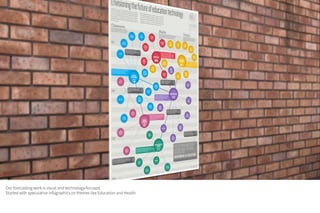
Our forecasting work is visual and technology-focused.
Started with speculative infographics on themes like Education and Health.
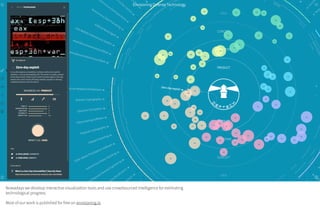
Nowadays we develop interactive visualization tools and use crowdsourced intelligence for estimating
technological progress.
Most of our work is published for free on envisioning.io
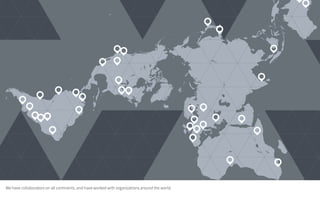
We have collaborators on all continents, and have worked with organizations around the world.
We have worked with organizations in both public & private sector.
Who in the audience works in technology?
…and who is concerned about technology?
Quite a few of you are worried about tech and perhaps where it’s heading.
Tech is fast-moving & unpredictable, but it’s better understood from a different perspective.
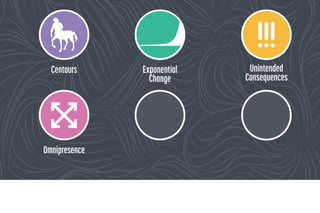
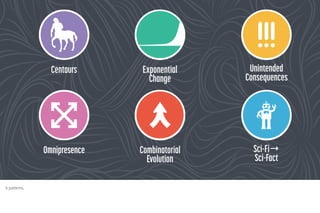
I will present 6 principles for how to think about technology over time.
Most of you have probably heard of Unicorns — the fabled $1B+ tech companies.
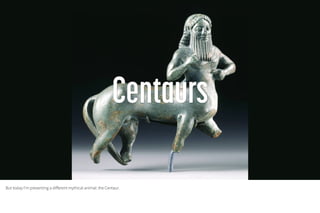
But today I’m presenting a different mythical animal: the Centaur.
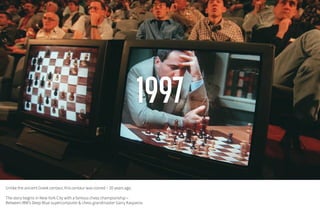
Unlike the ancient Greek centaur, this centaur was coined ~ 20 years ago.
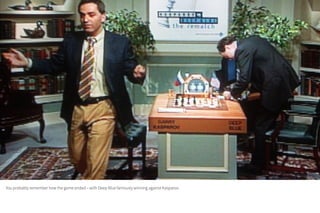
The story begins in New York City with a famous chess championship –
Between IBM’s Deep Blue supercomputer & chess grandmaster Garry Kasparov.
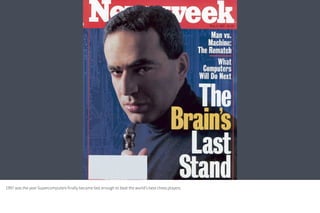
1997 was the year Supercomputers finally became fast enough to beat the world’s best chess players.
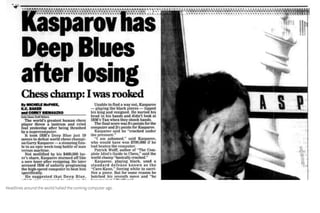
You probably remember how the game ended – with Deep Blue famously winning against Kasparov.
Headlines around the world hailed the coming computer age.
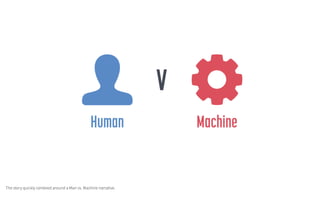
The story quickly centered around a Man vs. Machine narrative.
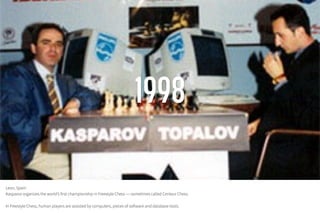
Fast-forward a year.
Leon, Spain
Kasparov organizes the world’s first championship in Freestyle Chess –– sometimes called Centaur Chess.
In Freestyle Chess, human players are assisted by computers, pieces of software and database tools.
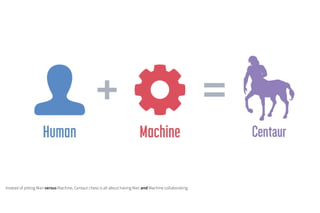
Instead of pitting Man versus Machine, Centaur chess is all about having Man and Machine collaborating.
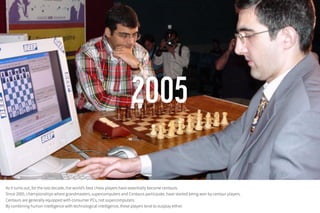
As it turns out, for the last decade, the world’s best chess players have essentially become centaurs.
Since 2005, championships where grandmasters, supercomputers and Centaurs participate, have started being won by centaur players.
Centaurs are generally equipped with consumer PCs, not supercomputers.
By combining human intelligence with technological intelligence, these players tend to outplay either.
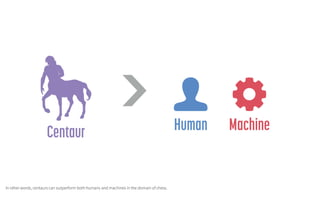
In other words, centaurs can outperform both humans and machines in the domain of chess.
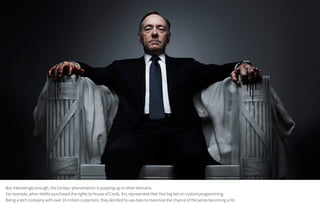
But interestingly enough, the Centaur phenomenon is popping up in other domains.
For example, when Netflix purchased the rights to House of Cards, this represented their first big bet on custom programming.
Being a tech company with over 10 million customers, they decided to use data to maximize the chance of the series becoming a hit.
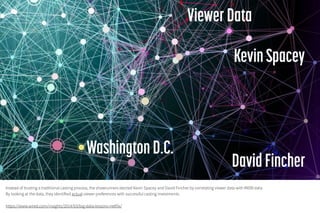
Instead of trusting a traditional casting process, the showrunners elected Kevin Spacey and David Fincher by correlating viewer data with IMDB data.
By looking at the data, they identified actual viewer preferences with successful casting investments.
https://www.wired.com/insights/2014/03/big-data-lessons-netflix/
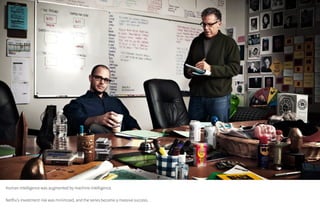
Human intelligence was augmented by machine intelligence.
Netflix's investment risk was minimized, and the series became a massive success.
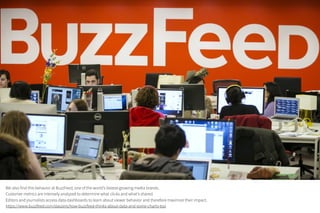
We also find this behavior at BuzzFeed, one of the world's fastest-growing media brands.
Customer metrics are intensely analyzed to determine what clicks and what's shared.
Editors and journalists access data dashboards to learn about viewer behavior and therefore maximize their impact.
https://www.buzzfeed.com/daozers/how-buzzfeed-thinks-about-data-and-some-charts-too
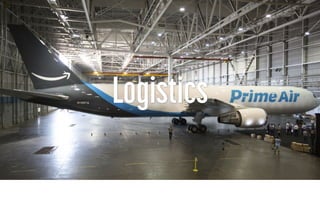
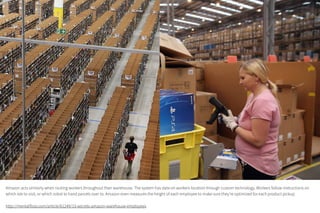
Amazon acts similarly when routing workers throughout their warehouse. The system has data on workers location through custom technology. Workers follow
instructions on which isle to visit, or which robot to hand parcels over to. Amazon even measures the height of each employee to make sure they’re optimized for
each product pickup.
http://mentalfloss.com/article/61249/13-secrets-amazon-warehouse-employees
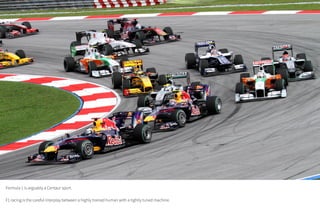
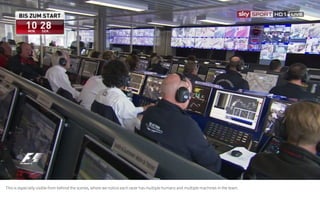
Formula 1 is arguably a Centaur sport.
F1 racing is the careful interplay between a highly trained human with a tightly tuned machine.
This is especially visible from behind the scenes, where we notice each racer has multiple humans and multiple machines in the team.
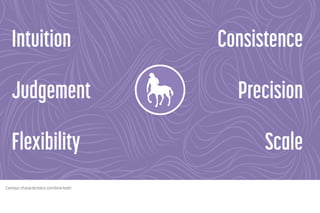
Human characteristics
Machine characteristics
Centaur characteristics combine both
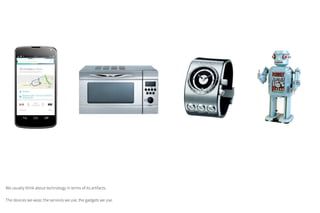
We usually think about technology in terms of its artifacts.
The devices we wear, the services we use, the gadgets we use.
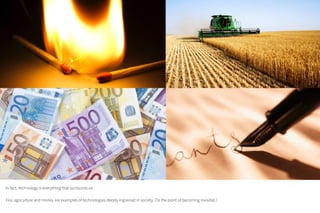
In fact, technology is everything that surrounds us.
Fire, agriculture and money are examples of technologies deeply ingrained in society. (To the point of becoming invisible.)
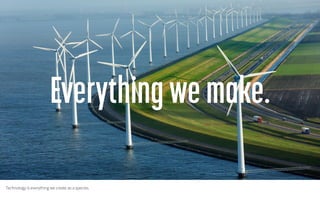
Technology is everything we create as a species.
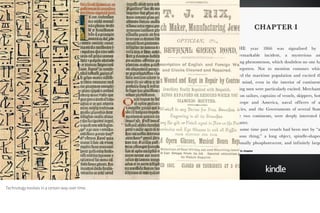
Technology evolves in a certain way over time.
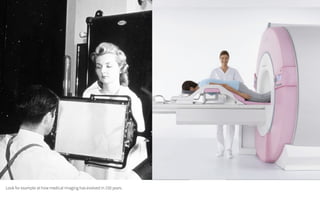
Look for example at how medical imaging has evolved in 150 years.
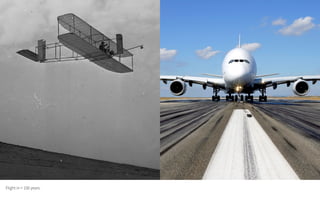
Flight in < 100 years.
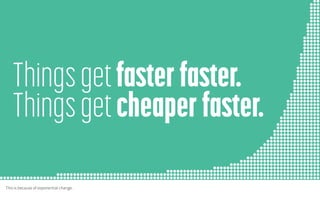
This is because of exponential change.
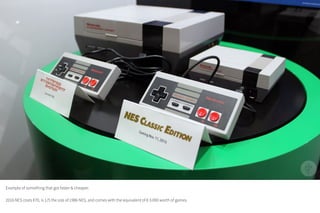
Example of something that got faster & cheaper.
2016 NES costs €70, is 1/5 the size of 1986 NES, and comes with the equivalent of € 3.000 worth of games.
The effect of exponential change indirectly affects everything around us.
We see it in tourism, where Streetview has enabled us to see virtually any inhabited location on earth, because of affordable geo-located 360º cameras.
[Drone Racing] https://www.youtube.com/watch?v=XnutpyvMiUE
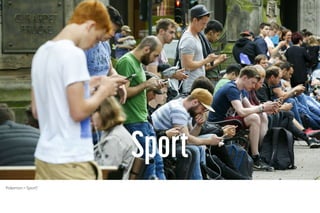
Pokemon = Sport?
If technology is everything we make –
and if technology is speeding up –
that means everything is accelerating
Which means today is the slowest day you will live through.
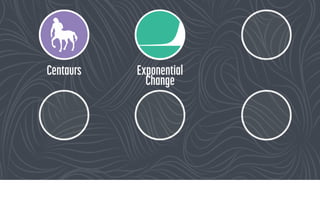
Exponential Change is second pattern.
Unintended Consequences are our third pattern.
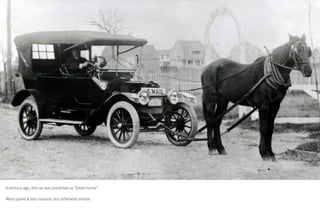
A century ago, the car was predicted as “faster horse”.
More speed & less manure, but otherwise similar.
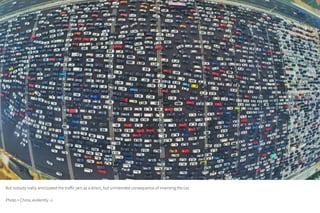
But nobody really anticipated the traffic jam as a direct, but unintended consequence of inventing the car.
Photo = China, evidently :-)
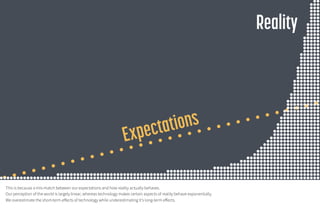
This is because a mis-match between our expectations and how reality actually behaves.
Our perception of the world is largely linear, whereas technology makes certain aspects of reality behave exponentially.
We overestimate the short-term effects of technology while underestimating it's long-term effects.
Another example is how elevator → dense urbanization.
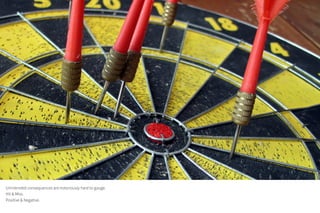
Unintended consequences are notoriously hard to gauge.
Hit & Miss.
Positive & Negative.
Fourth pattern: technological ubiquity.
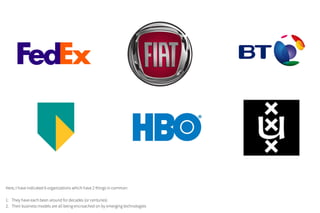
Here, I have indicated 6 organizations which have 2 things in common:
They have each been around for decades (or centuries)
Their business models are all being encroached on by emerging technologies
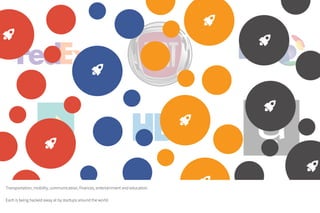
Transportation, mobility, communication, finances, entertainment and education.
Each is being hacked away at by startups around the world.
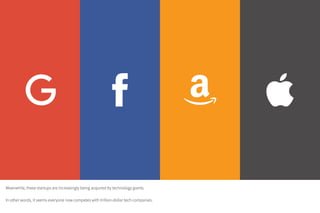
Meanwhile, these startups are increasingly being acquired by technology giants.
In other words, it seems everyone now competes with trillion-dollar tech companies.
If technology is everything we make, that means all companies are technology companies.
And if all companies are technology companies, that means there is “technology industry”.
We are ALL in the technology industry.
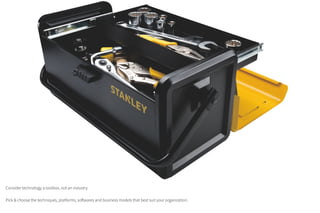
Consider technology a toolbox, not an industry.
Pick & choose the techniques, platforms, softwares and business models that best suit your organization.
Fifth pattern: all technologies are the combination of other technologies.
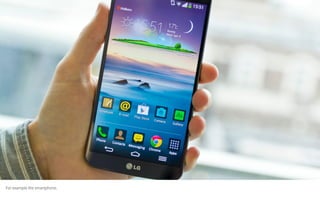
For example the smartphone.
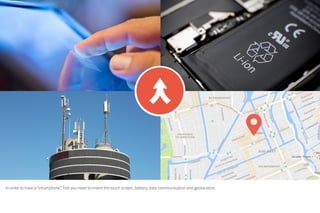
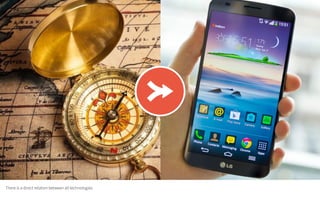
In order to have a “smartphone”, first you need to invent the touch screen, battery, data communication and geolocation.
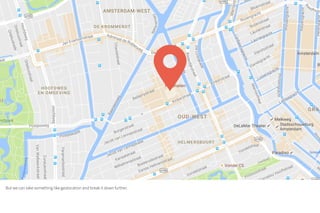
But we can take something like geolocation and break it down further.
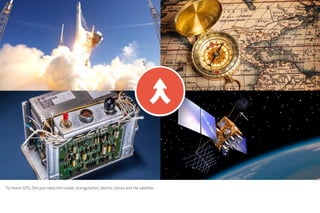
To invent GPS, first you need the rocket, triangulation, atomic clocks and the satellite.
There is a direct relation between all technologies.
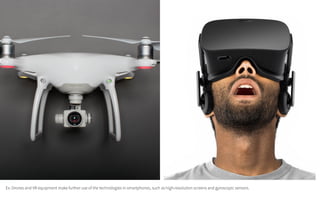
Ex: Drones and VR equipment make further use of the technologies in smartphones, such as high-resolution screens and gyroscopic sensors.
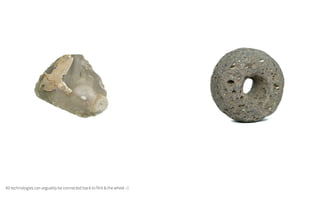
All technologies can arguably be connected back to flint & the wheel :-)
Final pattern: how science fiction affects innovation.
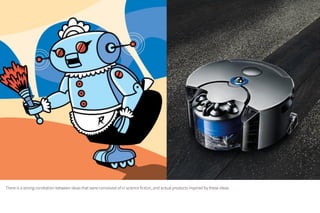
There is a strong correlation between ideas that were conceived of in science fiction, and actual products inspired by these ideas.
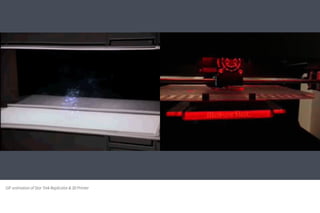
GIF animation of Star Trek Replicator & 3D Printer
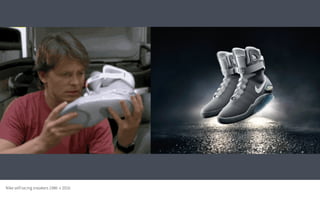
Nike self-lacing sneakers 1986 → 2016
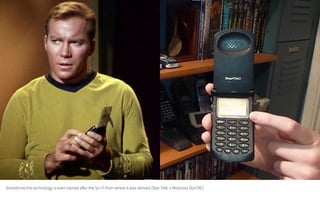
Sometimes the technology is even named after the Sci-Fi from where it was derived (Star Trek → Motorola StarTAC)
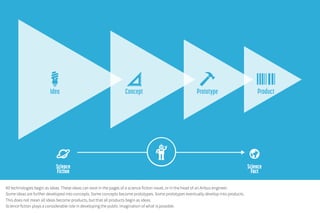
All technologies begin as ideas. These ideas can exist in the pages of a science fiction novel, or in the head of an Airbus engineer.
Some ideas are further developed into concepts. Some concepts become prototypes. Some prototypes eventually develop into products.
This does not mean all ideas become products, but that all products begin as ideas.
Science fiction plays a considerable role in developing the public imagination of what is possible.
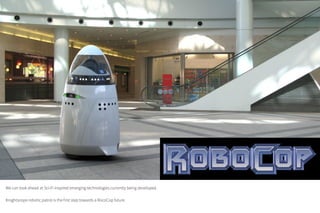
We can look ahead at Sci-Fi inspired emerging technologies currently being developed.
Knightscope robotic patrol is the first step towards a RocoCop future.
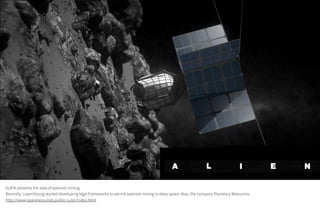
ALIEN presents the idea of asteroid mining.
Recently, Luxembourg started developing legal frameworks to permit asteroid mining in deep space. Also, the company Planetary Resources.
http://www.spaceresources.public.lu/en/index.html
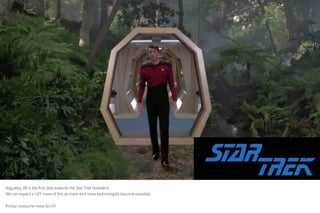
Arguably, VR is the first step towards the Star Trek Holodeck.
We can expect a LOT more of this as more and more technologies become possible.
Protip: consume more Sci-Fi!
6 patterns.
→ Technology can be more predictable than we believe.
→ Matter of perspective.
Thank you!

Patterns for technology thinking

  • 1.
    Patterns for technologythinking Michell Zappa January 2017
  • 2.
    Welcome and thanksfor being here. Today we'll talk about technology and how to anticipate the future.
  • 3.
    My name isMichell Zappa I’m a technology futurist and professed sci-fi geek.
  • 4.
    Patterns for technologythinking Presented by Michell Zappa December 2016 – Amsterdam In 2011, I founded an organization called Envisioning. Envisioning means "to picture a future event”, but carries a positive connotation which I particularly care for. If the future is something we create, then we should do so with optimism.
  • 5.
    Our forecasting workis visual and technology-focused. Started with speculative infographics on themes like Education and Health.
  • 6.
    Nowadays we developinteractive visualization tools and use crowdsourced intelligence for estimating technological progress. Most of our work is published for free on envisioning.io
  • 7.
    We have collaboratorson all continents, and have worked with organizations around the world.
  • 8.
    We have workedwith organizations in both public & private sector.
  • 9.
    Who in theaudience works in technology?
  • 10.
    …and who isconcerned about technology?
  • 11.
    Quite a fewof you are worried about tech and perhaps where it’s heading. Tech is fast-moving & unpredictable, but it’s better understood from a different perspective. I will present 6 principles for how to think about technology over time.
  • 12.
    Most of youhave probably heard of Unicorns — the fabled $1B+ tech companies.
  • 13.
    But today I’mpresenting a different mythical animal: the Centaur.
  • 14.
    Unlike the ancientGreek centaur, this centaur was coined ~ 20 years ago. The story begins in New York City with a famous chess championship – Between IBM’s Deep Blue supercomputer & chess grandmaster Garry Kasparov.
  • 15.
    1997 was theyear Supercomputers finally became fast enough to beat the world’s best chess players.
  • 16.
    You probably rememberhow the game ended – with Deep Blue famously winning against Kasparov.
  • 17.
    Headlines around theworld hailed the coming computer age.
  • 18.
    The story quicklycentered around a Man vs. Machine narrative.
  • 19.
  • 20.
    Leon, Spain Kasparov organizesthe world’s first championship in Freestyle Chess –– sometimes called Centaur Chess. In Freestyle Chess, human players are assisted by computers, pieces of software and database tools.
  • 21.
    Instead of pittingMan versus Machine, Centaur chess is all about having Man and Machine collaborating.
  • 22.
    As it turnsout, for the last decade, the world’s best chess players have essentially become centaurs. Since 2005, championships where grandmasters, supercomputers and Centaurs participate, have started being won by centaur players. Centaurs are generally equipped with consumer PCs, not supercomputers. By combining human intelligence with technological intelligence, these players tend to outplay either.
  • 23.
    In other words,centaurs can outperform both humans and machines in the domain of chess.
  • 24.
    But interestingly enough,the Centaur phenomenon is popping up in other domains. For example, when Netflix purchased the rights to House of Cards, this represented their first big bet on custom programming. Being a tech company with over 10 million customers, they decided to use data to maximize the chance of the series becoming a hit.
  • 25.
    Instead of trustinga traditional casting process, the showrunners elected Kevin Spacey and David Fincher by correlating viewer data with IMDB data. By looking at the data, they identified actual viewer preferences with successful casting investments. https://www.wired.com/insights/2014/03/big-data-lessons-netflix/
  • 26.
    Human intelligence wasaugmented by machine intelligence. Netflix's investment risk was minimized, and the series became a massive success.
  • 27.
    We also findthis behavior at BuzzFeed, one of the world's fastest-growing media brands. Customer metrics are intensely analyzed to determine what clicks and what's shared. Editors and journalists access data dashboards to learn about viewer behavior and therefore maximize their impact. https://www.buzzfeed.com/daozers/how-buzzfeed-thinks-about-data-and-some-charts-too
  • 28.
    Amazon acts similarlywhen routing workers throughout their warehouse. The system has data on workers location through custom technology. Workers follow instructions on which isle to visit, or which robot to hand parcels over to. Amazon even measures the height of each employee to make sure they’re optimized for each product pickup. http://mentalfloss.com/article/61249/13-secrets-amazon-warehouse-employees
  • 29.
    Formula 1 isarguably a Centaur sport. F1 racing is the careful interplay between a highly trained human with a tightly tuned machine.
  • 30.
    This is especiallyvisible from behind the scenes, where we notice each racer has multiple humans and multiple machines in the team.
  • 31.
  • 32.
  • 33.
  • 38.
    We usually thinkabout technology in terms of its artifacts. The devices we wear, the services we use, the gadgets we use.
  • 39.
    In fact, technologyis everything that surrounds us. Fire, agriculture and money are examples of technologies deeply ingrained in society. (To the point of becoming invisible.)
  • 40.
    Technology is everythingwe create as a species.
  • 41.
    Technology evolves ina certain way over time.
  • 42.
    Look for exampleat how medical imaging has evolved in 150 years.
  • 43.
    Flight in <100 years.
  • 44.
    This is becauseof exponential change.
  • 45.
    Example of somethingthat got faster & cheaper. 2016 NES costs €70, is 1/5 the size of 1986 NES, and comes with the equivalent of € 3.000 worth of games.
  • 46.
    The effect ofexponential change indirectly affects everything around us. We see it in tourism, where Streetview has enabled us to see virtually any inhabited location on earth, because of affordable geo-located 360º cameras.
  • 47.
  • 48.
  • 53.
    If technology iseverything we make – and if technology is speeding up – that means everything is accelerating
  • 54.
    Which means todayis the slowest day you will live through.
  • 55.
    Exponential Change issecond pattern.
  • 57.
    Unintended Consequences areour third pattern.
  • 58.
    A century ago,the car was predicted as “faster horse”. More speed & less manure, but otherwise similar.
  • 59.
    But nobody reallyanticipated the traffic jam as a direct, but unintended consequence of inventing the car. Photo = China, evidently :-)
  • 60.
    This is becausea mis-match between our expectations and how reality actually behaves. Our perception of the world is largely linear, whereas technology makes certain aspects of reality behave exponentially. We overestimate the short-term effects of technology while underestimating it's long-term effects.
  • 61.
    Another example ishow elevator → dense urbanization.
  • 62.
    Unintended consequences arenotoriously hard to gauge. Hit & Miss. Positive & Negative.
  • 64.
  • 65.
    Here, I haveindicated 6 organizations which have 2 things in common: They have each been around for decades (or centuries) Their business models are all being encroached on by emerging technologies
  • 66.
    Transportation, mobility, communication,finances, entertainment and education. Each is being hacked away at by startups around the world.
  • 67.
    Meanwhile, these startupsare increasingly being acquired by technology giants. In other words, it seems everyone now competes with trillion-dollar tech companies.
  • 68.
    If technology iseverything we make, that means all companies are technology companies.
  • 69.
    And if allcompanies are technology companies, that means there is “technology industry”. We are ALL in the technology industry.
  • 70.
    Consider technology atoolbox, not an industry. Pick & choose the techniques, platforms, softwares and business models that best suit your organization.
  • 72.
    Fifth pattern: alltechnologies are the combination of other technologies.
  • 73.
    For example thesmartphone.
  • 74.
    In order tohave a “smartphone”, first you need to invent the touch screen, battery, data communication and geolocation.
  • 75.
    But we cantake something like geolocation and break it down further.
  • 76.
    To invent GPS,first you need the rocket, triangulation, atomic clocks and the satellite.
  • 77.
    There is adirect relation between all technologies.
  • 78.
    Ex: Drones andVR equipment make further use of the technologies in smartphones, such as high-resolution screens and gyroscopic sensors.
  • 79.
    All technologies canarguably be connected back to flint & the wheel :-)
  • 80.
    Final pattern: howscience fiction affects innovation.
  • 81.
    There is astrong correlation between ideas that were conceived of in science fiction, and actual products inspired by these ideas.
  • 82.
    GIF animation ofStar Trek Replicator & 3D Printer
  • 83.
  • 84.
    Sometimes the technologyis even named after the Sci-Fi from where it was derived (Star Trek → Motorola StarTAC)
  • 85.
    All technologies beginas ideas. These ideas can exist in the pages of a science fiction novel, or in the head of an Airbus engineer. Some ideas are further developed into concepts. Some concepts become prototypes. Some prototypes eventually develop into products. This does not mean all ideas become products, but that all products begin as ideas. Science fiction plays a considerable role in developing the public imagination of what is possible.
  • 86.
    We can lookahead at Sci-Fi inspired emerging technologies currently being developed. Knightscope robotic patrol is the first step towards a RocoCop future.
  • 87.
    ALIEN presents theidea of asteroid mining. Recently, Luxembourg started developing legal frameworks to permit asteroid mining in deep space. Also, the company Planetary Resources. http://www.spaceresources.public.lu/en/index.html
  • 88.
    Arguably, VR isthe first step towards the Star Trek Holodeck. We can expect a LOT more of this as more and more technologies become possible. Protip: consume more Sci-Fi!
  • 89.
  • 90.
    → Technology canbe more predictable than we believe. → Matter of perspective.
  • 93.