Michell Zappa
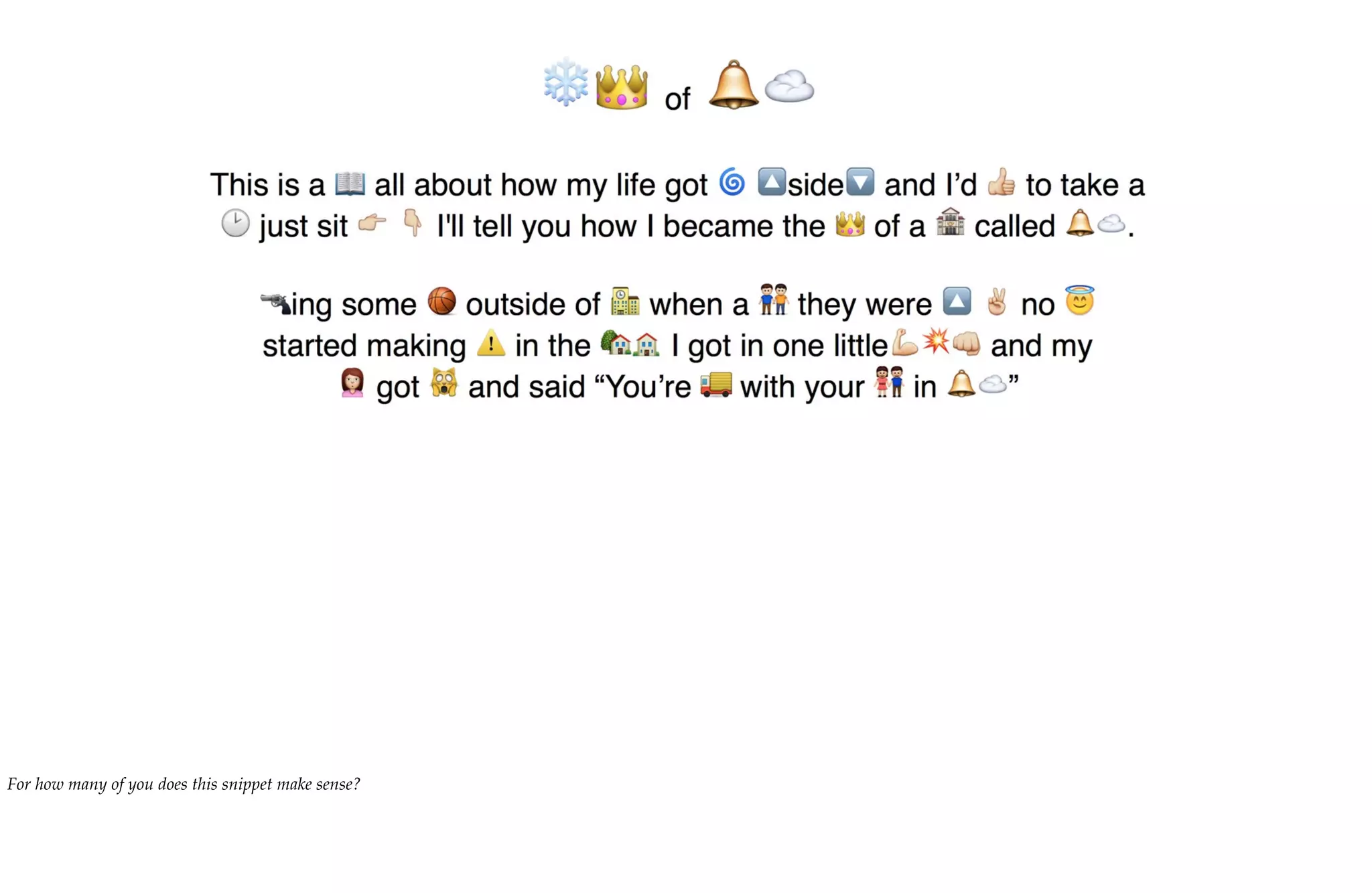
For how many of you does this snippet make sense?
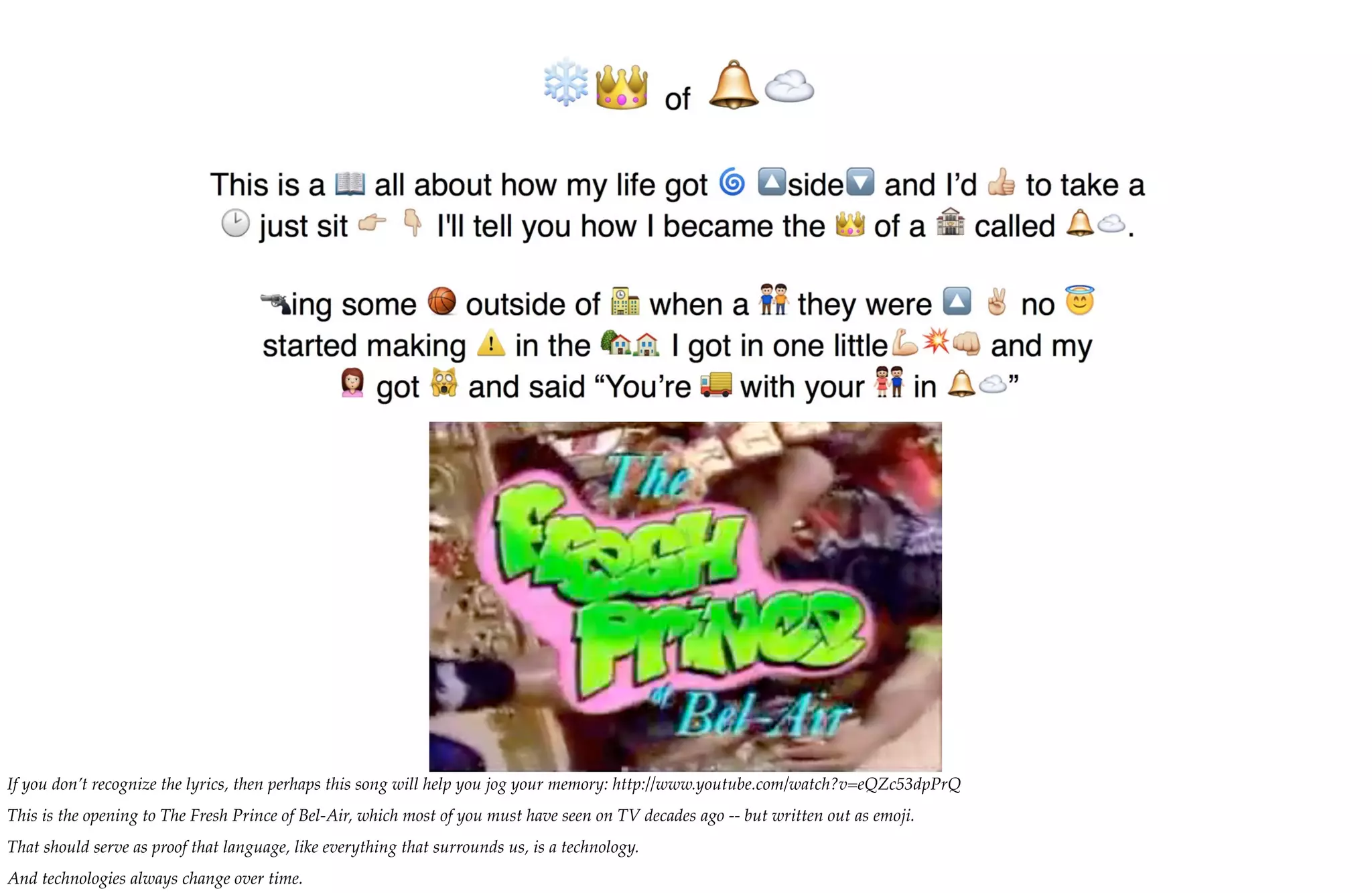
If you don’t recognize the lyrics, then perhaps this song will help you jog your memory: http://www.youtube.com/watch?v=eQZc53dpPrQ
This is the opening to The Fresh Prince of Bel-Air, which most of you must have seen on TV decades ago -- but written out as emoji.
That should serve as proof that language, like everything that surrounds us, is a technology.
And technologies always change over time.
Michell Zappa
TECHNOLOGY FUTURIST
      @michellzappa
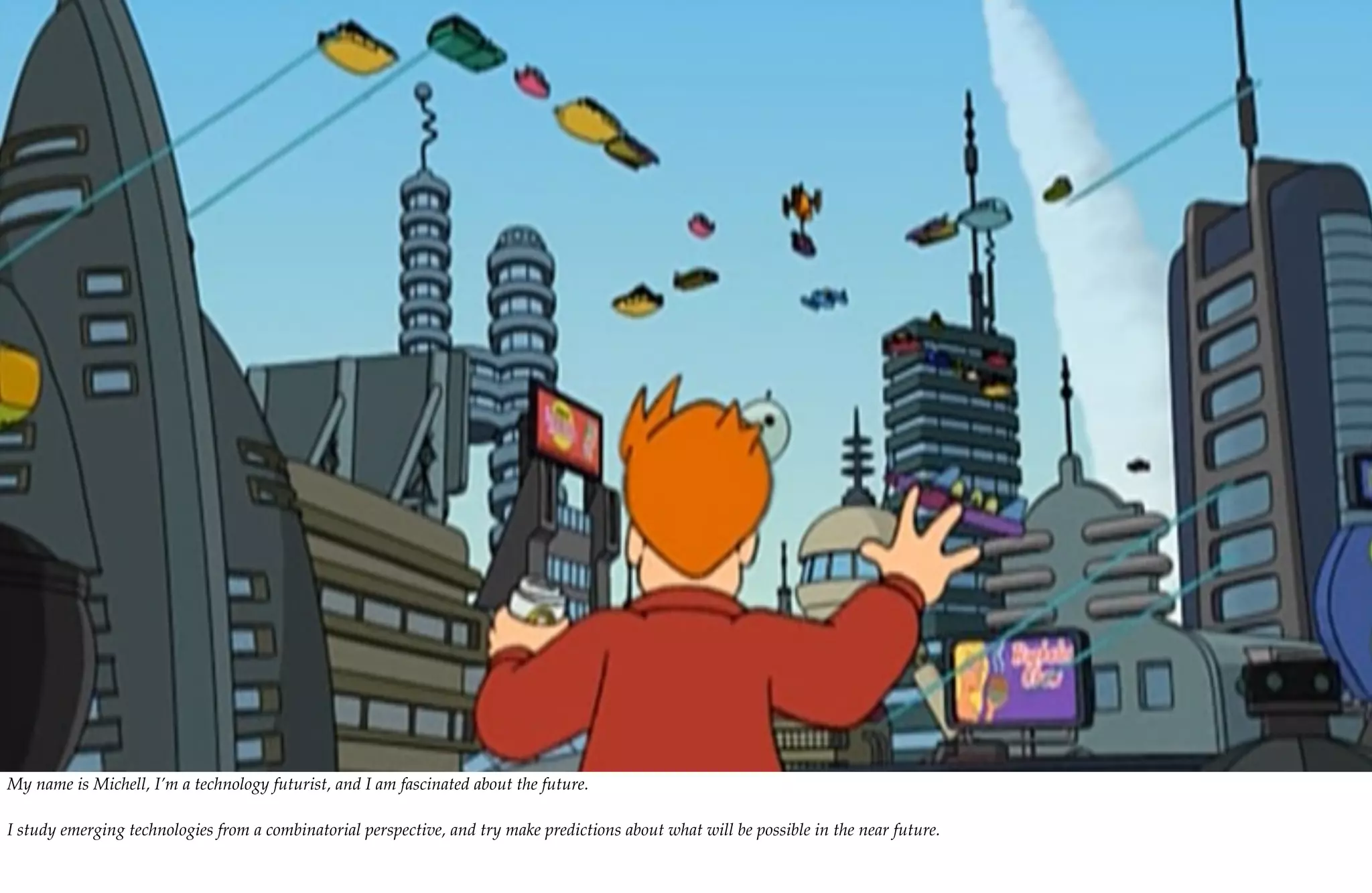
My name is Michell, I’m a technology futurist, and I am fascinated about the future.

I study emerging technologies from a combinatorial perspective, and try make predictions about what will be possible in the near future.
Solving problems that don’t (yet) exist.

Fundamentally, my job is about solving problems that don’t yet exist.

In order to frame the thinking about technological possibility, let’s start by looking at a technology we all know and love...
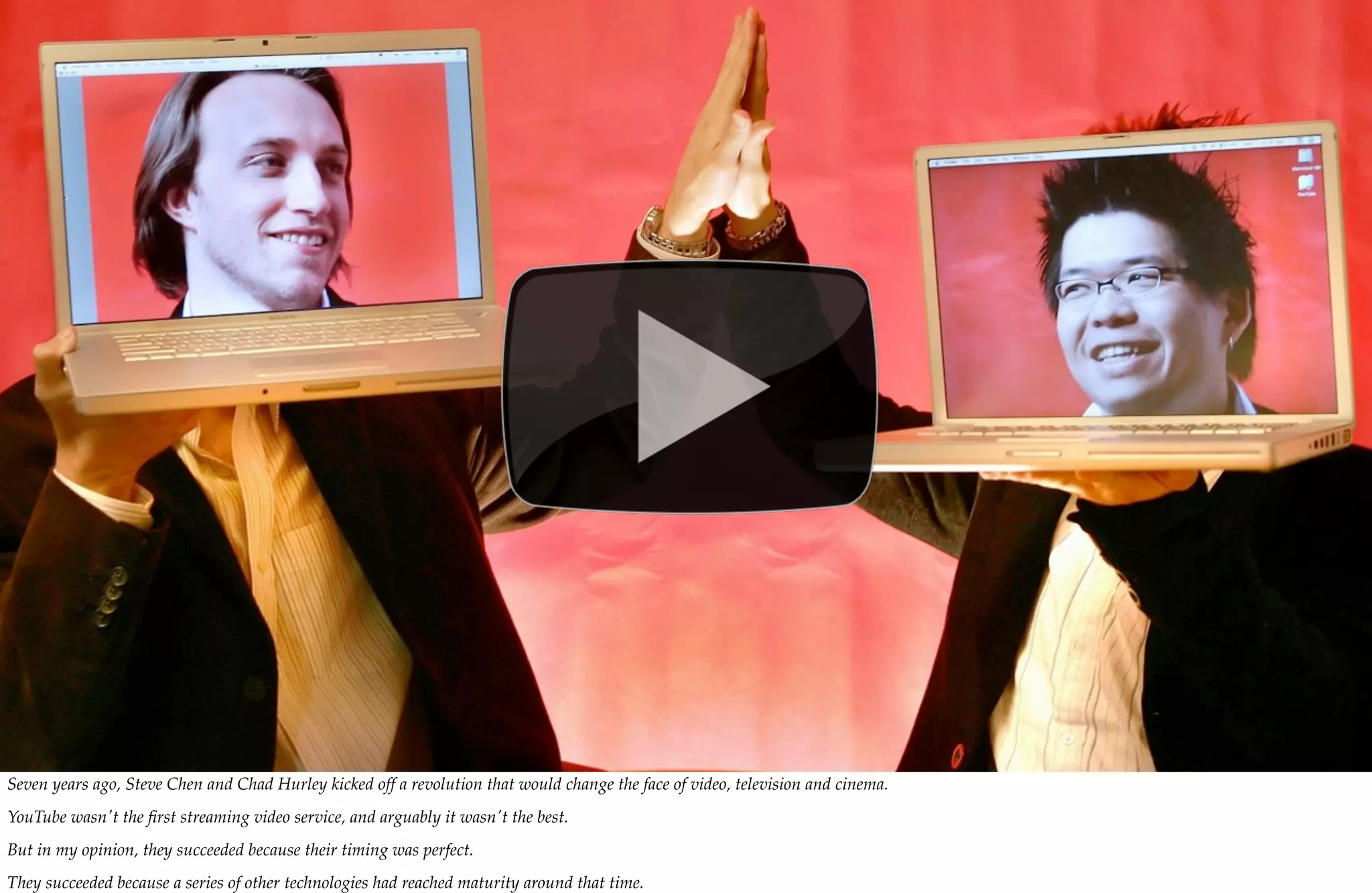
Seven years ago, Steve Chen and Chad Hurley kicked off a revolution that would change the face of video, television and cinema.
YouTube wasn't the first streaming video service, and arguably it wasn't the best.
But in my opinion, they succeeded because their timing was perfect.
They succeeded because a series of other technologies had reached maturity around that time.
GPS


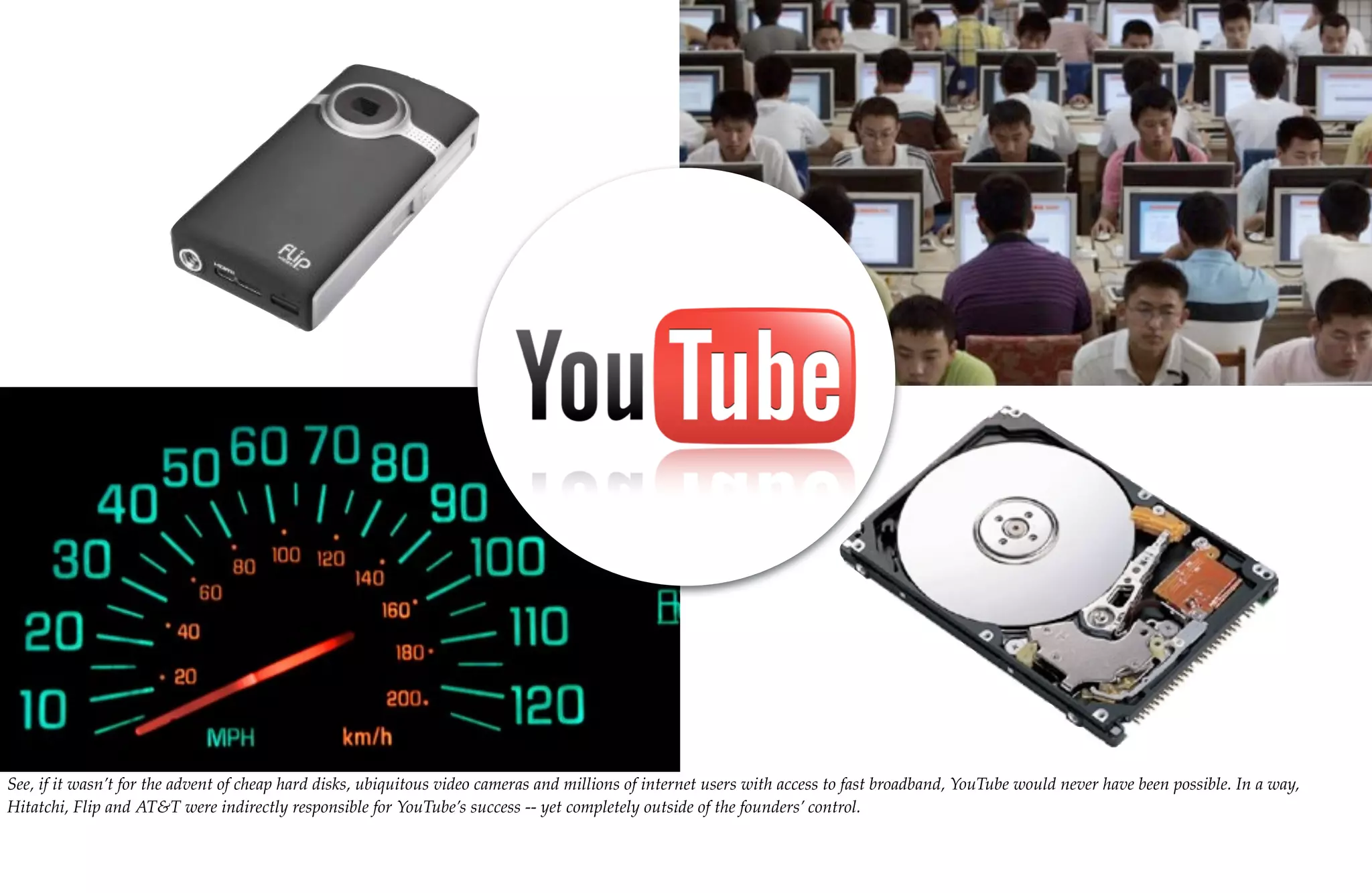
See, if it wasn’t for the advent of cheap hard disks, ubiquitous video cameras and millions of internet users with access to fast broadband, YouTube would never have been possible. In a way,
Hitatchi, Flip and AT&T were indirectly responsible for YouTube’s success -- yet completely outside of the founders’ control.
That and billions of hours of cat videos, evidently.
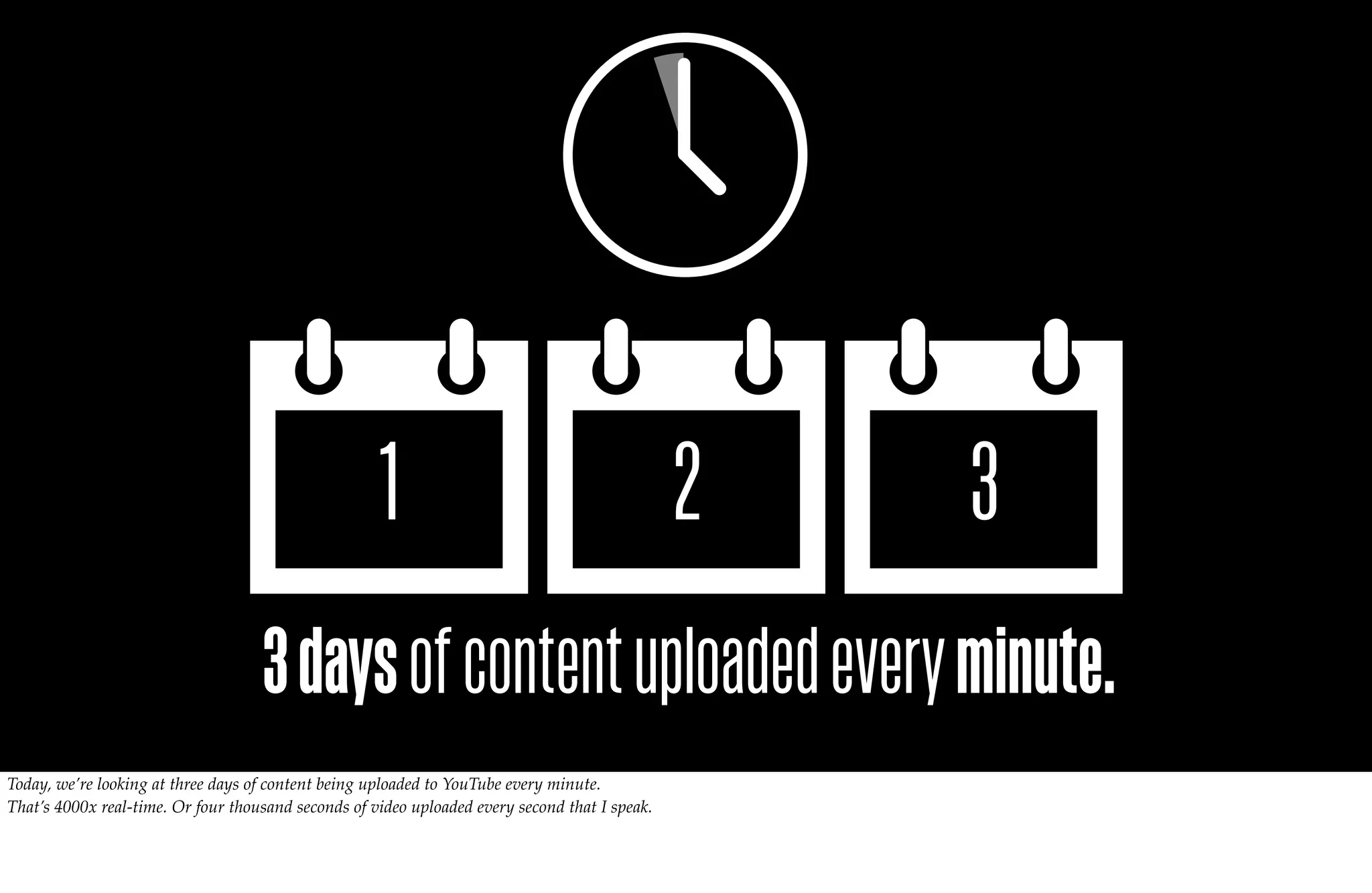
1                                          2   3
                                    3 days of content uploaded every minute.
Today, we’re looking at three days of content being uploaded to YouTube every minute.
That’s 4000x real-time. Or four thousand seconds of video uploaded every second that I speak.
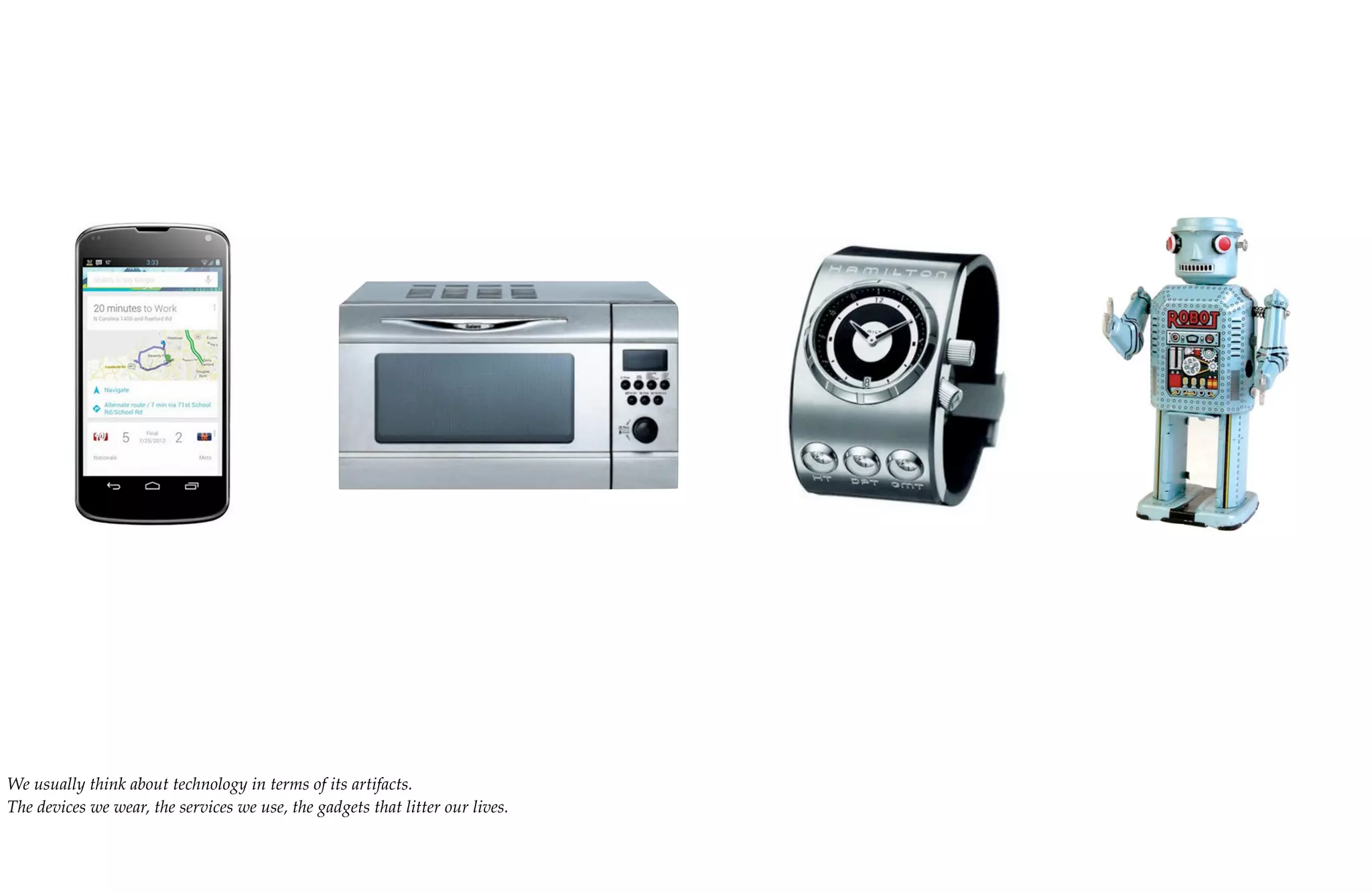
We usually think about technology in terms of its artifacts.
The devices we wear, the services we use, the gadgets that litter our lives.
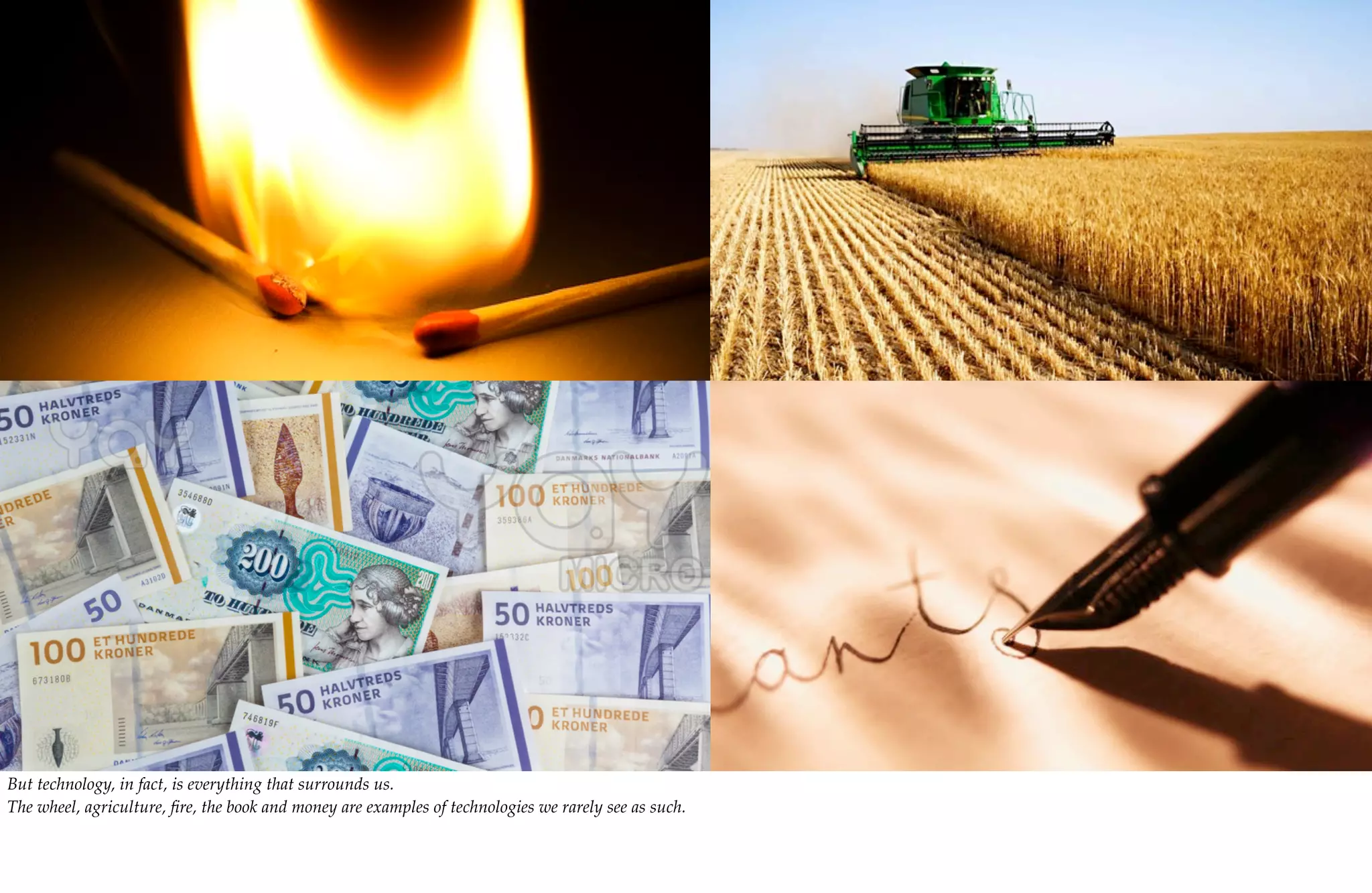
But technology, in fact, is everything that surrounds us.
The wheel, agriculture, fire, the book and money are examples of technologies we rarely see as such.
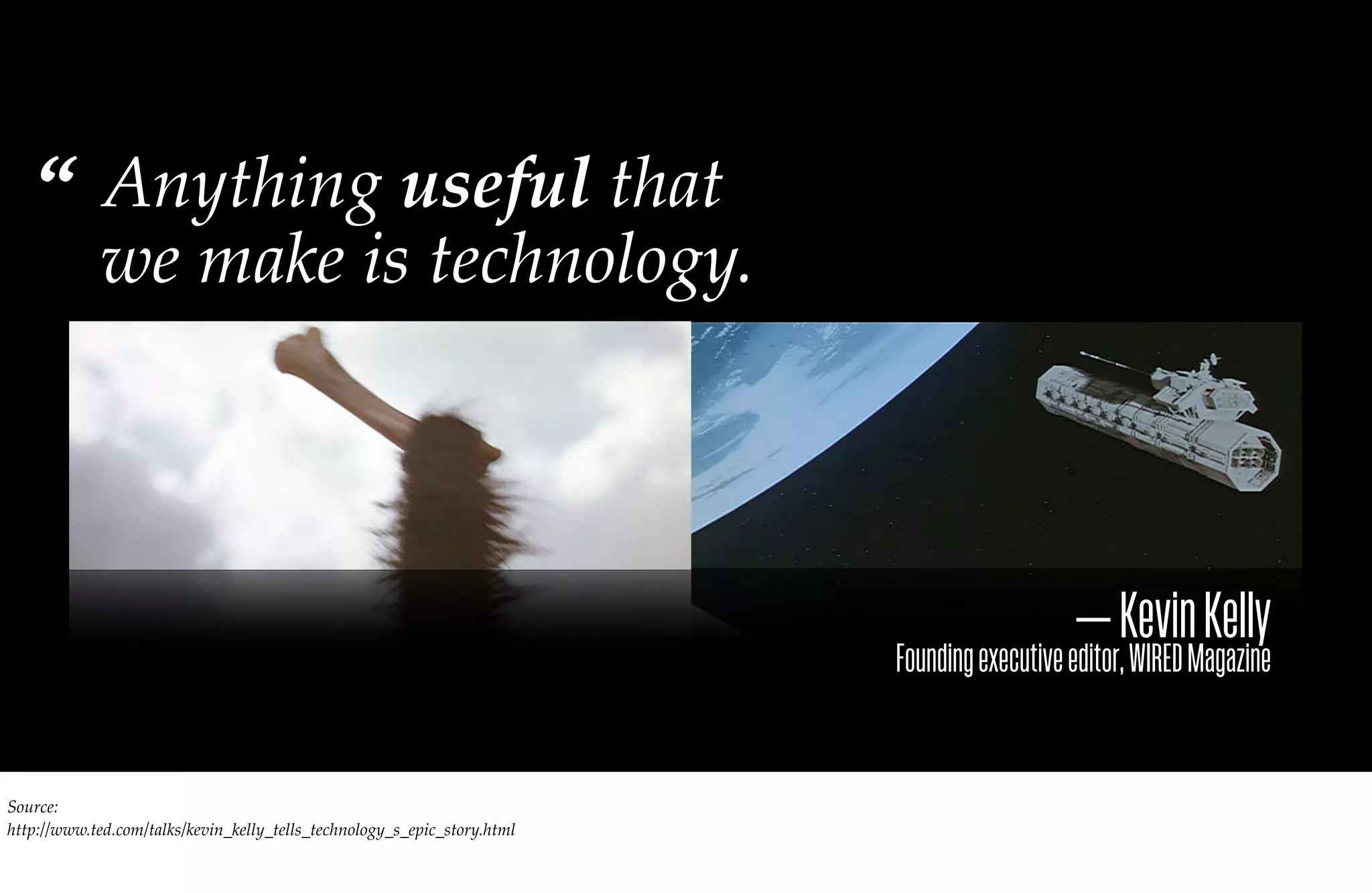
“          Anything useful that
             we make is technology.


                                                                                             — Kevin Kelly
                                                                          Founding executive editor, WIRED Magazine


Source:
http://www.ted.com/talks/kevin_kelly_tells_technology_s_epic_story.html
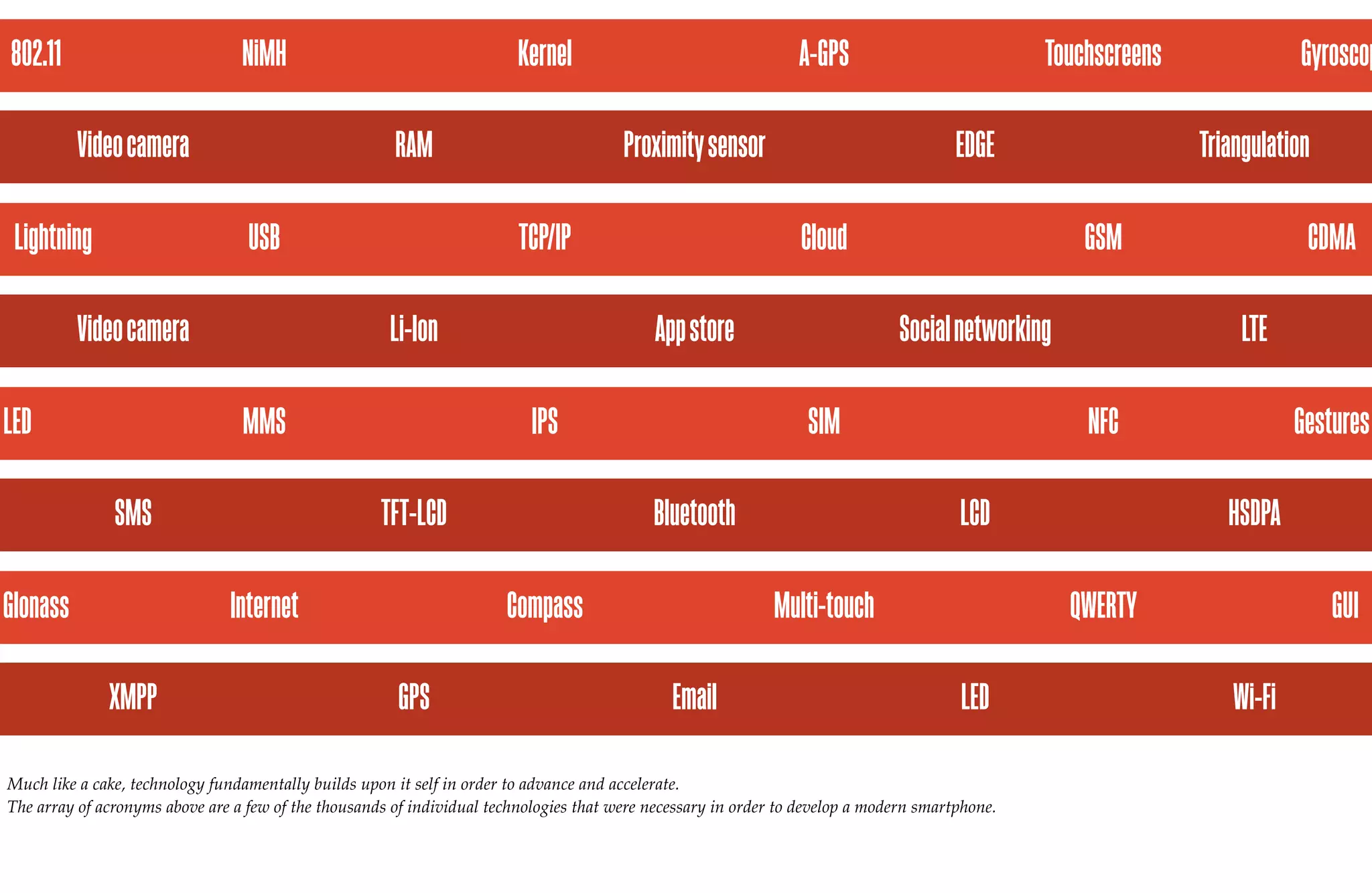
We can also think about technology like a layer cake.
802.11                           NiMH                                    Kernel                                  A-GPS                           Touchscreens              Gyroscop

          Video camera                                 RAM                              Proximity sensor                                EDGE                    Triangulation

 Lightning                        USB                                    TCP/IP                                  Cloud                               GSM                    CDMA

          Video camera                                Li-Ion                                App store                           Social networking                   LTE

LED                              MMS                                       IPS                                    SIM                                NFC                   Gestures

               SMS                                   TFT-LCD                                Bluetooth                                   LCD                        HSDPA

Glonass                         Internet                               Compass                                Multi-touch                           QWERTY                      GUI

              XMPP                                      GPS                                    Email                                    LED                        Wi-Fi

Much like a cake, technology fundamentally builds upon it self in order to advance and accelerate.
The array of acronyms above are a few of the thousands of individual technologies that were necessary in order to develop a modern smartphone.
802.11                            NiMH                                    Kernel                                    A-GPS                               Touchscreens                    Gyroscop
         Video camera                                   RAM                               Proximity sensor                                 EDGE                             Triangulation
 Lightning                         USB                                     TCP/IP                                   Cloud                                     GSM                        CDMA
         Video camera                                   Li-Ion                                 App store                          Social networking                              LTE
LED                               MMS                                       IPS                                      SIM                                      NFC                      Gestures
             SMS                                      TFT-LCD                                 Bluetooth                                    LCD                                  HSDPA
Glonass                         Internet                                 Compass                                Multi-touch                                QWERTY                          GUI
             XMPP                                        GPS                                     Email                                     LED                                  Wi-Fi
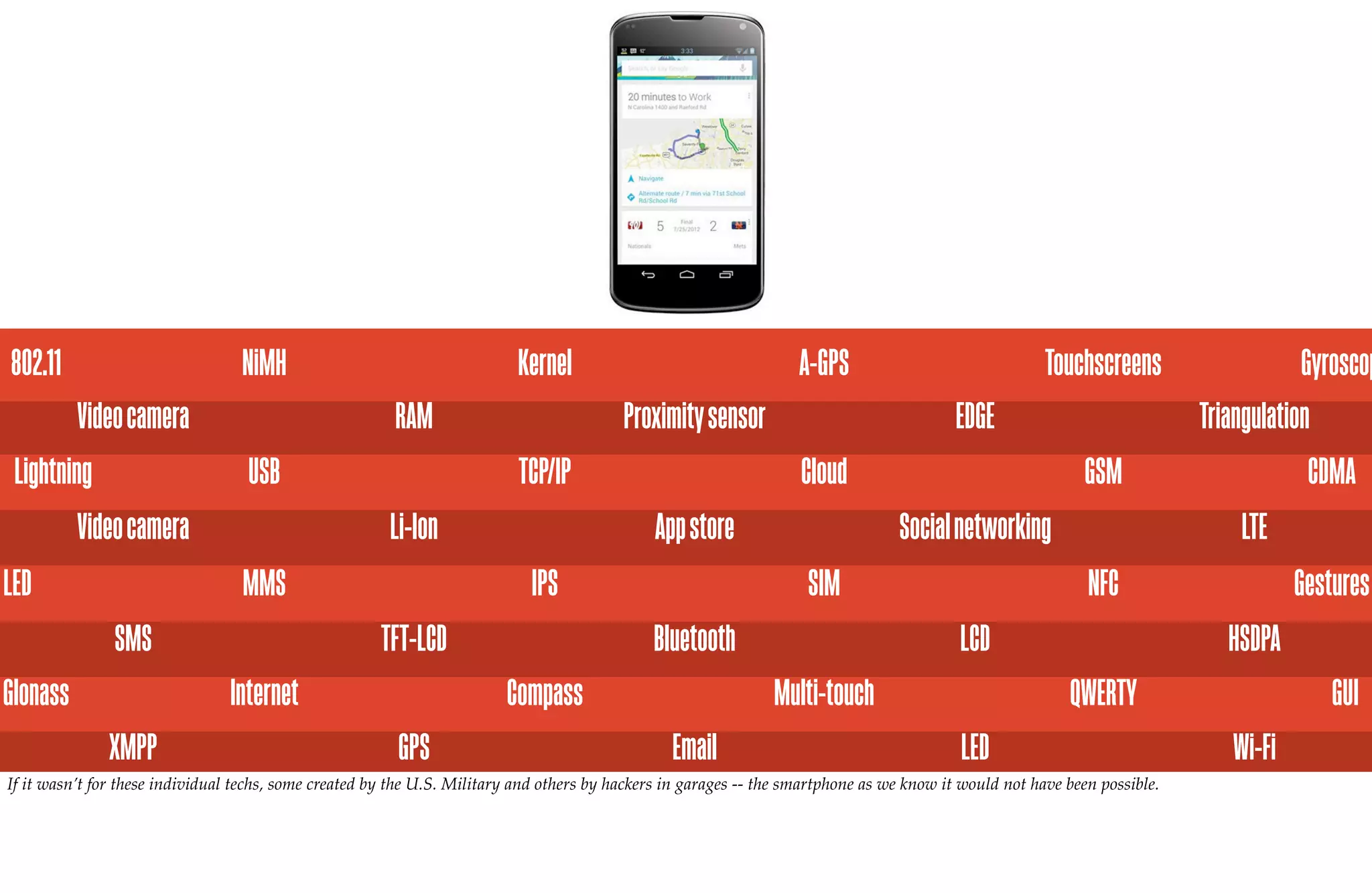
If it wasn’t for these individual techs, some created by the U.S. Military and others by hackers in garages -- the smartphone as we know it would not have been possible.
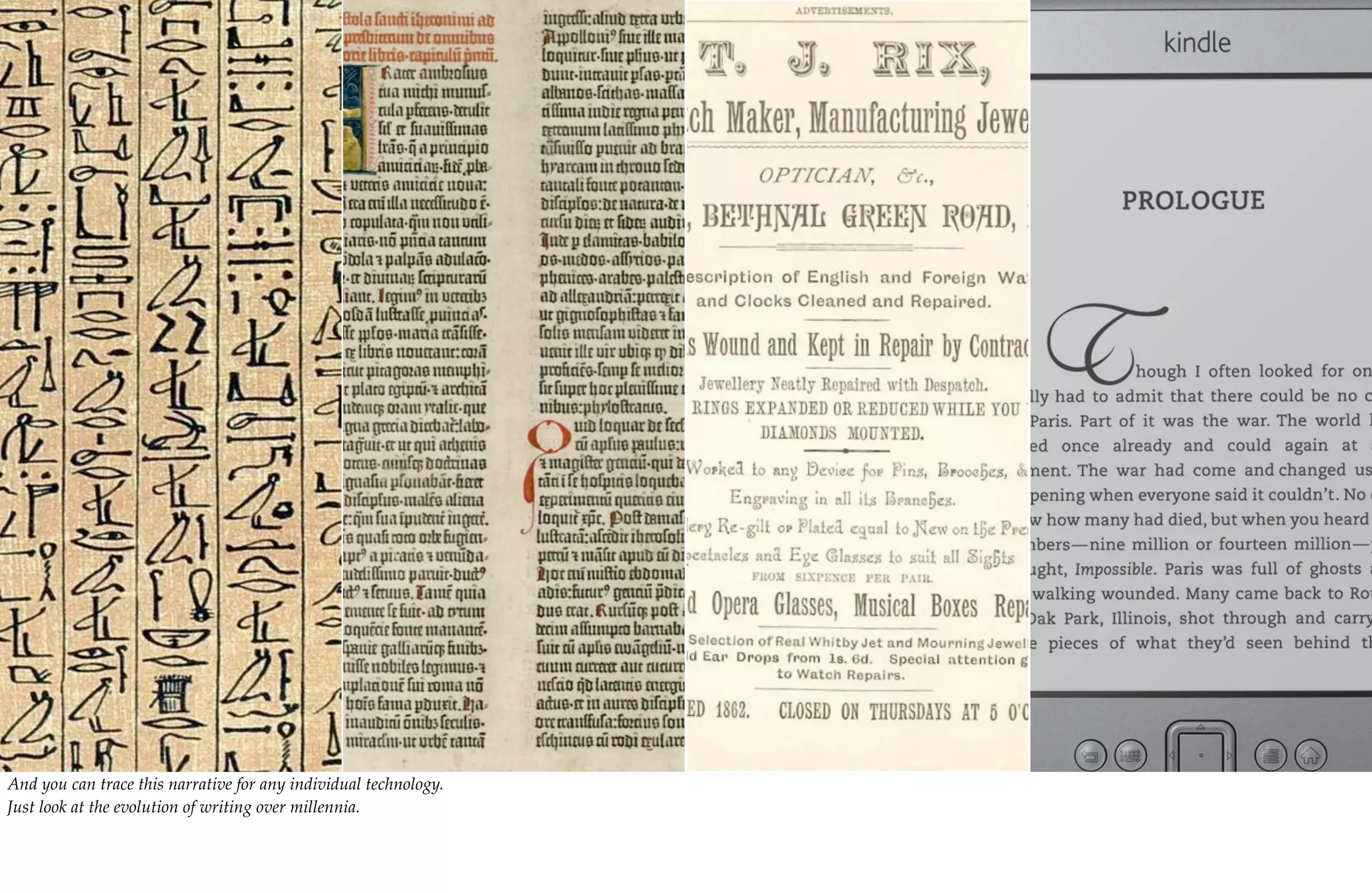
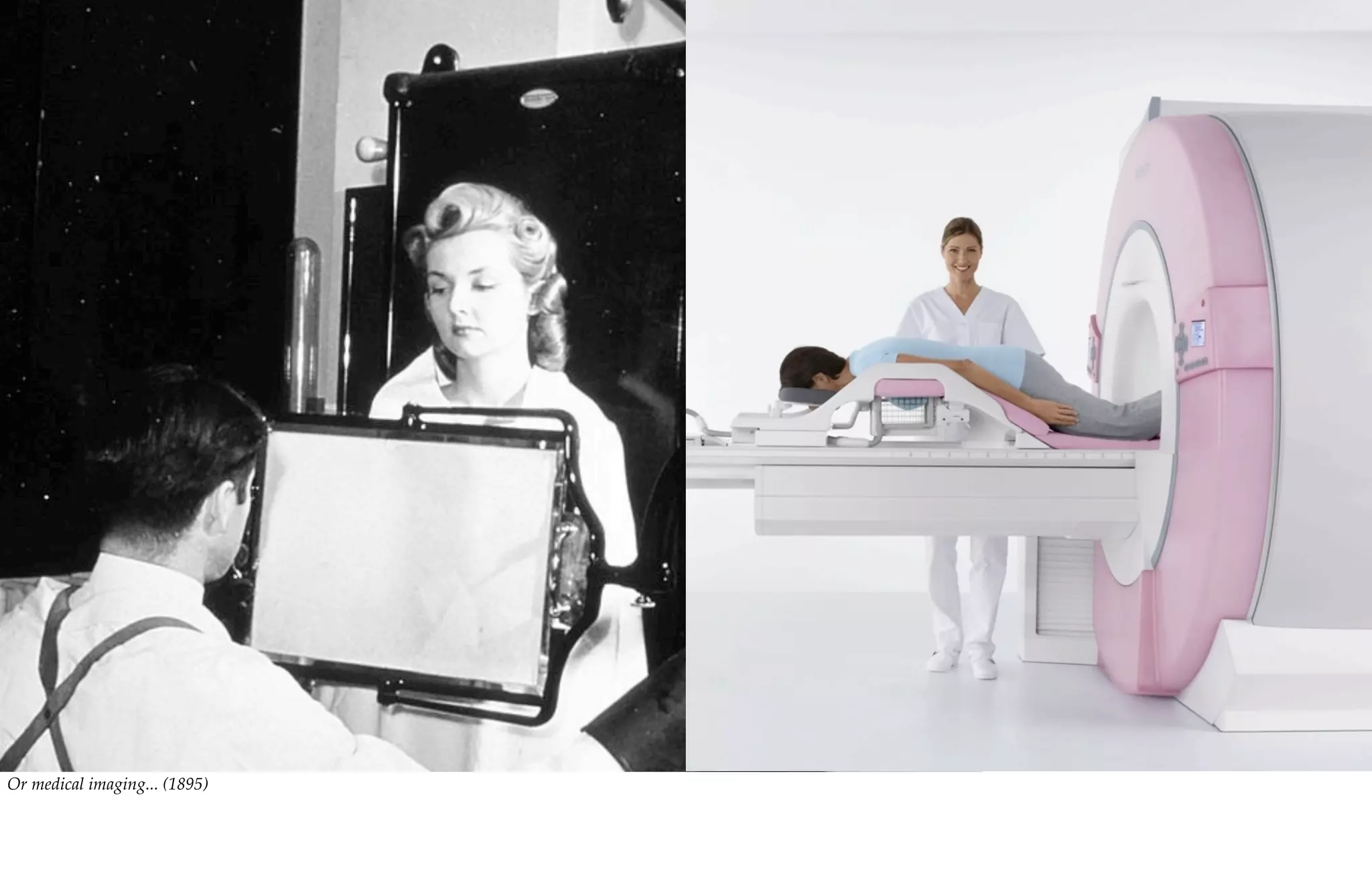
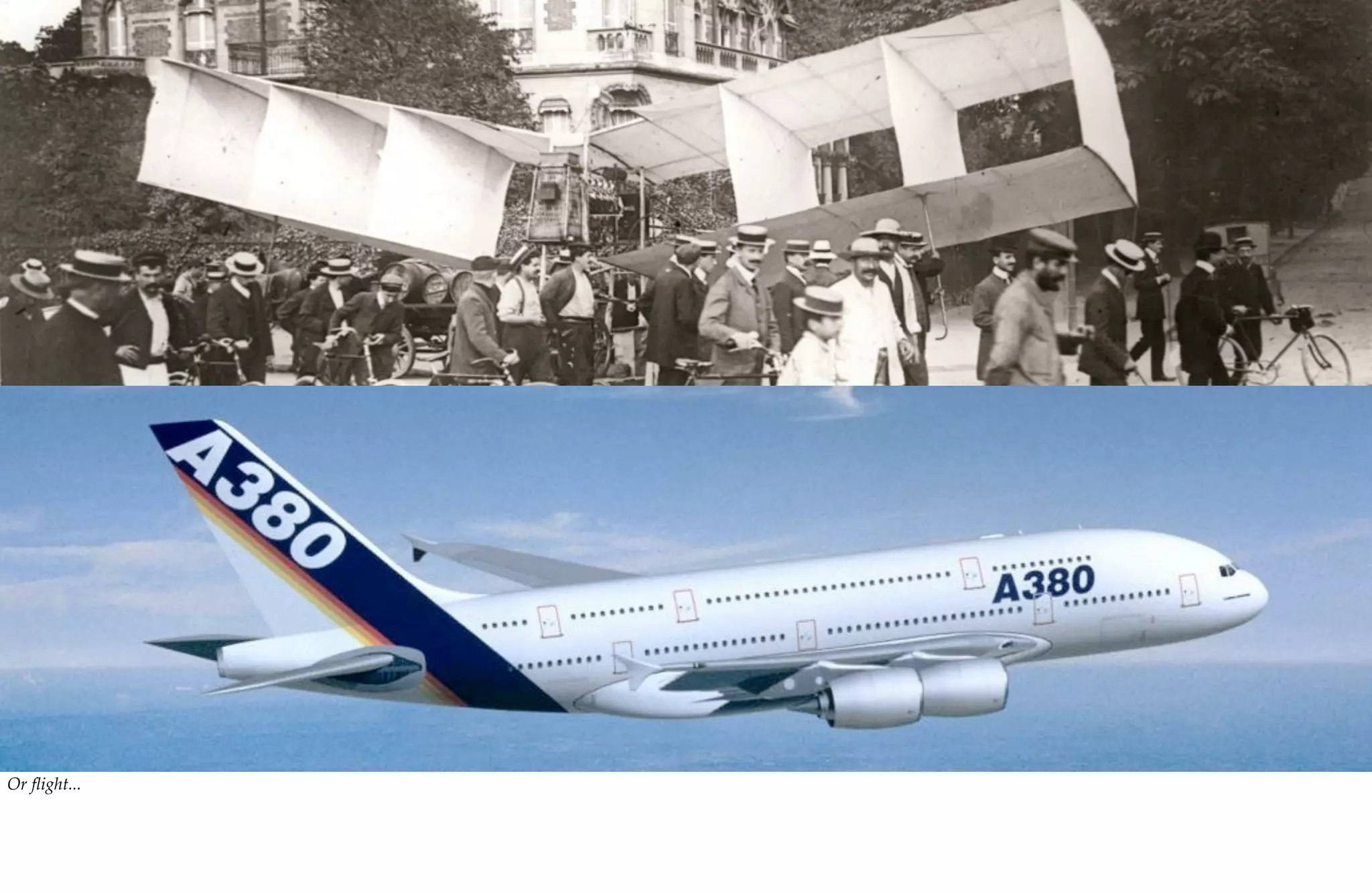
And you can trace this narrative for any individual technology.
Just look at the evolution of writing over millennia.
Or medical imaging... (1895)
Or flight...
A NEW TOPOLOGY
Like most other industries, I believe education acquiring a new topology.
The concentration of knowledge is no longer in schools -- and the methods through which we acquire new information is no longer through books.
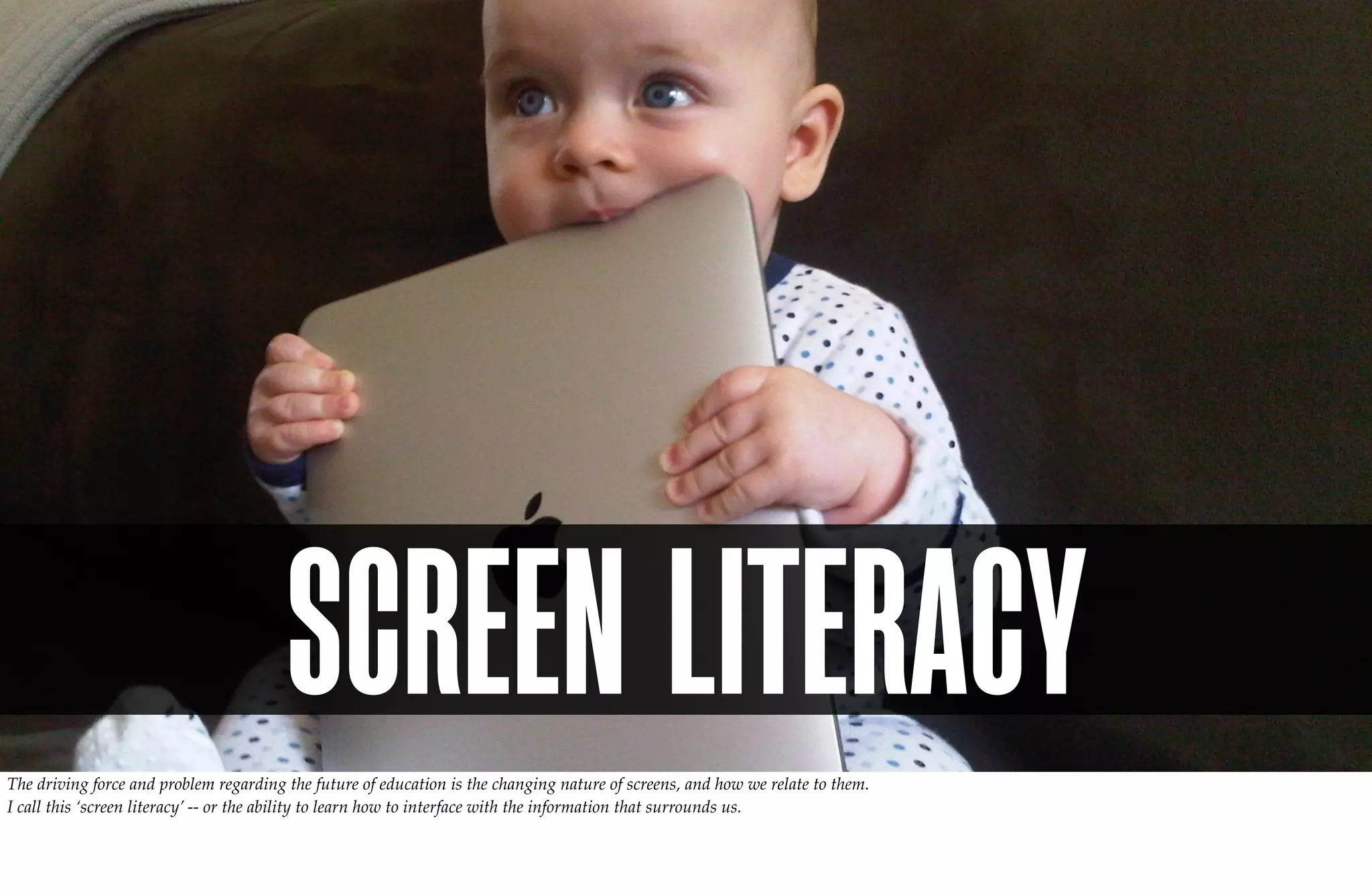
SCREEN LITERACY
The driving force and problem regarding the future of education is the changing nature of screens, and how we relate to them.
I call this ‘screen literacy’ -- or the ability to learn how to interface with the information that surrounds us.
TEACHERS & STUDENTS
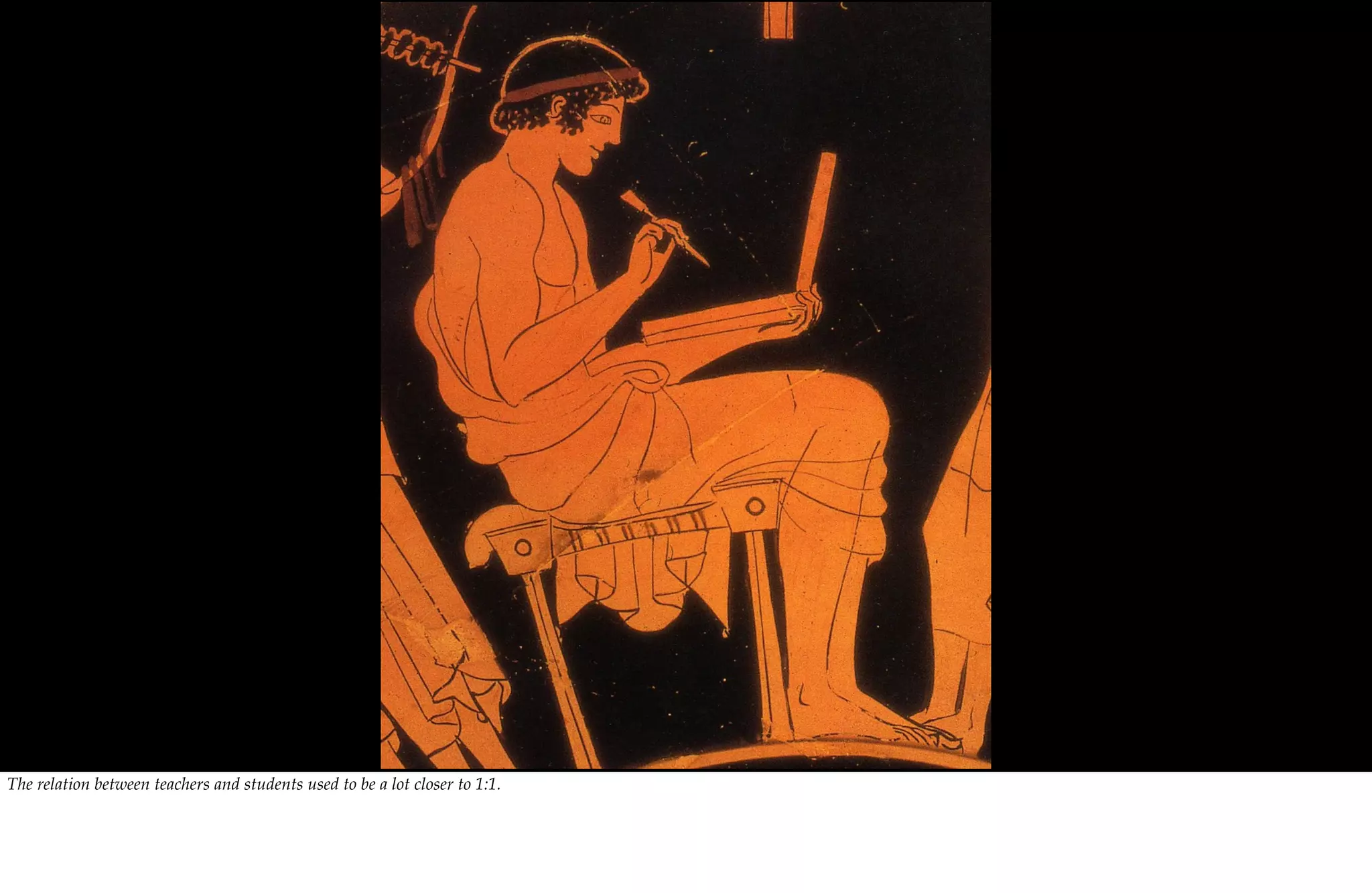
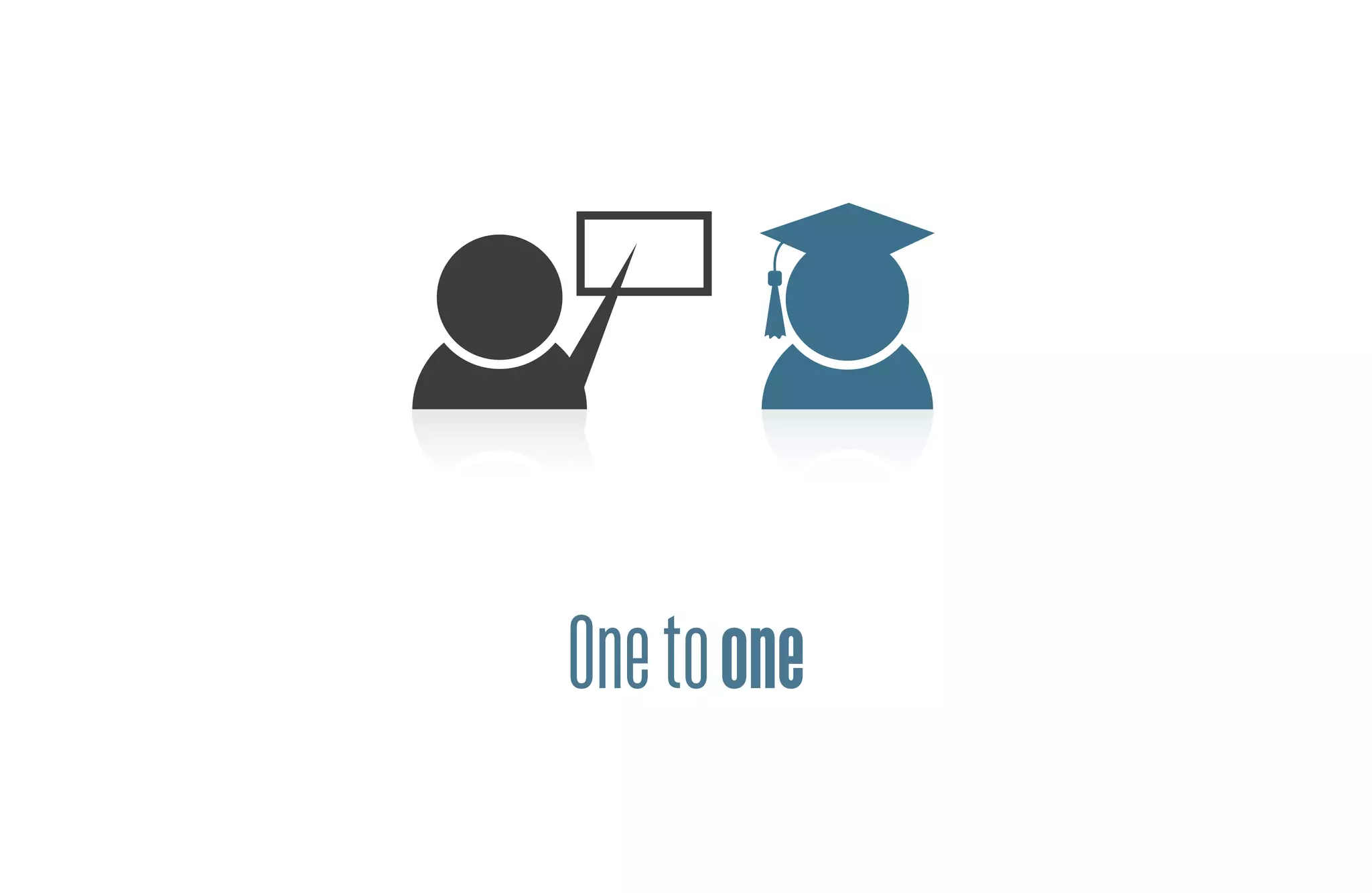
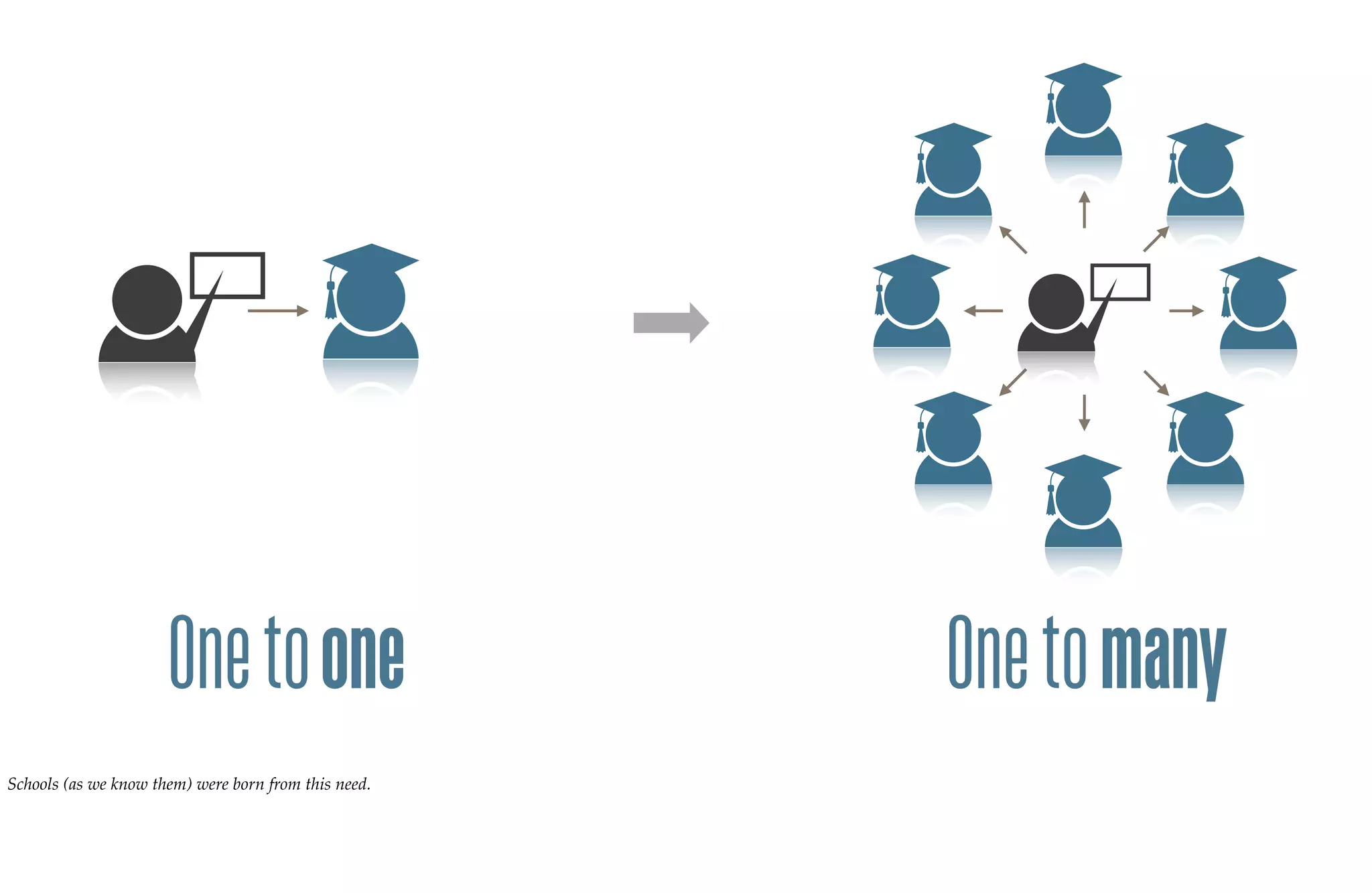
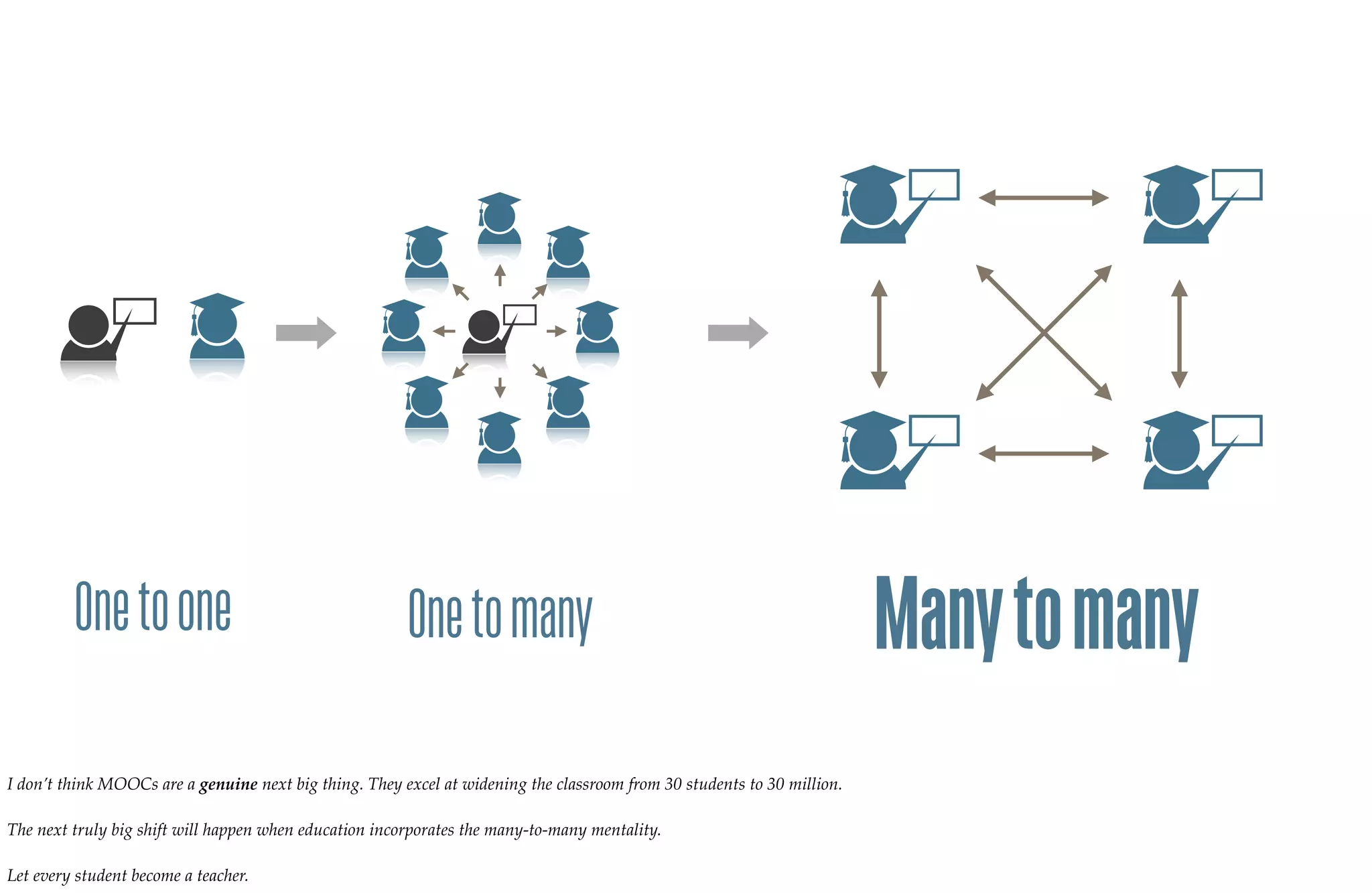
The relation between teachers and students used to be a lot closer to 1:1.
One to one
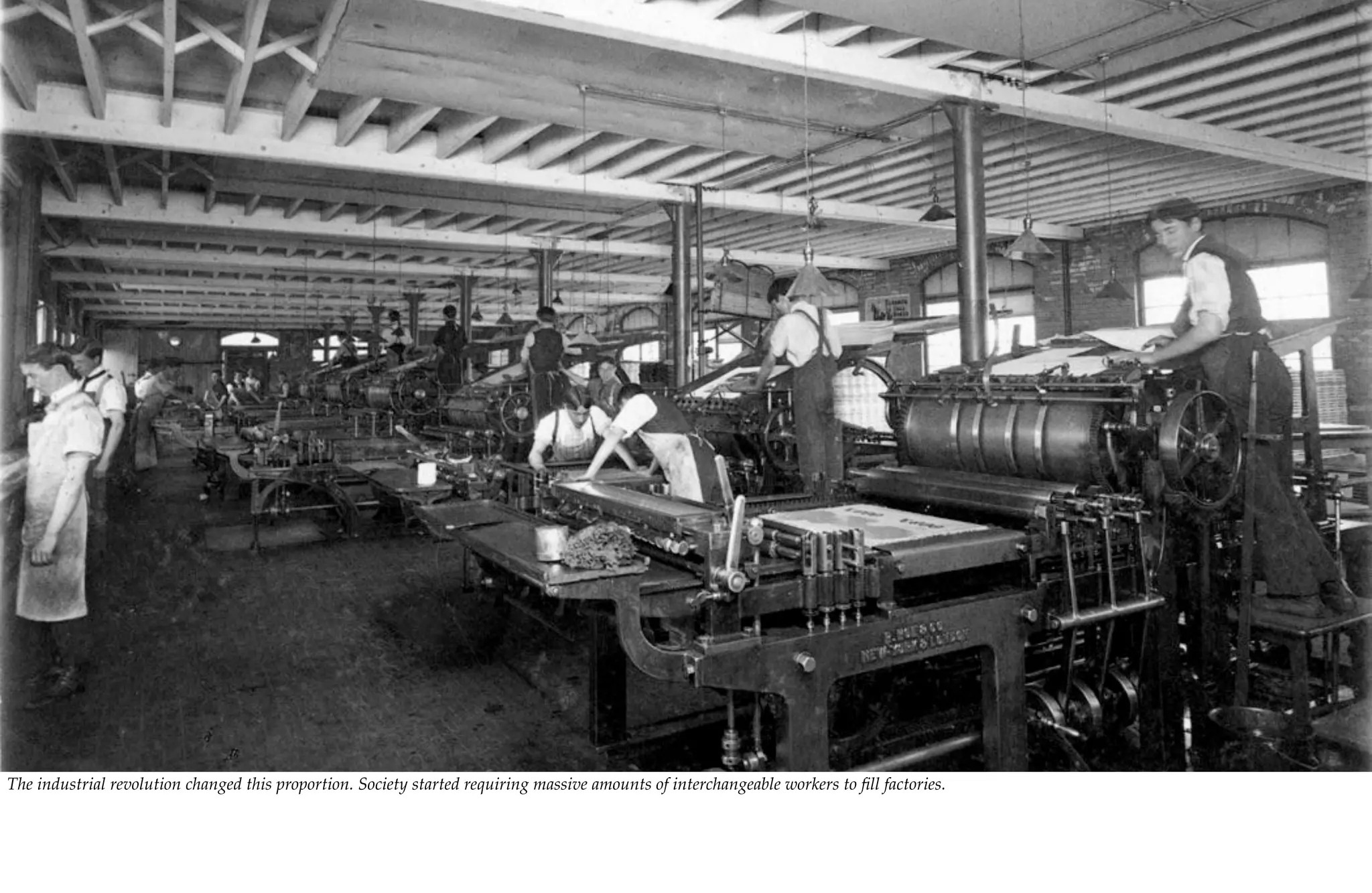
The industrial revolution changed this proportion. Society started requiring massive amounts of interchangeable workers to fill factories.
One to one                      One to many
Schools (as we know them) were born from this need.
MOOCs
                                             Massive Open Online Courses


MOOCs are (rightfully) all the rage today.
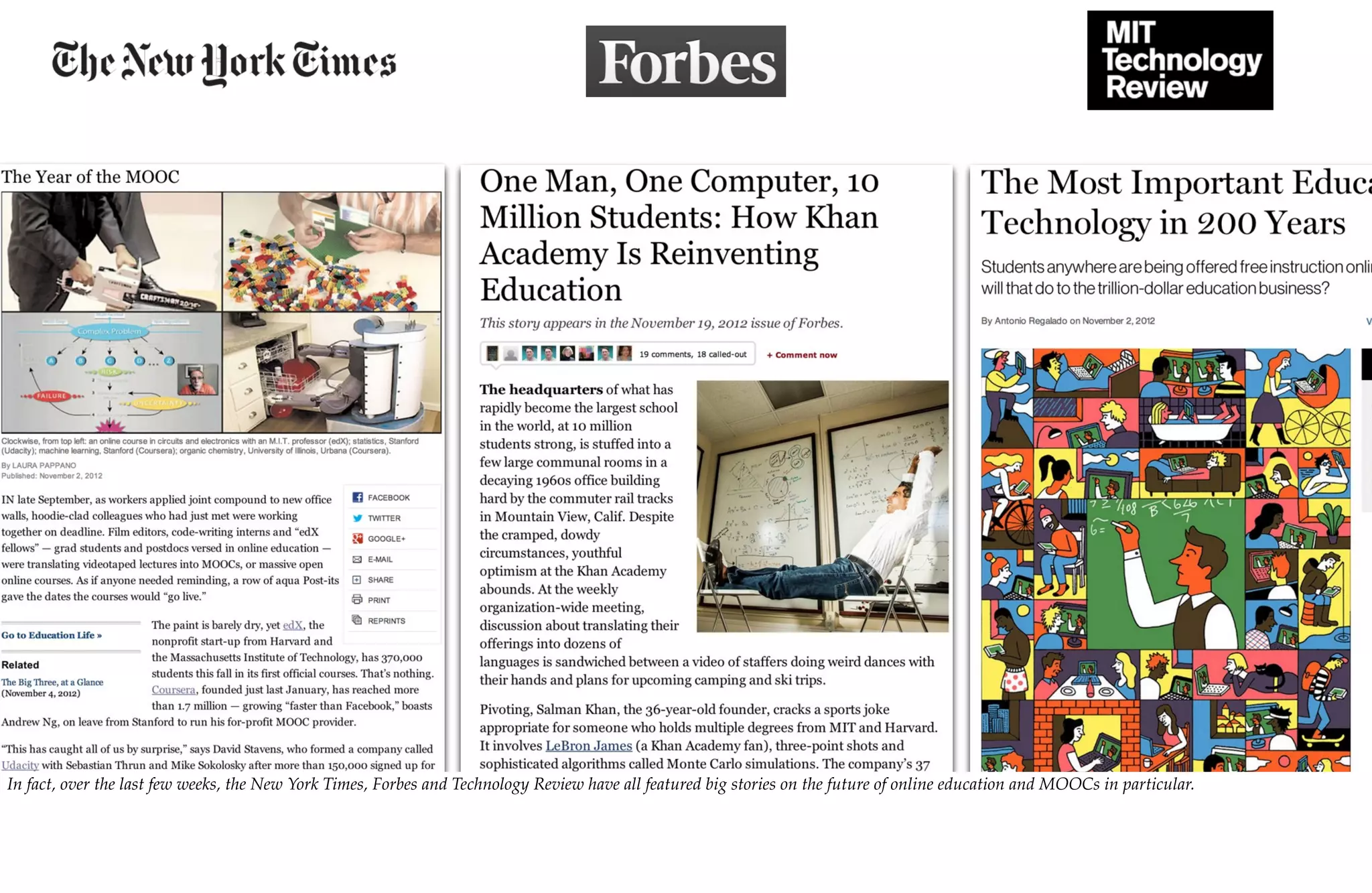
In fact, over the last few weeks, the New York Times, Forbes and Technology Review have all featured big stories on the future of online education and MOOCs in particular.
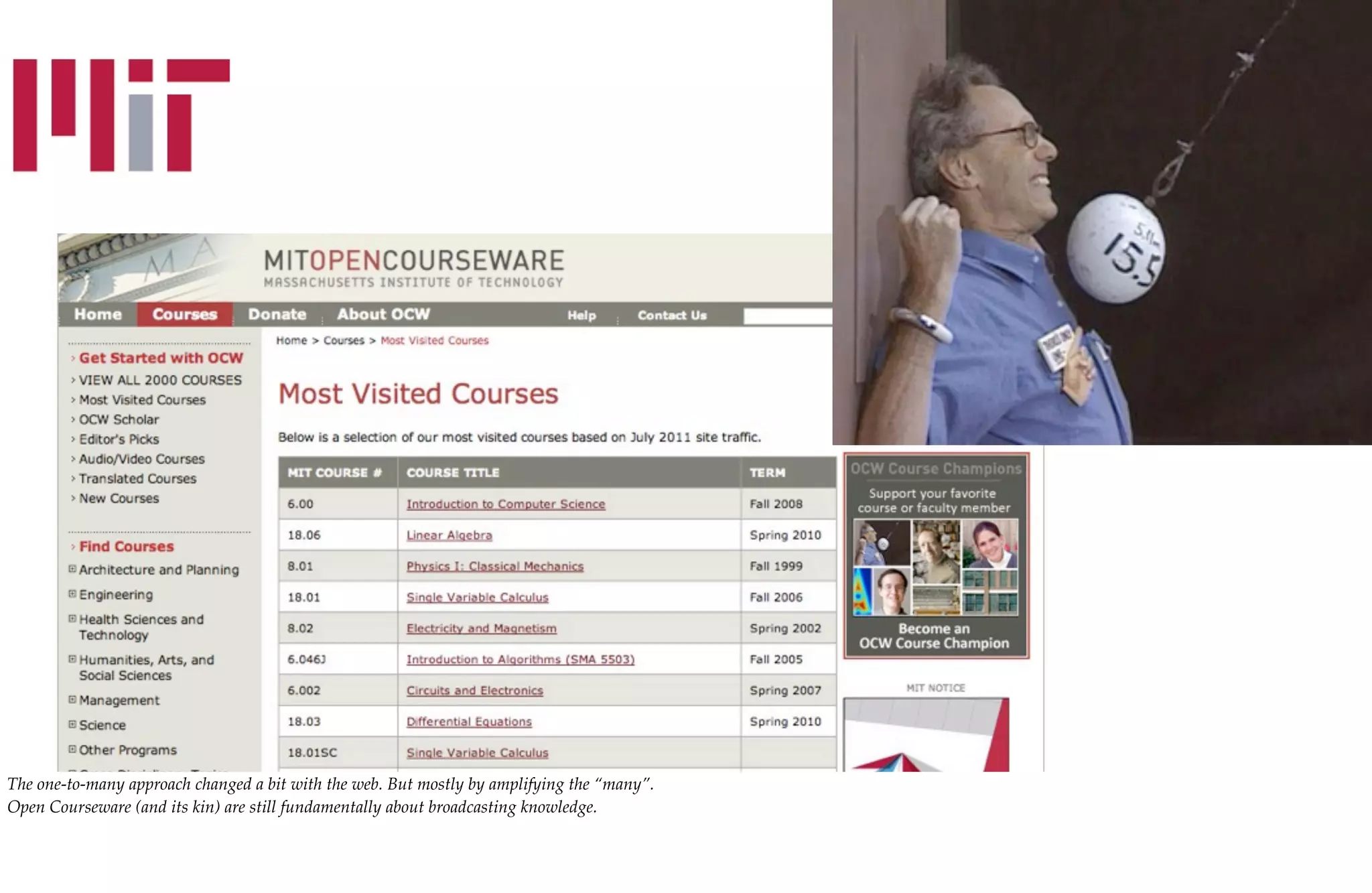
The one-to-many approach changed a bit with the web. But mostly by amplifying the “many”.
Open Courseware (and its kin) are still fundamentally about broadcasting knowledge.
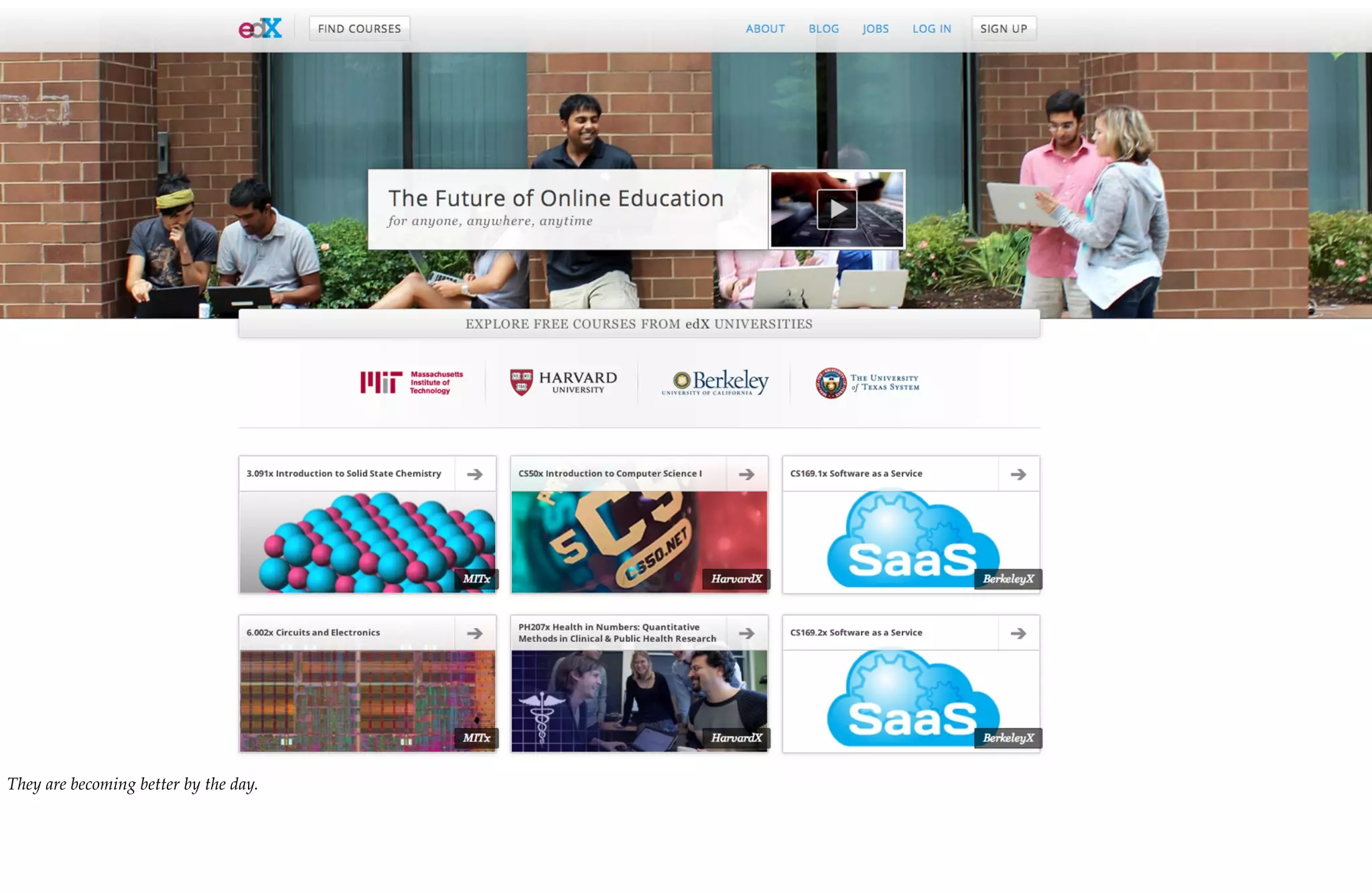
They are becoming better by the day.
And today we have several reliable online-only MOOCs.
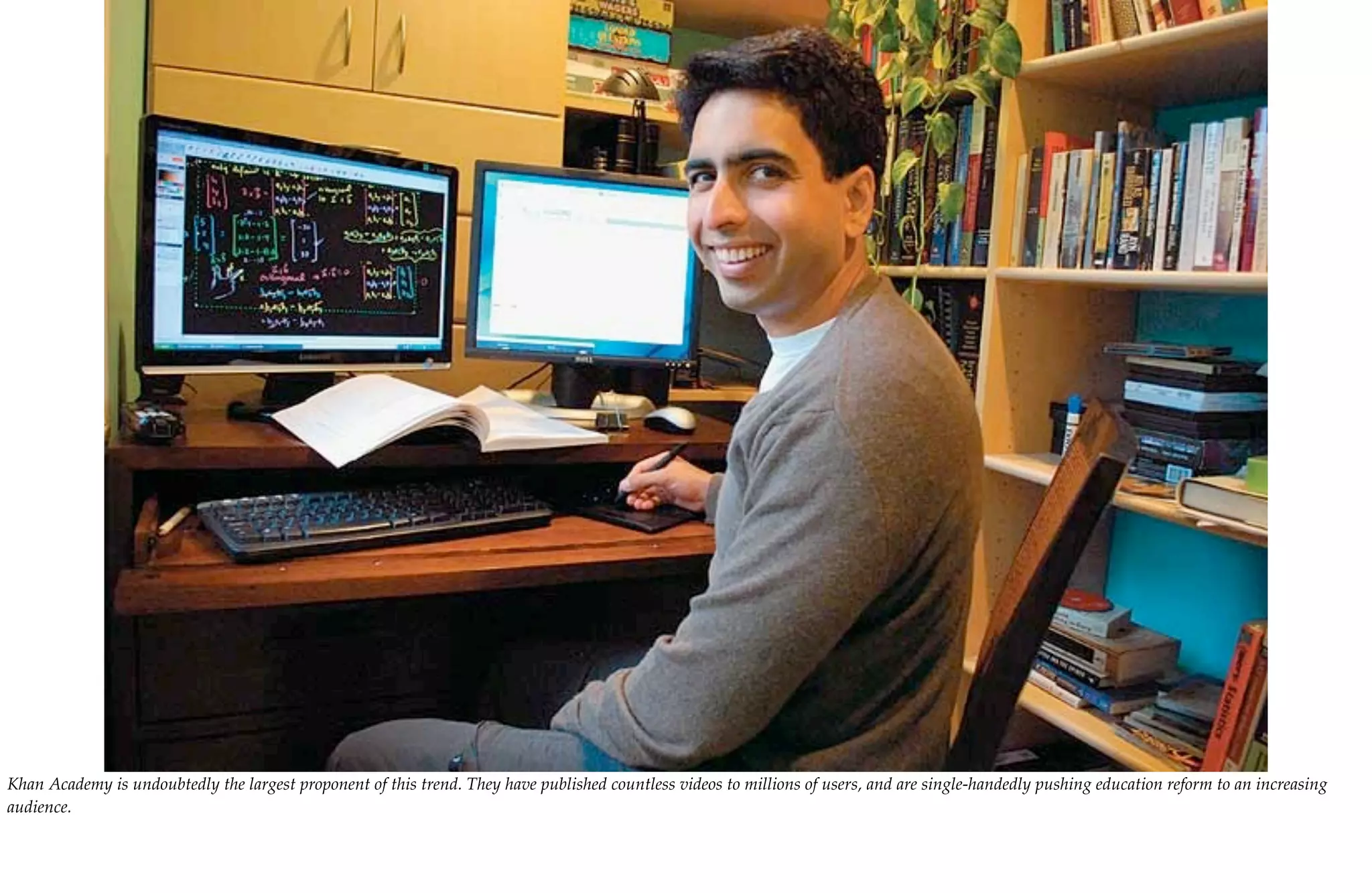
Khan Academy is undoubtedly the largest proponent of this trend. They have published countless videos to millions of users, and are single-handedly pushing education reform to an increasing
audience.
One to one                                     One to many                                                      Many to many
I don’t think MOOCs are a genuine next big thing. They excel at widening the classroom from 30 students to 30 million.

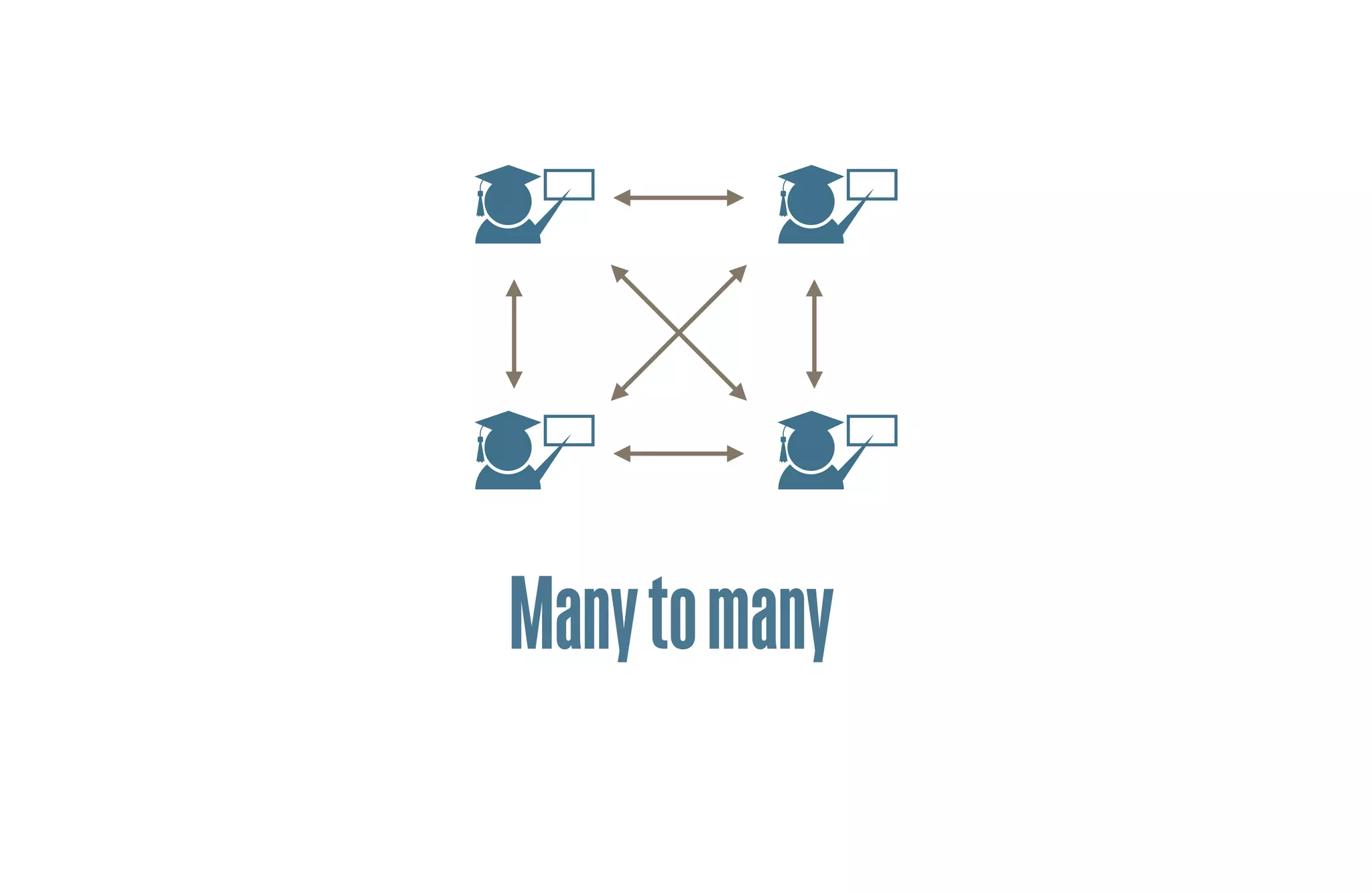
The next truly big shift will happen when education incorporates the many-to-many mentality.

Let every student become a teacher.
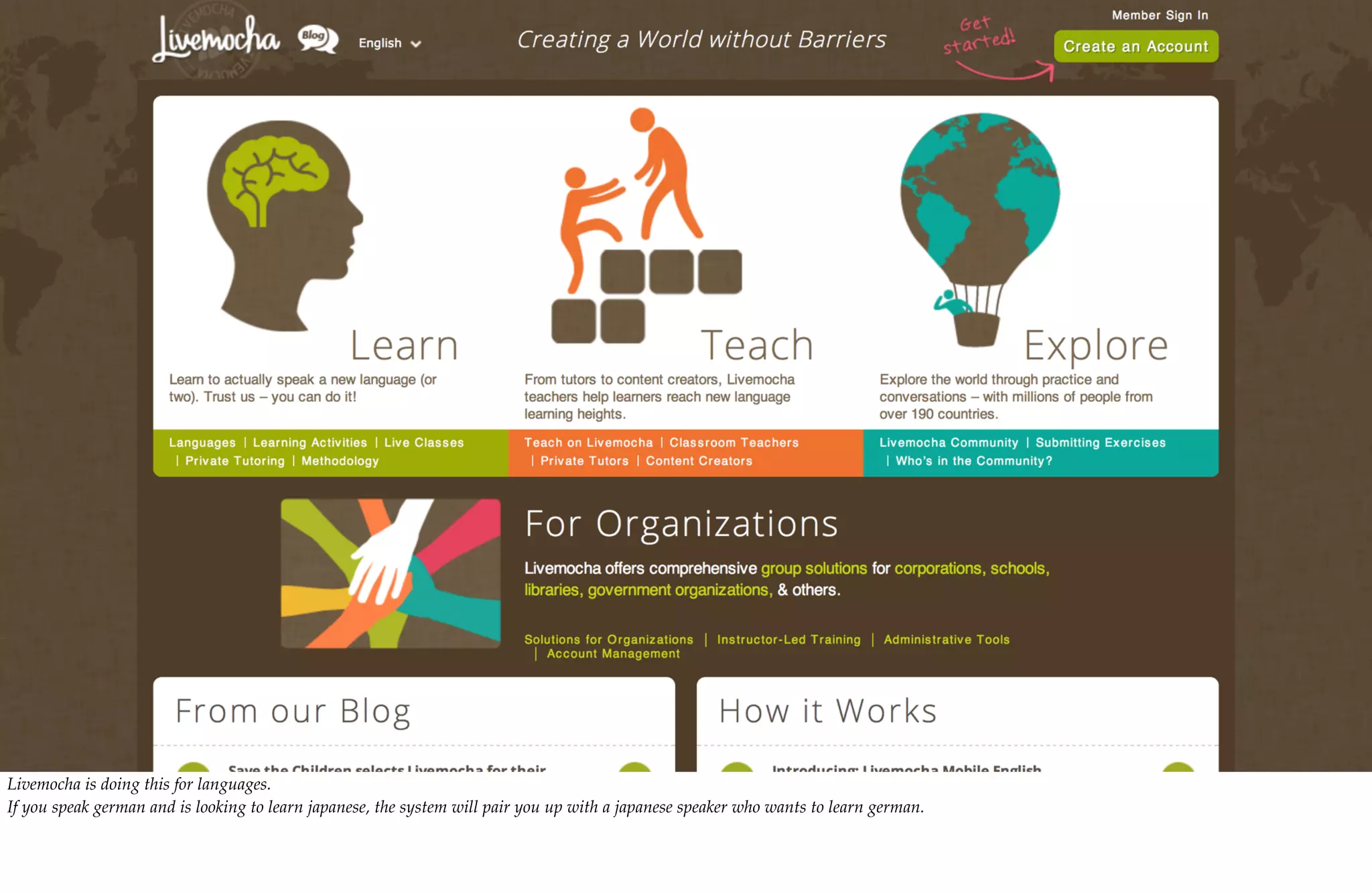
Livemocha is doing this for languages.
If you speak german and is looking to learn japanese, the system will pair you up with a japanese speaker who wants to learn german.
Programmers across the globe have learned to code from such platforms and forums. Professional coders who learned their trade in studying Computer Science are the exception, not the rule.
Many to many
The fundamental reason behind this shift relates to the accelerating change of culture and information. It becomes harder and harder for a “teacher” to know more than “students”. Information is
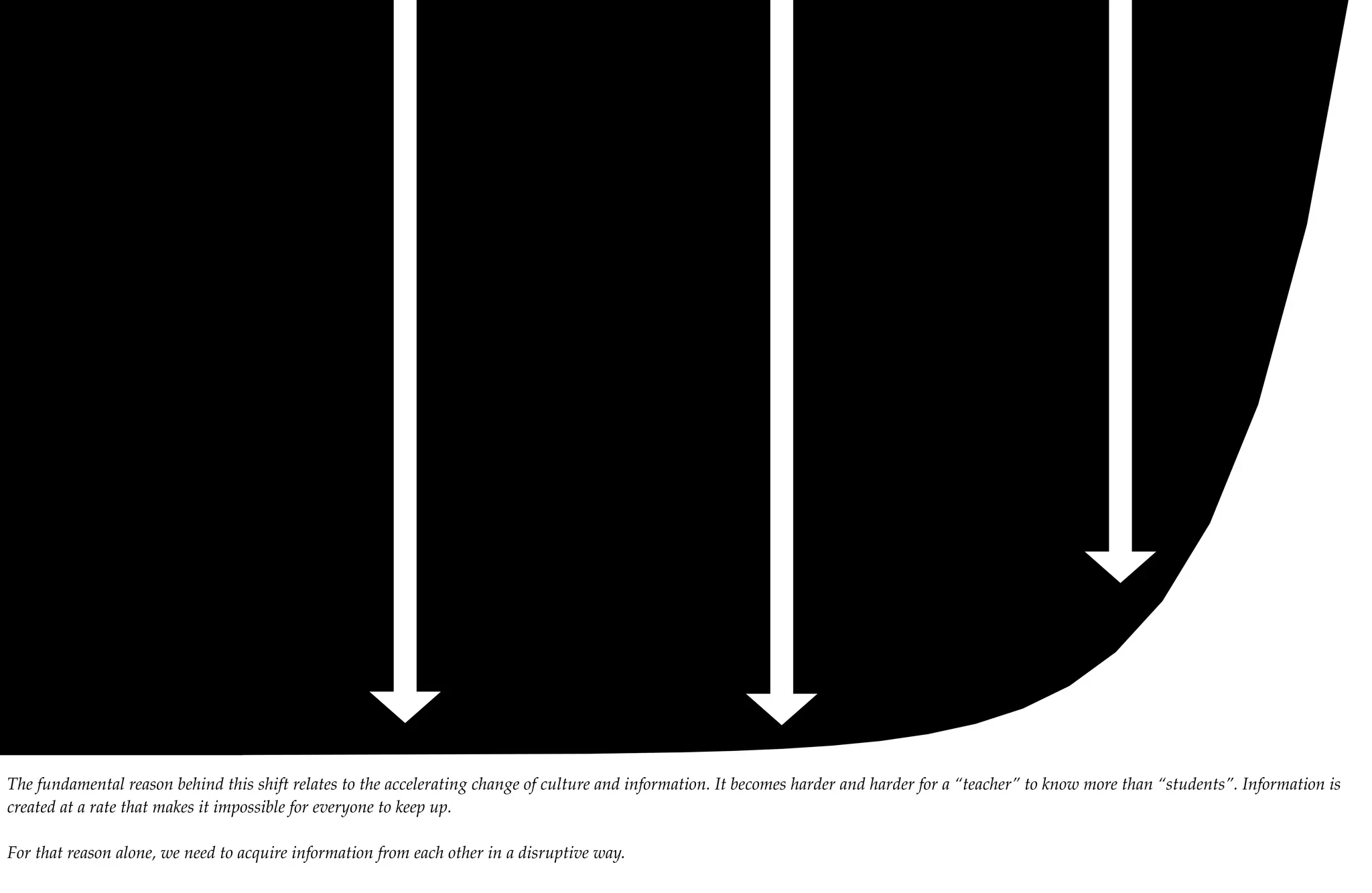
created at a rate that makes it impossible for everyone to keep up.
For that reason alone, we need to acquire information from each other in a disruptive way.
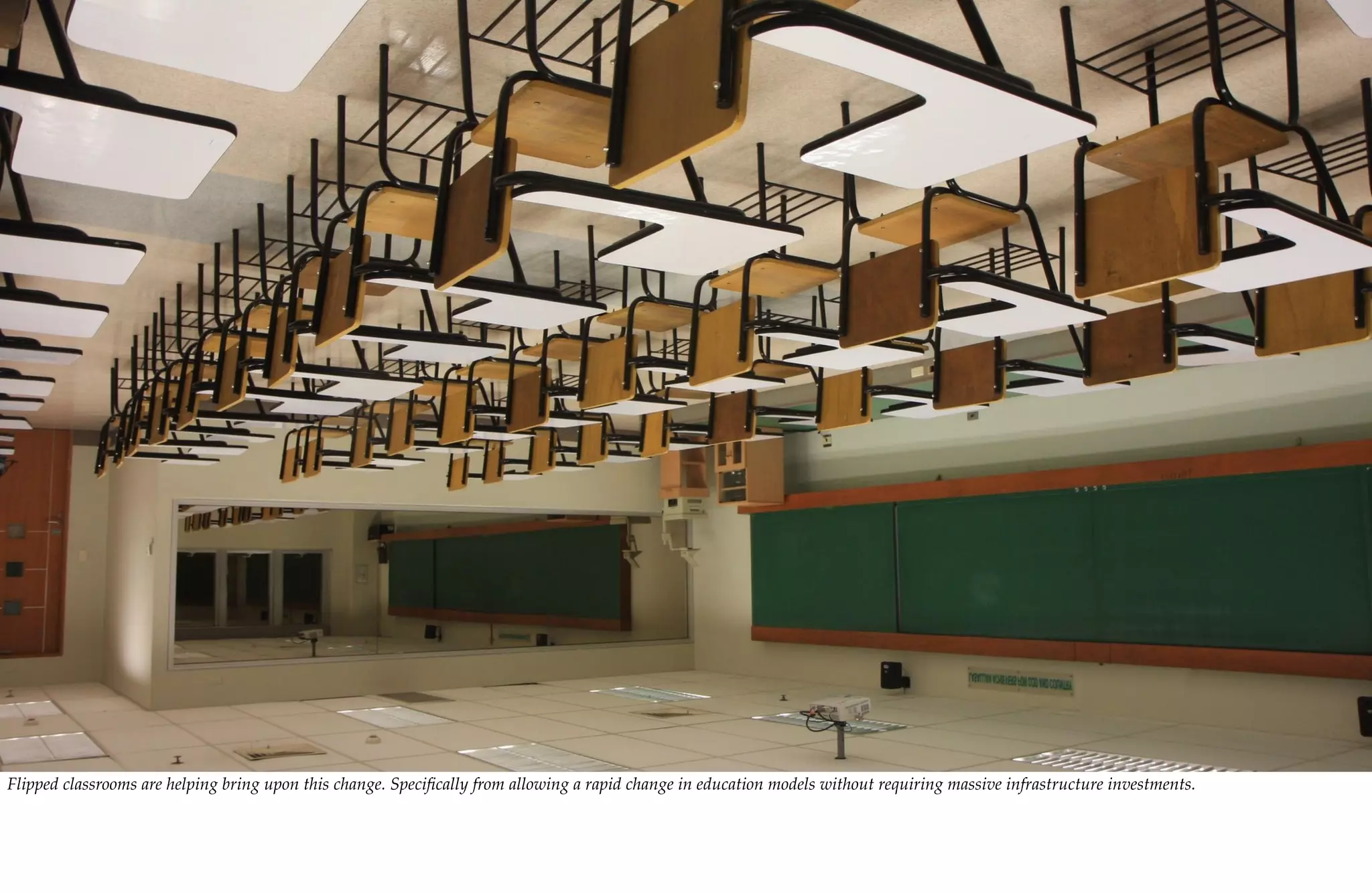
Flipped classrooms are helping bring upon this change. Specifically from allowing a rapid change in education models without requiring massive infrastructure investments.
Adaptive knowledge graphs
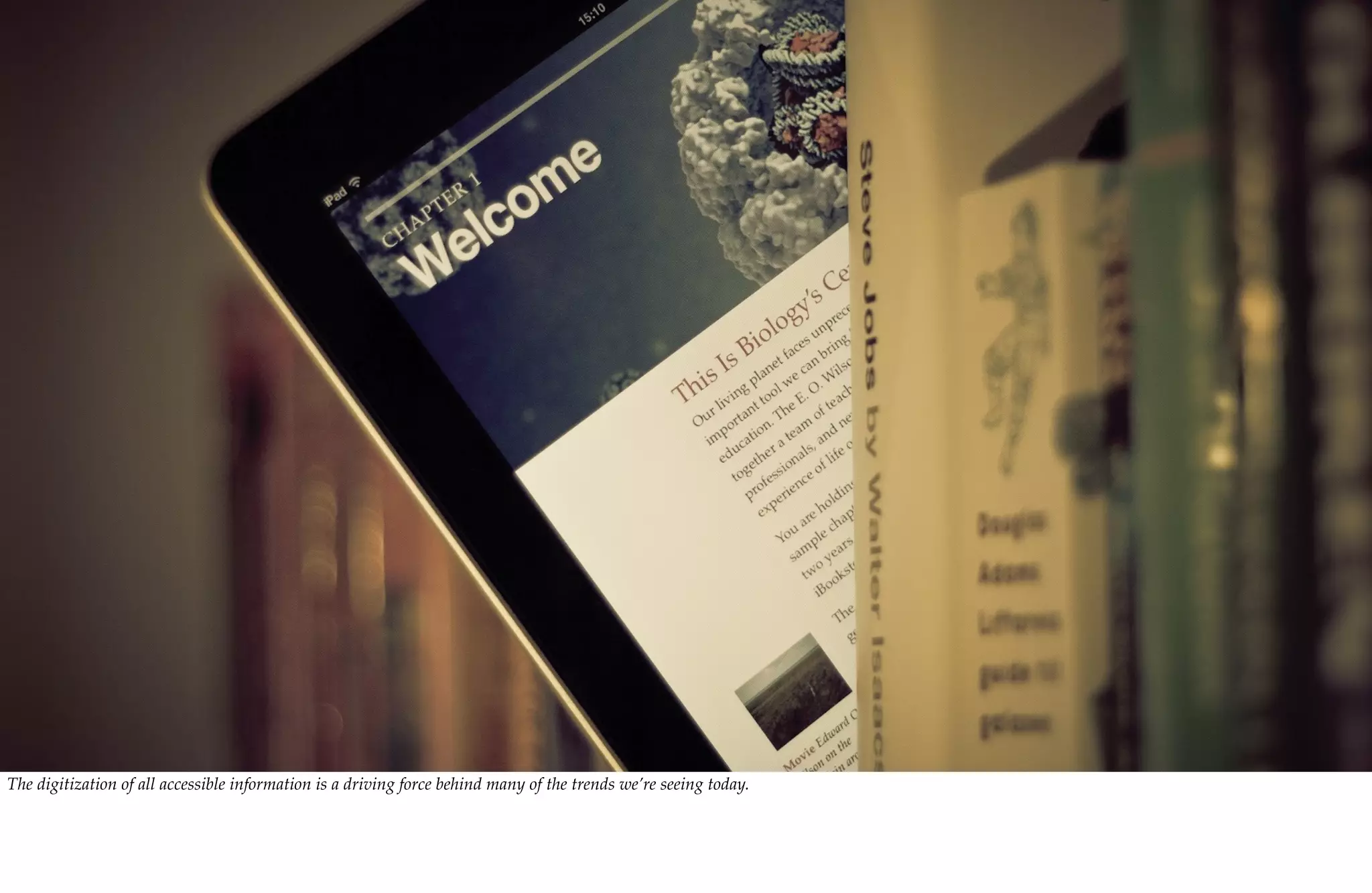
The digitization of all accessible information is a driving force behind many of the trends we’re seeing today.
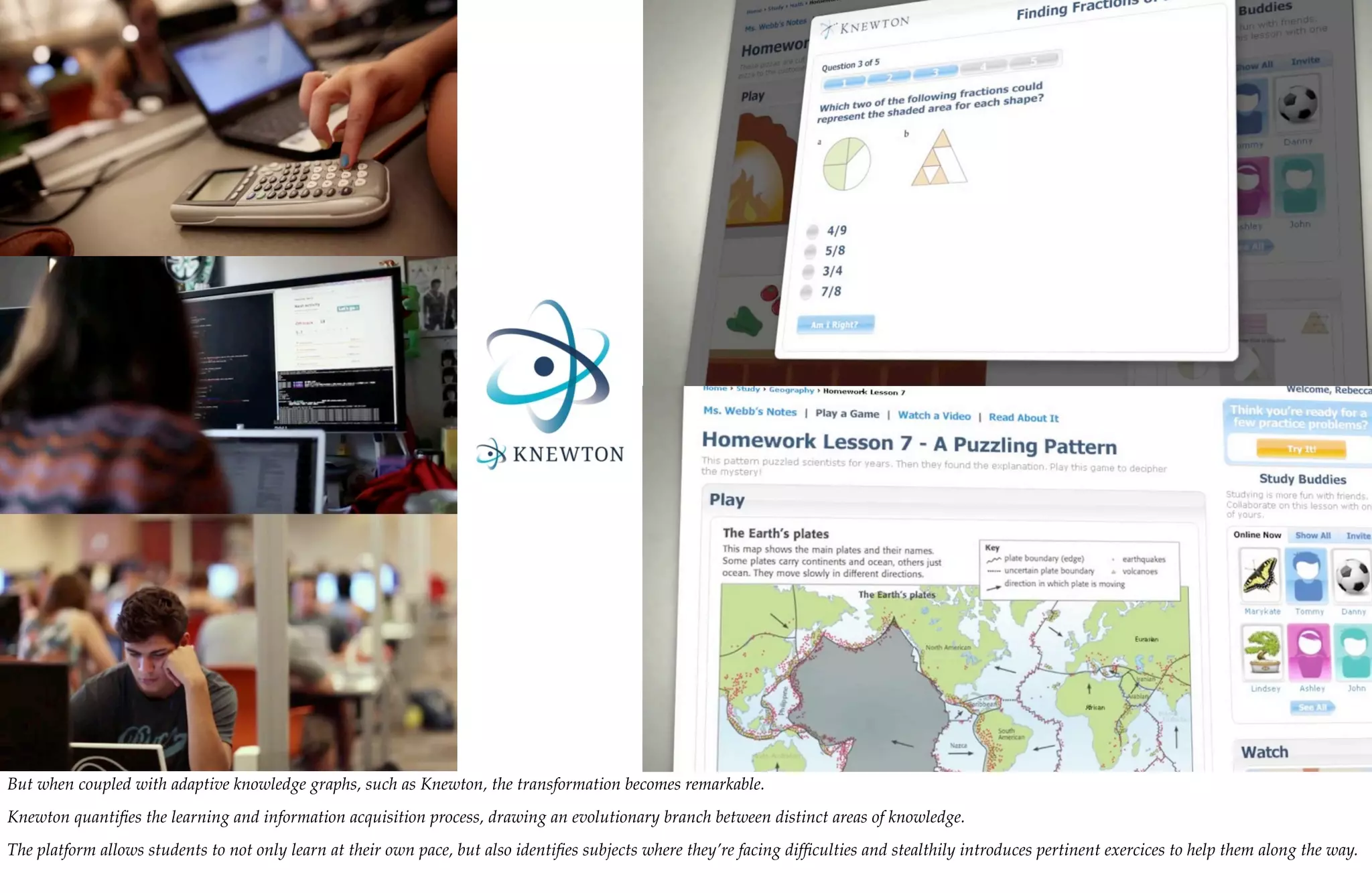
But when coupled with adaptive knowledge graphs, such as Knewton, the transformation becomes remarkable.
Knewton quantifies the learning and information acquisition process, drawing an evolutionary branch between distinct areas of knowledge.
The platform allows students to not only learn at their own pace, but also identifies subjects where they’re facing difficulties and stealthily introduces pertinent exercices to help them along the way.
CONTINUOUSLY ADAPTIVE EDUCATION
             P2P teaching + Adaptive knowledge graphs


This scenario, where autonomous systems identify students’ needs and knowledge, but also couples them with potential teachers anywhere on the planet will bring upon massive change. The notion
of school will fundamentally shift from a container of information towards that of a life guide.
INSTANT INFORMATION
The second paradigm change I want to discuss is how we retrieve and relate to information.
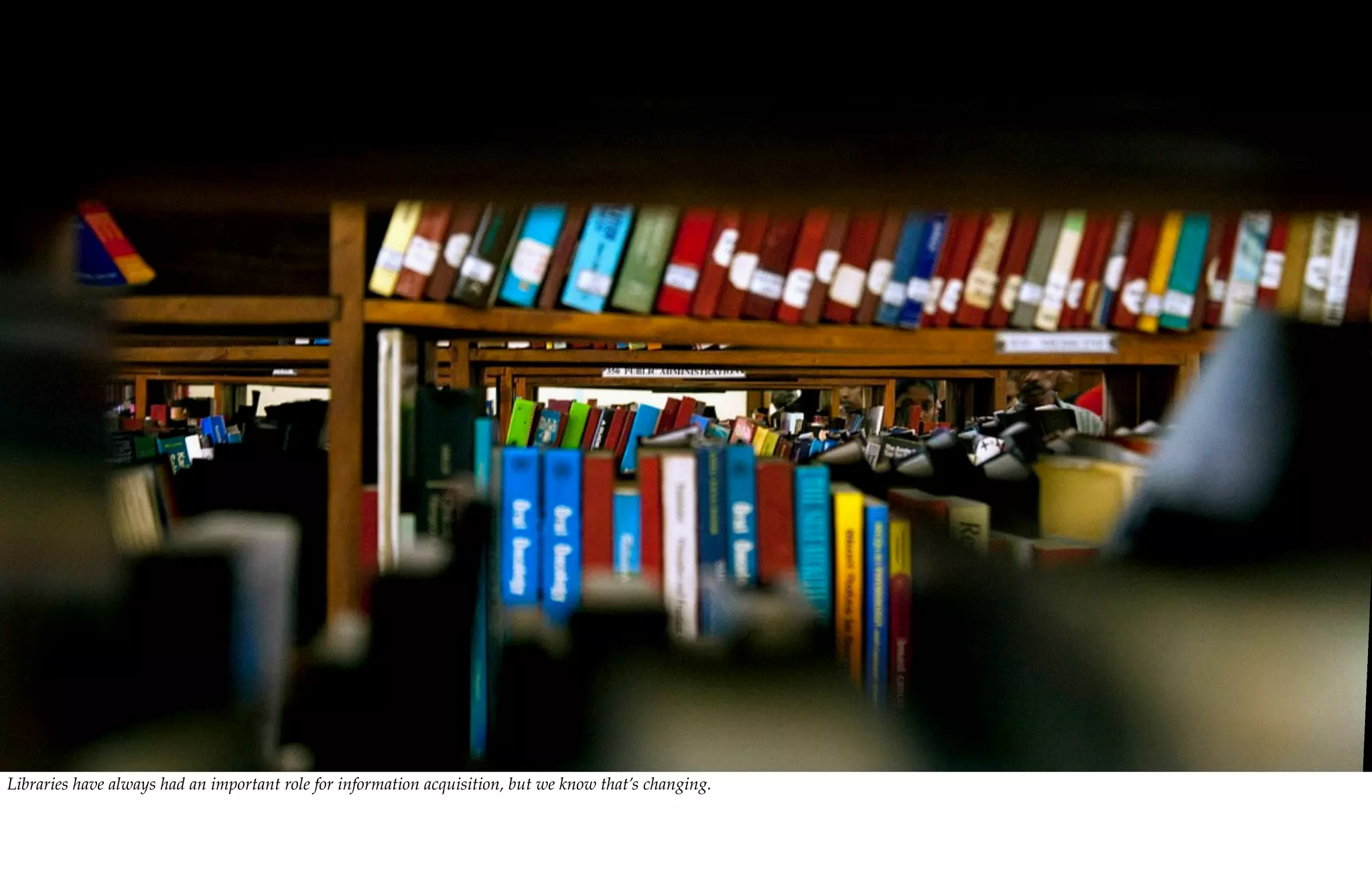
Libraries have always had an important role for information acquisition, but we know that’s changing.
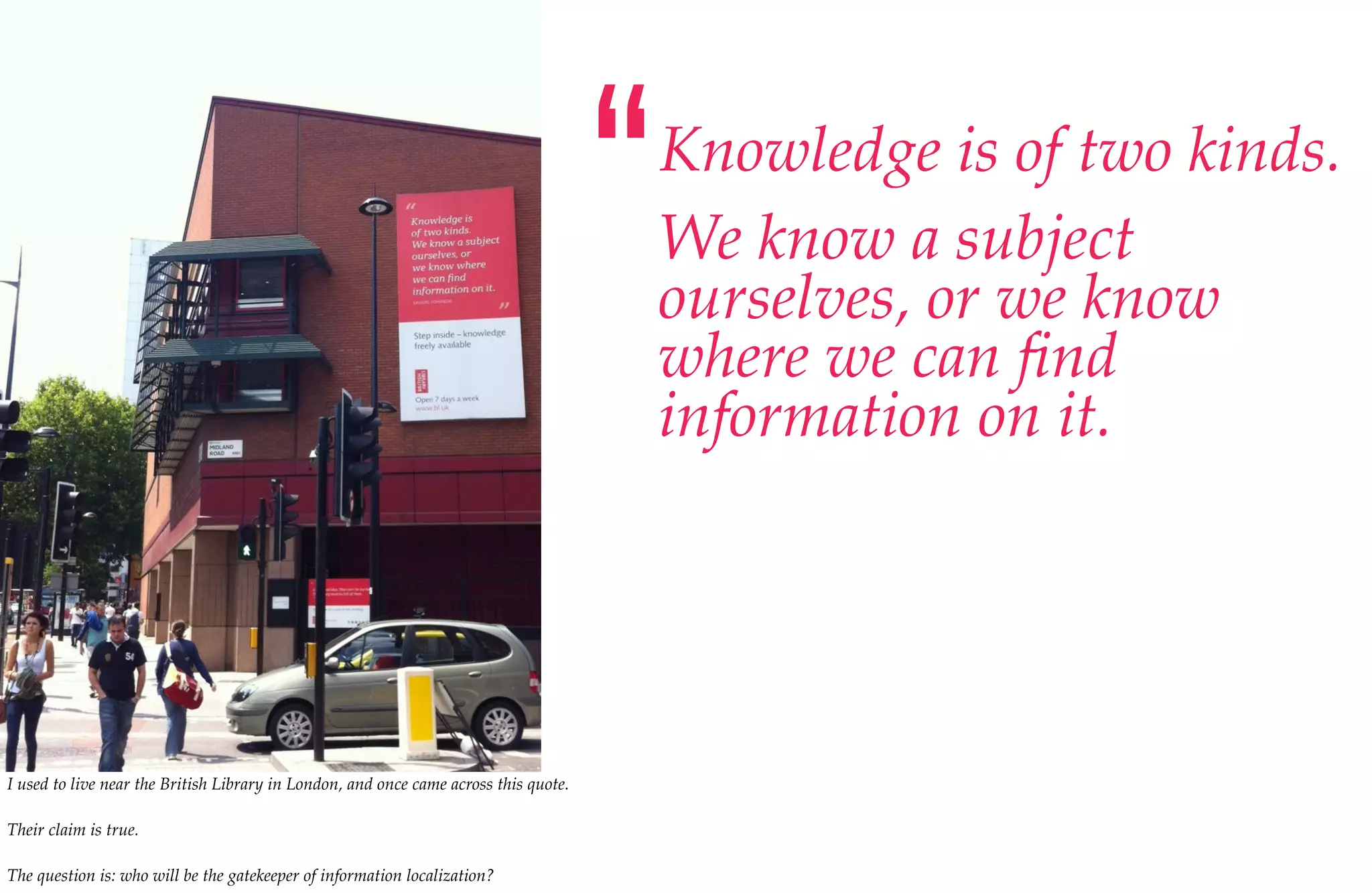
“   Knowledge is of two kinds.
                                                                                          We know a subject
                                                                                          ourselves, or we know
                                                                                          where we can find
                                                                                          information on it.


I used to live near the British Library in London, and once came across this quote.

Their claim is true.

The question is: who will be the gatekeeper of information localization?
The number of Google searches per day keeps going up. We are more than accustomed to having access to information at our fingertips.
What comes “after” typing in queries into a computer?
What happens when there’s only a “I’m Feeling Lucky” button? Or not even that?
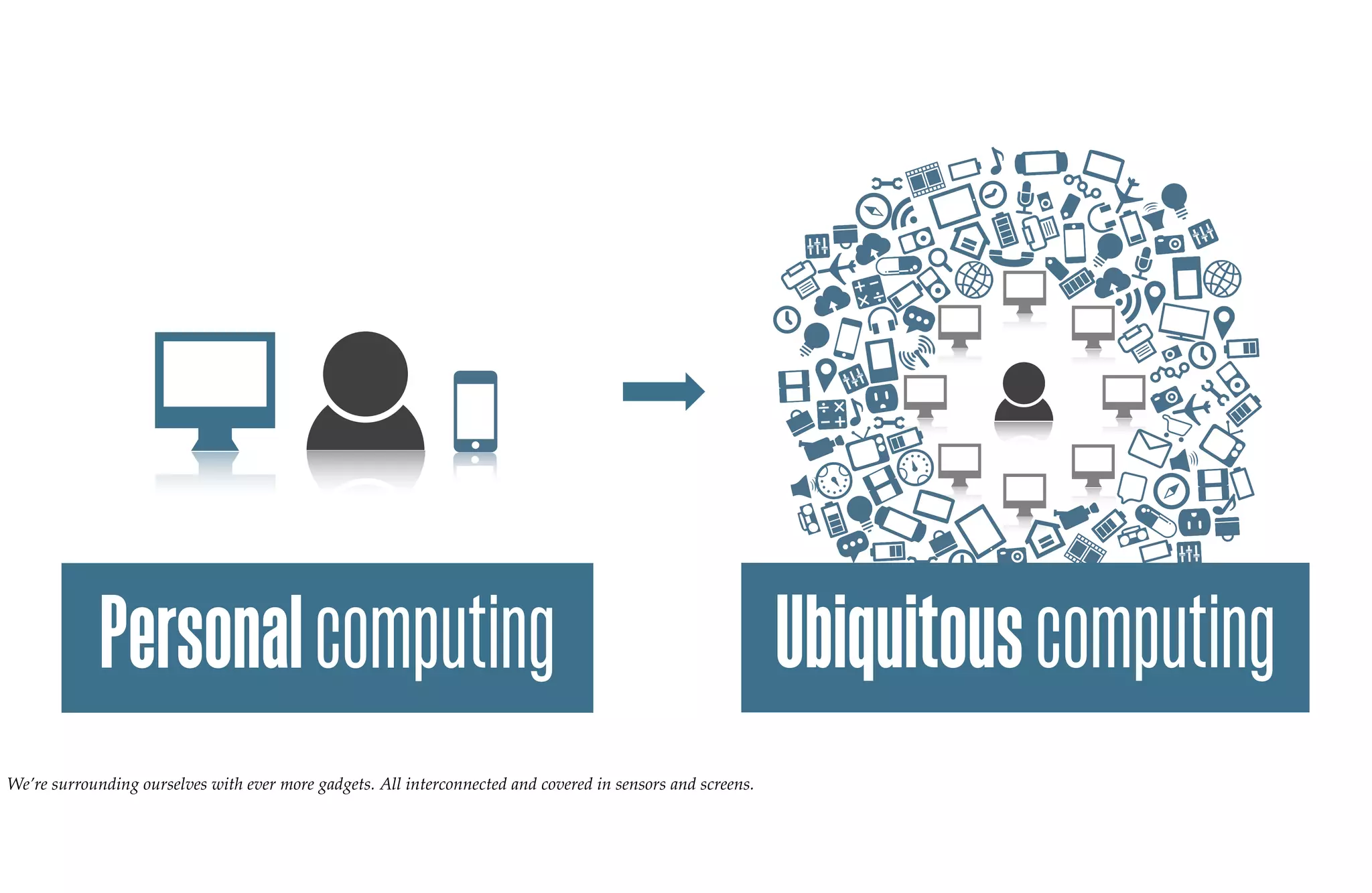
Personal computing                                                                              Ubiquitous computing
We’re surrounding ourselves with ever more gadgets. All interconnected and covered in sensors and screens.
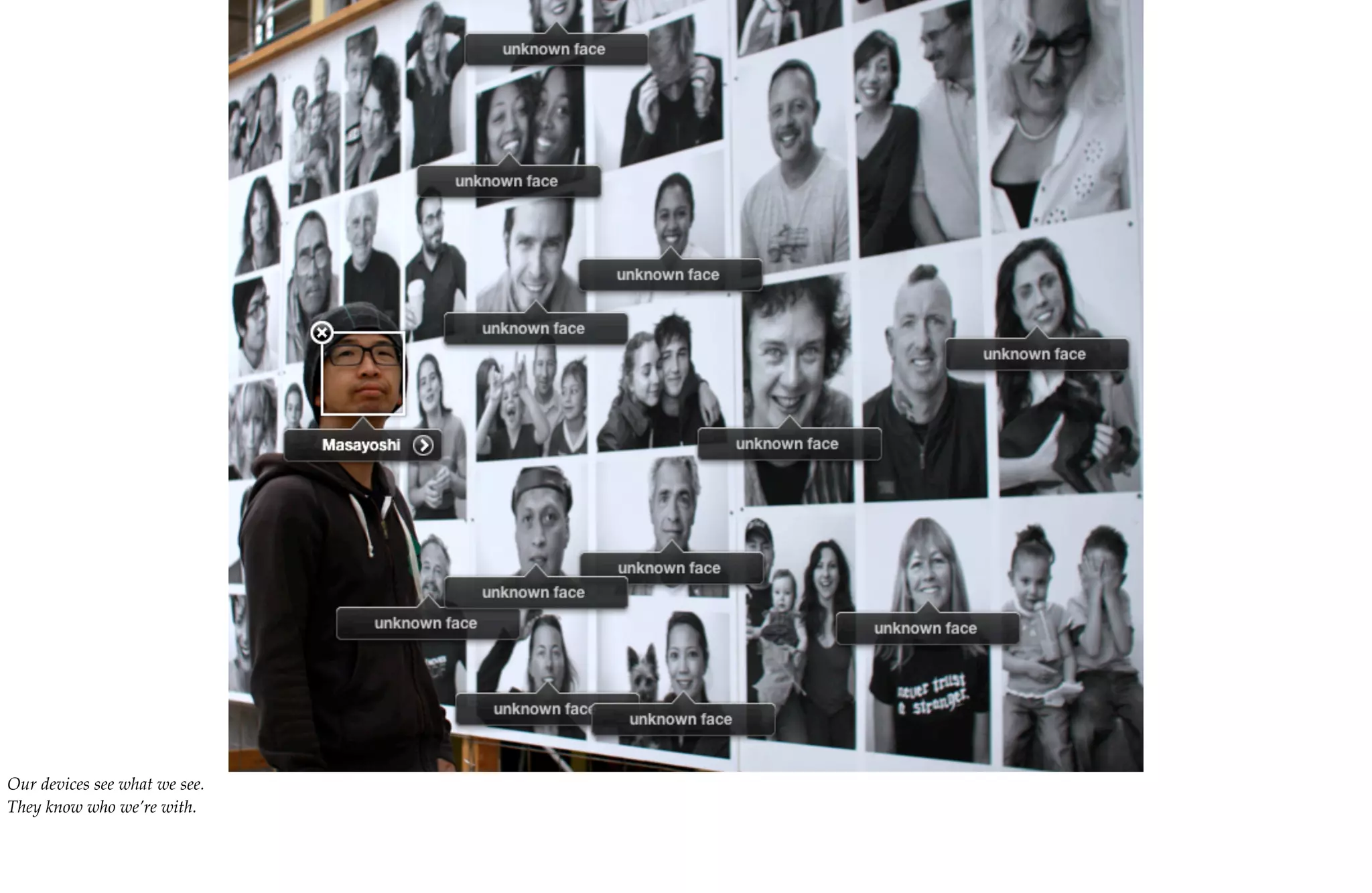
Our devices see what we see.
They know who we’re with.
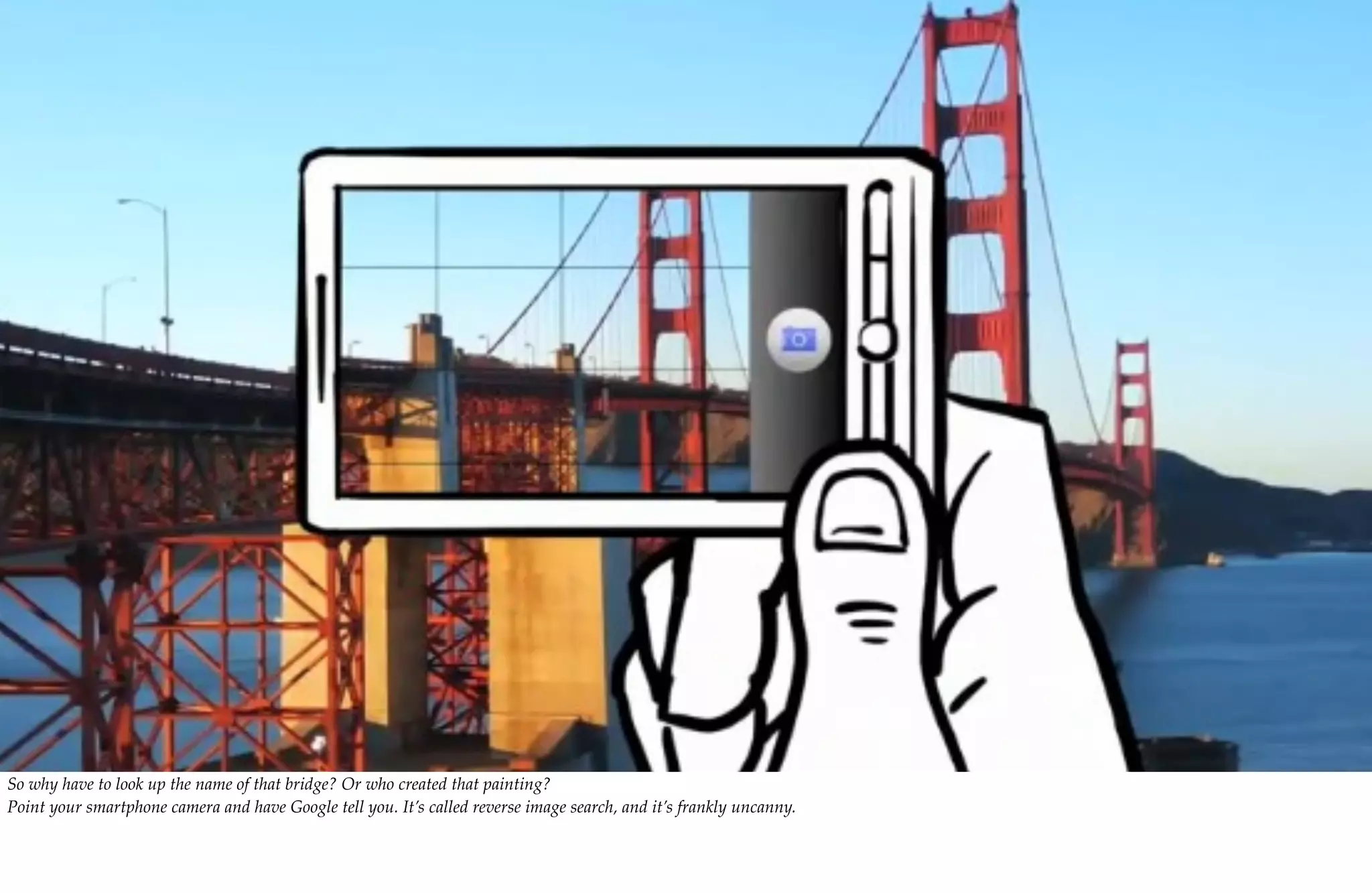
So why have to look up the name of that bridge? Or who created that painting?
Point your smartphone camera and have Google tell you. It’s called reverse image search, and it’s frankly uncanny.
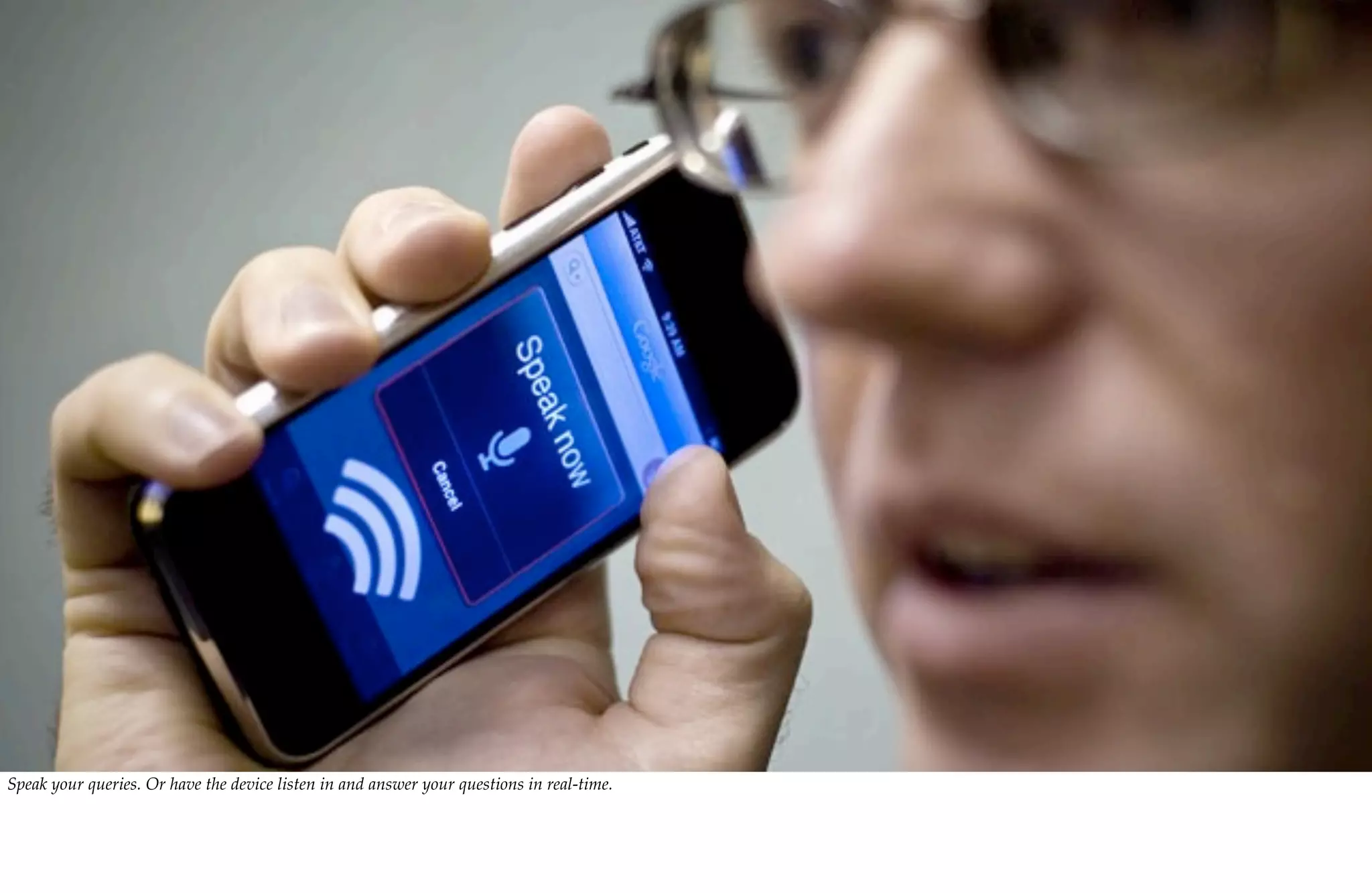
Speak your queries. Or have the device listen in and answer your questions in real-time.
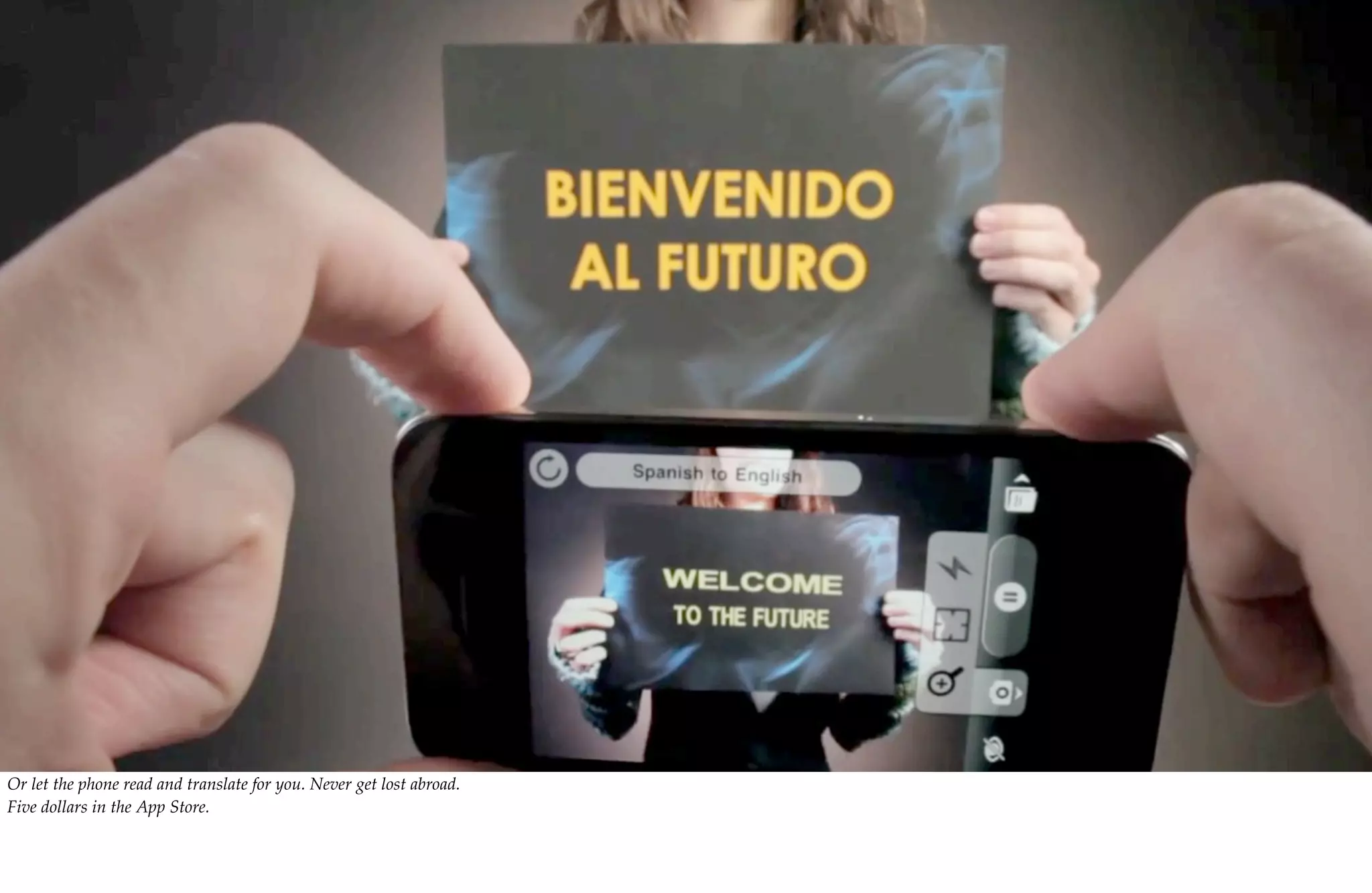
Or let the phone read and translate for you. Never get lost abroad.
Five dollars in the App Store.
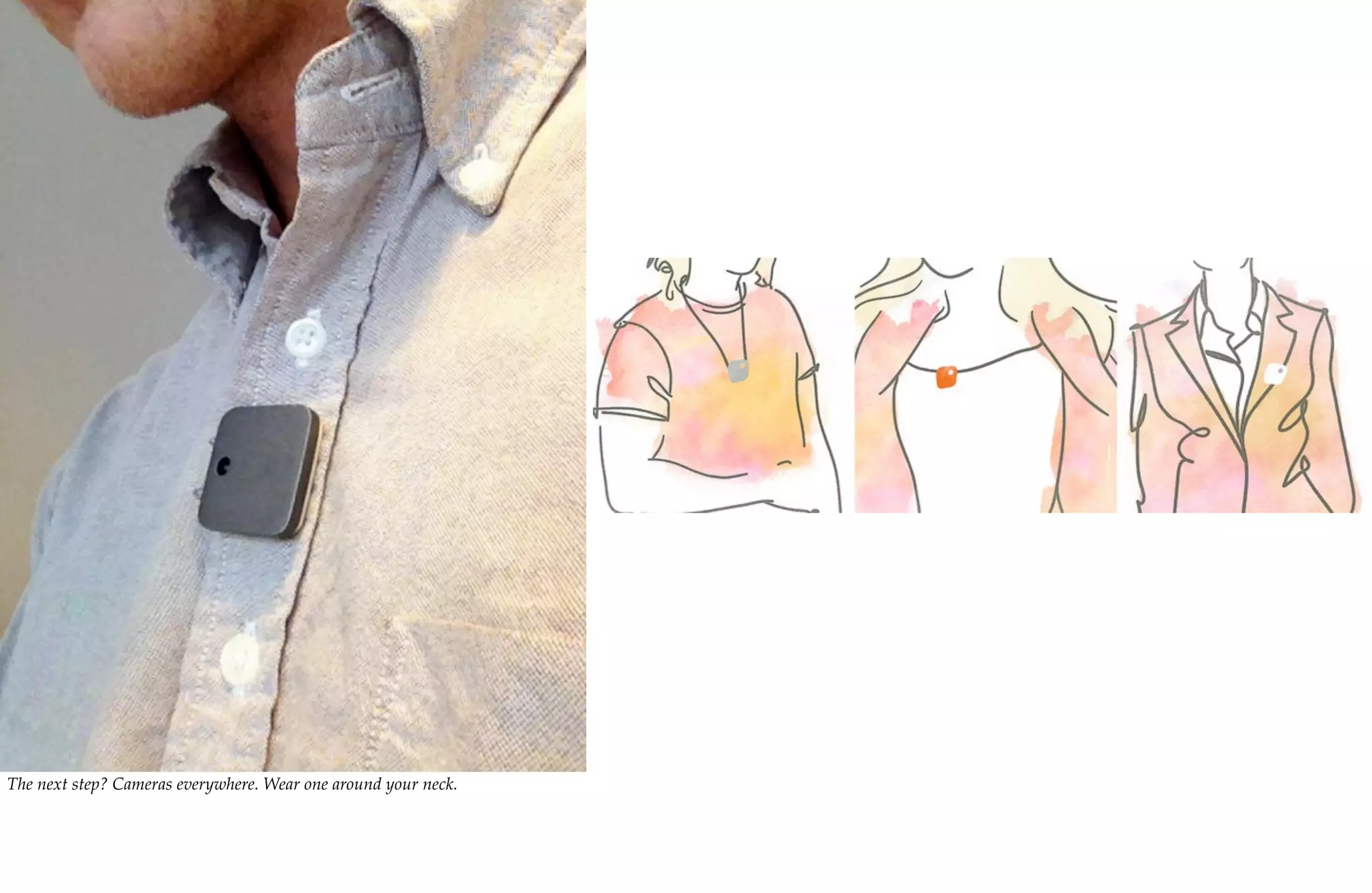
The next step? Cameras everywhere. Wear one around your neck.
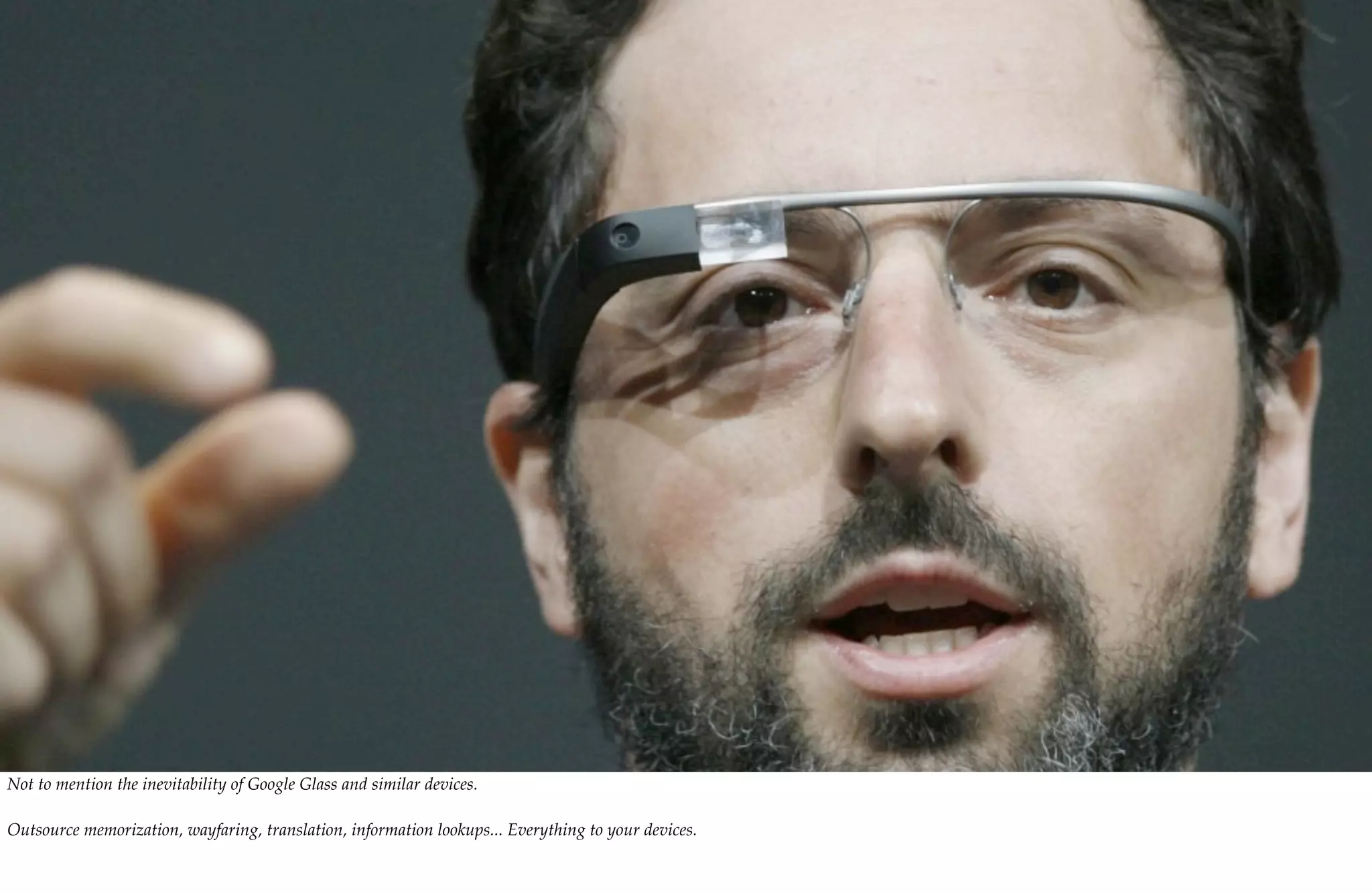
Not to mention the inevitability of Google Glass and similar devices.

Outsource memorization, wayfaring, translation, information lookups... Everything to your devices.
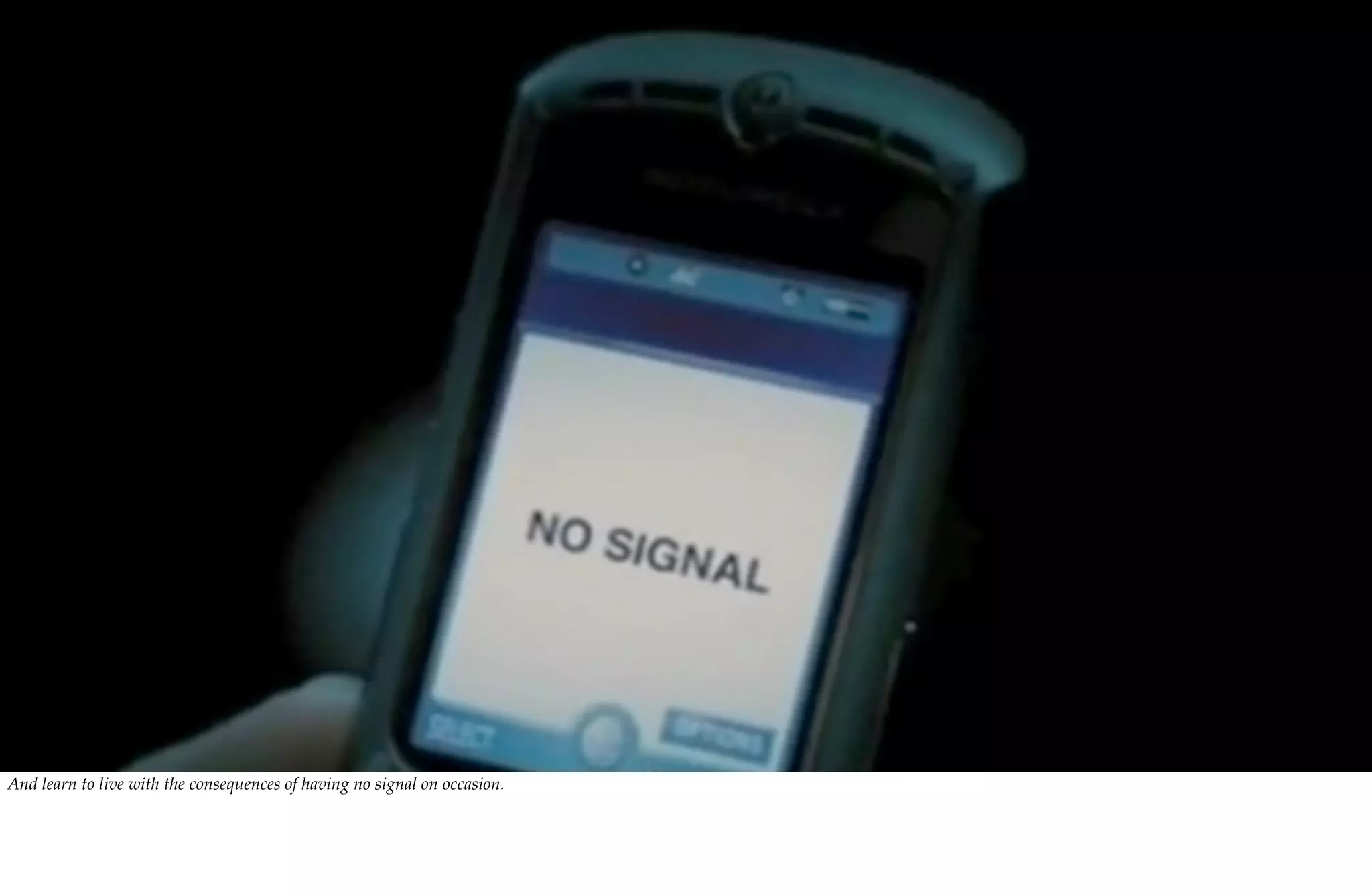
And learn to live with the consequences of having no signal on occasion.
SCREEN LITERACY
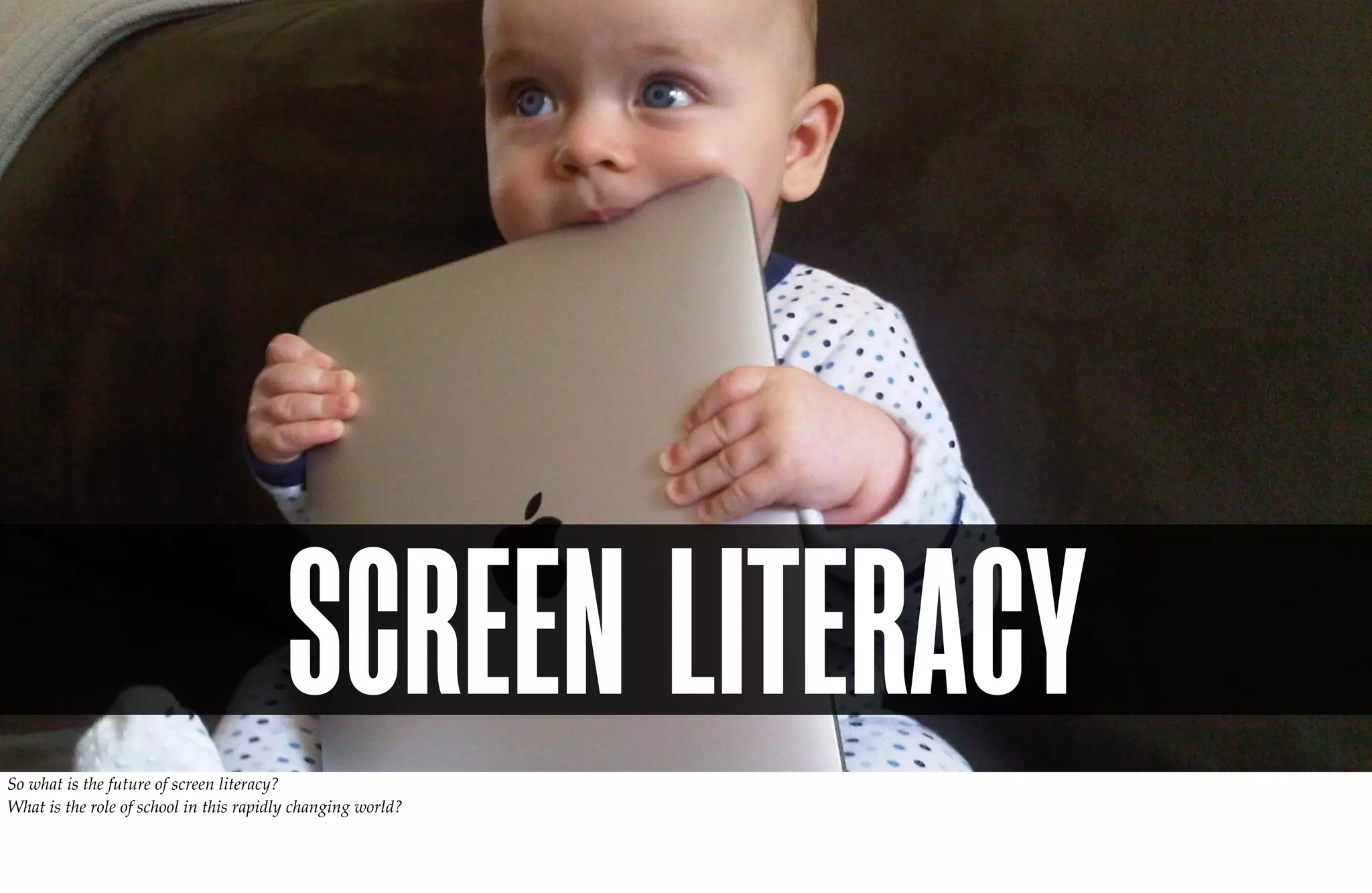
So what is the future of screen literacy?
What is the role of school in this rapidly changing world?
interface.
Who will teach us about interface?
programming.
Or programming: the new fundamental life skill.
privacy.
Or what photos to upload on Facebook?
attention.
Or how to successfully split your attention across dozen simultaneous information streams while keeping up a conversation in real life?
entrepreneurship.
Or how to build your own company. In kindergarten.
failure.
Or what happens when your enterprises inevitably fail, fail and fail.
data.
Or how to deal with “the new oil”.
collaboration.
Or how to work in a group (that just happens to be spread across four continents).
Everything is accelerating.

Everything is accelerating.

Today is the slowest things will ever be.
Thank you.
@michellzappa

The Future of Education (LEGO, Billund)

  • 1.
  • 2.
    For how manyof you does this snippet make sense?
  • 3.
    If you don’trecognize the lyrics, then perhaps this song will help you jog your memory: http://www.youtube.com/watch?v=eQZc53dpPrQ This is the opening to The Fresh Prince of Bel-Air, which most of you must have seen on TV decades ago -- but written out as emoji. That should serve as proof that language, like everything that surrounds us, is a technology. And technologies always change over time.
  • 4.
  • 5.
    My name isMichell, I’m a technology futurist, and I am fascinated about the future. I study emerging technologies from a combinatorial perspective, and try make predictions about what will be possible in the near future.
  • 6.
    Solving problems thatdon’t (yet) exist. Fundamentally, my job is about solving problems that don’t yet exist. In order to frame the thinking about technological possibility, let’s start by looking at a technology we all know and love...
  • 7.
    Seven years ago,Steve Chen and Chad Hurley kicked off a revolution that would change the face of video, television and cinema. YouTube wasn't the first streaming video service, and arguably it wasn't the best. But in my opinion, they succeeded because their timing was perfect. They succeeded because a series of other technologies had reached maturity around that time.
  • 8.
    GPS See, if itwasn’t for the advent of cheap hard disks, ubiquitous video cameras and millions of internet users with access to fast broadband, YouTube would never have been possible. In a way, Hitatchi, Flip and AT&T were indirectly responsible for YouTube’s success -- yet completely outside of the founders’ control.
  • 9.
    That and billionsof hours of cat videos, evidently.
  • 10.
    1 2 3 3 days of content uploaded every minute. Today, we’re looking at three days of content being uploaded to YouTube every minute. That’s 4000x real-time. Or four thousand seconds of video uploaded every second that I speak.
  • 11.
    We usually thinkabout technology in terms of its artifacts. The devices we wear, the services we use, the gadgets that litter our lives.
  • 12.
    But technology, infact, is everything that surrounds us. The wheel, agriculture, fire, the book and money are examples of technologies we rarely see as such.
  • 13.
    Anything useful that we make is technology. — Kevin Kelly Founding executive editor, WIRED Magazine Source: http://www.ted.com/talks/kevin_kelly_tells_technology_s_epic_story.html
  • 14.
    We can alsothink about technology like a layer cake.
  • 15.
    802.11 NiMH Kernel A-GPS Touchscreens Gyroscop Video camera RAM Proximity sensor EDGE Triangulation Lightning USB TCP/IP Cloud GSM CDMA Video camera Li-Ion App store Social networking LTE LED MMS IPS SIM NFC Gestures SMS TFT-LCD Bluetooth LCD HSDPA Glonass Internet Compass Multi-touch QWERTY GUI XMPP GPS Email LED Wi-Fi Much like a cake, technology fundamentally builds upon it self in order to advance and accelerate. The array of acronyms above are a few of the thousands of individual technologies that were necessary in order to develop a modern smartphone.
  • 16.
    802.11 NiMH Kernel A-GPS Touchscreens Gyroscop Video camera RAM Proximity sensor EDGE Triangulation Lightning USB TCP/IP Cloud GSM CDMA Video camera Li-Ion App store Social networking LTE LED MMS IPS SIM NFC Gestures SMS TFT-LCD Bluetooth LCD HSDPA Glonass Internet Compass Multi-touch QWERTY GUI XMPP GPS Email LED Wi-Fi If it wasn’t for these individual techs, some created by the U.S. Military and others by hackers in garages -- the smartphone as we know it would not have been possible.
  • 17.
    And you cantrace this narrative for any individual technology. Just look at the evolution of writing over millennia.
  • 18.
  • 19.
  • 20.
    A NEW TOPOLOGY Likemost other industries, I believe education acquiring a new topology. The concentration of knowledge is no longer in schools -- and the methods through which we acquire new information is no longer through books.
  • 21.
    SCREEN LITERACY The drivingforce and problem regarding the future of education is the changing nature of screens, and how we relate to them. I call this ‘screen literacy’ -- or the ability to learn how to interface with the information that surrounds us.
  • 22.
  • 23.
    The relation betweenteachers and students used to be a lot closer to 1:1.
  • 24.
  • 25.
    The industrial revolutionchanged this proportion. Society started requiring massive amounts of interchangeable workers to fill factories.
  • 26.
    One to one One to many Schools (as we know them) were born from this need.
  • 27.
    MOOCs Massive Open Online Courses MOOCs are (rightfully) all the rage today.
  • 28.
    In fact, overthe last few weeks, the New York Times, Forbes and Technology Review have all featured big stories on the future of online education and MOOCs in particular.
  • 29.
    The one-to-many approachchanged a bit with the web. But mostly by amplifying the “many”. Open Courseware (and its kin) are still fundamentally about broadcasting knowledge.
  • 30.
    They are becomingbetter by the day.
  • 31.
    And today wehave several reliable online-only MOOCs.
  • 32.
    Khan Academy isundoubtedly the largest proponent of this trend. They have published countless videos to millions of users, and are single-handedly pushing education reform to an increasing audience.
  • 33.
    One to one One to many Many to many I don’t think MOOCs are a genuine next big thing. They excel at widening the classroom from 30 students to 30 million. The next truly big shift will happen when education incorporates the many-to-many mentality. Let every student become a teacher.
  • 34.
    Livemocha is doingthis for languages. If you speak german and is looking to learn japanese, the system will pair you up with a japanese speaker who wants to learn german.
  • 35.
    Programmers across theglobe have learned to code from such platforms and forums. Professional coders who learned their trade in studying Computer Science are the exception, not the rule.
  • 36.
  • 37.
    The fundamental reasonbehind this shift relates to the accelerating change of culture and information. It becomes harder and harder for a “teacher” to know more than “students”. Information is created at a rate that makes it impossible for everyone to keep up. For that reason alone, we need to acquire information from each other in a disruptive way.
  • 38.
    Flipped classrooms arehelping bring upon this change. Specifically from allowing a rapid change in education models without requiring massive infrastructure investments.
  • 39.
  • 40.
    The digitization ofall accessible information is a driving force behind many of the trends we’re seeing today.
  • 41.
    But when coupledwith adaptive knowledge graphs, such as Knewton, the transformation becomes remarkable. Knewton quantifies the learning and information acquisition process, drawing an evolutionary branch between distinct areas of knowledge. The platform allows students to not only learn at their own pace, but also identifies subjects where they’re facing difficulties and stealthily introduces pertinent exercices to help them along the way.
  • 42.
    CONTINUOUSLY ADAPTIVE EDUCATION P2P teaching + Adaptive knowledge graphs This scenario, where autonomous systems identify students’ needs and knowledge, but also couples them with potential teachers anywhere on the planet will bring upon massive change. The notion of school will fundamentally shift from a container of information towards that of a life guide.
  • 43.
    INSTANT INFORMATION The secondparadigm change I want to discuss is how we retrieve and relate to information.
  • 44.
    Libraries have alwayshad an important role for information acquisition, but we know that’s changing.
  • 45.
    Knowledge is of two kinds. We know a subject ourselves, or we know where we can find information on it. I used to live near the British Library in London, and once came across this quote. Their claim is true. The question is: who will be the gatekeeper of information localization?
  • 46.
    The number ofGoogle searches per day keeps going up. We are more than accustomed to having access to information at our fingertips. What comes “after” typing in queries into a computer? What happens when there’s only a “I’m Feeling Lucky” button? Or not even that?
  • 47.
    Personal computing Ubiquitous computing We’re surrounding ourselves with ever more gadgets. All interconnected and covered in sensors and screens.
  • 48.
    Our devices seewhat we see. They know who we’re with.
  • 49.
    So why haveto look up the name of that bridge? Or who created that painting? Point your smartphone camera and have Google tell you. It’s called reverse image search, and it’s frankly uncanny.
  • 50.
    Speak your queries.Or have the device listen in and answer your questions in real-time.
  • 51.
    Or let thephone read and translate for you. Never get lost abroad. Five dollars in the App Store.
  • 52.
    The next step?Cameras everywhere. Wear one around your neck.
  • 53.
    Not to mentionthe inevitability of Google Glass and similar devices. Outsource memorization, wayfaring, translation, information lookups... Everything to your devices.
  • 54.
    And learn tolive with the consequences of having no signal on occasion.
  • 55.
    SCREEN LITERACY So whatis the future of screen literacy? What is the role of school in this rapidly changing world?
  • 56.
    interface. Who will teachus about interface?
  • 57.
    programming. Or programming: thenew fundamental life skill.
  • 58.
    privacy. Or what photosto upload on Facebook?
  • 59.
    attention. Or how tosuccessfully split your attention across dozen simultaneous information streams while keeping up a conversation in real life?
  • 60.
    entrepreneurship. Or how tobuild your own company. In kindergarten.
  • 61.
    failure. Or what happenswhen your enterprises inevitably fail, fail and fail.
  • 62.
    data. Or how todeal with “the new oil”.
  • 63.
    collaboration. Or how towork in a group (that just happens to be spread across four continents).
  • 64.
    Everything is accelerating. Everythingis accelerating. Today is the slowest things will ever be.
  • 65.