BY-VIKAS AAGRAHARI
7/29/2021
Patient compliance describes the degree to
which a patient correctly follows medical
advice.
Most commonly, it refers to medication or
drug compliance, but it can also apply to
other situations such as medical device use,
self care, self-directed exercises, or therapy
sessions
7/29/2021
DIFFERENCE BETWEEN
COMPLIANCE AND ADHERENCE
 Adherence is an active choice of patient to follow
through with the prescribed treatment while taking
responsibility for their own well-being.
 Compliance is a passive behaviour in which the
patient is following the list of instructions from the
doctor.
7/29/2021
TYPES OF PATIENT COMPLIANCE
 Full compliance – In this type of compliance patient
take medication according to the instructions of the
doctor.
 Partial compliance- In this patient show 20 to 50 %
compliance . He or she may forget to take the medicine
as per instructions.
 Non-compliance- The patient take medicine very
irregularly
 Over compliance- This occur when the patient is in
hope for faster relief.
7/29/2021
FACTORS AFFECTING MEDICATION
ADHERENCE OR COMPLIANCE
 Social or economic factors : People who have social
support from family , friends or care taker to assist
with medication have better adherence to the
treatment.
 Patient health care system related factor: A good
relation between the patient and health care provider
has a positive impact on adherence.
 Disease related factor- Adherence to long term drug
administration for chronic illness often decline,
significantly overtime . This often happen with less or
no symptoms.
7/29/2021
 Therapy related factor- The complexity of
medication regiment have been associated with
decreased adherence.
 Patient related factors- Physical impairment and
memory impairment may increase the risk for non-
adherence in older patients.
7/29/2021
7/29/2021
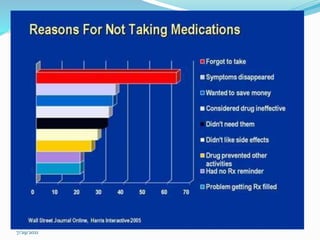
FACTORS AFFECTING PATIENT
COMPLIANCE
 Educational level
 Psychological Factors
 Patient beliefs and motivation about the therapy
 Cost of medication
 Duration therapy
 Poor understanding of instructions
 Adverse effects
7/29/2021
7/29/2021
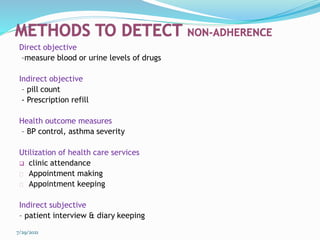
Direct objective
–measure blood or urine levels of drugs
Indirect objective
– pill count
- Prescription refill
Health outcome measures
– BP control, asthma severity
Utilization of health care services
 clinic attendance
Appointment making
Appointment keeping
Indirect subjective
– patient interview & diary keeping
7/29/2021
To track the record weather the patient is following the
prescribed medications or not: for this electronic access
to patient prescription and refill records is checked.
By using electronic questionnaire system in which the
patient is asked about the current drug treatment and
relief after starting the treatment.
By appointing nurse case managers which checks the
patient adherence and non-compliance at a very
personal level.
Utilizing pharmacist as a tool to resolve non-
compliance.
Long, complex and redundancy of drug regimens also
lead to non compliance so; this point should also
betaken care in mind while prescribing the medication.
7/29/2021
7/29/2021
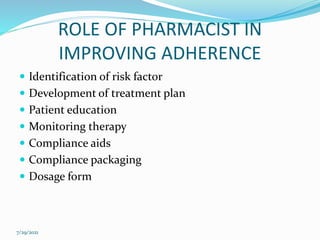
ROLE OF PHARMACIST IN
IMPROVING ADHERENCE
 Identification of risk factor
 Development of treatment plan
 Patient education
 Monitoring therapy
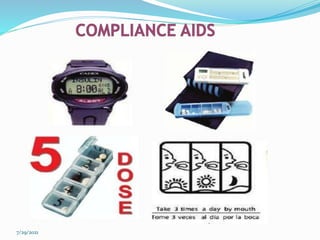
 Compliance aids
 Compliance packaging
 Dosage form
7/29/2021
REFERENCES
 Cline CM, Bjorck-Linne AK, Israelsson BY,
Willenheimer RB, Erhardt LR ( 1999). “ Non-
adherence and knowledge of prescribed medication in
elderly patients with heart failure”. European Journal
of Heart Failure. 145-149.
 “ Enhancing Patient Adherence : Proceedings of the
Pinnacle Roundtable Discussion . APA Highlights
Newsletter . October 2004.
 Niewulaat, Robby; Wilczynski, Nancy, Navarro,
Tamara ; Hobson, Nicholas; Jeffery, Rebecca .
‘Interventions for enhancing medication adherence’.
7/29/2021
7/29/2021

Patient compliance

  • 1.
  • 2.
    Patient compliance describesthe degree to which a patient correctly follows medical advice. Most commonly, it refers to medication or drug compliance, but it can also apply to other situations such as medical device use, self care, self-directed exercises, or therapy sessions 7/29/2021
  • 3.
    DIFFERENCE BETWEEN COMPLIANCE ANDADHERENCE  Adherence is an active choice of patient to follow through with the prescribed treatment while taking responsibility for their own well-being.  Compliance is a passive behaviour in which the patient is following the list of instructions from the doctor. 7/29/2021
  • 4.
    TYPES OF PATIENTCOMPLIANCE  Full compliance – In this type of compliance patient take medication according to the instructions of the doctor.  Partial compliance- In this patient show 20 to 50 % compliance . He or she may forget to take the medicine as per instructions.  Non-compliance- The patient take medicine very irregularly  Over compliance- This occur when the patient is in hope for faster relief. 7/29/2021
  • 5.
    FACTORS AFFECTING MEDICATION ADHERENCEOR COMPLIANCE  Social or economic factors : People who have social support from family , friends or care taker to assist with medication have better adherence to the treatment.  Patient health care system related factor: A good relation between the patient and health care provider has a positive impact on adherence.  Disease related factor- Adherence to long term drug administration for chronic illness often decline, significantly overtime . This often happen with less or no symptoms. 7/29/2021
  • 6.
     Therapy relatedfactor- The complexity of medication regiment have been associated with decreased adherence.  Patient related factors- Physical impairment and memory impairment may increase the risk for non- adherence in older patients. 7/29/2021
  • 7.
  • 8.
    FACTORS AFFECTING PATIENT COMPLIANCE Educational level  Psychological Factors  Patient beliefs and motivation about the therapy  Cost of medication  Duration therapy  Poor understanding of instructions  Adverse effects 7/29/2021
  • 9.
  • 10.
    Direct objective –measure bloodor urine levels of drugs Indirect objective – pill count - Prescription refill Health outcome measures – BP control, asthma severity Utilization of health care services  clinic attendance Appointment making Appointment keeping Indirect subjective – patient interview & diary keeping 7/29/2021
  • 11.
    To track therecord weather the patient is following the prescribed medications or not: for this electronic access to patient prescription and refill records is checked. By using electronic questionnaire system in which the patient is asked about the current drug treatment and relief after starting the treatment. By appointing nurse case managers which checks the patient adherence and non-compliance at a very personal level. Utilizing pharmacist as a tool to resolve non- compliance. Long, complex and redundancy of drug regimens also lead to non compliance so; this point should also betaken care in mind while prescribing the medication. 7/29/2021
  • 12.
  • 13.
    ROLE OF PHARMACISTIN IMPROVING ADHERENCE  Identification of risk factor  Development of treatment plan  Patient education  Monitoring therapy  Compliance aids  Compliance packaging  Dosage form 7/29/2021
  • 14.
    REFERENCES  Cline CM,Bjorck-Linne AK, Israelsson BY, Willenheimer RB, Erhardt LR ( 1999). “ Non- adherence and knowledge of prescribed medication in elderly patients with heart failure”. European Journal of Heart Failure. 145-149.  “ Enhancing Patient Adherence : Proceedings of the Pinnacle Roundtable Discussion . APA Highlights Newsletter . October 2004.  Niewulaat, Robby; Wilczynski, Nancy, Navarro, Tamara ; Hobson, Nicholas; Jeffery, Rebecca . ‘Interventions for enhancing medication adherence’. 7/29/2021
  • 15.