


PATIENT
CLASSIFICATION
SYSTEM
Mr. Arvind Joshi
Faculty College of Nursing
AIIMS Mangalagiri
08-02-2024
Workshop
on
Ward
Management
AIIMS
Mangalagiri
1
Introduction
• In the past, staffing requirements were traditionally based on patient census,
regardless of individual needs.
• However, the diversity of needs among patients frequently resulted in major
fluctuations in nursing care requirements from day to day and from shift to shift
08-02-2024
Workshop
on
Ward
Management
AIIMS
Mangalagiri
2
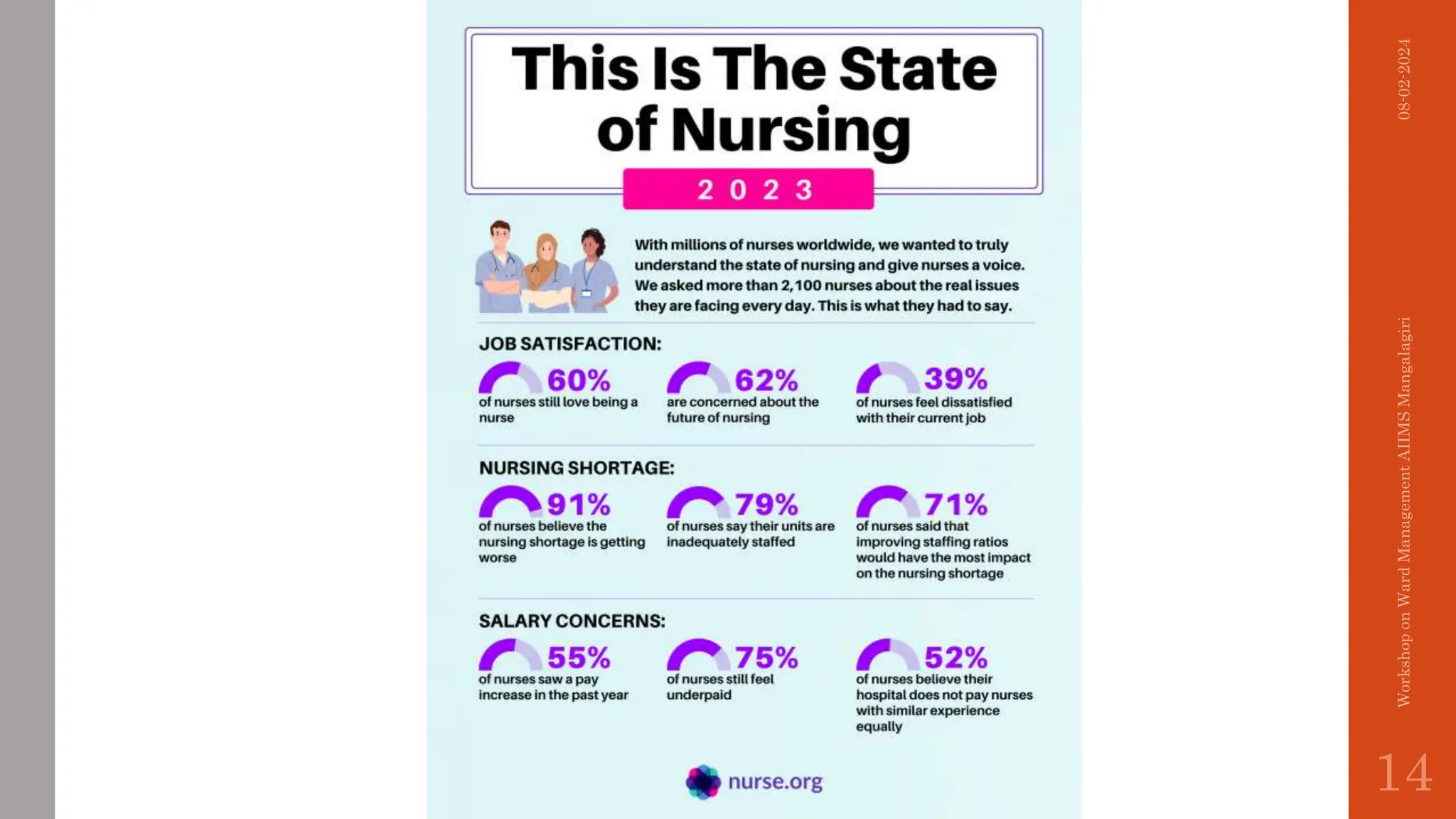
Nurses in India
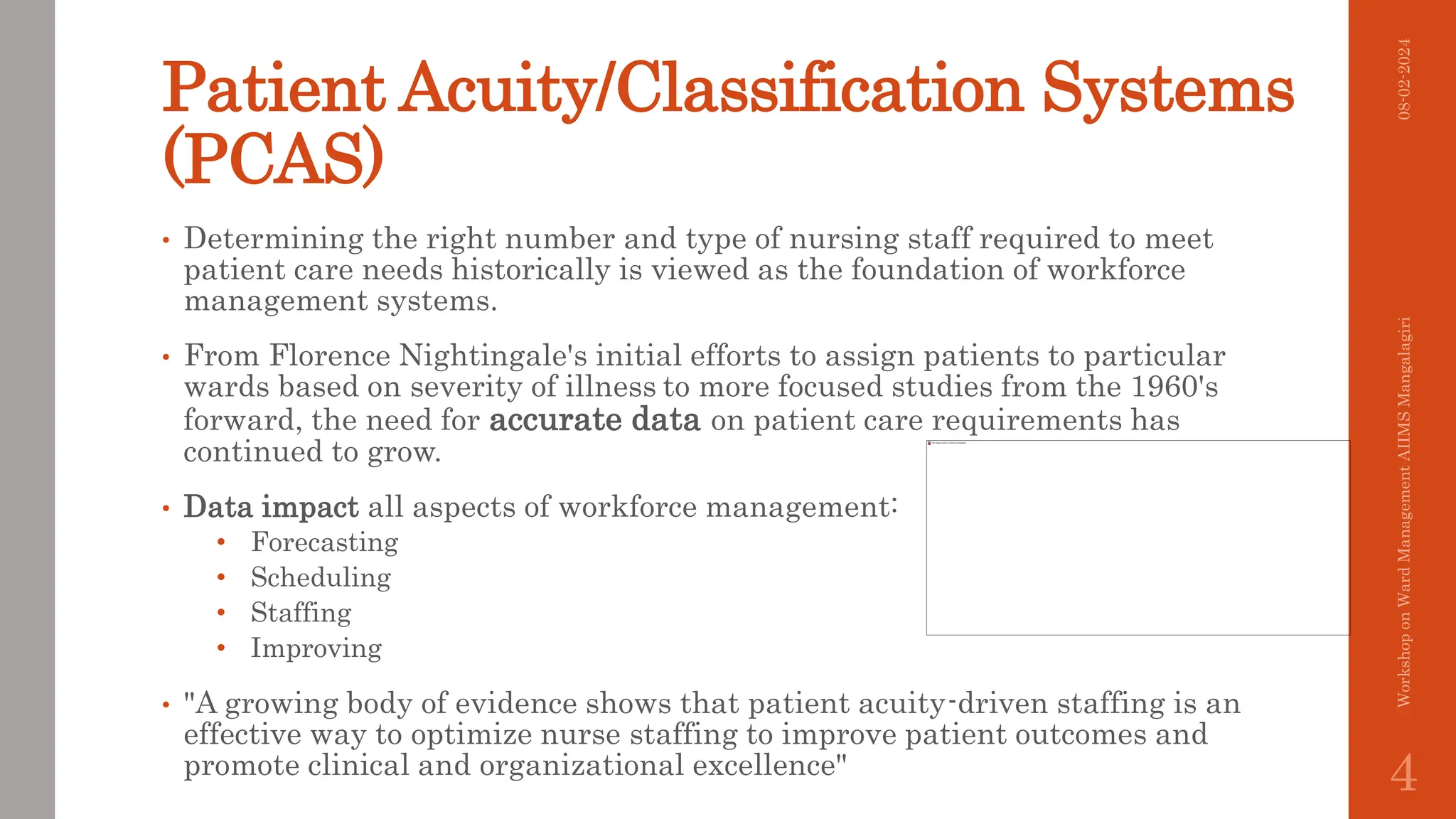
• "The nurse-population ratio in the country at present is 1.96 nurses
per 1,000 population,”
08-02-2024
Workshop
on
Ward
Management
AIIMS
Mangalagiri
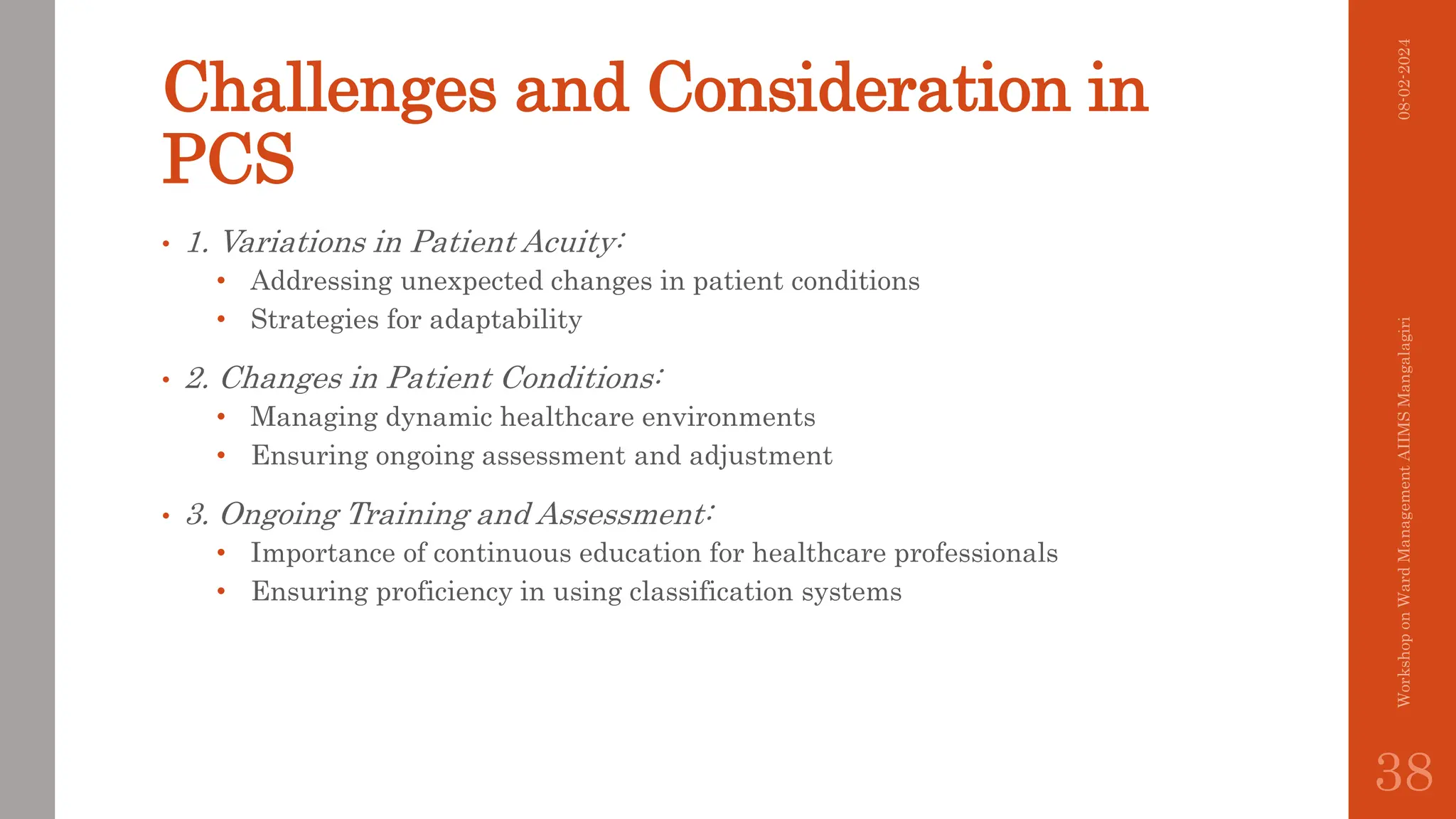
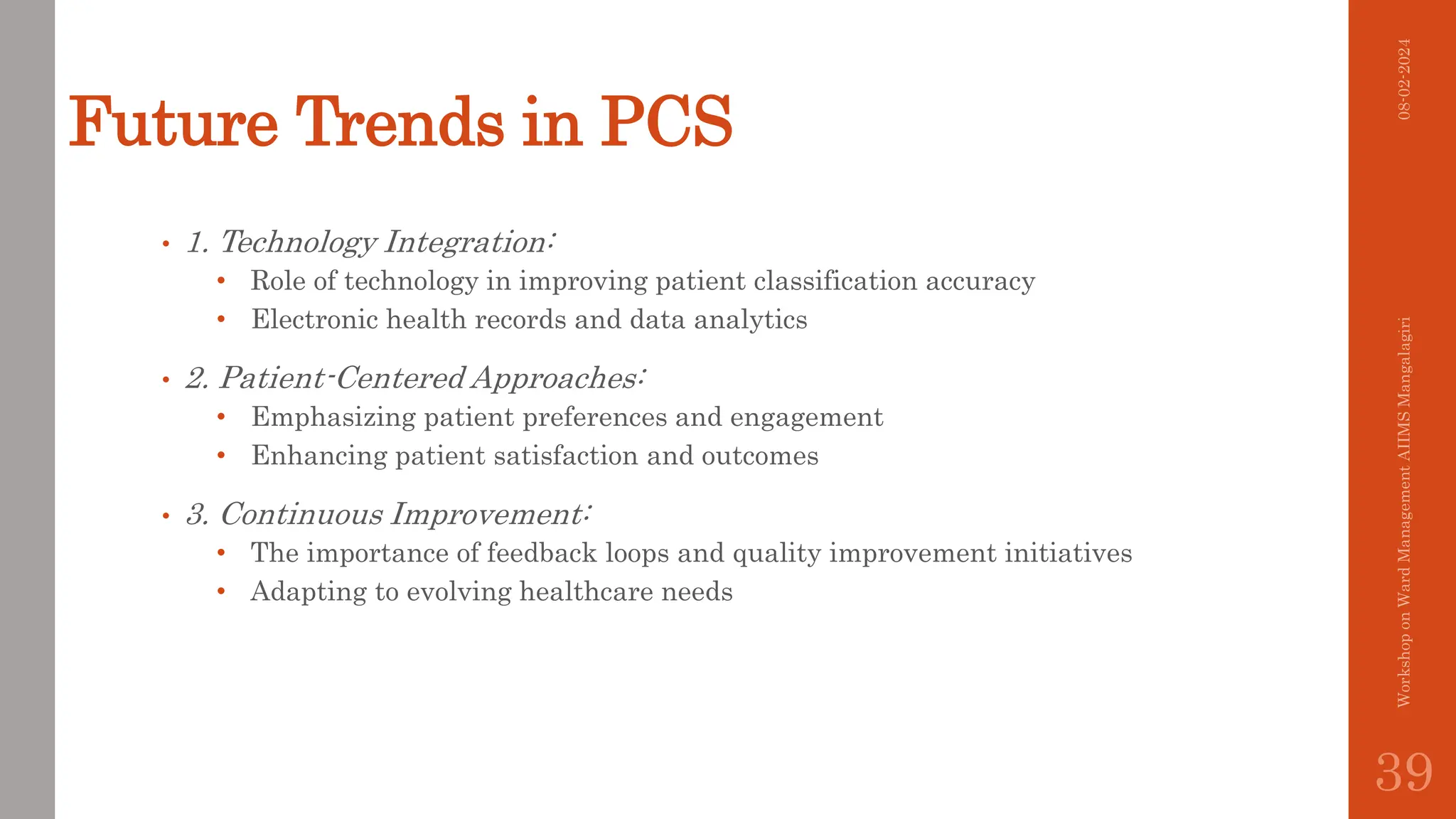
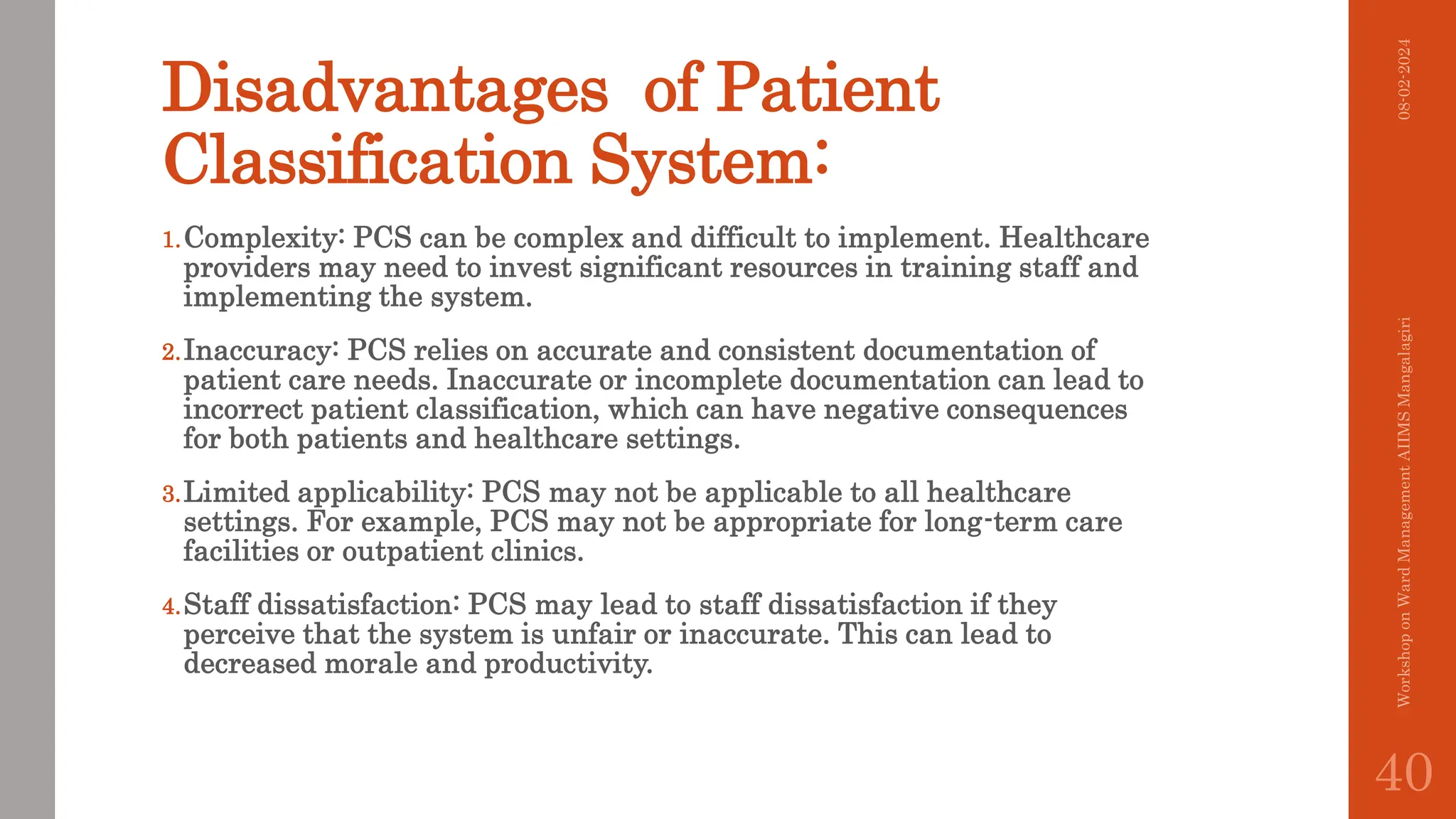
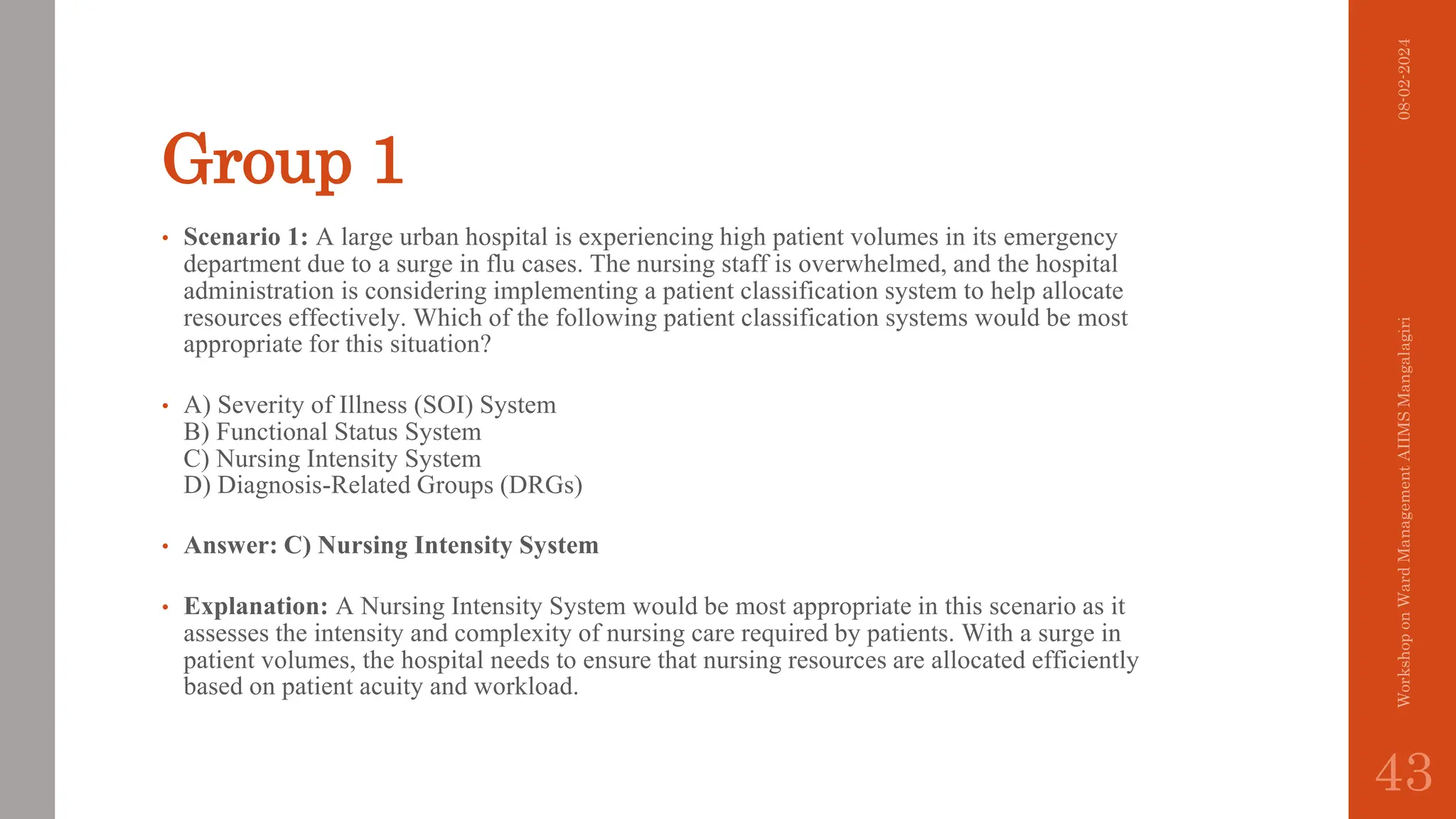
3
Patient Acuity/Classification Systems
(PCAS)
• Determining the right number and type of nursing staff required to meet
patient care needs historically is viewed as the foundation of workforce
management systems.
• From Florence Nightingale's initial efforts to assign patients to particular
wards based on severity of illness to more focused studies from the 1960's
forward, the need for accurate data on patient care requirements has
continued to grow.
• Data impact all aspects of workforce management:
• Forecasting
• Scheduling
• Staffing
• Improving
• "A growing body of evidence shows that patient acuity-driven staffing is an
effective way to optimize nurse staffing to improve patient outcomes and
promote clinical and organizational excellence"
08-02-2024
Workshop
on
Ward
Management
AIIMS
Mangalagiri
4
Patient classification system
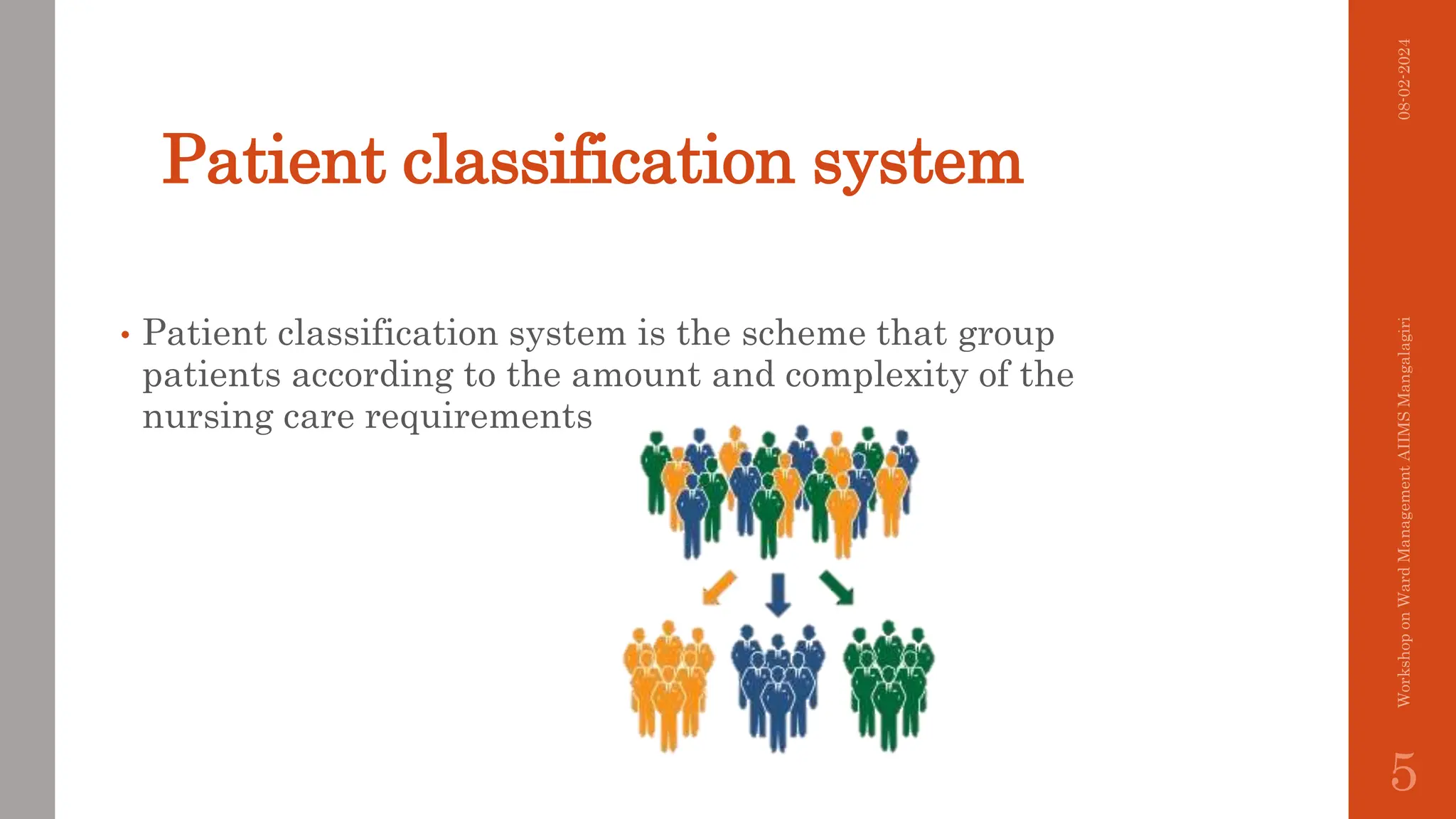
• Patient classification system is the scheme that group
patients according to the amount and complexity of the
nursing care requirements
08-02-2024
Workshop
on
Ward
Management
AIIMS
Mangalagiri
5
Patient classification system
• Patient classification system, which quantifies the quality of the
nursing care, is essential to staffing units of the hospital.
• The primary aim of PCS is to be able to respond to constant variation
in the care needs of patients.
• Patient Classification System is the term used to encompass not only
the process of identification the patient classification instrument but
also the quantification of the categories of care into some measure of
the nursing effort involved.
• Most commonly, the quantification is based on the nursing time
involved in direct patientcare.
08-02-2024
Workshop
on
Ward
Management
AIIMS
Mangalagiri
6
Nursing care time
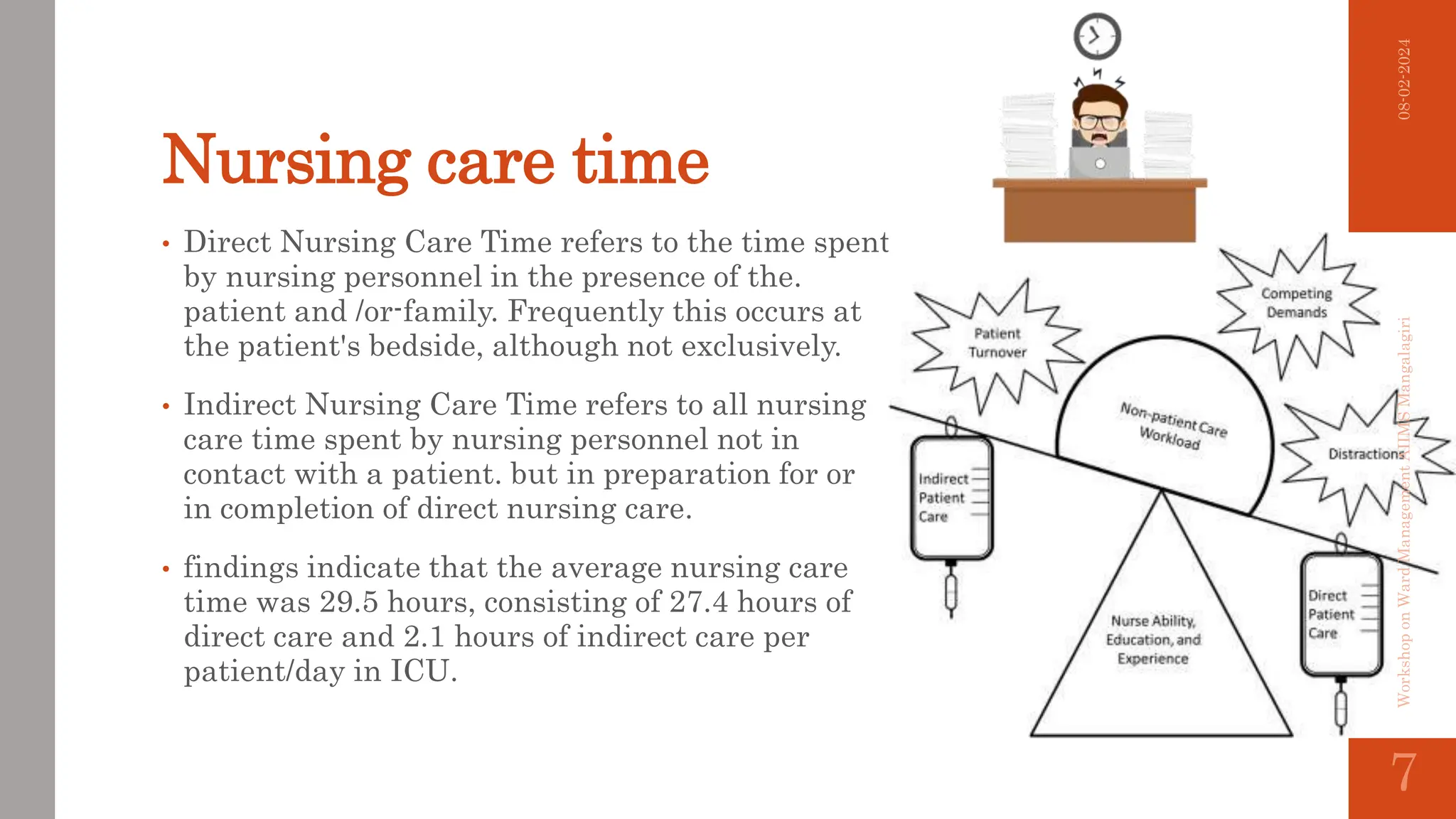
• Direct Nursing Care Time refers to the time spent
by nursing personnel in the presence of the.
patient and /or-family. Frequently this occurs at
the patient's bedside, although not exclusively.
• Indirect Nursing Care Time refers to all nursing
care time spent by nursing personnel not in
contact with a patient. but in preparation for or
in completion of direct nursing care.
• findings indicate that the average nursing care
time was 29.5 hours, consisting of 27.4 hours of
direct care and 2.1 hours of indirect care per
patient/day in ICU.
08-02-2024
Workshop
on
Ward
Management
AIIMS
Mangalagiri
7
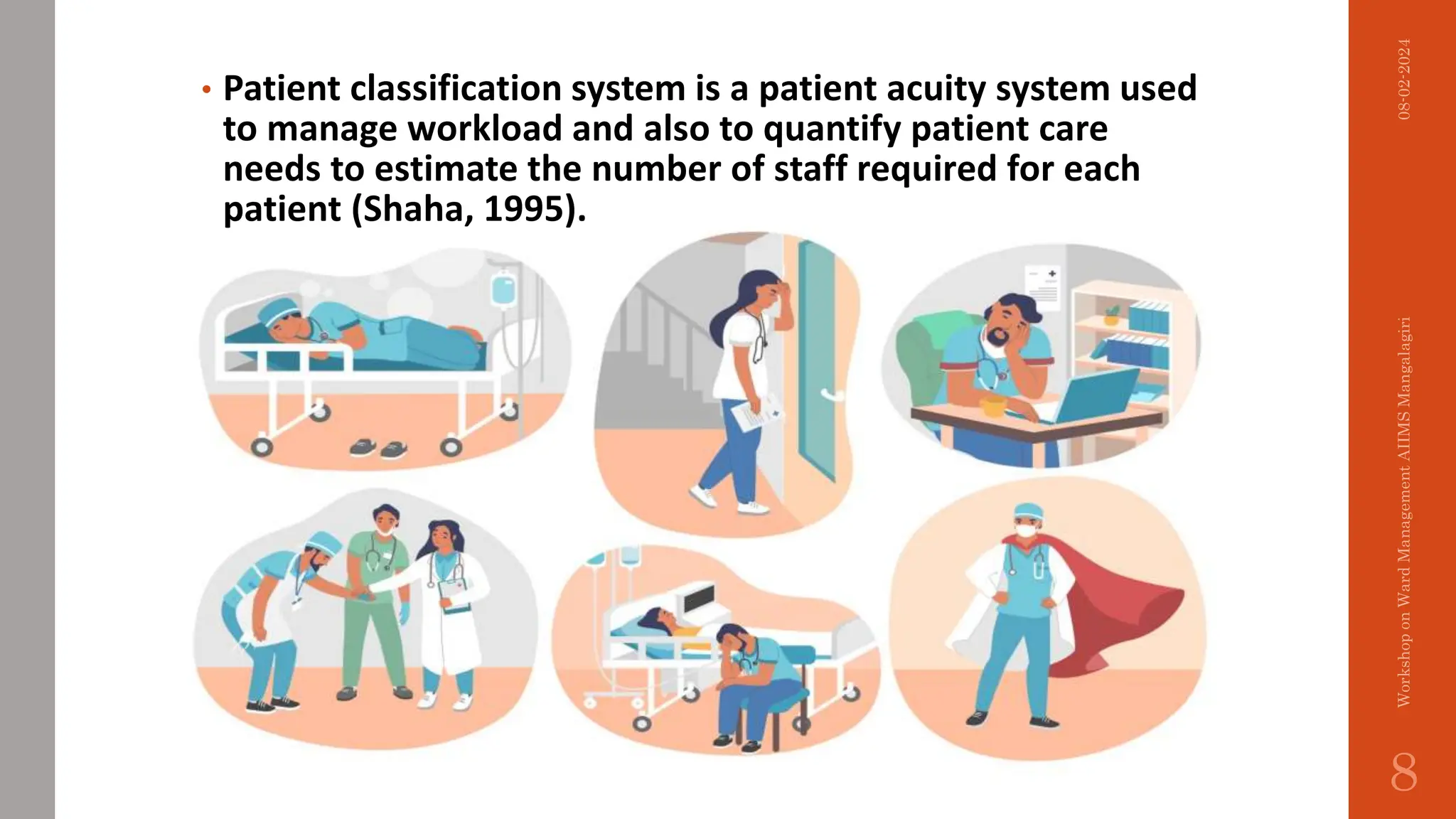
• Patient classification system is a patient acuity system used
to manage workload and also to quantify patient care
needs to estimate the number of staff required for each
patient (Shaha, 1995).
08-02-2024
Workshop
on
Ward
Management
AIIMS
Mangalagiri
8
Objectives
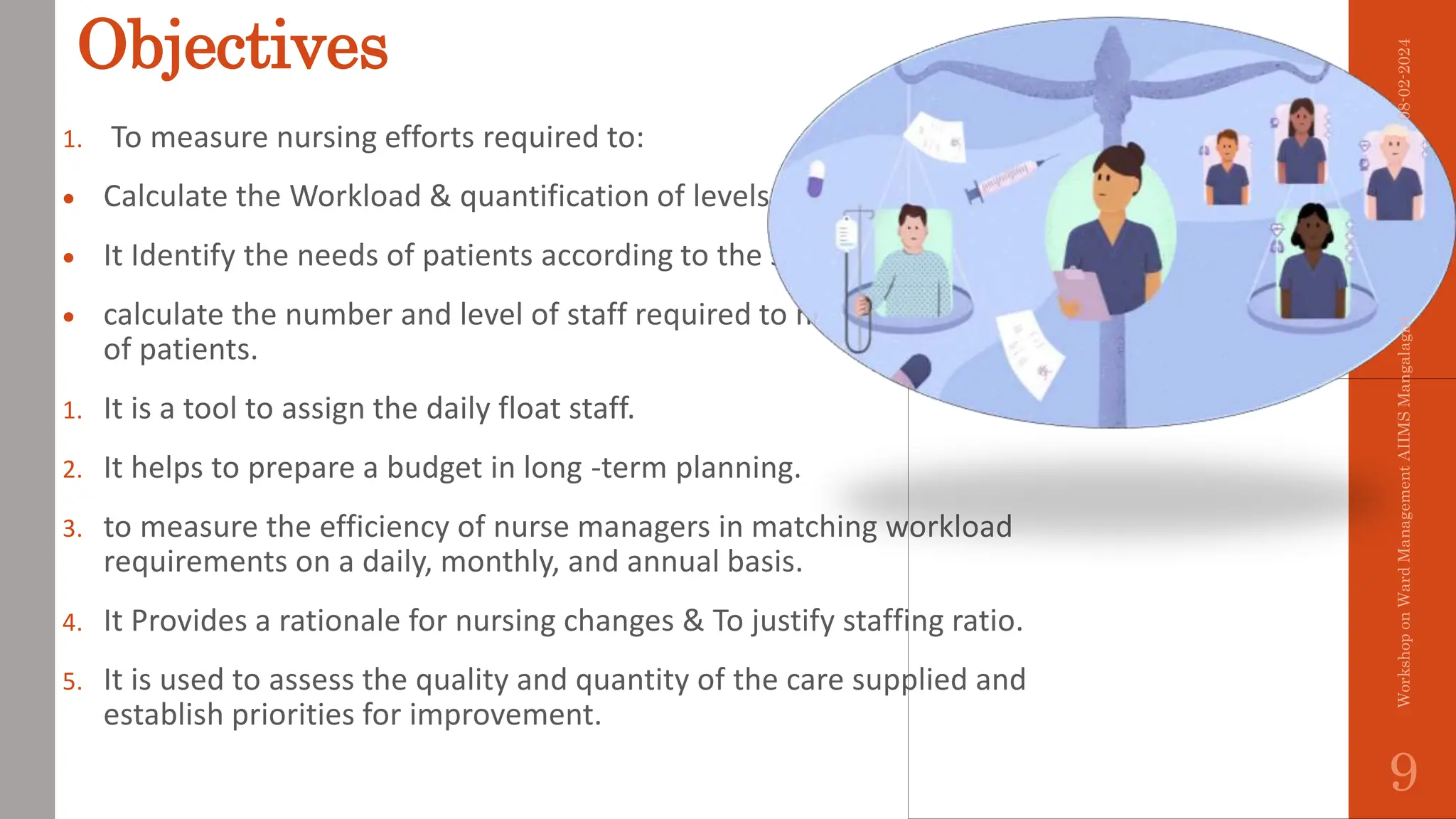
1. To measure nursing efforts required to:
 Calculate the Workload & quantification of levels of care
 It Identify the needs of patients according to the severity of their illness.
 calculate the number and level of staff required to meet the diverse needs
of patients.
1. It is a tool to assign the daily float staff.
2. It helps to prepare a budget in long -term planning.
3. to measure the efficiency of nurse managers in matching workload
requirements on a daily, monthly, and annual basis.
4. It Provides a rationale for nursing changes & To justify staffing ratio.
5. It is used to assess the quality and quantity of the care supplied and
establish priorities for improvement.
08-02-2024
Workshop
on
Ward
Management
AIIMS
Mangalagiri
9
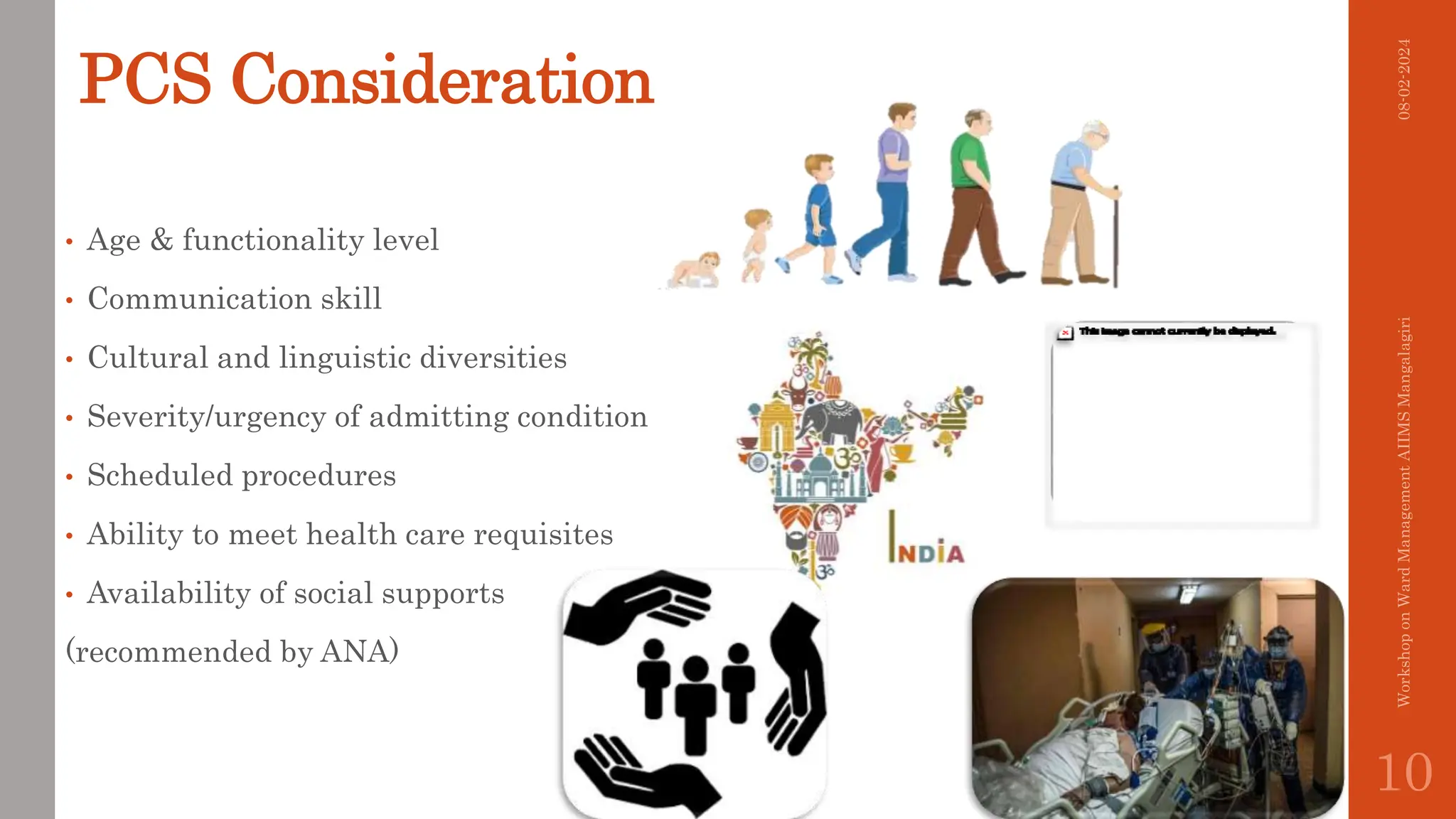
PCS Consideration
• Age & functionality level
• Communication skill
• Cultural and linguistic diversities
• Severity/urgency of admitting condition
• Scheduled procedures
• Ability to meet health care requisites
• Availability of social supports
(recommended by ANA)
08-02-2024
Workshop
on
Ward
Management
AIIMS
Mangalagiri
10
Meeting staff needs
• Satisfied nurses provide higher quality, more cost effective care.
• 24 hours/day, 365 day/year staffing need create staffing challenges
• Creative staffing option
• Staff input about staffing
08-02-2024
Workshop
on
Ward
Management
AIIMS
Mangalagiri
11
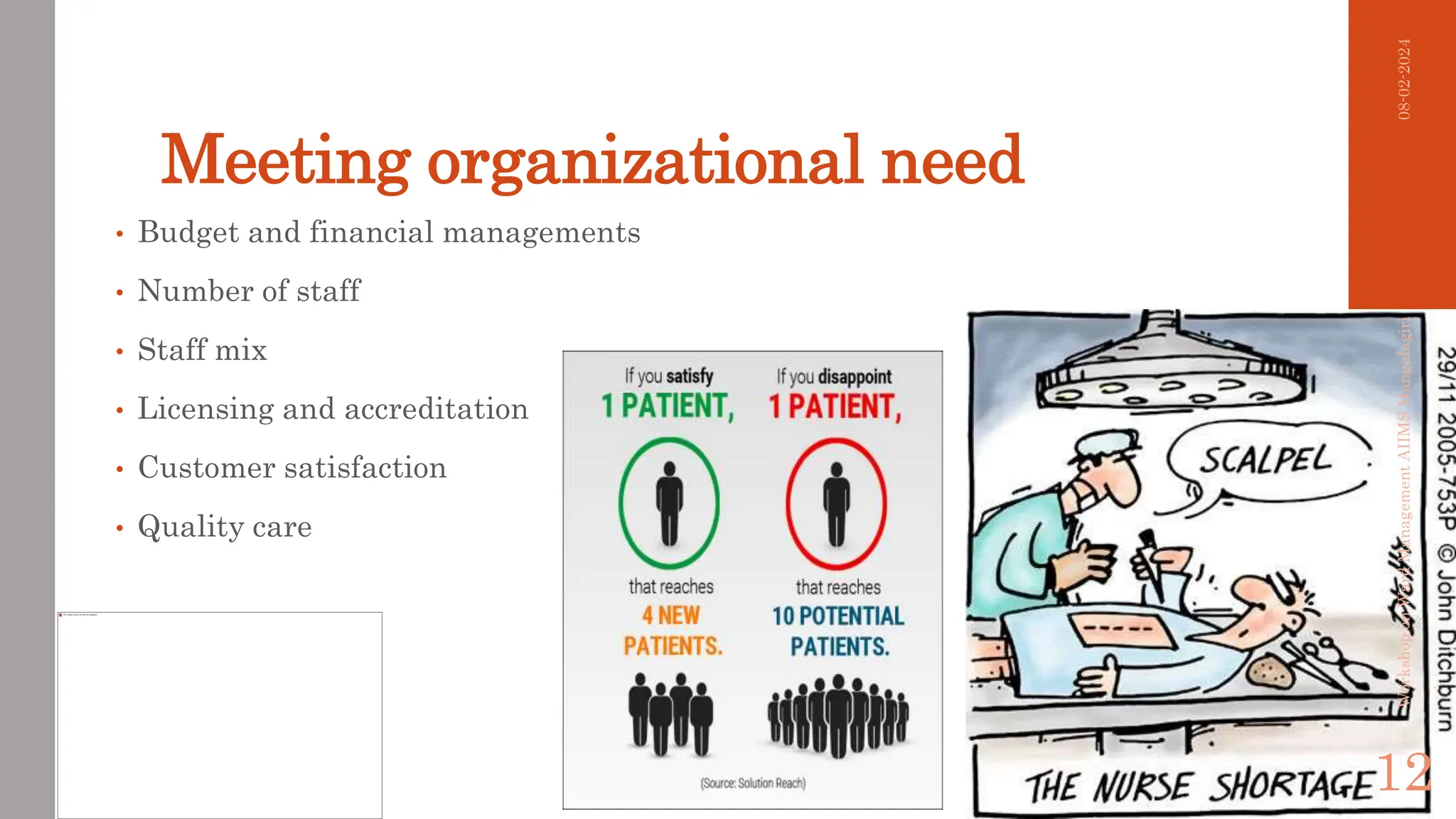
Meeting organizational need
• Budget and financial managements
• Number of staff
• Staff mix
• Licensing and accreditation
• Customer satisfaction
• Quality care
08-02-2024
Workshop
on
Ward
Management
AIIMS
Mangalagiri
12
Purpose of patient classification
• Determine the required nursing hours needed to provide safe and
efficient patient care based on standard of care and practice
• Determine the number and category of staff (skill mix) needed for
providing quality of patient care.
• Provide data on each patient care unit that directs and support
staffing in decision making
• Enhance staff satisfaction through stress free work environment.
• Categorize patient according their needs and the time and the
skills needed to satisfy each category needs.
• Determine workload and nursing care requirements
08-02-2024
Workshop
on
Ward
Management
AIIMS
Mangalagiri
13
08-02-2024
Workshop
on
Ward
Management
AIIMS
Mangalagiri
14
Types of Patient Classification
System
• Functional status system
• Pro type evaluation system
• Severity of Illness (SOI) system
• Nursing Intensity Systems
• Diagnosis-Related Groups (DRGs)
08-02-2024
Workshop
on
Ward
Management
AIIMS
Mangalagiri
15
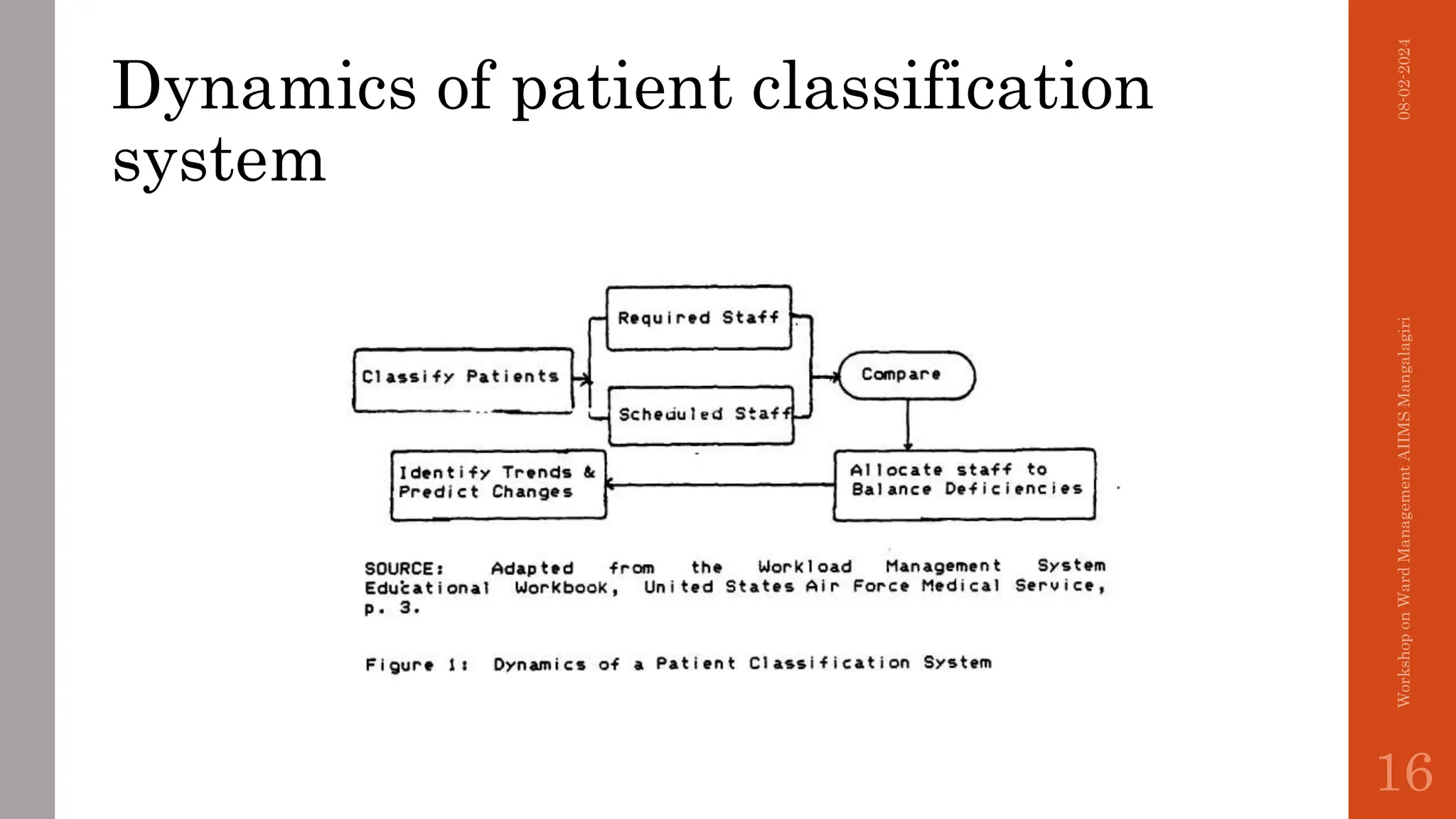
Dynamics of patient classification
system
08-02-2024
Workshop
on
Ward
Management
AIIMS
Mangalagiri
16
1.Functional status system
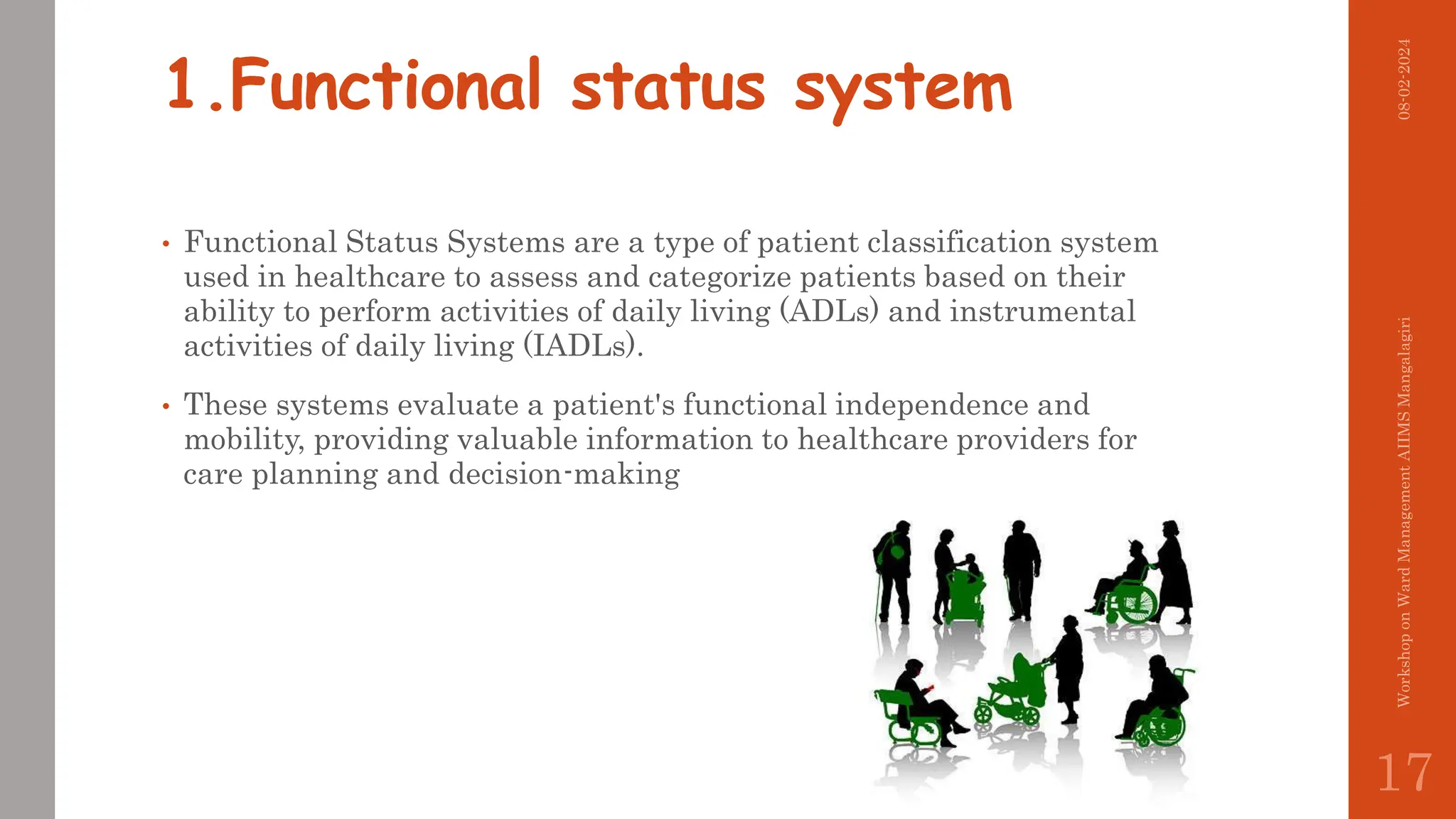
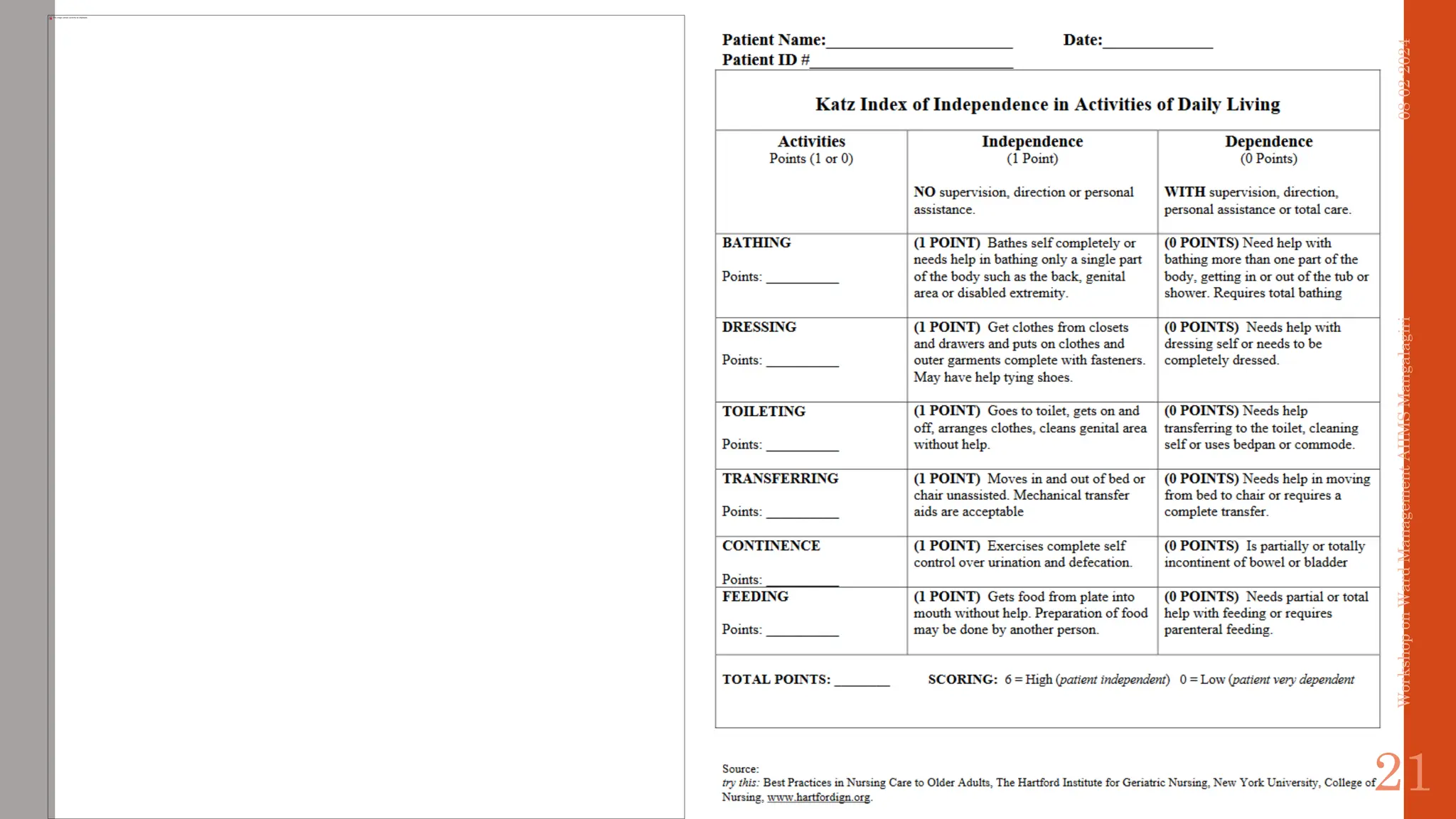
• Functional Status Systems are a type of patient classification system
used in healthcare to assess and categorize patients based on their
ability to perform activities of daily living (ADLs) and instrumental
activities of daily living (IADLs).
• These systems evaluate a patient's functional independence and
mobility, providing valuable information to healthcare providers for
care planning and decision-making
08-02-2024
Workshop
on
Ward
Management
AIIMS
Mangalagiri
17
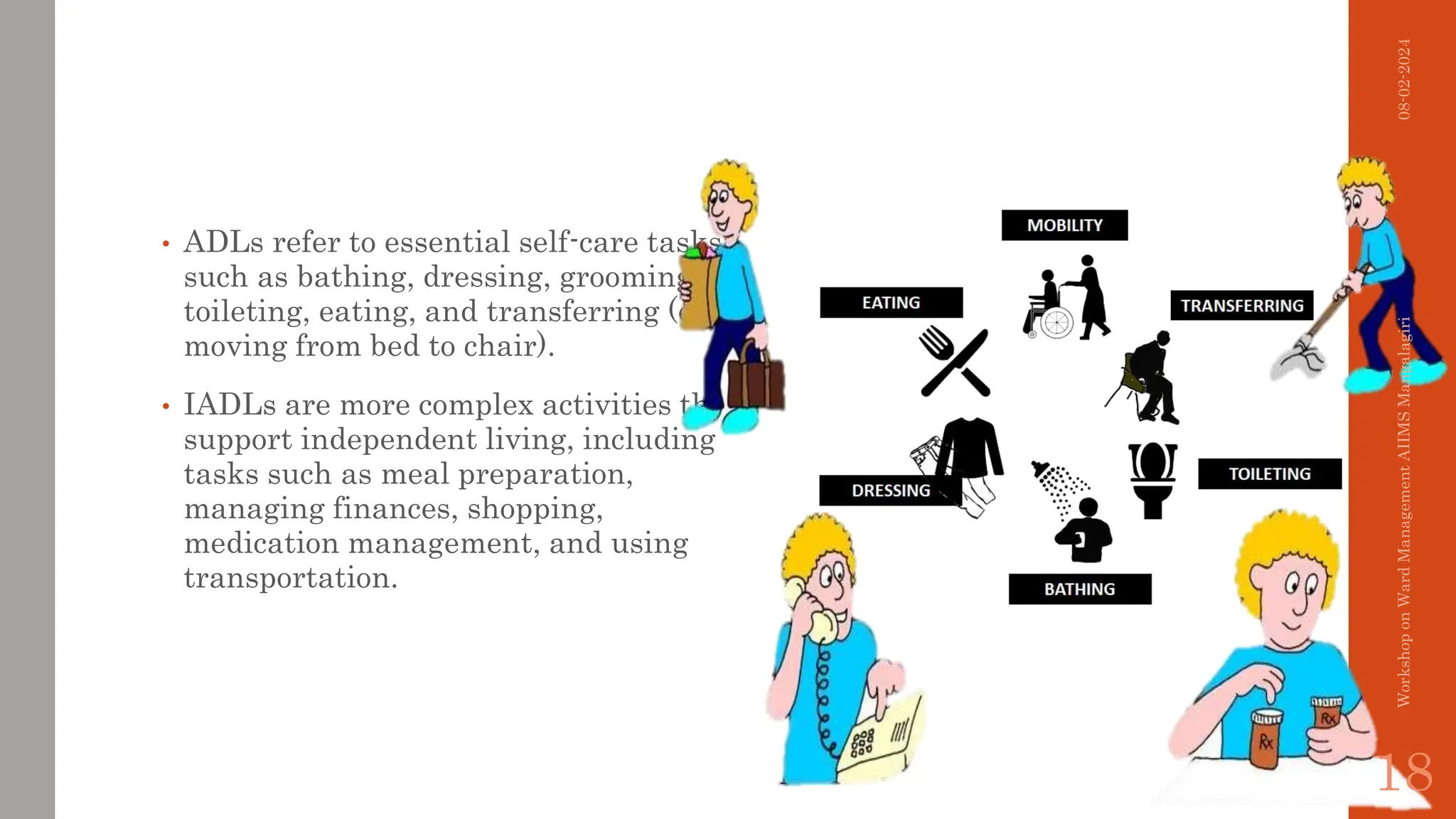
• ADLs refer to essential self-care tasks
such as bathing, dressing, grooming,
toileting, eating, and transferring (e.g.,
moving from bed to chair).
• IADLs are more complex activities that
support independent living, including
tasks such as meal preparation,
managing finances, shopping,
medication management, and using
transportation.
08-02-2024
Workshop
on
Ward
Management
AIIMS
Mangalagiri
18
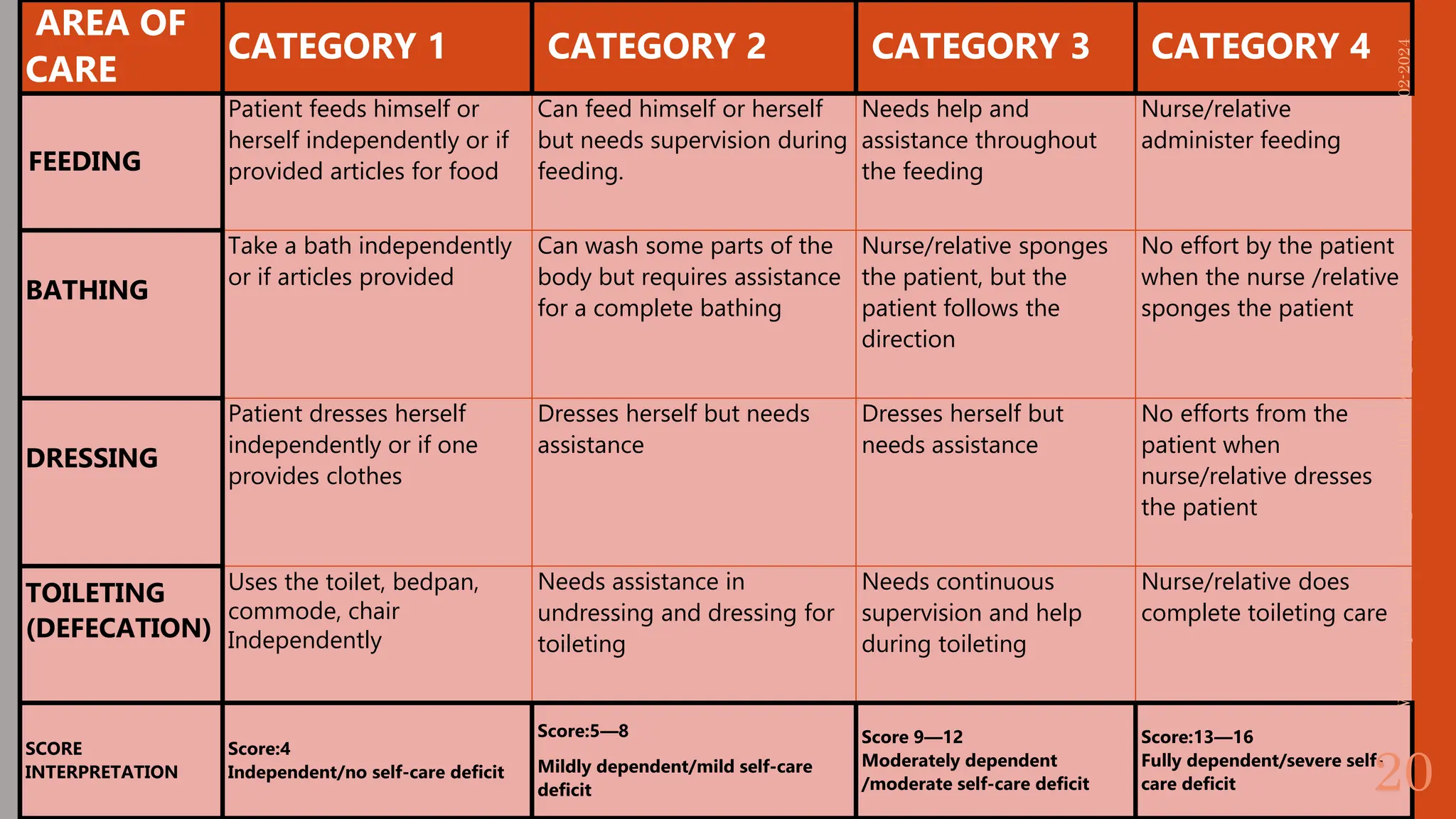
• Manjit and Vati (2004) developed a self-care-deficit
assessment scale related to ADL carries another
example of categorizing the dependency level of all
medical and surgical adult patients
08-02-2024
Workshop
on
Ward
Management
AIIMS
Mangalagiri
19
AREA OF
CARE
CATEGORY 1 CATEGORY 2 CATEGORY 3 CATEGORY 4
FEEDING
Patient feeds himself or
herself independently or if
provided articles for food
Can feed himself or herself
but needs supervision during
feeding.
Needs help and
assistance throughout
the feeding
Nurse/relative
administer feeding
BATHING
Take a bath independently
or if articles provided
Can wash some parts of the
body but requires assistance
for a complete bathing
Nurse/relative sponges
the patient, but the
patient follows the
direction
No effort by the patient
when the nurse /relative
sponges the patient
DRESSING
Patient dresses herself
independently or if one
provides clothes
Dresses herself but needs
assistance
Dresses herself but
needs assistance
No efforts from the
patient when
nurse/relative dresses
the patient
TOILETING
(DEFECATION)
Uses the toilet, bedpan,
commode, chair
Independently
Needs assistance in
undressing and dressing for
toileting
Needs continuous
supervision and help
during toileting
Nurse/relative does
complete toileting care
SCORE
INTERPRETATION
Score:4
Independent/no self-care deficit
Score:5—8
Mildly dependent/mild self-care
deficit
Score 9—12
Moderately dependent
/moderate self-care deficit
Score:13—16
Fully dependent/severe self-
care deficit
08-02-2024
Workshop
on
Ward
Management
AIIMS
Mangalagiri
20
08-02-2024
Workshop
on
Ward
Management
AIIMS
Mangalagiri
21
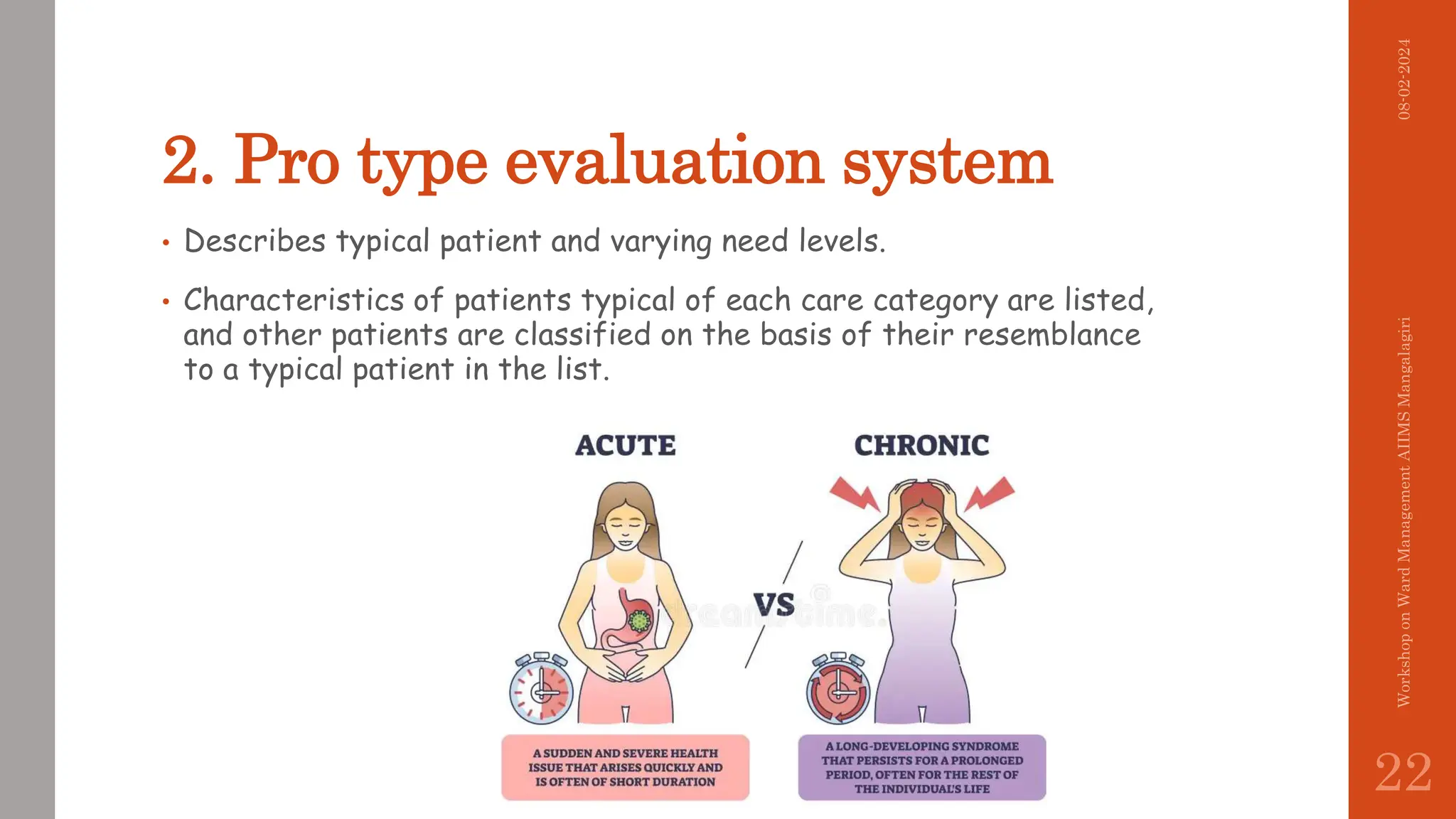
2. Pro type evaluation system
• Describes typical patient and varying need levels.
• Characteristics of patients typical of each care category are listed,
and other patients are classified on the basis of their resemblance
to a typical patient in the list.
08-02-2024
Workshop
on
Ward
Management
AIIMS
Mangalagiri
22
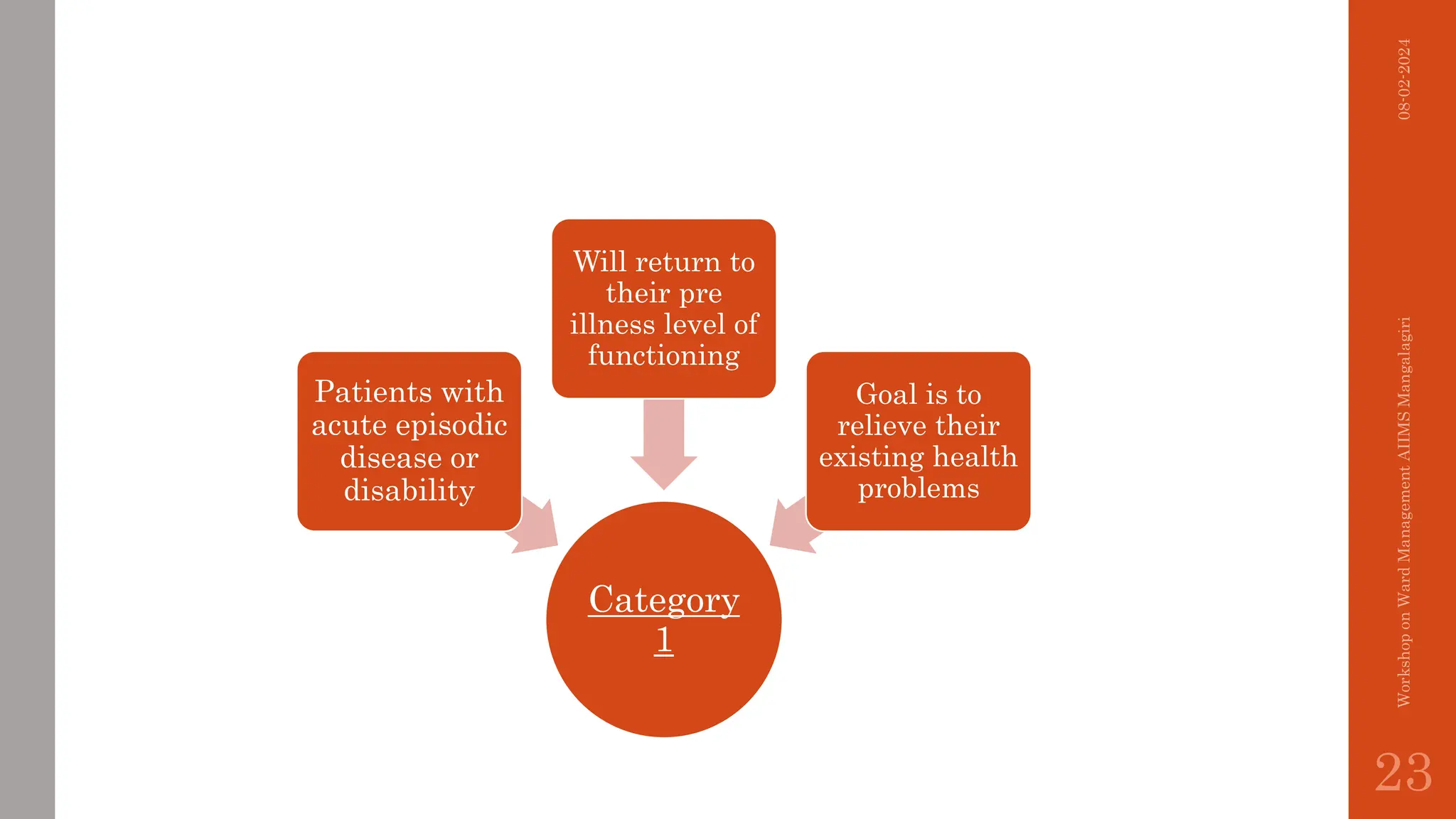
Category
1
Patients with
acute episodic
disease or
disability
Will return to
their pre
illness level of
functioning
Goal is to
relieve their
existing health
problems
08-02-2024
Workshop
on
Ward
Management
AIIMS
Mangalagiri
23
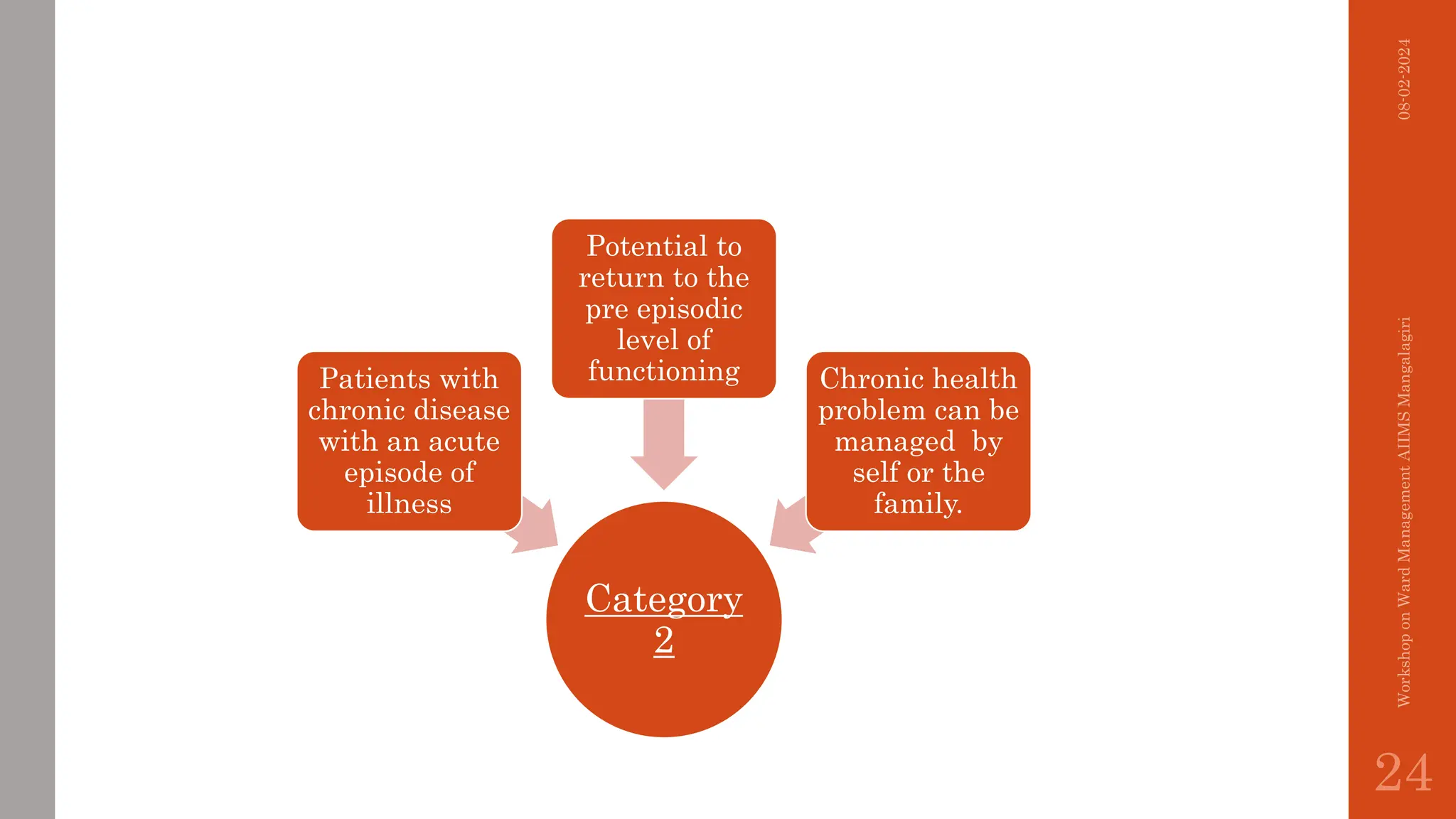
Category
2
Patients with
chronic disease
with an acute
episode of
illness
Potential to
return to the
pre episodic
level of
functioning Chronic health
problem can be
managed by
self or the
family.
08-02-2024
Workshop
on
Ward
Management
AIIMS
Mangalagiri
24
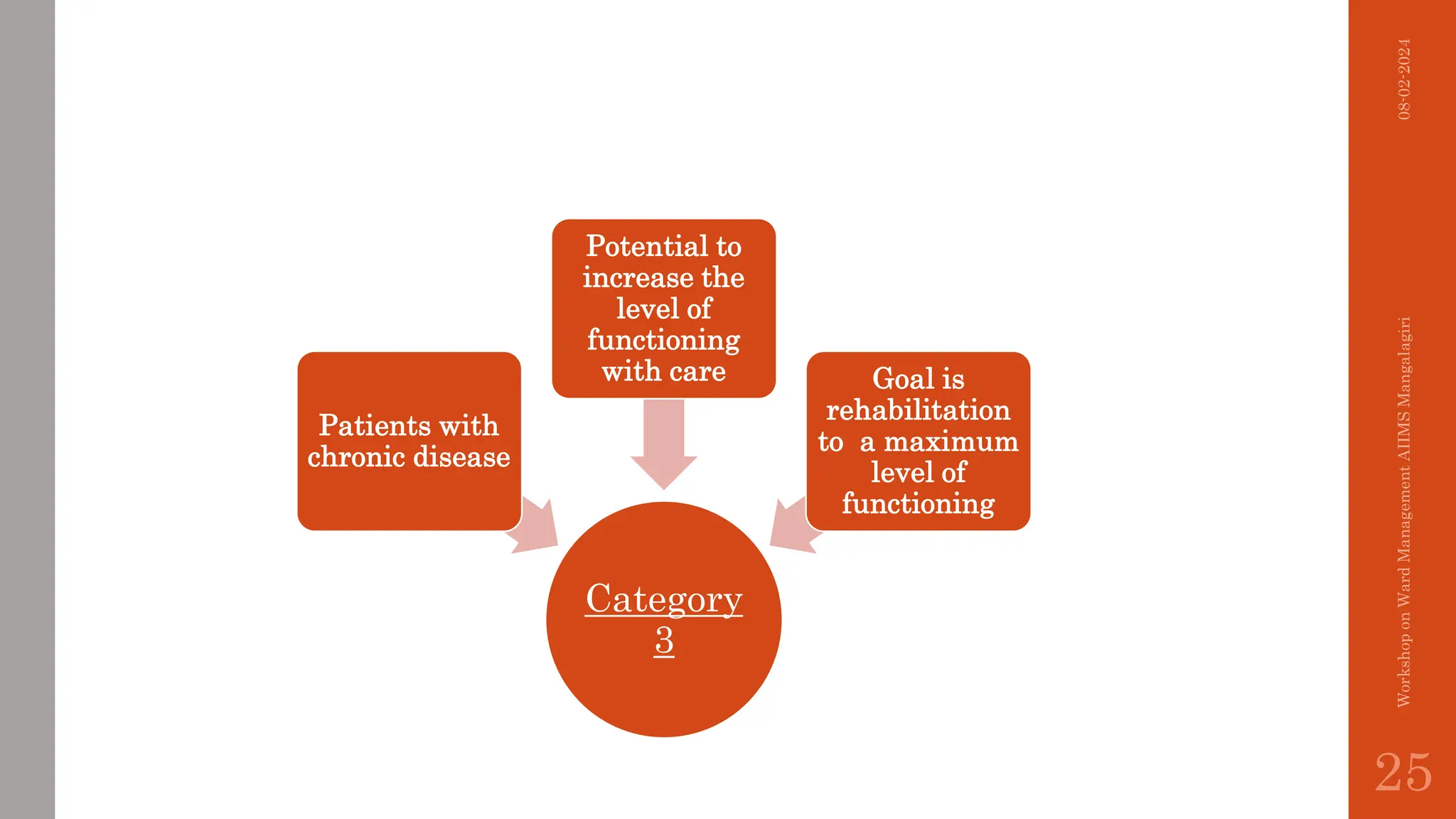
Category
3
Patients with
chronic disease
Potential to
increase the
level of
functioning
with care Goal is
rehabilitation
to a maximum
level of
functioning
08-02-2024
Workshop
on
Ward
Management
AIIMS
Mangalagiri
25
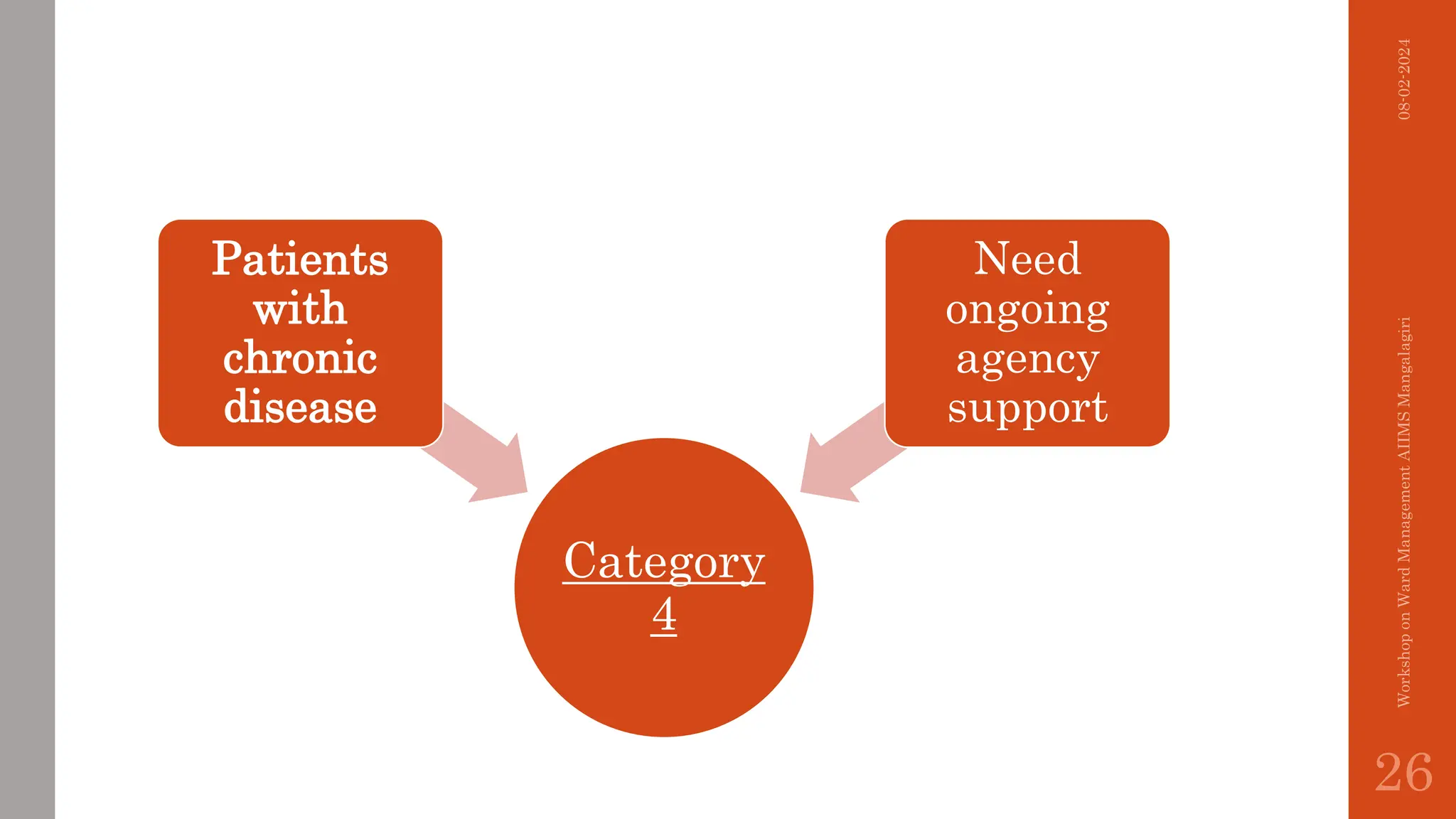
Category
4
Patients
with
chronic
disease
Need
ongoing
agency
support
08-02-2024
Workshop
on
Ward
Management
AIIMS
Mangalagiri
26
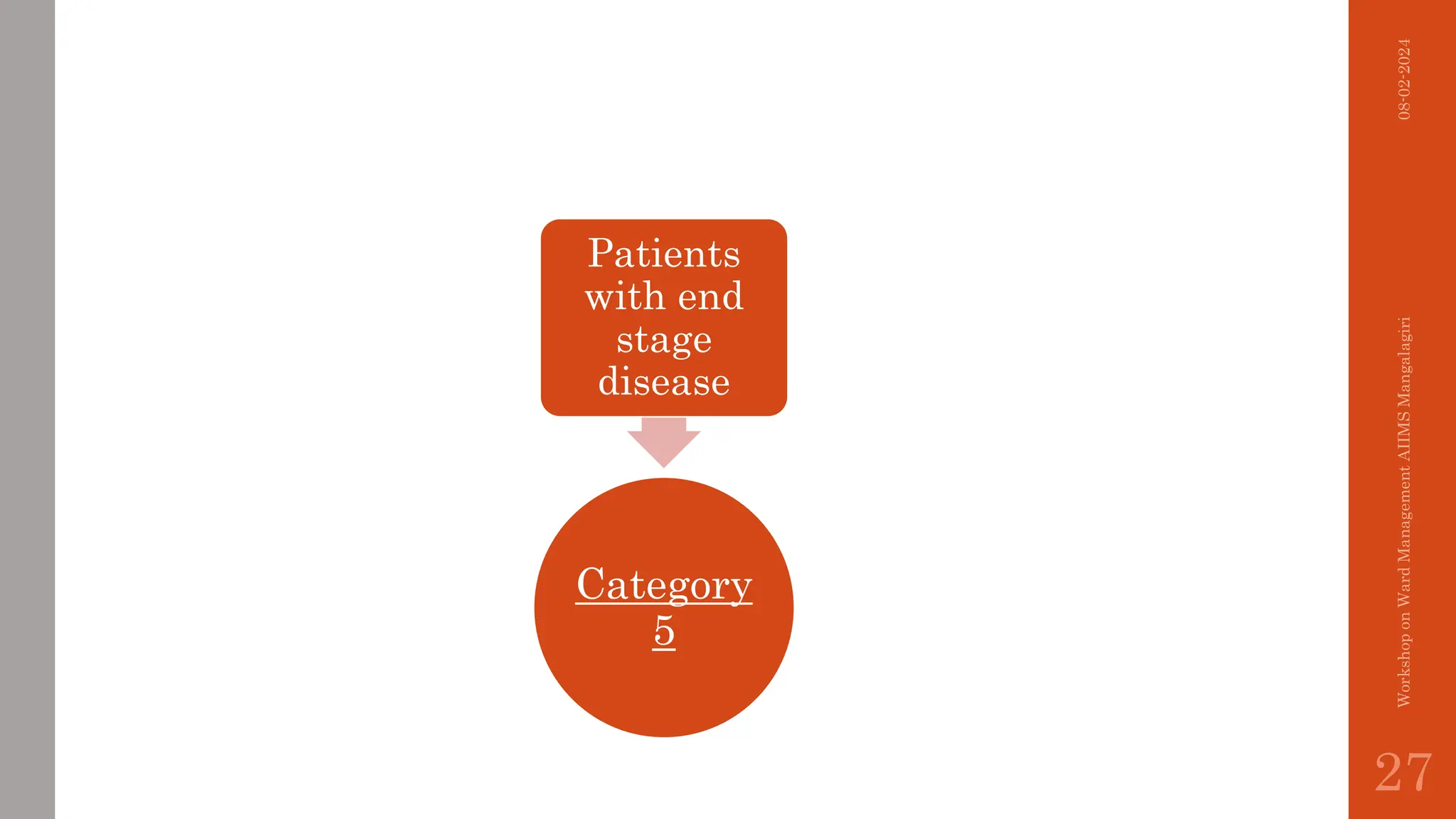
Category
5
Patients
with end
stage
disease
08-02-2024
Workshop
on
Ward
Management
AIIMS
Mangalagiri
27
3. Severity of Illness (SOI) system
• The Severity of Illness (SOI) system is a patient classification system
that assesses and categorizes patients based on the severity and
complexity of their medical conditions. This system aims to provide a
standardized approach for healthcare professionals to evaluate and
communicate the level of illness in patients, facilitating appropriate
resource allocation, care planning, and decision-making.
08-02-2024
Workshop
on
Ward
Management
AIIMS
Mangalagiri
28
• The primary purpose of the SOI system is to assist healthcare
providers in assessing the overall condition of patients and
predicting the potential impact of their illnesses on health outcomes
08-02-2024
Workshop
on
Ward
Management
AIIMS
Mangalagiri
29
Key components
• Severity of Diagnoses: Considers the seriousness of the patient's
medical diagnoses.
• Intensity of Treatment: Evaluates the complexity and aggressiveness
of medical interventions required.
• Extent of Physiological Deprivation: Examines the impact of the
illness on the patient's physiological functions.
08-02-2024
Workshop
on
Ward
Management
AIIMS
Mangalagiri
30
4. Nursing Intensity Systems
• Nursing Intensity Systems assess the intensity and complexity of
nursing care required by patients across various healthcare settings,
such as hospitals, long-term care facilities, and home healthcare.
• Nursing Intensity Systems take into account multiple factors to
determine the level of nursing care needed by each patient. These
factors may include:
• Severity and complexity of medical conditions
• Nursing interventions required (e.g., wound care, medication
management)
• Frequency of assessments and monitoring
• Specialized nursing skills and expertise needed
08-02-2024
Workshop
on
Ward
Management
AIIMS
Mangalagiri
31
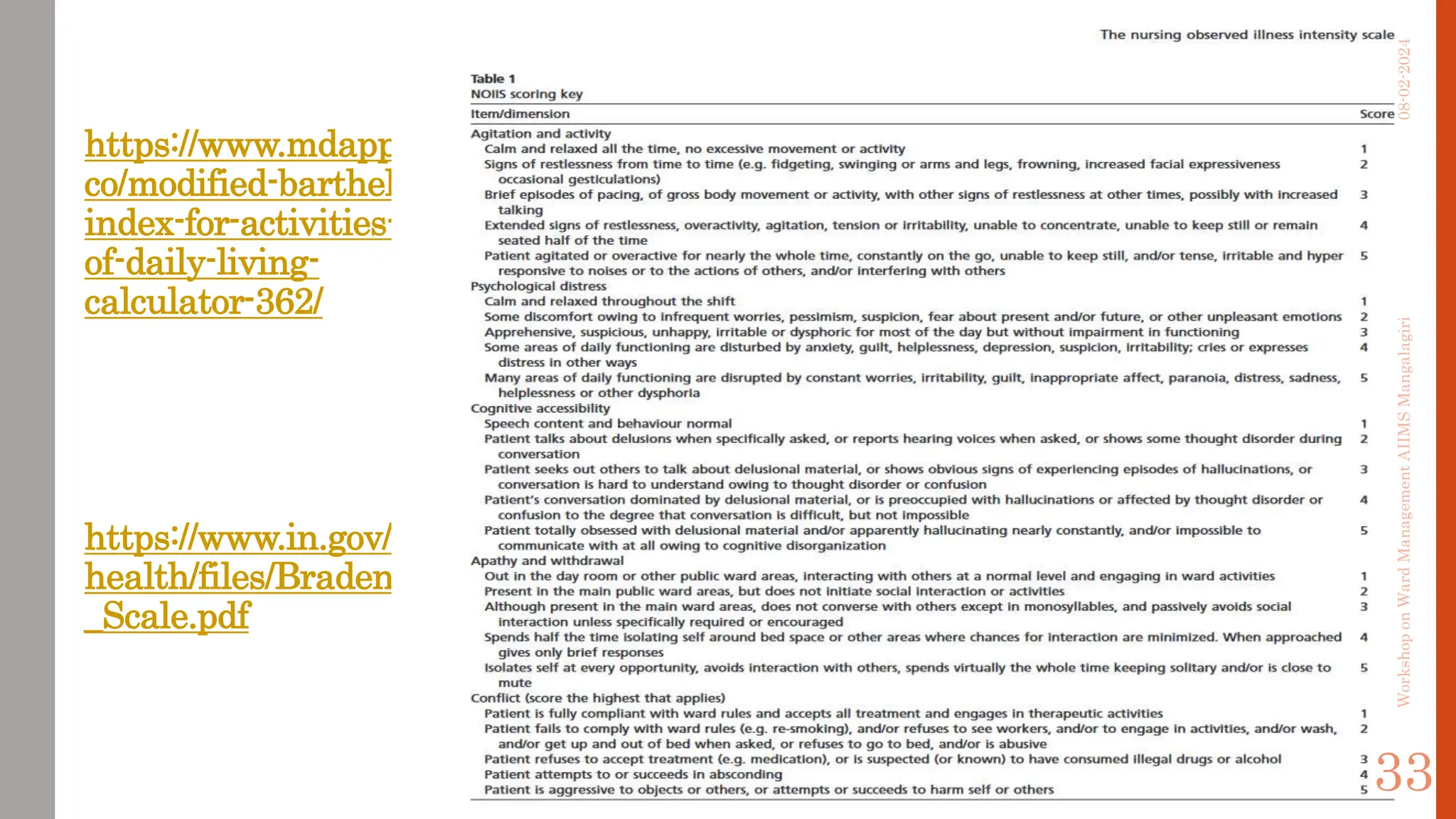
Assessment tools
• Various standardized assessment tools and scoring systems are used
to evaluate nursing intensity, such as the Nursing Intensity Scale
(NIS), the Modified Barthel Index (MBI), and the Braden Scale for
Predicting Pressure Sore Risk.
08-02-2024
Workshop
on
Ward
Management
AIIMS
Mangalagiri
32
https://www.mdapp.
co/modified-barthel-
index-for-activities-
of-daily-living-
calculator-362/
https://www.in.gov/
health/files/Braden
_Scale.pdf
08-02-2024
Workshop
on
Ward
Management
AIIMS
Mangalagiri
33
• Patients are typically classified into different categories or levels of
nursing intensity based on their assessment scores.
• Classification levels may range from low to high intensity, with
corresponding staffing requirements and resource allocations.
• Nursing Intensity Systems inform staffing decisions by matching the
intensity of nursing care required with appropriate nurse-to-patient
ratios.
08-02-2024
Workshop
on
Ward
Management
AIIMS
Mangalagiri
34
• Adequate staffing levels based on nursing intensity assessments help
mitigate risks to patient safety by ensuring timely interventions,
monitoring, and supervision.
• Nurses can provide more focused and attentive care to patients with
higher intensity needs, reducing the likelihood of errors and adverse
events.
08-02-2024
Workshop
on
Ward
Management
AIIMS
Mangalagiri
35
5. Diagnosis-Related Groups
(DRGs)
• Diagnosis-Related Groups (DRGs) are a classification system that
groups patients with similar clinical characteristics and resource
utilization patterns.
• DRGs were initially developed in the United States in the 1980s as a
prospective payment system for Medicare reimbursement.
• Patients are grouped into DRGs based on similar diagnoses, procedures
performed, age, sex, discharge status, and other relevant factors.
• Under the DRG payment system, healthcare providers receive a fixed
payment amount for treating patients within each DRG category
• Diagnosis-Related Groups (DRGs) play a significant role in healthcare
reimbursement and financial management, providing a standardized
framework for categorizing patients and allocating resources efficiently.
08-02-2024
Workshop
on
Ward
Management
AIIMS
Mangalagiri
36
Practical Application of PCS
• 1. Staffing Levels and Allocation:
• How patient classification informs staffing decisions
• Ensuring the right mix of skills for different patient categories
• 2. Admission and Discharge Planning:
• Coordinating transitions of care based on patient needs
• Enhancing patient experience and outcomes
• 3. Data Collection and Documentation:
• Importance for quality improvement initiatives
• Ensuring accurate and standardized documentation
• 4. Case Studies:
• Real-world examples showcasing successful implementation
08-02-2024
Workshop
on
Ward
Management
AIIMS
Mangalagiri
37
Challenges and Consideration in
PCS
• 1. Variations in Patient Acuity:
• Addressing unexpected changes in patient conditions
• Strategies for adaptability
• 2. Changes in Patient Conditions:
• Managing dynamic healthcare environments
• Ensuring ongoing assessment and adjustment
• 3. Ongoing Training and Assessment:
• Importance of continuous education for healthcare professionals
• Ensuring proficiency in using classification systems
08-02-2024
Workshop
on
Ward
Management
AIIMS
Mangalagiri
38
Future Trends in PCS
• 1. Technology Integration:
• Role of technology in improving patient classification accuracy
• Electronic health records and data analytics
• 2. Patient-Centered Approaches:
• Emphasizing patient preferences and engagement
• Enhancing patient satisfaction and outcomes
• 3. Continuous Improvement:
• The importance of feedback loops and quality improvement initiatives
• Adapting to evolving healthcare needs
08-02-2024
Workshop
on
Ward
Management
AIIMS
Mangalagiri
39
Disadvantages of Patient
Classification System:
1.Complexity: PCS can be complex and difficult to implement. Healthcare
providers may need to invest significant resources in training staff and
implementing the system.
2.Inaccuracy: PCS relies on accurate and consistent documentation of
patient care needs. Inaccurate or incomplete documentation can lead to
incorrect patient classification, which can have negative consequences
for both patients and healthcare settings.
3.Limited applicability: PCS may not be applicable to all healthcare
settings. For example, PCS may not be appropriate for long-term care
facilities or outpatient clinics.
4.Staff dissatisfaction: PCS may lead to staff dissatisfaction if they
perceive that the system is unfair or inaccurate. This can lead to
decreased morale and productivity.
08-02-2024
Workshop
on
Ward
Management
AIIMS
Mangalagiri
40
08-02-2024
Workshop
on
Ward
Management
AIIMS
Mangalagiri
41
Scenario
08-02-2024
Workshop
on
Ward
Management
AIIMS
Mangalagiri
42
Group 1
• Scenario 1: A large urban hospital is experiencing high patient volumes in its emergency
department due to a surge in flu cases. The nursing staff is overwhelmed, and the hospital
administration is considering implementing a patient classification system to help allocate
resources effectively. Which of the following patient classification systems would be most
appropriate for this situation?
• A) Severity of Illness (SOI) System
B) Functional Status System
C) Nursing Intensity System
D) Diagnosis-Related Groups (DRGs)
• Answer: C) Nursing Intensity System
• Explanation: A Nursing Intensity System would be most appropriate in this scenario as it
assesses the intensity and complexity of nursing care required by patients. With a surge in
patient volumes, the hospital needs to ensure that nursing resources are allocated efficiently
based on patient acuity and workload.
08-02-2024
Workshop
on
Ward
Management
AIIMS
Mangalagiri
43
Group 2
• Scenario 2: A rehabilitation facility is admitting a patient who recently
underwent hip replacement surgery and requires assistance with
activities of daily living (ADLs) such as bathing, dressing, and
transferring. Which patient classification system would be most relevant
for assessing this patient's functional status?
• A) Severity of Illness (SOI) System
B) Diagnosis-Related Groups (DRGs)
C) Functional Status System
D) Resource-Based System
• Answer: C) Functional Status System
• Explanation: A Functional Status System focuses on assessing a
patient's ability to perform ADLs and instrumental activities of daily
living (IADLs). Since the patient requires assistance with ADLs after hip
replacement surgery, a Functional Status System would be most
relevant for evaluating their functional status and determining
appropriate care interventions.
08-02-2024
Workshop
on
Ward
Management
AIIMS
Mangalagiri
44
Group 3
• Scenario 3: A hospital is implementing a new patient classification system to improve
resource allocation and staffing decisions. The system aims to categorize patients based on
the severity of their medical conditions, the intensity of nursing care required, and their
functional status. Which type of patient classification system does this description best align
with?
• A) Severity of Illness (SOI) System
B) Resource-Based System
C) Functional Status System
D) Nursing Intensity System
• Answer: D) Nursing Intensity System
• Explanation: A Nursing Intensity System evaluates patients based on the intensity and
complexity of nursing care they require, considering factors such as severity of illness,
nursing interventions needed, and functional status.
08-02-2024
Workshop
on
Ward
Management
AIIMS
Mangalagiri
45
Group 4
• Scenario 4: A healthcare facility is implementing a patient classification system primarily for
billing and reimbursement purposes. The system categorizes patients into groups based on
similar diagnoses, treatments, and expected resource use. Which type of patient classification
system does this description best align with?
• A) Severity of Illness (SOI) System
B) Diagnosis-Related Groups (DRGs)
C) Nursing Intensity System
D) Functional Status System
• Answer: B) Diagnosis-Related Groups (DRGs)
• Explanation: Diagnosis-Related Groups (DRGs) classify patients into groups based on
similar diagnoses, treatments, and expected resource use for the purpose of billing and
reimbursement. This aligns with the description provided in the scenario, where the primary
goal is to categorize patients for financial purposes.
08-02-2024
Workshop
on
Ward
Management
AIIMS
Mangalagiri
46
Group 5
• Scenario 5: A hospital is experiencing a shortage of nursing staff due to
unexpected absences and increased patient acuity. To optimize staffing
levels, the hospital decides to implement a system that categorizes
patients based on the severity and complexity of their medical
conditions. Which patient classification system would best address the
hospital's staffing needs in this situation?
• A) Nursing Intensity System
B) Diagnosis-Related Groups (DRGs)
C) Functional Status System
D) Severity of Illness (SOI) System
• Answer: D) Severity of Illness (SOI) System
• Explanation: A Severity of Illness (SOI) System categorizes patients
based on the severity of their medical conditions, helping healthcare
facilities allocate resources and staffing levels according to patient
acuity.
08-02-2024
Workshop
on
Ward
Management
AIIMS
Mangalagiri
47
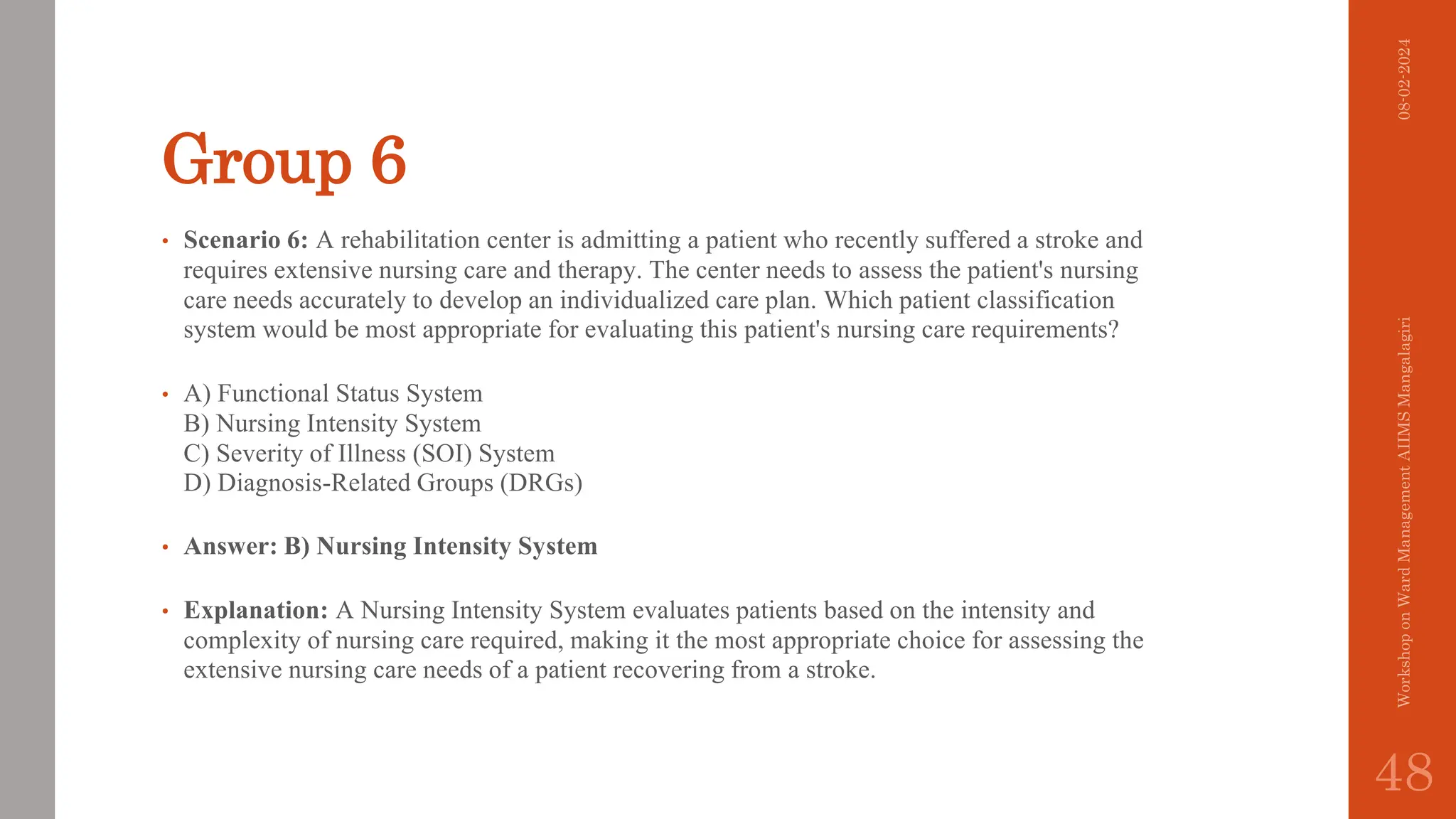
Group 6
• Scenario 6: A rehabilitation center is admitting a patient who recently suffered a stroke and
requires extensive nursing care and therapy. The center needs to assess the patient's nursing
care needs accurately to develop an individualized care plan. Which patient classification
system would be most appropriate for evaluating this patient's nursing care requirements?
• A) Functional Status System
B) Nursing Intensity System
C) Severity of Illness (SOI) System
D) Diagnosis-Related Groups (DRGs)
• Answer: B) Nursing Intensity System
• Explanation: A Nursing Intensity System evaluates patients based on the intensity and
complexity of nursing care required, making it the most appropriate choice for assessing the
extensive nursing care needs of a patient recovering from a stroke.
08-02-2024
Workshop
on
Ward
Management
AIIMS
Mangalagiri
48

Patient Classification System.pptx

  • 1.
    PATIENT CLASSIFICATION SYSTEM Mr. Arvind Joshi FacultyCollege of Nursing AIIMS Mangalagiri 08-02-2024 Workshop on Ward Management AIIMS Mangalagiri 1
  • 2.
    Introduction • In thepast, staffing requirements were traditionally based on patient census, regardless of individual needs. • However, the diversity of needs among patients frequently resulted in major fluctuations in nursing care requirements from day to day and from shift to shift 08-02-2024 Workshop on Ward Management AIIMS Mangalagiri 2
  • 3.
    Nurses in India •"The nurse-population ratio in the country at present is 1.96 nurses per 1,000 population,” 08-02-2024 Workshop on Ward Management AIIMS Mangalagiri 3
  • 4.
    Patient Acuity/Classification Systems (PCAS) •Determining the right number and type of nursing staff required to meet patient care needs historically is viewed as the foundation of workforce management systems. • From Florence Nightingale's initial efforts to assign patients to particular wards based on severity of illness to more focused studies from the 1960's forward, the need for accurate data on patient care requirements has continued to grow. • Data impact all aspects of workforce management: • Forecasting • Scheduling • Staffing • Improving • "A growing body of evidence shows that patient acuity-driven staffing is an effective way to optimize nurse staffing to improve patient outcomes and promote clinical and organizational excellence" 08-02-2024 Workshop on Ward Management AIIMS Mangalagiri 4
  • 5.
    Patient classification system •Patient classification system is the scheme that group patients according to the amount and complexity of the nursing care requirements 08-02-2024 Workshop on Ward Management AIIMS Mangalagiri 5
  • 6.
    Patient classification system •Patient classification system, which quantifies the quality of the nursing care, is essential to staffing units of the hospital. • The primary aim of PCS is to be able to respond to constant variation in the care needs of patients. • Patient Classification System is the term used to encompass not only the process of identification the patient classification instrument but also the quantification of the categories of care into some measure of the nursing effort involved. • Most commonly, the quantification is based on the nursing time involved in direct patientcare. 08-02-2024 Workshop on Ward Management AIIMS Mangalagiri 6
  • 7.
    Nursing care time •Direct Nursing Care Time refers to the time spent by nursing personnel in the presence of the. patient and /or-family. Frequently this occurs at the patient's bedside, although not exclusively. • Indirect Nursing Care Time refers to all nursing care time spent by nursing personnel not in contact with a patient. but in preparation for or in completion of direct nursing care. • findings indicate that the average nursing care time was 29.5 hours, consisting of 27.4 hours of direct care and 2.1 hours of indirect care per patient/day in ICU. 08-02-2024 Workshop on Ward Management AIIMS Mangalagiri 7
  • 8.
    • Patient classificationsystem is a patient acuity system used to manage workload and also to quantify patient care needs to estimate the number of staff required for each patient (Shaha, 1995). 08-02-2024 Workshop on Ward Management AIIMS Mangalagiri 8
  • 9.
    Objectives 1. To measurenursing efforts required to:  Calculate the Workload & quantification of levels of care  It Identify the needs of patients according to the severity of their illness.  calculate the number and level of staff required to meet the diverse needs of patients. 1. It is a tool to assign the daily float staff. 2. It helps to prepare a budget in long -term planning. 3. to measure the efficiency of nurse managers in matching workload requirements on a daily, monthly, and annual basis. 4. It Provides a rationale for nursing changes & To justify staffing ratio. 5. It is used to assess the quality and quantity of the care supplied and establish priorities for improvement. 08-02-2024 Workshop on Ward Management AIIMS Mangalagiri 9
  • 10.
    PCS Consideration • Age& functionality level • Communication skill • Cultural and linguistic diversities • Severity/urgency of admitting condition • Scheduled procedures • Ability to meet health care requisites • Availability of social supports (recommended by ANA) 08-02-2024 Workshop on Ward Management AIIMS Mangalagiri 10
  • 11.
    Meeting staff needs •Satisfied nurses provide higher quality, more cost effective care. • 24 hours/day, 365 day/year staffing need create staffing challenges • Creative staffing option • Staff input about staffing 08-02-2024 Workshop on Ward Management AIIMS Mangalagiri 11
  • 12.
    Meeting organizational need •Budget and financial managements • Number of staff • Staff mix • Licensing and accreditation • Customer satisfaction • Quality care 08-02-2024 Workshop on Ward Management AIIMS Mangalagiri 12
  • 13.
    Purpose of patientclassification • Determine the required nursing hours needed to provide safe and efficient patient care based on standard of care and practice • Determine the number and category of staff (skill mix) needed for providing quality of patient care. • Provide data on each patient care unit that directs and support staffing in decision making • Enhance staff satisfaction through stress free work environment. • Categorize patient according their needs and the time and the skills needed to satisfy each category needs. • Determine workload and nursing care requirements 08-02-2024 Workshop on Ward Management AIIMS Mangalagiri 13
  • 14.
  • 15.
    Types of PatientClassification System • Functional status system • Pro type evaluation system • Severity of Illness (SOI) system • Nursing Intensity Systems • Diagnosis-Related Groups (DRGs) 08-02-2024 Workshop on Ward Management AIIMS Mangalagiri 15
  • 16.
    Dynamics of patientclassification system 08-02-2024 Workshop on Ward Management AIIMS Mangalagiri 16
  • 17.
    1.Functional status system •Functional Status Systems are a type of patient classification system used in healthcare to assess and categorize patients based on their ability to perform activities of daily living (ADLs) and instrumental activities of daily living (IADLs). • These systems evaluate a patient's functional independence and mobility, providing valuable information to healthcare providers for care planning and decision-making 08-02-2024 Workshop on Ward Management AIIMS Mangalagiri 17
  • 18.
    • ADLs referto essential self-care tasks such as bathing, dressing, grooming, toileting, eating, and transferring (e.g., moving from bed to chair). • IADLs are more complex activities that support independent living, including tasks such as meal preparation, managing finances, shopping, medication management, and using transportation. 08-02-2024 Workshop on Ward Management AIIMS Mangalagiri 18
  • 19.
    • Manjit andVati (2004) developed a self-care-deficit assessment scale related to ADL carries another example of categorizing the dependency level of all medical and surgical adult patients 08-02-2024 Workshop on Ward Management AIIMS Mangalagiri 19
  • 20.
    AREA OF CARE CATEGORY 1CATEGORY 2 CATEGORY 3 CATEGORY 4 FEEDING Patient feeds himself or herself independently or if provided articles for food Can feed himself or herself but needs supervision during feeding. Needs help and assistance throughout the feeding Nurse/relative administer feeding BATHING Take a bath independently or if articles provided Can wash some parts of the body but requires assistance for a complete bathing Nurse/relative sponges the patient, but the patient follows the direction No effort by the patient when the nurse /relative sponges the patient DRESSING Patient dresses herself independently or if one provides clothes Dresses herself but needs assistance Dresses herself but needs assistance No efforts from the patient when nurse/relative dresses the patient TOILETING (DEFECATION) Uses the toilet, bedpan, commode, chair Independently Needs assistance in undressing and dressing for toileting Needs continuous supervision and help during toileting Nurse/relative does complete toileting care SCORE INTERPRETATION Score:4 Independent/no self-care deficit Score:5—8 Mildly dependent/mild self-care deficit Score 9—12 Moderately dependent /moderate self-care deficit Score:13—16 Fully dependent/severe self- care deficit 08-02-2024 Workshop on Ward Management AIIMS Mangalagiri 20
  • 21.
  • 22.
    2. Pro typeevaluation system • Describes typical patient and varying need levels. • Characteristics of patients typical of each care category are listed, and other patients are classified on the basis of their resemblance to a typical patient in the list. 08-02-2024 Workshop on Ward Management AIIMS Mangalagiri 22
  • 23.
    Category 1 Patients with acute episodic diseaseor disability Will return to their pre illness level of functioning Goal is to relieve their existing health problems 08-02-2024 Workshop on Ward Management AIIMS Mangalagiri 23
  • 24.
    Category 2 Patients with chronic disease withan acute episode of illness Potential to return to the pre episodic level of functioning Chronic health problem can be managed by self or the family. 08-02-2024 Workshop on Ward Management AIIMS Mangalagiri 24
  • 25.
    Category 3 Patients with chronic disease Potentialto increase the level of functioning with care Goal is rehabilitation to a maximum level of functioning 08-02-2024 Workshop on Ward Management AIIMS Mangalagiri 25
  • 26.
  • 27.
  • 28.
    3. Severity ofIllness (SOI) system • The Severity of Illness (SOI) system is a patient classification system that assesses and categorizes patients based on the severity and complexity of their medical conditions. This system aims to provide a standardized approach for healthcare professionals to evaluate and communicate the level of illness in patients, facilitating appropriate resource allocation, care planning, and decision-making. 08-02-2024 Workshop on Ward Management AIIMS Mangalagiri 28
  • 29.
    • The primarypurpose of the SOI system is to assist healthcare providers in assessing the overall condition of patients and predicting the potential impact of their illnesses on health outcomes 08-02-2024 Workshop on Ward Management AIIMS Mangalagiri 29
  • 30.
    Key components • Severityof Diagnoses: Considers the seriousness of the patient's medical diagnoses. • Intensity of Treatment: Evaluates the complexity and aggressiveness of medical interventions required. • Extent of Physiological Deprivation: Examines the impact of the illness on the patient's physiological functions. 08-02-2024 Workshop on Ward Management AIIMS Mangalagiri 30
  • 31.
    4. Nursing IntensitySystems • Nursing Intensity Systems assess the intensity and complexity of nursing care required by patients across various healthcare settings, such as hospitals, long-term care facilities, and home healthcare. • Nursing Intensity Systems take into account multiple factors to determine the level of nursing care needed by each patient. These factors may include: • Severity and complexity of medical conditions • Nursing interventions required (e.g., wound care, medication management) • Frequency of assessments and monitoring • Specialized nursing skills and expertise needed 08-02-2024 Workshop on Ward Management AIIMS Mangalagiri 31
  • 32.
    Assessment tools • Variousstandardized assessment tools and scoring systems are used to evaluate nursing intensity, such as the Nursing Intensity Scale (NIS), the Modified Barthel Index (MBI), and the Braden Scale for Predicting Pressure Sore Risk. 08-02-2024 Workshop on Ward Management AIIMS Mangalagiri 32
  • 33.
  • 34.
    • Patients aretypically classified into different categories or levels of nursing intensity based on their assessment scores. • Classification levels may range from low to high intensity, with corresponding staffing requirements and resource allocations. • Nursing Intensity Systems inform staffing decisions by matching the intensity of nursing care required with appropriate nurse-to-patient ratios. 08-02-2024 Workshop on Ward Management AIIMS Mangalagiri 34
  • 35.
    • Adequate staffinglevels based on nursing intensity assessments help mitigate risks to patient safety by ensuring timely interventions, monitoring, and supervision. • Nurses can provide more focused and attentive care to patients with higher intensity needs, reducing the likelihood of errors and adverse events. 08-02-2024 Workshop on Ward Management AIIMS Mangalagiri 35
  • 36.
    5. Diagnosis-Related Groups (DRGs) •Diagnosis-Related Groups (DRGs) are a classification system that groups patients with similar clinical characteristics and resource utilization patterns. • DRGs were initially developed in the United States in the 1980s as a prospective payment system for Medicare reimbursement. • Patients are grouped into DRGs based on similar diagnoses, procedures performed, age, sex, discharge status, and other relevant factors. • Under the DRG payment system, healthcare providers receive a fixed payment amount for treating patients within each DRG category • Diagnosis-Related Groups (DRGs) play a significant role in healthcare reimbursement and financial management, providing a standardized framework for categorizing patients and allocating resources efficiently. 08-02-2024 Workshop on Ward Management AIIMS Mangalagiri 36
  • 37.
    Practical Application ofPCS • 1. Staffing Levels and Allocation: • How patient classification informs staffing decisions • Ensuring the right mix of skills for different patient categories • 2. Admission and Discharge Planning: • Coordinating transitions of care based on patient needs • Enhancing patient experience and outcomes • 3. Data Collection and Documentation: • Importance for quality improvement initiatives • Ensuring accurate and standardized documentation • 4. Case Studies: • Real-world examples showcasing successful implementation 08-02-2024 Workshop on Ward Management AIIMS Mangalagiri 37
  • 38.
    Challenges and Considerationin PCS • 1. Variations in Patient Acuity: • Addressing unexpected changes in patient conditions • Strategies for adaptability • 2. Changes in Patient Conditions: • Managing dynamic healthcare environments • Ensuring ongoing assessment and adjustment • 3. Ongoing Training and Assessment: • Importance of continuous education for healthcare professionals • Ensuring proficiency in using classification systems 08-02-2024 Workshop on Ward Management AIIMS Mangalagiri 38
  • 39.
    Future Trends inPCS • 1. Technology Integration: • Role of technology in improving patient classification accuracy • Electronic health records and data analytics • 2. Patient-Centered Approaches: • Emphasizing patient preferences and engagement • Enhancing patient satisfaction and outcomes • 3. Continuous Improvement: • The importance of feedback loops and quality improvement initiatives • Adapting to evolving healthcare needs 08-02-2024 Workshop on Ward Management AIIMS Mangalagiri 39
  • 40.
    Disadvantages of Patient ClassificationSystem: 1.Complexity: PCS can be complex and difficult to implement. Healthcare providers may need to invest significant resources in training staff and implementing the system. 2.Inaccuracy: PCS relies on accurate and consistent documentation of patient care needs. Inaccurate or incomplete documentation can lead to incorrect patient classification, which can have negative consequences for both patients and healthcare settings. 3.Limited applicability: PCS may not be applicable to all healthcare settings. For example, PCS may not be appropriate for long-term care facilities or outpatient clinics. 4.Staff dissatisfaction: PCS may lead to staff dissatisfaction if they perceive that the system is unfair or inaccurate. This can lead to decreased morale and productivity. 08-02-2024 Workshop on Ward Management AIIMS Mangalagiri 40
  • 41.
  • 42.
  • 43.
    Group 1 • Scenario1: A large urban hospital is experiencing high patient volumes in its emergency department due to a surge in flu cases. The nursing staff is overwhelmed, and the hospital administration is considering implementing a patient classification system to help allocate resources effectively. Which of the following patient classification systems would be most appropriate for this situation? • A) Severity of Illness (SOI) System B) Functional Status System C) Nursing Intensity System D) Diagnosis-Related Groups (DRGs) • Answer: C) Nursing Intensity System • Explanation: A Nursing Intensity System would be most appropriate in this scenario as it assesses the intensity and complexity of nursing care required by patients. With a surge in patient volumes, the hospital needs to ensure that nursing resources are allocated efficiently based on patient acuity and workload. 08-02-2024 Workshop on Ward Management AIIMS Mangalagiri 43
  • 44.
    Group 2 • Scenario2: A rehabilitation facility is admitting a patient who recently underwent hip replacement surgery and requires assistance with activities of daily living (ADLs) such as bathing, dressing, and transferring. Which patient classification system would be most relevant for assessing this patient's functional status? • A) Severity of Illness (SOI) System B) Diagnosis-Related Groups (DRGs) C) Functional Status System D) Resource-Based System • Answer: C) Functional Status System • Explanation: A Functional Status System focuses on assessing a patient's ability to perform ADLs and instrumental activities of daily living (IADLs). Since the patient requires assistance with ADLs after hip replacement surgery, a Functional Status System would be most relevant for evaluating their functional status and determining appropriate care interventions. 08-02-2024 Workshop on Ward Management AIIMS Mangalagiri 44
  • 45.
    Group 3 • Scenario3: A hospital is implementing a new patient classification system to improve resource allocation and staffing decisions. The system aims to categorize patients based on the severity of their medical conditions, the intensity of nursing care required, and their functional status. Which type of patient classification system does this description best align with? • A) Severity of Illness (SOI) System B) Resource-Based System C) Functional Status System D) Nursing Intensity System • Answer: D) Nursing Intensity System • Explanation: A Nursing Intensity System evaluates patients based on the intensity and complexity of nursing care they require, considering factors such as severity of illness, nursing interventions needed, and functional status. 08-02-2024 Workshop on Ward Management AIIMS Mangalagiri 45
  • 46.
    Group 4 • Scenario4: A healthcare facility is implementing a patient classification system primarily for billing and reimbursement purposes. The system categorizes patients into groups based on similar diagnoses, treatments, and expected resource use. Which type of patient classification system does this description best align with? • A) Severity of Illness (SOI) System B) Diagnosis-Related Groups (DRGs) C) Nursing Intensity System D) Functional Status System • Answer: B) Diagnosis-Related Groups (DRGs) • Explanation: Diagnosis-Related Groups (DRGs) classify patients into groups based on similar diagnoses, treatments, and expected resource use for the purpose of billing and reimbursement. This aligns with the description provided in the scenario, where the primary goal is to categorize patients for financial purposes. 08-02-2024 Workshop on Ward Management AIIMS Mangalagiri 46
  • 47.
    Group 5 • Scenario5: A hospital is experiencing a shortage of nursing staff due to unexpected absences and increased patient acuity. To optimize staffing levels, the hospital decides to implement a system that categorizes patients based on the severity and complexity of their medical conditions. Which patient classification system would best address the hospital's staffing needs in this situation? • A) Nursing Intensity System B) Diagnosis-Related Groups (DRGs) C) Functional Status System D) Severity of Illness (SOI) System • Answer: D) Severity of Illness (SOI) System • Explanation: A Severity of Illness (SOI) System categorizes patients based on the severity of their medical conditions, helping healthcare facilities allocate resources and staffing levels according to patient acuity. 08-02-2024 Workshop on Ward Management AIIMS Mangalagiri 47
  • 48.
    Group 6 • Scenario6: A rehabilitation center is admitting a patient who recently suffered a stroke and requires extensive nursing care and therapy. The center needs to assess the patient's nursing care needs accurately to develop an individualized care plan. Which patient classification system would be most appropriate for evaluating this patient's nursing care requirements? • A) Functional Status System B) Nursing Intensity System C) Severity of Illness (SOI) System D) Diagnosis-Related Groups (DRGs) • Answer: B) Nursing Intensity System • Explanation: A Nursing Intensity System evaluates patients based on the intensity and complexity of nursing care required, making it the most appropriate choice for assessing the extensive nursing care needs of a patient recovering from a stroke. 08-02-2024 Workshop on Ward Management AIIMS Mangalagiri 48