Past, Present and Future: 
A History of Human Engineering 
TE8490: Intro to Engineering
Overview of the Ages in Mankind 
 Stone Age 
 Bronze Age 
 Iron Age 
 Pre-Scientific Revolution 
 Industrial Revolution 
 2nd Industrial Revolution 
 Information Age  Where we are now
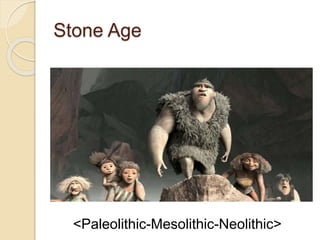
Stone Age 
<Paleolithic-Mesolithic-Neolithic>
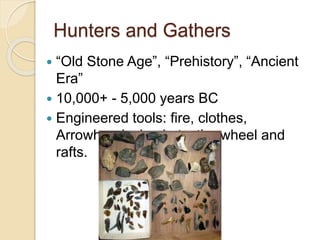
Hunters and Gathers 
 “Old Stone Age”, “Prehistory”, “Ancient 
Era” 
 10,000+ - 5,000 years BC 
 Engineered tools: fire, clothes, 
Arrowheads, baskets, the wheel and 
rafts.
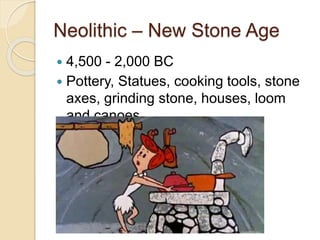
Neolithic – New Stone Age 
 4,500 - 2,000 BC 
 Pottery, Statues, cooking tools, stone 
axes, grinding stone, houses, loom 
and canoes
Bronze Age 
 2100~ - 1200 BC 
 Early human civilizations smelting 
smelting its own copper, alloying with 
Tin or trading for it. 
 The Rise of Civilizations 
◦ Ancient Egypt 
◦ Ancient Rome/Greece 
◦ Chinese Dynasty 
◦ Ancient Mayans
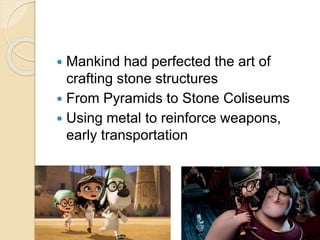
 Mankind had perfected the art of 
crafting stone structures 
 From Pyramids to Stone Coliseums 
 Using metal to reinforce weapons, 
early transportation
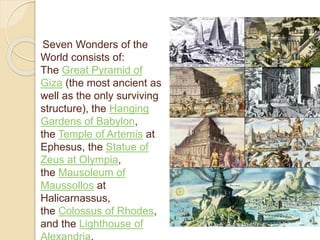
Seven Wonders of the 
World consists of: 
The Great Pyramid of 
Giza (the most ancient as 
well as the only surviving 
structure), the Hanging 
Gardens of Babylon, 
the Temple of Artemis at 
Ephesus, the Statue of 
Zeus at Olympia, 
the Mausoleum of 
Maussollos at 
Halicarnassus, 
the Colossus of Rhodes, 
and the Lighthouse of 
Alexandria.
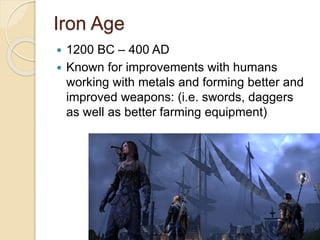
Iron Age 
 1200 BC – 400 AD 
 Known for improvements with humans 
working with metals and forming better and 
improved weapons: (i.e. swords, daggers 
as well as better farming equipment)
The Separation of the Iron Age to 
the Pre Scientific Age 
 One thousand years ago, superstition 
and the sword ruled. 
It was a time of darkness. It was a 
world of fear. 
 At this time mankind was choosing to 
not believe in myth and magic and 
scientific reasoning was beginning to 
set in.
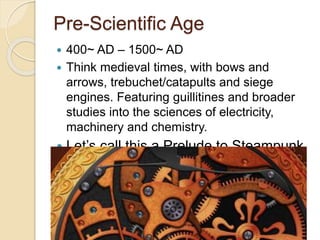
Pre-Scientific Age 
 400~ AD – 1500~ AD 
 Think medieval times, with bows and 
arrows, trebuchet/catapults and siege 
engines. Featuring guillitines and broader 
studies into the sciences of electricity, 
machinery and chemistry. 
 Let’s call this a Prelude to Steampunk
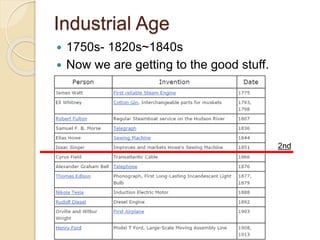
Industrial Age 
 1750s- 1820s~1840s 
 Now we are getting to the good stuff. 
2nd
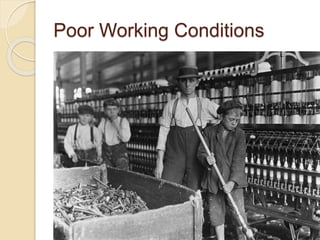
Poor Working Conditions
Second Industrial Revolution 
 1860s~1914~ 
 It is considered to have begun around the time of 
the introduction of Bessemer steel in the 1860s 
and culminated in early factory electrification, mass 
production and the production line. 
 Also Railroads, highways, steam power, oil power 
 Telegraph, telephone and Radio 
 Maritime Surge: Screw Propeller, oscillating 
engine, iron steamboat, surface condenser, paddle 
wheel and ironclad battleships.
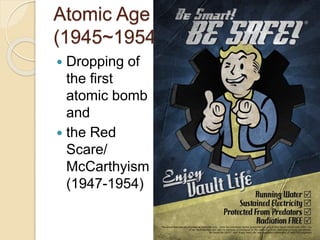
Atomic Age 
(1945~1954) 
 Dropping of 
the first 
atomic bomb 
and 
 the Red 
Scare/ 
McCarthyism 
(1947-1954)
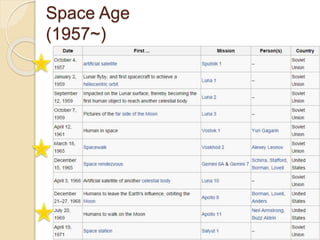
Space Age 
(1957~)
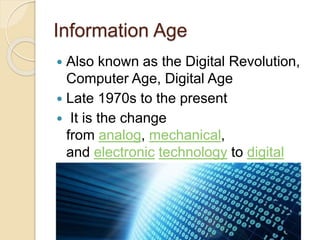
Information Age 
 Also known as the Digital Revolution, 
Computer Age, Digital Age 
 Late 1970s to the present 
 It is the change 
from analog, mechanical, 
and electronic technology to digital 
technology
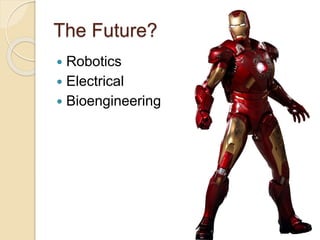
The Future? 
 Robotics 
 Electrical 
 Bioengineering

Past, Present and Future of Engineering

  • 1.
    Past, Present andFuture: A History of Human Engineering TE8490: Intro to Engineering
  • 2.
    Overview of theAges in Mankind  Stone Age  Bronze Age  Iron Age  Pre-Scientific Revolution  Industrial Revolution  2nd Industrial Revolution  Information Age  Where we are now
  • 3.
  • 4.
    Hunters and Gathers  “Old Stone Age”, “Prehistory”, “Ancient Era”  10,000+ - 5,000 years BC  Engineered tools: fire, clothes, Arrowheads, baskets, the wheel and rafts.
  • 5.
    Neolithic – NewStone Age  4,500 - 2,000 BC  Pottery, Statues, cooking tools, stone axes, grinding stone, houses, loom and canoes
  • 6.
    Bronze Age 2100~ - 1200 BC  Early human civilizations smelting smelting its own copper, alloying with Tin or trading for it.  The Rise of Civilizations ◦ Ancient Egypt ◦ Ancient Rome/Greece ◦ Chinese Dynasty ◦ Ancient Mayans
  • 7.
     Mankind hadperfected the art of crafting stone structures  From Pyramids to Stone Coliseums  Using metal to reinforce weapons, early transportation
  • 8.
    Seven Wonders ofthe World consists of: The Great Pyramid of Giza (the most ancient as well as the only surviving structure), the Hanging Gardens of Babylon, the Temple of Artemis at Ephesus, the Statue of Zeus at Olympia, the Mausoleum of Maussollos at Halicarnassus, the Colossus of Rhodes, and the Lighthouse of Alexandria.
  • 9.
    Iron Age 1200 BC – 400 AD  Known for improvements with humans working with metals and forming better and improved weapons: (i.e. swords, daggers as well as better farming equipment)
  • 10.
    The Separation ofthe Iron Age to the Pre Scientific Age  One thousand years ago, superstition and the sword ruled. It was a time of darkness. It was a world of fear.  At this time mankind was choosing to not believe in myth and magic and scientific reasoning was beginning to set in.
  • 11.
    Pre-Scientific Age 400~ AD – 1500~ AD  Think medieval times, with bows and arrows, trebuchet/catapults and siege engines. Featuring guillitines and broader studies into the sciences of electricity, machinery and chemistry.  Let’s call this a Prelude to Steampunk
  • 12.
    Industrial Age 1750s- 1820s~1840s  Now we are getting to the good stuff. 2nd
  • 13.
  • 14.
    Second Industrial Revolution  1860s~1914~  It is considered to have begun around the time of the introduction of Bessemer steel in the 1860s and culminated in early factory electrification, mass production and the production line.  Also Railroads, highways, steam power, oil power  Telegraph, telephone and Radio  Maritime Surge: Screw Propeller, oscillating engine, iron steamboat, surface condenser, paddle wheel and ironclad battleships.
  • 15.
    Atomic Age (1945~1954)  Dropping of the first atomic bomb and  the Red Scare/ McCarthyism (1947-1954)
  • 16.
  • 17.
    Information Age Also known as the Digital Revolution, Computer Age, Digital Age  Late 1970s to the present  It is the change from analog, mechanical, and electronic technology to digital technology
  • 18.
    The Future? Robotics  Electrical  Bioengineering

Editor's Notes

  • #13 Top 13 need-to-know
  • #16 Fall Out Game
  • #18 Dropping of the first atomic bomb and the Red Scare/McKarthyism (1947-1954) Space Race- Nasa