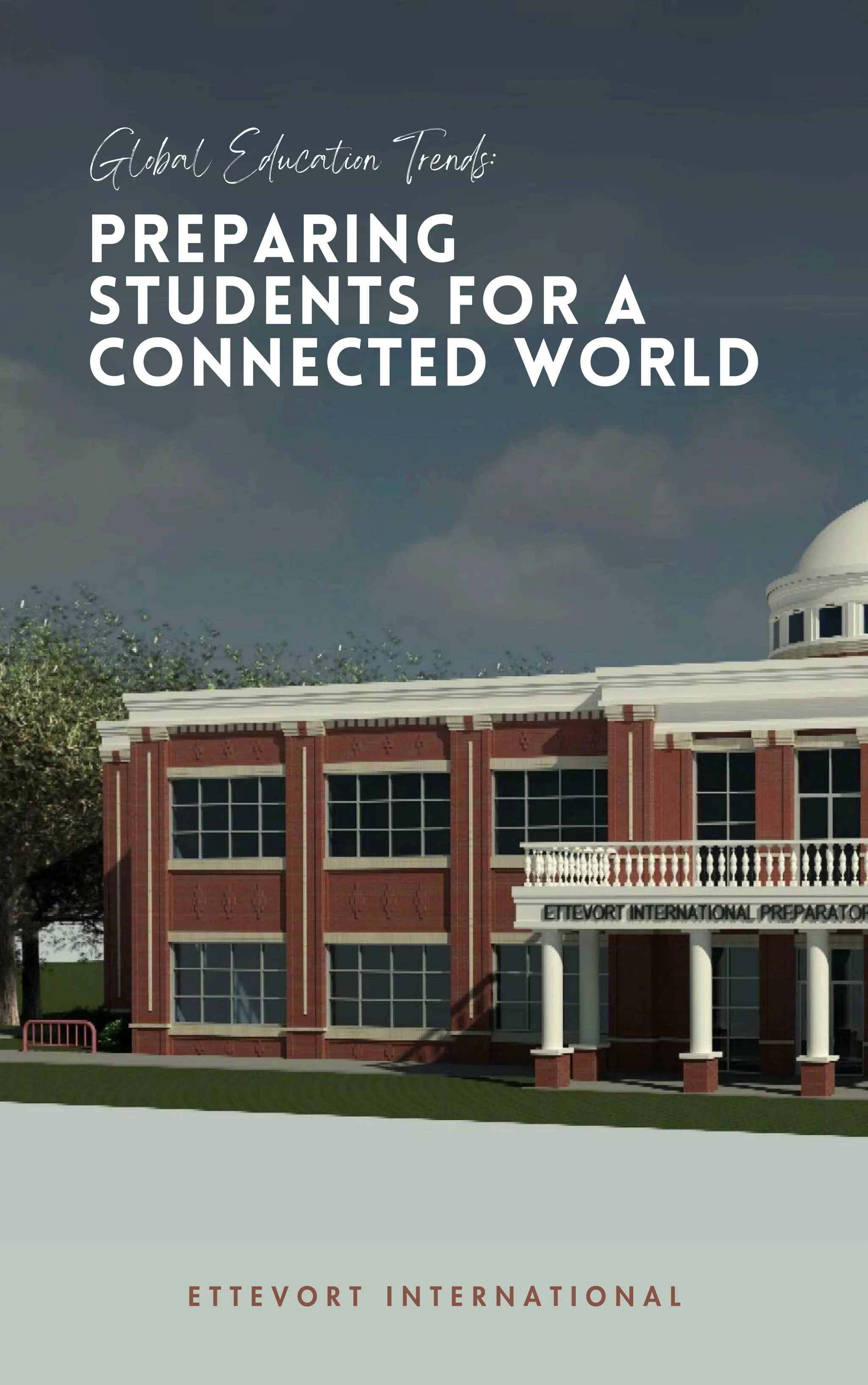
PREPARING
STUDENTS FOR A
CONNECTED WORLD
Global Education Trends:
E T T E V O R T I N T E R N A T I O N A L
E M B R A C I N G A N E W
E R A I N L E A R N I N G
Understanding Global Education
Global education refers to a dynamic approach that
seeks to equip students with the understanding,
skills, and values necessary to thrive in a highly
interconnected world. It emphasizes the importance
of cultural understanding, environmental
stewardship, and collaborative problem-solving
across borders.
The Importance of Global Education
In today’s digitally connected world, education
extends beyond local communities and national
boundaries. Global education fosters a deeper
awareness of other cultures and global issues,
preparing students not only to participate in the
global marketplace but also to contribute positively
to a diverse society.
Overview of Emerging Trends
This booklet will explore key trends reshaping
education, including technological integration, the
focus on soft skills, global connectivity initiatives, and
the continuous adaptation to rapidly evolving global
challenges.
D I G I T A L T O O L S
S H A P I N G M O D E R N
C L A S S R O O M S
E-Learning Platforms and Digital Classrooms
The rise of digital learning platforms has transformed
traditional educational methodologies, enabling
remote learning, flipped classrooms, and a more
personalized learning experience through adaptive
learning technologies.
STEM Education and Coding
With the increasing demand for technical skills,
educational systems worldwide are prioritizing STEM
(Science, Technology, Engineering, and Mathematics)
and coding from an early age. This trend highlights
the shift towards curricula that support critical
thinking and problem-solving skills essential for the
21st-century workforce.
Artificial Intelligence in Education
AI is playing a transformative role in customizing
student learning experiences. Tools like AI tutors and
chatbots provide personalized assistance to
students, while AI-driven analytics help educators
identify areas where students struggle and tailor their
teaching strategies accordingly.
C U L T I V A T I N G
E S S E N T I A L S K I L L S
F O R T H E F U T U R E
Importance of Soft Skills
As automation and artificial intelligence take on more
routine tasks, soft skills such as creativity, empathy,
and interpersonal communication become crucial.
These skills enable individuals to handle complex
social interactions and lead in diverse environments.
Lifelong Learning Models
The concept of lifelong learning is gaining traction,
recognizing that education does not end with formal
schooling. Continuous learning environments
encourage ongoing professional development and
personal growth throughout one's life.
Educational Strategies for Soft Skills
Innovative teaching approaches, such as project-
based learning and collaborative group work, are
being integrated into schools to enhance soft skills.
These methods provide practical experiences that
build leadership and teamwork capabilities among
students.
E X P A N D I N G
H O R I Z O N S T H R O U G H
I N T E R N A T I O N A L
C O L L A B O R A T I O N
International Collaboration Projects
Projects that connect students with their peers
abroad via digital tools promote a global perspective
and enhance digital communication skills. These
collaborations often involve joint problem-solving
tasks that address global issues like climate change or
sustainability.
Cultural Exchange Programs
Student exchange programs and international
campuses offer immersive experiences that are
invaluable for cultural understanding and language
acquisition, preparing students to operate effectively
in a globalized society.
Language Learning and Multilingual Education
Multilingual education empowers students by
improving their language skills, making them more
competitive in the global job market and better
prepared to engage with different cultures.
In a world where boundaries are increasingly blurred
by technology and cultural exchanges, education stands
as the bridge connecting diverse perspectives. By
embracing global education trends—from technological
integration to a focus on lifelong learning—we prepare
our students not just to navigate the world but to
enhance it. Together, we are building a foundation for a
future where learning is boundless and rich with
possibilities, empowering the next generation to thrive
in a truly connected global community.

Preparing Students for a Connected World.pdf

  • 1.
    PREPARING STUDENTS FOR A CONNECTEDWORLD Global Education Trends: E T T E V O R T I N T E R N A T I O N A L
  • 3.
    E M BR A C I N G A N E W E R A I N L E A R N I N G Understanding Global Education Global education refers to a dynamic approach that seeks to equip students with the understanding, skills, and values necessary to thrive in a highly interconnected world. It emphasizes the importance of cultural understanding, environmental stewardship, and collaborative problem-solving across borders. The Importance of Global Education In today’s digitally connected world, education extends beyond local communities and national boundaries. Global education fosters a deeper awareness of other cultures and global issues, preparing students not only to participate in the global marketplace but also to contribute positively to a diverse society. Overview of Emerging Trends This booklet will explore key trends reshaping education, including technological integration, the focus on soft skills, global connectivity initiatives, and the continuous adaptation to rapidly evolving global challenges.
  • 4.
    D I GI T A L T O O L S S H A P I N G M O D E R N C L A S S R O O M S E-Learning Platforms and Digital Classrooms The rise of digital learning platforms has transformed traditional educational methodologies, enabling remote learning, flipped classrooms, and a more personalized learning experience through adaptive learning technologies. STEM Education and Coding With the increasing demand for technical skills, educational systems worldwide are prioritizing STEM (Science, Technology, Engineering, and Mathematics) and coding from an early age. This trend highlights the shift towards curricula that support critical thinking and problem-solving skills essential for the 21st-century workforce. Artificial Intelligence in Education AI is playing a transformative role in customizing student learning experiences. Tools like AI tutors and chatbots provide personalized assistance to students, while AI-driven analytics help educators identify areas where students struggle and tailor their teaching strategies accordingly.
  • 5.
    C U LT I V A T I N G E S S E N T I A L S K I L L S F O R T H E F U T U R E Importance of Soft Skills As automation and artificial intelligence take on more routine tasks, soft skills such as creativity, empathy, and interpersonal communication become crucial. These skills enable individuals to handle complex social interactions and lead in diverse environments. Lifelong Learning Models The concept of lifelong learning is gaining traction, recognizing that education does not end with formal schooling. Continuous learning environments encourage ongoing professional development and personal growth throughout one's life. Educational Strategies for Soft Skills Innovative teaching approaches, such as project- based learning and collaborative group work, are being integrated into schools to enhance soft skills. These methods provide practical experiences that build leadership and teamwork capabilities among students.
  • 6.
    E X PA N D I N G H O R I Z O N S T H R O U G H I N T E R N A T I O N A L C O L L A B O R A T I O N International Collaboration Projects Projects that connect students with their peers abroad via digital tools promote a global perspective and enhance digital communication skills. These collaborations often involve joint problem-solving tasks that address global issues like climate change or sustainability. Cultural Exchange Programs Student exchange programs and international campuses offer immersive experiences that are invaluable for cultural understanding and language acquisition, preparing students to operate effectively in a globalized society. Language Learning and Multilingual Education Multilingual education empowers students by improving their language skills, making them more competitive in the global job market and better prepared to engage with different cultures.
  • 7.
    In a worldwhere boundaries are increasingly blurred by technology and cultural exchanges, education stands as the bridge connecting diverse perspectives. By embracing global education trends—from technological integration to a focus on lifelong learning—we prepare our students not just to navigate the world but to enhance it. Together, we are building a foundation for a future where learning is boundless and rich with possibilities, empowering the next generation to thrive in a truly connected global community.