



THE SHAKING
PALSY
Yasser Alzainy
Neurology Resident
AL-AZHAR UNIVERSITY
Faculty of Medicine
Neurology Department
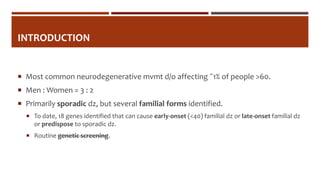
MOVEMENT DISORDERS
Moves too little
 Parkinson disease
 Parkinson-plus syndromes
Moves too much
 Tremor
 Dystonia
 Chorea
 Myoclonus
 Tics
 Akathisia
 Stereotypy
 RLS
INTRODUCTION
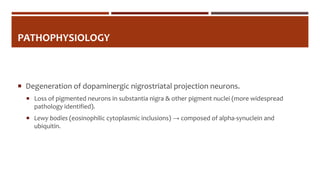
 Most common neurodegenerative mvmt d/o affecting ˜1% of people >60.
 Men : Women = 3 : 2
 Primarily sporadic dz, but several familial forms identified.
 To date, 18 genes identified that can cause early-onset (<40) familial dz or late-onset familial dz
or predispose to sporadic dz.
 Routine genetic screening.
PATHOPHYSIOLOGY
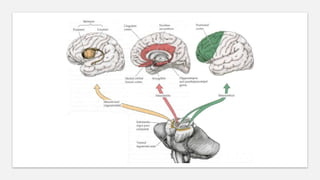
 Degeneration of dopaminergic nigrostriatal projection neurons.
 Loss of pigmented neurons in substantia nigra & other pigment nuclei (more widespread
pathology identified).
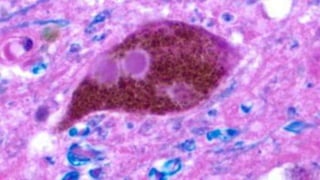
 Lewy bodies (eosinophilic cytoplasmic inclusions) → composed of alpha-synuclein and
ubiquitin.
CLINICAL FEATURES
CLINICAL FEATURES / DX
 4cardinal Symptoms
1. Rest tremor
2. Bradykinesia
3. Rigidity
4. Postural instability
 w/asymmetric onset.
 Other features:
 Depression
 Dementia: 40%
 ANS → bowel/bladder dysfxn, orthostatic hypotension.
 Sleep d/o: insomnia, RBD
EARLY SIGNS
 ↓ blinking (nl blink rate 15-20/min, PD → 5-10)
 ↓ facial expression (hypomimia)
 ↓ smell sensitivity
BRADYKINESIA
 Most characteristic feature of PD and
most disabling.
 Slow mvmts, first noted w/fine motor
tasks; micrographia (small handwriting).
 Difficulty turning in bed is late finding.
 Gait: slow, reduced arm swing, shuffling,
freezing, turning en bloc → freezing.
 Monotone, hypophonic dysarthria.
 Sialorrhea (failure to swallow).
POSTURAL INSTABILITY
 Worsening balance → falls; tested via pull
test.
 Festination—chasing center of gravity.
 Retropulsion/propulsion.
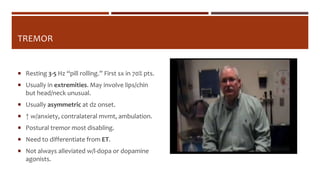
TREMOR
 Resting 3-5 Hz “pill rolling.” First sx in 70% pts.
 Usually in extremities. May involve lips/chin
but head/neck unusual.
 Usually asymmetric at dz onset.
 ↑ w/anxiety, contralateral mvmt, ambulation.
 Postural tremor most disabling.
 Need to differentiate from ET.
 Not always alleviated w/l-dopa or dopamine
agonists.
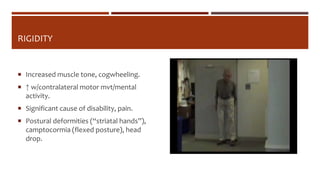
RIGIDITY
 Increased muscle tone, cogwheeling.
 ↑ w/contralateral motor mvt/mental
activity.
 Significant cause of disability, pain.
 Postural deformities (“striatal hands”),
camptocormia (flexed posture), head
drop.
DIFFERENTIAL DX
 Parkinson-plus syndromes
 25% of pts w/original dx of PD.
 Drug-induced parkinsonism
 reversible; rapid onset
 antipsychotics, antiemetics, amiodarone, valproate, lithium, Ca+ channel blockers.
 Structural (tumor, hydrocephalus, chronic subdural hematoma, trauma, vascular)
 Infectious (post-encephalitic, prion dz, HIV/AIDS, PML, neurosyphilis)
 Toxic: carbon monoxide, carbon disulfide, manganese
 Metabolic/miscellaneous: hepatocerebral degeneration, hypoparathyroidism/pseudohypoparathyroidism, hypoxia, Wilson
dz.
CLUES TO CONSIDER ALTERNATIVE DX:
 POOR response to dopaminergic therapy
 Early dementia → Lewy body dz
 Early/frequent falls → PSP
 Orthostatic hypotension → MSA
 Apraxia/alien hand → CBD
 Rapid onset → structural lesion/toxins.
TREATMENT
 L-dopa-carbidopa
 Dopamine Agonists
 MAO-B inhibitors
 COMT inhibitors
 Amantadine: Weakly effective monotherapy. May reduce dyskinesias/motor fluctuations due to
levodopa.
 Anticholinergics: Reduce tremor. Use limited by confusion.
 Atypical antipsychotics: For PD-associated psychosis.
 DBS
TREATMENT
 L-dopa-carbidopa
 Most effective med, active w/in 30 min of med ingestion; doesn't help all sxs (particularly postural
instability).
 Starting med early in dz doesn't ↓ long-term efficacy. Start 25/100 mg tid.
 Side effects:
 Nausea (common w/med initiation) → give med w/meal or crackers (but high-protein meal decreases med
absorption) or add additional carbidopa.
 Dyskinesias (worsen as dz progresses)
 Vivid dreams, sleep disturbance, visual hallucinations
 Hypotension, constipation
 Decreased impulse control → gambling
 Dopamine agonists: first-line alternative, pergolide, pramipexole & ropinirole
 Side effects:
 Decreased impulse control → gambling; hypersexuality; hypomanic states.
 Confusion, somnolence, delirium, hallucinations
 Peripheral edema
 MAO-B inhibitors (rasagiline, selegiline)
 Reduce dopamine metabolism. Weakly effective meds but may increase effectiveness (and side effects) of
L-dopa.
 Neuroprotective?
 Side effects: Nausea, headache. Insomnia, confusion w/selegiline. Avoid w/SSRI, TCA, or MAO-B inhibitors
that can cause serotonin syndrome.
 COMT inhibitors:
 Prolong levodopa effect and reduces “wearing off.” Give entacapone w/each dose of L-dopa.
 Avoid use of tolcapone given liver toxicity, needs LFT monitoring.
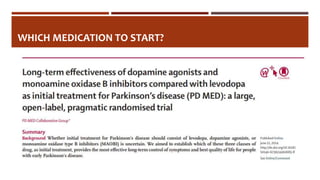
WHICH MEDICATION TO START?
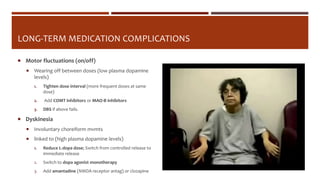
LONG-TERM MEDICATION COMPLICATIONS
 Motor fluctuations (on/off)
 Wearing off between doses (low plasma dopamine
levels)
1. Tighten dose interval (more frequent doses at same
dose)
2. Add COMT inhibitors or MAO-B inhibitors
3. DBS if above fails.
 Dyskinesia
 Involuntary choreiform mvmts
 linked to (high plasma dopamine levels)
1. Reduce L-dopa dose; Switch from controlled release to
immediate release
2. Switch to dopa agonist monotherapy
3. Add amantadine (NMDA receptor antag) or clozapine
QUESTIONS
 A 63-year-old woman with a 5-year history of idiopathic Parkinson’s disease (PD) presents
to her neurologist for routine follow-up. Her motor examination is stable, and she feels
that her regimen of dopaminergic therapy is adequate. However, her affect is blunted and
she describes multiple complaints, including loss of interest in social activities, reduced
appetite, increased sleep, and a sense of hopelessness. Which of the following statements
is correct in relation to this patient?
a) She is suffering from depression, and should be treated with appropriate pharmacologic and
nonpharmacologic measures targeted at the depression specifically
b) These symptoms are part of her PD and are best treated by optimizing her dopaminergic regimen
c) She is suffering from an adjustment disorder due to the diagnosis of PD, and just needs some
encouragement
d) Her affect is blunted only because of the hypomimia that occurs in PD
e) Her symptoms are likely due to the sedating side effects of her dopaminergic therapy, and her
dopaminergic therapy regimen should be reduced
 A 79-year-old man presents to the clinic complaining of tremor. On examination, he has
moderate bradykinesia, and bilateral tremor and rigidity, both worse in the right arm. His
wife reports that he takes several naps during the day and that he is sometimes forgetful.
The wife and the patient minimized his cognitive symptoms. What is the most appropriate
treatment for this patient?
a) Ropinirole
b) Carbidopa-levodopa
c) Pramipexole
d) Trihexyphenidyl
e) Bromocriptine
 Regarding the surgical treatment of idiopathic Parkinson’s disease (PD), which of the
following statements is incorrect?
a) If the motor symptoms are markedly asymmetric, with the less affected side being minimally involved,
unilateral deep brain stimulation (DBS) can be done 470
b) DBS is effective in treating tremor and bradykinesia
c) DBS is effective in treating levodopa-unresponsive gait freezing and falls
d) Significant cognitive impairment is a contraindication to DBS
e) DBS targets for PD include the subthalamic nucleus and globus pallidus interna
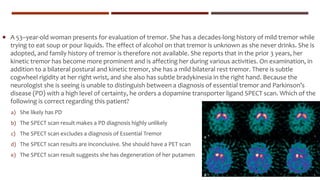
 A 53–year-old woman presents for evaluation of tremor. She has a decades-long history of mild tremor while
trying to eat soup or pour liquids. The effect of alcohol on that tremor is unknown as she never drinks. She is
adopted, and family history of tremor is therefore not available. She reports that in the prior 3 years, her
kinetic tremor has become more prominent and is affecting her during various activities. On examination, in
addition to a bilateral postural and kinetic tremor, she has a mild bilateral rest tremor. There is subtle
cogwheel rigidity at her right wrist, and she also has subtle bradykinesia in the right hand. Because the
neurologist she is seeing is unable to distinguish between a diagnosis of essential tremor and Parkinson’s
disease (PD) with a high level of certainty, he orders a dopamine transporter ligand SPECT scan. Which of the
following is correct regarding this patient?
a) She likely has PD
b) The SPECT scan result makes a PD diagnosis highly unlikely
c) The SPECT scan excludes a diagnosis of Essential Tremor
d) The SPECT scan results are inconclusive. She should have a PET scan
e) The SPECT scan result suggests she has degeneration of her putamen
Thank you

Parkinson disease

  • 1.
    THE SHAKING PALSY Yasser Alzainy NeurologyResident AL-AZHAR UNIVERSITY Faculty of Medicine Neurology Department
  • 2.
    MOVEMENT DISORDERS Moves toolittle  Parkinson disease  Parkinson-plus syndromes Moves too much  Tremor  Dystonia  Chorea  Myoclonus  Tics  Akathisia  Stereotypy  RLS
  • 3.
    INTRODUCTION  Most commonneurodegenerative mvmt d/o affecting ˜1% of people >60.  Men : Women = 3 : 2  Primarily sporadic dz, but several familial forms identified.  To date, 18 genes identified that can cause early-onset (<40) familial dz or late-onset familial dz or predispose to sporadic dz.  Routine genetic screening.
  • 4.
    PATHOPHYSIOLOGY  Degeneration ofdopaminergic nigrostriatal projection neurons.  Loss of pigmented neurons in substantia nigra & other pigment nuclei (more widespread pathology identified).  Lewy bodies (eosinophilic cytoplasmic inclusions) → composed of alpha-synuclein and ubiquitin.
  • 7.
  • 8.
    CLINICAL FEATURES /DX  4cardinal Symptoms 1. Rest tremor 2. Bradykinesia 3. Rigidity 4. Postural instability  w/asymmetric onset.  Other features:  Depression  Dementia: 40%  ANS → bowel/bladder dysfxn, orthostatic hypotension.  Sleep d/o: insomnia, RBD
  • 9.
    EARLY SIGNS  ↓blinking (nl blink rate 15-20/min, PD → 5-10)  ↓ facial expression (hypomimia)  ↓ smell sensitivity
  • 10.
    BRADYKINESIA  Most characteristicfeature of PD and most disabling.  Slow mvmts, first noted w/fine motor tasks; micrographia (small handwriting).  Difficulty turning in bed is late finding.  Gait: slow, reduced arm swing, shuffling, freezing, turning en bloc → freezing.  Monotone, hypophonic dysarthria.  Sialorrhea (failure to swallow).
  • 11.
    POSTURAL INSTABILITY  Worseningbalance → falls; tested via pull test.  Festination—chasing center of gravity.  Retropulsion/propulsion.
  • 12.
    TREMOR  Resting 3-5Hz “pill rolling.” First sx in 70% pts.  Usually in extremities. May involve lips/chin but head/neck unusual.  Usually asymmetric at dz onset.  ↑ w/anxiety, contralateral mvmt, ambulation.  Postural tremor most disabling.  Need to differentiate from ET.  Not always alleviated w/l-dopa or dopamine agonists.
  • 13.
    RIGIDITY  Increased muscletone, cogwheeling.  ↑ w/contralateral motor mvt/mental activity.  Significant cause of disability, pain.  Postural deformities (“striatal hands”), camptocormia (flexed posture), head drop.
  • 14.
    DIFFERENTIAL DX  Parkinson-plussyndromes  25% of pts w/original dx of PD.  Drug-induced parkinsonism  reversible; rapid onset  antipsychotics, antiemetics, amiodarone, valproate, lithium, Ca+ channel blockers.  Structural (tumor, hydrocephalus, chronic subdural hematoma, trauma, vascular)  Infectious (post-encephalitic, prion dz, HIV/AIDS, PML, neurosyphilis)  Toxic: carbon monoxide, carbon disulfide, manganese  Metabolic/miscellaneous: hepatocerebral degeneration, hypoparathyroidism/pseudohypoparathyroidism, hypoxia, Wilson dz.
  • 15.
    CLUES TO CONSIDERALTERNATIVE DX:  POOR response to dopaminergic therapy  Early dementia → Lewy body dz  Early/frequent falls → PSP  Orthostatic hypotension → MSA  Apraxia/alien hand → CBD  Rapid onset → structural lesion/toxins.
  • 16.
    TREATMENT  L-dopa-carbidopa  DopamineAgonists  MAO-B inhibitors  COMT inhibitors  Amantadine: Weakly effective monotherapy. May reduce dyskinesias/motor fluctuations due to levodopa.  Anticholinergics: Reduce tremor. Use limited by confusion.  Atypical antipsychotics: For PD-associated psychosis.  DBS
  • 17.
    TREATMENT  L-dopa-carbidopa  Mosteffective med, active w/in 30 min of med ingestion; doesn't help all sxs (particularly postural instability).  Starting med early in dz doesn't ↓ long-term efficacy. Start 25/100 mg tid.  Side effects:  Nausea (common w/med initiation) → give med w/meal or crackers (but high-protein meal decreases med absorption) or add additional carbidopa.  Dyskinesias (worsen as dz progresses)  Vivid dreams, sleep disturbance, visual hallucinations  Hypotension, constipation  Decreased impulse control → gambling
  • 18.
     Dopamine agonists:first-line alternative, pergolide, pramipexole & ropinirole  Side effects:  Decreased impulse control → gambling; hypersexuality; hypomanic states.  Confusion, somnolence, delirium, hallucinations  Peripheral edema  MAO-B inhibitors (rasagiline, selegiline)  Reduce dopamine metabolism. Weakly effective meds but may increase effectiveness (and side effects) of L-dopa.  Neuroprotective?  Side effects: Nausea, headache. Insomnia, confusion w/selegiline. Avoid w/SSRI, TCA, or MAO-B inhibitors that can cause serotonin syndrome.  COMT inhibitors:  Prolong levodopa effect and reduces “wearing off.” Give entacapone w/each dose of L-dopa.  Avoid use of tolcapone given liver toxicity, needs LFT monitoring.
  • 19.
  • 20.
    LONG-TERM MEDICATION COMPLICATIONS Motor fluctuations (on/off)  Wearing off between doses (low plasma dopamine levels) 1. Tighten dose interval (more frequent doses at same dose) 2. Add COMT inhibitors or MAO-B inhibitors 3. DBS if above fails.  Dyskinesia  Involuntary choreiform mvmts  linked to (high plasma dopamine levels) 1. Reduce L-dopa dose; Switch from controlled release to immediate release 2. Switch to dopa agonist monotherapy 3. Add amantadine (NMDA receptor antag) or clozapine
  • 21.
  • 22.
     A 63-year-oldwoman with a 5-year history of idiopathic Parkinson’s disease (PD) presents to her neurologist for routine follow-up. Her motor examination is stable, and she feels that her regimen of dopaminergic therapy is adequate. However, her affect is blunted and she describes multiple complaints, including loss of interest in social activities, reduced appetite, increased sleep, and a sense of hopelessness. Which of the following statements is correct in relation to this patient? a) She is suffering from depression, and should be treated with appropriate pharmacologic and nonpharmacologic measures targeted at the depression specifically b) These symptoms are part of her PD and are best treated by optimizing her dopaminergic regimen c) She is suffering from an adjustment disorder due to the diagnosis of PD, and just needs some encouragement d) Her affect is blunted only because of the hypomimia that occurs in PD e) Her symptoms are likely due to the sedating side effects of her dopaminergic therapy, and her dopaminergic therapy regimen should be reduced
  • 23.
     A 79-year-oldman presents to the clinic complaining of tremor. On examination, he has moderate bradykinesia, and bilateral tremor and rigidity, both worse in the right arm. His wife reports that he takes several naps during the day and that he is sometimes forgetful. The wife and the patient minimized his cognitive symptoms. What is the most appropriate treatment for this patient? a) Ropinirole b) Carbidopa-levodopa c) Pramipexole d) Trihexyphenidyl e) Bromocriptine
  • 24.
     Regarding thesurgical treatment of idiopathic Parkinson’s disease (PD), which of the following statements is incorrect? a) If the motor symptoms are markedly asymmetric, with the less affected side being minimally involved, unilateral deep brain stimulation (DBS) can be done 470 b) DBS is effective in treating tremor and bradykinesia c) DBS is effective in treating levodopa-unresponsive gait freezing and falls d) Significant cognitive impairment is a contraindication to DBS e) DBS targets for PD include the subthalamic nucleus and globus pallidus interna
  • 25.
     A 53–year-oldwoman presents for evaluation of tremor. She has a decades-long history of mild tremor while trying to eat soup or pour liquids. The effect of alcohol on that tremor is unknown as she never drinks. She is adopted, and family history of tremor is therefore not available. She reports that in the prior 3 years, her kinetic tremor has become more prominent and is affecting her during various activities. On examination, in addition to a bilateral postural and kinetic tremor, she has a mild bilateral rest tremor. There is subtle cogwheel rigidity at her right wrist, and she also has subtle bradykinesia in the right hand. Because the neurologist she is seeing is unable to distinguish between a diagnosis of essential tremor and Parkinson’s disease (PD) with a high level of certainty, he orders a dopamine transporter ligand SPECT scan. Which of the following is correct regarding this patient? a) She likely has PD b) The SPECT scan result makes a PD diagnosis highly unlikely c) The SPECT scan excludes a diagnosis of Essential Tremor d) The SPECT scan results are inconclusive. She should have a PET scan e) The SPECT scan result suggests she has degeneration of her putamen
  • 26.

Editor's Notes

  • #20 Dopaminergic tx. Tremor is a major sympt: try anticholinergic or amantadine monotherapy. Dopamine agonist vs. l-dopa: L-dopa associated w/increased motor complications (i.e., dyskinesia, mtr fluctuations) early in Rx (<5 yr) but has better overall motor fxn. Controversy over whether early L-dopa tx has long-term consequences for motor fluctuations. Some evidence that motor complications in the two grps equalize over time (10-14 yr). Eventually those treated w/agonist will require adjunctive L-dopa.