Dr Ravi Soni
Senior Resident
Dept. of Geriatric Mental Health
KGMU, LUCKNOW
Movement disorders in old
age
 Hypokinetic disorders:
 Parkinson’s disease
 Hyperkinetic disorders:
 Essential tremor
 Dyskinesias
 Dystonia
 Myoclonus
Causes of parkinsonism
Idiopathic PD- 85% of all PS
Familial (hereditary) PD
Parkinsonian syndromes:
 PSP- 1.5%
 MSA- 2.5%
- Striato-NigralType
(Parkinsonism First)
- Shy-Drager Syndrome
(Autonomic Failure First)
- Olivo-ponto-cerebellarType
(OPCA – Ataxia First)
 Corticobasal degeneration (CBD)
Secondary parkinsonism
 Vascular- 3%
 Drug induced- 7-9%
 Postencephalitic
 Hydrocephalus
Degenerative disorders with
associated parkinsonism:
 Alzheimer disease (AD)
 Parkinson—dementia—motor
neuron disease complex
Genetic disorders with associated
parkinsonism:
 Wilson disease (consider in all
cases <50 years)
 Huntington disease (HD)
(akinetic rigid [Westphal]
variant)
 Dopa-responsive dystonia
Main Biochemical
Abnormality
 Marked striatal DA depletion
 “striatal dopamine deficiency syndrome”
 At death, DA loss>90%
 <50% DA loss is asymptomatic
 ~70% DA loss for symptom manifestations
 Severity of DA loss best correlates with
bradykinesia in PD
Proposed stages of Parkinson’s
disease
Differential diagnosis
 Harrison’s neurology, chapter 24, table 24.3
Treatment options
 Non pharmacological management
 Medical (pharmacological and
neuroprotective agents)
 Surgical treatment
 Deep brain Stimulation
 Treatment under development
Newer medications
Neural tissue transplantation
Nonpharmacologic TreatmentsNonpharmacologic Treatments
Patient/caregiver education:Patient/caregiver education: about symptoms,about symptoms,
nature of the disease, prognosis,nature of the disease, prognosis, emotional and
psychological needs of the patient with PD and family
should be addressed
• Support groups for the caregivers, parkinson diseaseSupport groups for the caregivers, parkinson disease
organizationorganization
Physiotherapy and ExercisePhysiotherapy and Exercise
Speech therapySpeech therapy
Occupational therapyOccupational therapy
Treatment Goals
 Maintain function and quality of life
 Avoidance drug induced complications
 General considerations:
 Bradykinesia, tremor, rigidity and abnormal
posture respond well in early PD
 Cognitive symptoms, hypophonia, autonomic
dysfunction, imbalance respond poorly
 Primary motor disability leads to sedentary
life style
 Physical Deconditioning
 Secondary motor disability
When to initiate treatment
 As soon as symptom begin to interfere with
function
 Early initiation of therapy is necessary to
maintain an adequate level of physical and
mental activity
 Currently the priority is more beyond the
symptom control - neuroprotection
Initiation of Therapy
 First line agent depends upon
age and cognitive status-more
clinical type and finances-less
 Choices are:
1. Dopamine agonist
2. Levodopa preparation
3. MAO-B inhibitor
Dopamine agonist
 Well tolerated
 Improves motor function and disability
 50% lower risk of dyskinesia
 25% lower risk of motor fluctuations
 66% patients on agonist therapy will require
levodopa preparations after 5 years
 Successful agonist therapy requires higher doses
than usual
 If levodopa is to be added it should have
supplemental role
Caution with Dopamine agonist
 Higher incidence of non motor side effects
 Higher motor disability than levodopa
 Psychotic and behavioral symptoms
 Severe day time sleep disturbances
 Older patients and akinetic rigid form of PD
patients are better treated with levodopa
Pharmacotherapy of motor
symptom
 Levodopa remains the most effective treatment of
PD
 The aim of all dopaminomimetic strategies is to
restore dopamine transmission in the striatum. This
is accomplished by
o stimulating postsynaptic receptors (directly with
dopamine agonists),
o increasing dopamine precursor availability
(levodopa),
o blocking the metabolism of levodopa in the
periphery and in the brain, and
o blocking the catabolism of dopamine at the synapse
DA
GABA
ACh
Striatum
Substantia Nigra
levodopa
Amantadine*
Selegiline
Rasagaline
Dopamine
agonists
bromocriptine
pergolide
pramipexole
ropinirole
rotigotine
apomorphine
baclofen
trihexiphenidyl
BBB
carbidopa
benserazide
tolcapone
entacapone
Sites of Action of PD Drugs
MAO-B
Dopamine agonist
 Can be used as monotherapy
 In combination with levodopa-carbidopa combination
 In combination with anticholinergics and amantadine
 ERGOT
• Bromocriptine
• Lisuride
• Pergolide
• Cabergoline
 Non ERGOT
• Ropinirole
• Pramipexol
• rotigotine
Dopamine agonist
 A long-acting formulation of ropinirole and
 a transdermal patch delivery system of
rotigotine will soon be approved for use in PD.
 Infusion therapy has proved superior at
- controlling motor fluctuations
- Reducing dyskinesias over time
 Use of two dopamine agonist simultaneously is
not recommended
 Apomorphine administered parenteraly
Side effects of DAs
 Similar to levodopa
 Nausea.
 Vomiting.
 Postural hypotension.
 Confusion.
 Hallucinations.
 Somnolence.
 Can be managed by
reducing the dose
 Decreasing other
medications
 Adding domperidone
Side effects of ERGOT DA’s
 Fibrotic reactions
 Pulmonary, retroperitoneal and pericardial
fibrosis
 Cardiac valvulopathy
 In most cases non ergot DA’s preferred
 CXR, PFT’s, ESR,and S. creatinine before
starting treatment
Unusual side effects of
DA’s
 Complex group of impulse control disorders
 Pathological gambling.
 Hypersexuality.
 Compulsive eating or shopping.
. Repetitive perseverative behavior.
-- Punding
-- Excessive hobbyism.
Levodopa
 Used since the 1960’s
 Remains the ‘gold standard’
 Always used with dopa decarboxylase
inhibitor( either carbidopa or benserazide.)
 Preparations available: regular, immediate
release, controlled release, in combination
with entacapone
 Initiation of dosing at mealtimes will reduce
the incidence and severity of nausea.
Side effects of levodopa
 Very common
 Nausea, vomiting
 Excessive drowsiness
 Insomnia
 End of dose fluctuations
 Nocturnal immobility
 Motor fluctuations and dyskinesias
Levodopa augmentation
strategies
 MAO -B inhibitors:
 Selegiline
 10 mg. Od or 5 mg. Bd
 2.5 mg in elderly.
 Zelapar( oral lyophilisate ) 1.25 mg. Before breakfast.
 Place on tongue and allow to dissolve
 Neuroprotective??
Rasagiline
 1 mg. Expensive
o These compounds offer a modest symptomatic motor benefit
when used as monotherapy and enhance the efficacy of
carbidopa/levodopa formulations when used as adjuncts
o it increases “on” time while reducing motor fluctuations
COMT inhibitors
 Entacapone
 Talcapone
 In combination with levo dopa and carbidopa
 Dosage: 12.5/50/200
25/100/200
 When used in conjunction with carbidopa/levodopa,
o These agents increase the plasma levodopa levels by
>30%
o alleviate wearing-off symptoms
 Entacaprone (200 mg with each dose of
carbidopa/levodopa) increases “on” time by <1 h/d,
whereas tolcapone (100–200 mg tid) increases “on”
time by about 1.8 h/d.
Amantidine
 Antiviral properties
 Weak DA, anti cholinergic
 Reduce fatigue, tremor and dyskinesia
 Only for moderate to severe dyskinesia
 Glutamate antagonist
 100 mg. BD or TDS
 Amantadine can reduce drug-induced
dyskinesias by up to 70%.
Antimuscarinic drugs
- Benzatropine, Procyclidine
- Trihexyphenidyl (2-5mg bd or tid)
 Anticholinergics are particularly useful for
controlling rest tremor and dystonia,
- Side effects may include dry mouth, blurred
vision, sedation, delirium, hallucination,
constipation, and difficulty urinating
- Cognitive impairment in elderly
- Useful in drug induced Parkinsonism
- can be used for excessive salivation
Apomorphine
 Potent dopamine agonist
 Significant cost (10,000 £ PA for cont. Infusion)
 Only parenteral use
Subcutaneous (rescue ) injections.
SC continuous infusion.
 Severely emetogenic.
 Needs priming with Domperidone.
 Only used in advanced PD with severe motor
fluctuations.
 Injection site reactions
 Could be an alternative to invasive surgical
procedures
 Harrison’s neurology Table 24-4
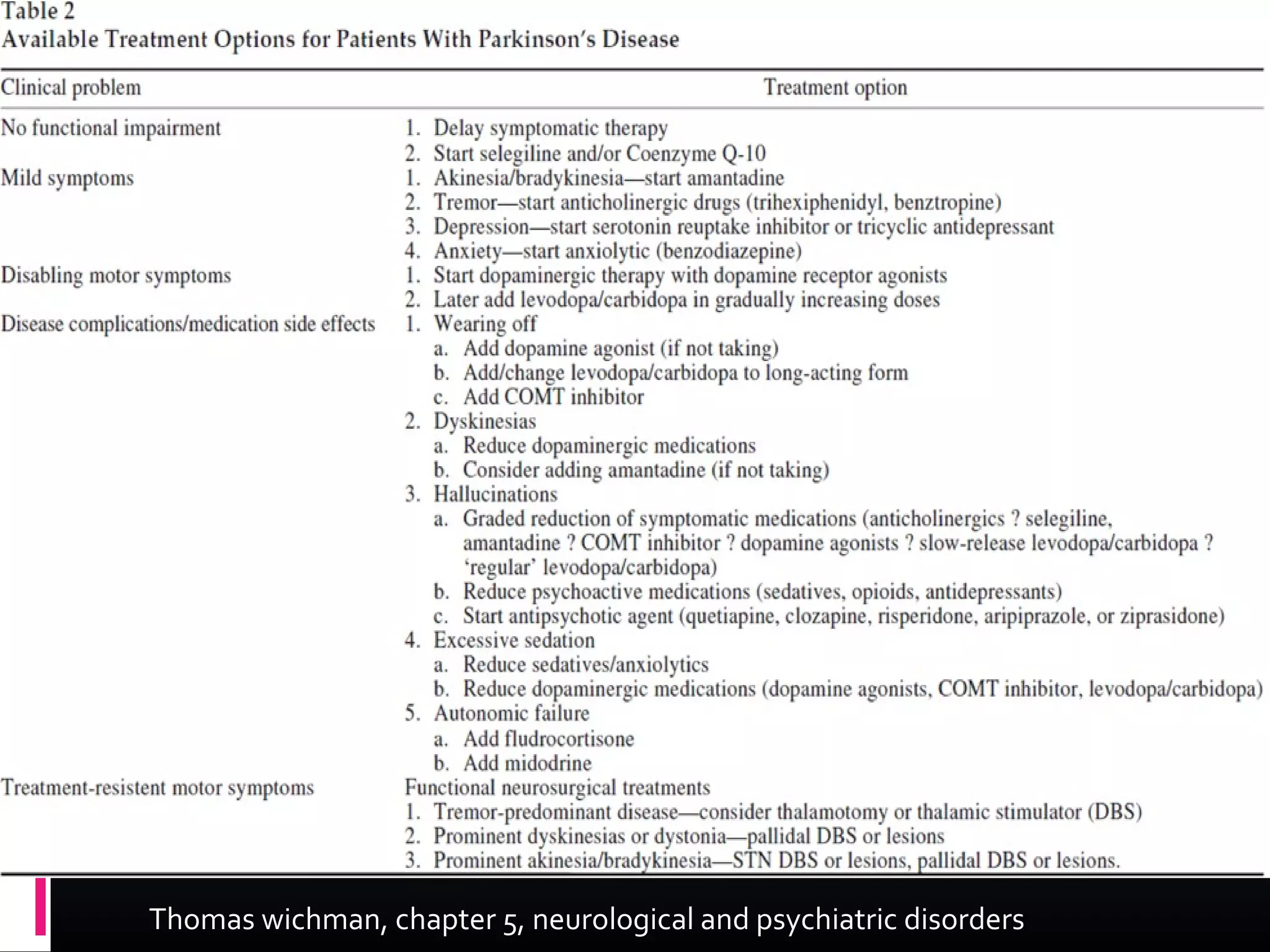
Thomas wichman, chapter 5, neurological and psychiatric disorders
 Physical Therapy / Volume 75, Number 5 / May 1995
Treatment of Non-motor
symptoms
 Depression
 Affects the quality of life in 40%
 Although SSRIs (e.g., citalopram and
sertraline) are first choice, it may cause a
deterioration of parkinsonian symptoms
 Mirtazapine (presynaptic A2 antagonist)
 Alternative drugs are the TCAs
 In severe cases electroconvulsive therapy
may be an option
Psychosis
 Occurs in 10%–15%
 Symptoms: mild illusions, visual hallucinations, and paranoid
delusions
 Underlying pathophysiology is combination of development of
cortical Lewy body dementia and medication effects.
 Management
 Treat any infection (urinary tract infections, bed sores, etc.).
 Correct any metabolic derangement, e.g., dehydration.
 Reduce and withdraw anticholinergics, selegiline, amantadine,
DAs, and, lastly, levodopa.
 If necessary, balance between “mad and mobile” and “stiff but
sane.”
 Consider addition of a newer generation of antipsychotic drugs,
e.g., quetiapine 25–50 mg daily to bid. Low-dose clozapine (6.25–
50 mg, mean 25 mg) has been shown to be effective.
 Agranulocytosis occurs in 1.2% of patients using clozapine.
Dementia
 Features of Lewy body dementia include
visual hallucinations, a fluctuating course
with lucid intervals, and an exquisite
sensitivity to neuroleptic drugs.
 Benefit with the use of cholinesterase
inhibitor drugs used in the treatment of AD,
such as donepezil and rivastigmine.
Sleep disturbance
 Common problem due to combination of factors:
 Stiffness and rigidity, making it diffi cult to turn in
bed. Consider CR levodopa preparations or
cabergoline.
 Bladder disturbance due to detrusor hyperrefl exia
resulting in nocturia. Oxybutynin and tolterodine
may help.
 Restless legs: CR levodopa or cabergoline at night
 Rapid eye movement (REM) sleep behavior disorder
(RBD) where purposeful nocturnal motor activity
occurs during REM sleep phase. Clonazepam 0.5–2
mg is effective.
Excess saliva due to an
inability to swallow
 Can be treated with anticholinergic drugs but
will have significant side effects
 Hyoscine patches behind the ear
 Instillation of atropine drops 0.5% on the
tongue two or three times a day
 Botulinum toxin injection or radiation therapy
into the parotid glands if unresponsive and
problematical
Falls and postural instability
 Occur late in the course of the disease and are
unresponsive to medication
 Multidisciplinary assessment with a
physiotherapist and occupational therapist to
acquire walking aids and make appropriate
adaptations
Neuroprotective therapy
 Slowing the progression of PD- is a major
focus of research
 Non-steroidal anti-inflammatory agents or
the use of estrogen replacement in
postmenopausal women may delay or
prevent the onset of PD through yet-unclear
mechanisms.
 Similarly, in large populations, the long-term
use of nicotine and caffeine has been
associated with a lower risk of PD
Neuroprotective therapy
 Selegilline monotherapy
 Coenzyme Q10: an antioxidant and a cofactor of complex I of
the mitochondrial oxidative chain, has been shown to have neuro-
protective effects against multiple toxic agents in vitro and in animal
models of PD-phase 3 trial is running
 creatine monohydrate and acetyllevo-carnitine: under
investigation, phase 3 trial has started
 Dopamine agonists
 nitric oxide synthetase inhibitors
 Antiapoptotic agents such as Jun N-terminal kinase
inhibitors and desmethylselegiline
 Intrastriatal infusion (or delivery via viral vectors) of
neurotrophic factors
DBS Overview
 The most common indications for surgery in PD are
intractable tremor and drug-induced motor fluctuations or
dyskinesias. The best candidates are patients with clear
levodopa-responsive parkinsonism who are free of
significant dementia or psychiatric comorbidities.
 PD Subthalamic Nuclei
 ET VIM (Thalamus)
 Dystonia GPi (Globus Pallidus interna)
 OCD Anterior Limb internal capsule
 FUTURE
 Depression Cingulate Gyrus
 Seizures Anterior Nucleus Thalamus
 Headaches Cluster HA -Hypothalamic
Surgical treatment in PD
 Oxford american handbook neurology, chapter 9, table 9.4
Treatment under development
 D1 receptor specific Dopamine agonist
 Adenosine A2A receptors antagonists
 Antagonists that block ionotropic glutamate
receptors (MK-801 or remacemide)
 Drugs acting on Metabotropic glutamate
receptors: more distributed in basal nuclei
Neural tissue transplantation
 Dopaminergic transplants in patients with PD use of
dopaminergic adrenal or fetal mesencephalic donor
tissues
 Intrastriatal transplantation of human embryonic
mesencephalic tissue have shown that grafted DA
neurons reinnervate the striatum, restore striatal DA
release and, in some patients, induce major clinical
benefit
 Transplantation- induced dyskinesias: result of
unregulated DA release from the transplanted tissue
 treatment of SNc cells with glia-derived nerve
growth factor may protect such neurons from
degeneration and may induce sprouting of
dopaminergic terminals
Stem cell therapy
 embryonic stem (ES) cells proliferate
extensively and can generate dopamine
neurons
 Highly enriched population of midbrain neural
stem cells can be derived from mouse ES cells
 Dopamine neurons generated by these stem
cells show electrophysiological and behavioral
properties expected of neurons from the
midbrain
 Results encourage the use of ES cells in cell-
replacement therapy for Parkinson's disease
Treatment of essential
tremor
 Non Medical:
 Applying weight to wrist
 Relaxation techniques, biofeedback
 Avoiding medications like lithium, antipsychotics, valproic acid,
corticosteroids, some anti-depressants and adrenergic agonists
 Medical:
 Primidone
 Propranolol
 benzodiazepines, especially clonazepam
 Refractory cases: gabapentin, topiramate and methazolamide
 Severe head tremors: botulinum toxin injections
Treatment of essential
tremor
 Surgery:
 Placing a surgical lesion in the ventral intermediate
thalamus (Vim)
 Side effects: speech problems
Deep brain Stimulation:
 Same site stimulation: ventral intermediate thalamus
Treatments of dystonia
 Differ depending upon type of dystonia
 Pharmacologic
 Levodopa(Sinemet), Anticholinergic medications
(Artane), Baclofen, Clonazepam, Dopamine
agonist, Clozapine, Tetrabenazine
 Chemodenervation
 Botox, alcohol, phenol
 Surgery
 DBS, Pallidotomy
Treatment of dyskinesias
 stopping the antipsychotic
 Change from typical to atypical
 Use clozapine and quetiapine
 Other medications: valproic acid,
anticholinergics, or botulinum toxin injections
 Refractory cases: reserprine or tetrabenazine
 Other approaches include baclofen (40–80
mg/d), clonazepam (1–8 mg/d), or valproic
acid (750–3000 mg/d).
Treatment of Myoclonus
 Treatment is aimed, whenever possible, at
the underlying cause,
 If symptomatic treatment is required, can use
 clonazepam,
 levetiracetam,
 valproic acid
 Primidone
 I have no choice about whether or not I have
Parkinson's. I have nothing but choices about
how I react to it. In those choices, there's
freedom to do a lot of things in areas that I
wouldn't have otherwise found myself in.
-Michael J. Fox

Management of movement disorders

  • 1.
    Dr Ravi Soni SeniorResident Dept. of Geriatric Mental Health KGMU, LUCKNOW
  • 2.
    Movement disorders inold age  Hypokinetic disorders:  Parkinson’s disease  Hyperkinetic disorders:  Essential tremor  Dyskinesias  Dystonia  Myoclonus
  • 3.
    Causes of parkinsonism IdiopathicPD- 85% of all PS Familial (hereditary) PD Parkinsonian syndromes:  PSP- 1.5%  MSA- 2.5% - Striato-NigralType (Parkinsonism First) - Shy-Drager Syndrome (Autonomic Failure First) - Olivo-ponto-cerebellarType (OPCA – Ataxia First)  Corticobasal degeneration (CBD) Secondary parkinsonism  Vascular- 3%  Drug induced- 7-9%  Postencephalitic  Hydrocephalus Degenerative disorders with associated parkinsonism:  Alzheimer disease (AD)  Parkinson—dementia—motor neuron disease complex Genetic disorders with associated parkinsonism:  Wilson disease (consider in all cases <50 years)  Huntington disease (HD) (akinetic rigid [Westphal] variant)  Dopa-responsive dystonia
  • 4.
    Main Biochemical Abnormality  Markedstriatal DA depletion  “striatal dopamine deficiency syndrome”  At death, DA loss>90%  <50% DA loss is asymptomatic  ~70% DA loss for symptom manifestations  Severity of DA loss best correlates with bradykinesia in PD
  • 5.
    Proposed stages ofParkinson’s disease
  • 6.
  • 7.
  • 8.
     Harrison’s neurology,chapter 24, table 24.3
  • 10.
    Treatment options  Nonpharmacological management  Medical (pharmacological and neuroprotective agents)  Surgical treatment  Deep brain Stimulation  Treatment under development Newer medications Neural tissue transplantation
  • 11.
    Nonpharmacologic TreatmentsNonpharmacologic Treatments Patient/caregivereducation:Patient/caregiver education: about symptoms,about symptoms, nature of the disease, prognosis,nature of the disease, prognosis, emotional and psychological needs of the patient with PD and family should be addressed • Support groups for the caregivers, parkinson diseaseSupport groups for the caregivers, parkinson disease organizationorganization Physiotherapy and ExercisePhysiotherapy and Exercise Speech therapySpeech therapy Occupational therapyOccupational therapy
  • 12.
    Treatment Goals  Maintainfunction and quality of life  Avoidance drug induced complications  General considerations:  Bradykinesia, tremor, rigidity and abnormal posture respond well in early PD  Cognitive symptoms, hypophonia, autonomic dysfunction, imbalance respond poorly  Primary motor disability leads to sedentary life style  Physical Deconditioning  Secondary motor disability
  • 13.
    When to initiatetreatment  As soon as symptom begin to interfere with function  Early initiation of therapy is necessary to maintain an adequate level of physical and mental activity  Currently the priority is more beyond the symptom control - neuroprotection
  • 14.
    Initiation of Therapy First line agent depends upon age and cognitive status-more clinical type and finances-less  Choices are: 1. Dopamine agonist 2. Levodopa preparation 3. MAO-B inhibitor
  • 15.
    Dopamine agonist  Welltolerated  Improves motor function and disability  50% lower risk of dyskinesia  25% lower risk of motor fluctuations  66% patients on agonist therapy will require levodopa preparations after 5 years  Successful agonist therapy requires higher doses than usual  If levodopa is to be added it should have supplemental role
  • 16.
    Caution with Dopamineagonist  Higher incidence of non motor side effects  Higher motor disability than levodopa  Psychotic and behavioral symptoms  Severe day time sleep disturbances  Older patients and akinetic rigid form of PD patients are better treated with levodopa
  • 17.
    Pharmacotherapy of motor symptom Levodopa remains the most effective treatment of PD  The aim of all dopaminomimetic strategies is to restore dopamine transmission in the striatum. This is accomplished by o stimulating postsynaptic receptors (directly with dopamine agonists), o increasing dopamine precursor availability (levodopa), o blocking the metabolism of levodopa in the periphery and in the brain, and o blocking the catabolism of dopamine at the synapse
  • 18.
  • 19.
    Dopamine agonist  Canbe used as monotherapy  In combination with levodopa-carbidopa combination  In combination with anticholinergics and amantadine  ERGOT • Bromocriptine • Lisuride • Pergolide • Cabergoline  Non ERGOT • Ropinirole • Pramipexol • rotigotine
  • 20.
    Dopamine agonist  Along-acting formulation of ropinirole and  a transdermal patch delivery system of rotigotine will soon be approved for use in PD.  Infusion therapy has proved superior at - controlling motor fluctuations - Reducing dyskinesias over time  Use of two dopamine agonist simultaneously is not recommended  Apomorphine administered parenteraly
  • 21.
    Side effects ofDAs  Similar to levodopa  Nausea.  Vomiting.  Postural hypotension.  Confusion.  Hallucinations.  Somnolence.  Can be managed by reducing the dose  Decreasing other medications  Adding domperidone
  • 22.
    Side effects ofERGOT DA’s  Fibrotic reactions  Pulmonary, retroperitoneal and pericardial fibrosis  Cardiac valvulopathy  In most cases non ergot DA’s preferred  CXR, PFT’s, ESR,and S. creatinine before starting treatment
  • 23.
    Unusual side effectsof DA’s  Complex group of impulse control disorders  Pathological gambling.  Hypersexuality.  Compulsive eating or shopping. . Repetitive perseverative behavior. -- Punding -- Excessive hobbyism.
  • 24.
    Levodopa  Used sincethe 1960’s  Remains the ‘gold standard’  Always used with dopa decarboxylase inhibitor( either carbidopa or benserazide.)  Preparations available: regular, immediate release, controlled release, in combination with entacapone  Initiation of dosing at mealtimes will reduce the incidence and severity of nausea.
  • 25.
    Side effects oflevodopa  Very common  Nausea, vomiting  Excessive drowsiness  Insomnia  End of dose fluctuations  Nocturnal immobility  Motor fluctuations and dyskinesias
  • 26.
    Levodopa augmentation strategies  MAO-B inhibitors:  Selegiline  10 mg. Od or 5 mg. Bd  2.5 mg in elderly.  Zelapar( oral lyophilisate ) 1.25 mg. Before breakfast.  Place on tongue and allow to dissolve  Neuroprotective?? Rasagiline  1 mg. Expensive o These compounds offer a modest symptomatic motor benefit when used as monotherapy and enhance the efficacy of carbidopa/levodopa formulations when used as adjuncts o it increases “on” time while reducing motor fluctuations
  • 27.
    COMT inhibitors  Entacapone Talcapone  In combination with levo dopa and carbidopa  Dosage: 12.5/50/200 25/100/200  When used in conjunction with carbidopa/levodopa, o These agents increase the plasma levodopa levels by >30% o alleviate wearing-off symptoms  Entacaprone (200 mg with each dose of carbidopa/levodopa) increases “on” time by <1 h/d, whereas tolcapone (100–200 mg tid) increases “on” time by about 1.8 h/d.
  • 28.
    Amantidine  Antiviral properties Weak DA, anti cholinergic  Reduce fatigue, tremor and dyskinesia  Only for moderate to severe dyskinesia  Glutamate antagonist  100 mg. BD or TDS  Amantadine can reduce drug-induced dyskinesias by up to 70%.
  • 29.
    Antimuscarinic drugs - Benzatropine,Procyclidine - Trihexyphenidyl (2-5mg bd or tid)  Anticholinergics are particularly useful for controlling rest tremor and dystonia, - Side effects may include dry mouth, blurred vision, sedation, delirium, hallucination, constipation, and difficulty urinating - Cognitive impairment in elderly - Useful in drug induced Parkinsonism - can be used for excessive salivation
  • 30.
    Apomorphine  Potent dopamineagonist  Significant cost (10,000 £ PA for cont. Infusion)  Only parenteral use Subcutaneous (rescue ) injections. SC continuous infusion.  Severely emetogenic.  Needs priming with Domperidone.  Only used in advanced PD with severe motor fluctuations.  Injection site reactions  Could be an alternative to invasive surgical procedures
  • 31.
  • 32.
    Thomas wichman, chapter5, neurological and psychiatric disorders
  • 34.
     Physical Therapy/ Volume 75, Number 5 / May 1995
  • 35.
    Treatment of Non-motor symptoms Depression  Affects the quality of life in 40%  Although SSRIs (e.g., citalopram and sertraline) are first choice, it may cause a deterioration of parkinsonian symptoms  Mirtazapine (presynaptic A2 antagonist)  Alternative drugs are the TCAs  In severe cases electroconvulsive therapy may be an option
  • 36.
    Psychosis  Occurs in10%–15%  Symptoms: mild illusions, visual hallucinations, and paranoid delusions  Underlying pathophysiology is combination of development of cortical Lewy body dementia and medication effects.  Management  Treat any infection (urinary tract infections, bed sores, etc.).  Correct any metabolic derangement, e.g., dehydration.  Reduce and withdraw anticholinergics, selegiline, amantadine, DAs, and, lastly, levodopa.  If necessary, balance between “mad and mobile” and “stiff but sane.”  Consider addition of a newer generation of antipsychotic drugs, e.g., quetiapine 25–50 mg daily to bid. Low-dose clozapine (6.25– 50 mg, mean 25 mg) has been shown to be effective.  Agranulocytosis occurs in 1.2% of patients using clozapine.
  • 37.
    Dementia  Features ofLewy body dementia include visual hallucinations, a fluctuating course with lucid intervals, and an exquisite sensitivity to neuroleptic drugs.  Benefit with the use of cholinesterase inhibitor drugs used in the treatment of AD, such as donepezil and rivastigmine.
  • 38.
    Sleep disturbance  Commonproblem due to combination of factors:  Stiffness and rigidity, making it diffi cult to turn in bed. Consider CR levodopa preparations or cabergoline.  Bladder disturbance due to detrusor hyperrefl exia resulting in nocturia. Oxybutynin and tolterodine may help.  Restless legs: CR levodopa or cabergoline at night  Rapid eye movement (REM) sleep behavior disorder (RBD) where purposeful nocturnal motor activity occurs during REM sleep phase. Clonazepam 0.5–2 mg is effective.
  • 39.
    Excess saliva dueto an inability to swallow  Can be treated with anticholinergic drugs but will have significant side effects  Hyoscine patches behind the ear  Instillation of atropine drops 0.5% on the tongue two or three times a day  Botulinum toxin injection or radiation therapy into the parotid glands if unresponsive and problematical
  • 40.
    Falls and posturalinstability  Occur late in the course of the disease and are unresponsive to medication  Multidisciplinary assessment with a physiotherapist and occupational therapist to acquire walking aids and make appropriate adaptations
  • 41.
    Neuroprotective therapy  Slowingthe progression of PD- is a major focus of research  Non-steroidal anti-inflammatory agents or the use of estrogen replacement in postmenopausal women may delay or prevent the onset of PD through yet-unclear mechanisms.  Similarly, in large populations, the long-term use of nicotine and caffeine has been associated with a lower risk of PD
  • 42.
    Neuroprotective therapy  Selegillinemonotherapy  Coenzyme Q10: an antioxidant and a cofactor of complex I of the mitochondrial oxidative chain, has been shown to have neuro- protective effects against multiple toxic agents in vitro and in animal models of PD-phase 3 trial is running  creatine monohydrate and acetyllevo-carnitine: under investigation, phase 3 trial has started  Dopamine agonists  nitric oxide synthetase inhibitors  Antiapoptotic agents such as Jun N-terminal kinase inhibitors and desmethylselegiline  Intrastriatal infusion (or delivery via viral vectors) of neurotrophic factors
  • 43.
    DBS Overview  Themost common indications for surgery in PD are intractable tremor and drug-induced motor fluctuations or dyskinesias. The best candidates are patients with clear levodopa-responsive parkinsonism who are free of significant dementia or psychiatric comorbidities.  PD Subthalamic Nuclei  ET VIM (Thalamus)  Dystonia GPi (Globus Pallidus interna)  OCD Anterior Limb internal capsule  FUTURE  Depression Cingulate Gyrus  Seizures Anterior Nucleus Thalamus  Headaches Cluster HA -Hypothalamic
  • 44.
    Surgical treatment inPD  Oxford american handbook neurology, chapter 9, table 9.4
  • 45.
    Treatment under development D1 receptor specific Dopamine agonist  Adenosine A2A receptors antagonists  Antagonists that block ionotropic glutamate receptors (MK-801 or remacemide)  Drugs acting on Metabotropic glutamate receptors: more distributed in basal nuclei
  • 46.
    Neural tissue transplantation Dopaminergic transplants in patients with PD use of dopaminergic adrenal or fetal mesencephalic donor tissues  Intrastriatal transplantation of human embryonic mesencephalic tissue have shown that grafted DA neurons reinnervate the striatum, restore striatal DA release and, in some patients, induce major clinical benefit  Transplantation- induced dyskinesias: result of unregulated DA release from the transplanted tissue  treatment of SNc cells with glia-derived nerve growth factor may protect such neurons from degeneration and may induce sprouting of dopaminergic terminals
  • 47.
    Stem cell therapy embryonic stem (ES) cells proliferate extensively and can generate dopamine neurons  Highly enriched population of midbrain neural stem cells can be derived from mouse ES cells  Dopamine neurons generated by these stem cells show electrophysiological and behavioral properties expected of neurons from the midbrain  Results encourage the use of ES cells in cell- replacement therapy for Parkinson's disease
  • 48.
    Treatment of essential tremor Non Medical:  Applying weight to wrist  Relaxation techniques, biofeedback  Avoiding medications like lithium, antipsychotics, valproic acid, corticosteroids, some anti-depressants and adrenergic agonists  Medical:  Primidone  Propranolol  benzodiazepines, especially clonazepam  Refractory cases: gabapentin, topiramate and methazolamide  Severe head tremors: botulinum toxin injections
  • 49.
    Treatment of essential tremor Surgery:  Placing a surgical lesion in the ventral intermediate thalamus (Vim)  Side effects: speech problems Deep brain Stimulation:  Same site stimulation: ventral intermediate thalamus
  • 50.
    Treatments of dystonia Differ depending upon type of dystonia  Pharmacologic  Levodopa(Sinemet), Anticholinergic medications (Artane), Baclofen, Clonazepam, Dopamine agonist, Clozapine, Tetrabenazine  Chemodenervation  Botox, alcohol, phenol  Surgery  DBS, Pallidotomy
  • 51.
    Treatment of dyskinesias stopping the antipsychotic  Change from typical to atypical  Use clozapine and quetiapine  Other medications: valproic acid, anticholinergics, or botulinum toxin injections  Refractory cases: reserprine or tetrabenazine  Other approaches include baclofen (40–80 mg/d), clonazepam (1–8 mg/d), or valproic acid (750–3000 mg/d).
  • 52.
    Treatment of Myoclonus Treatment is aimed, whenever possible, at the underlying cause,  If symptomatic treatment is required, can use  clonazepam,  levetiracetam,  valproic acid  Primidone
  • 54.
     I haveno choice about whether or not I have Parkinson's. I have nothing but choices about how I react to it. In those choices, there's freedom to do a lot of things in areas that I wouldn't have otherwise found myself in. -Michael J. Fox