Topic :Parathyroid gland
By: Dr Iqra bano Chandio
Parathyroid gland
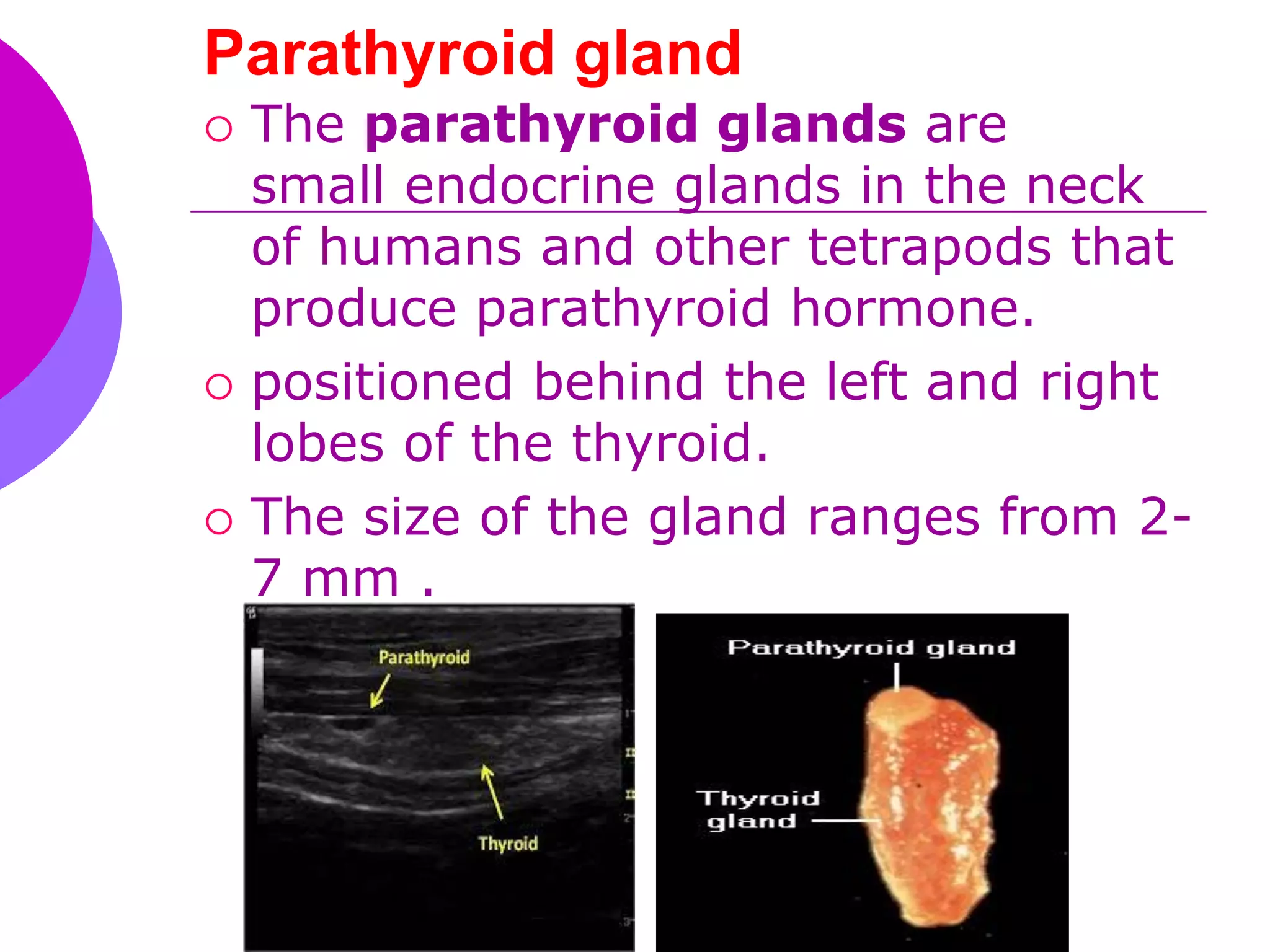
 The parathyroid glands are
small endocrine glands in the neck
of humans and other tetrapods that
produce parathyroid hormone.
 positioned behind the left and right
lobes of the thyroid.
 The size of the gland ranges from 2-
7 mm .
Parathyroid cells
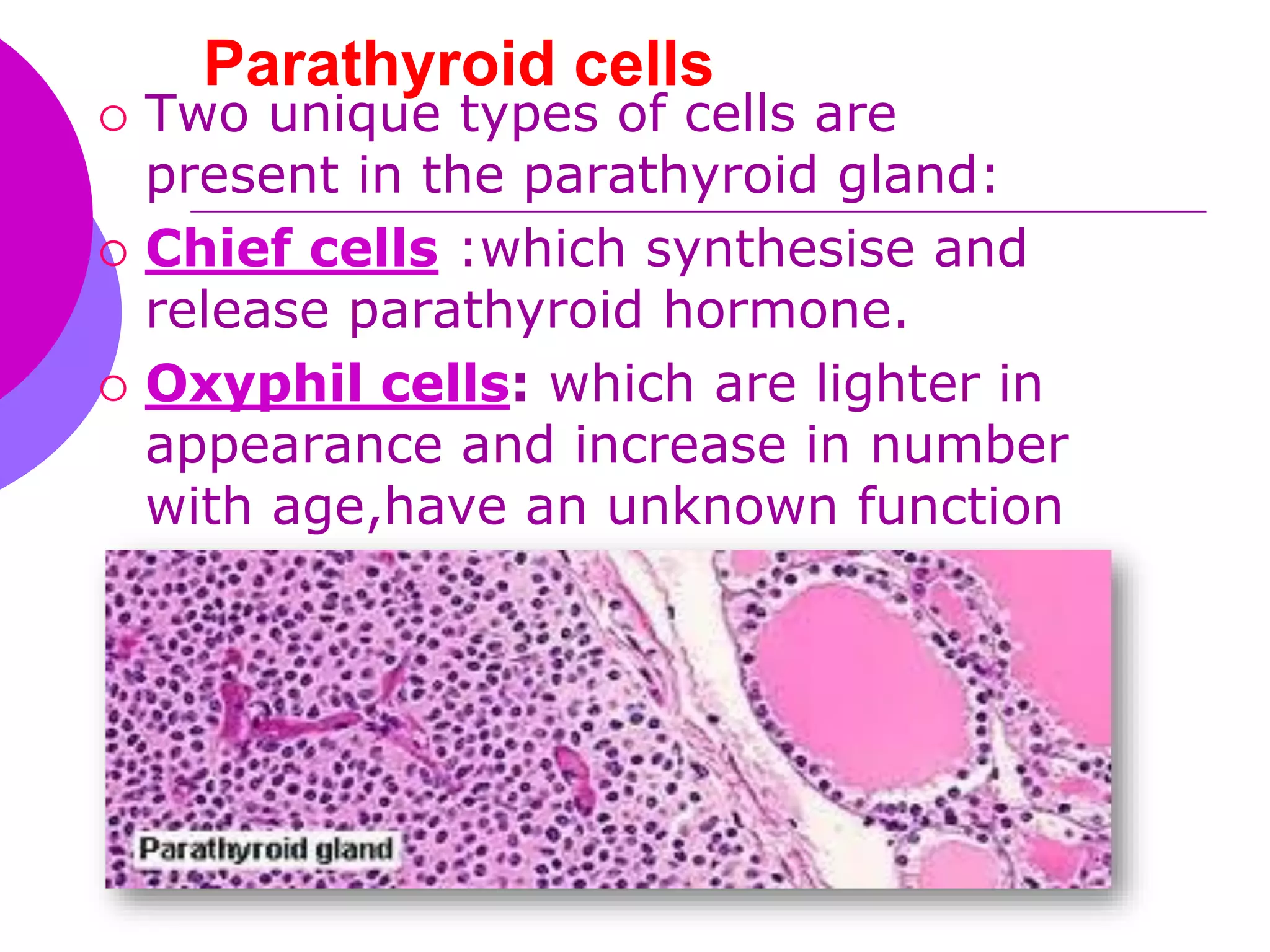
 Two unique types of cells are
present in the parathyroid gland:
 Chief cells :which synthesise and
release parathyroid hormone.
 Oxyphil cells: which are lighter in
appearance and increase in number
with age,have an unknown function
Parathyroid hormone
 Parathyroid hormone (PTH, also known
as parathormone) is a small protein that
takes part in the control of calcium and
phosphate homeostasis, as well as bone
physiology.
 Parathyroid hormone has effects
antagonistic to those of calcitonin.
Calcium
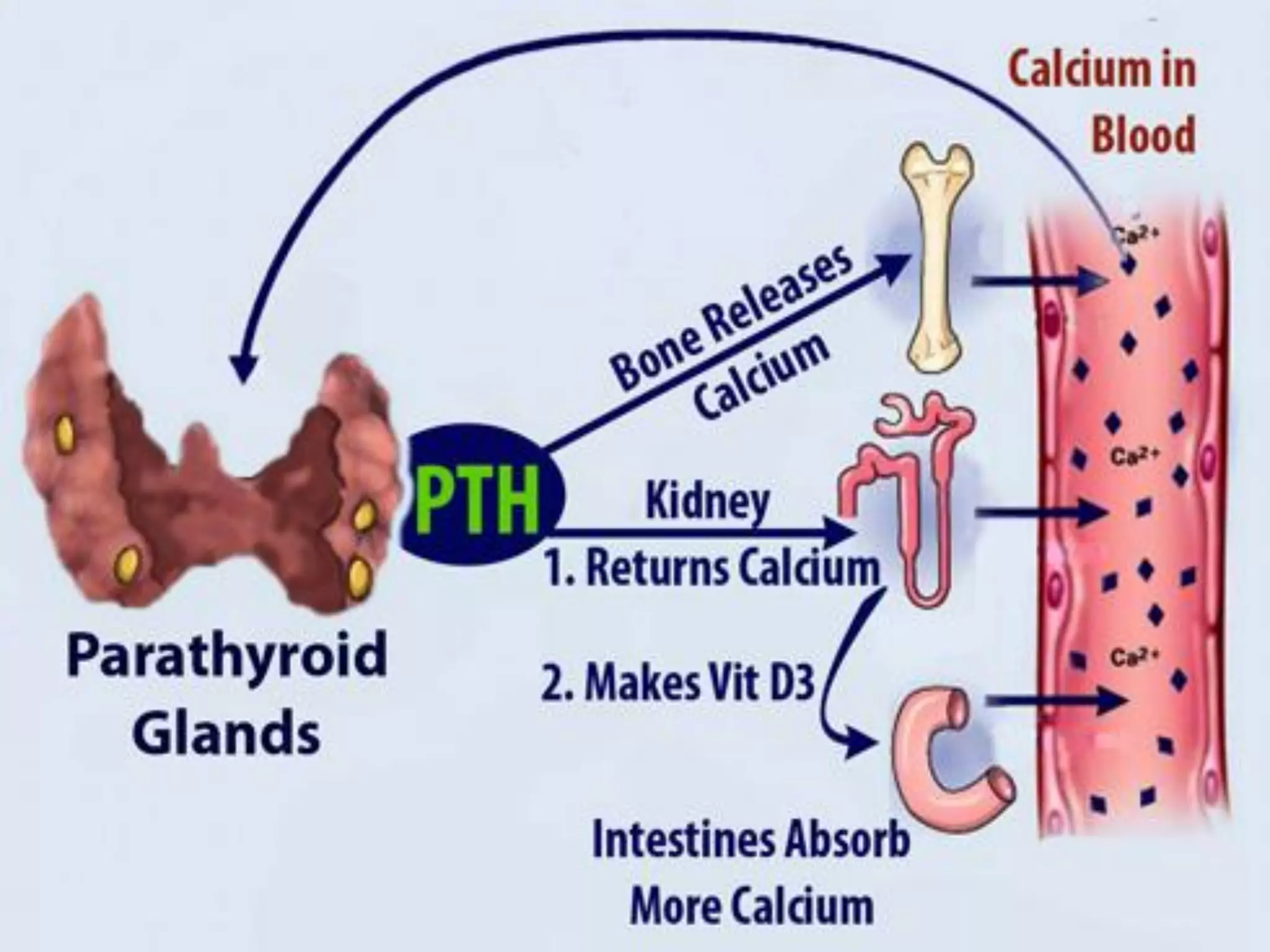
 PTH increases blood calcium levels
by stimulating osteoclasts to break
down bone and release calcium.
 PTH also increases gastrointestinal
calcium absorption by the
activating vitamin D, and promotes
calcium conservation (reabsorption)
by the kidneys.
Hyperparathyroidism
 Hyperparathyroidism is the state in
which there is excess parathyroid
hormone circulating.
 This may cause bone pain and
tenderness, due to increased bone
reabsorption.
Hypoparathyroidism
•The state of decreased parathyroid activity
is known as hypoparathyroidism.
• This is most commonly associated with
damage to the glands or their blood supply
during thyroid surgery.
Symptoms of hypoparathyroidism
 Tingling in the lips, hands, fingers and toes
 Dental malformations (eg, misshapen teeth,
loss of enamel)
 Dry hair, dry skin, brittle nails, thinning hair
 Cataracts
 Headaches, memory loss, mental retardatio
 Tetany (severe muscle spasm)
 Impaired kidney function
 Seizures caused by calcium deposits in the
brain.
 Cardiac arrhythmias, fainting episodes
Parathyroid tumor
 A parathyroid tumor develops as a result
of replication or growth of cells in the
parathyroid gland.
 Parathyroid tumors tend to be benign
(non-cancerous). Benign tumors are called
adenomas.
 A malignant form of tumor, called
parathyroid carcinoma, has been
described, but is rare.
 Parathyroid tumors are common in cats
and dogs.
What are the signs of a parathyroid
tumor?
 The signs of a parathyroid tumor are related
to a condition known as hypercalcemia.
 Parathyroid tumors cause an
overproduction of parathyroid hormone
(PTH), a hormone that regulates the
circulating level of blood calcium, causing it
to rise. This condition is known as
hypercalcemia
What are the signs of a parathyroid
tumor?
 With hypercalcemia, your pet may become
anorexic, start vomiting, drink and urinate
more, and show signs of weakness, muscle
trembling, and general lethargy.
Normal parathyroid gland parathyroid gland cancer
Parathyroid tumor appearance
FOR MORE LECTURES PLEASE SUBSCRIBE TO
YOUTUBE CHANNEL
https://www.youtube.com/channel/UCLyTj8NB
ZqbdTjpqrAqn7ow

Parathyroid Gland Physiology.pdf

  • 1.
    Topic :Parathyroid gland By:Dr Iqra bano Chandio
  • 2.
    Parathyroid gland  Theparathyroid glands are small endocrine glands in the neck of humans and other tetrapods that produce parathyroid hormone.  positioned behind the left and right lobes of the thyroid.  The size of the gland ranges from 2- 7 mm .
  • 3.
    Parathyroid cells  Twounique types of cells are present in the parathyroid gland:  Chief cells :which synthesise and release parathyroid hormone.  Oxyphil cells: which are lighter in appearance and increase in number with age,have an unknown function
  • 4.
    Parathyroid hormone  Parathyroidhormone (PTH, also known as parathormone) is a small protein that takes part in the control of calcium and phosphate homeostasis, as well as bone physiology.  Parathyroid hormone has effects antagonistic to those of calcitonin.
  • 5.
    Calcium  PTH increasesblood calcium levels by stimulating osteoclasts to break down bone and release calcium.  PTH also increases gastrointestinal calcium absorption by the activating vitamin D, and promotes calcium conservation (reabsorption) by the kidneys.
  • 7.
    Hyperparathyroidism  Hyperparathyroidism isthe state in which there is excess parathyroid hormone circulating.  This may cause bone pain and tenderness, due to increased bone reabsorption. Hypoparathyroidism •The state of decreased parathyroid activity is known as hypoparathyroidism. • This is most commonly associated with damage to the glands or their blood supply during thyroid surgery.
  • 8.
    Symptoms of hypoparathyroidism Tingling in the lips, hands, fingers and toes  Dental malformations (eg, misshapen teeth, loss of enamel)  Dry hair, dry skin, brittle nails, thinning hair  Cataracts  Headaches, memory loss, mental retardatio  Tetany (severe muscle spasm)  Impaired kidney function  Seizures caused by calcium deposits in the brain.  Cardiac arrhythmias, fainting episodes
  • 9.
    Parathyroid tumor  Aparathyroid tumor develops as a result of replication or growth of cells in the parathyroid gland.  Parathyroid tumors tend to be benign (non-cancerous). Benign tumors are called adenomas.  A malignant form of tumor, called parathyroid carcinoma, has been described, but is rare.  Parathyroid tumors are common in cats and dogs.
  • 10.
    What are thesigns of a parathyroid tumor?  The signs of a parathyroid tumor are related to a condition known as hypercalcemia.  Parathyroid tumors cause an overproduction of parathyroid hormone (PTH), a hormone that regulates the circulating level of blood calcium, causing it to rise. This condition is known as hypercalcemia
  • 11.
    What are thesigns of a parathyroid tumor?  With hypercalcemia, your pet may become anorexic, start vomiting, drink and urinate more, and show signs of weakness, muscle trembling, and general lethargy.
  • 12.
    Normal parathyroid glandparathyroid gland cancer Parathyroid tumor appearance
  • 13.
    FOR MORE LECTURESPLEASE SUBSCRIBE TO YOUTUBE CHANNEL https://www.youtube.com/channel/UCLyTj8NB ZqbdTjpqrAqn7ow