Downloaded 15 times
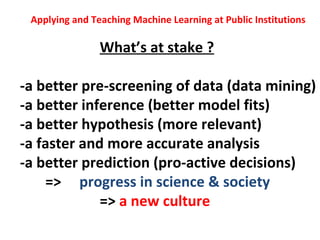
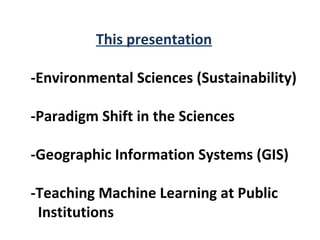


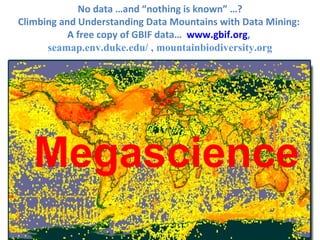
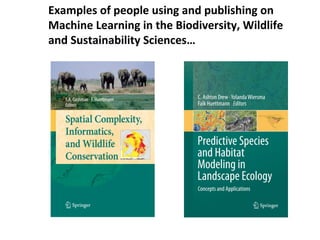
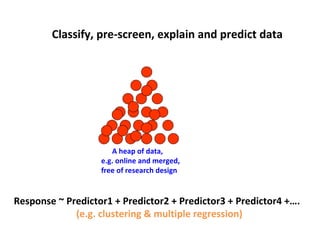
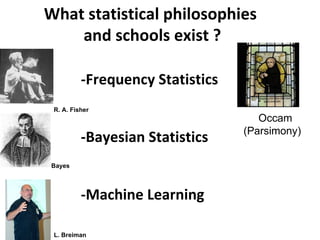
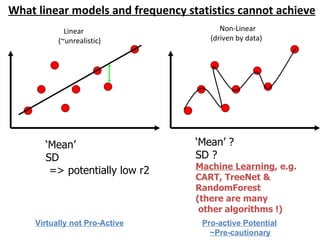
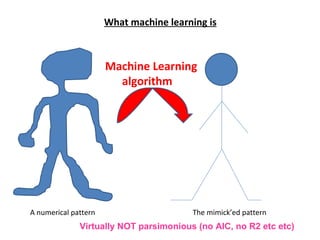
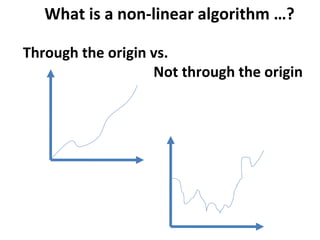
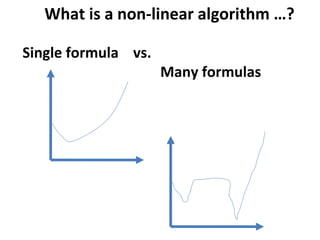
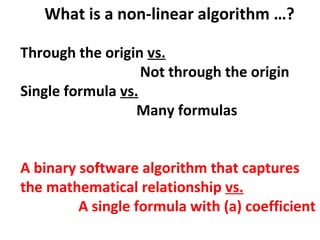
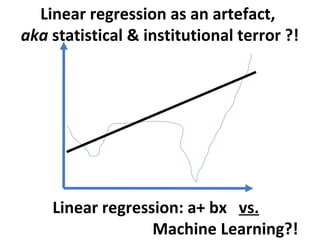
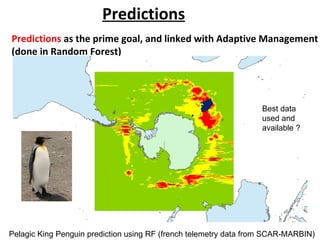
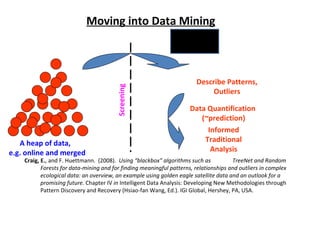
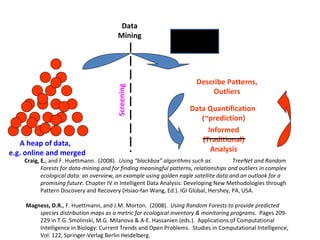
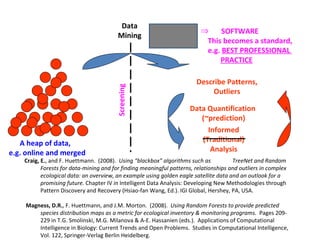
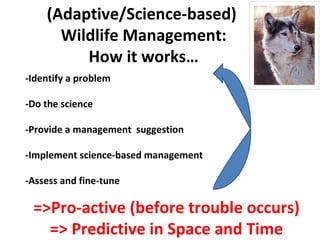
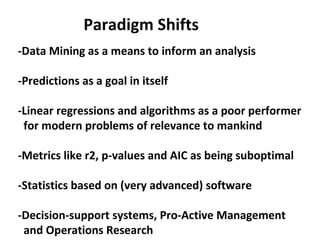
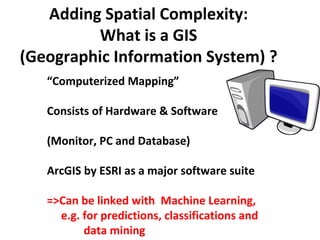
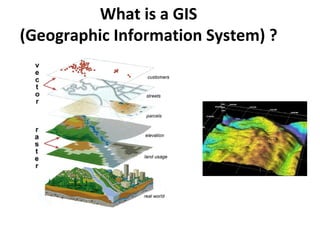
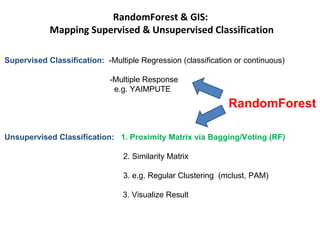
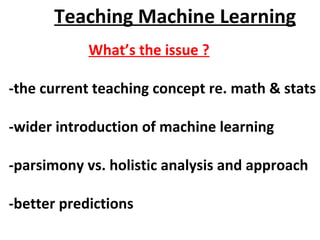
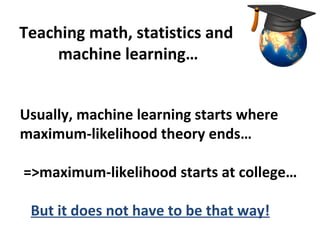
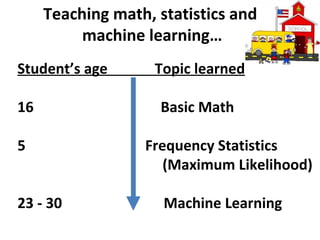
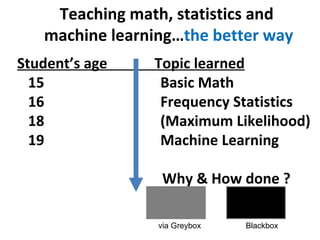
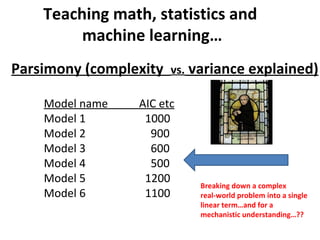
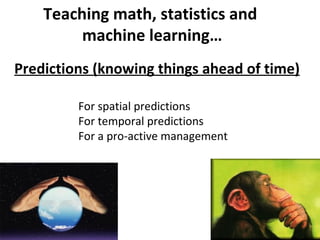


This document discusses machine learning applications in environmental science. It covers several key points: 1. Machine learning can improve data screening, modeling, hypothesis generation, and predictive capabilities for environmental research compared to traditional statistical methods. 2. There is a paradigm shift underway from linear statistical models to nonlinear machine learning algorithms driven by data rather than assumptions. 3. Geographic information systems (GIS) can be combined with machine learning for spatial predictions and classifications of environmental data. 4. Machine learning needs to be more widely taught alongside traditional statistics starting at earlier stages of education to train the next generation of environmental researchers.


