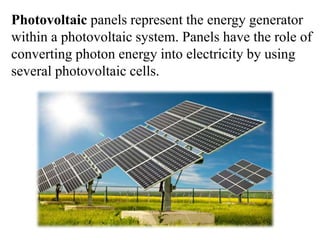
Photovoltaic panels represent the energy generator
within a photovoltaic system. Panels have the role of
converting photon energy into electricity by using
several photovoltaic cells.
The solar cell absorbs some of the
particles of light falling on it, also
called photons. Each photon contains a
small amount of energy. When a
photon is absorbed, it releases an
electron from the solar cell material.
Because each part of the solar cell is
connected to a cable, a current will
pass through it. The cell will produce
electricity that can be used instantly or
stored in batteries.
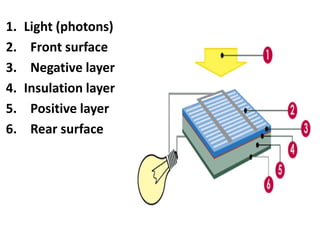
1. Light (photons)
2. Front surface
3. Negative layer
4. Insulation layer
5. Positive layer
6. Rear surface
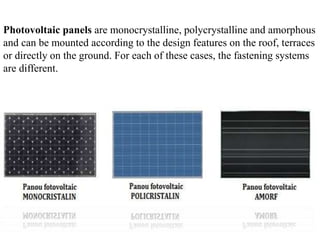
Photovoltaic panels are monocrystalline, polycrystalline and amorphous
and can be mounted according to the design features on the roof, terraces
or directly on the ground. For each of these cases, the fastening systems
are different.
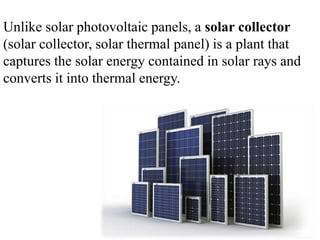
Unlike solar photovoltaic panels, a solar collector
(solar collector, solar thermal panel) is a plant that
captures the solar energy contained in solar rays and
converts it into thermal energy.
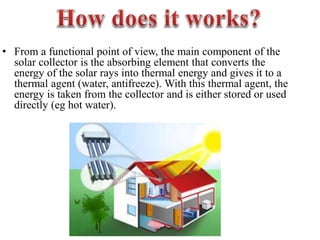
• From a functional point of view, the main component of the
solar collector is the absorbing element that converts the
energy of the solar rays into thermal energy and gives it to a
thermal agent (water, antifreeze). With this thermal agent, the
energy is taken from the collector and is either stored or used
directly (eg hot water).
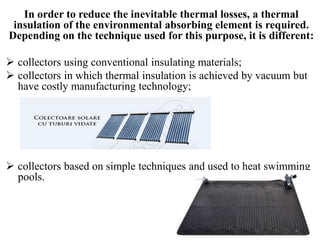
In order to reduce the inevitable thermal losses, a thermal
insulation of the environmental absorbing element is required.
Depending on the technique used for this purpose, it is different:
 collectors using conventional insulating materials;
 collectors in which thermal insulation is achieved by vacuum but
have costly manufacturing technology;
 collectors based on simple techniques and used to heat swimming
pools.
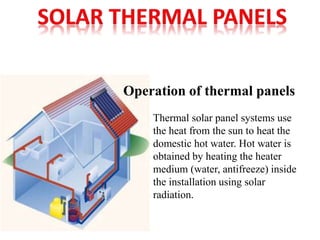
Operation of thermal panels
Thermal solar panel systems use
the heat from the sun to heat the
domestic hot water. Hot water is
obtained by heating the heater
medium (water, antifreeze) inside
the installation using solar
radiation.
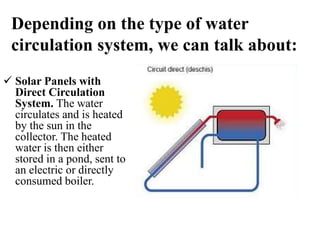
Depending on the type of water
circulation system, we can talk about:
 Solar Panels with
Direct Circulation
System. The water
circulates and is heated
by the sun in the
collector. The heated
water is then either
stored in a pond, sent to
an electric or directly
consumed boiler.
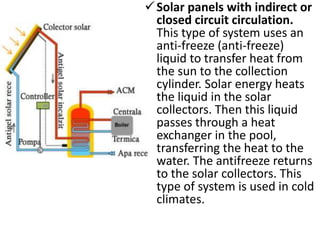
Solar panels with indirect or
closed circuit circulation.
This type of system uses an
anti-freeze (anti-freeze)
liquid to transfer heat from
the sun to the collection
cylinder. Solar energy heats
the liquid in the solar
collectors. Then this liquid
passes through a heat
exchanger in the pool,
transferring the heat to the
water. The antifreeze returns
to the solar collectors. This
type of system is used in cold
climates.
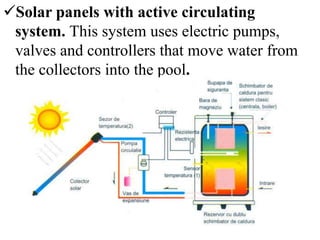
Solar panels with active circulating
system. This system uses electric pumps,
valves and controllers that move water from
the collectors into the pool.
 https://toppanourisolare.ro/panouri-solare/functionarea-
panourilor-solare.html
 https://ro.wikipedia.org/wiki/Panou_solar
 http://energie-verde.ro/produse/panouri-
fotovoltaice-2/

Panouri solare tradus

  • 2.
    Photovoltaic panels representthe energy generator within a photovoltaic system. Panels have the role of converting photon energy into electricity by using several photovoltaic cells.
  • 3.
    The solar cellabsorbs some of the particles of light falling on it, also called photons. Each photon contains a small amount of energy. When a photon is absorbed, it releases an electron from the solar cell material. Because each part of the solar cell is connected to a cable, a current will pass through it. The cell will produce electricity that can be used instantly or stored in batteries.
  • 4.
    1. Light (photons) 2.Front surface 3. Negative layer 4. Insulation layer 5. Positive layer 6. Rear surface
  • 5.
    Photovoltaic panels aremonocrystalline, polycrystalline and amorphous and can be mounted according to the design features on the roof, terraces or directly on the ground. For each of these cases, the fastening systems are different.
  • 6.
    Unlike solar photovoltaicpanels, a solar collector (solar collector, solar thermal panel) is a plant that captures the solar energy contained in solar rays and converts it into thermal energy.
  • 7.
    • From afunctional point of view, the main component of the solar collector is the absorbing element that converts the energy of the solar rays into thermal energy and gives it to a thermal agent (water, antifreeze). With this thermal agent, the energy is taken from the collector and is either stored or used directly (eg hot water).
  • 8.
    In order toreduce the inevitable thermal losses, a thermal insulation of the environmental absorbing element is required. Depending on the technique used for this purpose, it is different:  collectors using conventional insulating materials;  collectors in which thermal insulation is achieved by vacuum but have costly manufacturing technology;  collectors based on simple techniques and used to heat swimming pools.
  • 9.
    Operation of thermalpanels Thermal solar panel systems use the heat from the sun to heat the domestic hot water. Hot water is obtained by heating the heater medium (water, antifreeze) inside the installation using solar radiation.
  • 10.
    Depending on thetype of water circulation system, we can talk about:  Solar Panels with Direct Circulation System. The water circulates and is heated by the sun in the collector. The heated water is then either stored in a pond, sent to an electric or directly consumed boiler.
  • 11.
    Solar panels withindirect or closed circuit circulation. This type of system uses an anti-freeze (anti-freeze) liquid to transfer heat from the sun to the collection cylinder. Solar energy heats the liquid in the solar collectors. Then this liquid passes through a heat exchanger in the pool, transferring the heat to the water. The antifreeze returns to the solar collectors. This type of system is used in cold climates.
  • 12.
    Solar panels withactive circulating system. This system uses electric pumps, valves and controllers that move water from the collectors into the pool.
  • 13.