Download to read offline

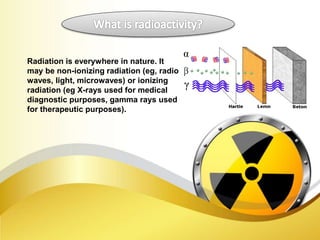
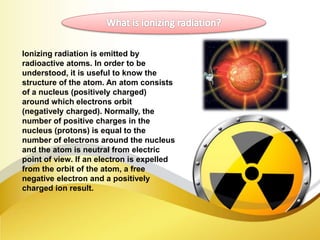
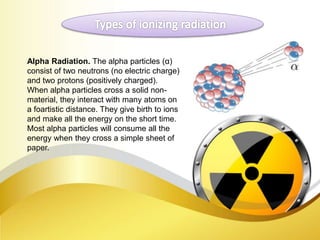
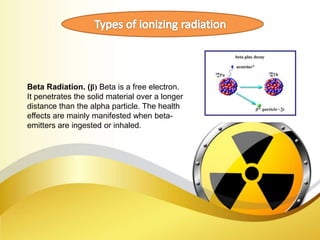
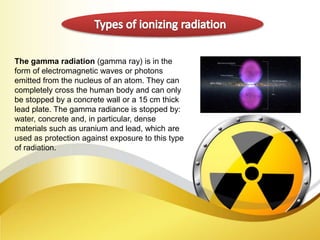
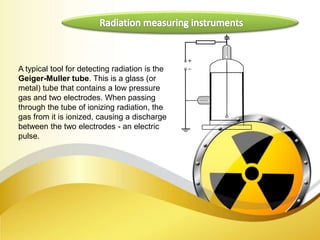
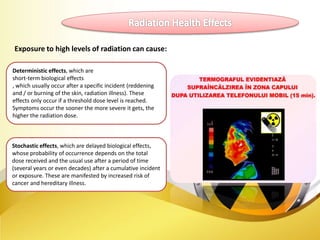
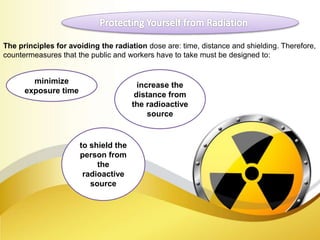

Radiation comes in two forms: ionizing and non-ionizing. Ionizing radiation is emitted from radioactive atoms and can damage body tissues. It includes alpha particles, beta particles, and gamma rays. Alpha particles have a strong charge but short range, beta particles can penetrate farther, and gamma rays are electromagnetic waves that require dense materials to stop them. Exposure to high levels of radiation can cause both deterministic effects like burns and radiation sickness above a threshold dose, as well as stochastic effects like increased cancer risk related to cumulative exposure levels over time. Detection instruments like Geiger counters use ionization of gas to detect radiation.


