The Sun is the ultimate energy provider.
The development of the renewable energy market is,
to a large extent, based on that fact.
Most of the green technologies currently operating
harvest solar energy, directly or indirectly.
Among indirect solar energy sources, wind, low
grade geothermal (used in ground source heat pump
systems), tidal and wave are either being largely
employed and under development.
Direct solar energy source consist of solar rays
reaching the atmosphere.
They can be collected by two different technologies.
1. Solar thermal technology, which captures
the sun’s heat. This heat is used directly
or converted into mechanical energy and in turn
electricity, known as concentrated solar power.
This heat is used directly (low temperature solar
thermal) or converted into mechanical energy and
in turn electricity (concentrated solar power –
CSP).
2. Photovoltaic solar technology, which directly
converts sunlight into electricity using panels made
of semiconductor cells.
Two different types of installations are used:
1. Individual systems for homes or small
communities. Photovoltaic panels can power
electrical devices, while solar thermal collectors
can heat homes or hot water.
2. Photovoltaic or concentrated solar power plants
that cover hundreds of acres produce electricity
on a large scale, which can be fed into power grids.
 Solar energy is one of the most attractive renewable
energies because of its flexibility – its capacity
to power cities and industry using large solar plants
while at the same time offering a stand-alone
capability in the most isolated rural regions.
Problems related to solar energy
Sunlight is a universal source of energy that is free
and available to everyone.
The sun energy source is practically inexhaustible.
Solar thermal energy can be used for both heating and
cooling.
Key applications of solar energy include domestic
water heating, space heating, pool heating and certain
industrial processes.
There are however some problems which hinder more
widespread use of solar energy.
The most serious one is that solar energy is available
only during sunny days.
At any given time the amount of the available solar
energy depends on weather conditions, location, and
the time of year.
Solar energy received at a given location may vary
considerably within an hour or even minutes.
During the winter months, when the demand for
thermal energy is the highest, relatively low amount of
the solar radiation can be received.
 In turn, the bulk of the solar energy available in the
summer period cannot be fully used due to the lower
demand for heat in this period.
Solar Energy Collectors
A solar collector is a device for collecting Solar
radiation and transfer the energy to a fluid passing in
contact with it.
Utilization of solar energy requires solar collectors.
These are general of two types.
1. non-concentrating or flat type solar collector
2. concentrating or focussing type solar collector
The solar energy collector , with its associated
absorber is the essential component of any system for
the conversion of solar radiation energy into more
usable form.
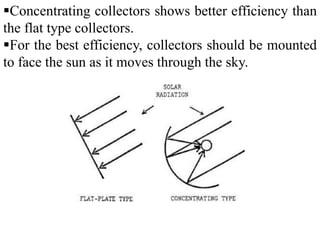
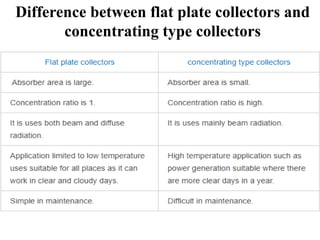
In the non concentration type, the collector area (the
area that intercepts solar radiation) is same as the
absorber area (the area that absorbing solar radiation).
In the concentrating type, the area intercepting the
solar radiation is greater, sometimes hundred of times
greater than the absorber area.
By means of concentrating collector, much higher
temperatures can be obtained than with the non
concentrating type collectors.
Concentrating collectors may be used to generate
medium pressure steam.
They use many different arrangements of mirrors and
lenses to concentrate the sun rays on the boiler.
Concentrating collectors shows better efficiency than
the flat type collectors.
For the best efficiency, collectors should be mounted
to face the sun as it moves through the sky.
Difference between flat plate collectors and
concentrating type collectors
PHYSICAL PRINCIPLES OF THE
CONVERSION OF SOLAR RADIATION INTO
HEAT
To estimate the size, efficiency and cost of equipment
necessary to transfer a specified amount of heat in a
given time, a heat transfer analysis must be made.
The dimensions of a solar collector, a heat exchanger
or a refrigerator depend not so much on the amount of
heat to be transmitted but rather on the rate at which
heat is to be transferred under given external
conditions.
The rate of heat transfer at a specified temperature
difference is the key problem in sizing a solar
collector.
Heat transfer occurs mainly by three mechanisms.
1. Conduction
the transfer of heat between two parts of a stationary
system, caused by a temperature difference
between the parts.
Conduction is the transfer of thermal energy through
direct contact.
2. Convection
When a fluid, such as air or a liquid, is heated
and then travels away from the source, it carries the
thermal energy along. This type of heat transfer is
called convection.
3. Radiation
Radiation is a method of heat transfer that
does not rely upon any contact between
the heat source and the heated object as is the case
with conduction and convection. Heat can be
transmitted through empty space by thermal
radiation often called infrared radiation. This is a type
electromagnetic radiation .
4. Evaporation
Evaporation is the process by which water
changes from a liquid to a gas or
vapour. Evaporation is the primary pathway that water
moves from the liquid state back into the water cycle
as atmospheric water vapour.
Solar Energy Types.pptx

Solar Energy Types.pptx

  • 2.
    The Sun isthe ultimate energy provider. The development of the renewable energy market is, to a large extent, based on that fact. Most of the green technologies currently operating harvest solar energy, directly or indirectly. Among indirect solar energy sources, wind, low grade geothermal (used in ground source heat pump systems), tidal and wave are either being largely employed and under development. Direct solar energy source consist of solar rays reaching the atmosphere. They can be collected by two different technologies.
  • 3.
    1. Solar thermaltechnology, which captures the sun’s heat. This heat is used directly or converted into mechanical energy and in turn electricity, known as concentrated solar power. This heat is used directly (low temperature solar thermal) or converted into mechanical energy and in turn electricity (concentrated solar power – CSP). 2. Photovoltaic solar technology, which directly converts sunlight into electricity using panels made of semiconductor cells.
  • 4.
    Two different typesof installations are used: 1. Individual systems for homes or small communities. Photovoltaic panels can power electrical devices, while solar thermal collectors can heat homes or hot water. 2. Photovoltaic or concentrated solar power plants that cover hundreds of acres produce electricity on a large scale, which can be fed into power grids.  Solar energy is one of the most attractive renewable energies because of its flexibility – its capacity to power cities and industry using large solar plants while at the same time offering a stand-alone capability in the most isolated rural regions.
  • 5.
    Problems related tosolar energy Sunlight is a universal source of energy that is free and available to everyone. The sun energy source is practically inexhaustible. Solar thermal energy can be used for both heating and cooling. Key applications of solar energy include domestic water heating, space heating, pool heating and certain industrial processes. There are however some problems which hinder more widespread use of solar energy. The most serious one is that solar energy is available only during sunny days.
  • 6.
    At any giventime the amount of the available solar energy depends on weather conditions, location, and the time of year. Solar energy received at a given location may vary considerably within an hour or even minutes. During the winter months, when the demand for thermal energy is the highest, relatively low amount of the solar radiation can be received.  In turn, the bulk of the solar energy available in the summer period cannot be fully used due to the lower demand for heat in this period.
  • 7.
    Solar Energy Collectors Asolar collector is a device for collecting Solar radiation and transfer the energy to a fluid passing in contact with it. Utilization of solar energy requires solar collectors. These are general of two types. 1. non-concentrating or flat type solar collector 2. concentrating or focussing type solar collector The solar energy collector , with its associated absorber is the essential component of any system for the conversion of solar radiation energy into more usable form.
  • 8.
    In the nonconcentration type, the collector area (the area that intercepts solar radiation) is same as the absorber area (the area that absorbing solar radiation). In the concentrating type, the area intercepting the solar radiation is greater, sometimes hundred of times greater than the absorber area. By means of concentrating collector, much higher temperatures can be obtained than with the non concentrating type collectors. Concentrating collectors may be used to generate medium pressure steam. They use many different arrangements of mirrors and lenses to concentrate the sun rays on the boiler.
  • 9.
    Concentrating collectors showsbetter efficiency than the flat type collectors. For the best efficiency, collectors should be mounted to face the sun as it moves through the sky.
  • 10.
    Difference between flatplate collectors and concentrating type collectors
  • 11.
    PHYSICAL PRINCIPLES OFTHE CONVERSION OF SOLAR RADIATION INTO HEAT To estimate the size, efficiency and cost of equipment necessary to transfer a specified amount of heat in a given time, a heat transfer analysis must be made. The dimensions of a solar collector, a heat exchanger or a refrigerator depend not so much on the amount of heat to be transmitted but rather on the rate at which heat is to be transferred under given external conditions. The rate of heat transfer at a specified temperature difference is the key problem in sizing a solar collector.
  • 12.
    Heat transfer occursmainly by three mechanisms. 1. Conduction the transfer of heat between two parts of a stationary system, caused by a temperature difference between the parts. Conduction is the transfer of thermal energy through direct contact. 2. Convection When a fluid, such as air or a liquid, is heated and then travels away from the source, it carries the thermal energy along. This type of heat transfer is called convection.
  • 13.
    3. Radiation Radiation isa method of heat transfer that does not rely upon any contact between the heat source and the heated object as is the case with conduction and convection. Heat can be transmitted through empty space by thermal radiation often called infrared radiation. This is a type electromagnetic radiation . 4. Evaporation Evaporation is the process by which water changes from a liquid to a gas or vapour. Evaporation is the primary pathway that water moves from the liquid state back into the water cycle as atmospheric water vapour.