Thalamus
-
The Diencephalon(“between brain,”)
1. The dorsal thalamus or thalamus proper
2. The hypothalamus,
3. The subthalamus,
4. The Epithalamus - habenular nuclei and pineal
body
 habenular nuclei
major link between limbic structures, the
basal ganglia, and the midbrain.
 pineal body functional contributions are not
clear (thought to help regulate circadian
rhythms –in some species, not in man)
.
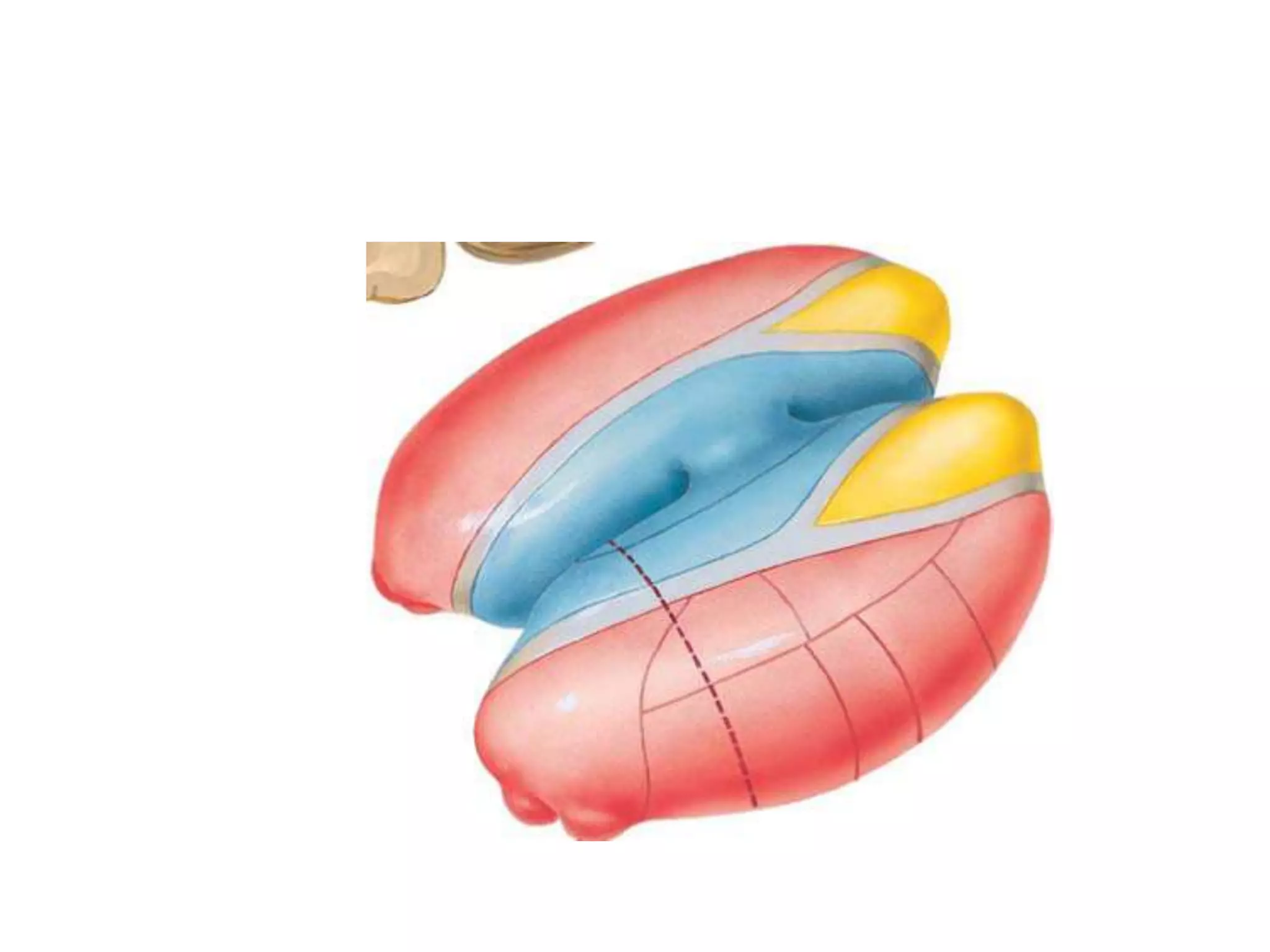
• The thalamus both structurally and
functionally occupies a central position in the
brain.
• It makes up the bulk of the diencephalon.
• There are two thalami, one for each
hemisphere of the brain, and these are often
connected across the midline by nervous
tissue, the massa intermedia
.
Coronal
-
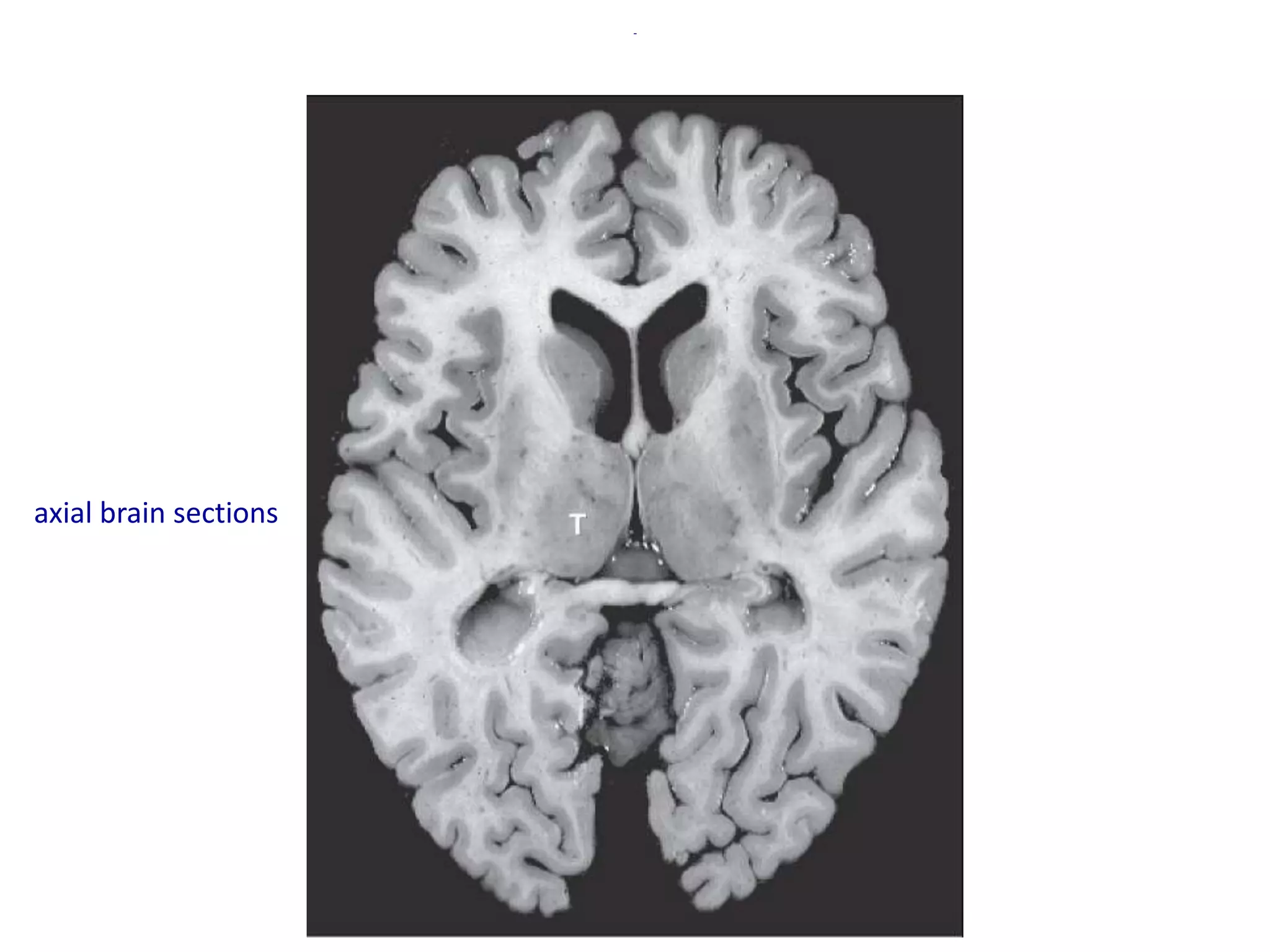
axial brain sections
-
.
• It is a paired oval mass that surrounds the third
ventricle and lies medial to the posterior limb of
the internal capsule
• Its anteroventral surface continuous with the
hypothalamus, while more posteriorly it lies
above the zona incerta and the subthalamic nuclei
and eventually over the red nucleus of the
midbrain
.
• Each half of the thalamus is separated into three
major divisions by a more or less vertical sheet of
myelinated fibers called the internal medullary
lamina.
• This lamina creates a medial and a lateral division
and then, as a result of its bifurcation near the
anterior pole of the thalamus, this lamina
produces an anterior division
• The thalamus is composed of a number of
discrete nuclear groups that can be differentiated
on the basis of structural and functional
considerations
Thalamic nuclei
.
Three different types of nuclei:
1. Specific relay nuclei
 relay sensory and motor information to
specific sensory and motor areas of the
cerebral cortex. e.g. the medial and lateral
geniculate bodies, relay nuclei for the auditory
and visual systems.
 motor regulatory information from the basal
ganglia and cerebellum is also relayed in the
thalamus as part of this set of nuclei
 are located in the lateral nuclear mass.
. .
1a. Sensory:
• VPL, ventral posterolateral nucleus: somatosensory -
relay to the appropriate areas of the post-central gyrus,
areas 1, 2, and 3, the sensory homunculus.
• VPM, ventral posteromedial nucleus: from the trigeminal
system (TG), i.e., the face- relayed to the facial area of
the postcentral gyrus).
• MGB, medial geniculate body (nucleus): nucleus for the
auditory fibers from the inferior colliculus, - relay to the
transverse gyri of Heschl on the superior temporal gyri in
the lateral fissure
• LGB, lateral geniculate body (nucleus): the relay nucleus
for the visual fibers from the ganglion cells of the retina
to the calcarine cortex.
.
1b. Motor
VA and VL, ventral anterior and ventral lateral: Fibers to
these nuclei originate in the globus pallidus and
substantia nigra (pars reticulata) as well as the
cerebellum, and are relayed to the motor and premotor
areas of the cerebral cortex, as well as the
supplementary motor cortex
.
2. Association nuclei.
 These are connected to broad areas of the cerebral
cortex known as the association areas.
DM-Dorsomedial, from many of the thalamic nuclei as
well as from parts of the limbic system (hypothalamus
and amygdala) to the prefrontal cortex
AN- anterior nuclei
LD- lateral dorsal nucleus
Pul, pulvinar- part of the visual relay
.
3. Nonspecific nuclei
 These scattered nuclei have other or multiple
connections.
 Some of these nuclei are located within the
internal medullary lamina and are often
referred to as the intralaminar nuclei - does not
have the strong reciprocal connections with the
cortex like the other nuclei.
 Some form part of the ascending reticular
activating system, which is involved in the
regulation of our state of consciousness and
arousal
Connection of the thalamus
-
Functions of Thalamus
.
-
1. A relay station for just about all sensory
information traveling from peripheral receptors to
the cortex.
–All sensory input (with the exception of
olfaction) is relayed through the thalamus prior
to entering the cortex.
–The thalamus might either dampen or facilitate
certain sensory inputs prior to their transmission
to the cortex.
• Play a role in the preliminary processing (e.g.,
integration or decoding) of incoming sensory
information.
-
2. The final common pathway in most, if not all,
cortical–subcortical feedback loops
–The thalamus is a critical component of the
extensive feedback loops for motor, cognitive,
and emotional systems that project from the
cortex to the basal ganglia (and cerebellum)
and back to the cortex via discrete thalamic
pathways
–Some thalamic nuclei receive input directly
from the cortex and project directly back to
those discrete cortical regions- reciprocal
connection
.
3. Plays key roles in cortical arousal and selective
attention, both necessary to efficient execution
of those behavioral goals or programs.
–Parts of the thalamus play an important role
in the maintenance and regulation of the
state of consciousness, and also possibly
attention, as part of the ascending reticular
activating system
–The thalamus plays a major role in activating
or arousing the cortex.
Lesions of Thalamus
.
.
Vascular disturbances
• Symptoms associated with hemorrhages or
infarctions of thalamus
• Thalamic lesions often extend beyond its
boundaries
• Lesions that are restricted to the thalamic
“motor” nuclei (primarily VA and VL) cause
transient motor symptoms, such as
hemiparesis, but permanent deficits are more
likely the result of invasion of the genu or
posterior limb of the internal capsule.
.
1. Motor – muscle weakness, gaze palsy,
ataxia, aphasia
2. Somatosensory disturbances – sensory
loss, thalamic pain, Visual field defects
3. Cognitive/arousal disturbances –
• Memory disturbance-dementia
• Mental confusion; disturbance of
consciousness

P5Thalamus-1 (1).ppt

  • 1.
  • 2.
    The Diencephalon(“between brain,”) 1.The dorsal thalamus or thalamus proper 2. The hypothalamus, 3. The subthalamus, 4. The Epithalamus - habenular nuclei and pineal body  habenular nuclei major link between limbic structures, the basal ganglia, and the midbrain.  pineal body functional contributions are not clear (thought to help regulate circadian rhythms –in some species, not in man)
  • 3.
    . • The thalamusboth structurally and functionally occupies a central position in the brain. • It makes up the bulk of the diencephalon. • There are two thalami, one for each hemisphere of the brain, and these are often connected across the midline by nervous tissue, the massa intermedia
  • 4.
  • 5.
  • 6.
  • 8.
    . • It isa paired oval mass that surrounds the third ventricle and lies medial to the posterior limb of the internal capsule • Its anteroventral surface continuous with the hypothalamus, while more posteriorly it lies above the zona incerta and the subthalamic nuclei and eventually over the red nucleus of the midbrain
  • 9.
    . • Each halfof the thalamus is separated into three major divisions by a more or less vertical sheet of myelinated fibers called the internal medullary lamina. • This lamina creates a medial and a lateral division and then, as a result of its bifurcation near the anterior pole of the thalamus, this lamina produces an anterior division • The thalamus is composed of a number of discrete nuclear groups that can be differentiated on the basis of structural and functional considerations
  • 11.
  • 12.
    . Three different typesof nuclei: 1. Specific relay nuclei  relay sensory and motor information to specific sensory and motor areas of the cerebral cortex. e.g. the medial and lateral geniculate bodies, relay nuclei for the auditory and visual systems.  motor regulatory information from the basal ganglia and cerebellum is also relayed in the thalamus as part of this set of nuclei  are located in the lateral nuclear mass.
  • 13.
    . . 1a. Sensory: •VPL, ventral posterolateral nucleus: somatosensory - relay to the appropriate areas of the post-central gyrus, areas 1, 2, and 3, the sensory homunculus. • VPM, ventral posteromedial nucleus: from the trigeminal system (TG), i.e., the face- relayed to the facial area of the postcentral gyrus). • MGB, medial geniculate body (nucleus): nucleus for the auditory fibers from the inferior colliculus, - relay to the transverse gyri of Heschl on the superior temporal gyri in the lateral fissure • LGB, lateral geniculate body (nucleus): the relay nucleus for the visual fibers from the ganglion cells of the retina to the calcarine cortex.
  • 14.
    . 1b. Motor VA andVL, ventral anterior and ventral lateral: Fibers to these nuclei originate in the globus pallidus and substantia nigra (pars reticulata) as well as the cerebellum, and are relayed to the motor and premotor areas of the cerebral cortex, as well as the supplementary motor cortex
  • 15.
    . 2. Association nuclei. These are connected to broad areas of the cerebral cortex known as the association areas. DM-Dorsomedial, from many of the thalamic nuclei as well as from parts of the limbic system (hypothalamus and amygdala) to the prefrontal cortex AN- anterior nuclei LD- lateral dorsal nucleus Pul, pulvinar- part of the visual relay
  • 16.
    . 3. Nonspecific nuclei These scattered nuclei have other or multiple connections.  Some of these nuclei are located within the internal medullary lamina and are often referred to as the intralaminar nuclei - does not have the strong reciprocal connections with the cortex like the other nuclei.  Some form part of the ascending reticular activating system, which is involved in the regulation of our state of consciousness and arousal
  • 17.
  • 18.
  • 19.
  • 20.
    - 1. A relaystation for just about all sensory information traveling from peripheral receptors to the cortex. –All sensory input (with the exception of olfaction) is relayed through the thalamus prior to entering the cortex. –The thalamus might either dampen or facilitate certain sensory inputs prior to their transmission to the cortex. • Play a role in the preliminary processing (e.g., integration or decoding) of incoming sensory information.
  • 21.
    - 2. The finalcommon pathway in most, if not all, cortical–subcortical feedback loops –The thalamus is a critical component of the extensive feedback loops for motor, cognitive, and emotional systems that project from the cortex to the basal ganglia (and cerebellum) and back to the cortex via discrete thalamic pathways –Some thalamic nuclei receive input directly from the cortex and project directly back to those discrete cortical regions- reciprocal connection
  • 22.
    . 3. Plays keyroles in cortical arousal and selective attention, both necessary to efficient execution of those behavioral goals or programs. –Parts of the thalamus play an important role in the maintenance and regulation of the state of consciousness, and also possibly attention, as part of the ascending reticular activating system –The thalamus plays a major role in activating or arousing the cortex.
  • 23.
  • 24.
    . Vascular disturbances • Symptomsassociated with hemorrhages or infarctions of thalamus • Thalamic lesions often extend beyond its boundaries • Lesions that are restricted to the thalamic “motor” nuclei (primarily VA and VL) cause transient motor symptoms, such as hemiparesis, but permanent deficits are more likely the result of invasion of the genu or posterior limb of the internal capsule.
  • 25.
    . 1. Motor –muscle weakness, gaze palsy, ataxia, aphasia 2. Somatosensory disturbances – sensory loss, thalamic pain, Visual field defects 3. Cognitive/arousal disturbances – • Memory disturbance-dementia • Mental confusion; disturbance of consciousness

Editor's Notes

  • #21 It is possible that crude forms of sensation, including pain, are “appreciated” in the thalamus, but localization of the sensation to a particular spot on the skin surface requires the involvement of the cortex