Who Owns
Software
Security?
Tim Buntel
@tbuntel
(obligatory)	
  About	
  Me	
  
Smarter	
  in	
  
the	
  City	
  
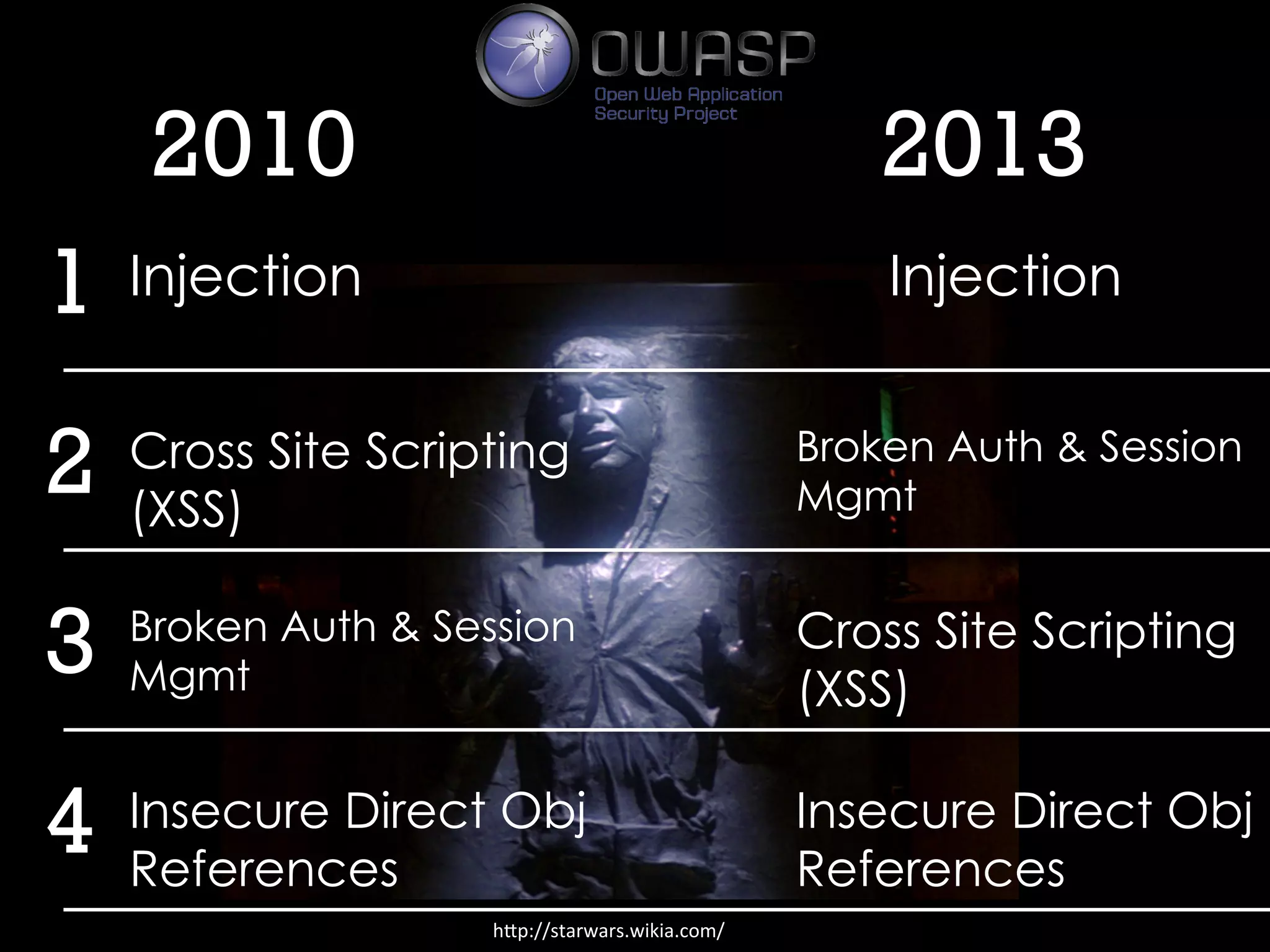
2010 2013
Injection1	
  
Injection
Broken Auth & Session
Mgmt2	
  
Cross Site Scripting
(XSS)
Cross Site Scripting
(XSS)
3	
  
Broken Auth & Session
Mgmt
Insecure Direct Obj
References
4	
  
Insecure Direct Obj
References
h2p://starwars.wikia.com/	
  
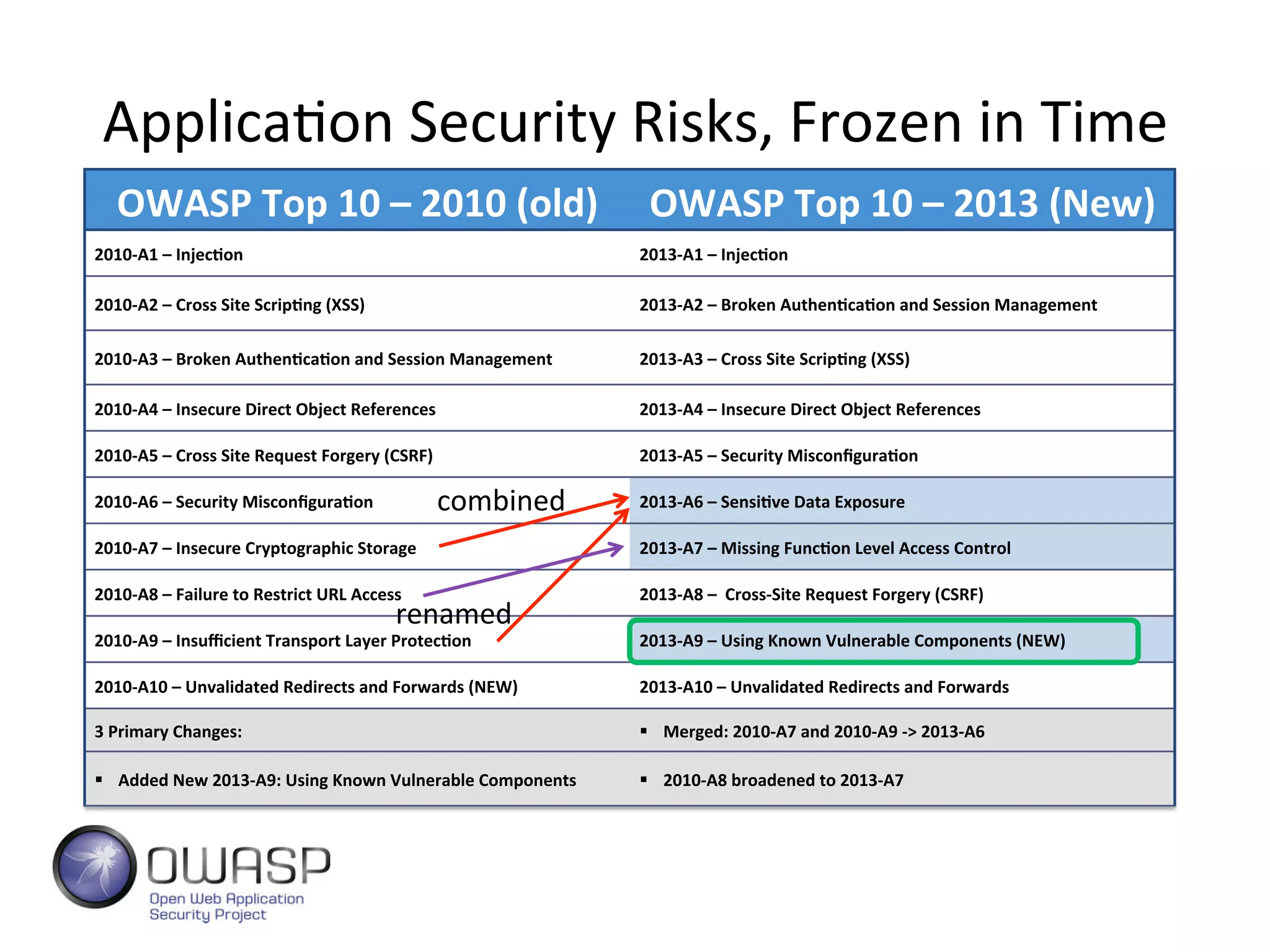
Applica<on	
  Security	
  Risks,	
  Frozen	
  in	
  Time	
  	
  
OWASP	
  Top	
  10	
  –	
  2010	
  (old)	
   OWASP	
  Top	
  10	
  –	
  2013	
  (New)	
  
2010-­‐A1	
  –	
  InjecCon	
   2013-­‐A1	
  –	
  InjecCon	
  
2010-­‐A2	
  –	
  Cross	
  Site	
  ScripCng	
  (XSS)	
   2013-­‐A2	
  –	
  Broken	
  AuthenCcaCon	
  and	
  Session	
  Management	
  
2010-­‐A3	
  –	
  Broken	
  AuthenCcaCon	
  and	
  Session	
  Management	
   2013-­‐A3	
  –	
  Cross	
  Site	
  ScripCng	
  (XSS)	
  
2010-­‐A4	
  –	
  Insecure	
  Direct	
  Object	
  References	
   2013-­‐A4	
  –	
  Insecure	
  Direct	
  Object	
  References	
  
2010-­‐A5	
  –	
  Cross	
  Site	
  Request	
  Forgery	
  (CSRF)	
   2013-­‐A5	
  –	
  Security	
  MisconfiguraCon	
  
2010-­‐A6	
  –	
  Security	
  MisconfiguraCon	
   2013-­‐A6	
  –	
  SensiCve	
  Data	
  Exposure	
  
2010-­‐A7	
  –	
  Insecure	
  Cryptographic	
  Storage	
   2013-­‐A7	
  –	
  Missing	
  FuncCon	
  Level	
  Access	
  Control	
  
2010-­‐A8	
  –	
  Failure	
  to	
  Restrict	
  URL	
  Access	
   2013-­‐A8	
  –	
  	
  Cross-­‐Site	
  Request	
  Forgery	
  (CSRF)	
  
2010-­‐A9	
  –	
  Insufficient	
  Transport	
  Layer	
  ProtecCon	
   2013-­‐A9	
  –	
  Using	
  Known	
  Vulnerable	
  Components	
  (NEW)	
  
2010-­‐A10	
  –	
  Unvalidated	
  Redirects	
  and	
  Forwards	
  (NEW)	
   2013-­‐A10	
  –	
  Unvalidated	
  Redirects	
  and	
  Forwards	
  
3	
  Primary	
  Changes:	
   §  Merged:	
  2010-­‐A7	
  and	
  2010-­‐A9	
  -­‐>	
  2013-­‐A6	
  
§  Added	
  New	
  2013-­‐A9:	
  Using	
  Known	
  Vulnerable	
  Components	
   §  2010-­‐A8	
  broadened	
  to	
  2013-­‐A7	
  
renamed	
  
combined	
  
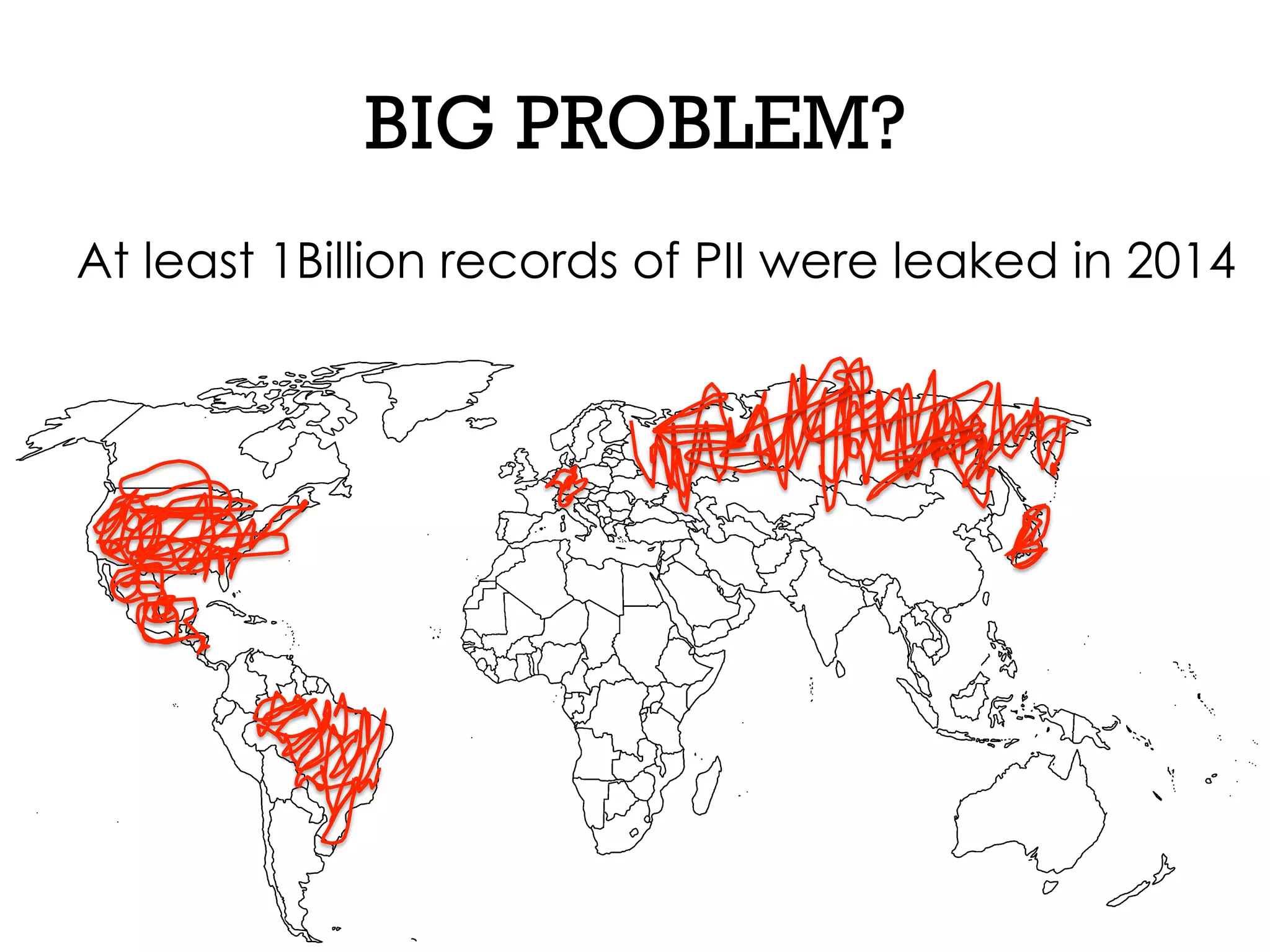
BIG PROBLEM?
At least 1Billion records of PII were leaked in 2014
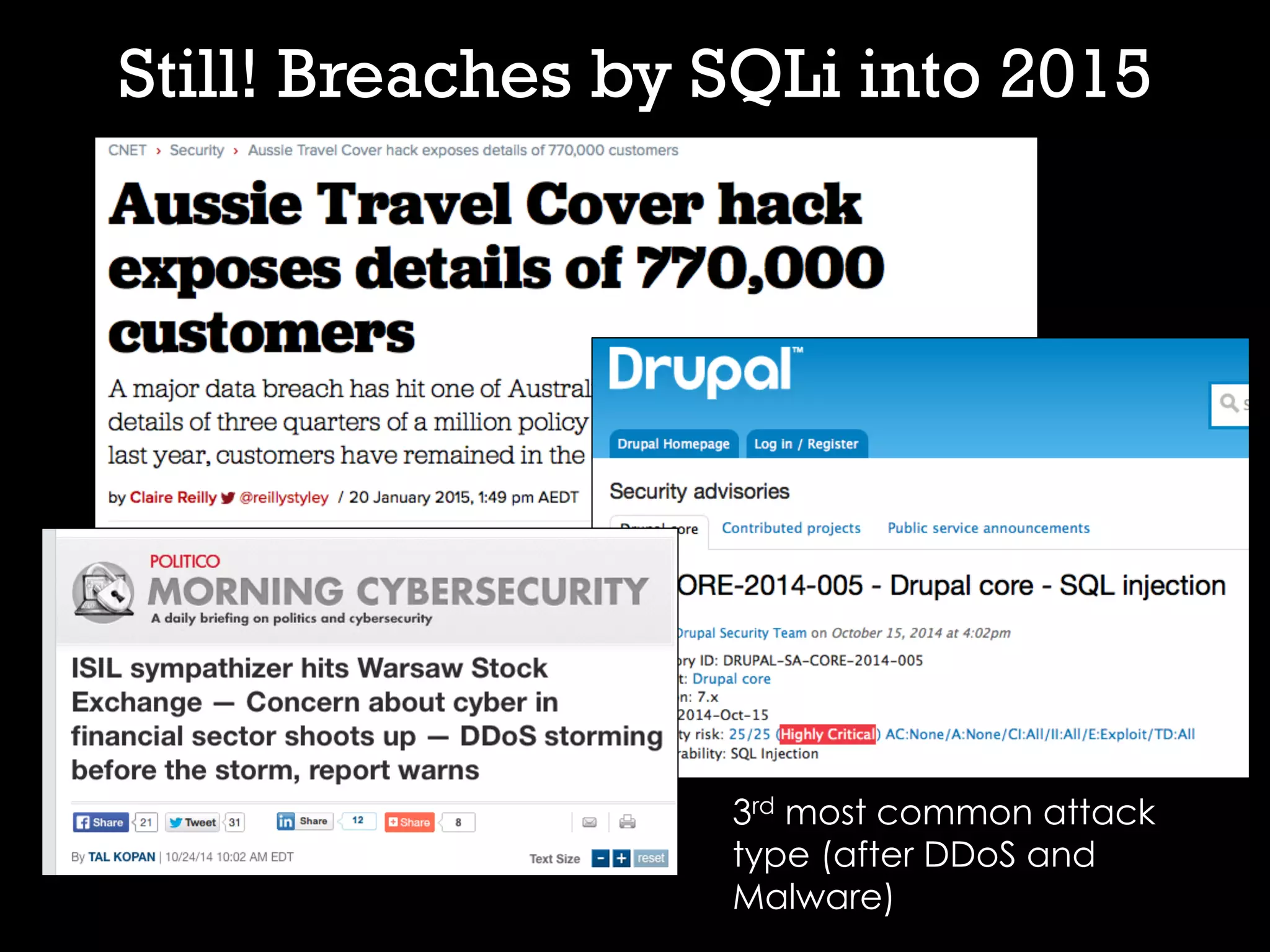
Still! Breaches by SQLi into 2015
3rd most common attack
type (after DDoS and
Malware)
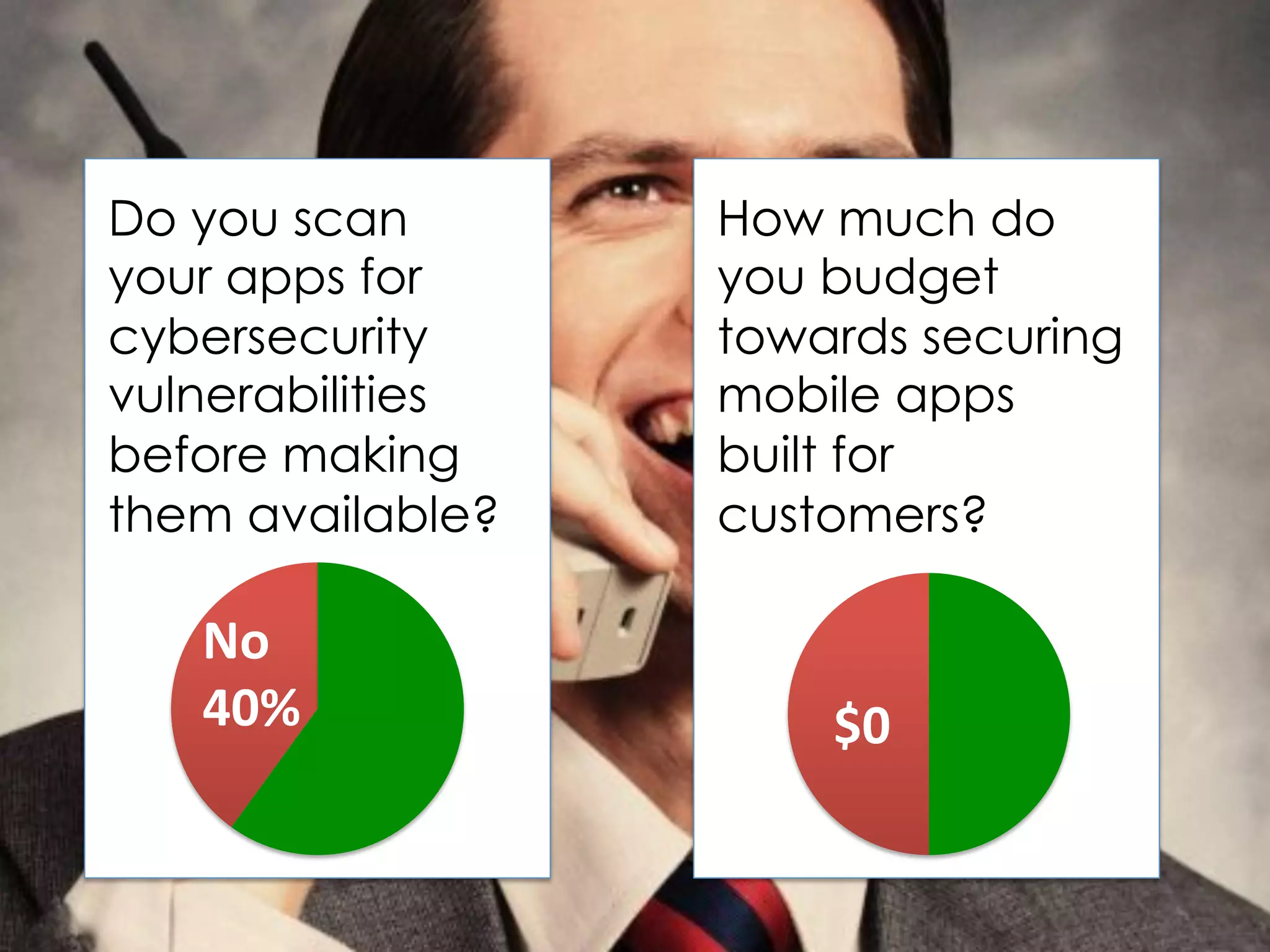
Do you scan
your apps for
cybersecurity
vulnerabilities
before making
them available?
No	
  
40%	
  
How much do
you budget
towards securing
mobile apps
built for
customers?
$0	
  
FIX THE DAMNED SOFTWARE!
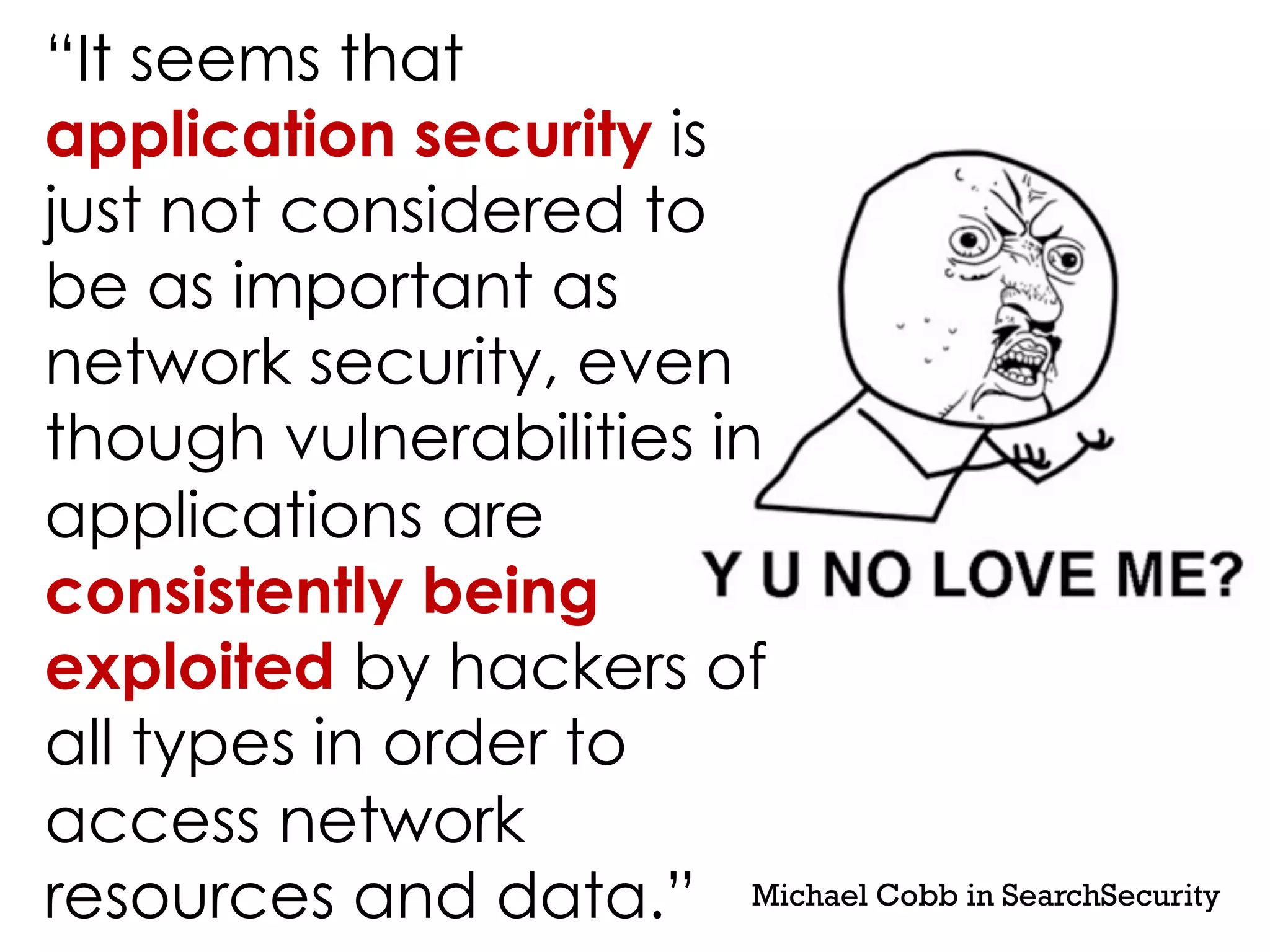
“It seems that
application security is
just not considered to
be as important as
network security, even
though vulnerabilities in
applications are
consistently being
exploited by hackers of
all types in order to
access network
resources and data.” Michael Cobb in SearchSecurity
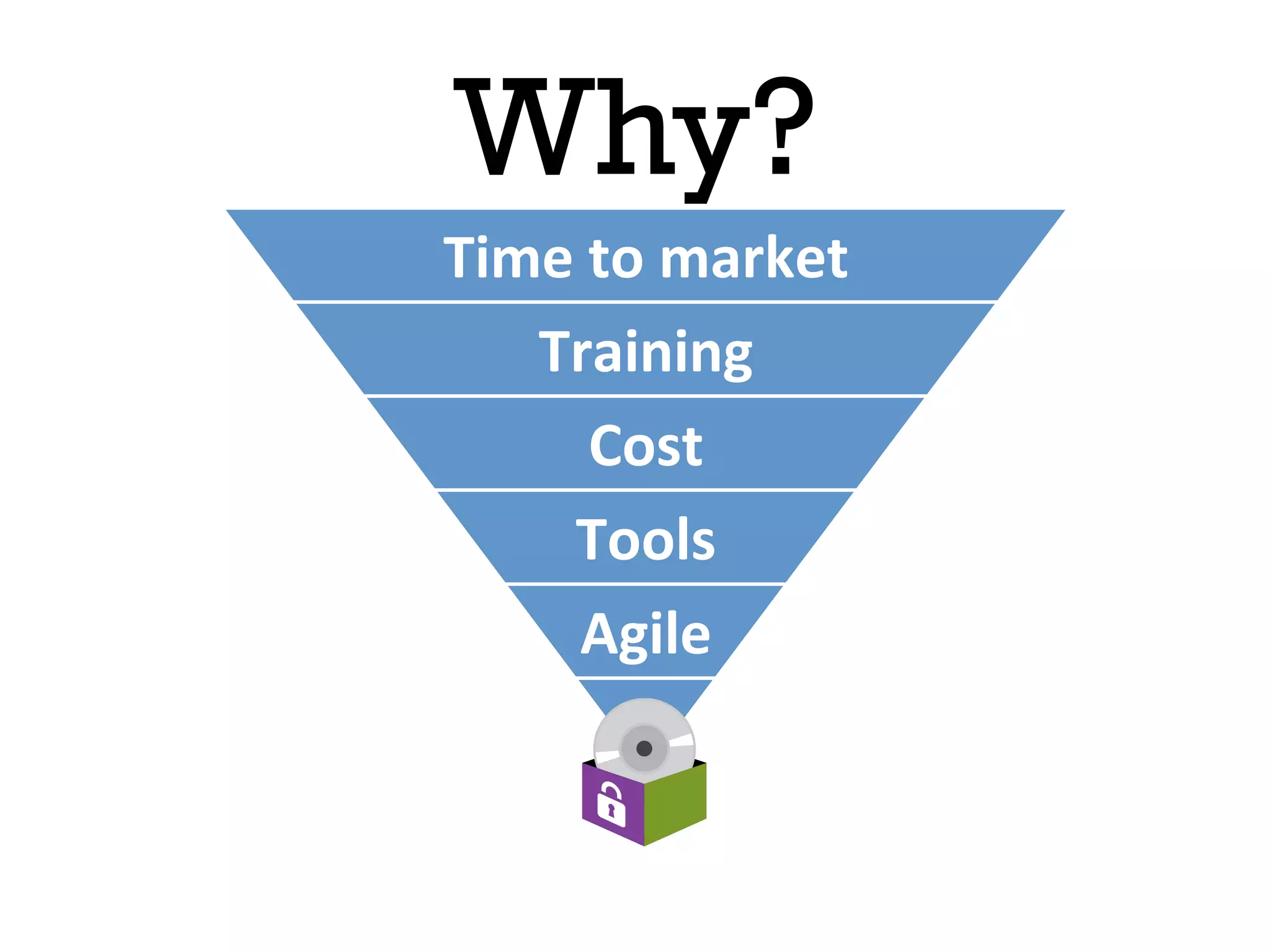
Why?
Time	
  to	
  market	
  
Training	
  
Cost	
  
Tools	
  
Agile	
  
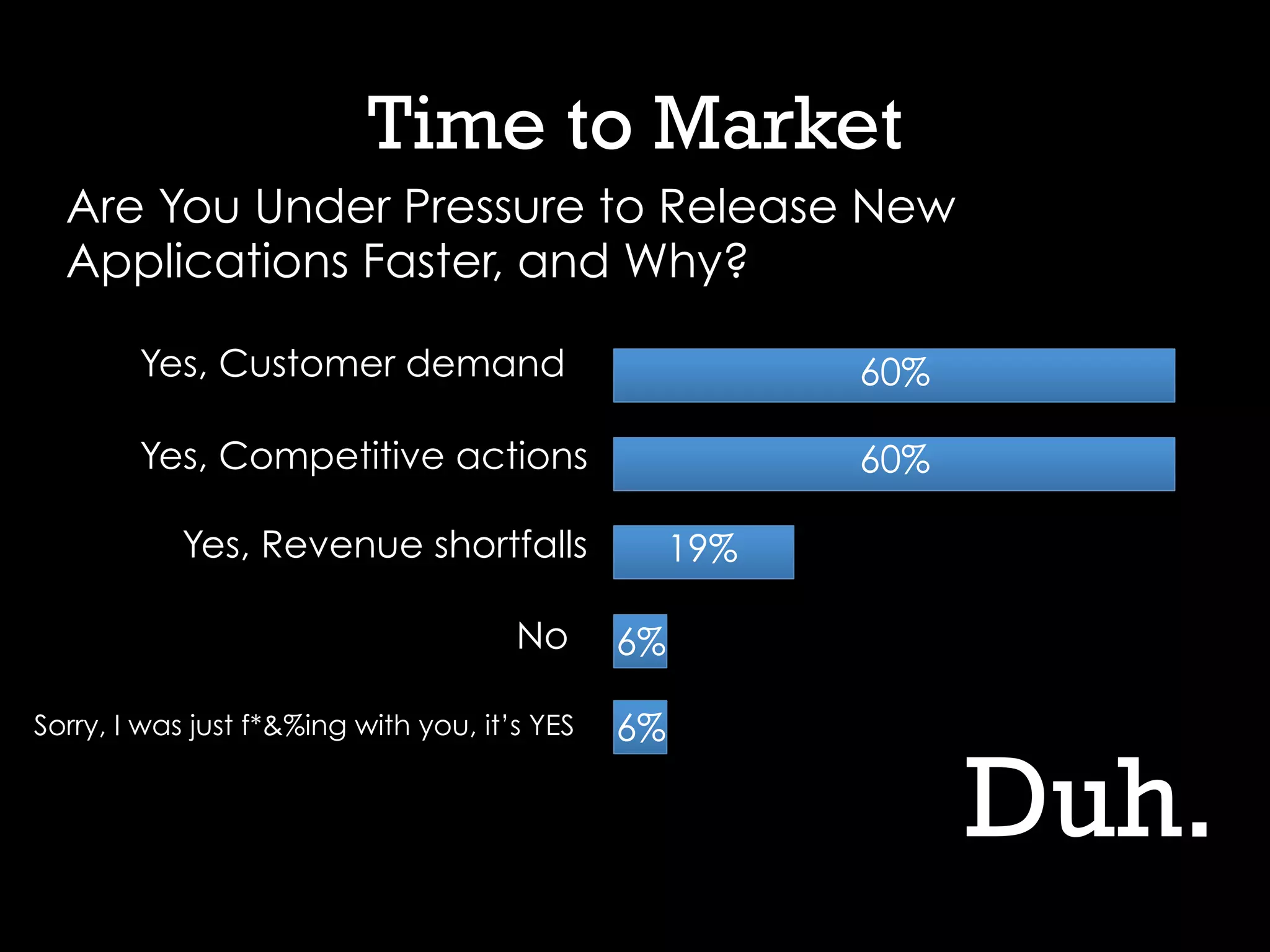
Time to Market
Duh.
Are You Under Pressure to Release New
Applications Faster, and Why?
Yes, Customer demand
Yes, Competitive actions
Yes, Revenue shortfalls
No
Sorry, I was just f*&%ing with you, it’s YES
60%	
  
60%	
  
19%	
  
6%	
  
6%	
  
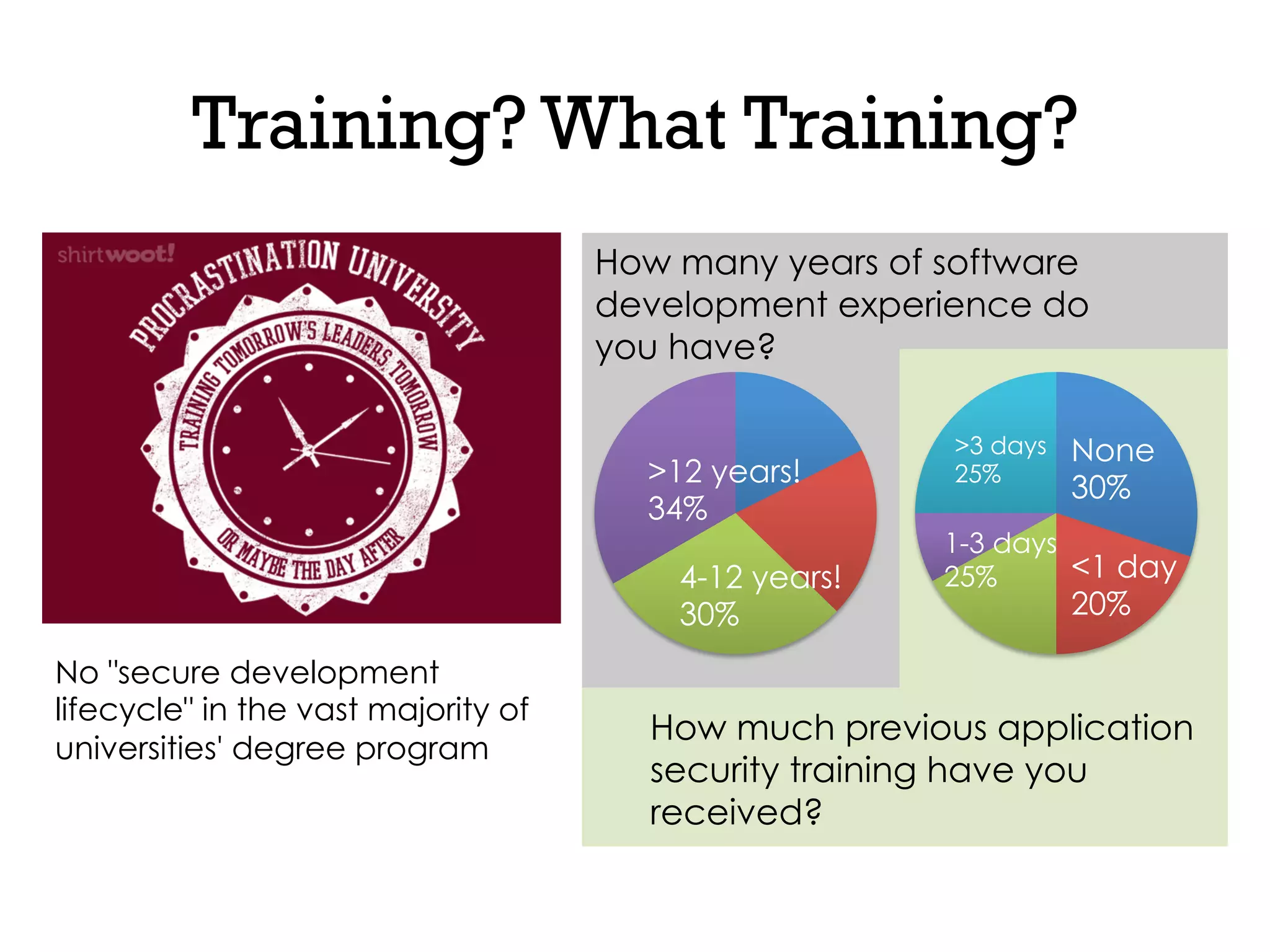
Training? What Training?
No "secure development
lifecycle" in the vast majority of
universities' degree program
How many years of software
development experience do
you have?
>12 years!
34%
4-12 years!
30%
How much previous application
security training have you
received?
None
30%
<1 day
20%
>3 days
25%
1-3 days
25%
No Tools?
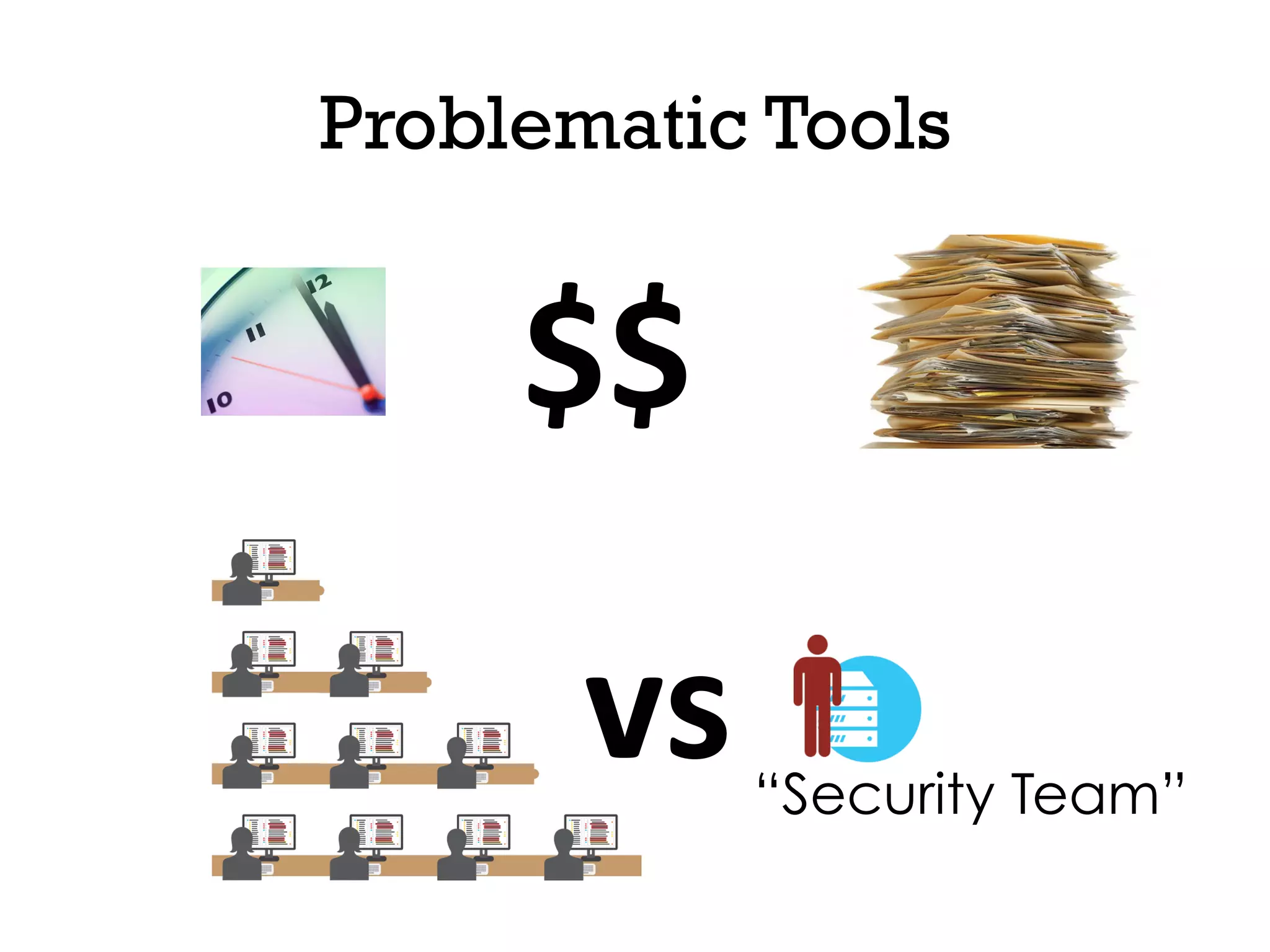
Problematic Tools
$$	
  
“Security Team”
vs	
  
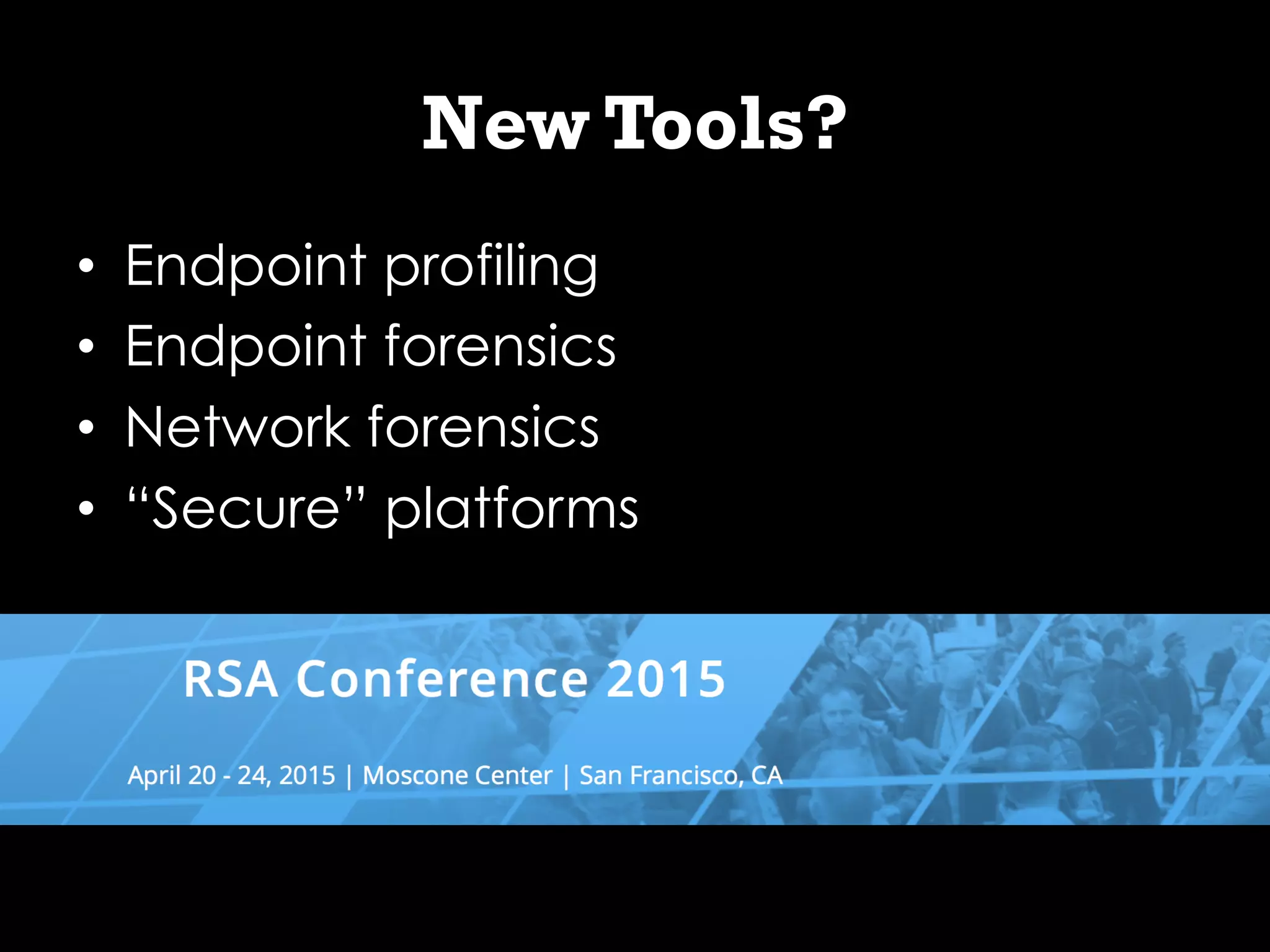
New Tools?
•  Endpoint profiling
•  Endpoint forensics
•  Network forensics
•  “Secure” platforms
LOCK THE DAMNED DOOR!
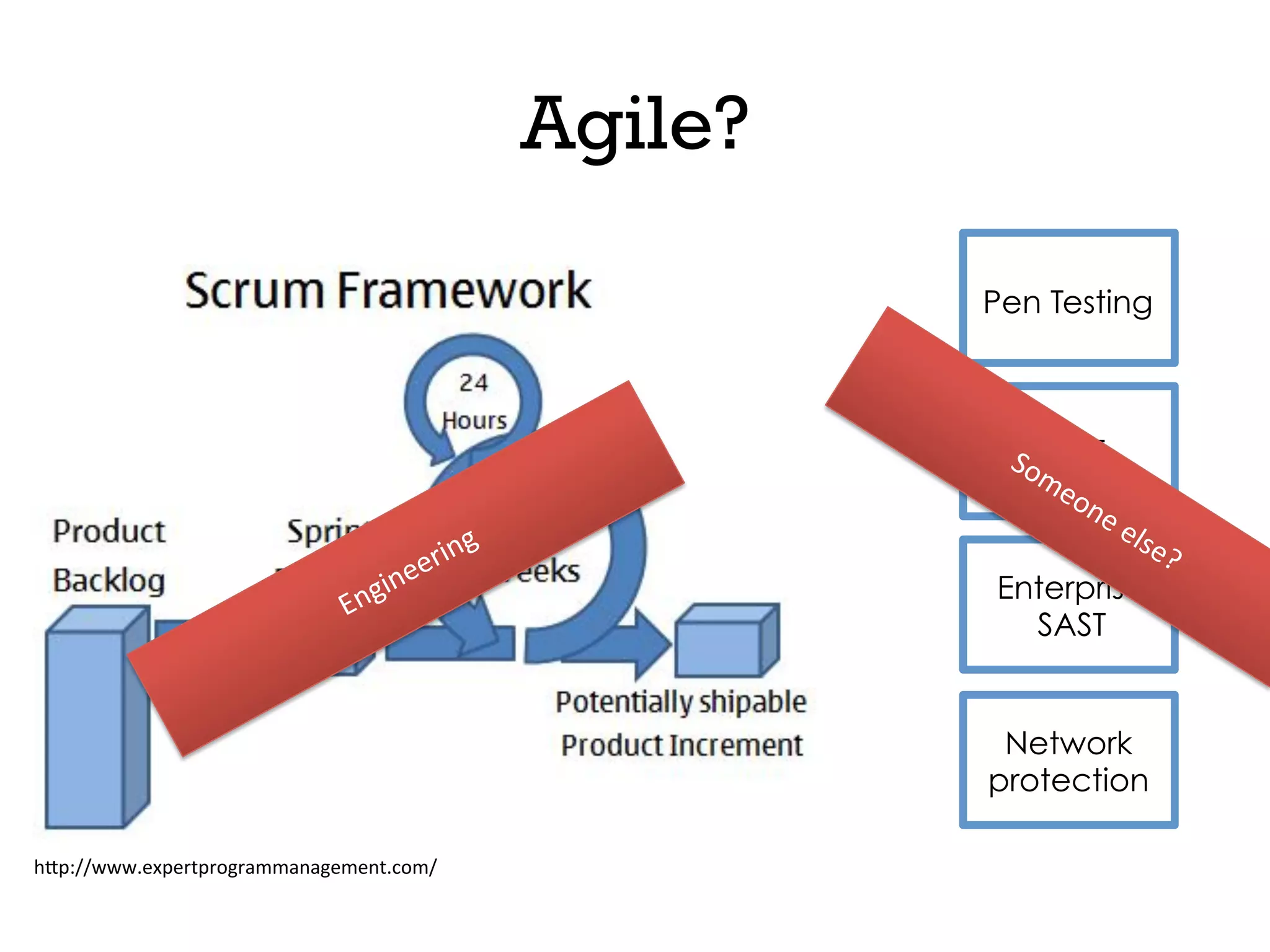
Agile?
h2p://www.expertprogrammanagement.com/	
  
Pen Testing
DAST
Enterprise
SAST
Network
protection
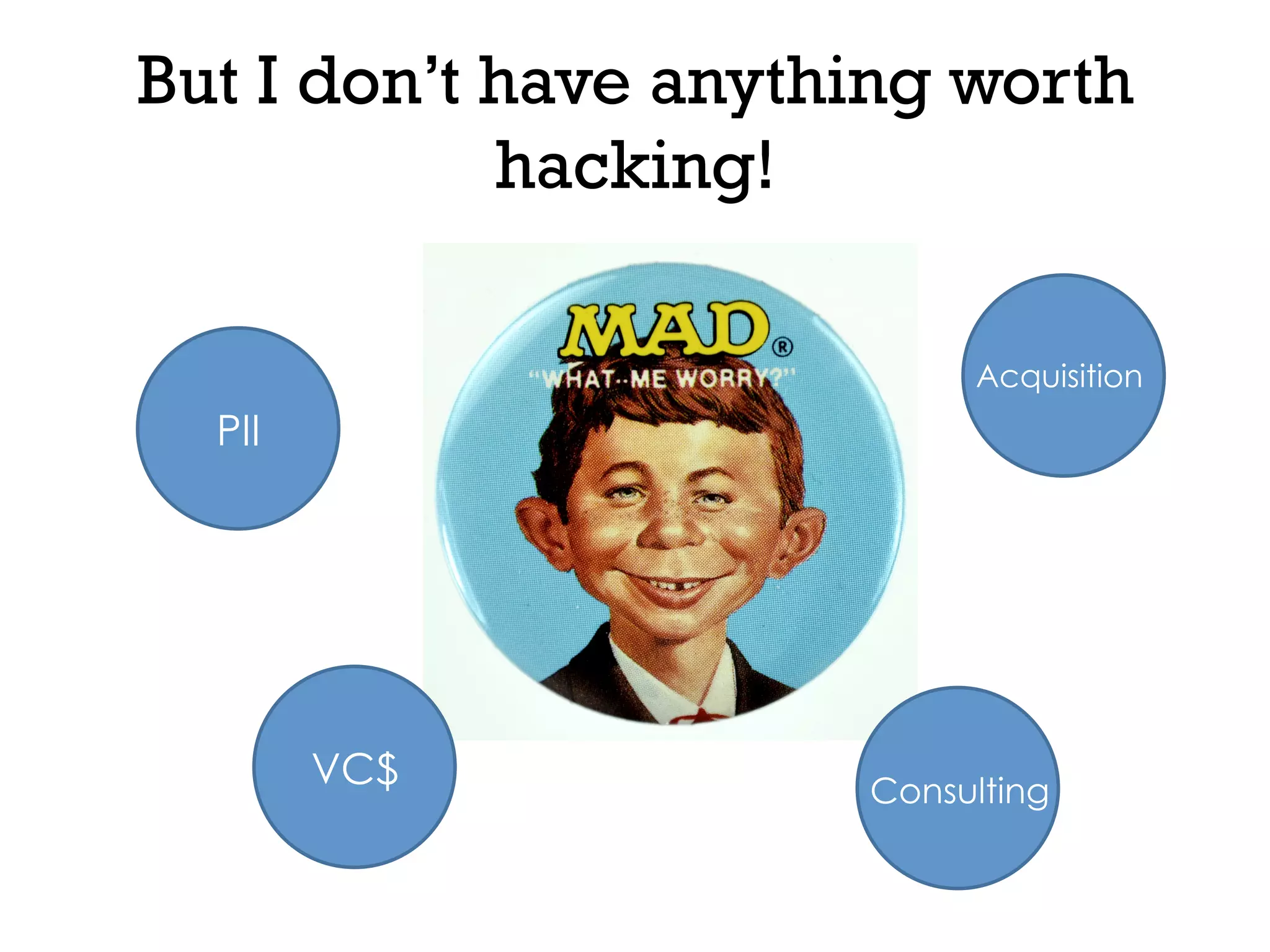
But I don’t have anything worth
hacking!
PII
VC$ Consulting	
  
Acquisition	
  
But enough about the
problems…
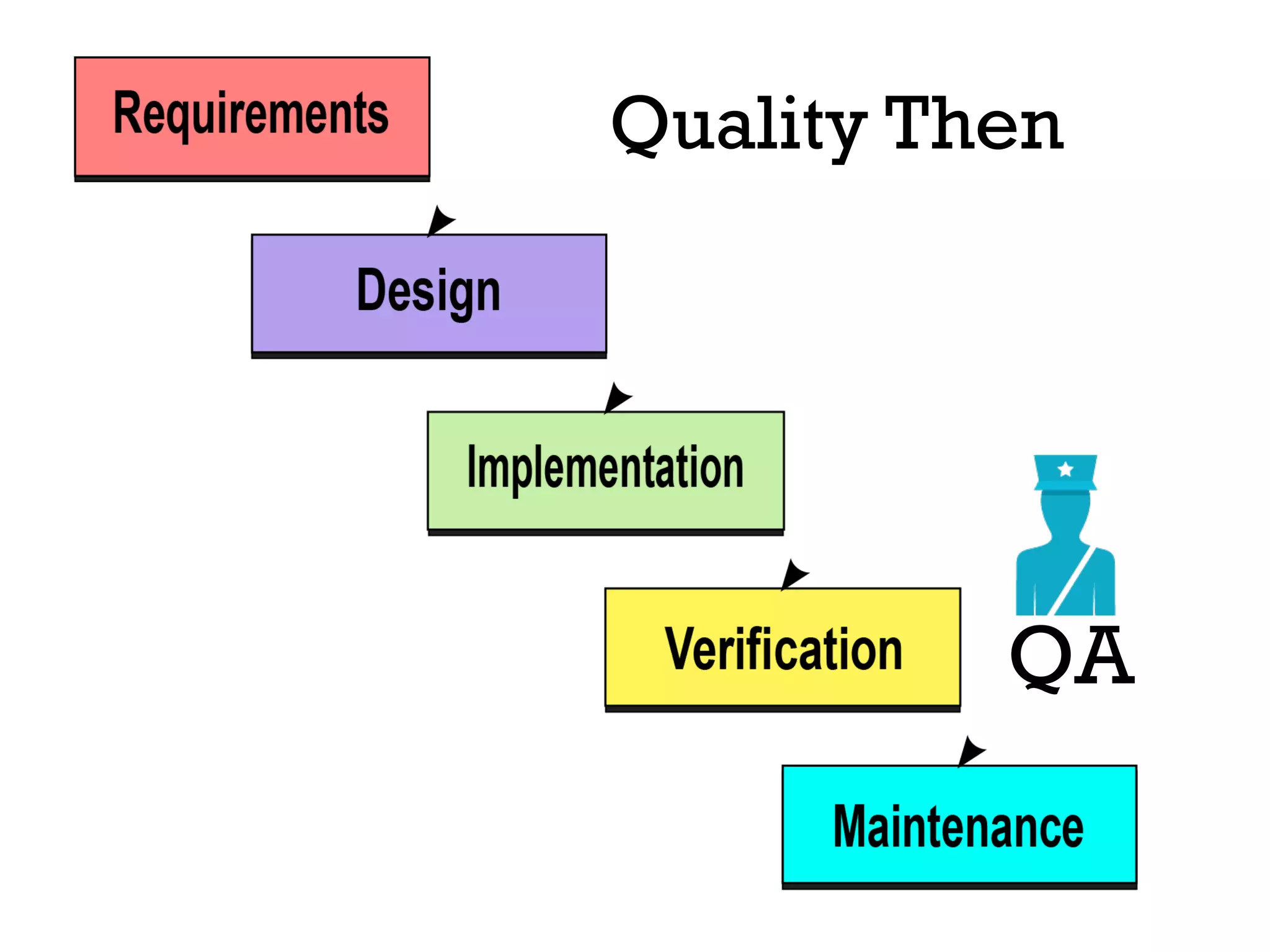
The Quality Metaphor
QA
Quality Then
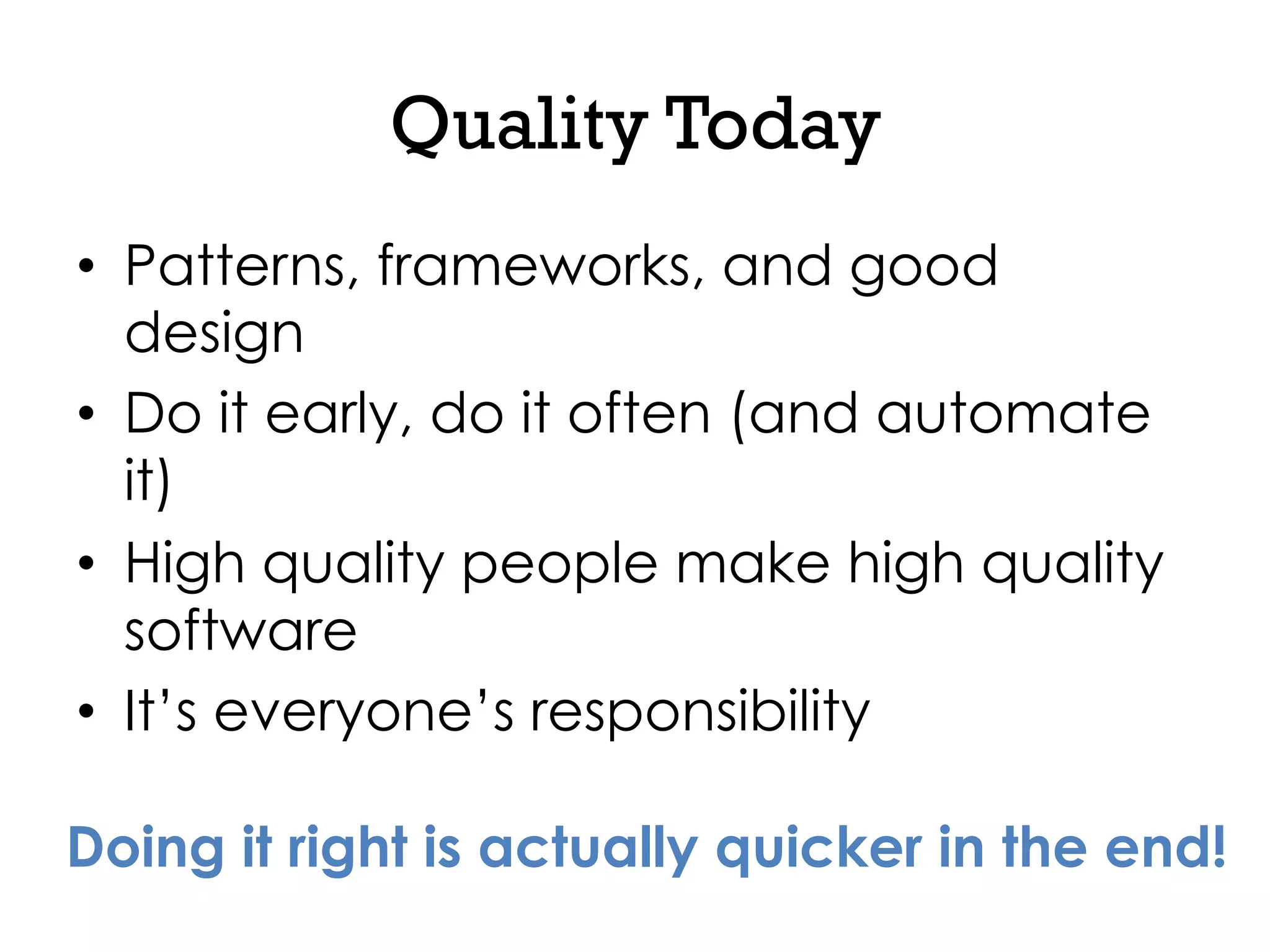
Quality Today
•  Patterns, frameworks, and good
design
•  Do it early, do it often (and automate
it)
•  High quality people make high quality
software
•  It’s everyone’s responsibility
Doing it right is actually quicker in the end!
GOOD SOFTWARE IS SECURE.
SECURE SOFTWARE IS GOOD SOFTWARE.	
  
Your	
  4	
  Step	
  Plan!	
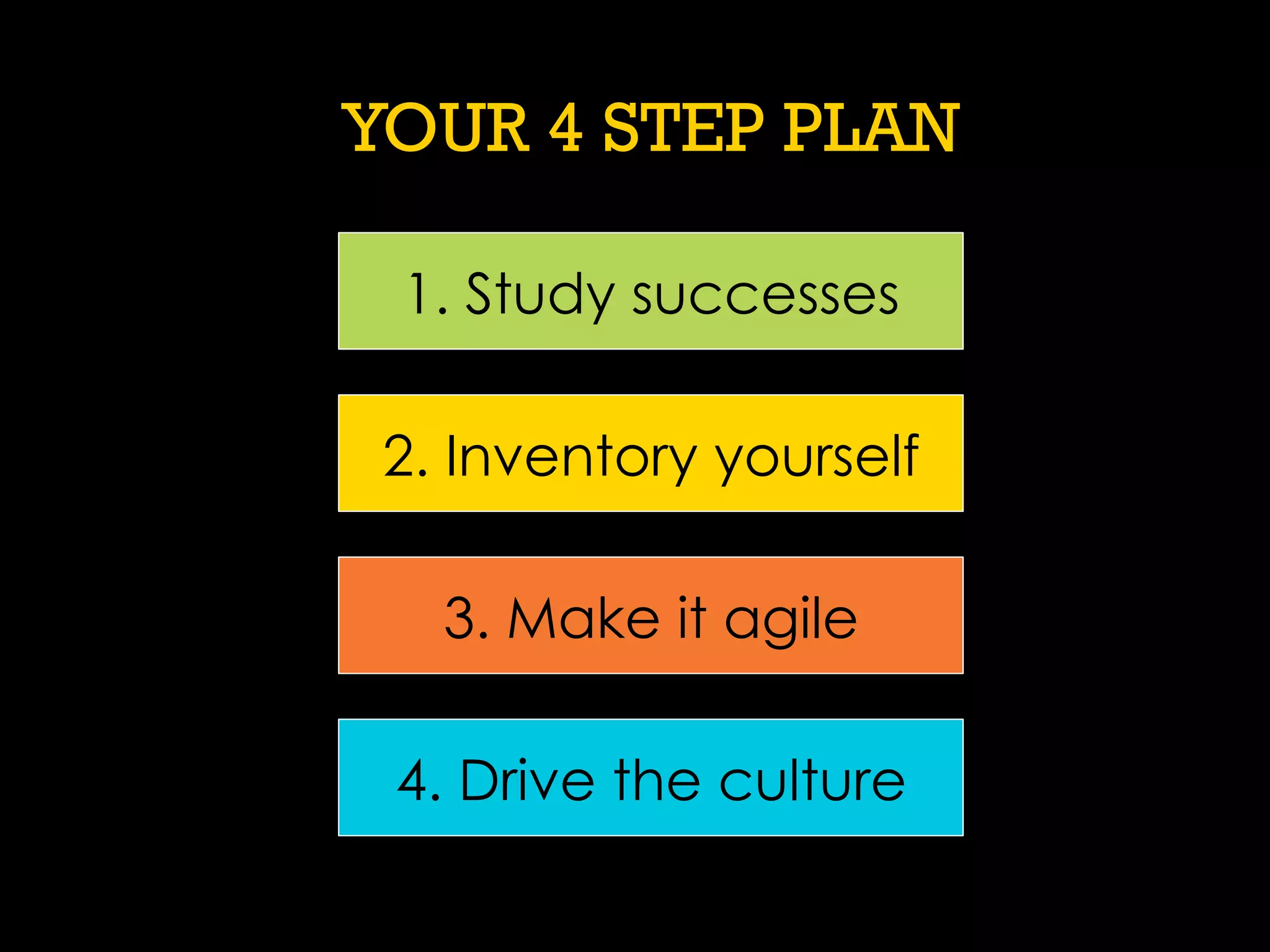
  YOUR 4 STEP PLAN	
  
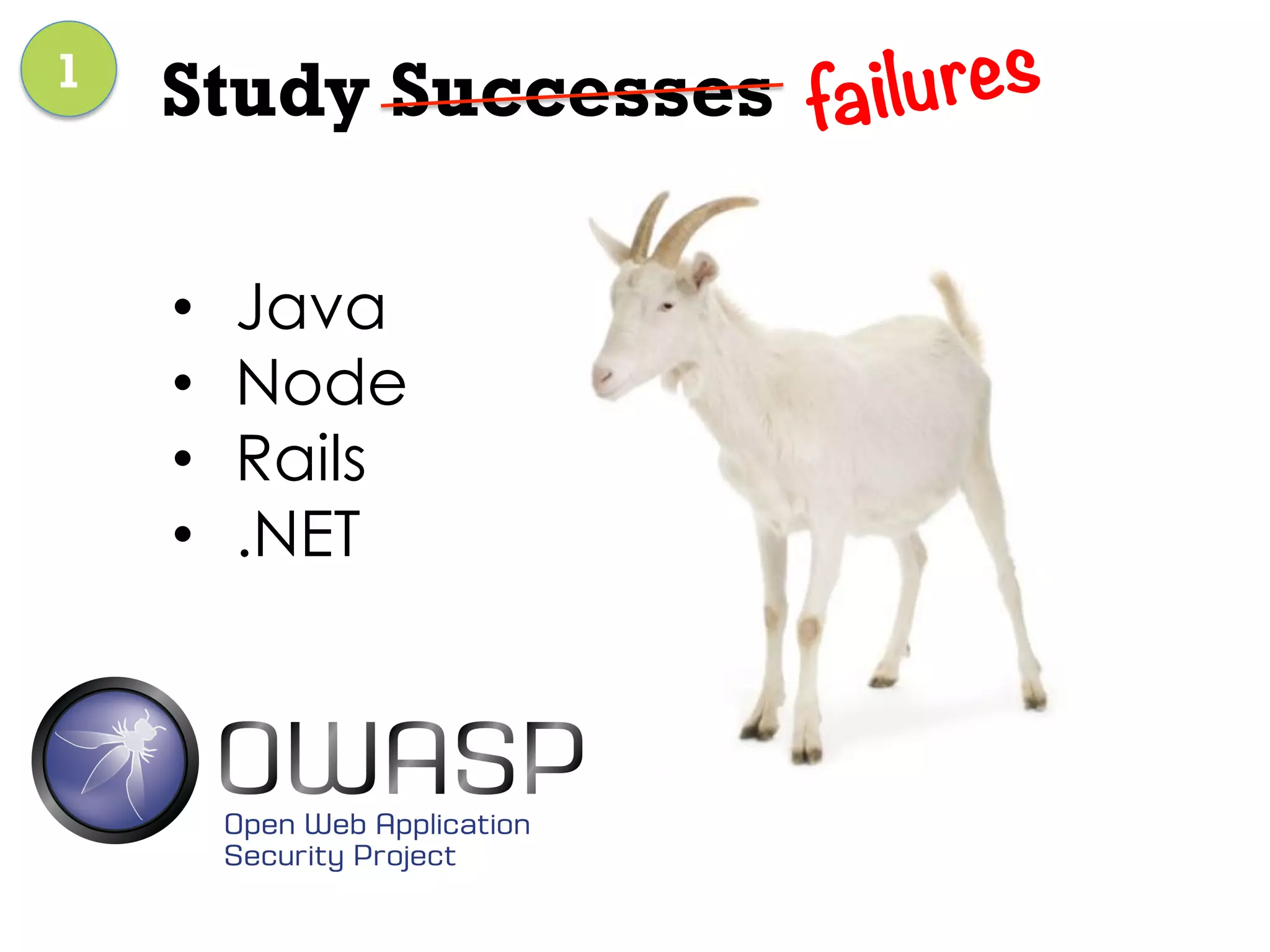
1. Study successes
2. Inventory yourself
3. Make it agile
4. Drive the culture
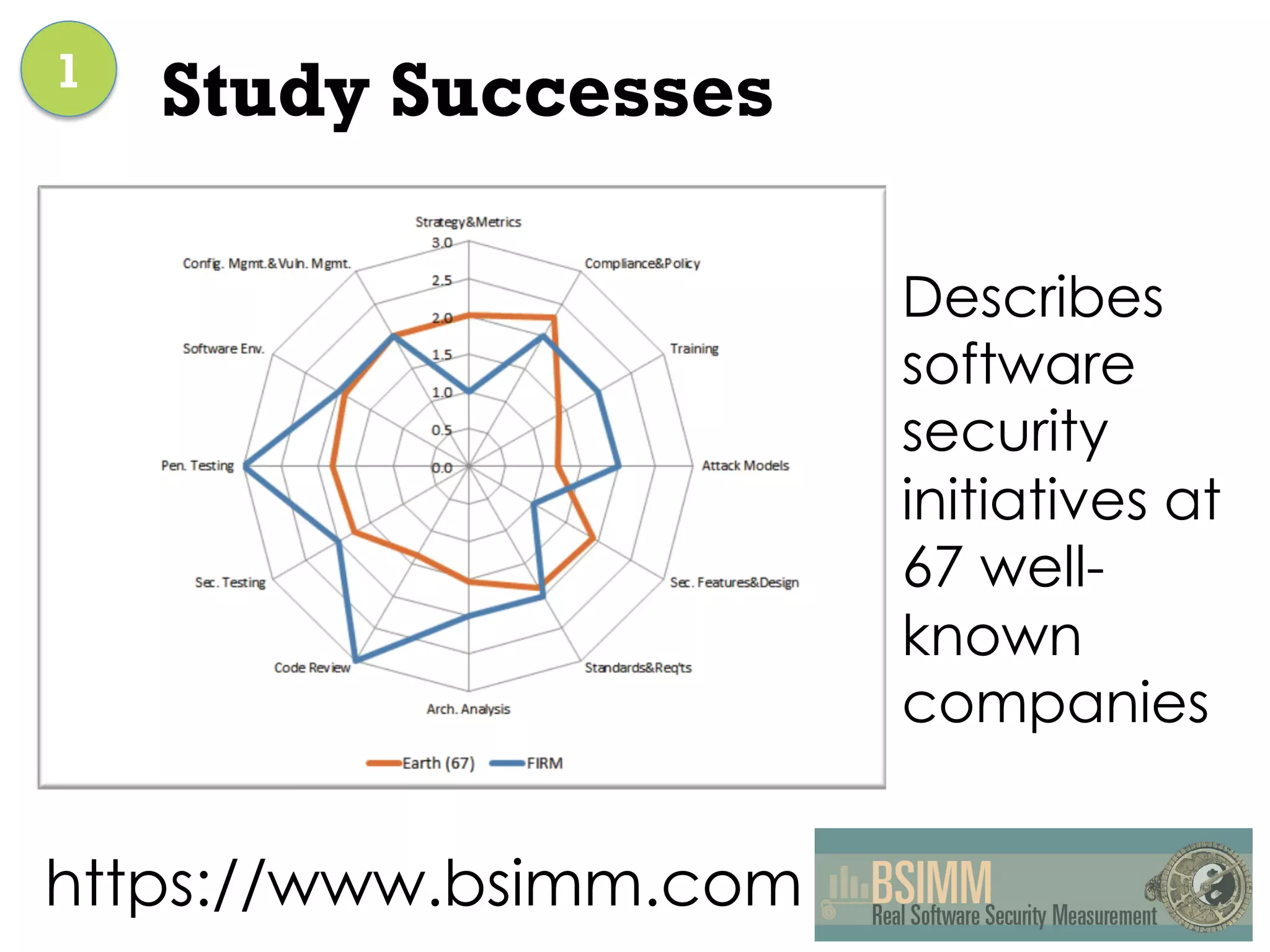
Describes
software
security
initiatives at
67 well-
known
companies
https://www.bsimm.com
1
Study Successes 	
  
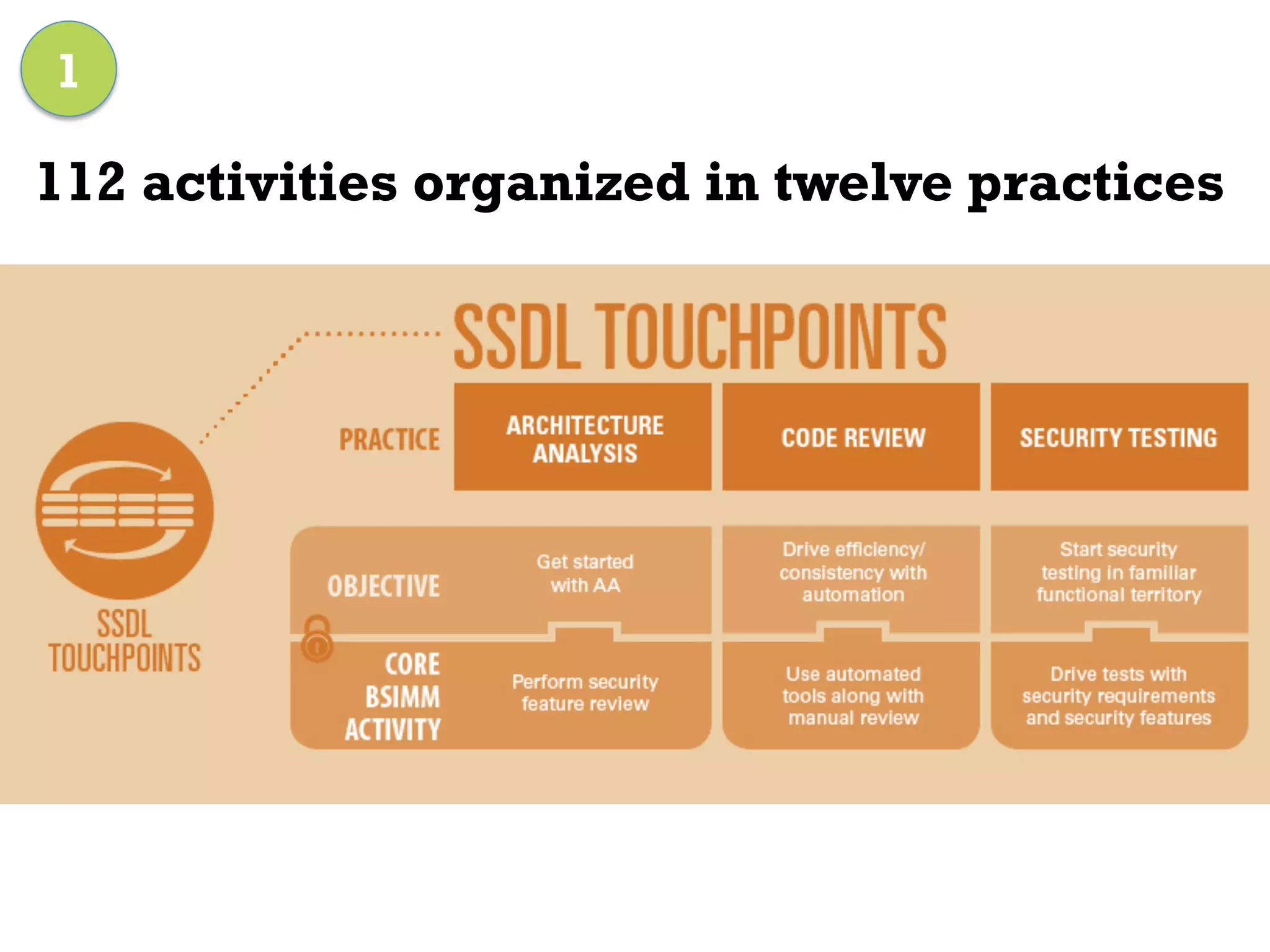
112 activities organized in twelve practices
1
1
Study Successes 	
  
•  Java
•  Node
•  Rails
•  .NET
failures
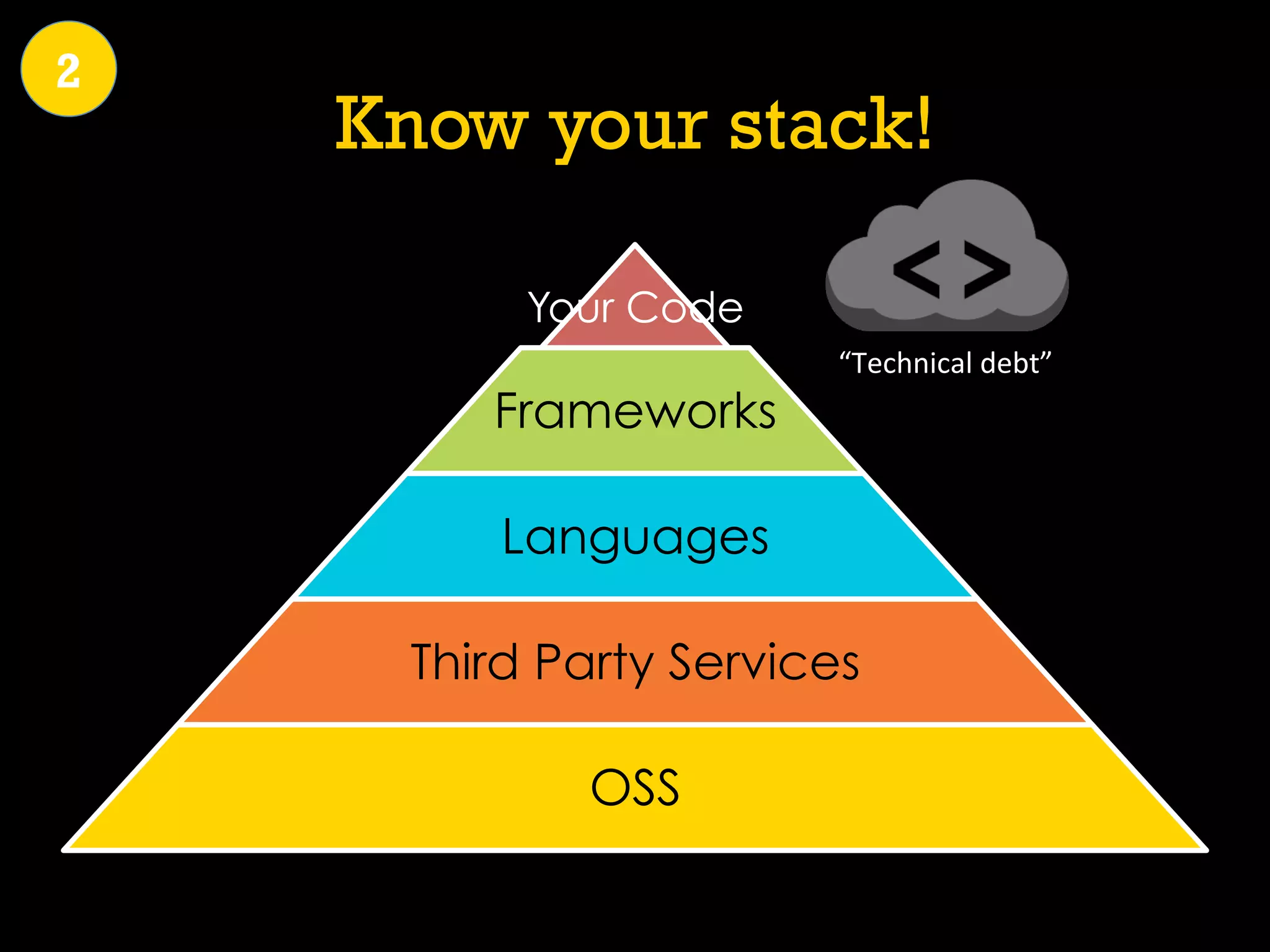
Know your stack!
Your Code
Frameworks
Languages
Third Party Services
OSS
“Technical	
  debt”	
  
2
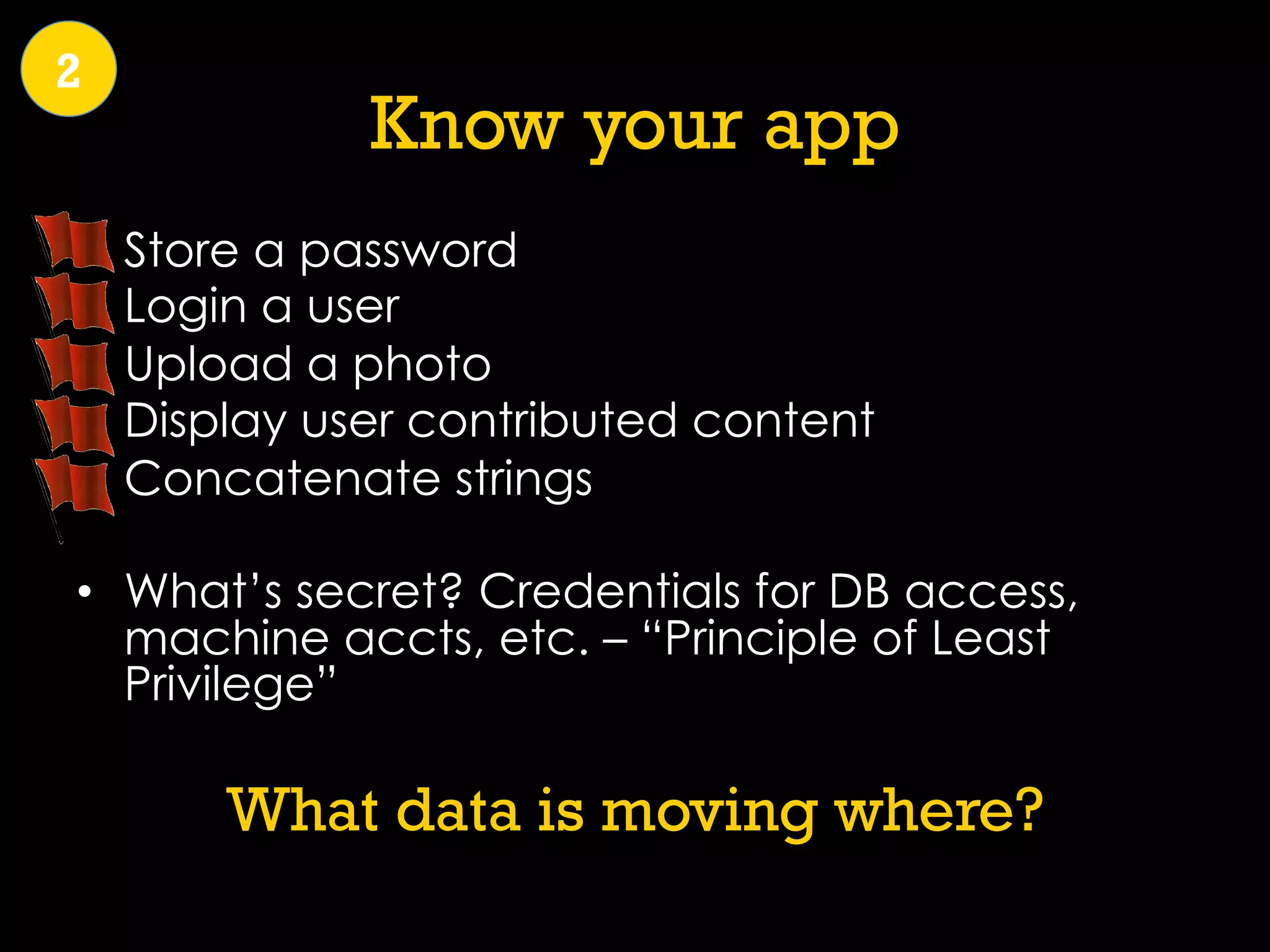
Know your app
•  Store a password
•  Login a user
•  Upload a photo
•  Display user contributed content
•  Concatenate strings
•  What’s secret? Credentials for DB access,
machine accts, etc. – “Principle of Least
Privilege”
What data is moving where?
2
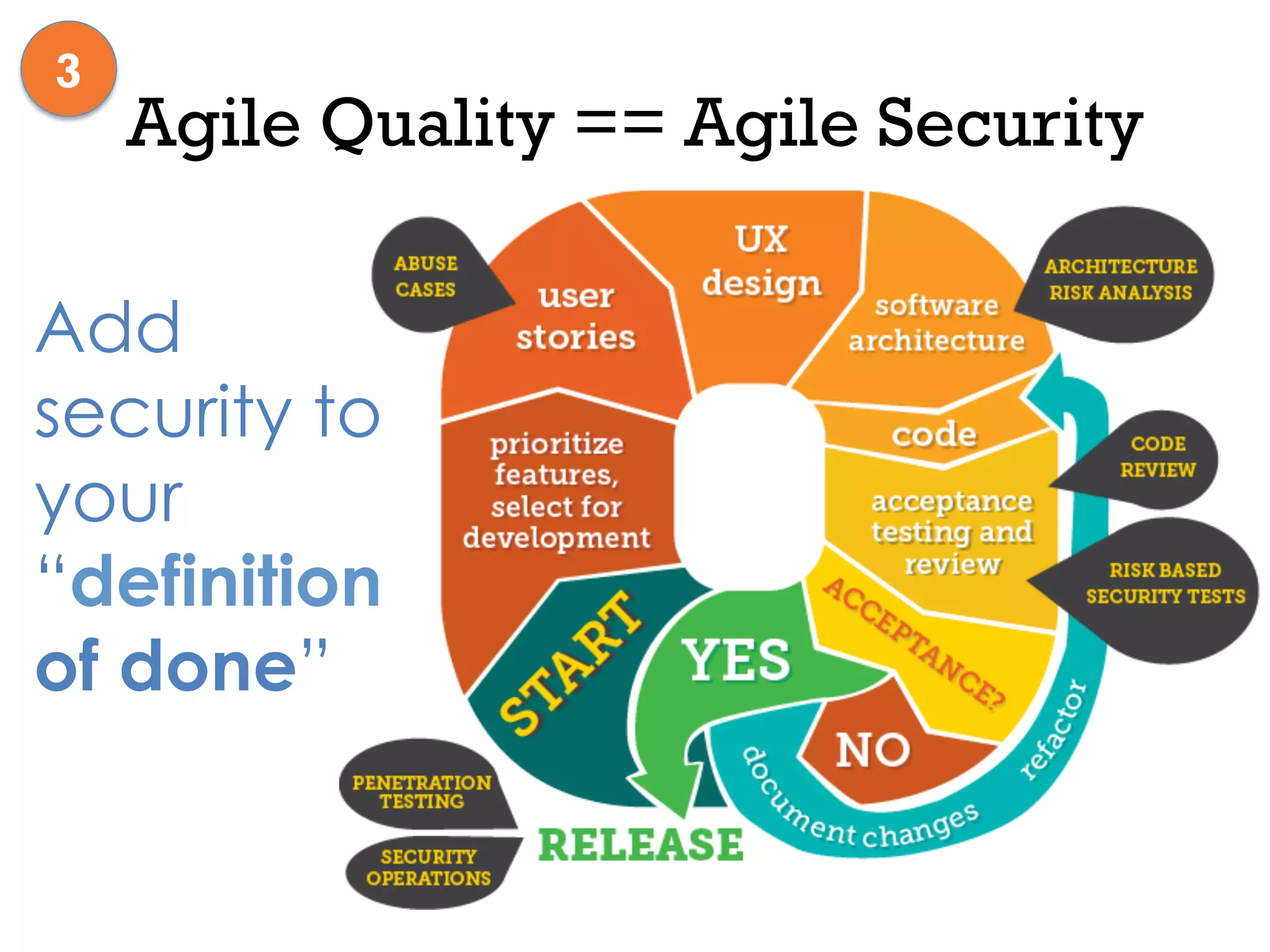
Agile Quality == Agile Security
Add
security to
your
“definition
of done”
3
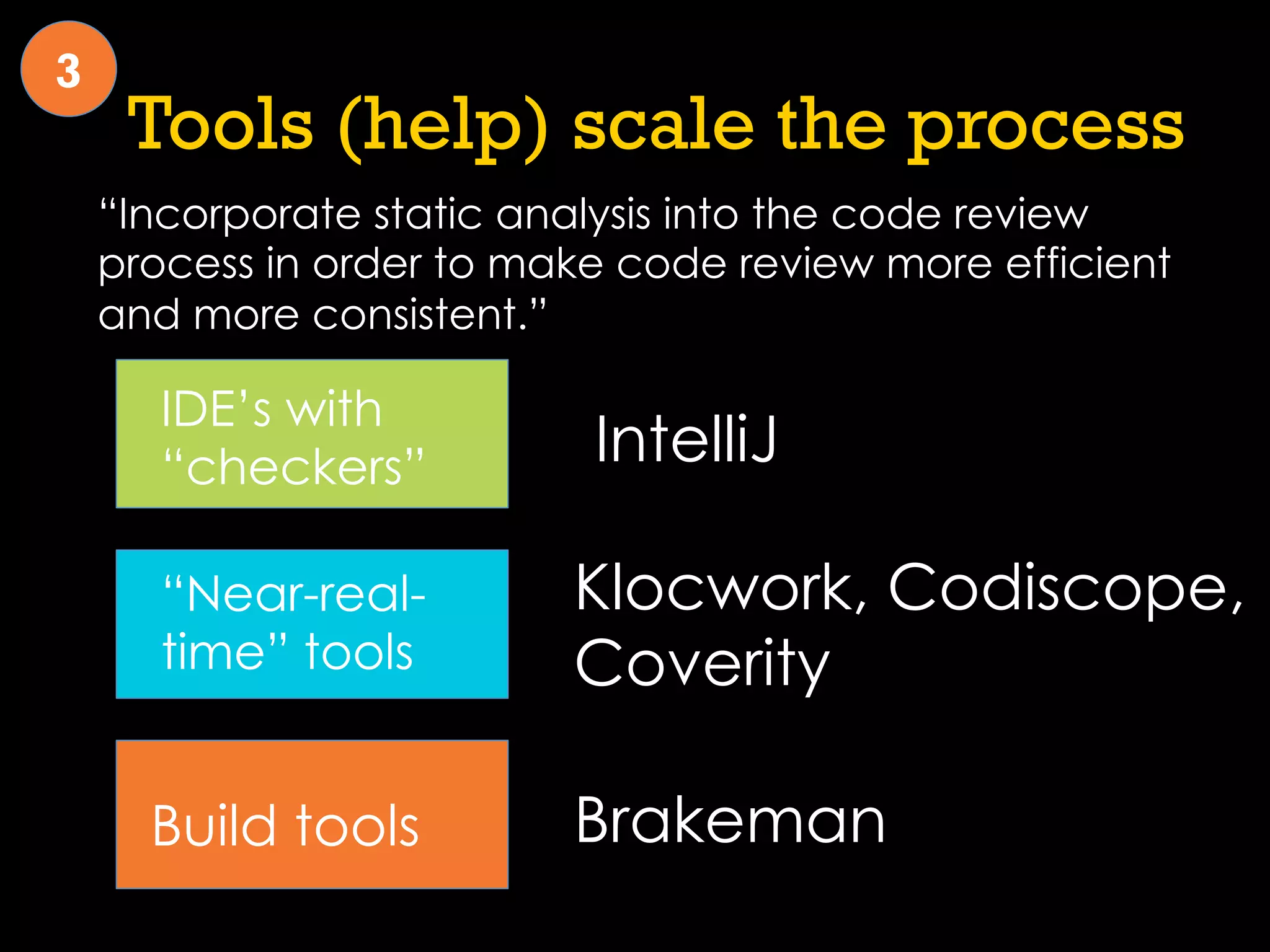
Tools (help) scale the process
“Incorporate static analysis into the code review
process in order to make code review more efficient
and more consistent.”
3
IDE’s with
“checkers”
“Near-real-
time” tools
Build tools
IntelliJ
Klocwork, Codiscope,
Coverity
Brakeman
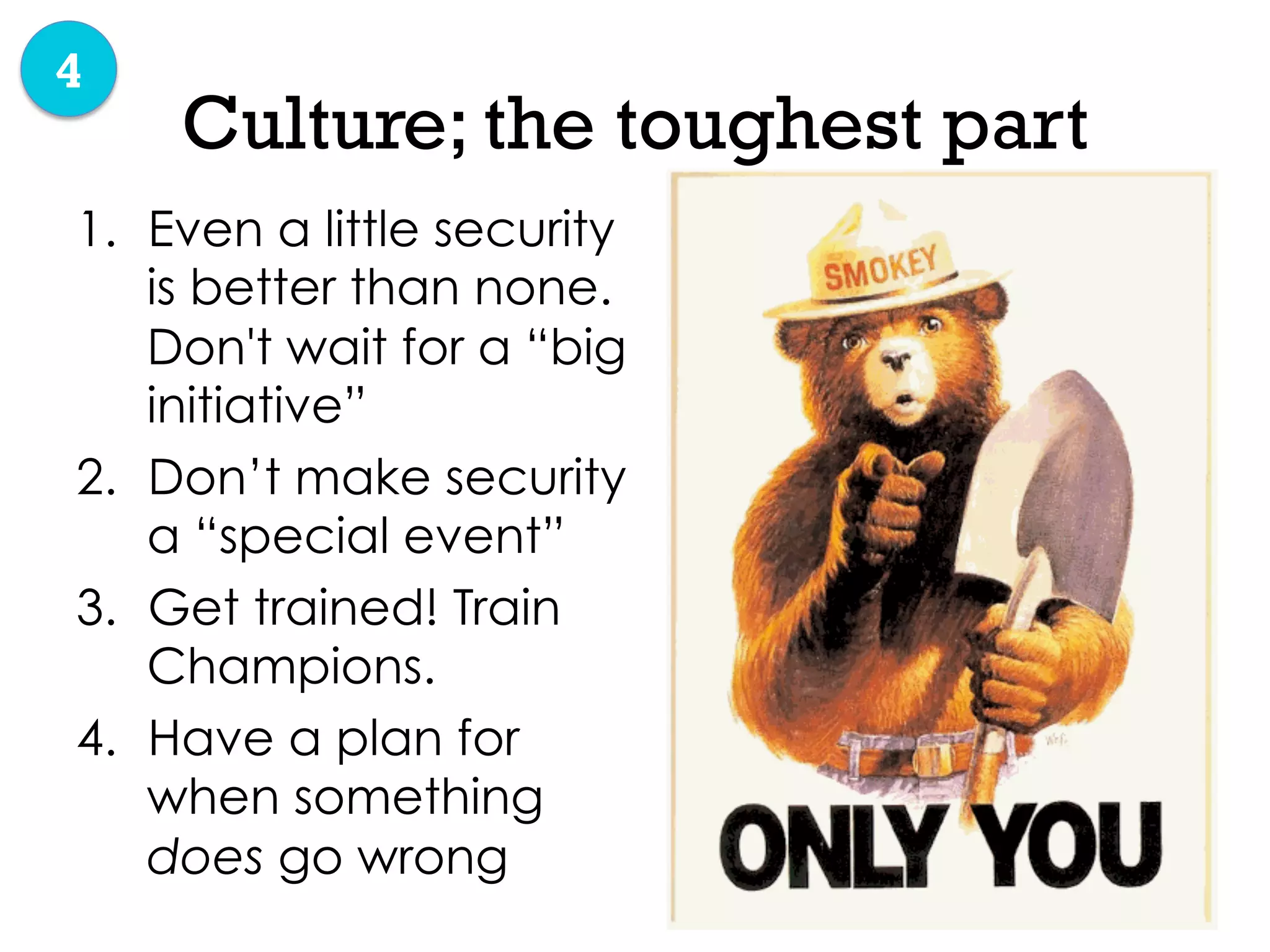
Culture; the toughest part
1.  Even a little security
is better than none.
Don't wait for a “big
initiative”
2.  Don’t make security
a “special event”
3.  Get trained! Train
Champions.
4.  Have a plan for
when something
does go wrong
4
GOOD SOFTWARE IS SECURE.
SECURE SOFTWARE IS GOOD SOFTWARE.	
  
Thanks!
tim@buntel.com
@tbuntel
www.codiscope.com

Who owns Software Security

  • 1.
  • 2.
    (obligatory)  About  Me   Smarter  in   the  City  
  • 3.
    2010 2013 Injection1   Injection BrokenAuth & Session Mgmt2   Cross Site Scripting (XSS) Cross Site Scripting (XSS) 3   Broken Auth & Session Mgmt Insecure Direct Obj References 4   Insecure Direct Obj References h2p://starwars.wikia.com/  
  • 4.
    Applica<on  Security  Risks,  Frozen  in  Time     OWASP  Top  10  –  2010  (old)   OWASP  Top  10  –  2013  (New)   2010-­‐A1  –  InjecCon   2013-­‐A1  –  InjecCon   2010-­‐A2  –  Cross  Site  ScripCng  (XSS)   2013-­‐A2  –  Broken  AuthenCcaCon  and  Session  Management   2010-­‐A3  –  Broken  AuthenCcaCon  and  Session  Management   2013-­‐A3  –  Cross  Site  ScripCng  (XSS)   2010-­‐A4  –  Insecure  Direct  Object  References   2013-­‐A4  –  Insecure  Direct  Object  References   2010-­‐A5  –  Cross  Site  Request  Forgery  (CSRF)   2013-­‐A5  –  Security  MisconfiguraCon   2010-­‐A6  –  Security  MisconfiguraCon   2013-­‐A6  –  SensiCve  Data  Exposure   2010-­‐A7  –  Insecure  Cryptographic  Storage   2013-­‐A7  –  Missing  FuncCon  Level  Access  Control   2010-­‐A8  –  Failure  to  Restrict  URL  Access   2013-­‐A8  –    Cross-­‐Site  Request  Forgery  (CSRF)   2010-­‐A9  –  Insufficient  Transport  Layer  ProtecCon   2013-­‐A9  –  Using  Known  Vulnerable  Components  (NEW)   2010-­‐A10  –  Unvalidated  Redirects  and  Forwards  (NEW)   2013-­‐A10  –  Unvalidated  Redirects  and  Forwards   3  Primary  Changes:   §  Merged:  2010-­‐A7  and  2010-­‐A9  -­‐>  2013-­‐A6   §  Added  New  2013-­‐A9:  Using  Known  Vulnerable  Components   §  2010-­‐A8  broadened  to  2013-­‐A7   renamed   combined  
  • 5.
    BIG PROBLEM? At least1Billion records of PII were leaked in 2014
  • 6.
    Still! Breaches bySQLi into 2015 3rd most common attack type (after DDoS and Malware)
  • 7.
    Do you scan yourapps for cybersecurity vulnerabilities before making them available? No   40%   How much do you budget towards securing mobile apps built for customers? $0  
  • 8.
    FIX THE DAMNEDSOFTWARE!
  • 9.
    “It seems that applicationsecurity is just not considered to be as important as network security, even though vulnerabilities in applications are consistently being exploited by hackers of all types in order to access network resources and data.” Michael Cobb in SearchSecurity
  • 10.
    Why? Time  to  market   Training   Cost   Tools   Agile  
  • 11.
    Time to Market Duh. AreYou Under Pressure to Release New Applications Faster, and Why? Yes, Customer demand Yes, Competitive actions Yes, Revenue shortfalls No Sorry, I was just f*&%ing with you, it’s YES 60%   60%   19%   6%   6%  
  • 12.
    Training? What Training? No"secure development lifecycle" in the vast majority of universities' degree program How many years of software development experience do you have? >12 years! 34% 4-12 years! 30% How much previous application security training have you received? None 30% <1 day 20% >3 days 25% 1-3 days 25%
  • 13.
  • 14.
  • 15.
    New Tools? •  Endpointprofiling •  Endpoint forensics •  Network forensics •  “Secure” platforms
  • 16.
  • 17.
  • 18.
    But I don’thave anything worth hacking! PII VC$ Consulting   Acquisition  
  • 19.
    But enough aboutthe problems… The Quality Metaphor
  • 20.
  • 21.
    Quality Today •  Patterns,frameworks, and good design •  Do it early, do it often (and automate it) •  High quality people make high quality software •  It’s everyone’s responsibility Doing it right is actually quicker in the end!
  • 22.
    GOOD SOFTWARE ISSECURE. SECURE SOFTWARE IS GOOD SOFTWARE.  
  • 23.
    Your  4  Step  Plan!  YOUR 4 STEP PLAN   1. Study successes 2. Inventory yourself 3. Make it agile 4. Drive the culture
  • 24.
  • 25.
    112 activities organizedin twelve practices 1
  • 26.
    1 Study Successes   •  Java •  Node •  Rails •  .NET failures
  • 27.
    Know your stack! YourCode Frameworks Languages Third Party Services OSS “Technical  debt”   2
  • 28.
    Know your app • Store a password •  Login a user •  Upload a photo •  Display user contributed content •  Concatenate strings •  What’s secret? Credentials for DB access, machine accts, etc. – “Principle of Least Privilege” What data is moving where? 2
  • 29.
    Agile Quality ==Agile Security Add security to your “definition of done” 3
  • 30.
    Tools (help) scalethe process “Incorporate static analysis into the code review process in order to make code review more efficient and more consistent.” 3 IDE’s with “checkers” “Near-real- time” tools Build tools IntelliJ Klocwork, Codiscope, Coverity Brakeman
  • 31.
    Culture; the toughestpart 1.  Even a little security is better than none. Don't wait for a “big initiative” 2.  Don’t make security a “special event” 3.  Get trained! Train Champions. 4.  Have a plan for when something does go wrong 4
  • 32.
    GOOD SOFTWARE ISSECURE. SECURE SOFTWARE IS GOOD SOFTWARE.  
  • 33.