OVERACTIVE
BLADDER
OUTLINES
Introduction… Definition and Prevalence.
Bladder Anatomy and Physiology.
Etiology and Pathophysiology OAB.
Diagnosis and evaluation of OAB.
Treatment of OAB.
Definition of OAB
The International Continence Society (ICS) defines
OAB as:
• The presence of “urinary urgency, usually accompanied
by frequency and nocturia, with or without urge
incontinence, in the absence of UTI or other pathology.”
• OAB is based on symptoms and it is a clinical syndrome.
• While detrusor overactivity (DO) is a urodynamic
observation, characterized by involuntary detrusor
contractions during the filling phase.
• OAB and DO are different terms.
Abrams et al, 2002
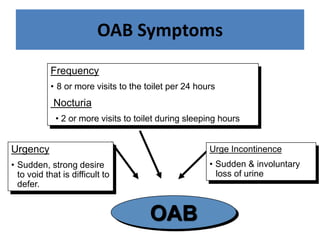
Urge Incontinence
• Sudden & involuntary
loss of urine
Frequency
• 8 or more visits to the toilet per 24 hours
Nocturia
• 2 or more visits to toilet during sleeping hours
OAB
OAB Symptoms
Urgency
• Sudden, strong desire
to void that is difficult to
defer.
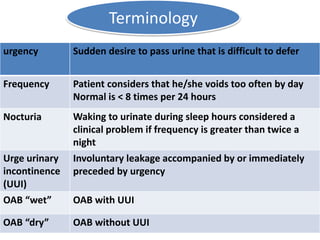
Sudden desire to pass urine that is difficult to deferurgency
Patient considers that he/she voids too often by day
Normal is < 8 times per 24 hours
Frequency
Waking to urinate during sleep hours considered a
clinical problem if frequency is greater than twice a
night
Nocturia
Involuntary leakage accompanied by or immediately
preceded by urgency
Urge urinary
incontinence
(UUI)
OAB with UUIOAB “wet”
OAB without UUIOAB “dry”
Terminology
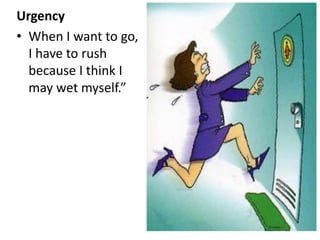
Urgency
• When I want to go,
I have to rush
because I think I
may wet myself.”
• Overall OAB prevalence is 11.8% in adults.
• prevalence increase with age.
• Both genders have similar rates of OAB, but
“OAB wet” is more prevalent in women and
“OAB dry” is more prevalent in men.
• OAB wet common in women due to the relative
weakness of the bladder neck and urethral
sphincter mechanism in women, especial after
pregnancy.
Milsom et al, 2001
PREVALENCE
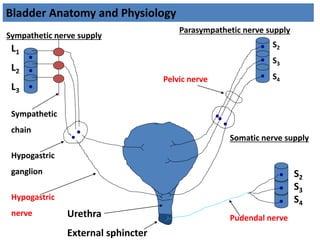
L1
L2
L3
Sympathetic nerve supply
Sympathetic
chain
Hypogastric
ganglion
Hypogastric
nerve Urethra
External sphincter
Parasympathetic nerve supply
S2
S3
S4
S2
S3
S4
Pelvic nerve
Pudendal nerve
Somatic nerve supply
Bladder Anatomy and Physiology
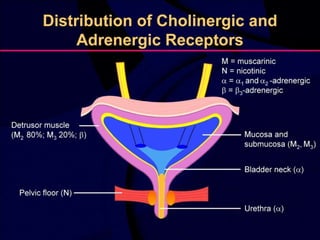
• Normal filling requires
Parasympathetic inhibition and sympathetic
stimulation Reduces detrusor tone.
• Normal emptying requires
Sympathetic inhibition and parasympathetic
stimulation increase detrusor tone.
PATHOPHYSIOLOGY AND ETIOLOGY
• The etiology of OAB is complex and poorly
understood.
Neurological hypothesis.
The myogenic hypothesis.
PATHOPHYSIOLOGY AND ETIOLOGY
Neurological hypothesis
• DO arises from generalized, nerve-mediated
excitation of the detrusor muscle.
• Normaly the bladder control is modulated in an
inhibitory fashion by the cerebral cortex.
• Damage to the brain can induce DO by reducing
suprapontine inhibition.
• Damage to axonal pathways in the spinal cord allows
the expression of primitive spinal bladder reflexes..
De Groat et al, 1997
PATHOPHYSIOLOGY AND ETIOLOGY
The myogenic hypothesis
Overactive detrusor contractions result
from a combination of
1. Increased spontaneous excitation
within smooth muscle of the bladder.
2. Enhanced propagation of this activity to
affect an excessive proportion of the
bladder wall.
Brading, 1997
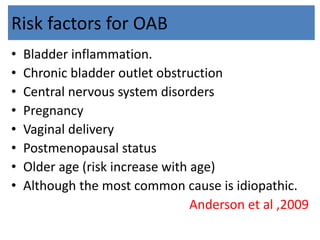
Risk factors for OAB
• Bladder inflammation.
• Chronic bladder outlet obstruction
• Central nervous system disorders
• Pregnancy
• Vaginal delivery
• Postmenopausal status
• Older age (risk increase with age)
• Although the most common cause is idiopathic.
Anderson et al ,2009
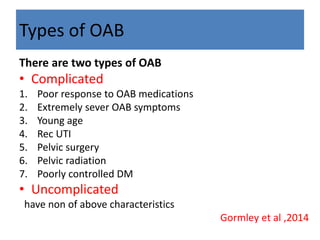
Types of OAB
There are two types of OAB
• Complicated
1. Poor response to OAB medications
2. Extremely sever OAB symptoms
3. Young age
4. Rec UTI
5. Pelvic surgery
6. Pelvic radiation
7. Poorly controlled DM
• Uncomplicated
have non of above characteristics
Gormley et al ,2014
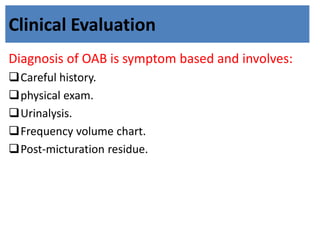
Clinical Evaluation
Diagnosis of OAB is symptom based and involves:
Careful history.
physical exam.
Urinalysis.
Frequency volume chart.
Post-micturation residue.
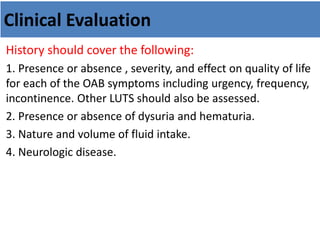
Clinical Evaluation
History should cover the following:
1. Presence or absence , severity, and effect on quality of life
for each of the OAB symptoms including urgency, frequency,
incontinence. Other LUTS should also be assessed.
2. Presence or absence of dysuria and hematuria.
3. Nature and volume of fluid intake.
4. Neurologic disease.
Clinical Evaluation
History should cover the following:
5. Obstetric and gynecologic history, previous surgery/
radiotherapy, bowel symptoms.
6. Other medical issues (e.g., closed-angle glaucoma and
cognitive impairment can limit treatment options).
7.Drug history
There are many medications that can exacerbate the
symptoms of OAB (diuretics, alpha agonist)
Abrams et al, 2009
Clinical Evaluation
Physical examination
• Abdominal and vaginal examinations should be performed
and, if indicated a rectal examination should also be
undertaken.
• The presence of pelvic organ prolapse, e.g a cystocele,
may cause urinary urgency and frequency as it drags on
the trigone and causes sensation of bladder fullness.
Clinical Evaluation
Physical examination
• Bimanual examination will rule out pelvic masses, e.g
ovarian cysts and uterine enlargement, which can also
cause urinary symptoms.
• For women with an atrophic vagina and symptoms of
OAB, estrogen deficiency may be a contributing factor to
their symptoms.
Abrams et al, 2009
Clinical Evaluation
Other possible causes of urgency and frequency of
micturition
• Urological;- Urinary tract infection, Bladder tumour,
Bladder stone ,Urethral diverticulum, Small capacity
bladder, Interstitial cystitis, Radiation cystitis.
• Gynecological;-Cystocele, Previous pelvic surgery, Pelvic
mass (fibroids).
• Medical;- Upper motor neuron lesion (Cerebro-vascular
stroke , parkinson’s), Impaired renal function, Congestive
heart failure, Diabetes mellitus, Diabetes insipidus.
Clinical Evaluation
Urinalysis
• It should be done to exclude an underlying urinary tract
infection.
Post-micturition residual
• This can be performed to rule out overflow incontinence or
incomplete bladder emptying, which can cause symptoms
of OAB.
Clinical Evaluation
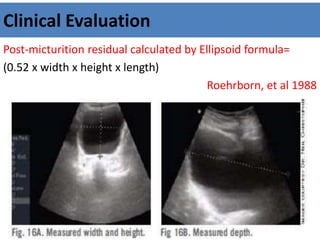
Post-micturition residual calculated by Ellipsoid formula=
(0.52 x width x height x length)
Roehrborn, et al 1988
Clinical Evaluation
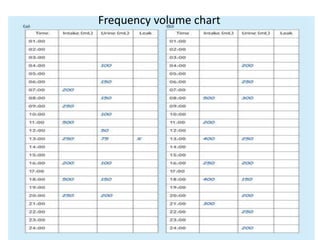
Frequency volume chart
• Bladder diaries are useful tool when assessing patients
with urinary symptoms and facilitates history taking.
• Bladder diary done for a minimum of 3 days and the
patient continue his normal eating/drinking patterns as
well as daily activities.
• A record of how much fluid intake , how much urine
output , and how often patient empty his bladder on a
daily basis as well as any leakage occurs and number
and degree of wetness of pads.
Frequency volume chart
Clinical Evaluation
Urodynamic evaluation
• It is common practice to prescribe conservative
management and oral pharmacotherapy ttt without a
urodynamic diagnosis.
• Before urodynamic tests are requested, the reasons for
“failure” of drug therapy should be explored:
1. Insufficient duration or poor patient compliance.
2. Insufficient dose, Presence of dry mouth symptoms
is a useful for deciding whether dose is adequate.
3. Idiosyncrasy of response; some people appear to find
better efficacy with certain agents.
4. Side effects.
Clinical Evaluation
Urodynamic indicated when
1) Conservative and drug therapy fail adequately to
manage OAB.
2) Complicated cases of OAB.
3) Before invasive surgery.
Abrams et al, 2006
Urodynamic Evaluation
Whether to discontinue anti-muscarinic drugs before
the test can be argued either way;
1. Stopping the drugs (48 hr.) gives the best chance of
observing DO if present.
2. while continuing them allows evaluation of the
mechanism underlying residual refractory symptoms.
• The two main urodynamic finding associated with OAB are
DO and increased filling sensation.
• Failure to demonstrate DO on UDS does not rule out its
existence. It is well known that up to 50% of women with
urgency incontinence do not demonstrate DO on UDS.
Hashim et al, 2006
Urodynamic Evaluation
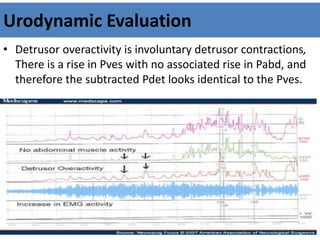
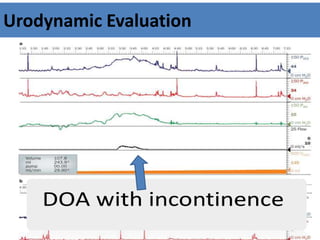
• Detrusor overactivity is involuntary detrusor contractions,
There is a rise in Pves with no associated rise in Pabd, and
therefore the subtracted Pdet looks identical to the Pves.
Urodynamic Evaluation
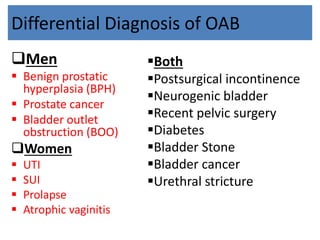
Differential Diagnosis of OAB
Men
 Benign prostatic
hyperplasia (BPH)
 Prostate cancer
 Bladder outlet
obstruction (BOO)
Women
 UTI
 SUI
 Prolapse
 Atrophic vaginitis
Both
Postsurgical incontinence
Neurogenic bladder
Recent pelvic surgery
Diabetes
Bladder Stone
Bladder cancer
Urethral stricture
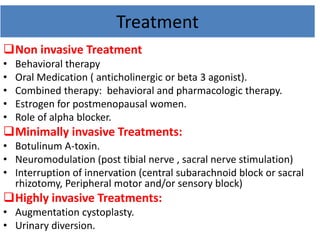
Treatment
Non invasive Treatment
• Behavioral therapy
• Oral Medication ( anticholinergic or beta 3 agonist).
• Combined therapy: behavioral and pharmacologic therapy.
• Estrogen for postmenopausal women.
• Role of alpha blocker.
Minimally invasive Treatments:
• Botulinum A-toxin.
• Neuromodulation (post tibial nerve , sacral nerve stimulation)
• Interruption of innervation (central subarachnoid block or sacral
rhizotomy, Peripheral motor and/or sensory block)
Highly invasive Treatments:
• Augmentation cystoplasty.
• Urinary diversion.
Barriers to Treatment
1. Part of normal aging or everyday life.
2. Not severe or frequent enough to treat.
3. Too Shameful to discuss.
4. Treatment won't help.
Behavioral Modifications
Dietary Changes and fluid Management
Timed voiding
Bladder training
Pelvic floor therapy
• Pelvic floor training ( Kegel exercises).
• Biofeedback ( auditory or visual feedback).
• Vaginal weights
• Pelvic floor electrical or magnetic stimulation.
Labrie et al, 2013
Behavioral Modifications
1.Dietary Changes and fluid Management
• Weight loss in obese patient.
• Cessation of smoking.
• Avoid bladder irritant (Caffeine, Alcohol, spicy food,
acidic food).
• Avoid Diuretics and excessive fluid intake especial
before bed time.
• TTT constipation.
• In patient with lower extremity edema elevation of leg
before bed time help to prevent nocturia.
Ayeleke,et al ,2013
Cont… Behavioral Modifications
• 10 foods and drinks should avoided in overactive
bladder (bladder irritants).
1. Spicy foods
2. Coffee
3. Alcohol
4. Soda
5. Orange juice
6. Tomatoes (acidic)
Cont… Behavioral Modifications
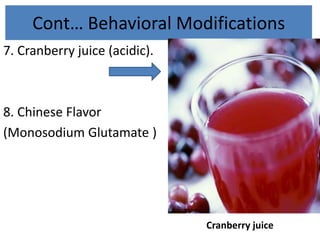
7. Cranberry juice (acidic).
8. Chinese Flavor
(Monosodium Glutamate )
Cranberry juice
Cont… Behavioral Modifications
9. Too much or Too little fluid
intake (6-8 glasses of water
per day is acceptable).
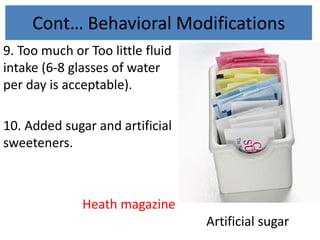
10. Added sugar and artificial
sweeteners.
Heath magazine
Artificial sugar
Cont…Behavioral Modifications
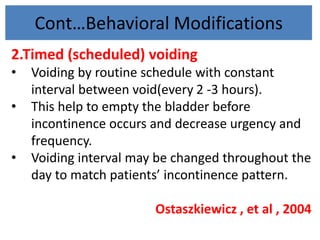
2.Timed (scheduled) voiding
• Voiding by routine schedule with constant
interval between void(every 2 -3 hours).
• This help to empty the bladder before
incontinence occurs and decrease urgency and
frequency.
• Voiding interval may be changed throughout the
day to match patients’ incontinence pattern.
Ostaszkiewicz , et al , 2004
Cont.. Behavioral Modifications
3.Bladder training
It involves two processes
1. Modification of voiding interval by
Gradual increase of voiding interval by 15- 60 min
every 1-2 week until an acceptable voiding interval
is achieved without incontinence.
(initial interval determined by pre-ttt voiding diary).
Cont.. Behavioral Modifications
CONT… Bladder training
2. Urge control (bladder inhibition)
Suppressing the urge using any of following methods;
• keeping the body calm until urge subsides.
• taking slow deep breath.
• concentration on elimination the urge by mental
calculation or mental imaging.
• Contraction of pelvic floor muscle.
After the urge subside don't urinate until the next
scheduled void.
Bladder training required a motivated patient with
sufficient cognitive function.
Wallace SA ,et al , 2004
Cont…. Behavioral Modifications
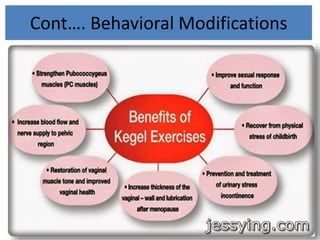
4. Pelvic floor Training (kegel exercises)
• It consists of Intermittent voluntary maximal
contraction of pelvic floor muscles
• Each contraction is held 6-8 seconds and
followed by brief period of relaxation.
• A common regimen is set of 10 contraction 3
times per day.
• Continence improved 6 -12 weeks after PFME.
Neumamm PB , et al , 2006
Cont…. Behavioral Modifications
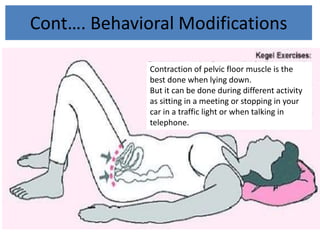
Contraction of pelvic floor muscle is the
best done when lying down.
But it can be done during different activity
as sitting in a meeting or stopping in your
car in a traffic light or when talking in
telephone.
Cont…. Behavioral Modifications
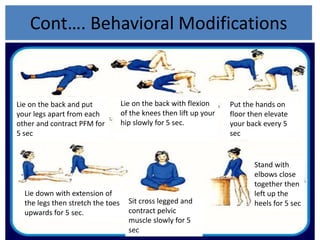
Lie on the back and put
your legs apart from each
other and contract PFM for
5 sec
Lie on the back with flexion
of the knees then lift up your
hip slowly for 5 sec.
Lie down with extension of
the legs then stretch the toes
upwards for 5 sec.
Sit cross legged and
contract pelvic
muscle slowly for 5
sec
Stand with
elbows close
together then
left up the
heels for 5 sec
Put the hands on
floor then elevate
your back every 5
sec
Cont…. Behavioral Modifications
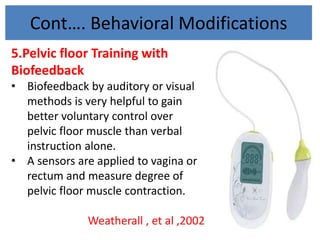
5.Pelvic floor Training with
Biofeedback
• Biofeedback by auditory or visual
methods is very helpful to gain
better voluntary control over
pelvic floor muscle than verbal
instruction alone.
• A sensors are applied to vagina or
rectum and measure degree of
pelvic floor muscle contraction.
Weatherall , et al ,2002
Cont…. Behavioral Modifications
Efficacy of behavioral therapy
It is very effective method for ttt of OAB as a
sole method or in combination with
medication.
Dumoulin , et al ,2010
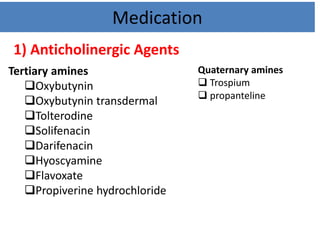
Tertiary amines
Oxybutynin
Oxybutynin transdermal
Tolterodine
Solifenacin
Darifenacin
Hyoscyamine
Flavoxate
Propiverine hydrochloride
Medication
1) Anticholinergic Agents
Quaternary amines
 Trospium
 propanteline
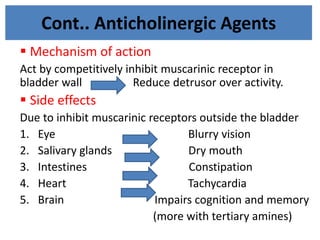
Cont.. Anticholinergic Agents
 Mechanism of action
Act by competitively inhibit muscarinic receptor in
bladder wall Reduce detrusor over activity.
 Side effects
Due to inhibit muscarinic receptors outside the bladder
1. Eye Blurry vision
2. Salivary glands Dry mouth
3. Intestines Constipation
4. Heart Tachycardia
5. Brain Impairs cognition and memory
(more with tertiary amines)
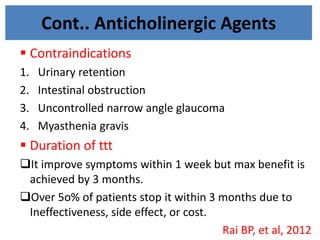
Cont.. Anticholinergic Agents
 Contraindications
1. Urinary retention
2. Intestinal obstruction
3. Uncontrolled narrow angle glaucoma
4. Myasthenia gravis
 Duration of ttt
It improve symptoms within 1 week but max benefit is
achieved by 3 months.
Over 5o% of patients stop it within 3 months due to
Ineffectiveness, side effect, or cost.
Rai BP, et al, 2012
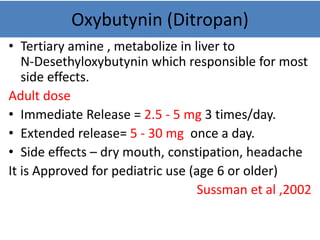
Oxybutynin (Ditropan)
• Tertiary amine , metabolize in liver to
N-Desethyloxybutynin which responsible for most
side effects.
Adult dose
• Immediate Release = 2.5 - 5 mg 3 times/day.
• Extended release= 5 - 30 mg once a day.
• Side effects – dry mouth, constipation, headache
It is Approved for pediatric use (age 6 or older)
Sussman et al ,2002
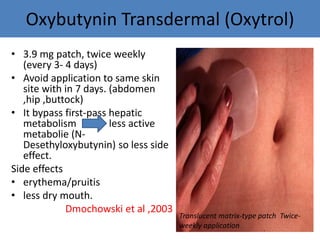
Oxybutynin Transdermal (Oxytrol)
• 3.9 mg patch, twice weekly
(every 3- 4 days)
• Avoid application to same skin
site with in 7 days. (abdomen
,hip ,buttock)
• It bypass first-pass hepatic
metabolism less active
metabolie (N-
Desethyloxybutynin) so less side
effect.
Side effects
• erythema/pruitis
• less dry mouth.
Dmochowski et al ,2003
Translucent matrix-type patch Twice-
weekly application
Tolterodine (Detrol)
• Teriary amine ,metabolize in liver
Adult dose
• Immediate Release 1-2 mg twice per day.
• long acting 2-4 mg Once per day.
Side effects
• Similar to oxybutynin in addition to allergic
reaction and hallucinations are reported.
Chapple e al ,2008
Solifenacin (Vesicare)
• Tertiary amine, selective M3 inhibitor, metabolize
by liver.
• Highly selective for bladder than salivary glands
which may reduce dry mouth.
• Has long half life (48 hour) so used once per day.
• Adult dose
• 5 – 10 mg once daily dose
• Main side effects – constipation and less dry
mouth.
• Chapple et al ,2005
Darifenacin (Enablex)
• Tertiary amine , M3 selective , metabolize by liver
• Adult dose
• 7.5 mg or 15 mg once a day.
• Main side effects – constipation and dry mouth.
Chapple et al ,2007
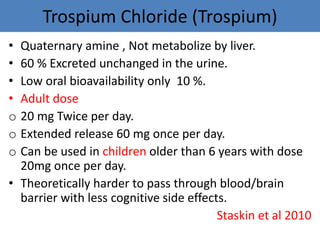
Trospium Chloride (Trospium)
• Quaternary amine , Not metabolize by liver.
• 60 % Excreted unchanged in the urine.
• Low oral bioavailability only 10 %.
• Adult dose
o 20 mg Twice per day.
o Extended release 60 mg once per day.
o Can be used in children older than 6 years with dose
20mg once per day.
• Theoretically harder to pass through blood/brain
barrier with less cognitive side effects.
Staskin et al 2010
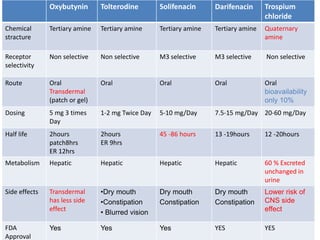
Trospium
chloride
DarifenacinSolifenacinTolterodineOxybutynin
Quaternary
amine
Tertiary amineTertiary amineTertiary amineTertiary amineChemical
stracture
Non selectiveM3 selectiveM3 selectiveNon selectiveNon selectiveReceptor
selectivity
Oral
bioavailability
only 10%
OralOralOralOral
Transdermal
(patch or gel)
Route
20-60 mg/Day7.5-15 mg/Day5-10 mg/Day1-2 mg Twice Day5 mg 3 times
Day
Dosing
12 -20hours13 -19hours45 -86 hours2hours
ER 9hrs
2hours
patch8hrs
ER 12hrs
Half life
60 % Excreted
unchanged in
urine
HepaticHepaticHepaticHepaticMetabolism
Lower risk of
CNS side
effect
Dry mouth
Constipation
Dry mouth
Constipation
•Dry mouth
•Constipation
• Blurred vision
Transdermal
has less side
effect
Side effects
YESYESYesYesYesFDA
Approval
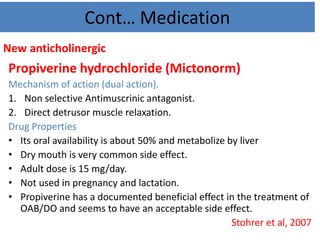
Cont… Medication
New anticholinergic
Propiverine hydrochloride (Mictonorm)
Mechanism of action (dual action).
1. Non selective Antimuscrinic antagonist.
2. Direct detrusor muscle relaxation.
Drug Properties
• Its oral availability is about 50% and metabolize by liver
• Dry mouth is very common side effect.
• Adult dose is 15 mg/day.
• Not used in pregnancy and lactation.
• Propiverine has a documented beneficial effect in the treatment of
OAB/DO and seems to have an acceptable side effect.
Stohrer et al, 2007
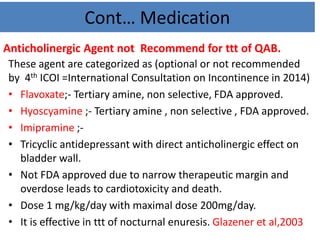
Cont… Medication
Anticholinergic Agent not Recommend for ttt of QAB.
These agent are categorized as (optional or not recommended
by 4th ICOI =International Consultation on Incontinence in 2014)
• Flavoxate;- Tertiary amine, non selective, FDA approved.
• Hyoscyamine ;- Tertiary amine , non selective , FDA approved.
• Imipramine ;-
• Tricyclic antidepressant with direct anticholinergic effect on
bladder wall.
• Not FDA approved due to narrow therapeutic margin and
overdose leads to cardiotoxicity and death.
• Dose 1 mg/kg/day with maximal dose 200mg/day.
• It is effective in ttt of nocturnal enuresis. Glazener et al,2003
Cont… Medication
2) Beta 3 agonist (Mirabegron)
• Mechanism of action
Stimulate beta 3 adrenergic receptors causes relaxation of detrusor muscle
and Increase bladder capacity.
• Adult dose
25 or 50 mg per day
• Side effects
1. Hypertension
2. Headache
3. Tachycardia
4. Urinary retention
5. Very low rate of dry mouth and constipation.
• Contraindications
Sever uncontrolled hypertension
Cont… Medication
3) Estrogen for postmenopausal women
• Use of oral estrogen alone or in combination with progesterone
has poor effect in ttt of OAB but also it show worsening of
preexisting incontinence. Grodstein et al 2004
• Local estrogen therapy is the most beneficial route in ttt of OAB
due to direct effect on reversal of vaginal atrophy.
Cardozo, et al 2004
Contraindication
1. History of venous or pulmonary embolism.
2. Recent myocardial infarction.
3. Breast cancer
4. Liver dysfunction Loose, et al 2006
Cont… Medication
Cont… Estrogen for postmenopausal women
Side effects
1. Myocardial infarction.
2. Pulmonary and venous embolism.
3. Increase risk of cancer (ovarian, endometrial, breast)
4. Visual disturbance. Loose, et al ,2006
Role of estrogen in EUA Guidelines 2015
• Offer Vaginal Estrogen therapy for post-menopausal women
with urinary incontinence especially if other symptoms of
vulvovaginal atrophy are present.
• Don't offer oral estrogen replacement due to it’s systemic side
effects.
Cont… Medication
4) Role of alpha blocker in OAB
• There are no controlled clinical trials showing that they are an
effective alternative in the treatment of OAB/DO.
Andersson et al, 2002
• There is no evidence that α1-AR blocker are effective in patients
with storage symptoms.
Dwyer et al, 1992
• Voiding symptoms in women with functional outflow obstruction,
were successfully treated with an α1-blocker.
Robinson et al, 2007
• In Men with BPH combination of alpha blocker and anticholinergic
has significant improvement in voiding symptoms.
Casabe et al 2014
Minimally Invasive TTT
1) Botulinum A-toxin Intravesical injection.
Inhibit detrusor contraction by inhibit release of Ach at
neuromuscular Junction.
FDA approved in ttt of OAB refractory to Antimuscarinic
medications.
Side effects
Increase risk of UTI and Urinary retention that required
catheterization.
Contraindications
UTI, Pregnancy , myasthenia gravis.
Cont..Minimally Invasive TTT
1)Cont… Botulinum A-toxin Intravesical injection.
Administration
1. For OAB without neurological disorder
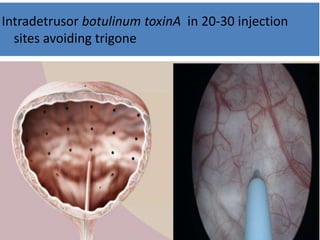
100units/10ml injected in 20 sites avoiding trigone.
2. For incontinence with neurological detrusor
overactivity 200units/30ml injected at 30
sites avoiding trigone.
Efficacy
It cause Improvement within 2 weeks
Effects decrease over 3-12 months and repeated TTT
required.
Kennelly et al 2013
Intradetrusor botulinum toxinA in 20-30 injection
sites avoiding trigone
Cont….Minimally Invasive TTT
2.Post-tibial nerve stimulation
Less invasive way of stimulating sacral nerve roots
Electric Stimulation of tibial nerve transmitted to S3
. Modification of voiding reflex.
weekly sessions for 12 months (30 minutes each)
followed by maintance.
Efficacy
Frequency , urgency ,UUI improves in 60% of patient.
FDA in ttt of OAB.
Van Balken ,et al, 2001
Cont… Minimally Invasive TTT
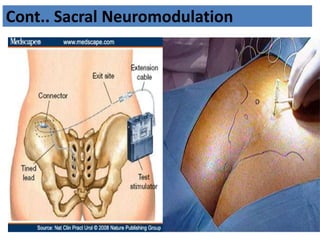
3.Sacral Neuromodulation (InterStim)
Modifies voiding reflex by direct electric stimulation of S3
afferent nerve.
Stimulation of the sacral roots has effectively suppressed the
hyperactivity of the detrusor muscle.
Indicated in pt. who fail or cannot tolerate conservative ttt.
It consists of Two stage:
1. Percutaneous nerve evaluation (PNE) which determine if the
patient is candidate for SNM, done as outpatient procedure.
2. Permanent implantation done if patient shows 50% or
greater improvement of symptoms after 3-5 days of PNE.
Cont… Minimally Invasive TTT
Cont….Sacral Neuromodulation (InterStim)
Complications
Infection, lead migration, change in bowel function and
change in menstrual cycle.
Contraindications
Pregnancy and MRI imaging.
Short wave diathermy in patient with permanent implant.
Efficancy
• 50% symptom improvement in more than 60% of
patients for urgency/frequency and urgency urinary
incontinence.
Siegel SW , et al ,2000
Cont.. Sacral Neuromodulation
Surgical TTT
Indication
-OAB refractory to less invasive ttt.
-Urinary incontinence due to reduce bladder capacity.
Types
• Augmentation Enterocystoplasty
• Autoaugmentaton
• Urinary diversion as ileal conduit, catheterizable Stoma.
Mechanism
Increase bladder capacity and lower intravesical pressure.
Efficancy
• 80% become dry however 10-40% requires CIC.
• Less in Autoaugmentaton due to limited bladder capacity.
• Less in preoperative radiation .
EUA GUIDELINES 2015
• Offer bladder training as a first-line therapy to adults
with urgency urinary incontinence or mixed urinary
incontinence.
• Offer antimuscarinic drugs for adults with urgency
urinary incontinence.
• Consider using transdermal oxybutynin if oral
antimuscarinic agents cannot be tolerated due to dry
mouth.
• Use antimuscarinic drugs with caution in elderly
patients who are at risk of, or have, cognitive
dysfunction.
EUA GUIDELINES 2015
• Offer bladder wall injections of onabotulinum
toxin A (100 units) to patients with urgency
urinary incontinence refractory to antimuscarinic
therapy.
• If available, offer sacral nerve modulation to
patients, who have urgency urinary incontinence
refractory to conservative therapy.
• Do not offer PTNS to women or men who are
seeking a cure for urgency urinary incontinence.
EUA GUIDELINES 2015
• Only offer augmentation cystoplasty to patients
with detrusor overactivity incontinence who
have failed conservative therapy, in whom the
possibility of botulinum toxin and sacral nerve
stimulation has been discussed.
• Only offer urinary diversion to patients who have
failed less invasive therapies for the treatment of
urinary incontinence and who will accept a
stoma.
• Do not offer Auto augmentation as a treatment
for urinary incontinence.
Overactive bladder

Overactive bladder

  • 1.
  • 2.
    OUTLINES Introduction… Definition andPrevalence. Bladder Anatomy and Physiology. Etiology and Pathophysiology OAB. Diagnosis and evaluation of OAB. Treatment of OAB.
  • 3.
    Definition of OAB TheInternational Continence Society (ICS) defines OAB as: • The presence of “urinary urgency, usually accompanied by frequency and nocturia, with or without urge incontinence, in the absence of UTI or other pathology.” • OAB is based on symptoms and it is a clinical syndrome. • While detrusor overactivity (DO) is a urodynamic observation, characterized by involuntary detrusor contractions during the filling phase. • OAB and DO are different terms. Abrams et al, 2002
  • 4.
    Urge Incontinence • Sudden& involuntary loss of urine Frequency • 8 or more visits to the toilet per 24 hours Nocturia • 2 or more visits to toilet during sleeping hours OAB OAB Symptoms Urgency • Sudden, strong desire to void that is difficult to defer.
  • 5.
    Sudden desire topass urine that is difficult to deferurgency Patient considers that he/she voids too often by day Normal is < 8 times per 24 hours Frequency Waking to urinate during sleep hours considered a clinical problem if frequency is greater than twice a night Nocturia Involuntary leakage accompanied by or immediately preceded by urgency Urge urinary incontinence (UUI) OAB with UUIOAB “wet” OAB without UUIOAB “dry” Terminology
  • 6.
    Urgency • When Iwant to go, I have to rush because I think I may wet myself.”
  • 7.
    • Overall OABprevalence is 11.8% in adults. • prevalence increase with age. • Both genders have similar rates of OAB, but “OAB wet” is more prevalent in women and “OAB dry” is more prevalent in men. • OAB wet common in women due to the relative weakness of the bladder neck and urethral sphincter mechanism in women, especial after pregnancy. Milsom et al, 2001 PREVALENCE
  • 8.
    L1 L2 L3 Sympathetic nerve supply Sympathetic chain Hypogastric ganglion Hypogastric nerveUrethra External sphincter Parasympathetic nerve supply S2 S3 S4 S2 S3 S4 Pelvic nerve Pudendal nerve Somatic nerve supply Bladder Anatomy and Physiology
  • 10.
    Bladder Anatomy andPhysiology • Normal filling requires Parasympathetic inhibition and sympathetic stimulation Reduces detrusor tone. • Normal emptying requires Sympathetic inhibition and parasympathetic stimulation increase detrusor tone.
  • 11.
    PATHOPHYSIOLOGY AND ETIOLOGY •The etiology of OAB is complex and poorly understood. Neurological hypothesis. The myogenic hypothesis.
  • 12.
    PATHOPHYSIOLOGY AND ETIOLOGY Neurologicalhypothesis • DO arises from generalized, nerve-mediated excitation of the detrusor muscle. • Normaly the bladder control is modulated in an inhibitory fashion by the cerebral cortex. • Damage to the brain can induce DO by reducing suprapontine inhibition. • Damage to axonal pathways in the spinal cord allows the expression of primitive spinal bladder reflexes.. De Groat et al, 1997
  • 13.
    PATHOPHYSIOLOGY AND ETIOLOGY Themyogenic hypothesis Overactive detrusor contractions result from a combination of 1. Increased spontaneous excitation within smooth muscle of the bladder. 2. Enhanced propagation of this activity to affect an excessive proportion of the bladder wall. Brading, 1997
  • 14.
    Risk factors forOAB • Bladder inflammation. • Chronic bladder outlet obstruction • Central nervous system disorders • Pregnancy • Vaginal delivery • Postmenopausal status • Older age (risk increase with age) • Although the most common cause is idiopathic. Anderson et al ,2009
  • 15.
    Types of OAB Thereare two types of OAB • Complicated 1. Poor response to OAB medications 2. Extremely sever OAB symptoms 3. Young age 4. Rec UTI 5. Pelvic surgery 6. Pelvic radiation 7. Poorly controlled DM • Uncomplicated have non of above characteristics Gormley et al ,2014
  • 16.
    Clinical Evaluation Diagnosis ofOAB is symptom based and involves: Careful history. physical exam. Urinalysis. Frequency volume chart. Post-micturation residue.
  • 17.
    Clinical Evaluation History shouldcover the following: 1. Presence or absence , severity, and effect on quality of life for each of the OAB symptoms including urgency, frequency, incontinence. Other LUTS should also be assessed. 2. Presence or absence of dysuria and hematuria. 3. Nature and volume of fluid intake. 4. Neurologic disease.
  • 18.
    Clinical Evaluation History shouldcover the following: 5. Obstetric and gynecologic history, previous surgery/ radiotherapy, bowel symptoms. 6. Other medical issues (e.g., closed-angle glaucoma and cognitive impairment can limit treatment options). 7.Drug history There are many medications that can exacerbate the symptoms of OAB (diuretics, alpha agonist) Abrams et al, 2009
  • 19.
    Clinical Evaluation Physical examination •Abdominal and vaginal examinations should be performed and, if indicated a rectal examination should also be undertaken. • The presence of pelvic organ prolapse, e.g a cystocele, may cause urinary urgency and frequency as it drags on the trigone and causes sensation of bladder fullness.
  • 20.
    Clinical Evaluation Physical examination •Bimanual examination will rule out pelvic masses, e.g ovarian cysts and uterine enlargement, which can also cause urinary symptoms. • For women with an atrophic vagina and symptoms of OAB, estrogen deficiency may be a contributing factor to their symptoms. Abrams et al, 2009
  • 21.
    Clinical Evaluation Other possiblecauses of urgency and frequency of micturition • Urological;- Urinary tract infection, Bladder tumour, Bladder stone ,Urethral diverticulum, Small capacity bladder, Interstitial cystitis, Radiation cystitis. • Gynecological;-Cystocele, Previous pelvic surgery, Pelvic mass (fibroids). • Medical;- Upper motor neuron lesion (Cerebro-vascular stroke , parkinson’s), Impaired renal function, Congestive heart failure, Diabetes mellitus, Diabetes insipidus.
  • 22.
    Clinical Evaluation Urinalysis • Itshould be done to exclude an underlying urinary tract infection. Post-micturition residual • This can be performed to rule out overflow incontinence or incomplete bladder emptying, which can cause symptoms of OAB.
  • 23.
    Clinical Evaluation Post-micturition residualcalculated by Ellipsoid formula= (0.52 x width x height x length) Roehrborn, et al 1988
  • 24.
    Clinical Evaluation Frequency volumechart • Bladder diaries are useful tool when assessing patients with urinary symptoms and facilitates history taking. • Bladder diary done for a minimum of 3 days and the patient continue his normal eating/drinking patterns as well as daily activities. • A record of how much fluid intake , how much urine output , and how often patient empty his bladder on a daily basis as well as any leakage occurs and number and degree of wetness of pads.
  • 25.
  • 26.
    Clinical Evaluation Urodynamic evaluation •It is common practice to prescribe conservative management and oral pharmacotherapy ttt without a urodynamic diagnosis. • Before urodynamic tests are requested, the reasons for “failure” of drug therapy should be explored: 1. Insufficient duration or poor patient compliance. 2. Insufficient dose, Presence of dry mouth symptoms is a useful for deciding whether dose is adequate. 3. Idiosyncrasy of response; some people appear to find better efficacy with certain agents. 4. Side effects.
  • 27.
    Clinical Evaluation Urodynamic indicatedwhen 1) Conservative and drug therapy fail adequately to manage OAB. 2) Complicated cases of OAB. 3) Before invasive surgery. Abrams et al, 2006
  • 28.
    Urodynamic Evaluation Whether todiscontinue anti-muscarinic drugs before the test can be argued either way; 1. Stopping the drugs (48 hr.) gives the best chance of observing DO if present. 2. while continuing them allows evaluation of the mechanism underlying residual refractory symptoms. • The two main urodynamic finding associated with OAB are DO and increased filling sensation. • Failure to demonstrate DO on UDS does not rule out its existence. It is well known that up to 50% of women with urgency incontinence do not demonstrate DO on UDS. Hashim et al, 2006
  • 29.
    Urodynamic Evaluation • Detrusoroveractivity is involuntary detrusor contractions, There is a rise in Pves with no associated rise in Pabd, and therefore the subtracted Pdet looks identical to the Pves.
  • 30.
  • 31.
    Differential Diagnosis ofOAB Men  Benign prostatic hyperplasia (BPH)  Prostate cancer  Bladder outlet obstruction (BOO) Women  UTI  SUI  Prolapse  Atrophic vaginitis Both Postsurgical incontinence Neurogenic bladder Recent pelvic surgery Diabetes Bladder Stone Bladder cancer Urethral stricture
  • 32.
    Treatment Non invasive Treatment •Behavioral therapy • Oral Medication ( anticholinergic or beta 3 agonist). • Combined therapy: behavioral and pharmacologic therapy. • Estrogen for postmenopausal women. • Role of alpha blocker. Minimally invasive Treatments: • Botulinum A-toxin. • Neuromodulation (post tibial nerve , sacral nerve stimulation) • Interruption of innervation (central subarachnoid block or sacral rhizotomy, Peripheral motor and/or sensory block) Highly invasive Treatments: • Augmentation cystoplasty. • Urinary diversion.
  • 33.
    Barriers to Treatment 1.Part of normal aging or everyday life. 2. Not severe or frequent enough to treat. 3. Too Shameful to discuss. 4. Treatment won't help.
  • 34.
    Behavioral Modifications Dietary Changesand fluid Management Timed voiding Bladder training Pelvic floor therapy • Pelvic floor training ( Kegel exercises). • Biofeedback ( auditory or visual feedback). • Vaginal weights • Pelvic floor electrical or magnetic stimulation. Labrie et al, 2013
  • 35.
    Behavioral Modifications 1.Dietary Changesand fluid Management • Weight loss in obese patient. • Cessation of smoking. • Avoid bladder irritant (Caffeine, Alcohol, spicy food, acidic food). • Avoid Diuretics and excessive fluid intake especial before bed time. • TTT constipation. • In patient with lower extremity edema elevation of leg before bed time help to prevent nocturia. Ayeleke,et al ,2013
  • 36.
    Cont… Behavioral Modifications •10 foods and drinks should avoided in overactive bladder (bladder irritants). 1. Spicy foods 2. Coffee 3. Alcohol 4. Soda 5. Orange juice 6. Tomatoes (acidic)
  • 37.
    Cont… Behavioral Modifications 7.Cranberry juice (acidic). 8. Chinese Flavor (Monosodium Glutamate ) Cranberry juice
  • 38.
    Cont… Behavioral Modifications 9.Too much or Too little fluid intake (6-8 glasses of water per day is acceptable). 10. Added sugar and artificial sweeteners. Heath magazine Artificial sugar
  • 39.
    Cont…Behavioral Modifications 2.Timed (scheduled)voiding • Voiding by routine schedule with constant interval between void(every 2 -3 hours). • This help to empty the bladder before incontinence occurs and decrease urgency and frequency. • Voiding interval may be changed throughout the day to match patients’ incontinence pattern. Ostaszkiewicz , et al , 2004
  • 40.
    Cont.. Behavioral Modifications 3.Bladdertraining It involves two processes 1. Modification of voiding interval by Gradual increase of voiding interval by 15- 60 min every 1-2 week until an acceptable voiding interval is achieved without incontinence. (initial interval determined by pre-ttt voiding diary).
  • 41.
    Cont.. Behavioral Modifications CONT…Bladder training 2. Urge control (bladder inhibition) Suppressing the urge using any of following methods; • keeping the body calm until urge subsides. • taking slow deep breath. • concentration on elimination the urge by mental calculation or mental imaging. • Contraction of pelvic floor muscle. After the urge subside don't urinate until the next scheduled void. Bladder training required a motivated patient with sufficient cognitive function. Wallace SA ,et al , 2004
  • 42.
    Cont…. Behavioral Modifications 4.Pelvic floor Training (kegel exercises) • It consists of Intermittent voluntary maximal contraction of pelvic floor muscles • Each contraction is held 6-8 seconds and followed by brief period of relaxation. • A common regimen is set of 10 contraction 3 times per day. • Continence improved 6 -12 weeks after PFME. Neumamm PB , et al , 2006
  • 43.
    Cont…. Behavioral Modifications Contractionof pelvic floor muscle is the best done when lying down. But it can be done during different activity as sitting in a meeting or stopping in your car in a traffic light or when talking in telephone.
  • 44.
    Cont…. Behavioral Modifications Lieon the back and put your legs apart from each other and contract PFM for 5 sec Lie on the back with flexion of the knees then lift up your hip slowly for 5 sec. Lie down with extension of the legs then stretch the toes upwards for 5 sec. Sit cross legged and contract pelvic muscle slowly for 5 sec Stand with elbows close together then left up the heels for 5 sec Put the hands on floor then elevate your back every 5 sec
  • 45.
  • 46.
    Cont…. Behavioral Modifications 5.Pelvicfloor Training with Biofeedback • Biofeedback by auditory or visual methods is very helpful to gain better voluntary control over pelvic floor muscle than verbal instruction alone. • A sensors are applied to vagina or rectum and measure degree of pelvic floor muscle contraction. Weatherall , et al ,2002
  • 47.
    Cont…. Behavioral Modifications Efficacyof behavioral therapy It is very effective method for ttt of OAB as a sole method or in combination with medication. Dumoulin , et al ,2010
  • 48.
    Tertiary amines Oxybutynin Oxybutynin transdermal Tolterodine Solifenacin Darifenacin Hyoscyamine Flavoxate Propiverinehydrochloride Medication 1) Anticholinergic Agents Quaternary amines  Trospium  propanteline
  • 49.
    Cont.. Anticholinergic Agents Mechanism of action Act by competitively inhibit muscarinic receptor in bladder wall Reduce detrusor over activity.  Side effects Due to inhibit muscarinic receptors outside the bladder 1. Eye Blurry vision 2. Salivary glands Dry mouth 3. Intestines Constipation 4. Heart Tachycardia 5. Brain Impairs cognition and memory (more with tertiary amines)
  • 50.
    Cont.. Anticholinergic Agents Contraindications 1. Urinary retention 2. Intestinal obstruction 3. Uncontrolled narrow angle glaucoma 4. Myasthenia gravis  Duration of ttt It improve symptoms within 1 week but max benefit is achieved by 3 months. Over 5o% of patients stop it within 3 months due to Ineffectiveness, side effect, or cost. Rai BP, et al, 2012
  • 51.
    Oxybutynin (Ditropan) • Tertiaryamine , metabolize in liver to N-Desethyloxybutynin which responsible for most side effects. Adult dose • Immediate Release = 2.5 - 5 mg 3 times/day. • Extended release= 5 - 30 mg once a day. • Side effects – dry mouth, constipation, headache It is Approved for pediatric use (age 6 or older) Sussman et al ,2002
  • 52.
    Oxybutynin Transdermal (Oxytrol) •3.9 mg patch, twice weekly (every 3- 4 days) • Avoid application to same skin site with in 7 days. (abdomen ,hip ,buttock) • It bypass first-pass hepatic metabolism less active metabolie (N- Desethyloxybutynin) so less side effect. Side effects • erythema/pruitis • less dry mouth. Dmochowski et al ,2003 Translucent matrix-type patch Twice- weekly application
  • 53.
    Tolterodine (Detrol) • Teriaryamine ,metabolize in liver Adult dose • Immediate Release 1-2 mg twice per day. • long acting 2-4 mg Once per day. Side effects • Similar to oxybutynin in addition to allergic reaction and hallucinations are reported. Chapple e al ,2008
  • 54.
    Solifenacin (Vesicare) • Tertiaryamine, selective M3 inhibitor, metabolize by liver. • Highly selective for bladder than salivary glands which may reduce dry mouth. • Has long half life (48 hour) so used once per day. • Adult dose • 5 – 10 mg once daily dose • Main side effects – constipation and less dry mouth. • Chapple et al ,2005
  • 55.
    Darifenacin (Enablex) • Tertiaryamine , M3 selective , metabolize by liver • Adult dose • 7.5 mg or 15 mg once a day. • Main side effects – constipation and dry mouth. Chapple et al ,2007
  • 56.
    Trospium Chloride (Trospium) •Quaternary amine , Not metabolize by liver. • 60 % Excreted unchanged in the urine. • Low oral bioavailability only 10 %. • Adult dose o 20 mg Twice per day. o Extended release 60 mg once per day. o Can be used in children older than 6 years with dose 20mg once per day. • Theoretically harder to pass through blood/brain barrier with less cognitive side effects. Staskin et al 2010
  • 57.
    Trospium chloride DarifenacinSolifenacinTolterodineOxybutynin Quaternary amine Tertiary amineTertiary amineTertiaryamineTertiary amineChemical stracture Non selectiveM3 selectiveM3 selectiveNon selectiveNon selectiveReceptor selectivity Oral bioavailability only 10% OralOralOralOral Transdermal (patch or gel) Route 20-60 mg/Day7.5-15 mg/Day5-10 mg/Day1-2 mg Twice Day5 mg 3 times Day Dosing 12 -20hours13 -19hours45 -86 hours2hours ER 9hrs 2hours patch8hrs ER 12hrs Half life 60 % Excreted unchanged in urine HepaticHepaticHepaticHepaticMetabolism Lower risk of CNS side effect Dry mouth Constipation Dry mouth Constipation •Dry mouth •Constipation • Blurred vision Transdermal has less side effect Side effects YESYESYesYesYesFDA Approval
  • 58.
    Cont… Medication New anticholinergic Propiverinehydrochloride (Mictonorm) Mechanism of action (dual action). 1. Non selective Antimuscrinic antagonist. 2. Direct detrusor muscle relaxation. Drug Properties • Its oral availability is about 50% and metabolize by liver • Dry mouth is very common side effect. • Adult dose is 15 mg/day. • Not used in pregnancy and lactation. • Propiverine has a documented beneficial effect in the treatment of OAB/DO and seems to have an acceptable side effect. Stohrer et al, 2007
  • 59.
    Cont… Medication Anticholinergic Agentnot Recommend for ttt of QAB. These agent are categorized as (optional or not recommended by 4th ICOI =International Consultation on Incontinence in 2014) • Flavoxate;- Tertiary amine, non selective, FDA approved. • Hyoscyamine ;- Tertiary amine , non selective , FDA approved. • Imipramine ;- • Tricyclic antidepressant with direct anticholinergic effect on bladder wall. • Not FDA approved due to narrow therapeutic margin and overdose leads to cardiotoxicity and death. • Dose 1 mg/kg/day with maximal dose 200mg/day. • It is effective in ttt of nocturnal enuresis. Glazener et al,2003
  • 60.
    Cont… Medication 2) Beta3 agonist (Mirabegron) • Mechanism of action Stimulate beta 3 adrenergic receptors causes relaxation of detrusor muscle and Increase bladder capacity. • Adult dose 25 or 50 mg per day • Side effects 1. Hypertension 2. Headache 3. Tachycardia 4. Urinary retention 5. Very low rate of dry mouth and constipation. • Contraindications Sever uncontrolled hypertension
  • 61.
    Cont… Medication 3) Estrogenfor postmenopausal women • Use of oral estrogen alone or in combination with progesterone has poor effect in ttt of OAB but also it show worsening of preexisting incontinence. Grodstein et al 2004 • Local estrogen therapy is the most beneficial route in ttt of OAB due to direct effect on reversal of vaginal atrophy. Cardozo, et al 2004 Contraindication 1. History of venous or pulmonary embolism. 2. Recent myocardial infarction. 3. Breast cancer 4. Liver dysfunction Loose, et al 2006
  • 62.
    Cont… Medication Cont… Estrogenfor postmenopausal women Side effects 1. Myocardial infarction. 2. Pulmonary and venous embolism. 3. Increase risk of cancer (ovarian, endometrial, breast) 4. Visual disturbance. Loose, et al ,2006 Role of estrogen in EUA Guidelines 2015 • Offer Vaginal Estrogen therapy for post-menopausal women with urinary incontinence especially if other symptoms of vulvovaginal atrophy are present. • Don't offer oral estrogen replacement due to it’s systemic side effects.
  • 63.
    Cont… Medication 4) Roleof alpha blocker in OAB • There are no controlled clinical trials showing that they are an effective alternative in the treatment of OAB/DO. Andersson et al, 2002 • There is no evidence that α1-AR blocker are effective in patients with storage symptoms. Dwyer et al, 1992 • Voiding symptoms in women with functional outflow obstruction, were successfully treated with an α1-blocker. Robinson et al, 2007 • In Men with BPH combination of alpha blocker and anticholinergic has significant improvement in voiding symptoms. Casabe et al 2014
  • 64.
    Minimally Invasive TTT 1)Botulinum A-toxin Intravesical injection. Inhibit detrusor contraction by inhibit release of Ach at neuromuscular Junction. FDA approved in ttt of OAB refractory to Antimuscarinic medications. Side effects Increase risk of UTI and Urinary retention that required catheterization. Contraindications UTI, Pregnancy , myasthenia gravis.
  • 65.
    Cont..Minimally Invasive TTT 1)Cont…Botulinum A-toxin Intravesical injection. Administration 1. For OAB without neurological disorder 100units/10ml injected in 20 sites avoiding trigone. 2. For incontinence with neurological detrusor overactivity 200units/30ml injected at 30 sites avoiding trigone. Efficacy It cause Improvement within 2 weeks Effects decrease over 3-12 months and repeated TTT required. Kennelly et al 2013
  • 66.
    Intradetrusor botulinum toxinAin 20-30 injection sites avoiding trigone
  • 67.
    Cont….Minimally Invasive TTT 2.Post-tibialnerve stimulation Less invasive way of stimulating sacral nerve roots Electric Stimulation of tibial nerve transmitted to S3 . Modification of voiding reflex. weekly sessions for 12 months (30 minutes each) followed by maintance. Efficacy Frequency , urgency ,UUI improves in 60% of patient. FDA in ttt of OAB. Van Balken ,et al, 2001
  • 68.
    Cont… Minimally InvasiveTTT 3.Sacral Neuromodulation (InterStim) Modifies voiding reflex by direct electric stimulation of S3 afferent nerve. Stimulation of the sacral roots has effectively suppressed the hyperactivity of the detrusor muscle. Indicated in pt. who fail or cannot tolerate conservative ttt. It consists of Two stage: 1. Percutaneous nerve evaluation (PNE) which determine if the patient is candidate for SNM, done as outpatient procedure. 2. Permanent implantation done if patient shows 50% or greater improvement of symptoms after 3-5 days of PNE.
  • 69.
    Cont… Minimally InvasiveTTT Cont….Sacral Neuromodulation (InterStim) Complications Infection, lead migration, change in bowel function and change in menstrual cycle. Contraindications Pregnancy and MRI imaging. Short wave diathermy in patient with permanent implant. Efficancy • 50% symptom improvement in more than 60% of patients for urgency/frequency and urgency urinary incontinence. Siegel SW , et al ,2000
  • 70.
  • 71.
    Surgical TTT Indication -OAB refractoryto less invasive ttt. -Urinary incontinence due to reduce bladder capacity. Types • Augmentation Enterocystoplasty • Autoaugmentaton • Urinary diversion as ileal conduit, catheterizable Stoma. Mechanism Increase bladder capacity and lower intravesical pressure. Efficancy • 80% become dry however 10-40% requires CIC. • Less in Autoaugmentaton due to limited bladder capacity. • Less in preoperative radiation .
  • 72.
    EUA GUIDELINES 2015 •Offer bladder training as a first-line therapy to adults with urgency urinary incontinence or mixed urinary incontinence. • Offer antimuscarinic drugs for adults with urgency urinary incontinence. • Consider using transdermal oxybutynin if oral antimuscarinic agents cannot be tolerated due to dry mouth. • Use antimuscarinic drugs with caution in elderly patients who are at risk of, or have, cognitive dysfunction.
  • 73.
    EUA GUIDELINES 2015 •Offer bladder wall injections of onabotulinum toxin A (100 units) to patients with urgency urinary incontinence refractory to antimuscarinic therapy. • If available, offer sacral nerve modulation to patients, who have urgency urinary incontinence refractory to conservative therapy. • Do not offer PTNS to women or men who are seeking a cure for urgency urinary incontinence.
  • 74.
    EUA GUIDELINES 2015 •Only offer augmentation cystoplasty to patients with detrusor overactivity incontinence who have failed conservative therapy, in whom the possibility of botulinum toxin and sacral nerve stimulation has been discussed. • Only offer urinary diversion to patients who have failed less invasive therapies for the treatment of urinary incontinence and who will accept a stoma. • Do not offer Auto augmentation as a treatment for urinary incontinence.