OUTPUT DEVICES
By K. Anjali
B.Sc.B.Ed.Mathematics
CONTENT
 Definition
 Types
 Importance
 Advantages
 Disadvantages
OUTPUT DEVICE
A piece of equipment/hardware which gives out the result of
the entered input, once it is processed (i.e. converts data from
machine language to a human-understandable language), is
called an output device.
Or
An output device is any hardware device used to send data
from a computer to another device or user.
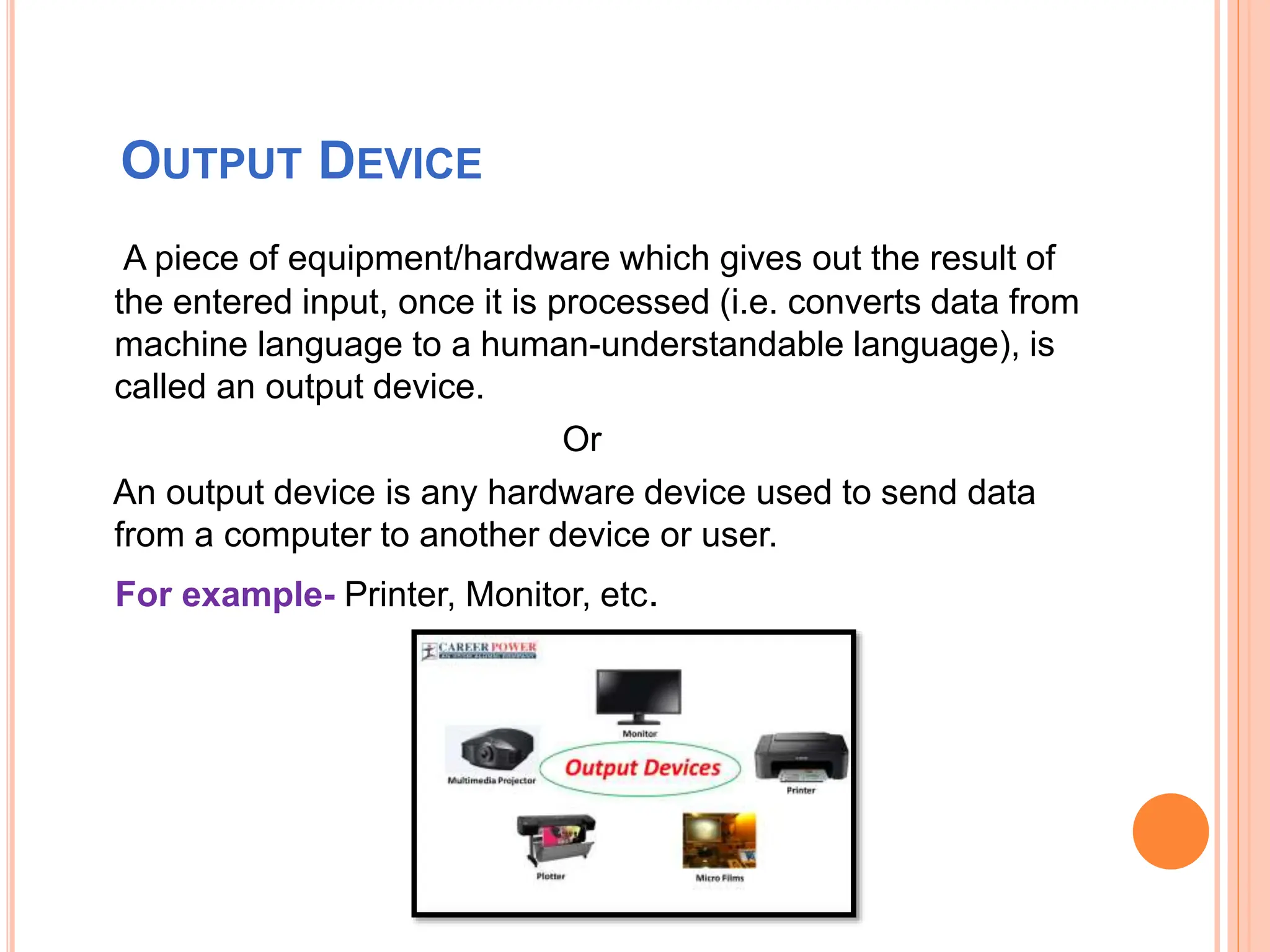
For example- Printer, Monitor, etc.
TYPES OF OUTPUT DEVICES
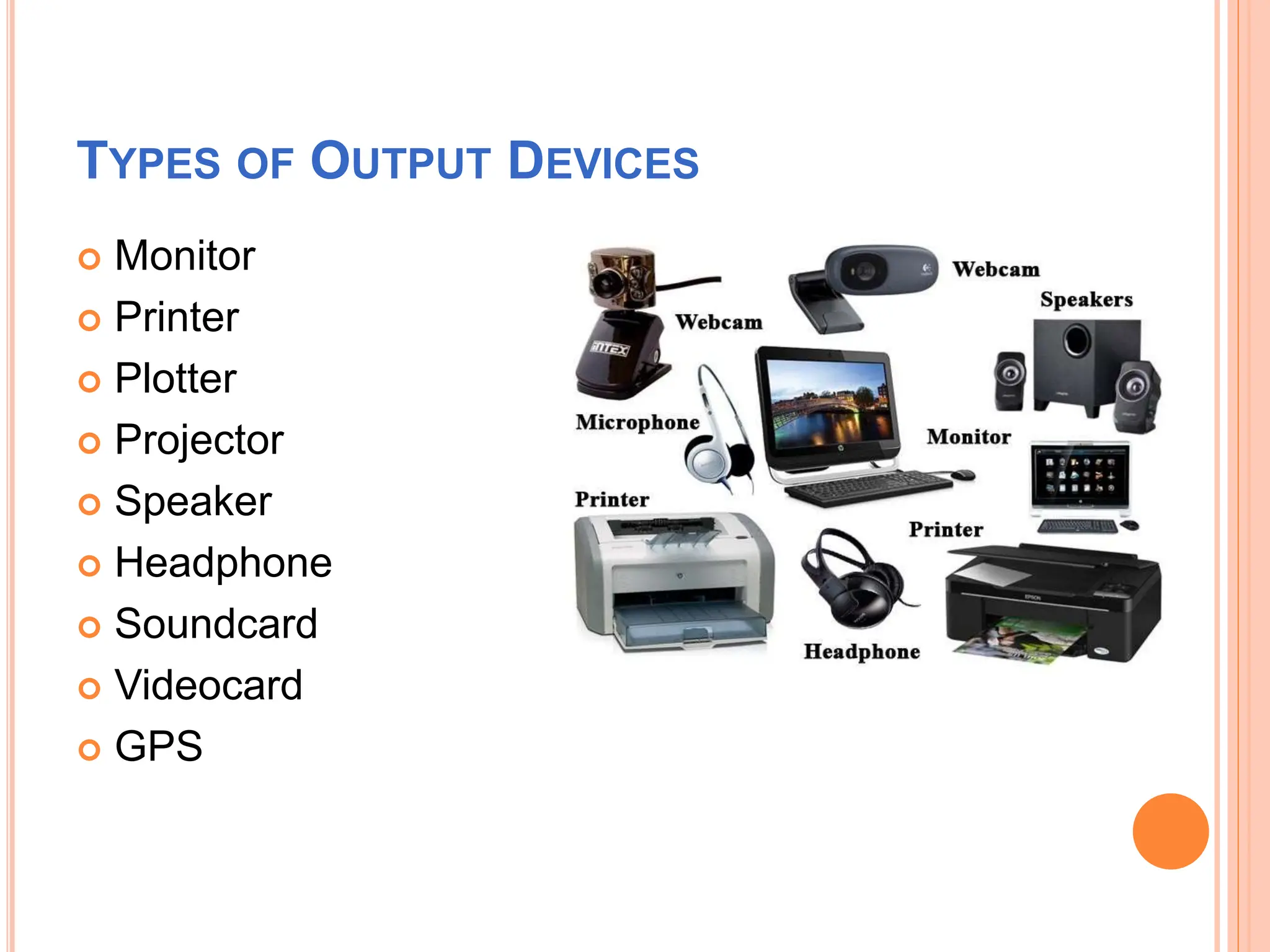
 Monitor
 Printer
 Plotter
 Projector
 Speaker
 Headphone
 Soundcard
 Videocard
 GPS
IMPORTANCE
 It allow users to better interact with computer
equipment.
 It obtain information from the computer and send
data that has been processed by the computer to
the user.
 It transfer data in human readable forms, like audio,
visual, and hard copy media.
 For example-
o Speaker - Sound being played .
o Monitor - The main output device of a computer. It forms
images by converting electrical energy into light in the
form of tiny dots on the screen called pixels.
ADVANTAGES
 Output devices make our work cheaper as we do
not need to print all the files.
 They can produce high-quality texts and can be
magnified.
 Users can recheck the produced results and make
changes to the file or document before printing.
 Some others are -
o Convenience and Flexibility
o Reduced Clutter
o Enhanced Mobility
o Ease of Sharing
o Increased Accessibility
DISADVANTAGES
 It can cost more money to produce outputs as we
need paper and ink during the printing, and quality.
 Devices like speakers, when used at high volume,
can cause health issues.
 Devices like monitors, when seen from a small
distance, can cause problems to the eyes.
 Some others are –
o Images fuzzy
o Expensive
o Accessibility issues
CONCLUSION
 Output devices connect to the computer via a cable
or wirelessly. Some output peripherals are already
built into laptops. This allows information on a
computer to be viewed, heard, or played back.
 These peripherals differ from input peripherals,
which allow information from the external
environment to enter a device. For example, the
keyboard, the mouse, or the microphone.
 Some peripherals, such as video display terminals
and USB hubs, are both input and output because
they transmit and receive information.
OUTPUT DEVICES.pptx

OUTPUT DEVICES.pptx

  • 1.
    OUTPUT DEVICES By K.Anjali B.Sc.B.Ed.Mathematics
  • 2.
    CONTENT  Definition  Types Importance  Advantages  Disadvantages
  • 3.
    OUTPUT DEVICE A pieceof equipment/hardware which gives out the result of the entered input, once it is processed (i.e. converts data from machine language to a human-understandable language), is called an output device. Or An output device is any hardware device used to send data from a computer to another device or user. For example- Printer, Monitor, etc.
  • 4.
    TYPES OF OUTPUTDEVICES  Monitor  Printer  Plotter  Projector  Speaker  Headphone  Soundcard  Videocard  GPS
  • 5.
    IMPORTANCE  It allowusers to better interact with computer equipment.  It obtain information from the computer and send data that has been processed by the computer to the user.  It transfer data in human readable forms, like audio, visual, and hard copy media.  For example- o Speaker - Sound being played . o Monitor - The main output device of a computer. It forms images by converting electrical energy into light in the form of tiny dots on the screen called pixels.
  • 6.
    ADVANTAGES  Output devicesmake our work cheaper as we do not need to print all the files.  They can produce high-quality texts and can be magnified.  Users can recheck the produced results and make changes to the file or document before printing.  Some others are - o Convenience and Flexibility o Reduced Clutter o Enhanced Mobility o Ease of Sharing o Increased Accessibility
  • 7.
    DISADVANTAGES  It cancost more money to produce outputs as we need paper and ink during the printing, and quality.  Devices like speakers, when used at high volume, can cause health issues.  Devices like monitors, when seen from a small distance, can cause problems to the eyes.  Some others are – o Images fuzzy o Expensive o Accessibility issues
  • 8.
    CONCLUSION  Output devicesconnect to the computer via a cable or wirelessly. Some output peripherals are already built into laptops. This allows information on a computer to be viewed, heard, or played back.  These peripherals differ from input peripherals, which allow information from the external environment to enter a device. For example, the keyboard, the mouse, or the microphone.  Some peripherals, such as video display terminals and USB hubs, are both input and output because they transmit and receive information.