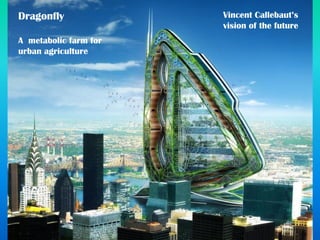
Dragonfly
A metabolic farm for
urban agriculture
Vincent Callebaut’s
vision of the future
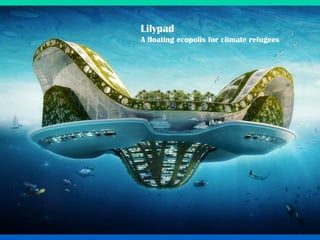
Lilypad
A floating ecopolis for climate refugees
What do you
think
the future will be like?
What do you
want
the future to be like?
Sustainable Development
What is it?
Development that meets the needs of
the present without compromising the
ability of future generations to meet
their own needs.
Brundtland Definition
What do you want to achieve?
• What’s your big goal?
• How will you get there?
• What smaller steps will you work towards along
the way to help you get to your big goal?
We need to know what we want to make
a plan to get there.
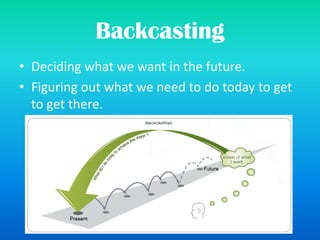
Backcasting
• Deciding what we want in the future.
• Figuring out what we need to do today to get
to get there.
Why plan with Backcasting?
• The council notice that more and more people are using homeless
shelters.
• They project that this number will continue increasing based on past
trends.
• They decide to allocate more money to fund homeless shelters.
• They have not really looked at the future they want.
• It might be better to envisage a future where no one needed the
shelters, then look back and see what needed to be done today to
achieve this and allocate money and time to these areas instead.
• E.g. Better education, more family and community support, help to
pay rent or home loans, treatment for alcohol or drug problems.
• Of course these will need to be looked at along the way and maybe
adjusted to make them better .
Your task
• In groups decide on one area of the future that you would
like to see happen by 2050.
• It should be based on human needs and should be
sustainable.
• Check with me that this is a good area to plan for.
• Brainstorm the steps you will take to make it happen. Use
the worksheet to guide you.
• Draw a poster/ flow diagram showing the steps you will
take to present to the class.
• If you like, add pictures, graphs etc to help illustrate your
points.
• Also include information about work already being done,
obstacles, resources needed etc.

Our future

  • 1.
    Dragonfly A metabolic farmfor urban agriculture Vincent Callebaut’s vision of the future
  • 2.
    Lilypad A floating ecopolisfor climate refugees
  • 3.
    What do you think thefuture will be like? What do you want the future to be like?
  • 4.
    Sustainable Development What isit? Development that meets the needs of the present without compromising the ability of future generations to meet their own needs. Brundtland Definition
  • 5.
    What do youwant to achieve? • What’s your big goal? • How will you get there? • What smaller steps will you work towards along the way to help you get to your big goal? We need to know what we want to make a plan to get there.
  • 6.
    Backcasting • Deciding whatwe want in the future. • Figuring out what we need to do today to get to get there.
  • 7.
    Why plan withBackcasting? • The council notice that more and more people are using homeless shelters. • They project that this number will continue increasing based on past trends. • They decide to allocate more money to fund homeless shelters. • They have not really looked at the future they want. • It might be better to envisage a future where no one needed the shelters, then look back and see what needed to be done today to achieve this and allocate money and time to these areas instead. • E.g. Better education, more family and community support, help to pay rent or home loans, treatment for alcohol or drug problems. • Of course these will need to be looked at along the way and maybe adjusted to make them better .
  • 9.
    Your task • Ingroups decide on one area of the future that you would like to see happen by 2050. • It should be based on human needs and should be sustainable. • Check with me that this is a good area to plan for. • Brainstorm the steps you will take to make it happen. Use the worksheet to guide you. • Draw a poster/ flow diagram showing the steps you will take to present to the class. • If you like, add pictures, graphs etc to help illustrate your points. • Also include information about work already being done, obstacles, resources needed etc.