Class 17
Ewrt 2
AGENDA
 Section # 4: Privilege and
Perspective
 Discussion: Woolf's
“Shakespeare’s Sister"
 Bio
 Rhetorical Strategies
 Questions for Critical Reading
 QHQ
 Essay #4
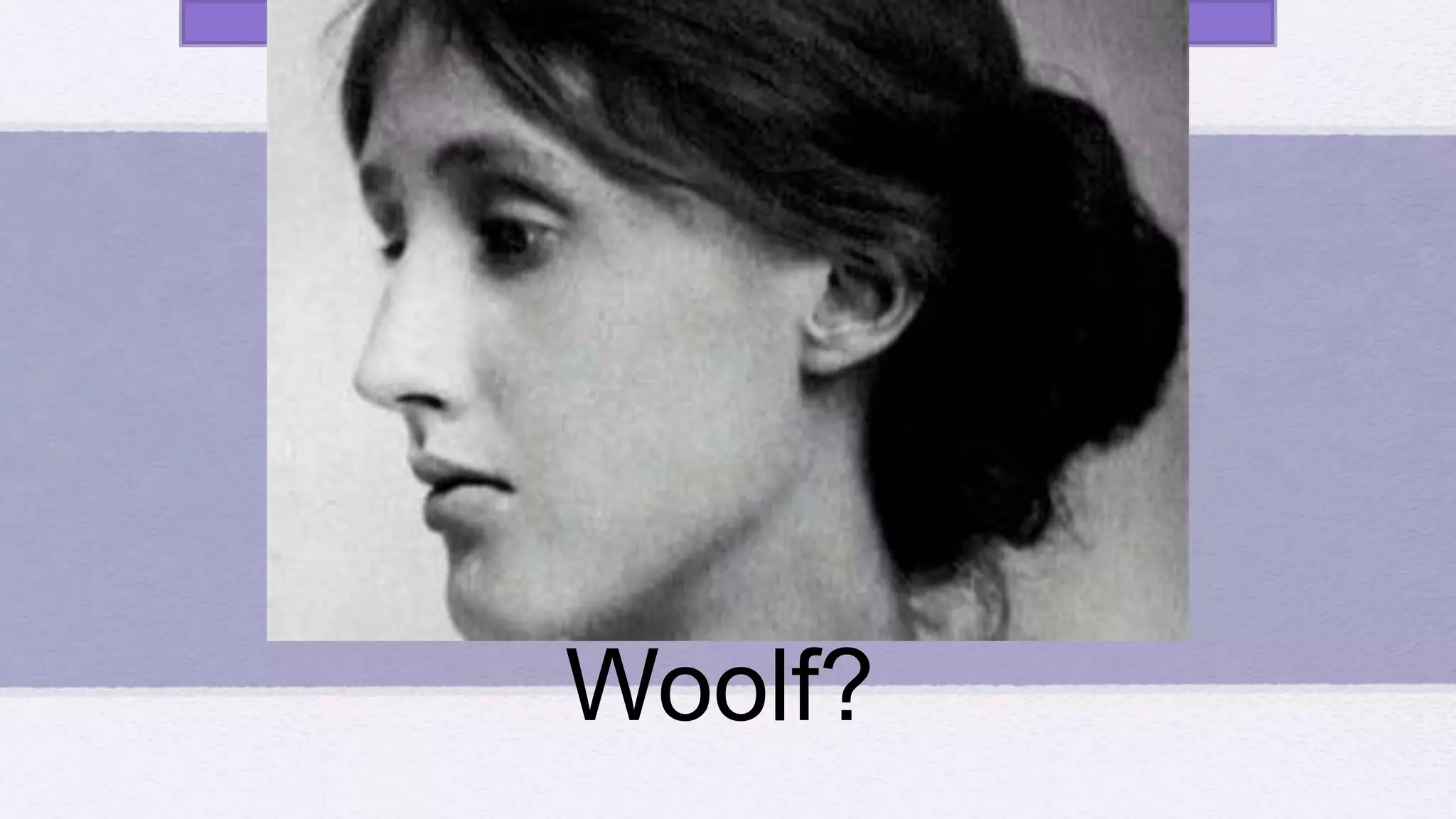
Who is Virginia
Woolf?
A Brief Biography
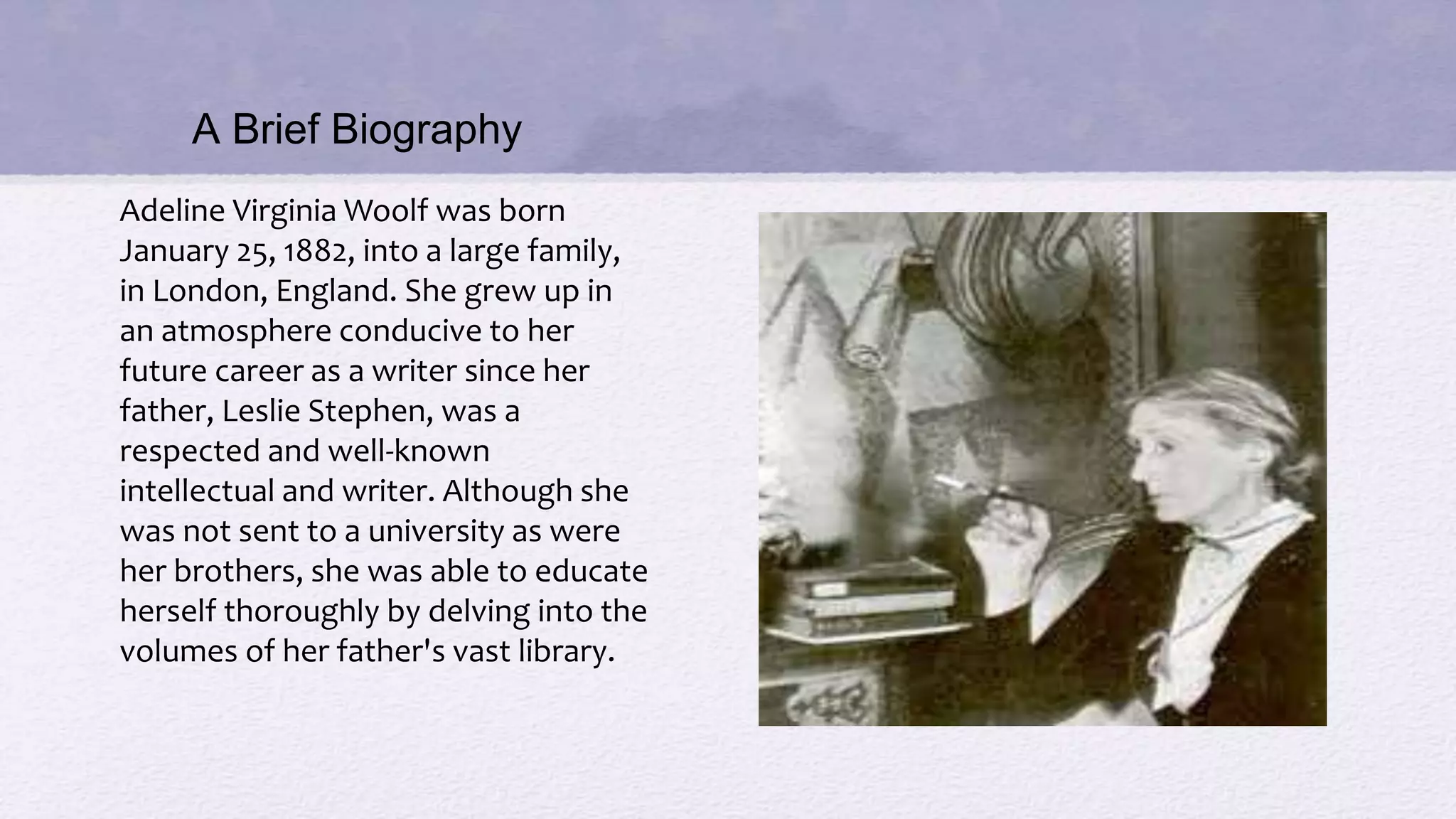
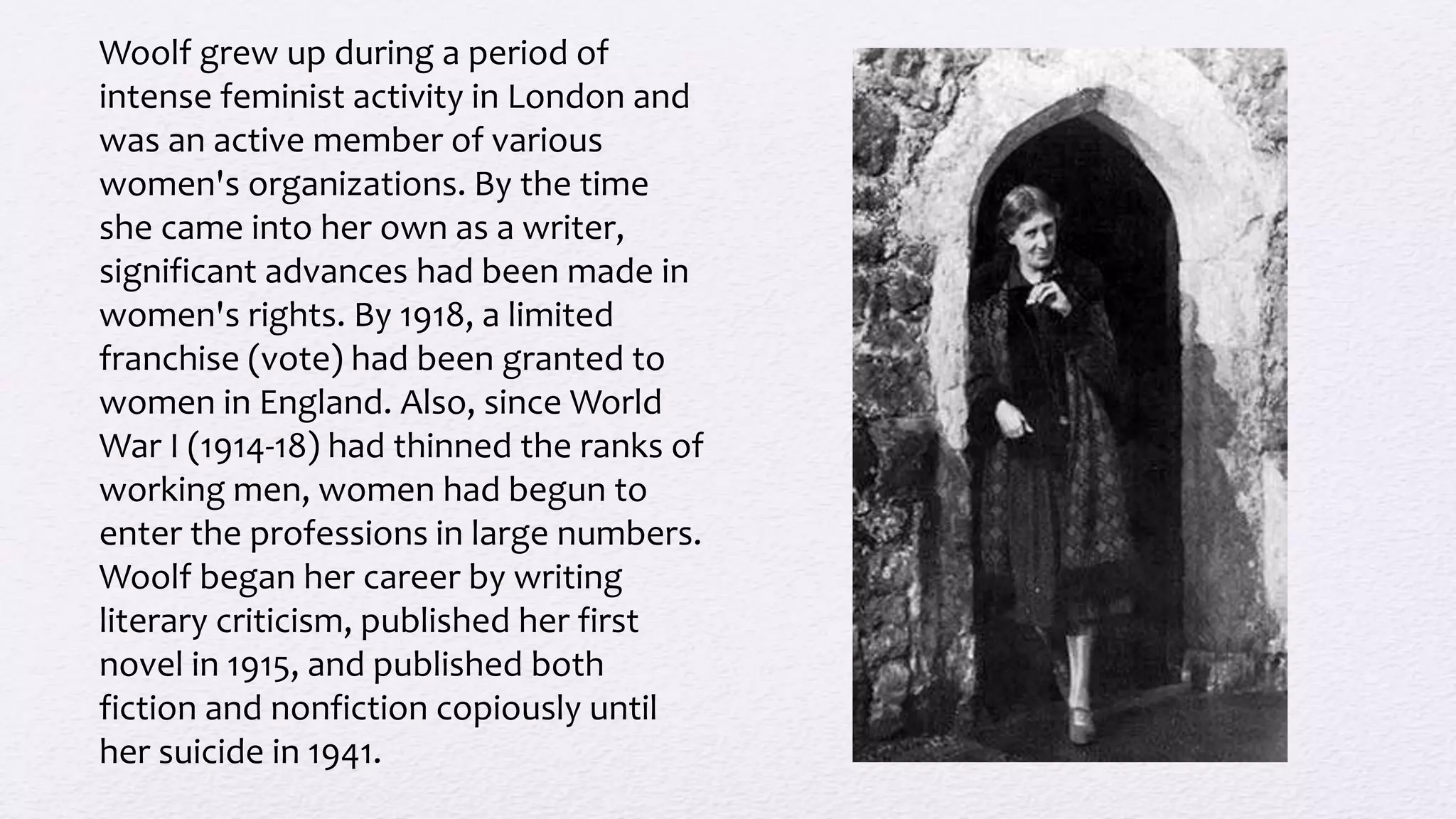
Adeline Virginia Woolf was born
January 25, 1882, into a large family,
in London, England. She grew up in
an atmosphere conducive to her
future career as a writer since her
father, Leslie Stephen, was a
respected and well-known
intellectual and writer. Although she
was not sent to a university as were
her brothers, she was able to educate
herself thoroughly by delving into the
volumes of her father's vast library.
Woolf grew up during a period of
intense feminist activity in London and
was an active member of various
women's organizations. By the time
she came into her own as a writer,
significant advances had been made in
women's rights. By 1918, a limited
franchise (vote) had been granted to
women in England. Also, since World
War I (1914-18) had thinned the ranks of
working men, women had begun to
enter the professions in large numbers.
Woolf began her career by writing
literary criticism, published her first
novel in 1915, and published both
fiction and nonfiction copiously until
her suicide in 1941.
She is well known internationally for her
many superb novels and collections of
essays. A Room of One's Own (1929)
and Three Guineas (1938) are important
feminist tracts written by Woolf.
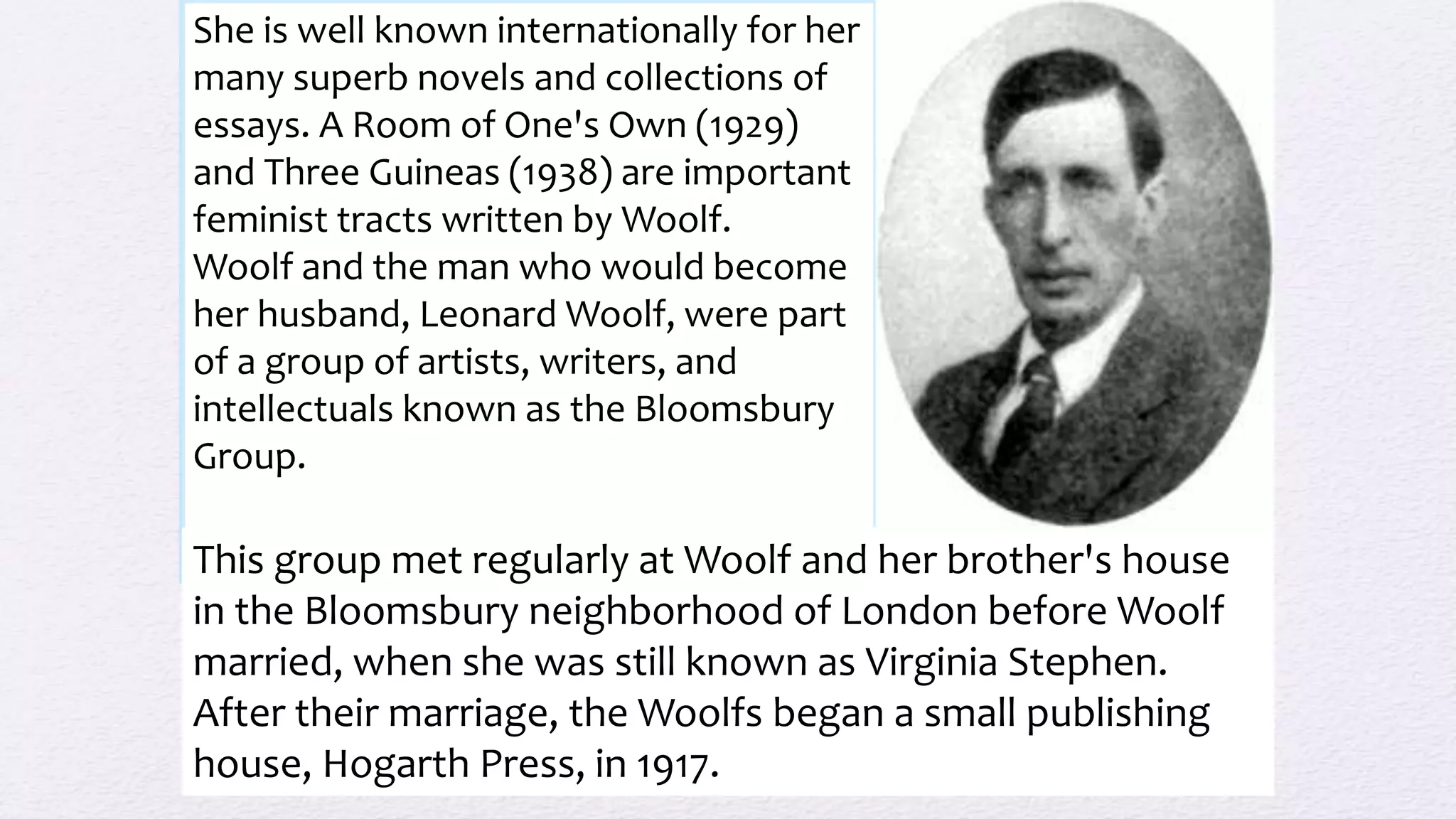
Woolf and the man who would become
her husband, Leonard Woolf, were part
of a group of artists, writers, and
intellectuals known as the Bloomsbury
Group.
This group met regularly at Woolf and her brother's house
in the Bloomsbury neighborhood of London before Woolf
married, when she was still known as Virginia Stephen.
After their marriage, the Woolfs began a small publishing
house, Hogarth Press, in 1917.
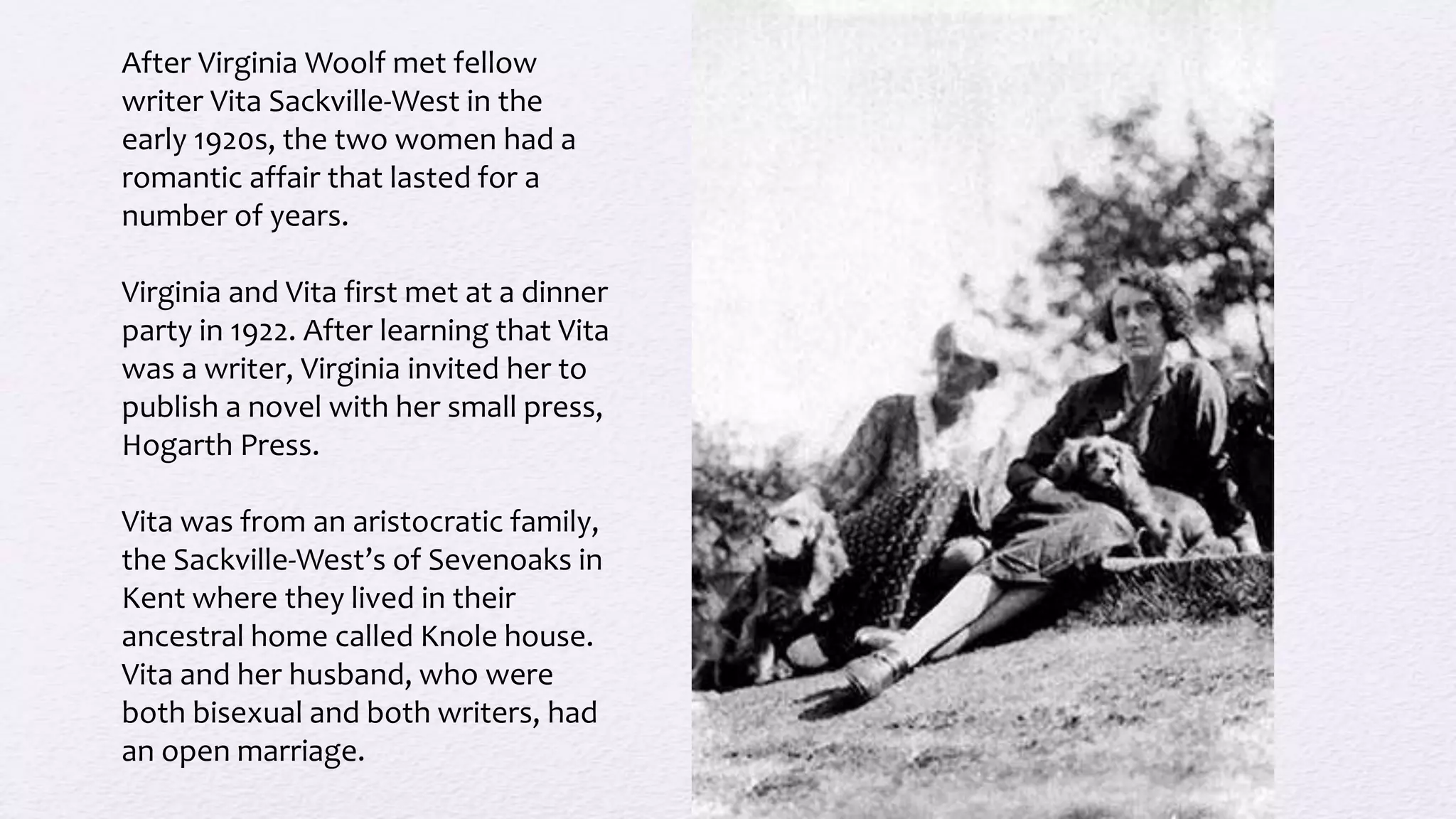
After Virginia Woolf met fellow
writer Vita Sackville-West in the
early 1920s, the two women had a
romantic affair that lasted for a
number of years.
Virginia and Vita first met at a dinner
party in 1922. After learning that Vita
was a writer, Virginia invited her to
publish a novel with her small press,
Hogarth Press.
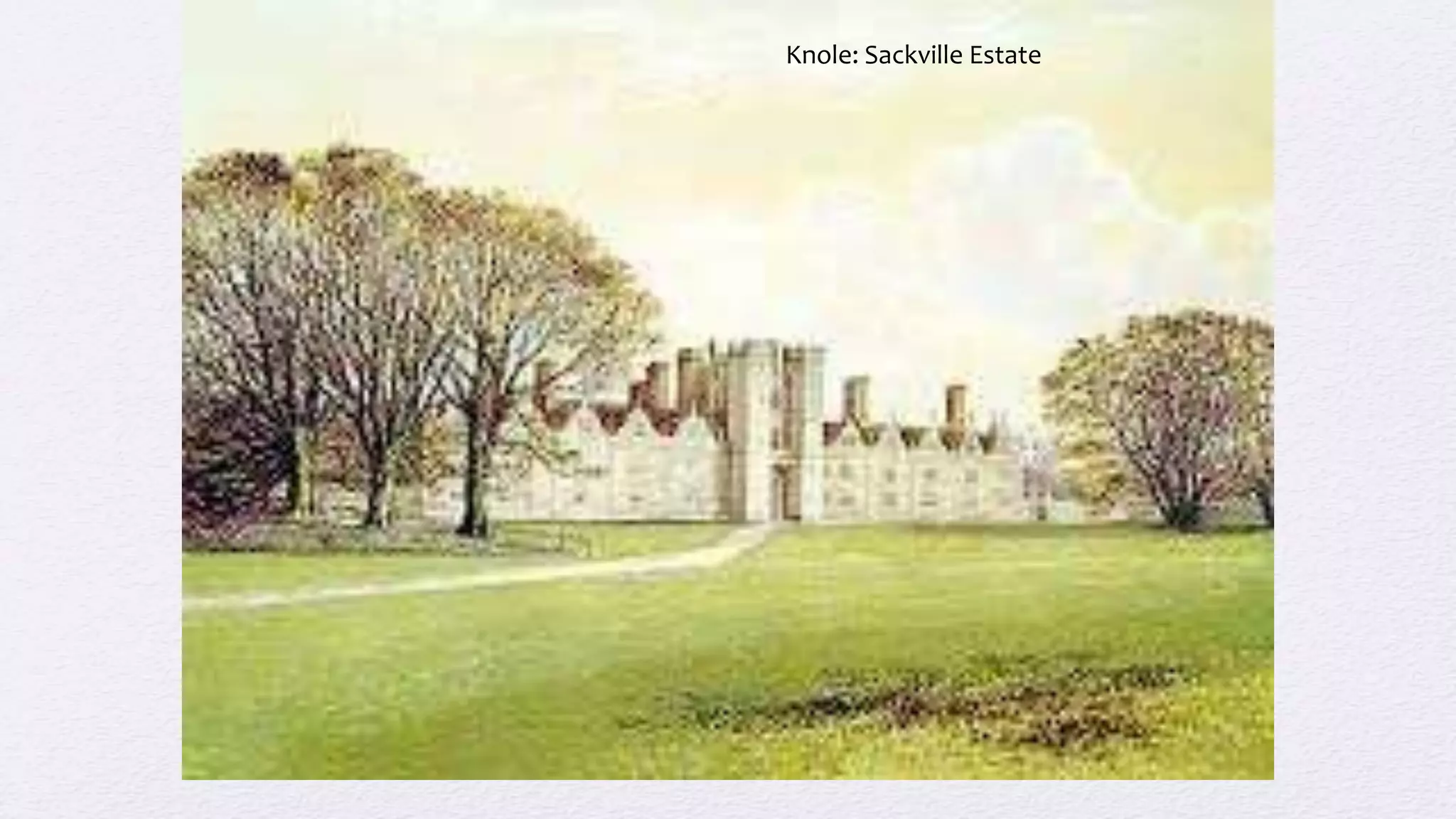
Vita was from an aristocratic family,
the Sackville-West’s of Sevenoaks in
Kent where they lived in their
ancestral home called Knole house.
Vita and her husband, who were
both bisexual and both writers, had
an open marriage.
Knole: Sackville Estate
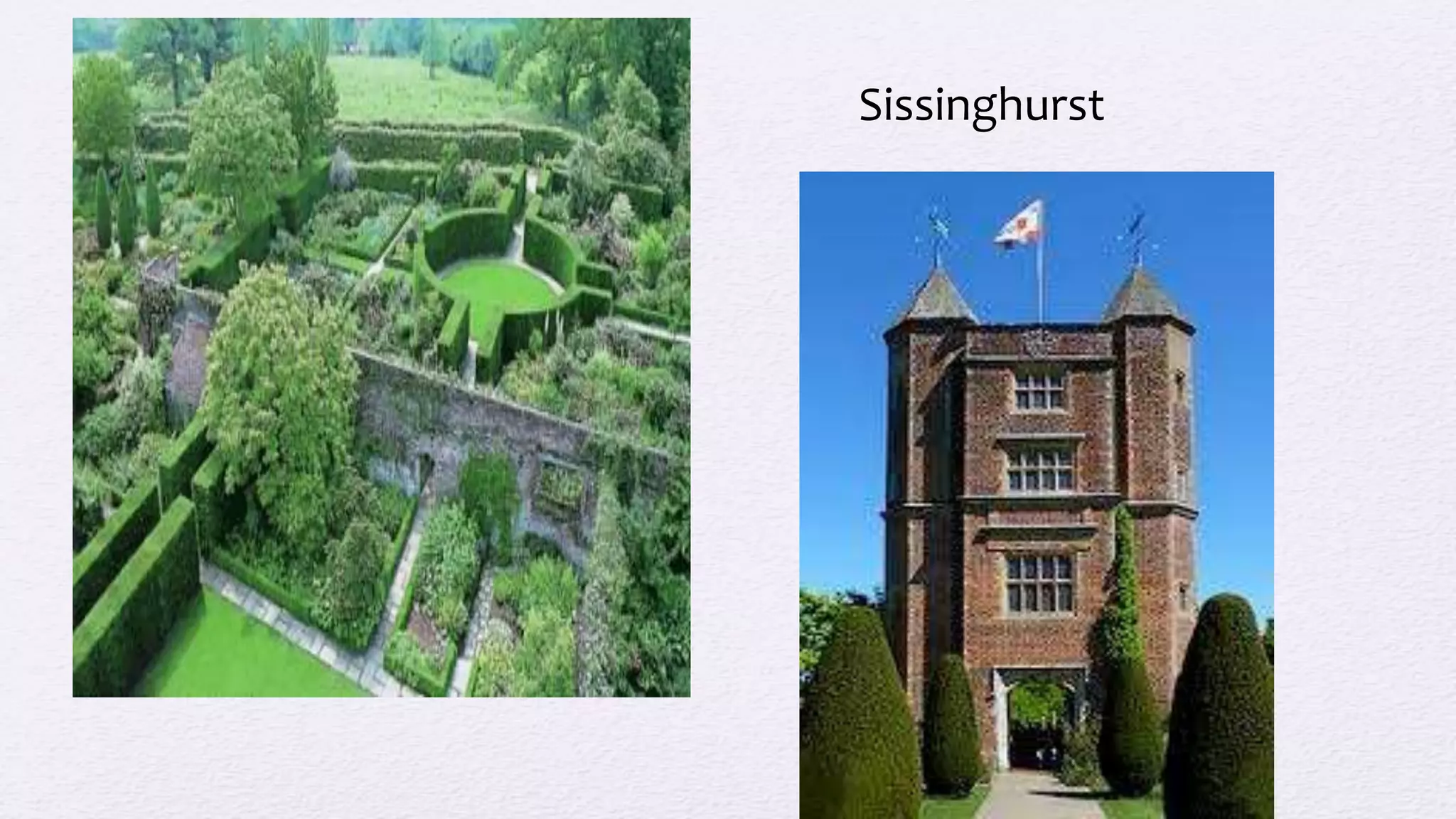
Sissinghurst
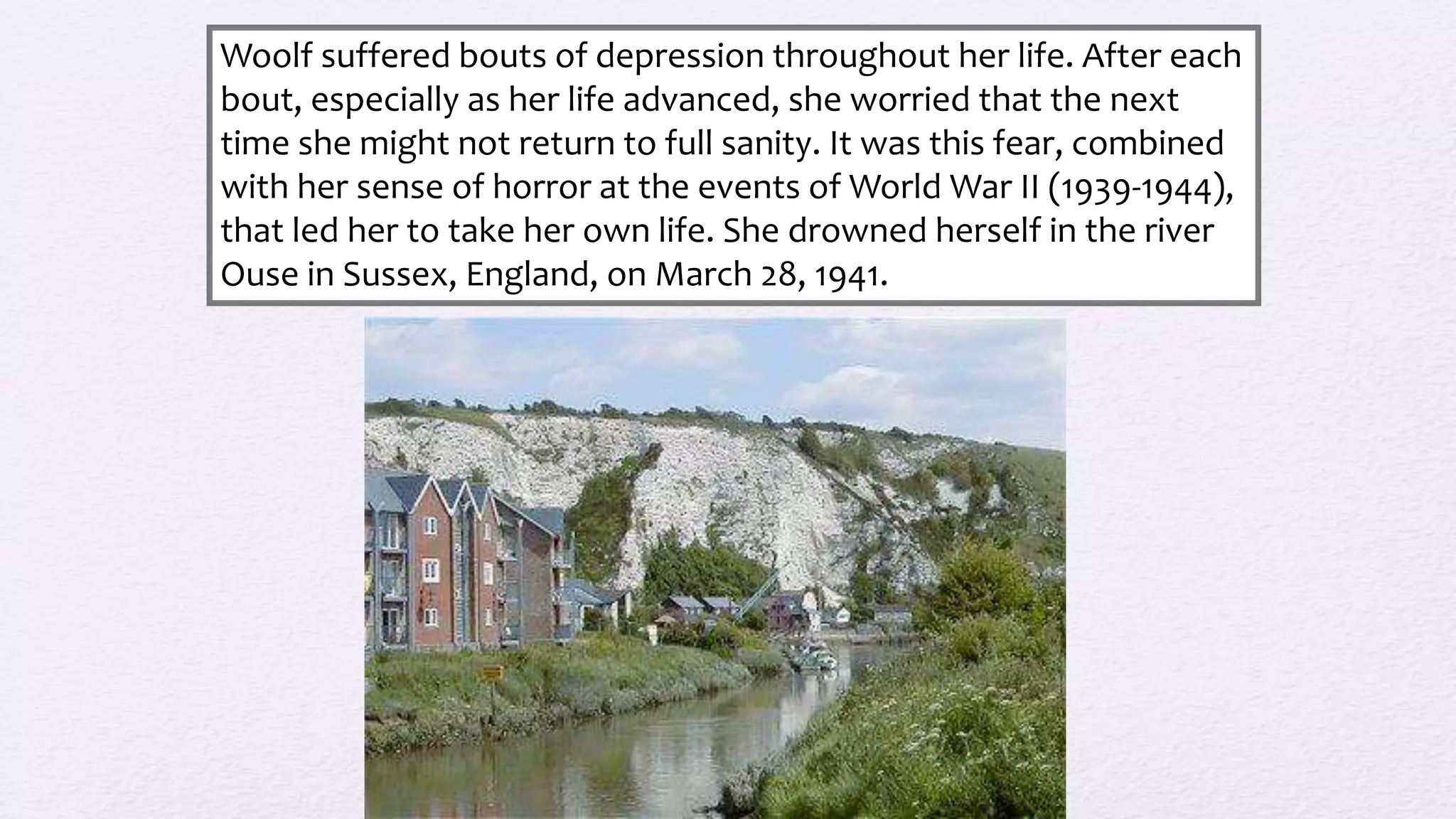
Woolf suffered bouts of depression throughout her life. After each
bout, especially as her life advanced, she worried that the next
time she might not return to full sanity. It was this fear, combined
with her sense of horror at the events of World War II (1939-1944),
that led her to take her own life. She drowned herself in the river
Ouse in Sussex, England, on March 28, 1941.
Get into your groups!
In groups, Discuss
“Shakespeare’s Sister”
From
Woolf’s A Room of One’s Own
Consider her rhetorical strategies, the essay’s
content, and the “Questions for Critical
Reading” (page 776)
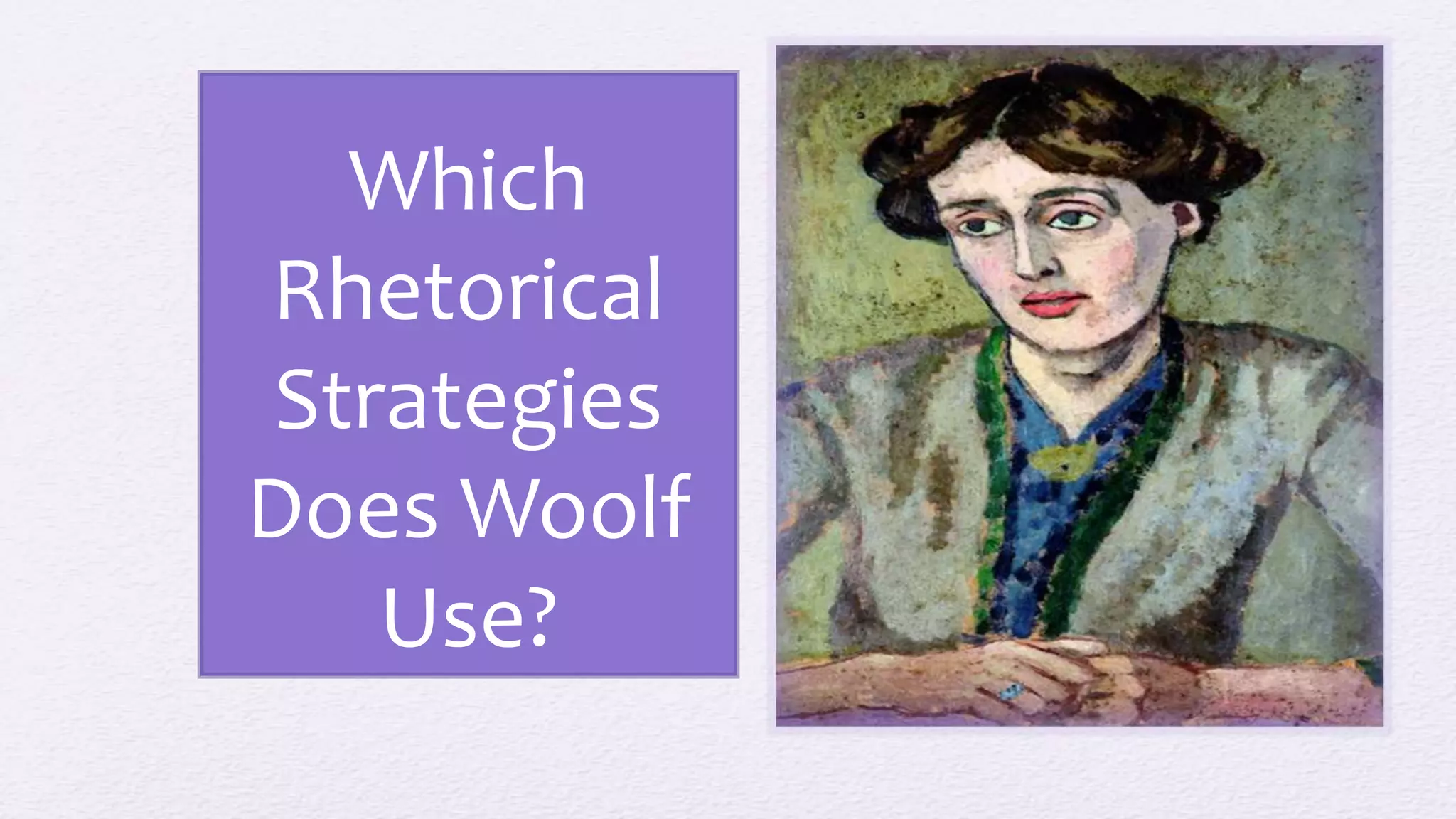
Which
Rhetorical
Strategies
Does Woolf
Use?
Rhetorical Strategies
 Scenario
 Simile
 Controlled and
cool tone
 Allusion
 Politeness
Questions for
Critical Reading
•How did Elizabethan
gender roles limit
opportunities in
literature?
•Why does Woolf
begin by referring to
an eminent historian?
• Why does history treat
sixteenth- and
seventeenth-century
women with so little
notice?
• What is Woolf’s point
regarding the behavior
of Oscar Browning?
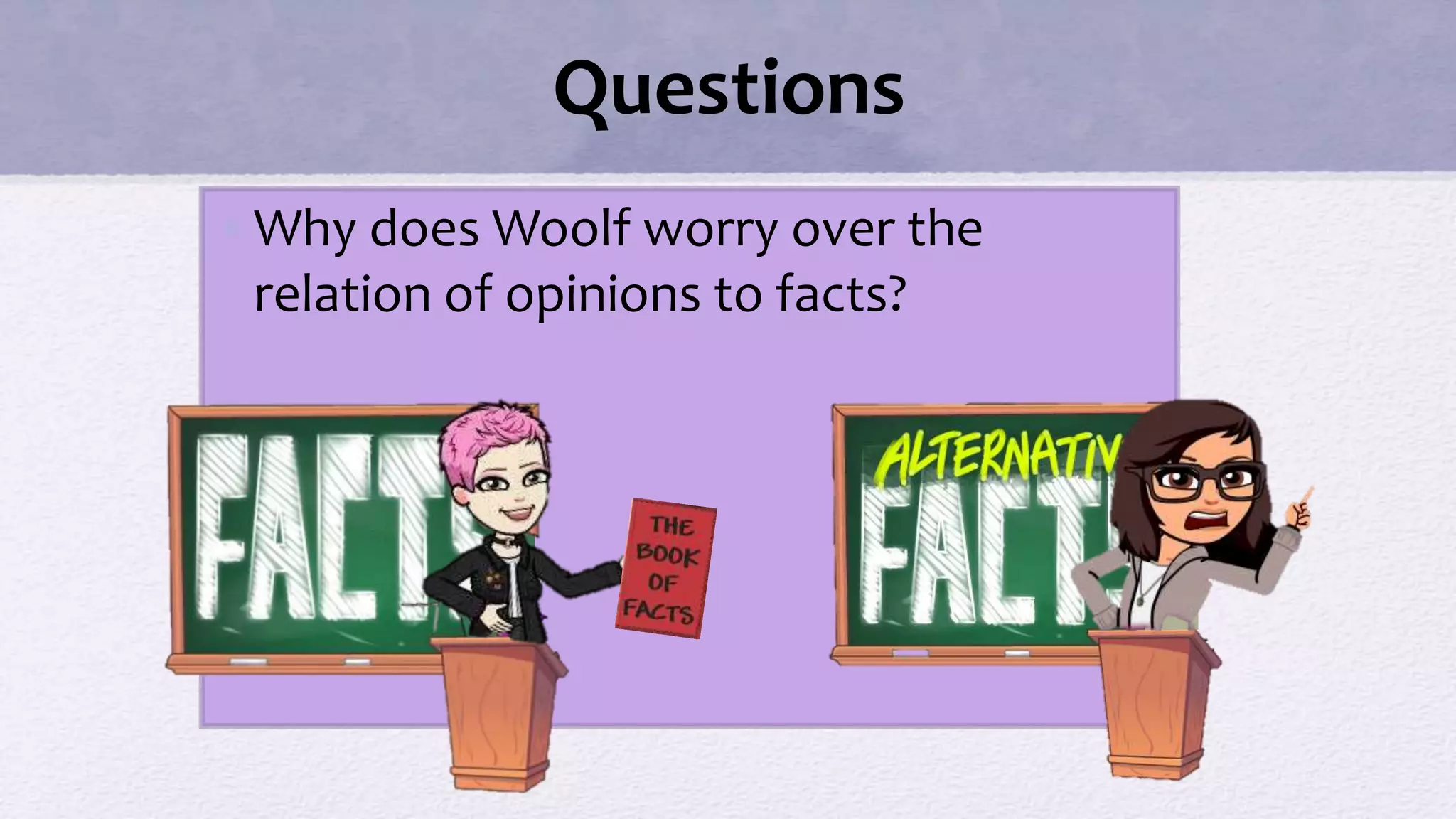
Questions
•Why does Woolf worry over the
relation of opinions to facts?
 What is the
difference
between the way
women are
represented in
history and the
way they are
depicted in fiction?
 Why does Woolf
have Judith
Shakespeare
become pregnant?
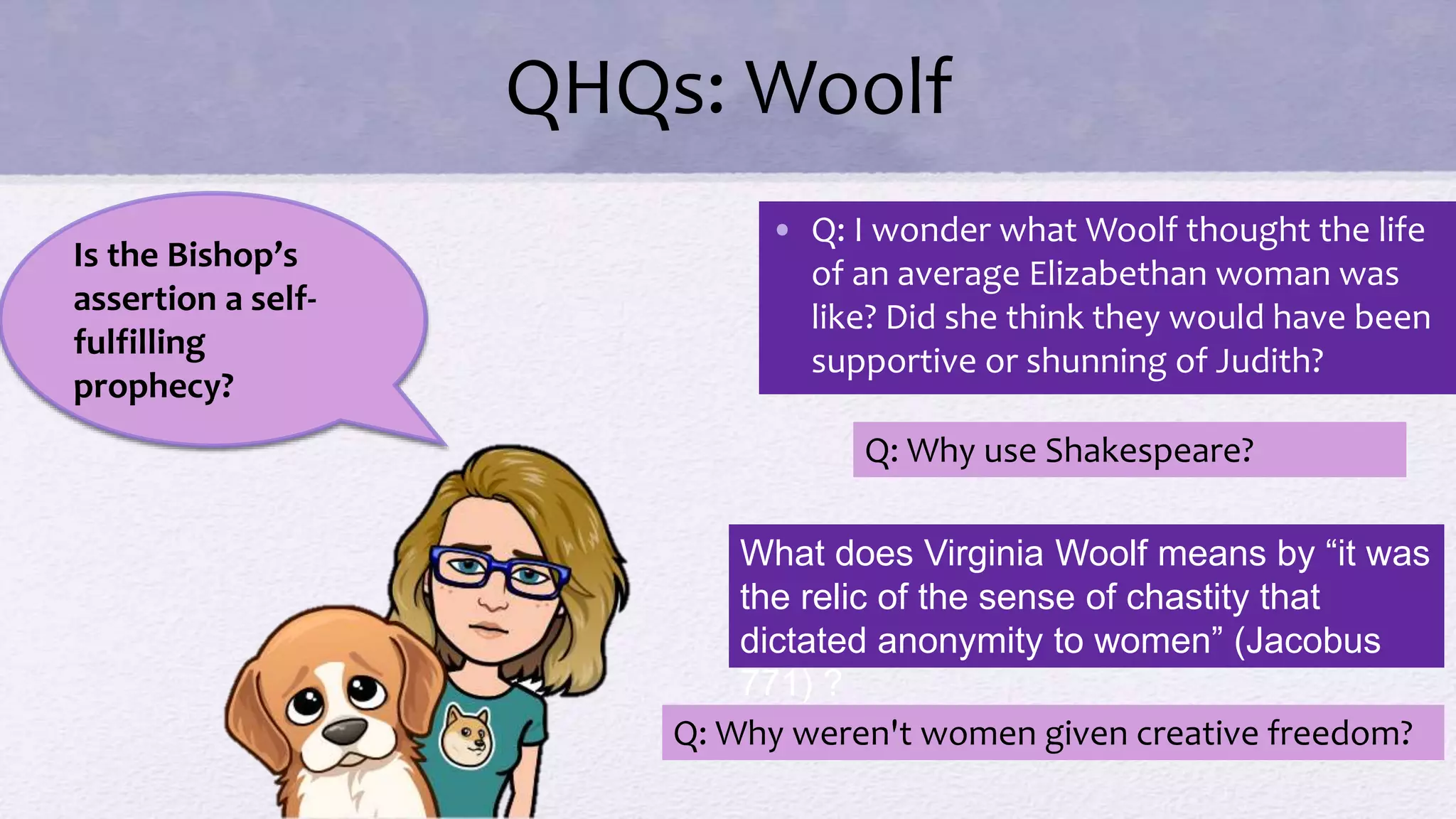
QHQs: Woolf
• Q: I wonder what Woolf thought the life
of an average Elizabethan woman was
like? Did she think they would have been
supportive or shunning of Judith?
Q: Why use Shakespeare?
Is the Bishop’s
assertion a self-
fulfilling
prophecy?
What does Virginia Woolf means by “it was
the relic of the sense of chastity that
dictated anonymity to women” (Jacobus
771) ?
Q: Why weren't women given creative freedom?
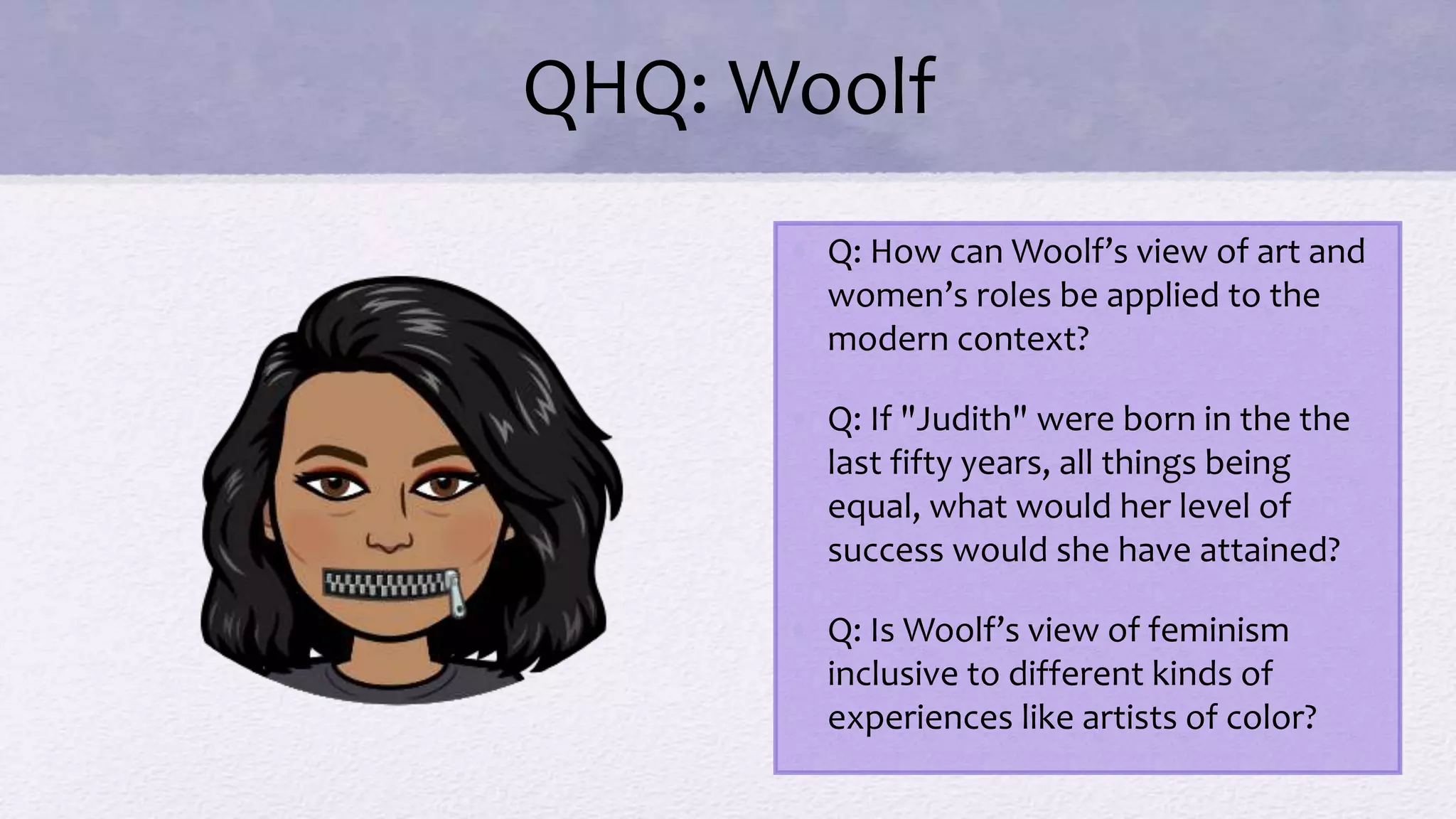
QHQ: Woolf
• Q: How can Woolf’s view of art and
women’s roles be applied to the
modern context?
• Q: If "Judith" were born in the the
last fifty years, all things being
equal, what would her level of
success would she have attained?
• Q: Is Woolf’s view of feminism
inclusive to different kinds of
experiences like artists of color?
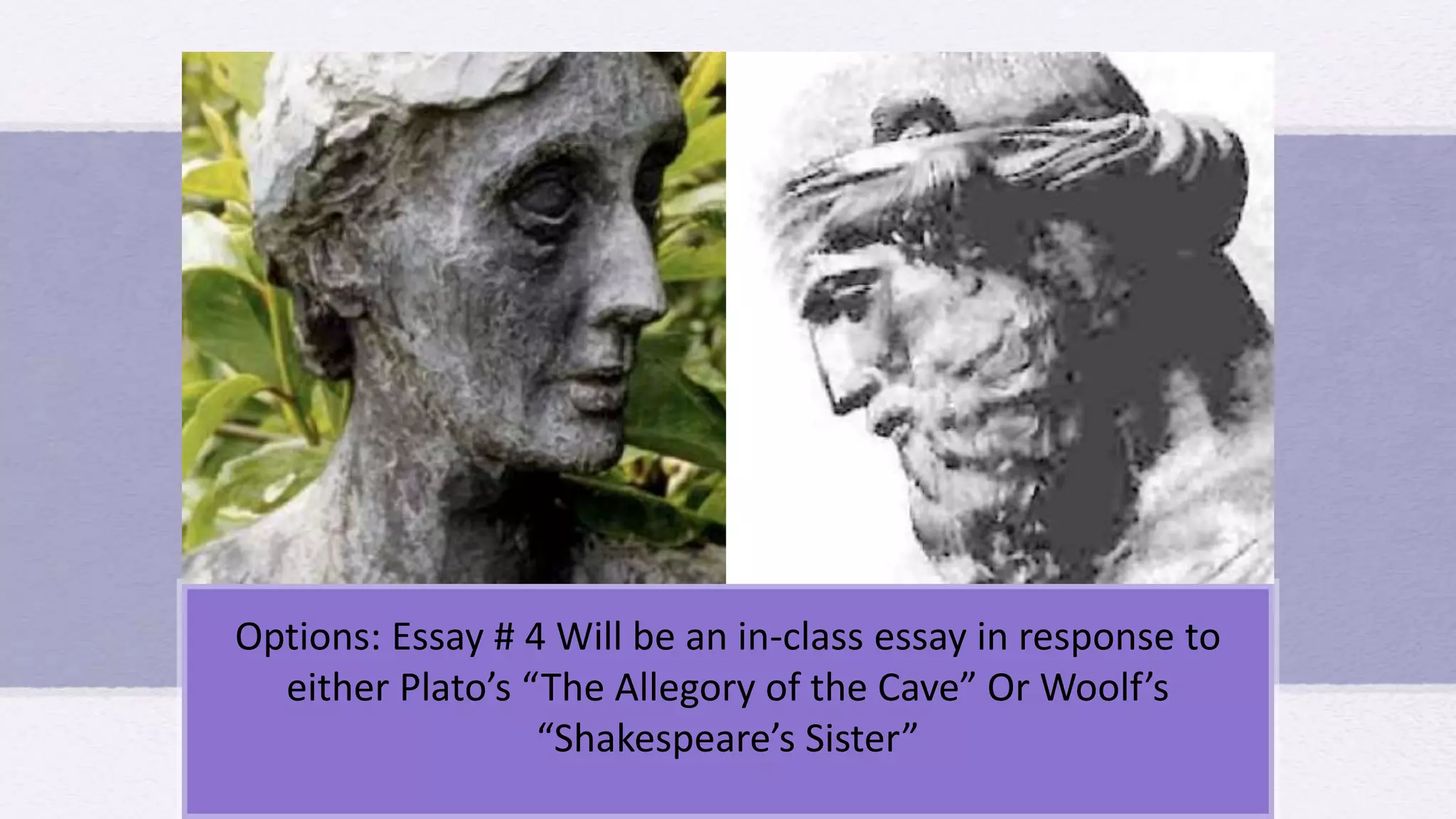
Options: Essay # 4 Will be an in-class essay in response to
either Plato’s “The Allegory of the Cave” Or Woolf’s
“Shakespeare’s Sister”
Essay #4: An in-class essay on Plato’s “The
Allegory of the Cave” and Woolf’s
“Shakespeare’s Sister (Class 19)
 You will respond to one of several prompts provided.
 There will be prompts addressing each Plato and Woolf.
 Your essay will be between 500 and 750 words. The number of
pages will depend on your handwriting!
 You will have two hours to write.
 You may use your textbook or copies of the essays (no other pages
or papers will be allowed).
 Please bring a clean, large Blue Book: No Blue Book, no test.
 (Approx. 8x10). You can buy them at the bookstore.
 You may write with either a number 2 pencil (dark lead) or blue or
black pen.
 Prepare for essay test 4
 Post # 27 QHQ: How can we
apply the ideas of Plato and
Woolf to A Game of Thrones?
Make sure to include textual
support in your post. You
might consider how Woolf’s
notions can be extended
beyond the realm of women.

Ewrt 2 class 17 woolf

  • 1.
  • 2.
    AGENDA  Section #4: Privilege and Perspective  Discussion: Woolf's “Shakespeare’s Sister"  Bio  Rhetorical Strategies  Questions for Critical Reading  QHQ  Essay #4
  • 3.
  • 4.
    A Brief Biography AdelineVirginia Woolf was born January 25, 1882, into a large family, in London, England. She grew up in an atmosphere conducive to her future career as a writer since her father, Leslie Stephen, was a respected and well-known intellectual and writer. Although she was not sent to a university as were her brothers, she was able to educate herself thoroughly by delving into the volumes of her father's vast library.
  • 5.
    Woolf grew upduring a period of intense feminist activity in London and was an active member of various women's organizations. By the time she came into her own as a writer, significant advances had been made in women's rights. By 1918, a limited franchise (vote) had been granted to women in England. Also, since World War I (1914-18) had thinned the ranks of working men, women had begun to enter the professions in large numbers. Woolf began her career by writing literary criticism, published her first novel in 1915, and published both fiction and nonfiction copiously until her suicide in 1941.
  • 6.
    She is wellknown internationally for her many superb novels and collections of essays. A Room of One's Own (1929) and Three Guineas (1938) are important feminist tracts written by Woolf. Woolf and the man who would become her husband, Leonard Woolf, were part of a group of artists, writers, and intellectuals known as the Bloomsbury Group. This group met regularly at Woolf and her brother's house in the Bloomsbury neighborhood of London before Woolf married, when she was still known as Virginia Stephen. After their marriage, the Woolfs began a small publishing house, Hogarth Press, in 1917.
  • 7.
    After Virginia Woolfmet fellow writer Vita Sackville-West in the early 1920s, the two women had a romantic affair that lasted for a number of years. Virginia and Vita first met at a dinner party in 1922. After learning that Vita was a writer, Virginia invited her to publish a novel with her small press, Hogarth Press. Vita was from an aristocratic family, the Sackville-West’s of Sevenoaks in Kent where they lived in their ancestral home called Knole house. Vita and her husband, who were both bisexual and both writers, had an open marriage.
  • 8.
  • 9.
  • 10.
    Woolf suffered boutsof depression throughout her life. After each bout, especially as her life advanced, she worried that the next time she might not return to full sanity. It was this fear, combined with her sense of horror at the events of World War II (1939-1944), that led her to take her own life. She drowned herself in the river Ouse in Sussex, England, on March 28, 1941.
  • 11.
  • 12.
    In groups, Discuss “Shakespeare’sSister” From Woolf’s A Room of One’s Own Consider her rhetorical strategies, the essay’s content, and the “Questions for Critical Reading” (page 776)
  • 13.
  • 14.
    Rhetorical Strategies  Scenario Simile  Controlled and cool tone  Allusion  Politeness
  • 15.
  • 16.
    •How did Elizabethan genderroles limit opportunities in literature? •Why does Woolf begin by referring to an eminent historian?
  • 17.
    • Why doeshistory treat sixteenth- and seventeenth-century women with so little notice? • What is Woolf’s point regarding the behavior of Oscar Browning?
  • 18.
    Questions •Why does Woolfworry over the relation of opinions to facts?
  • 19.
     What isthe difference between the way women are represented in history and the way they are depicted in fiction?  Why does Woolf have Judith Shakespeare become pregnant?
  • 20.
    QHQs: Woolf • Q:I wonder what Woolf thought the life of an average Elizabethan woman was like? Did she think they would have been supportive or shunning of Judith? Q: Why use Shakespeare? Is the Bishop’s assertion a self- fulfilling prophecy? What does Virginia Woolf means by “it was the relic of the sense of chastity that dictated anonymity to women” (Jacobus 771) ? Q: Why weren't women given creative freedom?
  • 21.
    QHQ: Woolf • Q:How can Woolf’s view of art and women’s roles be applied to the modern context? • Q: If "Judith" were born in the the last fifty years, all things being equal, what would her level of success would she have attained? • Q: Is Woolf’s view of feminism inclusive to different kinds of experiences like artists of color?
  • 22.
    Options: Essay #4 Will be an in-class essay in response to either Plato’s “The Allegory of the Cave” Or Woolf’s “Shakespeare’s Sister”
  • 23.
    Essay #4: Anin-class essay on Plato’s “The Allegory of the Cave” and Woolf’s “Shakespeare’s Sister (Class 19)  You will respond to one of several prompts provided.  There will be prompts addressing each Plato and Woolf.  Your essay will be between 500 and 750 words. The number of pages will depend on your handwriting!  You will have two hours to write.  You may use your textbook or copies of the essays (no other pages or papers will be allowed).  Please bring a clean, large Blue Book: No Blue Book, no test.  (Approx. 8x10). You can buy them at the bookstore.  You may write with either a number 2 pencil (dark lead) or blue or black pen.
  • 24.
     Prepare foressay test 4  Post # 27 QHQ: How can we apply the ideas of Plato and Woolf to A Game of Thrones? Make sure to include textual support in your post. You might consider how Woolf’s notions can be extended beyond the realm of women.