Welcome to Strategic Leadership and
Management
Peterborough Hub
Session One
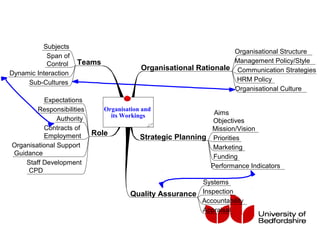
Organisational Rationale
Teams
Role
Strategic Planning
Quality Assurance
Organisation and
its Workings
Organisational Structure
Management Policy/Style
Communication Strategies
HRM Policy
Organisational Culture
Subjects
Span of
Control
Dynamic Interaction
Sub-Cultures
Expectations
Responsibilities
Authority
Contracts of
Employment
Organisational Support
Guidance
Staff Development
CPD
Aims
Objectives
Mission/Vision
Priorities
Marketing
Funding
Performance Indicators
Systems
Inspection
Accountability
Appraisal
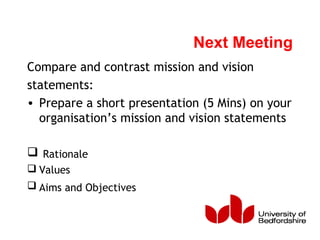
Next Meeting
Compare and contrast mission and vision
statements:
• Prepare a short presentation (5 Mins) on your
organisation’s mission and vision statements
 Rationale
 Values
 Aims and Objectives
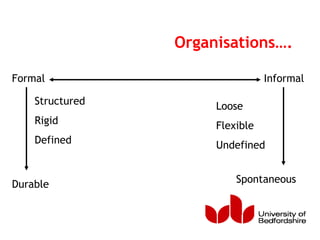
Organisations….
Formal Informal
Durable Spontaneous
Structured
Rigid
Defined
Loose
Flexible
Undefined
What is an Organisation?
“ Organisations are social arrangements for
the controlled performance of collective
goals.”
Huczynski & Buchanan: 1997:2
“ Organisation: a group of people brought
together for the purpose of achieving
certain objectives. As the basic unit of an
organisation is the role rather than the
person in it. The organisation is maintained
in existence, sometimes over long periods of
time, despite many changes of members”.
Statt:1991:02
A working definition...
“(1) a social entity that;
(2) has a purpose,
(3) has a boundary, so that that some
participants are considered outside, and (4)
patterns the activities of participants into
recognisable structure”
(Daft,1989, cited in Butler, 1991)
Task…
Draw your own organisation as a vehicle.
It could be anything vehicle you wish; Train,
Plane, Boat, Bus etc….
Consider the characteristics of your organisation,
how does that influence the design of your
vehicle?
Be prepared to defend your illustration…!
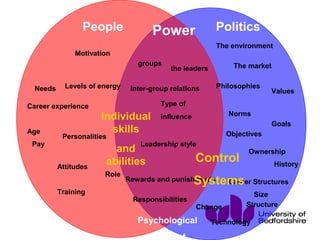
People
Motivation
Needs Levels of energy
Career experience
Age
Pay
Attitudes
Personalities
Training
Role
Individual
skills
and
abilities
Psychological
Contract
Power
groups
the leaders
Inter-group relations
Type of
influence
Leadership style
Rewards and punishments
Responsibilities
Politics
The environment
The market
Philosophies
Values
Norms
Goals
Objectives
Ownership
History
Career Structures
Size
StructureChange
Technology
Control
Systems
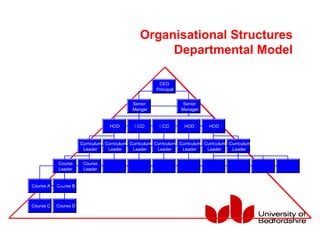
Organisational Structures
Departmental Model
Curriculum
Leader
CEO
Principal
Senior
Manger
Senior
Manager
HOD HOD HOD HODHOD
Curriculum
Leader
Curriculum
Leader
Curriculum
Leader
Curriculum
Leader
Curriculum
Leader
Curriculum
Leader
Course
Leader
Course
Leader
Course A
Course C
Course B
Course D
Greek Temple
[Role culture: Bureaucracy: Handy]
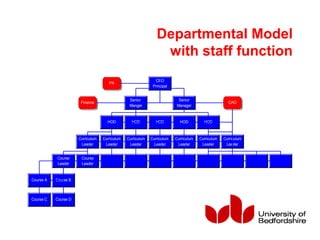
Departmental Model
with staff function
Curriculum
Leader
Finance
PA
CEO
Principal
Senior
Manger
Senior
Manager
HOD HOD HOD HODHOD
Curriculum
Leader
Curriculum
Leader
Curriculum
Leader
Curriculum
Leader
Curriculum
Leader
Curriculum
Leader
Course
Leader
Course
Leader
CAO
Course A
Course C
Course B
Course D
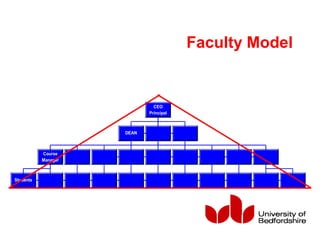
Faculty Model
CEO
Principal
DEAN
Course
Manager
Students
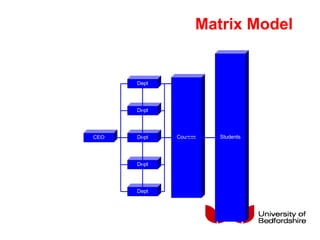
Matrix Model
CEO
Dept
Dept
Dept
Dept
Dept
StudentsCourses
Task Culture: Job/Project orientated
Matrix [Handy]
Power
&
Influence
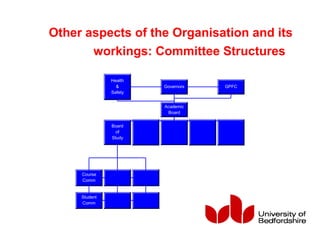
Other aspects of the Organisation and its
workings: Committee Structures
Governors
Academic
Board
GPFC
Board
of
Study
Health
&
Safety
Course
Comm
Student
Comm
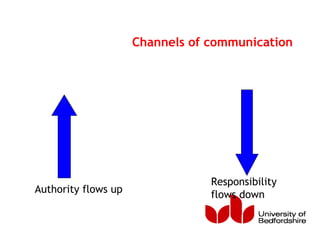
Channels of communication
Authority flows up
Responsibility
flows down
Communication
Official: Policy statements, strategic plans,
Memo, email, meetings, minutes of
meetings,
Unofficial: ‘Grapevine’, rumour, email,

Organisational structures 2010 session one

  • 1.
    Welcome to StrategicLeadership and Management Peterborough Hub Session One
  • 2.
    Organisational Rationale Teams Role Strategic Planning QualityAssurance Organisation and its Workings Organisational Structure Management Policy/Style Communication Strategies HRM Policy Organisational Culture Subjects Span of Control Dynamic Interaction Sub-Cultures Expectations Responsibilities Authority Contracts of Employment Organisational Support Guidance Staff Development CPD Aims Objectives Mission/Vision Priorities Marketing Funding Performance Indicators Systems Inspection Accountability Appraisal
  • 3.
    Next Meeting Compare andcontrast mission and vision statements: • Prepare a short presentation (5 Mins) on your organisation’s mission and vision statements  Rationale  Values  Aims and Objectives
  • 4.
  • 5.
    What is anOrganisation? “ Organisations are social arrangements for the controlled performance of collective goals.” Huczynski & Buchanan: 1997:2 “ Organisation: a group of people brought together for the purpose of achieving certain objectives. As the basic unit of an organisation is the role rather than the person in it. The organisation is maintained in existence, sometimes over long periods of time, despite many changes of members”. Statt:1991:02
  • 6.
    A working definition... “(1)a social entity that; (2) has a purpose, (3) has a boundary, so that that some participants are considered outside, and (4) patterns the activities of participants into recognisable structure” (Daft,1989, cited in Butler, 1991)
  • 7.
    Task… Draw your ownorganisation as a vehicle. It could be anything vehicle you wish; Train, Plane, Boat, Bus etc…. Consider the characteristics of your organisation, how does that influence the design of your vehicle? Be prepared to defend your illustration…!
  • 8.
    People Motivation Needs Levels ofenergy Career experience Age Pay Attitudes Personalities Training Role Individual skills and abilities Psychological Contract Power groups the leaders Inter-group relations Type of influence Leadership style Rewards and punishments Responsibilities Politics The environment The market Philosophies Values Norms Goals Objectives Ownership History Career Structures Size StructureChange Technology Control Systems
  • 9.
    Organisational Structures Departmental Model Curriculum Leader CEO Principal Senior Manger Senior Manager HODHOD HOD HODHOD Curriculum Leader Curriculum Leader Curriculum Leader Curriculum Leader Curriculum Leader Curriculum Leader Course Leader Course Leader Course A Course C Course B Course D
  • 10.
    Greek Temple [Role culture:Bureaucracy: Handy]
  • 11.
    Departmental Model with stafffunction Curriculum Leader Finance PA CEO Principal Senior Manger Senior Manager HOD HOD HOD HODHOD Curriculum Leader Curriculum Leader Curriculum Leader Curriculum Leader Curriculum Leader Curriculum Leader Course Leader Course Leader CAO Course A Course C Course B Course D
  • 12.
  • 14.
  • 15.
    Task Culture: Job/Projectorientated Matrix [Handy] Power & Influence
  • 16.
    Other aspects ofthe Organisation and its workings: Committee Structures Governors Academic Board GPFC Board of Study Health & Safety Course Comm Student Comm
  • 17.
    Channels of communication Authorityflows up Responsibility flows down
  • 18.
    Communication Official: Policy statements,strategic plans, Memo, email, meetings, minutes of meetings, Unofficial: ‘Grapevine’, rumour, email,