OBJECTIVES
• IN THIS MODULE, YOU WILL BE ABLE TO:
• DIFFERENTIATE THE VARIOUS MODELS OF COMMUNICATION (EN11/12OC-IA-3)
• SPECIFICALLY, YOU ARE EXPECTED TO:
• IDENTIFY THE THREE MODELS OF COMMUNICATION IN CONTEXT;
• DIFFERENTIATE THE MODELS OF COMMUNICATION BY ITS USE THROUGH VARIOUS
• ACTIVITIES;
• APPRECIATE THE IMPORTANCE OF COMMUNICATION
LINEAR COMMUNICATION MODEL
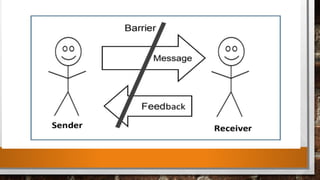
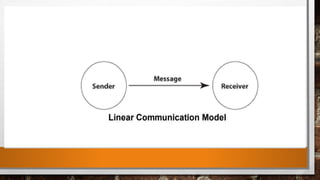
•COMMUNICATION IS CONSIDERED AS ONE-WAY PROCESS.
• THE MESSAGE SIGNAL IS ENCODED AND TRANSMITTED THROUGH
CHANNEL IN
•PRESENCE OF NOISE
• THE SENDER IS MORE PROMINENT IN LINEAR MODEL OF COMMUNICATION
• IT IS APPLIED IN MASS COMMUNICATION LIKE TELEVISION, RADIO, ETC.
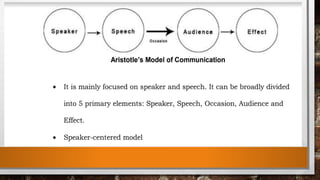
1. ARISTOTLE’S MODEL OF COMMUNICATION
•CONSIDERED AS THE FIRST MODEL OF COMMUNICATION AND
WAS PROPOSED
•BEFORE 300 B.C.
• MOST WIDELY ACCEPTED AMONG ALL COMMUNICATION
MODELS.
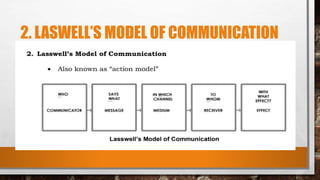
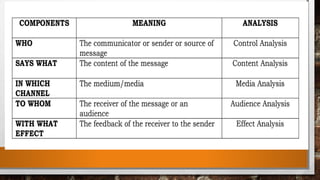
2. LASWELL’S MODEL OF COMMUNICATION
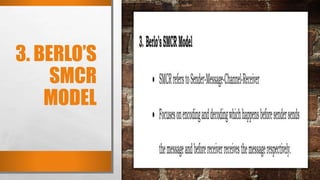
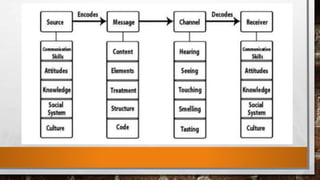
3. BERLO’S
SMCR
MODEL
II. TRANSACTIONAL MODEL OF
COMMUNICATION
•IS THE EXCHANGE OF MESSAGES BETWEEN SENDER AND RECEIVER WHERE EACH
•TAKE TURNS TO SEND OR RECEIVE MESSAGES.
• BOTH SENDER AND RECEIVER ARE KNOWN AS COMMUNICATORS.
• IT IS MOSTLY USED FOR INTERPERSONAL COMMUNICATION AND IS ALSO
CALLED
•CIRCULAR MODEL OF COMMUNICATION.
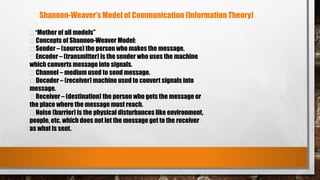
“Mother of all models”
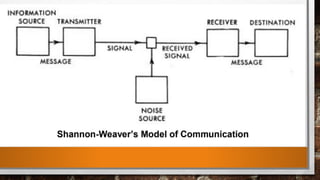
Concepts of Shannon-Weaver Model:
Sender – (source) the person who makes the message.
Encoder – (transmitter) is the sender who uses the machine
which converts message into signals.
Channel – medium used to send message.
Decoder – (receiver) machine used to convert signals into
message.
Receiver – (destination) the person who gets the message or
the place where the message must reach.
Noise (barrier) is the physical disturbances like environment,
people, etc. which does not let the message get to the receiver
as what is sent.
Shannon-Weaver’s Model of Communication (Information Theory)
INTERACTIVE MODEL OF COMMUNICATION
• ALSO KNOWN AS “CONVERGENCE MODEL”
• DEALS WITH EXCHANGE OF IDEAS AND MESSAGES
TAKING PLACE BOTH WAYS
•FROM SENDER TO RECEIVER AND VICE-VERSA.
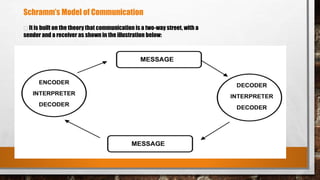
Schramm’s Model of Communication
It is built on the theory that communication is a two-way street, with a
sender and a receiver as shown in the illustration below:
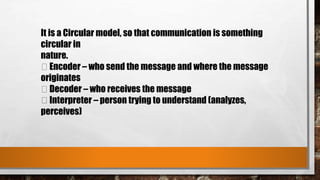
It is a Circular model, so that communication is something
circular in
nature.
Encoder – who send the message and where the message
originates
Decoder – who receives the message
Interpreter – person trying to understand (analyzes,
perceives)
DO THE FOLLOWING :
P 18
ACTIVITY 3: TRUE OF
FALSE
P 19-20
ACTIVITY 4: DRAW ME
A MODEL
ASSESSMENT PP 23-25
ACTIVITY 8 ARRANGE
ME
ACTIVITY 9 COMPARE AND
CONTRAST

ORAL-COMMUNICATION-QUARTER-1-WEEK-2.pptx

  • 2.
    OBJECTIVES • IN THISMODULE, YOU WILL BE ABLE TO: • DIFFERENTIATE THE VARIOUS MODELS OF COMMUNICATION (EN11/12OC-IA-3) • SPECIFICALLY, YOU ARE EXPECTED TO: • IDENTIFY THE THREE MODELS OF COMMUNICATION IN CONTEXT; • DIFFERENTIATE THE MODELS OF COMMUNICATION BY ITS USE THROUGH VARIOUS • ACTIVITIES; • APPRECIATE THE IMPORTANCE OF COMMUNICATION
  • 7.
    LINEAR COMMUNICATION MODEL •COMMUNICATIONIS CONSIDERED AS ONE-WAY PROCESS. • THE MESSAGE SIGNAL IS ENCODED AND TRANSMITTED THROUGH CHANNEL IN •PRESENCE OF NOISE • THE SENDER IS MORE PROMINENT IN LINEAR MODEL OF COMMUNICATION • IT IS APPLIED IN MASS COMMUNICATION LIKE TELEVISION, RADIO, ETC.
  • 10.
    1. ARISTOTLE’S MODELOF COMMUNICATION •CONSIDERED AS THE FIRST MODEL OF COMMUNICATION AND WAS PROPOSED •BEFORE 300 B.C. • MOST WIDELY ACCEPTED AMONG ALL COMMUNICATION MODELS.
  • 12.
    2. LASWELL’S MODELOF COMMUNICATION
  • 14.
  • 17.
    II. TRANSACTIONAL MODELOF COMMUNICATION •IS THE EXCHANGE OF MESSAGES BETWEEN SENDER AND RECEIVER WHERE EACH •TAKE TURNS TO SEND OR RECEIVE MESSAGES. • BOTH SENDER AND RECEIVER ARE KNOWN AS COMMUNICATORS. • IT IS MOSTLY USED FOR INTERPERSONAL COMMUNICATION AND IS ALSO CALLED •CIRCULAR MODEL OF COMMUNICATION.
  • 18.
    “Mother of allmodels” Concepts of Shannon-Weaver Model: Sender – (source) the person who makes the message. Encoder – (transmitter) is the sender who uses the machine which converts message into signals. Channel – medium used to send message. Decoder – (receiver) machine used to convert signals into message. Receiver – (destination) the person who gets the message or the place where the message must reach. Noise (barrier) is the physical disturbances like environment, people, etc. which does not let the message get to the receiver as what is sent. Shannon-Weaver’s Model of Communication (Information Theory)
  • 21.
    INTERACTIVE MODEL OFCOMMUNICATION • ALSO KNOWN AS “CONVERGENCE MODEL” • DEALS WITH EXCHANGE OF IDEAS AND MESSAGES TAKING PLACE BOTH WAYS •FROM SENDER TO RECEIVER AND VICE-VERSA.
  • 22.
    Schramm’s Model ofCommunication It is built on the theory that communication is a two-way street, with a sender and a receiver as shown in the illustration below:
  • 23.
    It is aCircular model, so that communication is something circular in nature. Encoder – who send the message and where the message originates Decoder – who receives the message Interpreter – person trying to understand (analyzes, perceives)
  • 24.
    DO THE FOLLOWING: P 18 ACTIVITY 3: TRUE OF FALSE P 19-20 ACTIVITY 4: DRAW ME A MODEL ASSESSMENT PP 23-25 ACTIVITY 8 ARRANGE ME ACTIVITY 9 COMPARE AND CONTRAST