Oral
Chemotherapy
PRESENTED BY: SANDEEPKUMAR BALABBIGARI
CYCLE 7: QUALITAS PHARMACY SERVICES
FEBRUARY 1 ST, 2016
Objectives
•Review the etiology and epidemiology of cancer
•Overview of underlying principles of chemotherapy
•Understand the pharmacology of the common oral
chemotherapy agents dispensed at Qualitas
Pharmacy Services
Disease State Overview
Background
•Oral chemotherapy agents primarily target
specific molecular components, are typically
cytostatic, and are involved in long-term
therapy
•Many new chemotherapy agents are exclusively
available as oral formulations
Epidemiology
•In 2015, there were 1.7 million cancer diagnoses
and 600,000 patients cancer-related deaths
•Approximately 39.6 percent of men and women
will be diagnosed with cancer
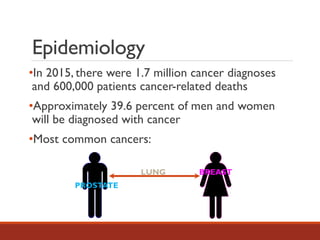
•Most common cancers:
PROSTATE
BREASTLUNG
Etiology
•The exact cause of cancer is unknown
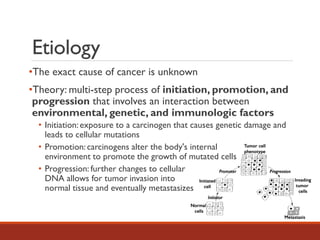
•Theory: multi-step process of initiation, promotion, and
progression that involves an interaction between
environmental, genetic, and immunologic factors
• Initiation: exposure to a carcinogen that causes genetic damage and
leads to cellular mutations
• Promotion: carcinogens alter the body's internal
environment to promote the growth of mutated cells
• Progression: further changes to cellular
DNA allows for tumor invasion into
normal tissue and eventually metastasizes
Diagnosis
•Diagnosis varies by the specific type of cancer that
is suspected
•Possible methods to diagnosis cancer includes:
• History and Physical Exam
• Imaging
• Biochemical markers
• Tissue biopsy
Signs & Symptoms
•Initially, many cancers present asymptomatically or
with non-specific symptoms
•As the cancer progresses, symptoms may reflect
the specific tissues/organs the cancer is affecting
•Many organs and areas of the body may become
affected as the cancer begins to metastasize into
surrounding areas
Treatment
•Ideal chemotherapeutic agents are tumor-cell
specific
•Chemotherapy agents can affect tumor cells
through a variety of mechanisms: alter the cell
cycle, inhibit enzymes, block growth factors and
receptors, and modify biologic responses
•Certain chemotherapy agents are preferred over
others due to the presence of resistance or the
predominant pathways that are involved in the
progression of specific cancers
Oral Agents
Capecitabine (Xeloda®)
•Indication: Local or metastatic colon cancer;
metastatic breast cancer
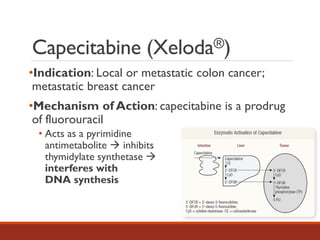
•Mechanism of Action: capecitabine is a prodrug
of fluorouracil
• Acts as a pyrimidine
antimetabolite  inhibits
thymidylate synthetase 
interferes with
DNA synthesis
Capecitabine (Xeloda®)
•Adverse Drug Reactions: overall, oral
capecitabine is less toxic than the IV form, 5-FU
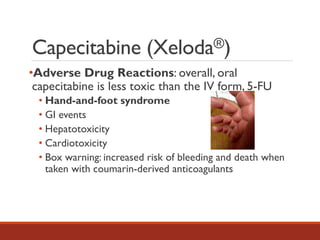
• Hand-and-foot syndrome
• GI events
• Hepatotoxicity
• Cardiotoxicity
• Box warning: increased risk of bleeding and death when
taken with coumarin-derived anticoagulants
Capecitabine (Xeloda®)
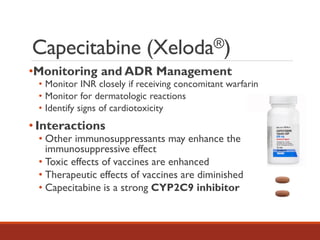
•Monitoring and ADR Management
• Monitor INR closely if receiving concomitant warfarin
• Monitor for dermatologic reactions
• Identify signs of cardiotoxicity
• Interactions
• Other immunosuppressants may enhance the
immunosuppressive effect
• Toxic effects of vaccines are enhanced
• Therapeutic effects of vaccines are diminished
• Capecitabine is a strong CYP2C9 inhibitor
Everolimus (Afinitor®)
•Indication
• Hormone positive, HER2-negative breast cancer in
postmenopausal women in combination with exemestane
• Pancreatic neuroendocrine tumors
• Renal angiomyolipoma and Renal cell carcinoma
• Subependymal giant cell astrocytoma
• Mechanism of Action: mTOR Inhibitor
• Inhibits the mammalian Target Of Rapamycin (mTOR) →
prevents protein synthesis and cell proliferation
• Reduces angiogenesis by inhibiting vascular endothelial growth
factor (VEGF) and hypoxia-inducible factor (HIF-1) expression
Everolimus (Afinitor®)
•Adverse Drug Reactions
• BoxWarning: Immunosuppression increases
susceptibility to infection and risk of malignancies
• Hyperglycemia, hyperlipidemia, and hypertriglyceridemia
• Nephrotoxicity
•Monitoring and ADR Management
• CBC with differential
• Monitor hepatic and renal function
• Fasting serum glucose and lipid profile
• Monitor for signs and symptoms of infection or malignancy
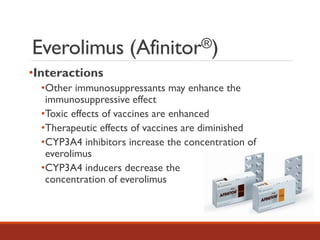
•Interactions
•Other immunosuppressants may enhance the
immunosuppressive effect
•Toxic effects of vaccines are enhanced
•Therapeutic effects of vaccines are diminished
•CYP3A4 inhibitors increase the concentration of
everolimus
•CYP3A4 inducers decrease the
concentration of everolimus
Everolimus (Afinitor®)
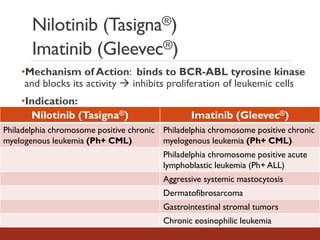
Nilotinib (Tasigna®)
Imatinib (Gleevec®)
•Mechanism of Action: binds to BCR-ABL tyrosine kinase
and blocks its activity  inhibits proliferation of leukemic cells
•Indication:
Nilotinib (Tasigna®) Imatinib (Gleevec®)
Philadelphia chromosome positive chronic
myelogenous leukemia (Ph+ CML)
Philadelphia chromosome positive chronic
myelogenous leukemia (Ph+ CML)
Philadelphia chromosome positive acute
lymphoblastic leukemia (Ph+ ALL)
Aggressive systemic mastocytosis
Dermatofibrosarcoma
Gastrointestinal stromal tumors
Chronic eosinophilic leukemia
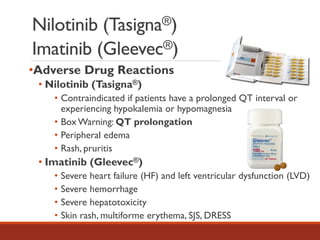
Nilotinib (Tasigna®)
Imatinib (Gleevec®)
•Adverse Drug Reactions
• Nilotinib (Tasigna®)
• Contraindicated if patients have a prolonged QT interval or
experiencing hypokalemia or hypomagnesia
• Box Warning: QT prolongation
• Peripheral edema
• Rash, pruritis
• Imatinib (Gleevec®)
• Severe heart failure (HF) and left ventricular dysfunction (LVD)
• Severe hemorrhage
• Severe hepatotoxicity
• Skin rash, multiforme erythema, SJS, DRESS
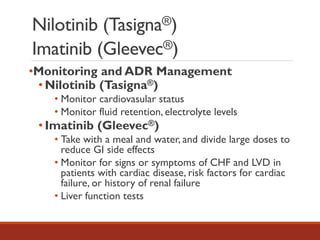
Nilotinib (Tasigna®)
Imatinib (Gleevec®)
•Monitoring and ADR Management
• Nilotinib (Tasigna®)
• Monitor cardiovasular status
• Monitor fluid retention, electrolyte levels
• Imatinib (Gleevec®)
• Take with a meal and water, and divide large doses to
reduce GI side effects
• Monitor for signs or symptoms of CHF and LVD in
patients with cardiac disease, risk factors for cardiac
failure, or history of renal failure
• Liver function tests
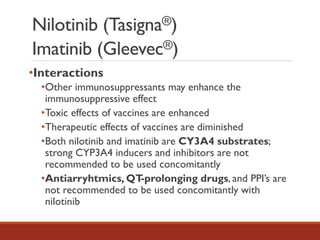
Nilotinib (Tasigna®)
Imatinib (Gleevec®)
•Interactions
•Other immunosuppressants may enhance the
immunosuppressive effect
•Toxic effects of vaccines are enhanced
•Therapeutic effects of vaccines are diminished
•Both nilotinib and imatinib are CY3A4 substrates;
strong CYP3A4 inducers and inhibitors are not
recommended to be used concomitantly
•Antiarryhtmics, QT-prolonging drugs, and PPI’s are
not recommended to be used concomitantly with
nilotinib
Summary
•The development of cancer involves a complex
interaction between environmental, genetic, and
immunologic factors leading to the initiation,
promotion, and progression tumor cells.
•Many new and old chemotherapy agents are becoming
available as oral formulations.
•Currently approved oral chemotherapy agents can be
used to treat a wide range of cancers through a
variety of mechanisms. But they also pose many of the
same clinical risks as their parenteral counterparts.
References
1. "U.S. Food and Drug Administration." Hematology/Oncology (Cancer) Approvals & Safety Notifications.Web. 19
Jan. 2016.
2.Weingart, S., P. Bach, and S. Johnson. "NCCNTask Force Report: Oral Chemotherapy." Journal of the National
Comprehensive Cancer Network 6.3 (2008):Web. 19 Jan. 2016.
3. Colomer, R., E.Alba, and A. Gonzalez-Martin. "Treatment of Cancer with Oral Drugs:A Position Statement by
the Spanish Society of Medical Oncology (SEOM)." Annals of Oncology 21.2 (2010): 196-98.Web.
4. "Cancer Statistics." National Cancer Institute.Web. 19 Jan. 2016.
5. "Signs and Symptoms of Cancer." American Cancer Society. N.p., 11 Aug. 2014.Web. 19 Jan. 2016.
6. Lexi-Drugs. Lexicomp. Wolters Kluwer Health, Inc. Hudson, OH. Available at: http://online.lexi.com.
19 Jan. 2016.
7. Micromedex 2.0. Truven Health Analytics, Inc. GreenwoodVillage, CO. Available at:
http://www.micromedexsolutions.com. 19 Jan. 2016.
8. Pereiras, Maribel. "Pharmacology of Antineoplastic Agents“” Rutgers University. Oct. 2015. Lecture.
9. Pereiras, Maribel. "Principles of Chemotherapy and Carcinogenesis”. Rutgers University. Oct. 2015. Lecture.
10. Peach, D. "Xeloda 4.8.7." Donna Peach. N.p., 05 Aug. 2012.Web. 19 Jan. 2016
ThankYou!
Questions?
QuizTime!

Oral Chemotherapy

  • 1.
    Oral Chemotherapy PRESENTED BY: SANDEEPKUMARBALABBIGARI CYCLE 7: QUALITAS PHARMACY SERVICES FEBRUARY 1 ST, 2016
  • 2.
    Objectives •Review the etiologyand epidemiology of cancer •Overview of underlying principles of chemotherapy •Understand the pharmacology of the common oral chemotherapy agents dispensed at Qualitas Pharmacy Services
  • 3.
  • 4.
    Background •Oral chemotherapy agentsprimarily target specific molecular components, are typically cytostatic, and are involved in long-term therapy •Many new chemotherapy agents are exclusively available as oral formulations
  • 5.
    Epidemiology •In 2015, therewere 1.7 million cancer diagnoses and 600,000 patients cancer-related deaths •Approximately 39.6 percent of men and women will be diagnosed with cancer •Most common cancers: PROSTATE BREASTLUNG
  • 6.
    Etiology •The exact causeof cancer is unknown •Theory: multi-step process of initiation, promotion, and progression that involves an interaction between environmental, genetic, and immunologic factors • Initiation: exposure to a carcinogen that causes genetic damage and leads to cellular mutations • Promotion: carcinogens alter the body's internal environment to promote the growth of mutated cells • Progression: further changes to cellular DNA allows for tumor invasion into normal tissue and eventually metastasizes
  • 7.
    Diagnosis •Diagnosis varies bythe specific type of cancer that is suspected •Possible methods to diagnosis cancer includes: • History and Physical Exam • Imaging • Biochemical markers • Tissue biopsy
  • 8.
    Signs & Symptoms •Initially,many cancers present asymptomatically or with non-specific symptoms •As the cancer progresses, symptoms may reflect the specific tissues/organs the cancer is affecting •Many organs and areas of the body may become affected as the cancer begins to metastasize into surrounding areas
  • 9.
    Treatment •Ideal chemotherapeutic agentsare tumor-cell specific •Chemotherapy agents can affect tumor cells through a variety of mechanisms: alter the cell cycle, inhibit enzymes, block growth factors and receptors, and modify biologic responses •Certain chemotherapy agents are preferred over others due to the presence of resistance or the predominant pathways that are involved in the progression of specific cancers
  • 10.
  • 11.
    Capecitabine (Xeloda®) •Indication: Localor metastatic colon cancer; metastatic breast cancer •Mechanism of Action: capecitabine is a prodrug of fluorouracil • Acts as a pyrimidine antimetabolite  inhibits thymidylate synthetase  interferes with DNA synthesis
  • 12.
    Capecitabine (Xeloda®) •Adverse DrugReactions: overall, oral capecitabine is less toxic than the IV form, 5-FU • Hand-and-foot syndrome • GI events • Hepatotoxicity • Cardiotoxicity • Box warning: increased risk of bleeding and death when taken with coumarin-derived anticoagulants
  • 13.
    Capecitabine (Xeloda®) •Monitoring andADR Management • Monitor INR closely if receiving concomitant warfarin • Monitor for dermatologic reactions • Identify signs of cardiotoxicity • Interactions • Other immunosuppressants may enhance the immunosuppressive effect • Toxic effects of vaccines are enhanced • Therapeutic effects of vaccines are diminished • Capecitabine is a strong CYP2C9 inhibitor
  • 14.
    Everolimus (Afinitor®) •Indication • Hormonepositive, HER2-negative breast cancer in postmenopausal women in combination with exemestane • Pancreatic neuroendocrine tumors • Renal angiomyolipoma and Renal cell carcinoma • Subependymal giant cell astrocytoma • Mechanism of Action: mTOR Inhibitor • Inhibits the mammalian Target Of Rapamycin (mTOR) → prevents protein synthesis and cell proliferation • Reduces angiogenesis by inhibiting vascular endothelial growth factor (VEGF) and hypoxia-inducible factor (HIF-1) expression
  • 15.
    Everolimus (Afinitor®) •Adverse DrugReactions • BoxWarning: Immunosuppression increases susceptibility to infection and risk of malignancies • Hyperglycemia, hyperlipidemia, and hypertriglyceridemia • Nephrotoxicity •Monitoring and ADR Management • CBC with differential • Monitor hepatic and renal function • Fasting serum glucose and lipid profile • Monitor for signs and symptoms of infection or malignancy
  • 16.
    •Interactions •Other immunosuppressants mayenhance the immunosuppressive effect •Toxic effects of vaccines are enhanced •Therapeutic effects of vaccines are diminished •CYP3A4 inhibitors increase the concentration of everolimus •CYP3A4 inducers decrease the concentration of everolimus Everolimus (Afinitor®)
  • 17.
    Nilotinib (Tasigna®) Imatinib (Gleevec®) •Mechanismof Action: binds to BCR-ABL tyrosine kinase and blocks its activity  inhibits proliferation of leukemic cells •Indication: Nilotinib (Tasigna®) Imatinib (Gleevec®) Philadelphia chromosome positive chronic myelogenous leukemia (Ph+ CML) Philadelphia chromosome positive chronic myelogenous leukemia (Ph+ CML) Philadelphia chromosome positive acute lymphoblastic leukemia (Ph+ ALL) Aggressive systemic mastocytosis Dermatofibrosarcoma Gastrointestinal stromal tumors Chronic eosinophilic leukemia
  • 18.
    Nilotinib (Tasigna®) Imatinib (Gleevec®) •AdverseDrug Reactions • Nilotinib (Tasigna®) • Contraindicated if patients have a prolonged QT interval or experiencing hypokalemia or hypomagnesia • Box Warning: QT prolongation • Peripheral edema • Rash, pruritis • Imatinib (Gleevec®) • Severe heart failure (HF) and left ventricular dysfunction (LVD) • Severe hemorrhage • Severe hepatotoxicity • Skin rash, multiforme erythema, SJS, DRESS
  • 19.
    Nilotinib (Tasigna®) Imatinib (Gleevec®) •Monitoringand ADR Management • Nilotinib (Tasigna®) • Monitor cardiovasular status • Monitor fluid retention, electrolyte levels • Imatinib (Gleevec®) • Take with a meal and water, and divide large doses to reduce GI side effects • Monitor for signs or symptoms of CHF and LVD in patients with cardiac disease, risk factors for cardiac failure, or history of renal failure • Liver function tests
  • 20.
    Nilotinib (Tasigna®) Imatinib (Gleevec®) •Interactions •Otherimmunosuppressants may enhance the immunosuppressive effect •Toxic effects of vaccines are enhanced •Therapeutic effects of vaccines are diminished •Both nilotinib and imatinib are CY3A4 substrates; strong CYP3A4 inducers and inhibitors are not recommended to be used concomitantly •Antiarryhtmics, QT-prolonging drugs, and PPI’s are not recommended to be used concomitantly with nilotinib
  • 21.
    Summary •The development ofcancer involves a complex interaction between environmental, genetic, and immunologic factors leading to the initiation, promotion, and progression tumor cells. •Many new and old chemotherapy agents are becoming available as oral formulations. •Currently approved oral chemotherapy agents can be used to treat a wide range of cancers through a variety of mechanisms. But they also pose many of the same clinical risks as their parenteral counterparts.
  • 22.
    References 1. "U.S. Foodand Drug Administration." Hematology/Oncology (Cancer) Approvals & Safety Notifications.Web. 19 Jan. 2016. 2.Weingart, S., P. Bach, and S. Johnson. "NCCNTask Force Report: Oral Chemotherapy." Journal of the National Comprehensive Cancer Network 6.3 (2008):Web. 19 Jan. 2016. 3. Colomer, R., E.Alba, and A. Gonzalez-Martin. "Treatment of Cancer with Oral Drugs:A Position Statement by the Spanish Society of Medical Oncology (SEOM)." Annals of Oncology 21.2 (2010): 196-98.Web. 4. "Cancer Statistics." National Cancer Institute.Web. 19 Jan. 2016. 5. "Signs and Symptoms of Cancer." American Cancer Society. N.p., 11 Aug. 2014.Web. 19 Jan. 2016. 6. Lexi-Drugs. Lexicomp. Wolters Kluwer Health, Inc. Hudson, OH. Available at: http://online.lexi.com. 19 Jan. 2016. 7. Micromedex 2.0. Truven Health Analytics, Inc. GreenwoodVillage, CO. Available at: http://www.micromedexsolutions.com. 19 Jan. 2016. 8. Pereiras, Maribel. "Pharmacology of Antineoplastic Agents“” Rutgers University. Oct. 2015. Lecture. 9. Pereiras, Maribel. "Principles of Chemotherapy and Carcinogenesis”. Rutgers University. Oct. 2015. Lecture. 10. Peach, D. "Xeloda 4.8.7." Donna Peach. N.p., 05 Aug. 2012.Web. 19 Jan. 2016
  • 23.
  • 24.