Operating Systems
Presentation by Sheikh Iyad
Bachelors in Computer Science (1st
Semester)
Submitted to: Mrs. Shafiya Ma’am
an introduction and overview on
the Backbone of Modern
Computing
Introduction to Operating
System
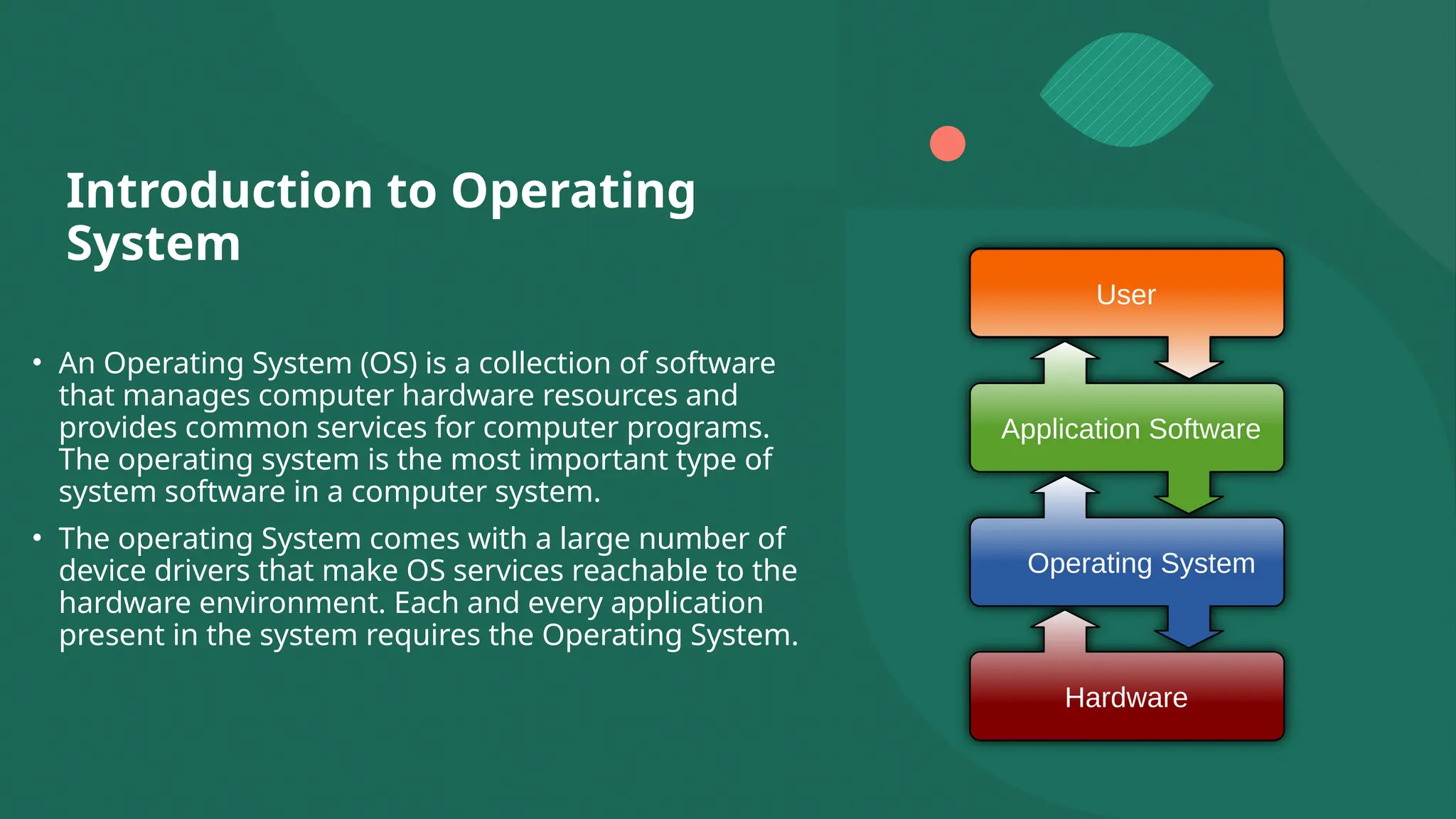
• An Operating System (OS) is a collection of software
that manages computer hardware resources and
provides common services for computer programs.
The operating system is the most important type of
system software in a computer system.
• The operating System comes with a large number of
device drivers that make OS services reachable to the
hardware environment. Each and every application
present in the system requires the Operating System.
Functions of an Operating
System
The main functions of an Operating System are as follows:
• Resource Management
• Process Management
• Memory Management
• File Management
• Device Management
• User Interface
Evolutions of
Operating Systems
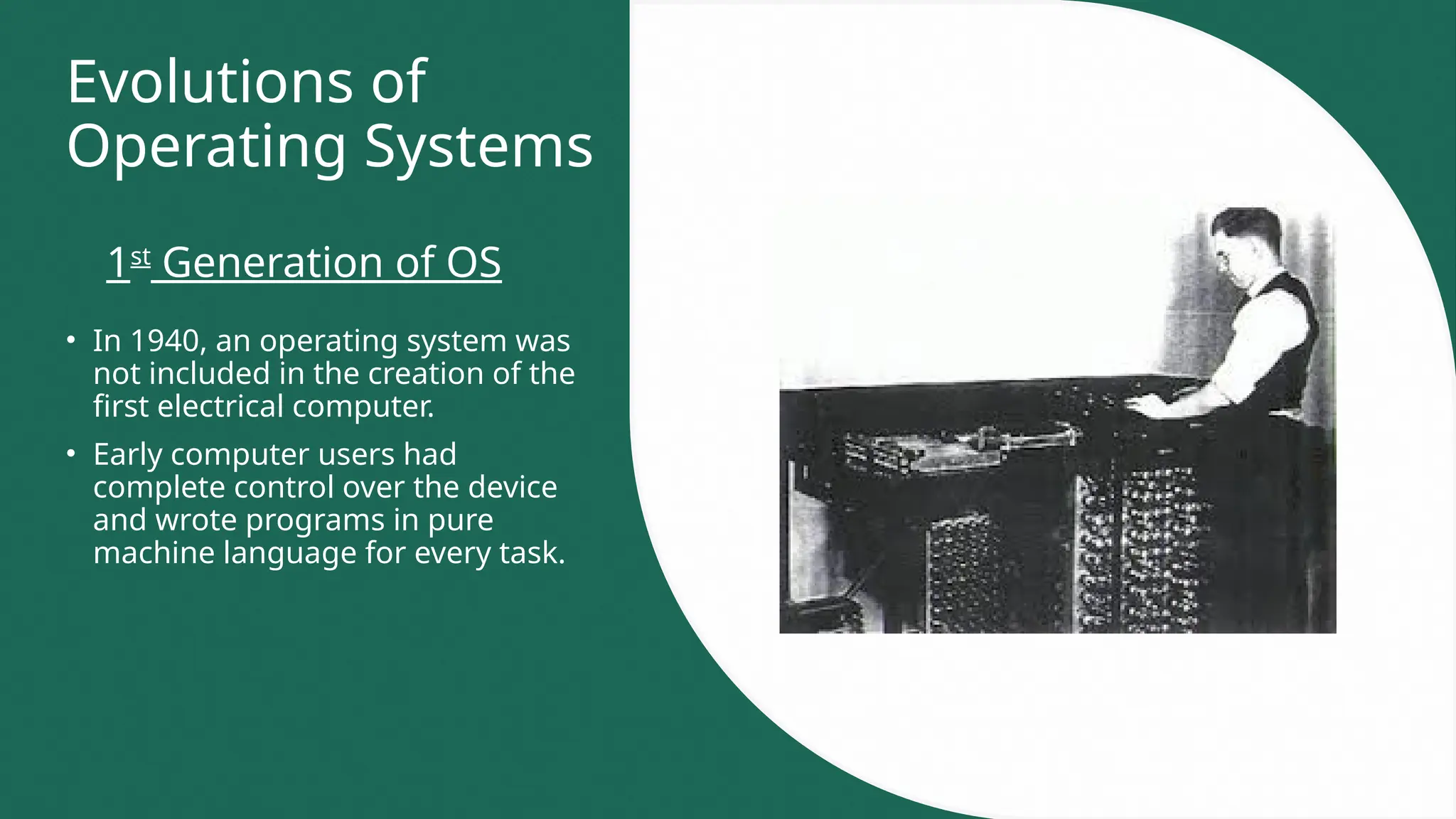
• In 1940, an operating system was
not included in the creation of the
first electrical computer.
• Early computer users had
complete control over the device
and wrote programs in pure
machine language for every task.
1st
Generation of OS
Evolutions of
Operating Systems
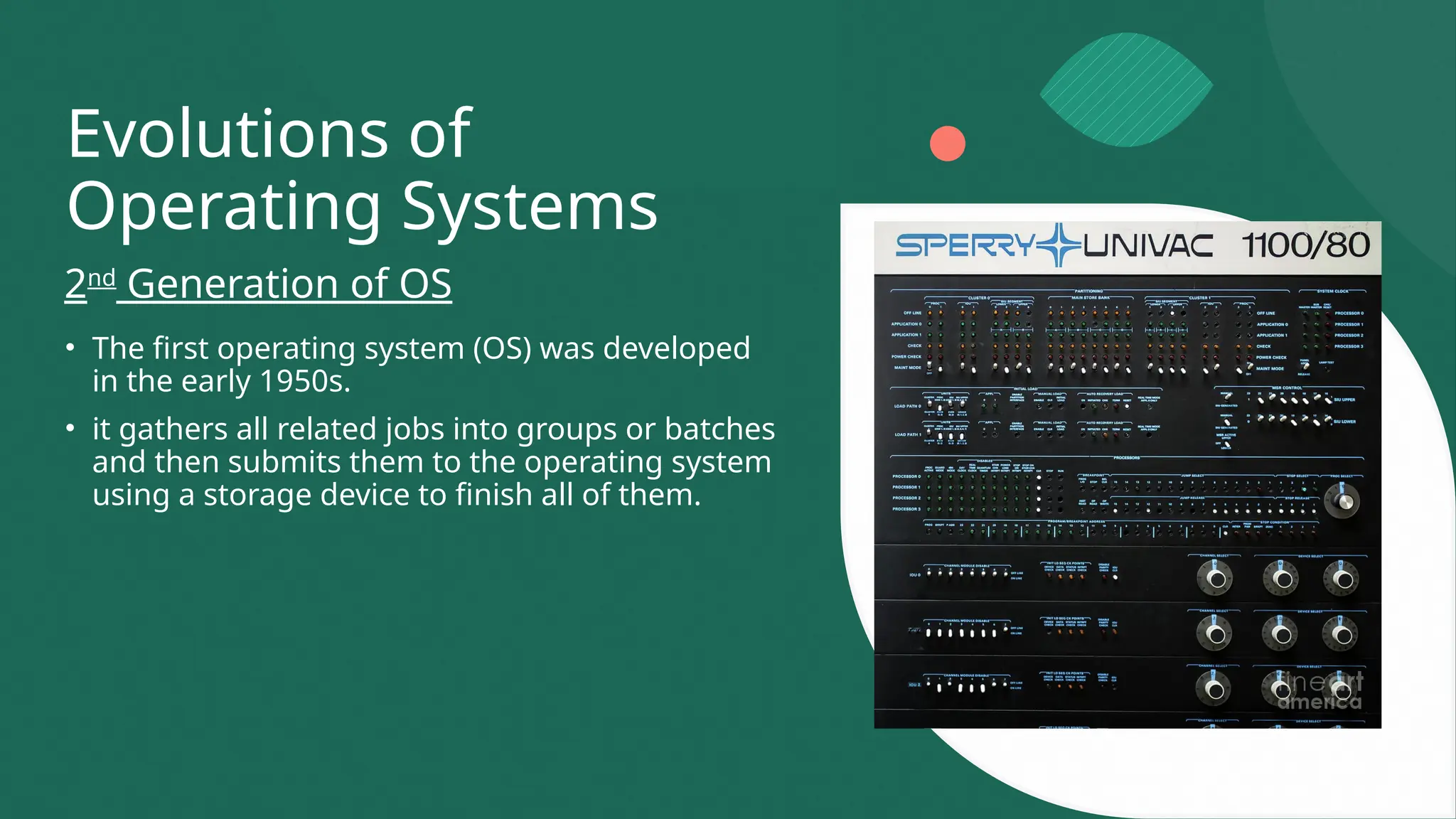
• The first operating system (OS) was developed
in the early 1950s.
• it gathers all related jobs into groups or batches
and then submits them to the operating system
using a storage device to finish all of them.
2nd
Generation of OS
Evolutions of
Operating Systems
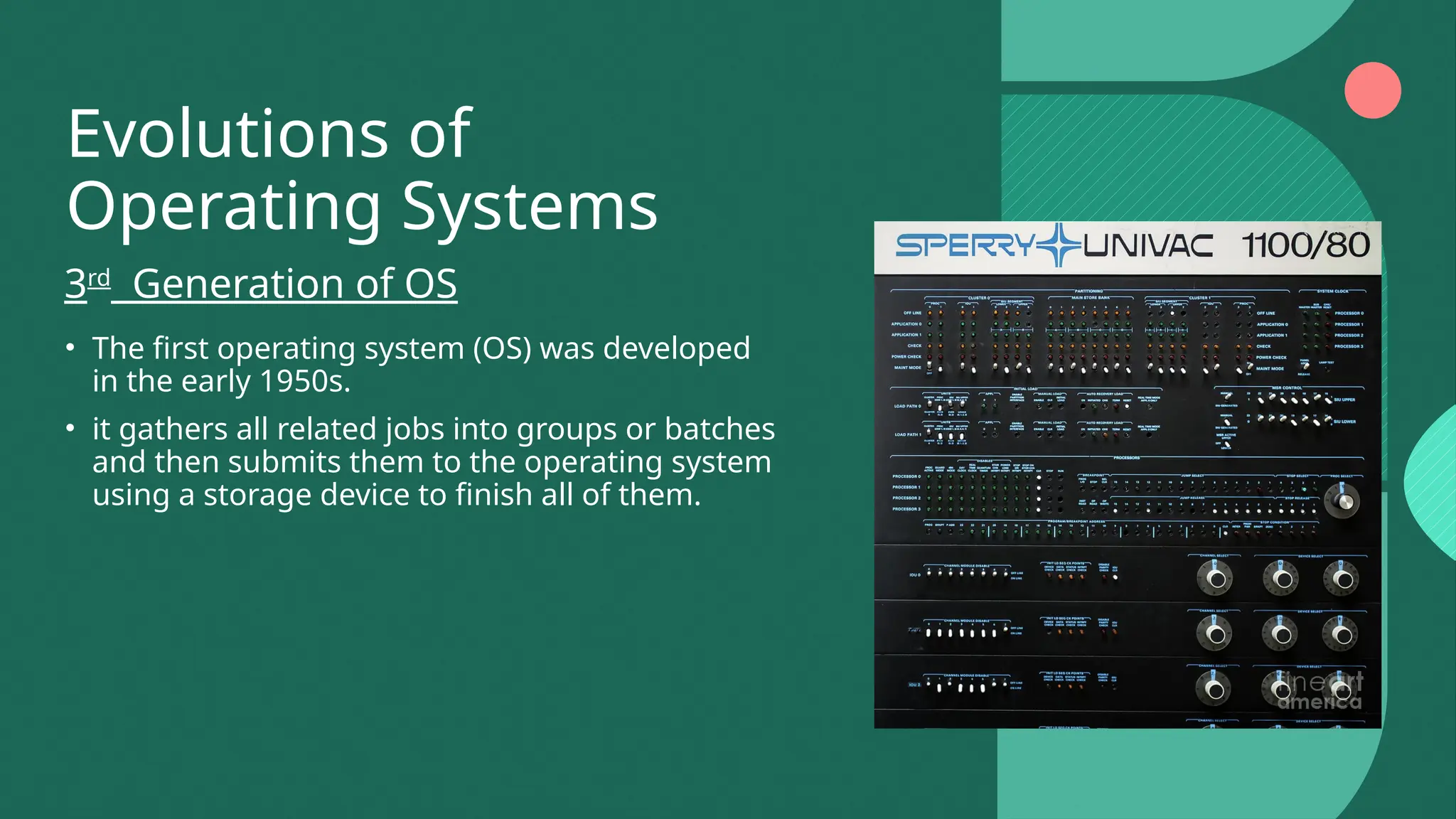
• The first operating system (OS) was developed
in the early 1950s.
• it gathers all related jobs into groups or batches
and then submits them to the operating system
using a storage device to finish all of them.
3rd
Generation of OS
Types of
Operating System
Some of the most commonly used
types of OS are listed below:
• Single-User Operating Systems
• Time-sharing Operating System
• Distributed Operating System
• Embedded Operating Systems
• Real-time Operating System
Operating System Architecture
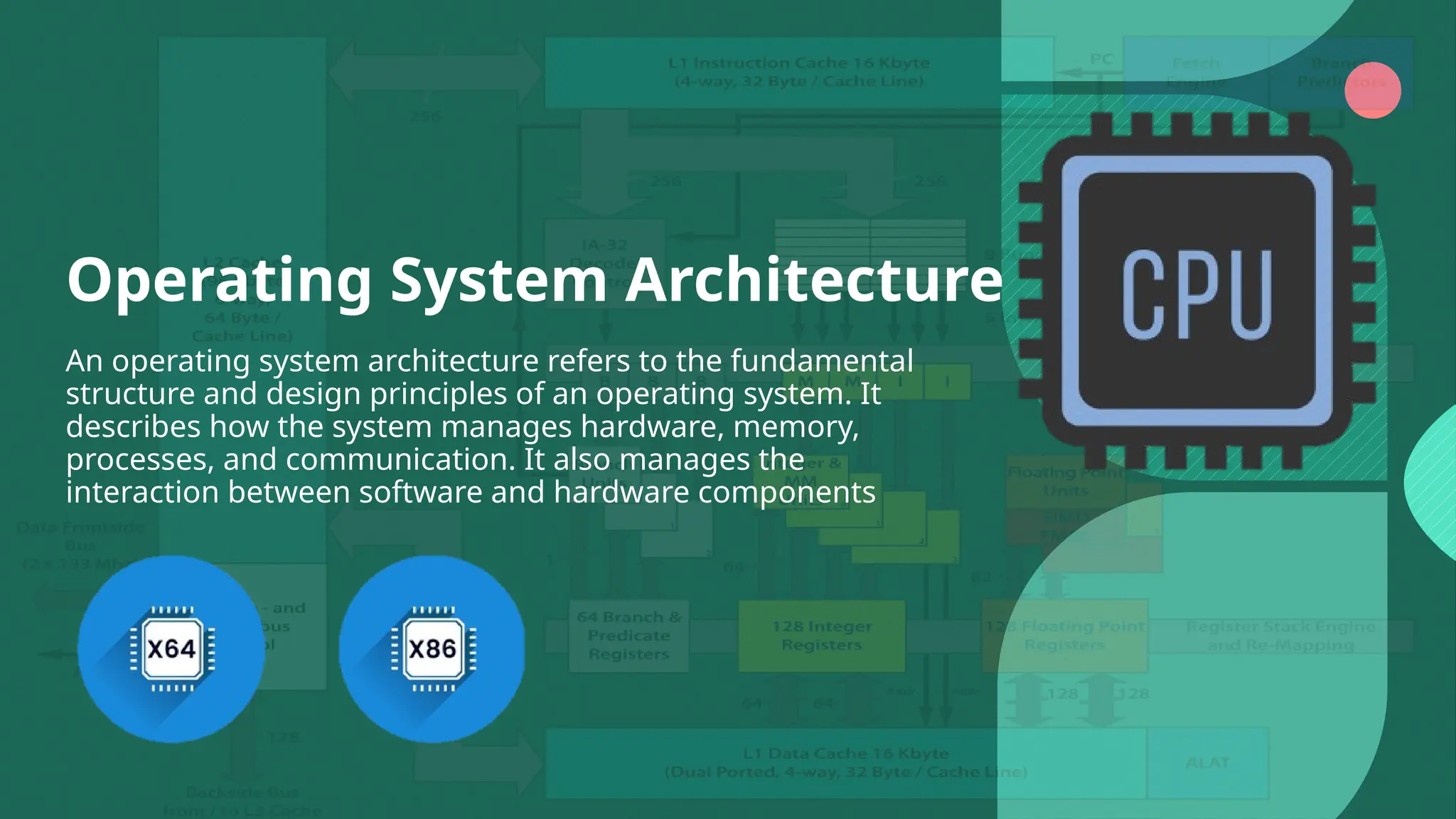
An operating system architecture refers to the fundamental
structure and design principles of an operating system. It
describes how the system manages hardware, memory,
processes, and communication. It also manages the
interaction between software and hardware components
Conclusion and Future Trends
As technology evolves, operating systems continue to advance,
incorporating innovations like virtualization, cloud computing, and
AI integration. These advancements drive efficiency, scalability, and
enhanced user experiences, shaping the future of computing.
Staying ahead in understanding these trends is essential for
leveraging the full potential of modern operating systems.
Operating Systems Bachelors in CompScience

Operating Systems Bachelors in CompScience

  • 1.
    Operating Systems Presentation bySheikh Iyad Bachelors in Computer Science (1st Semester) Submitted to: Mrs. Shafiya Ma’am an introduction and overview on the Backbone of Modern Computing
  • 2.
    Introduction to Operating System •An Operating System (OS) is a collection of software that manages computer hardware resources and provides common services for computer programs. The operating system is the most important type of system software in a computer system. • The operating System comes with a large number of device drivers that make OS services reachable to the hardware environment. Each and every application present in the system requires the Operating System.
  • 3.
    Functions of anOperating System The main functions of an Operating System are as follows: • Resource Management • Process Management • Memory Management • File Management • Device Management • User Interface
  • 4.
    Evolutions of Operating Systems •In 1940, an operating system was not included in the creation of the first electrical computer. • Early computer users had complete control over the device and wrote programs in pure machine language for every task. 1st Generation of OS
  • 5.
    Evolutions of Operating Systems •The first operating system (OS) was developed in the early 1950s. • it gathers all related jobs into groups or batches and then submits them to the operating system using a storage device to finish all of them. 2nd Generation of OS
  • 6.
    Evolutions of Operating Systems •The first operating system (OS) was developed in the early 1950s. • it gathers all related jobs into groups or batches and then submits them to the operating system using a storage device to finish all of them. 3rd Generation of OS
  • 7.
    Types of Operating System Someof the most commonly used types of OS are listed below: • Single-User Operating Systems • Time-sharing Operating System • Distributed Operating System • Embedded Operating Systems • Real-time Operating System
  • 8.
    Operating System Architecture Anoperating system architecture refers to the fundamental structure and design principles of an operating system. It describes how the system manages hardware, memory, processes, and communication. It also manages the interaction between software and hardware components
  • 9.
    Conclusion and FutureTrends As technology evolves, operating systems continue to advance, incorporating innovations like virtualization, cloud computing, and AI integration. These advancements drive efficiency, scalability, and enhanced user experiences, shaping the future of computing. Staying ahead in understanding these trends is essential for leveraging the full potential of modern operating systems.