EXPLORING SHOPPING MODES: ONLINE VS OFFLINE SHOPPING OF
GARMENTS IN JODHPUR
Norin Deshwali Shivani Yadav
Shreya Chaudhary Sunanda Ghorai
Guided by
Mr. Yuvraj Garg, Dr. Ankita Shrivastava
National Institute Of Fashion Technology, Jodhpur
• Growth of Internet
• Advancement in technology
• Online shopping Vs Offline shopping
Introduction
• To find out consumer motivations to engage in online
shopping versus physical store shopping.
• To find out the perceived benefits and drawbacks of internet
shopping versus physical store shopping.
Objective
• Survey method
• Qualitative research
• Target population: 18 years to 50 years
• Sample size: 50
• Primary data: Questionnaire
Research Design
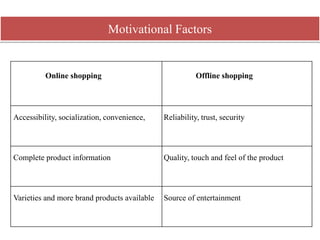
Online shopping Offline shopping
Accessibility, socialization, convenience, Reliability, trust, security
Complete product information Quality, touch and feel of the product
Varieties and more brand products available Source of entertainment
Motivational Factors
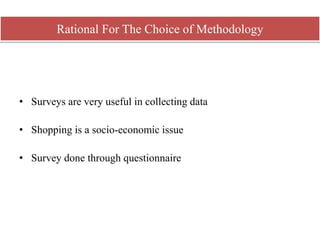
• Surveys are very useful in collecting data
• Shopping is a socio-economic issue
• Survey done through questionnaire
Rational For The Choice of Methodology
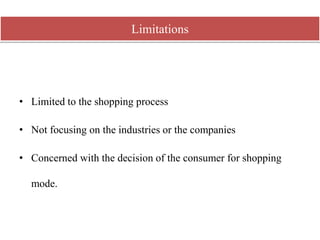
• Limited to the shopping process
• Not focusing on the industries or the companies
• Concerned with the decision of the consumer for shopping
mode.
Limitations
Data Analysis
Findings and Analysis
• Most of the people covered in our survey were students who opted mostly for
online shopping.
• Online shopping has various factors which affect the consumers:
– Product Information
– Time
– Access of internet
– Attractive advertisements
• Physical shopping is still a trend in the local people of Jodhpur because of:
– Quality
– Assurance
– Source of entertainment.
Conclusions
THANK YOU

online vs offline shopping

  • 1.
    EXPLORING SHOPPING MODES:ONLINE VS OFFLINE SHOPPING OF GARMENTS IN JODHPUR Norin Deshwali Shivani Yadav Shreya Chaudhary Sunanda Ghorai Guided by Mr. Yuvraj Garg, Dr. Ankita Shrivastava National Institute Of Fashion Technology, Jodhpur
  • 2.
    • Growth ofInternet • Advancement in technology • Online shopping Vs Offline shopping Introduction
  • 3.
    • To findout consumer motivations to engage in online shopping versus physical store shopping. • To find out the perceived benefits and drawbacks of internet shopping versus physical store shopping. Objective
  • 4.
    • Survey method •Qualitative research • Target population: 18 years to 50 years • Sample size: 50 • Primary data: Questionnaire Research Design
  • 5.
    Online shopping Offlineshopping Accessibility, socialization, convenience, Reliability, trust, security Complete product information Quality, touch and feel of the product Varieties and more brand products available Source of entertainment Motivational Factors
  • 6.
    • Surveys arevery useful in collecting data • Shopping is a socio-economic issue • Survey done through questionnaire Rational For The Choice of Methodology
  • 7.
    • Limited tothe shopping process • Not focusing on the industries or the companies • Concerned with the decision of the consumer for shopping mode. Limitations
  • 8.
  • 9.
    • Most ofthe people covered in our survey were students who opted mostly for online shopping. • Online shopping has various factors which affect the consumers: – Product Information – Time – Access of internet – Attractive advertisements • Physical shopping is still a trend in the local people of Jodhpur because of: – Quality – Assurance – Source of entertainment. Conclusions
  • 10.

Editor's Notes

  • #5 Sample size :50 because it is a convenient type of sampling in which people which are easily accessible are surveyed.
  • #6 According to the Technology Acceptance Model, the easier and useful a technology is, the more likely are consumers to get motivated to use online technology.
  • #7 relating to motivates, opinions and attitudes concerning socio economic issues. and understanding motivations as well as perceived benefits requires a method that will collect a wide range of data from people in order to understand how they feel about the issue. The survey is thus selected together with the questionnaires because of their ability to provide the research with enough information to answer the research objectives.