CONTENT
1. FAKE NEWS
2. FAKE NEWS - ORIGIN TYPES
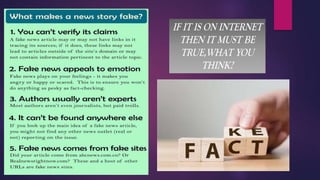
3. WHAT MAKES A NEWS STORY FAKE
4. TYPES
5. EFFECTS
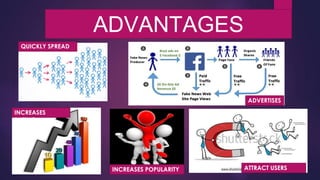
6. ADVANTAGES
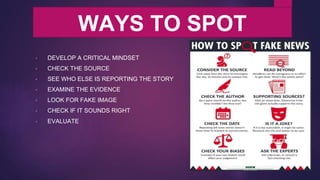
7. WAYS TO SPOT FAKE NEWS
8. FIGHT BACK
9. MESSAGE
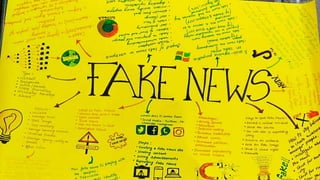
FAKE NEWS
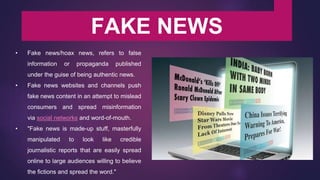
• Fake news/hoax news, refers to false
information or propaganda published
under the guise of being authentic news.
• Fake news websites and channels push
fake news content in an attempt to mislead
consumers and spread misinformation
via social networks and word-of-mouth.
• "Fake news is made-up stuff, masterfully
manipulated to look like credible
journalistic reports that are easily spread
online to large audiences willing to believe
the fictions and spread the word."
FAKE NEWS - ORIGIN
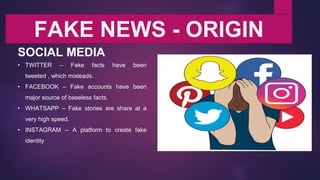
SOCIAL MEDIA
• TWITTER – Fake facts have been
tweeted , which misleads.
• FACEBOOK – Fake accounts have been
major source of baseless facts.
• WHATSAPP – Fake stories are share at a
very high speed.
• INSTAGRAM -- A platform to create fake
identity
TYPES
1) Satire or Parody – sites such as the Onion or Daily Mash
publish fake news stories as humorous attempts to satirize the
media, but have the potential to fool when shared out of
context.
2) Misleading news that’s sort of true but used in the wrong
context – selectively chosen real facts that are reported to gain
headlines, but tend to be a misinterpretation of scientific
research.
3) Sloppy reporting that fits an agenda – news that contains
some grains of truth that are not fully verified, which are used
to support a certain position or view.
4) Intentionally deceptive – news that has been fabricated
deliberately to either make money through number of
clicks, or to cause confusion or discontent or as
sensationalist propaganda
TYPES (cont.)
EFFECTS
• MISLEAD
• DAMAGE TRUST
• SPOIL IMAGE
• SAP CURIOSITY
• DAMAGE LEARNING CULTURE
• UNETHICAL PRACTICE
• DAMAGE AGENCY,ENTITY OR PERSON
• CYBER CRIME
ATTRACT USERS
ADVANTAGES
QUICKLY SPREAD
ADVERTISES
INCREASES
RATING
I
INCREASES POPULARITY
WAYS TO SPOT
• DEVELOP A CRITICAL MINDSET
• CHECK THE SOURCE
• SEE WHO ELSE IS REPORTING THE STORY
• EXAMINE THE EVIDENCE
• LOOK FOR FAKE IMAGE
• CHECK IF IT SOUNDS RIGHT
• EVALUATE
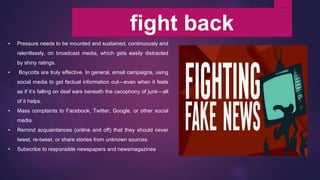
fight back
• Pressure needs to be mounted and sustained, continuously and
relentlessly, on broadcast media, which gets easily distracted
by shiny ratings.
• Boycotts are truly effective. In general, email campaigns, using
social media to get factual information out—even when it feels
as if it’s falling on deaf ears beneath the cacophony of junk—all
of it helps.
• Mass complaints to Facebook, Twitter, Google, or other social
media.
• Remind acquaintances (online and off) that they should never
tweet, re-tweet, or share stories from unknown sources.
• Subscribe to responsible newspapers and newsmagazines
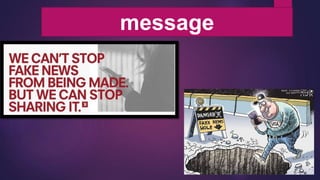
message
REPORT ON FAKE
NEWS
SUBMITTED BY:- KRITIKA VATS
097
PINKI SHARMA 101
PRIYA BISHT 102
PRIYANSHI SHARMA 105
SANA FARAHANI 106
SUBMITTED TO:- MS. MEGHA GUPTA
• SUBJECT :- COMMUNICATION SYSTEM AND MASS MEDIA
• COURSE :- B.SC. HOME SCIENCE HONOURS
• YEAR :- II
• SEMESTER:- III

Fake news ppt.pptx

  • 2.
    CONTENT 1. FAKE NEWS 2.FAKE NEWS - ORIGIN TYPES 3. WHAT MAKES A NEWS STORY FAKE 4. TYPES 5. EFFECTS 6. ADVANTAGES 7. WAYS TO SPOT FAKE NEWS 8. FIGHT BACK 9. MESSAGE
  • 3.
    FAKE NEWS • Fakenews/hoax news, refers to false information or propaganda published under the guise of being authentic news. • Fake news websites and channels push fake news content in an attempt to mislead consumers and spread misinformation via social networks and word-of-mouth. • "Fake news is made-up stuff, masterfully manipulated to look like credible journalistic reports that are easily spread online to large audiences willing to believe the fictions and spread the word."
  • 4.
    FAKE NEWS -ORIGIN SOCIAL MEDIA • TWITTER – Fake facts have been tweeted , which misleads. • FACEBOOK – Fake accounts have been major source of baseless facts. • WHATSAPP – Fake stories are share at a very high speed. • INSTAGRAM -- A platform to create fake identity
  • 6.
    TYPES 1) Satire orParody – sites such as the Onion or Daily Mash publish fake news stories as humorous attempts to satirize the media, but have the potential to fool when shared out of context. 2) Misleading news that’s sort of true but used in the wrong context – selectively chosen real facts that are reported to gain headlines, but tend to be a misinterpretation of scientific research. 3) Sloppy reporting that fits an agenda – news that contains some grains of truth that are not fully verified, which are used to support a certain position or view.
  • 7.
    4) Intentionally deceptive– news that has been fabricated deliberately to either make money through number of clicks, or to cause confusion or discontent or as sensationalist propaganda TYPES (cont.)
  • 8.
    EFFECTS • MISLEAD • DAMAGETRUST • SPOIL IMAGE • SAP CURIOSITY • DAMAGE LEARNING CULTURE • UNETHICAL PRACTICE • DAMAGE AGENCY,ENTITY OR PERSON • CYBER CRIME
  • 9.
  • 11.
    WAYS TO SPOT •DEVELOP A CRITICAL MINDSET • CHECK THE SOURCE • SEE WHO ELSE IS REPORTING THE STORY • EXAMINE THE EVIDENCE • LOOK FOR FAKE IMAGE • CHECK IF IT SOUNDS RIGHT • EVALUATE
  • 12.
    fight back • Pressureneeds to be mounted and sustained, continuously and relentlessly, on broadcast media, which gets easily distracted by shiny ratings. • Boycotts are truly effective. In general, email campaigns, using social media to get factual information out—even when it feels as if it’s falling on deaf ears beneath the cacophony of junk—all of it helps. • Mass complaints to Facebook, Twitter, Google, or other social media. • Remind acquaintances (online and off) that they should never tweet, re-tweet, or share stories from unknown sources. • Subscribe to responsible newspapers and newsmagazines
  • 13.
  • 15.
    REPORT ON FAKE NEWS SUBMITTEDBY:- KRITIKA VATS 097 PINKI SHARMA 101 PRIYA BISHT 102 PRIYANSHI SHARMA 105 SANA FARAHANI 106 SUBMITTED TO:- MS. MEGHA GUPTA • SUBJECT :- COMMUNICATION SYSTEM AND MASS MEDIA • COURSE :- B.SC. HOME SCIENCE HONOURS • YEAR :- II • SEMESTER:- III