Onchocerciasis
Group II: presentation
PRESENTATION CONTENT
– Description and Classification
– Morphology
– Life cycle
– Pathogenesis and Symptomatology
– Diagnosis (Clinical and Laboratory)
– Treatment
– Epidemiology
– Prevention and Control
DESCRIPTION AND
CLASSIFICATION
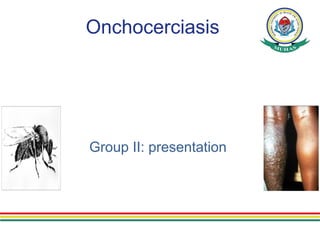
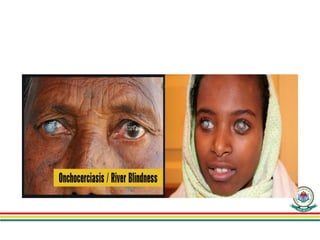
• Onchocerciasis (also known as River blindness, Robles’
Disease) is a filarial infection which causes blindness
and debilitating skin lesions as caused by parasitic worm
Onchocerca volvulus. It is transmitted to humans through
exposure to repeated bites of infected blackflies of the
genus Simulium.
• The fly breeds in rivers with a prevalence for turbulent
and highly oxygenated waters.
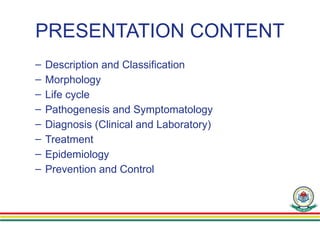
• Both the eyes and the skin are affected by the condition
commonly known as ‘River Blindness’.
DESCRIPTION AND
CLASSIFICATION
Taxonomy
• Kingdom - Animalia
• Phylum - Nematoda
• Class - Rhabditea
• Order - Spirurida
• Super Family - Filaroidea
• Family - Onchocercidae
• Genus – Onchocerca
• Specie - volvulus
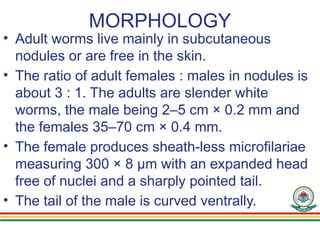
MORPHOLOGY
• Adult worms live mainly in subcutaneous
nodules or are free in the skin.
• The ratio of adult females : males in nodules is
about 3 : 1. The adults are slender white
worms, the male being 2–5 cm × 0.2 mm and
the females 35–70 cm × 0.4 mm.
• The female produces sheath-less microfilariae
measuring 300 × 8 μm with an expanded head
free of nuclei and a sharply pointed tail.
• The tail of the male is curved ventrally.
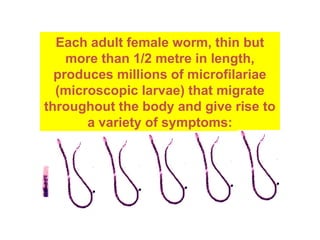
Each adult female worm, thin but
more than 1/2 metre in length,
produces millions of microfilariae
(microscopic larvae) that migrate
throughout the body and give rise to
a variety of symptoms:
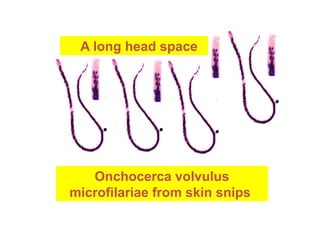
Onchocerca volvulus
microfilariae from skin snips
A long head space
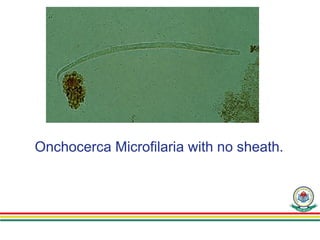
Onchocerca Microfilaria with no sheath.
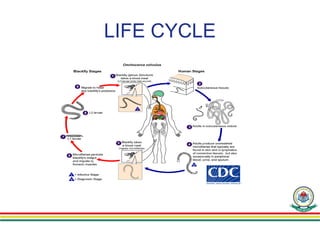
LIFE CYCLE
LIFE CYCLE
• During a blood meal, an infected blackfly (genus
Simulium) introduces third-stage filarial larvae onto
the skin of the human host, where they penetrate
into the bite wound.
• Once in the subcutaneous tissues the larvae develop
into adult filariae, which commonly reside in
nodules in subcutaneous connective tissues.
• Adults can live in the nodules for approximately 15
years. Some nodules may contain numerous male
and female worms.
• In the subcutaneous nodule, the female worms are
capable of producing microfilariae for
LIFE CYCLE
• Now during blood meal, A blackfly ingests the
microfilariae.
• After ingestion, the microfilariae migrate from the
blackfly's midgut through the hemocoel to the
thoracic muscles.
• There the microfilariae develop into first-stage
larvae and subsequently into third-stage infective
larvae.
• The third-stage infective larvae migrate to the
blackfly's proboscis and can infect another human
when the fly takes a blood meal.
PATHOGENESIS
• After inoculation following a bite from an infected fly, the
worm matures (in several months) in subcutaneous tissue
and connective tissues.
• At sites of trauma, over bony prominences and around
joints, fibrosis may form nodules around adult worms which
otherwise causes no direct damage.
• Innumerable microfilariae discharged by the female O.
volvulus move actively in these nodules and in the adjacent
tissues and are widely distributed and may invade the eye.
• Live microfilaria elicit little tissue reaction but dead ones
cause severe allergic inflammation leading to hyaline
necrosis, loss of collagen and elastin.
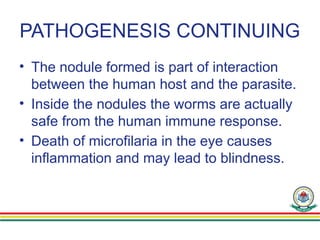
PATHOGENESIS CONTINUING
• The nodule formed is part of interaction
between the human host and the parasite.
• Inside the nodules the worms are actually
safe from the human immune response.
• Death of microfilaria in the eye causes
inflammation and may lead to blindness.
SYMPTOMATOLOGY
Main clinical manifestations are the
following;
1.The subcutaneous (or deeper) nodules
(Onchocercoma).
2.Onchocercal Dermatitis.
3.Eye disease.
4.Other Conditions.
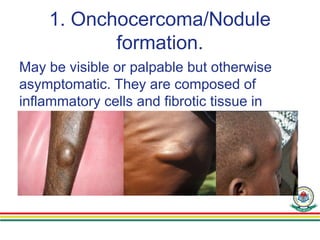
1. Onchocercoma/Nodule
formation.
May be visible or palpable but otherwise
asymptomatic. They are composed of
inflammatory cells and fibrotic tissue in
various proportions. Old nodules may
caseate or calsify.
2. Onchocercal Dermatitis.
- Dermal skin changes occur when the microfilaria
undergo destruction in the skin and vary from a few
papules to the extensive pigmentary and chronic
atrophic changes.
• Itching (filarial itch) and rash are the most important
early manifestations of onchocercal dermatitis.
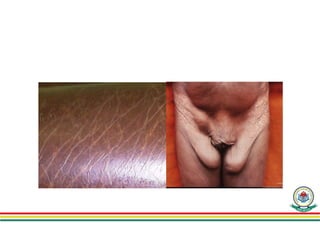
• In the later stages, there may be heavy lichenification
and thickening of the skin (Lizard Skin)
• Hanging groin is a skin manifestation in
Onchocerciasis that is characterized with pendulous
folds following loss of skin elastic fibers.
Onchocercal Dermatitis
Continuing;
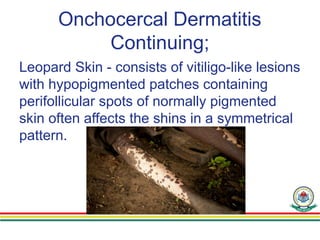
Leopard Skin - consists of vitiligo-like lesions
with hypopigmented patches containing
perifollicular spots of normally pigmented
skin often affects the shins in a symmetrical
pattern.
Onchocercal Dermatitis
Continuing;
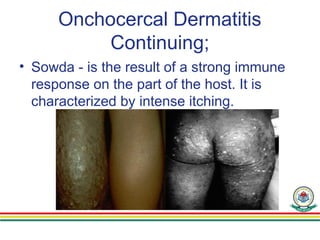
• Sowda - is the result of a strong immune
response on the part of the host. It is
characterized by intense itching.
3. Eye Disease.
Many changes in both anterior and posterior segments can
occur in the eyes of infected individuals. The more serious
lesions may progress to blindness. Manifest in 2 ways;
• Anterior Segment Lesions - Punctate keratitis (snowflake
opacities) occurs as an acute inflammatory reaction around
microfilariae. These lesions are reversible. In sclerosing
keratitis, vascular infiltrates begin at the limbus and pass
inwards, resulting in a cellular organization and excessive
scarring of the cornea, which causes blindness.
• Posterior Segment Lesions - Both optic nerve atrophy and
choroidoretinitis of the posterior segment may result in
blindness.
4. Other Conditions.
Onchocerciasis has been associated with weight loss
and musculoskeletal pain. Several reports have
indicated a higher than normal frequency of epilepsy in
onchocerciasis hyperendemic areas.
Onchocerciasis has also been associated with a
syndrome of growth arrest and delayed sexual
development (the Nakalanga syndrome) seen in Uganda
and Burundi.
DIAGNOSIS
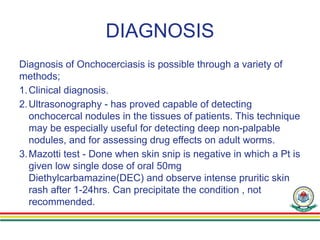
Diagnosis of Onchocerciasis is possible through a variety of
methods;
1.Clinical diagnosis.
2.Ultrasonography - has proved capable of detecting
onchocercal nodules in the tissues of patients. This technique
may be especially useful for detecting deep non-palpable
nodules, and for assessing drug effects on adult worms.
3.Mazotti test - Done when skin snip is negative in which a Pt is
given low single dose of oral 50mg
Diethylcarbamazine(DEC) and observe intense pruritic skin
rash after 1-24hrs. Can precipitate the condition , not
recommended.
DIAGNOSIS CONTINUING;
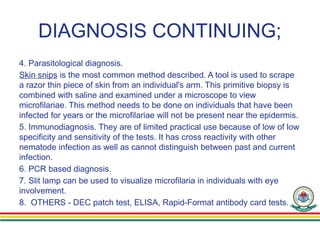
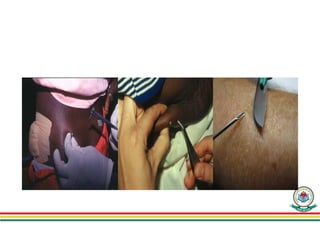
4. Parasitological diagnosis.
Skin snips is the most common method described. A tool is used to scrape
a razor thin piece of skin from an individual's arm. This primitive biopsy is
combined with saline and examined under a microscope to view
microfilariae. This method needs to be done on individuals that have been
infected for years or the microfilariae will not be present near the epidermis.
5. Immunodiagnosis. They are of limited practical use because of low of low
specificity and sensitivity of the tests. It has cross reactivity with other
nematode infection as well as cannot distinguish between past and current
infection.
6. PCR based diagnosis.
7. Slit lamp can be used to visualize microfilaria in individuals with eye
involvement.
8. OTHERS - DEC patch test, ELISA, Rapid-Format antibody card tests.
TREATMENT
Pharmacological;
Ivermectin in a single oral dose of 150 μg/kg body weight causes
a rapid elimination of microfilariae from the skin.
NOTE; DEC is no longer recommended for the treatment of
onchocerciasis.
Moxidectin was approved for Onchocerciasis in 2018 for people
over the age of 11 in the united states, Safety of multiple doses is
unclear.
Non Pharmacological;
Nodulectomy has only limited use because many worms are
present outside the nodules and some nodules are not palpable.
Head nodules should be excised because their presence
increases the risk of eye disease and blindness.
EPIDEMIOLOGY
More than 99% of infected people live in 31 African countries. The disease
also exists in some foci in Latin America and Yemen. (WHO)
The Global Burden of Disease Study estimated in 2017 that there were 20.9
million prevalent O. volvulus infections worldwide: 14.6 million of the
infected people had skin disease and 1.15 million had vision loss. (WHO)
O. volvulus is transmitted between humans and the vectors. The infection is not a
zoonosis.
• Onchocercal infections are found in tropical climates.
• The main burden is in 30 countries in sub-Saharan Africa, though the parasite
is found in limited areas in the Americas and in Yemen in the Middle East
• The people most at risk for acquiring onchocerciasis are those who live near
streams or rivers where there are Simulium blackflies
EPIDEMIOLOGY CONTINUING
• In the Americas, transmission of onchocerciasis has been
interrupted in 11 of the 13 foci.
• Interventions to limit transmission stopped in Colombia in 2008,
in Ecuador in 2010, in Mexico in 2012, and in Guatemala in 2012
• Transmission and interventions to limit transmission continue in
one area in Venezuela and one area in Brazil.
East and central Africa
The most important vectors in East and Central Africa belong
to the S. damnosum complex, but vectors of the S. neavei
group also transmit onchocerciasis in Ethiopia, Tanzania,
Malawi, Uganda and parts of Zaire.
CONTROL - VECTOR
• The principal method for controlling
onchocerciasis has been to break the cycle of
transmission by eliminating the back fly.
• Simulium larvae are destroyed by application of
selected insecticides through aerial spraying of
breeding sites in fast-flowing rivers.
• Once the cycle of river blindness has been
interrupted for 14 years the reservoir of adult
worms dies out in the human population, thus
eliminating the source of the disease
CONTROL – IVERMECTIN
TREATMENT
• To complement vector control activities, the
drug ivermectin is distributed where needed
through a community directed approach.
• Ivermectin kills the larval worms that cause
blindness and other onchocercal
manifestations and acts to decrease
transmission as well. Ivermectin became
available in 1987 to complement blackfly
control activities.
CONTROL - BLACKFLIES
• Control of adults by insecticides not feasible, they
bite outdoors and are highly scattered in the bush;
would need to spray large areas in the bush that
would be extremely expensive.
• Larval control ideal, larvae remain in their breeding
sites. Most useful in Africa, employ biodegradable
insecticides such as temefos (Abate) in low
concentrations, sprayed once weekly. Bacillus
thuringiensis H-14, a biological insecticide suspension
can also be used at a dose 2.5 times higher than
temefos.
African Program For
Onchocerciasis Control (APOC)
• WHO is the executing agent of APOC.
• In four areas of Uganda, the United Republic of
Tanzania, and Equatorial Guinea, African
Programme for Onchocerciasis Control’s
(APOC) strategy of community-directed
treatment with ivermectin has been
supplemented by activities to eliminate the
black-fly vector. Vector control is not considered
feasible or cost-effective in the remaining
APOC countries.
References
• Manson’s Tropical Diseases , 22nd
Edition.
• WHO.
• Articles.
• CDC.

Onchocerciasis power Point presentation.

  • 1.
  • 2.
    PRESENTATION CONTENT – Descriptionand Classification – Morphology – Life cycle – Pathogenesis and Symptomatology – Diagnosis (Clinical and Laboratory) – Treatment – Epidemiology – Prevention and Control
  • 3.
    DESCRIPTION AND CLASSIFICATION • Onchocerciasis(also known as River blindness, Robles’ Disease) is a filarial infection which causes blindness and debilitating skin lesions as caused by parasitic worm Onchocerca volvulus. It is transmitted to humans through exposure to repeated bites of infected blackflies of the genus Simulium. • The fly breeds in rivers with a prevalence for turbulent and highly oxygenated waters. • Both the eyes and the skin are affected by the condition commonly known as ‘River Blindness’.
  • 4.
    DESCRIPTION AND CLASSIFICATION Taxonomy • Kingdom- Animalia • Phylum - Nematoda • Class - Rhabditea • Order - Spirurida • Super Family - Filaroidea • Family - Onchocercidae • Genus – Onchocerca • Specie - volvulus
  • 5.
    MORPHOLOGY • Adult wormslive mainly in subcutaneous nodules or are free in the skin. • The ratio of adult females : males in nodules is about 3 : 1. The adults are slender white worms, the male being 2–5 cm × 0.2 mm and the females 35–70 cm × 0.4 mm. • The female produces sheath-less microfilariae measuring 300 × 8 μm with an expanded head free of nuclei and a sharply pointed tail. • The tail of the male is curved ventrally.
  • 6.
    Each adult femaleworm, thin but more than 1/2 metre in length, produces millions of microfilariae (microscopic larvae) that migrate throughout the body and give rise to a variety of symptoms:
  • 7.
    Onchocerca volvulus microfilariae fromskin snips A long head space
  • 8.
  • 9.
  • 10.
    LIFE CYCLE • Duringa blood meal, an infected blackfly (genus Simulium) introduces third-stage filarial larvae onto the skin of the human host, where they penetrate into the bite wound. • Once in the subcutaneous tissues the larvae develop into adult filariae, which commonly reside in nodules in subcutaneous connective tissues. • Adults can live in the nodules for approximately 15 years. Some nodules may contain numerous male and female worms. • In the subcutaneous nodule, the female worms are capable of producing microfilariae for
  • 11.
    LIFE CYCLE • Nowduring blood meal, A blackfly ingests the microfilariae. • After ingestion, the microfilariae migrate from the blackfly's midgut through the hemocoel to the thoracic muscles. • There the microfilariae develop into first-stage larvae and subsequently into third-stage infective larvae. • The third-stage infective larvae migrate to the blackfly's proboscis and can infect another human when the fly takes a blood meal.
  • 12.
    PATHOGENESIS • After inoculationfollowing a bite from an infected fly, the worm matures (in several months) in subcutaneous tissue and connective tissues. • At sites of trauma, over bony prominences and around joints, fibrosis may form nodules around adult worms which otherwise causes no direct damage. • Innumerable microfilariae discharged by the female O. volvulus move actively in these nodules and in the adjacent tissues and are widely distributed and may invade the eye. • Live microfilaria elicit little tissue reaction but dead ones cause severe allergic inflammation leading to hyaline necrosis, loss of collagen and elastin.
  • 13.
    PATHOGENESIS CONTINUING • Thenodule formed is part of interaction between the human host and the parasite. • Inside the nodules the worms are actually safe from the human immune response. • Death of microfilaria in the eye causes inflammation and may lead to blindness.
  • 14.
    SYMPTOMATOLOGY Main clinical manifestationsare the following; 1.The subcutaneous (or deeper) nodules (Onchocercoma). 2.Onchocercal Dermatitis. 3.Eye disease. 4.Other Conditions.
  • 15.
    1. Onchocercoma/Nodule formation. May bevisible or palpable but otherwise asymptomatic. They are composed of inflammatory cells and fibrotic tissue in various proportions. Old nodules may caseate or calsify.
  • 16.
    2. Onchocercal Dermatitis. -Dermal skin changes occur when the microfilaria undergo destruction in the skin and vary from a few papules to the extensive pigmentary and chronic atrophic changes. • Itching (filarial itch) and rash are the most important early manifestations of onchocercal dermatitis. • In the later stages, there may be heavy lichenification and thickening of the skin (Lizard Skin) • Hanging groin is a skin manifestation in Onchocerciasis that is characterized with pendulous folds following loss of skin elastic fibers.
  • 18.
    Onchocercal Dermatitis Continuing; Leopard Skin- consists of vitiligo-like lesions with hypopigmented patches containing perifollicular spots of normally pigmented skin often affects the shins in a symmetrical pattern.
  • 19.
    Onchocercal Dermatitis Continuing; • Sowda- is the result of a strong immune response on the part of the host. It is characterized by intense itching.
  • 20.
    3. Eye Disease. Manychanges in both anterior and posterior segments can occur in the eyes of infected individuals. The more serious lesions may progress to blindness. Manifest in 2 ways; • Anterior Segment Lesions - Punctate keratitis (snowflake opacities) occurs as an acute inflammatory reaction around microfilariae. These lesions are reversible. In sclerosing keratitis, vascular infiltrates begin at the limbus and pass inwards, resulting in a cellular organization and excessive scarring of the cornea, which causes blindness. • Posterior Segment Lesions - Both optic nerve atrophy and choroidoretinitis of the posterior segment may result in blindness.
  • 22.
    4. Other Conditions. Onchocerciasishas been associated with weight loss and musculoskeletal pain. Several reports have indicated a higher than normal frequency of epilepsy in onchocerciasis hyperendemic areas. Onchocerciasis has also been associated with a syndrome of growth arrest and delayed sexual development (the Nakalanga syndrome) seen in Uganda and Burundi.
  • 27.
    DIAGNOSIS Diagnosis of Onchocerciasisis possible through a variety of methods; 1.Clinical diagnosis. 2.Ultrasonography - has proved capable of detecting onchocercal nodules in the tissues of patients. This technique may be especially useful for detecting deep non-palpable nodules, and for assessing drug effects on adult worms. 3.Mazotti test - Done when skin snip is negative in which a Pt is given low single dose of oral 50mg Diethylcarbamazine(DEC) and observe intense pruritic skin rash after 1-24hrs. Can precipitate the condition , not recommended.
  • 28.
    DIAGNOSIS CONTINUING; 4. Parasitologicaldiagnosis. Skin snips is the most common method described. A tool is used to scrape a razor thin piece of skin from an individual's arm. This primitive biopsy is combined with saline and examined under a microscope to view microfilariae. This method needs to be done on individuals that have been infected for years or the microfilariae will not be present near the epidermis. 5. Immunodiagnosis. They are of limited practical use because of low of low specificity and sensitivity of the tests. It has cross reactivity with other nematode infection as well as cannot distinguish between past and current infection. 6. PCR based diagnosis. 7. Slit lamp can be used to visualize microfilaria in individuals with eye involvement. 8. OTHERS - DEC patch test, ELISA, Rapid-Format antibody card tests.
  • 30.
    TREATMENT Pharmacological; Ivermectin in asingle oral dose of 150 μg/kg body weight causes a rapid elimination of microfilariae from the skin. NOTE; DEC is no longer recommended for the treatment of onchocerciasis. Moxidectin was approved for Onchocerciasis in 2018 for people over the age of 11 in the united states, Safety of multiple doses is unclear. Non Pharmacological; Nodulectomy has only limited use because many worms are present outside the nodules and some nodules are not palpable. Head nodules should be excised because their presence increases the risk of eye disease and blindness.
  • 31.
    EPIDEMIOLOGY More than 99%of infected people live in 31 African countries. The disease also exists in some foci in Latin America and Yemen. (WHO) The Global Burden of Disease Study estimated in 2017 that there were 20.9 million prevalent O. volvulus infections worldwide: 14.6 million of the infected people had skin disease and 1.15 million had vision loss. (WHO) O. volvulus is transmitted between humans and the vectors. The infection is not a zoonosis. • Onchocercal infections are found in tropical climates. • The main burden is in 30 countries in sub-Saharan Africa, though the parasite is found in limited areas in the Americas and in Yemen in the Middle East • The people most at risk for acquiring onchocerciasis are those who live near streams or rivers where there are Simulium blackflies
  • 32.
    EPIDEMIOLOGY CONTINUING • Inthe Americas, transmission of onchocerciasis has been interrupted in 11 of the 13 foci. • Interventions to limit transmission stopped in Colombia in 2008, in Ecuador in 2010, in Mexico in 2012, and in Guatemala in 2012 • Transmission and interventions to limit transmission continue in one area in Venezuela and one area in Brazil. East and central Africa The most important vectors in East and Central Africa belong to the S. damnosum complex, but vectors of the S. neavei group also transmit onchocerciasis in Ethiopia, Tanzania, Malawi, Uganda and parts of Zaire.
  • 33.
    CONTROL - VECTOR •The principal method for controlling onchocerciasis has been to break the cycle of transmission by eliminating the back fly. • Simulium larvae are destroyed by application of selected insecticides through aerial spraying of breeding sites in fast-flowing rivers. • Once the cycle of river blindness has been interrupted for 14 years the reservoir of adult worms dies out in the human population, thus eliminating the source of the disease
  • 34.
    CONTROL – IVERMECTIN TREATMENT •To complement vector control activities, the drug ivermectin is distributed where needed through a community directed approach. • Ivermectin kills the larval worms that cause blindness and other onchocercal manifestations and acts to decrease transmission as well. Ivermectin became available in 1987 to complement blackfly control activities.
  • 35.
    CONTROL - BLACKFLIES •Control of adults by insecticides not feasible, they bite outdoors and are highly scattered in the bush; would need to spray large areas in the bush that would be extremely expensive. • Larval control ideal, larvae remain in their breeding sites. Most useful in Africa, employ biodegradable insecticides such as temefos (Abate) in low concentrations, sprayed once weekly. Bacillus thuringiensis H-14, a biological insecticide suspension can also be used at a dose 2.5 times higher than temefos.
  • 36.
    African Program For OnchocerciasisControl (APOC) • WHO is the executing agent of APOC. • In four areas of Uganda, the United Republic of Tanzania, and Equatorial Guinea, African Programme for Onchocerciasis Control’s (APOC) strategy of community-directed treatment with ivermectin has been supplemented by activities to eliminate the black-fly vector. Vector control is not considered feasible or cost-effective in the remaining APOC countries.
  • 37.
    References • Manson’s TropicalDiseases , 22nd Edition. • WHO. • Articles. • CDC.

Editor's Notes

  • #3 -In Africa it is transmitted by Simulium damnosum, and S. neavei. In America it is transmitted by Simulium ochraceum, S. metallicum, and S. callidum. -Called River Blindness because, Blackfly that transmits the infection lives and breeds near fast flowing streams and rivers and the infection can result into blindness.
  • #5 -Posterior end of the microfilaria is curved hence its name “Onchocerca” ( means curved/coiled tail). -Lips and buccal capsule are absent but there are four papillae each surround the mouth. -The tail of the male is curved ventrally, The microfilariae are unsheathed, 300 x 8µ and are found in cyst cavity and surrounding skin. The body tapers to a sharp-pointed tail which is curved. A V-spot is in the anterior 1/5. Cephalic cone is thickened at the beginning of the nuclear column; nuclei extend to tip of tail. Microfilariae are often found in the eye thus causing River blindness.
  • #6 Source; Google, Previous power points.
  • #7 Source; Google, Previous power points.
  • #8 Source; Previous Power Point.
  • #9 Source; CDC Adults in the sub-cutaneous skin tissue and in nodules (Onchocercoma)
  • #10 Remember; Microfilariae are unsheathed having a life span for up to 2 years.
  • #12 *The female microfilaria discharges 500-1500 microfilaria per day. *Mean duration of the female reproductive life is estimated to be around 9 to 11 years.
  • #13 Adult worms are usually found near the female worms.
  • #16 Clinical classification and grading system of the cutaneous changes in onchocerciasis has been developed, with the main recognized categories being acute papular onchodermatitis, chronic popular onchodermatitis, lichenified onchodermatitis, skin atrophy, and skin depigmentation. https://en.wikipedia.org/wiki/Onchocerciasis For skin manifastations.
  • #17 Presbyderma and Hanging Groin.
  • #20 The eye disease gives onchocerciasis its common name – river blindness. Onchocercal blindness is the world’s fourth leading cause of preventable blindness after cataract, glaucoma and trachoma. (WORLD HEALTH ORGANIZATION 02.39 AM, 02.07.2020)
  • #21 Source; Google.
  • #22 Nakalanga syndrome (pygmy dwarfism) due to pituitary damage by microfilariae invading the CNS. Study; https://www.annualreviews.org/doi/pdf/10.1146/annurev-pathmechdis-012419-032748
  • #23 https://www.ncbi.nlm.nih.gov/pubmed/30957099 The study summarizes an association between Epilepsy and Onchocerciasis
  • #24 https://www.ncbi.nlm.nih.gov/pubmed/29605818
  • #25 https://www.ncbi.nlm.nih.gov/pubmed/31122275
  • #26 https://www.ncbi.nlm.nih.gov/pubmed/29921319
  • #28 Skin snip biopsy remains to be the gold standard for diagnosis of Onchocerciasis. For more studies on diagnosis of Onchocerca volvulus, Study the links attached below. https://www.ncbi.nlm.nih.gov/pmc/articles/PMC120049/ https://www.ncbi.nlm.nih.gov/pmc/articles/PMC4824238/
  • #29 https://www.ncbi.nlm.nih.gov/pmc/articles/PMC4824238/
  • #30 WHO recommends treating onchocerciasis with ivermectin at least once yearly for between 10 to 15 years. Ivermectin has a strong microfilaricidal effect, whereas adult worms remain essentially unaffected. For studies on treatment, Please visit https://journals.plos.org/plosntds/article?id=10.1371/journal.pntd.0005156 Ivermectin has the following advantages: • It kills microfilariae. • It reduces the risk of blindness due to optic atrophy by 50%. • The production of microfilariae by the adult female worm is inhibited for some months. • A single dose every 6–12 months eliminates microfilariae. • It is sufficiently safe for mass distribution to entire communities. • The oral route provides easy delivery of the drug.
  • #31 From Manson’s Tropical Diseases (22nd Edition) Disease occurs in 37 countries. 30 in Africa, 6 in America and 1 in Arabian Peninsula.
  • #32 This group includes all Simulium species wit larvae and pupae that become attached to riverine crabs of the genus Potamonautes. In Tanzania, S. woodi is the most important vector within the S. neavei group. In the Tukuyu valley and Mahenge mountains transmission is by S. damnosum s.l.128 In East Africa onchocerciasis rarely causes blindness, but itching and dermatitis may be severe
  • #35 There is no vaccine or medication to prevent infection with O. volvulus.