Sensation of SMELL
Vd.GANESH T. GAIKWAD
ASSI.PROFESSOR
DEPT.OF KRIYA SHARIR
CSMSS AYU MAHA ;CHATRAPATI
SAMBHAJI NAGAR
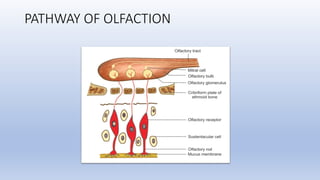
PATHWAY OF OLFACTION
OLFACTORY RECEPTORS
Olfactory receptors are situated in olfactory mucus membrane, which
is the modified mucus membrane that lines upper part of nostril.
Olfactory mucus membrane consists of 10 to 20 millions of olfactory
receptor cells supported by the sustentacular cells.
Mucosa also contains mucus-secreting Bowman glands
Olfactory receptor cell is a bipolar neuron.
Dendrite of this neuron is short and it has an expanded end called
olfactory rod.
From olfactory rod, about 10 to 12 cilia arise.
Cilia are non-myelinated, with a length of 2 μ and a diameter of 0.1 μ.
These cilia project to the surface of olfactory mucus membrane.
Mucus secreted by Bowman glands continuously lines the olfactory
mucosa. Mucus contains some proteins, which increase the actions of
odoriferous substances on receptor cells.
VOMERONASAL ORGAN
1. Vomeronasal organ is an accessory olfactory organ found in many
animals including mammals.
2. This organ was discovered in 1813, by a Danish physician Ludwig
Jacobson, hence it is also called Jacobsonorgan.
3. It is enclosed in a cartilaginous capsule, which opens into the base of
nasal cavity.
4. Olfactory receptors of this organ are sensitive to non-volatile substances
such as scents and pheromones.
5. Vomeronasal organ helps the animals to detect even the trace quantities
of chemicals.
6. Impulses from this organ are sent to amygdala and hypothalamus via
accessory olfactory bulb.
OLFACTORY PATHWAY
1. Axons of bipolar olfactory receptors pierce the cribriform plate of
ethmoid bone and reach the olfactory bulb.
2. Here, the axons synapse with dendrites of mitral cells.
3. Different groups of these synapses form globular structures called
olfactory glomeruli.
4. Axons of mitral cells leave the olfactory bulb and form olfactory tract.
5. Olfactory tract runs backward and ends in olfactory cortex, through the
intermediate and lateral olfactory stria.
6. Olfactory cortex includes the structures, which form a part of limbic
system.
7. These structures are anterior olfactory nucleus, prepyriform cortex,
olfactory tubercle and amygdala.
OLFACTORY TRANSDUCTION
1. Olfactory transduction is the process by which olfactory receptor
converts chemical energy into action potentials in olfactory nerve fiber.
2. The odoriferous substance stimulates the olfactory receptors, only if it
dissolves in mucus, covering the olfactory mucus membrane.
3. Molecules of dissolved substance, bind with receptor proteins in the cilia
and form substance-receptor complex.
4. Substance receptor complex activates adenyl cyclase that causes the
formation of cyclic AMP.
5. Cyclic AMP in turn, causes opening of sodium channels, leading to influx
of sodium and generation of receptor potential.
6. Receptor potential causes generation of action potential in the axon of
bipolar neuron
CLASSIFICATION OF ODOR
Odor is classified into various types.
Substances producing different
types of odor are:
1. Aromatic or resinous odor:
Camphor, lavender,
clove and bitter almonds
2. Ambrosial odor: Musk
3. Burning odor: Burning feathers,
tobacco, roasted coffee and meat
4. Ethereal odor: Fruits, ethers and
beeswax
5. Fragrant or balsamic odor:
Flowers and perfumes
6. Garlic odor: Garlic, onion and
sulfur
7. Goat odor: Caproic acid and
sweet cheese
8. Nauseating odor: Decayed
vegetables and feces
9. Repulsive odor: Bed bug.
ADAPTATION
Olfactory receptors are phasic receptors and adapt
very rapidly.
Within one second, the adaptation occurs up to 50%.
APPLIED PHYSIOLOGY – ABNORMALITIES
OF OLFACTORY SENSATION
1.ANOSMIA
Anosmia refers to total loss of sensation of smell,
i.e. inability to recognize or detect any odor.
It may be temporary or permanent.
Temporary anosmia is due to obstruction of nose, which occurs during
common cold, nasal sinus and allergic conditions
2.HYPOSMIA
Hyposmia is the reduced ability to recognize and to
detect any odor. The odors can be detected only at
higher concentrations. It is the most common disorder of
smell. Hyposmia also may be temporary or permanent.
It occurs due to same causes of anosmia.
3.HYPEROSMIA
Hyperosmia is the increased or exaggerated olfactory
sensation. It is also called olfactory hyperesthesia.
It occurs in brain injury, epilepsy and neurotic conditions.

SMELL PATHWAY presnsatationeefsccssc .pdf

  • 1.
    Sensation of SMELL Vd.GANESHT. GAIKWAD ASSI.PROFESSOR DEPT.OF KRIYA SHARIR CSMSS AYU MAHA ;CHATRAPATI SAMBHAJI NAGAR
  • 2.
  • 3.
    OLFACTORY RECEPTORS Olfactory receptorsare situated in olfactory mucus membrane, which is the modified mucus membrane that lines upper part of nostril. Olfactory mucus membrane consists of 10 to 20 millions of olfactory receptor cells supported by the sustentacular cells. Mucosa also contains mucus-secreting Bowman glands
  • 4.
    Olfactory receptor cellis a bipolar neuron. Dendrite of this neuron is short and it has an expanded end called olfactory rod. From olfactory rod, about 10 to 12 cilia arise. Cilia are non-myelinated, with a length of 2 μ and a diameter of 0.1 μ. These cilia project to the surface of olfactory mucus membrane. Mucus secreted by Bowman glands continuously lines the olfactory mucosa. Mucus contains some proteins, which increase the actions of odoriferous substances on receptor cells.
  • 5.
    VOMERONASAL ORGAN 1. Vomeronasalorgan is an accessory olfactory organ found in many animals including mammals. 2. This organ was discovered in 1813, by a Danish physician Ludwig Jacobson, hence it is also called Jacobsonorgan. 3. It is enclosed in a cartilaginous capsule, which opens into the base of nasal cavity. 4. Olfactory receptors of this organ are sensitive to non-volatile substances such as scents and pheromones. 5. Vomeronasal organ helps the animals to detect even the trace quantities of chemicals. 6. Impulses from this organ are sent to amygdala and hypothalamus via accessory olfactory bulb.
  • 6.
    OLFACTORY PATHWAY 1. Axonsof bipolar olfactory receptors pierce the cribriform plate of ethmoid bone and reach the olfactory bulb. 2. Here, the axons synapse with dendrites of mitral cells. 3. Different groups of these synapses form globular structures called olfactory glomeruli. 4. Axons of mitral cells leave the olfactory bulb and form olfactory tract. 5. Olfactory tract runs backward and ends in olfactory cortex, through the intermediate and lateral olfactory stria. 6. Olfactory cortex includes the structures, which form a part of limbic system. 7. These structures are anterior olfactory nucleus, prepyriform cortex, olfactory tubercle and amygdala.
  • 7.
    OLFACTORY TRANSDUCTION 1. Olfactorytransduction is the process by which olfactory receptor converts chemical energy into action potentials in olfactory nerve fiber. 2. The odoriferous substance stimulates the olfactory receptors, only if it dissolves in mucus, covering the olfactory mucus membrane. 3. Molecules of dissolved substance, bind with receptor proteins in the cilia and form substance-receptor complex. 4. Substance receptor complex activates adenyl cyclase that causes the formation of cyclic AMP. 5. Cyclic AMP in turn, causes opening of sodium channels, leading to influx of sodium and generation of receptor potential. 6. Receptor potential causes generation of action potential in the axon of bipolar neuron
  • 8.
    CLASSIFICATION OF ODOR Odoris classified into various types. Substances producing different types of odor are: 1. Aromatic or resinous odor: Camphor, lavender, clove and bitter almonds 2. Ambrosial odor: Musk 3. Burning odor: Burning feathers, tobacco, roasted coffee and meat 4. Ethereal odor: Fruits, ethers and beeswax 5. Fragrant or balsamic odor: Flowers and perfumes 6. Garlic odor: Garlic, onion and sulfur 7. Goat odor: Caproic acid and sweet cheese 8. Nauseating odor: Decayed vegetables and feces 9. Repulsive odor: Bed bug.
  • 9.
    ADAPTATION Olfactory receptors arephasic receptors and adapt very rapidly. Within one second, the adaptation occurs up to 50%.
  • 10.
    APPLIED PHYSIOLOGY –ABNORMALITIES OF OLFACTORY SENSATION 1.ANOSMIA Anosmia refers to total loss of sensation of smell, i.e. inability to recognize or detect any odor. It may be temporary or permanent. Temporary anosmia is due to obstruction of nose, which occurs during common cold, nasal sinus and allergic conditions
  • 11.
    2.HYPOSMIA Hyposmia is thereduced ability to recognize and to detect any odor. The odors can be detected only at higher concentrations. It is the most common disorder of smell. Hyposmia also may be temporary or permanent. It occurs due to same causes of anosmia. 3.HYPEROSMIA Hyperosmia is the increased or exaggerated olfactory sensation. It is also called olfactory hyperesthesia. It occurs in brain injury, epilepsy and neurotic conditions.