*objective
*The environmental technological, economic
and social factors which influence the
distribution of different types and systems of
farming
*The factors which influence the patterns of
agricultural output and trade.
*New agricultural techniques which increase
yields.
*Outcome
*ALL: all students are able to make simple
identification as well as identify factors that
influence the patterns of agriculture.
*MOST: students are able to work on skill of
interpretation.
*SOME: students are able to develop a
sustainable plan.
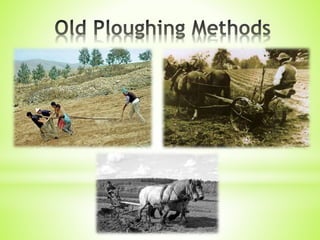
What is Ploughing?
• Ploughing is when you dig the soil making it loose.
• This brings the nutrients (all the goods things in soil) to
the top and pushes the bad things (like weeds and
seeds and old soil) to the bottom.
• Loosening the soil also means that water can get to the
seeds instead of running off the top.
What is Sowing?
• sowing is when the farmers put seeds in the soil they
have ploughed.
• The seeds are then covered with soil and watered.
• The seeds are then left to grow.
• It needs three things to help it grow; water, soil,
sunlight.
What is Harvesting?
• Plants have matured when they are fully grown and
ready to eat.
• When the crop has matured its get collected from the
fields and this is harvesting.
• It then gets graded (sorting the good crop from the
bad) and packed ready for people to buy and eat.
*
*
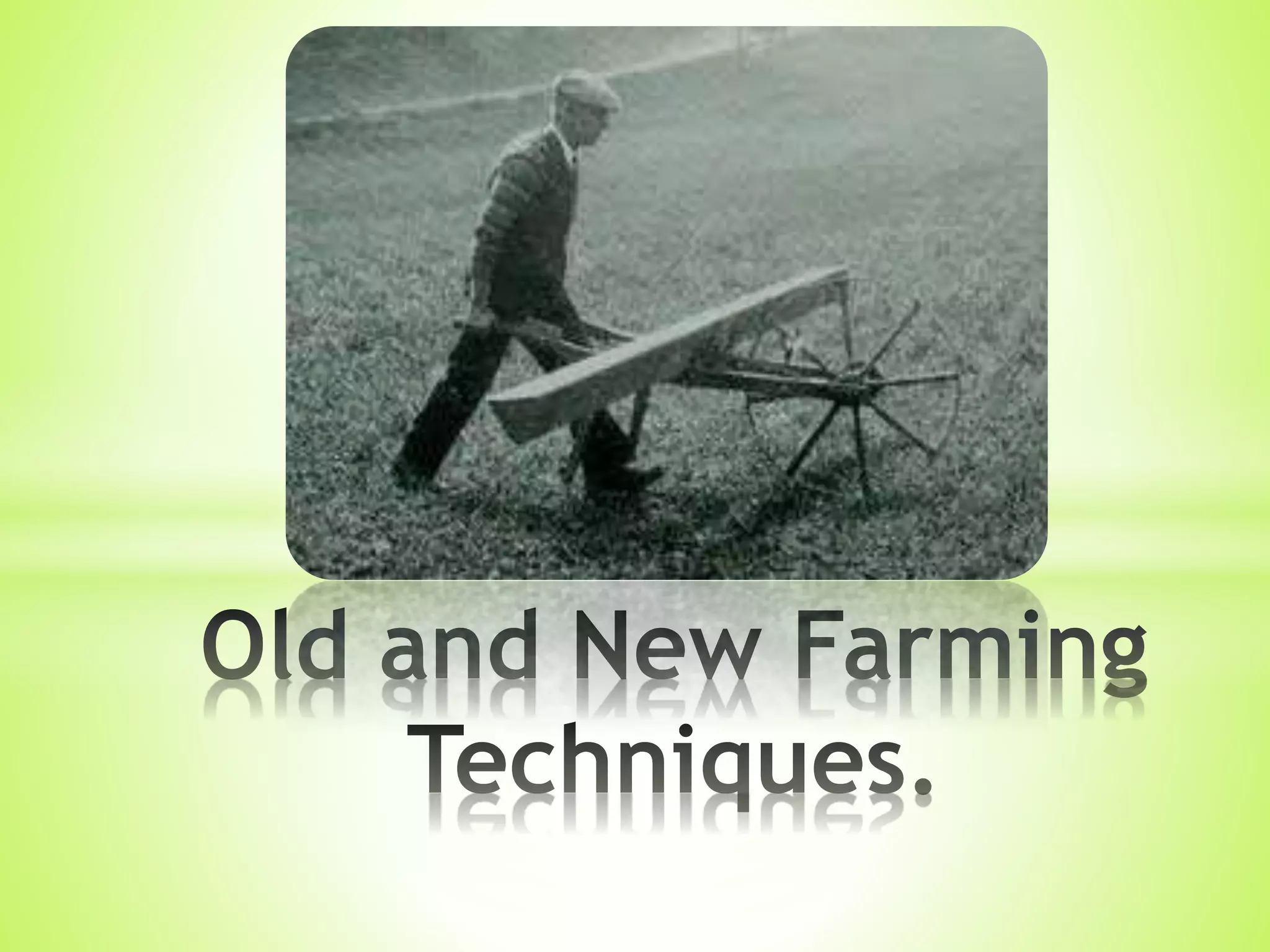
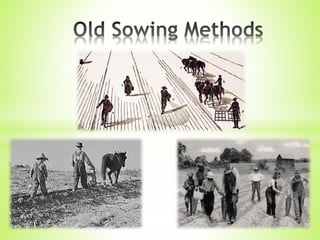
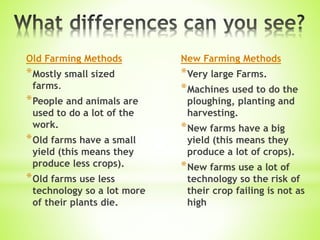
Old Farming Methods
*Mostly small sized
farms.
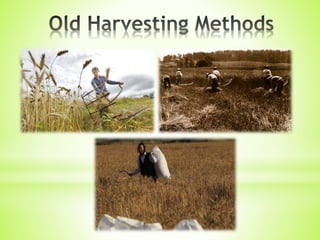
*People and animals are
used to do a lot of the
work.
*Old farms have a small
yield (this means they
produce less crops).
*Old farms use less
technology so a lot more
of their plants die.
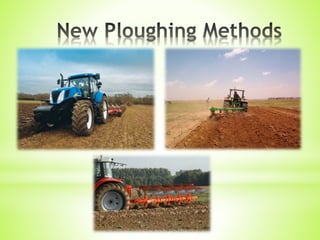
New Farming Methods
*Very large Farms.
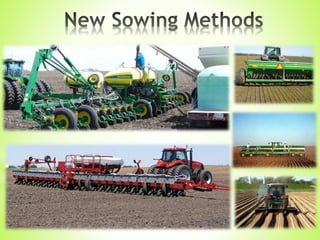
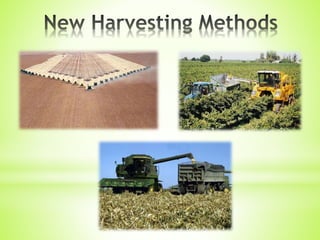
*Machines used to do the
ploughing, planting and
harvesting.
*New farms have a big
yield (this means they
produce a lot of crops).
*New farms use a lot of
technology so the risk of
their crop failing is not as
high

Old and new_farming

  • 2.
    *objective *The environmental technological,economic and social factors which influence the distribution of different types and systems of farming *The factors which influence the patterns of agricultural output and trade. *New agricultural techniques which increase yields.
  • 3.
    *Outcome *ALL: all studentsare able to make simple identification as well as identify factors that influence the patterns of agriculture. *MOST: students are able to work on skill of interpretation. *SOME: students are able to develop a sustainable plan.
  • 4.
    What is Ploughing? •Ploughing is when you dig the soil making it loose. • This brings the nutrients (all the goods things in soil) to the top and pushes the bad things (like weeds and seeds and old soil) to the bottom. • Loosening the soil also means that water can get to the seeds instead of running off the top.
  • 7.
    What is Sowing? •sowing is when the farmers put seeds in the soil they have ploughed. • The seeds are then covered with soil and watered. • The seeds are then left to grow. • It needs three things to help it grow; water, soil, sunlight.
  • 10.
    What is Harvesting? •Plants have matured when they are fully grown and ready to eat. • When the crop has matured its get collected from the fields and this is harvesting. • It then gets graded (sorting the good crop from the bad) and packed ready for people to buy and eat.
  • 13.
  • 14.
  • 15.
    Old Farming Methods *Mostlysmall sized farms. *People and animals are used to do a lot of the work. *Old farms have a small yield (this means they produce less crops). *Old farms use less technology so a lot more of their plants die. New Farming Methods *Very large Farms. *Machines used to do the ploughing, planting and harvesting. *New farms have a big yield (this means they produce a lot of crops). *New farms use a lot of technology so the risk of their crop failing is not as high