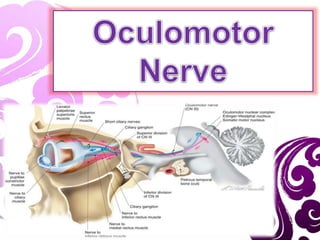
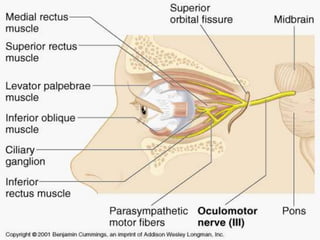
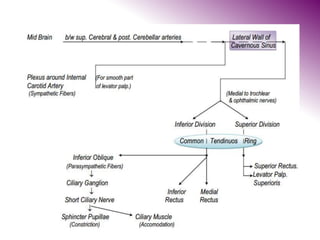
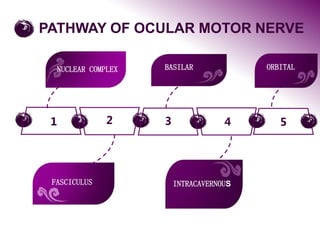
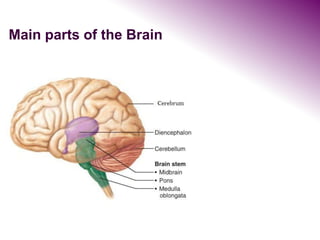
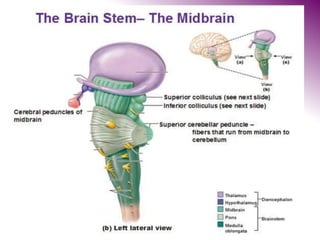
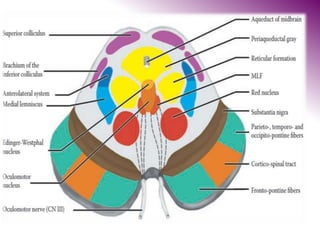
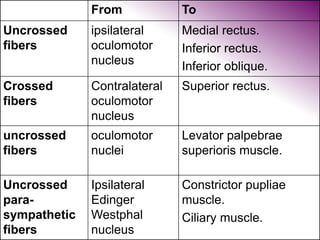
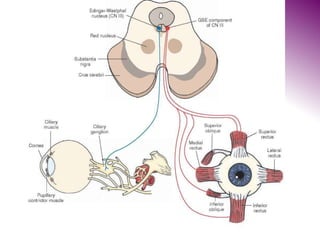
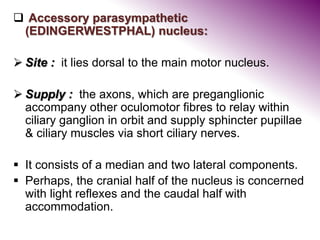
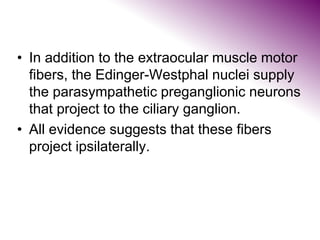
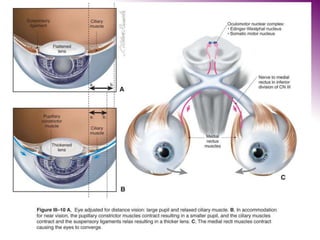
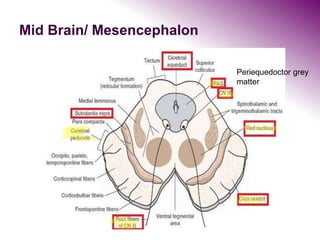
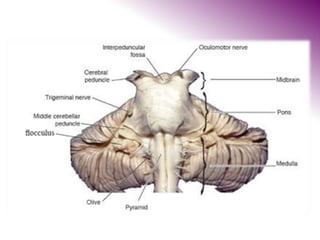
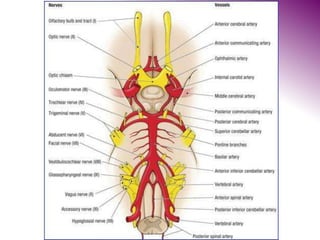
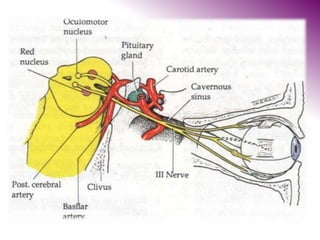
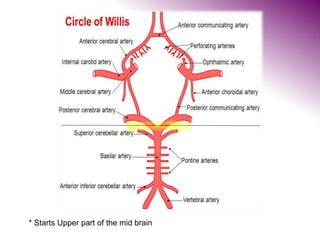
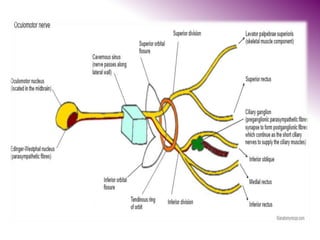
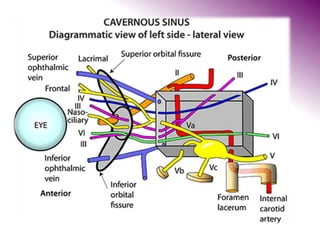
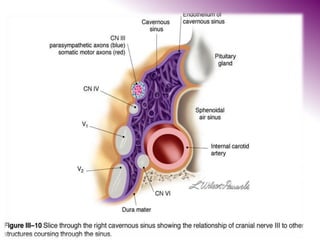
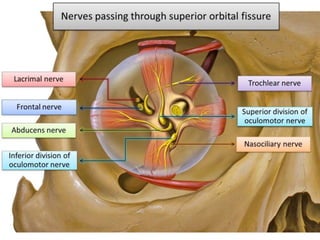
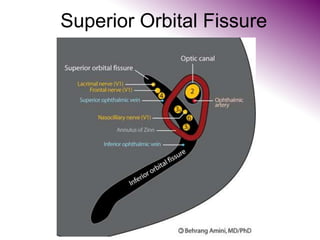
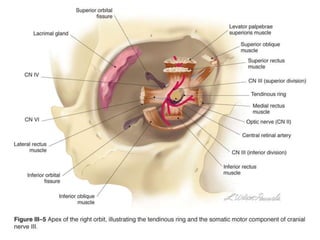
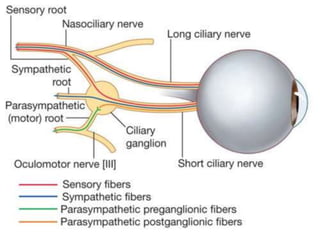
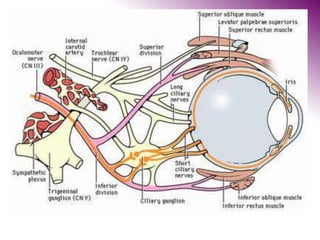
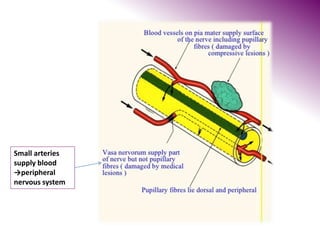
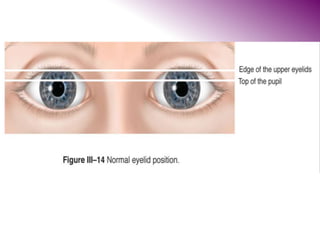
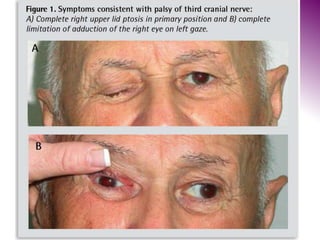
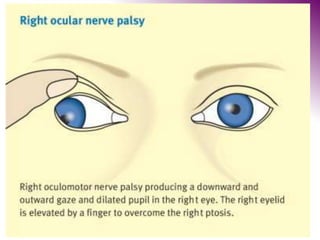
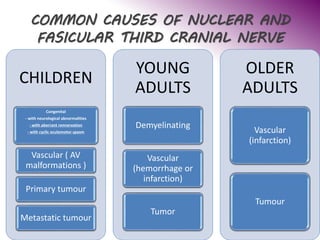
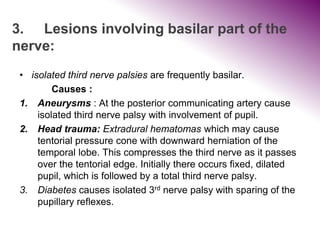
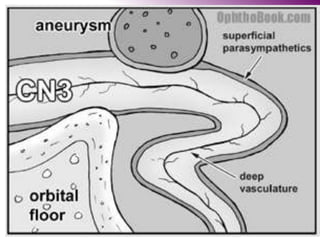
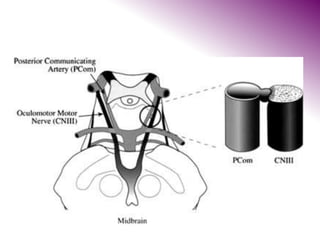
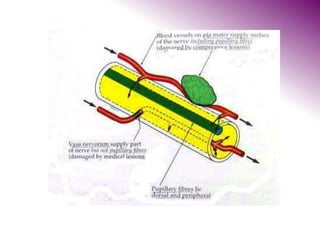
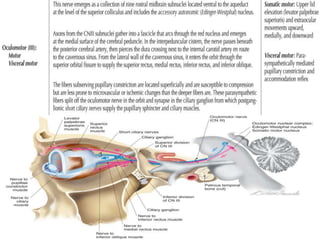
The document discusses the anatomy and clinical presentations of the third cranial nerve (oculomotor nerve). It begins by describing the origin and course of the nerve, including its nuclei in the midbrain and pathways through the brainstem and cavernous sinus. It then discusses the individual branches and functions of the nerve in innervating the extraocular muscles and parasympathetic fibers to the eye. The summary concludes by noting that damage to the third cranial nerve can cause a total third nerve palsy presenting with ptosis, external eye movement limitations, pupil dilation and loss of accommodation.