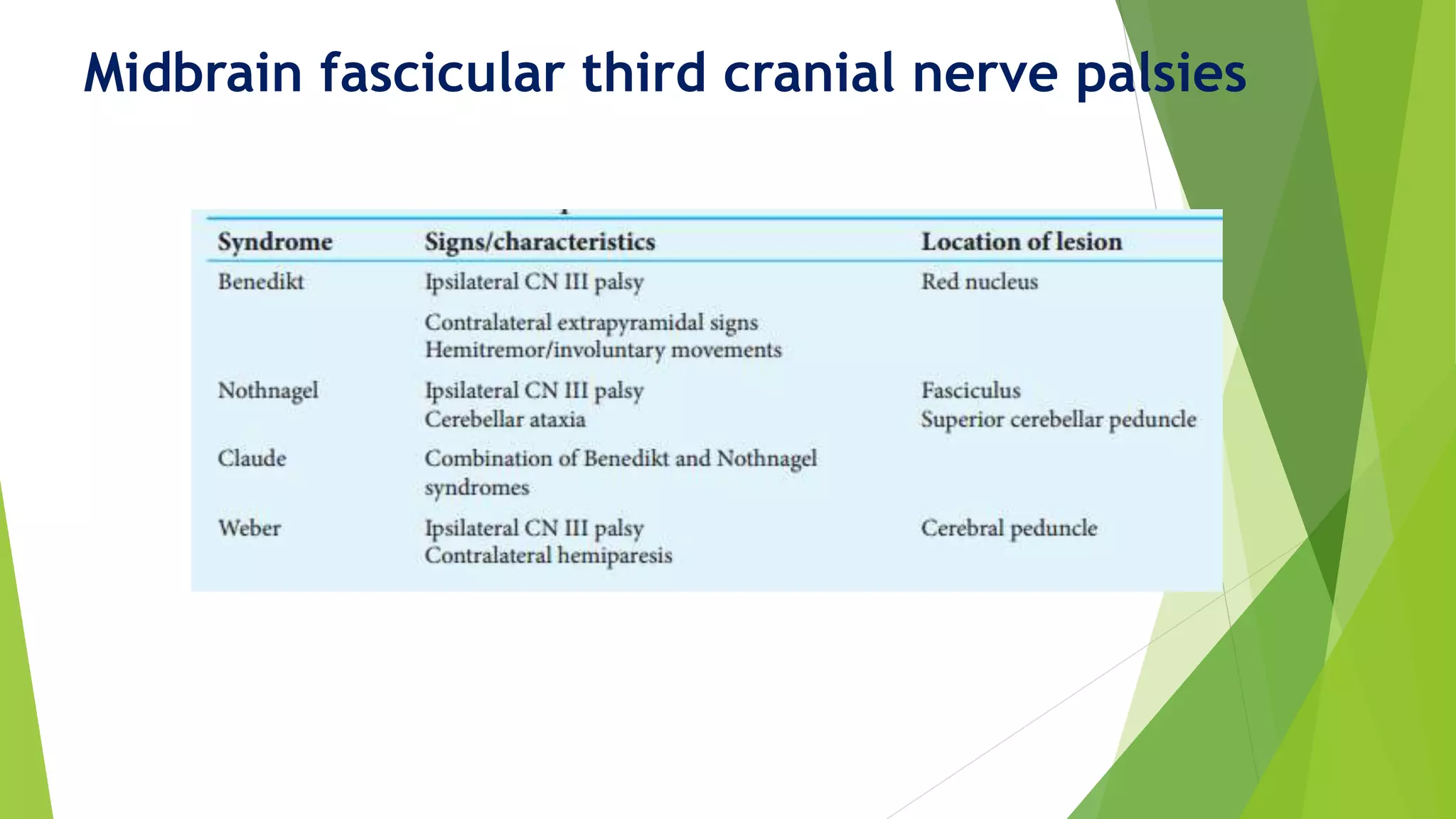
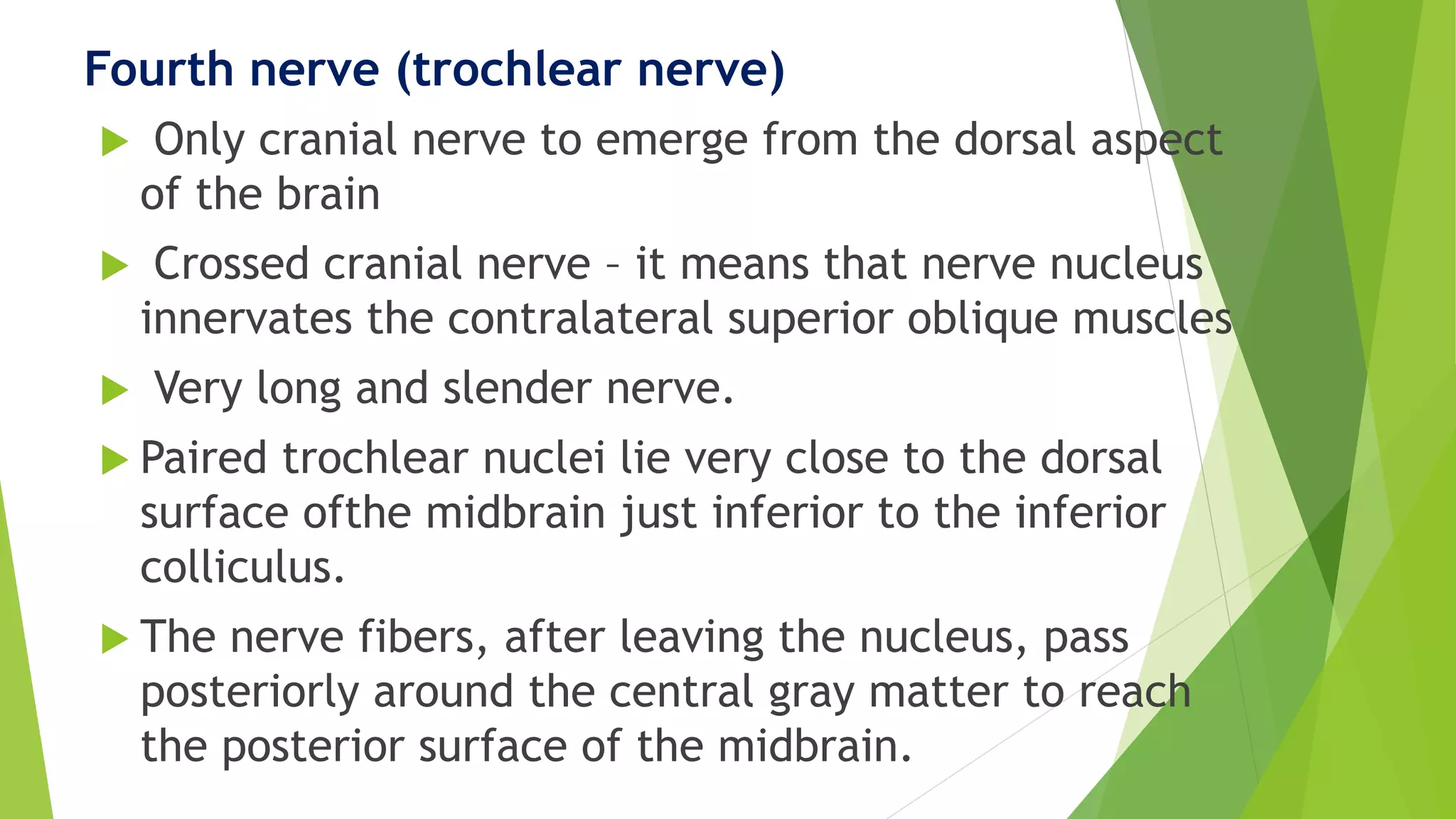
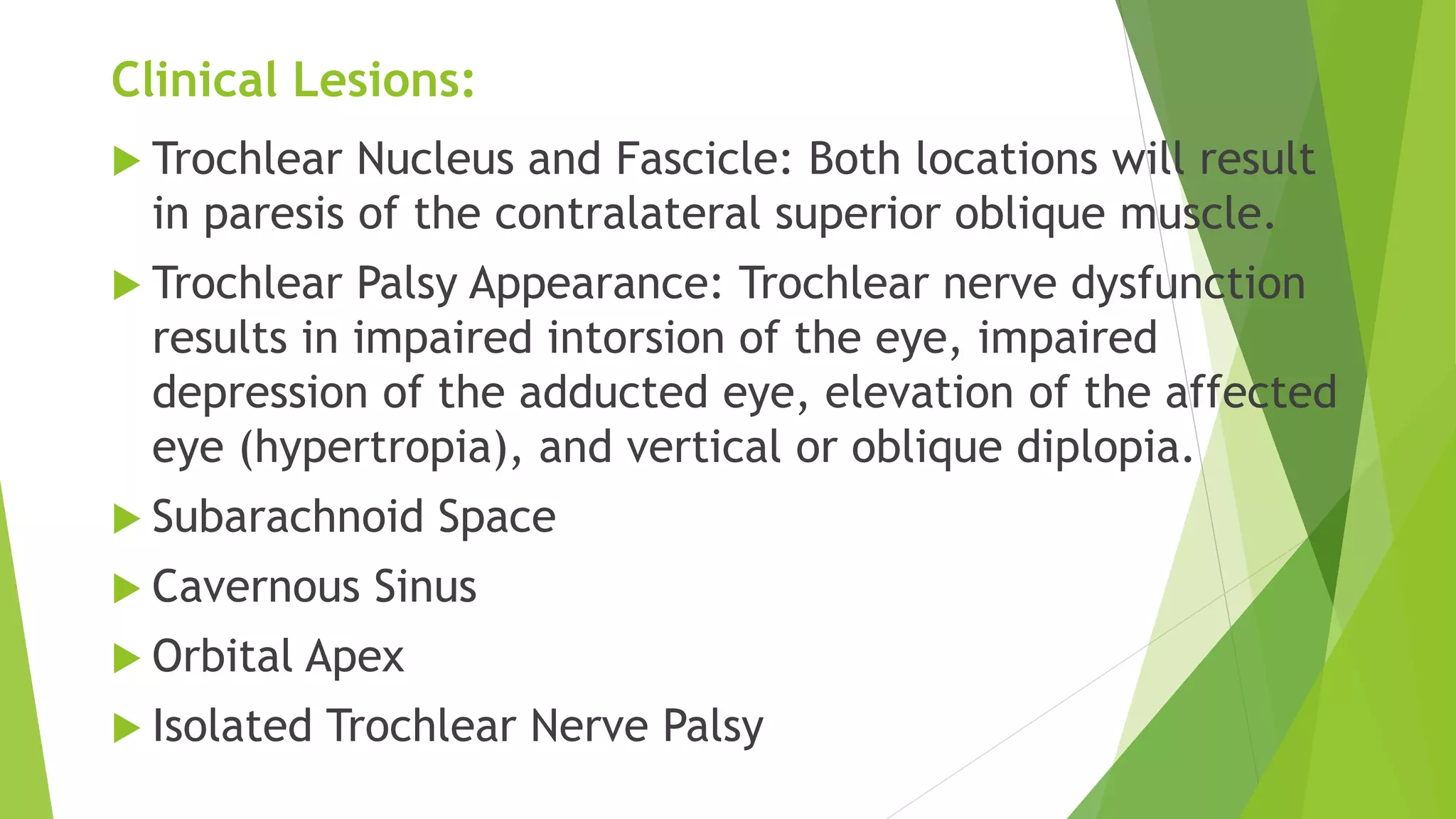
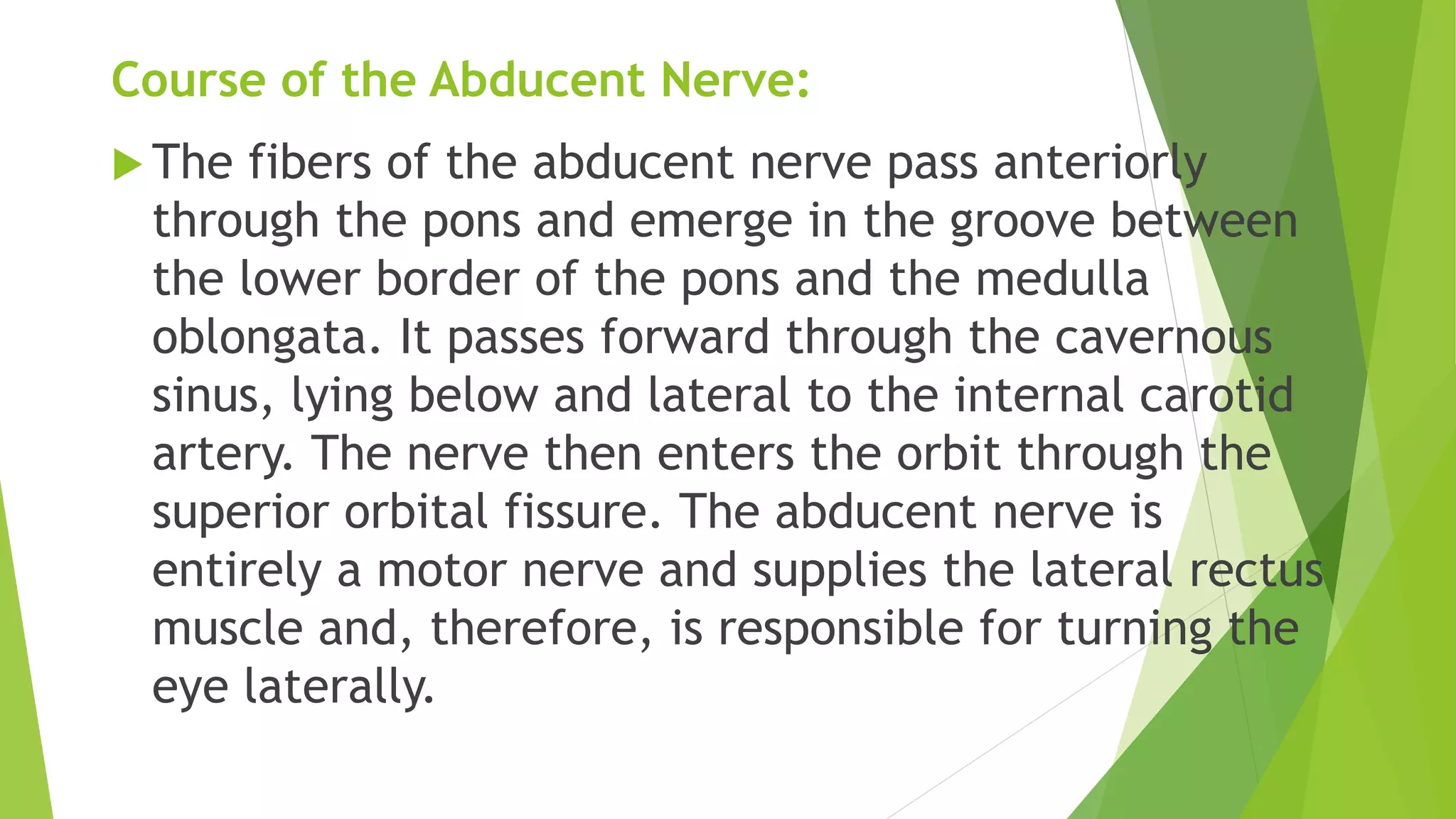
The document discusses cranial nerves III (oculomotor), IV (trochlear), and VI (abducens). It describes the anatomy and nuclei of each nerve, their paths through the brain and orbit, the muscles they innervate, and examples of clinical lesions that can occur. Cranial nerve III has motor functions including eye movement and parasympathetic innervation. Cranial nerve IV is the only crossed nerve and innervates the superior oblique muscle. Cranial nerve VI innervates the lateral rectus muscle and is responsible for eye abduction.