













To reflect on the broad scope of
  occupational therapy practice.


To recognise the occupational lens.


 To understand new terms about
      occupational issues.
Occupational therapy is a profession
concerned with promoting health and
   well being through occupation.
The primary goal of occupational therapy
 is to enable people to participate in the
         activities of everyday life.
Occupational therapists achieve this
outcome by enabling people to do things
    that will enhance their ability to
     participate or by modifying the
     environment to better support
              participation.
Occupational therapists work
collaboratively with individuals or groups
                of people.
Occupational therapists believe that
 participation can be supported or
           restricted by...

        the abilities of the individual
Occupational therapists believe that
 participation can be supported or
           restricted by...

        the occupation
Occupational therapists believe that
 participation can be supported or
           restricted by...

        the physical, social, attitudinal
        and legislative environments
Occupational therapy is a profession
concerned with promoting health and
   well being through occupation.
blah
BLAH


           BLAH


                     bl ah
bl
   a
       h
                  BLAH
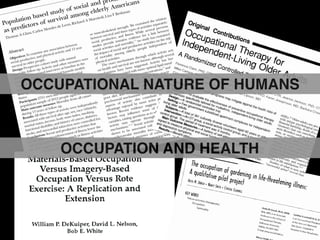
OCCUPATIONAL NATURE OF HUMANS


    OCCUPATION AND HEALTH
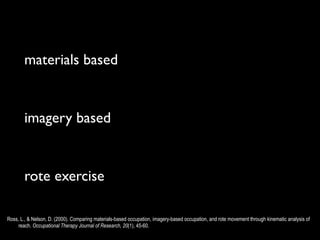
materials based


        imagery based


        rote exercise

Ross, L., & Nelson, D. (2000). Comparing materials-based occupation, imagery-based occupation, and rote movement through kinematic analysis of
     reach. Occupational Therapy Journal of Research, 20(1), 45-60.
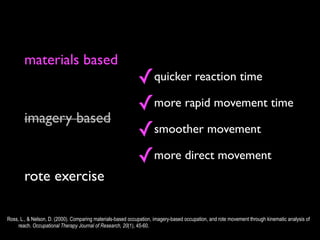
materials based
                                                             ✓quicker reaction time
                                                             ✓more rapid movement time
        imagery based
                                                             ✓smoother movement
                                                             ✓more direct movement
        rote exercise

Ross, L., & Nelson, D. (2000). Comparing materials-based occupation, imagery-based occupation, and rote movement through kinematic analysis of
     reach. Occupational Therapy Journal of Research, 20(1), 45-60.
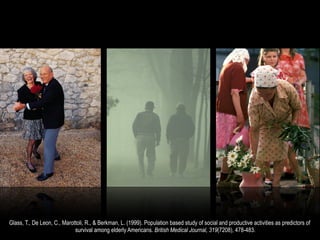
Glass, T., De Leon, C., Marottoli, R., & Berkman, L. (1999). Population based study of social and productive activities as predictors of
                             survival among elderly Americans. British Medical Journal, 319(7208), 478-483.
an
occupational
perspective
of humans and health
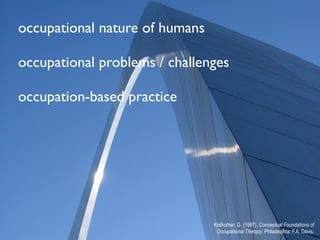
occupational nature of humans

occupational problems / challenges

occupation-based practice


                                Kielhofner, G. (1997). Conceptual Foundations of
                                 Occupational Therapy. Philadeplhia: F.A. Davis.
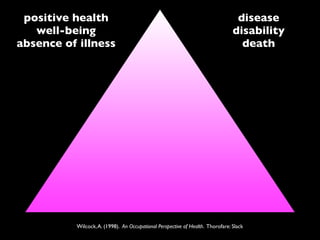
Wilcock’s Triangles
positive health                                                                 disease
   well-being                                                                   disability
absence of illness                                                                death


          Wilcock, A. (1998). An Occupational Perspective of Health. Thorofare: Slack
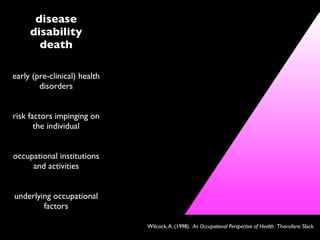
disease
     disability
       death

early (pre-clinical) health
        disorders


risk factors impinging on
       the individual


occupational institutions
     and activities


underlying occupational
        factors

                              Wilcock, A. (1998). An Occupational Perspective of Health. Thorofare: Slack
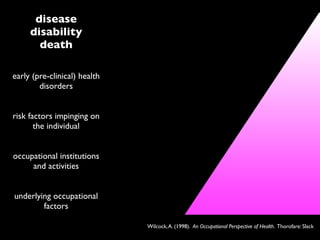
disease
     disability
       death

early (pre-clinical) health
        disorders


risk factors impinging on
       the individual


occupational institutions
     and activities


underlying occupational
        factors

                              Wilcock, A. (1998). An Occupational Perspective of Health. Thorofare: Slack
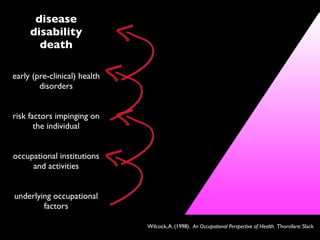
disease
     disability
       death

early (pre-clinical) health
        disorders


risk factors impinging on
       the individual


occupational institutions
     and activities


underlying occupational
        factors

                              Wilcock, A. (1998). An Occupational Perspective of Health. Thorofare: Slack
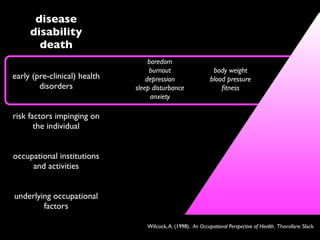
disease
     disability
       death
                                   boredom
                                   burnout                     body weight
early (pre-clinical) health       depression                  blood pressure
        disorders             sleep disturbance                   fitness
                                    anxiety

risk factors impinging on
       the individual


occupational institutions
     and activities


underlying occupational
        factors

                                  Wilcock, A. (1998). An Occupational Perspective of Health. Thorofare: Slack
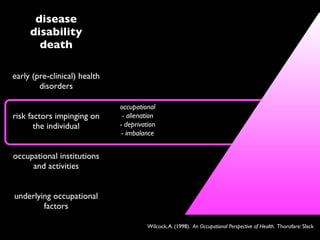
disease
     disability
       death

early (pre-clinical) health
        disorders

                              occupational
risk factors impinging on      - alienation
       the individual         - deprivation
                               - imbalance


occupational institutions
     and activities


underlying occupational
        factors

                                        Wilcock, A. (1998). An Occupational Perspective of Health. Thorofare: Slack
occupational imbalance


               Wilcock, A. (1998). An Occupational Perspective of Health. Thorofare: Slack
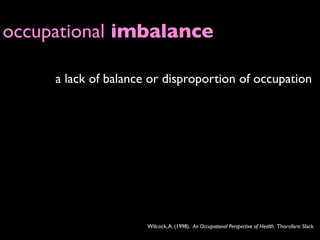
occupational imbalance

     a lack of balance or disproportion of occupation


                      Wilcock, A. (1998). An Occupational Perspective of Health. Thorofare: Slack
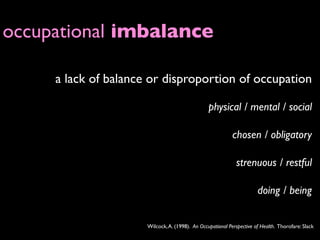
occupational imbalance

     a lack of balance or disproportion of occupation

                                                 physical / mental / social

                                                            chosen / obligatory

                                                              strenuous / restful

                                                                       doing / being


                      Wilcock, A. (1998). An Occupational Perspective of Health. Thorofare: Slack
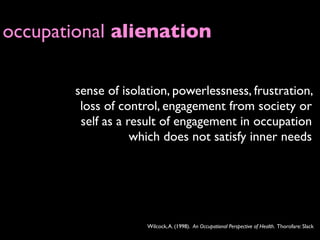
occupational alienation

       sense of isolation, powerlessness, frustration,
        loss of control, engagement from society or
        self as a result of engagement in occupation
                   which does not satisfy inner needs


                     Wilcock, A. (1998). An Occupational Perspective of Health. Thorofare: Slack
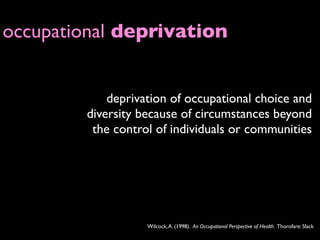
occupational deprivation


            deprivation of occupational choice and
        diversity because of circumstances beyond
         the control of individuals or communities


                   Wilcock, A. (1998). An Occupational Perspective of Health. Thorofare: Slack
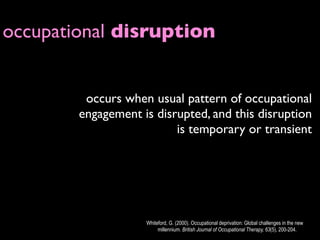
occupational disruption


         occurs when usual pattern of occupational
        engagement is disrupted, and this disruption
                          is temporary or transient


                    Whiteford, G. (2000). Occupational deprivation: Global challenges in the new
                         millennium. British Journal of Occupational Therapy, 63(5), 200-204.
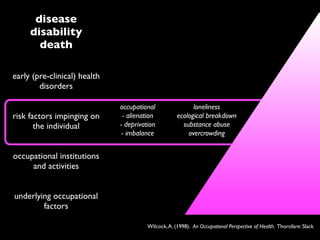
disease
     disability
       death

early (pre-clinical) health
        disorders

                              occupational                 loneliness
risk factors impinging on      - alienation          ecological breakdown
       the individual         - deprivation            substance abuse
                               - imbalance               overcrowding


occupational institutions
     and activities


underlying occupational
        factors

                                        Wilcock, A. (1998). An Occupational Perspective of Health. Thorofare: Slack
disease
     disability
       death

early (pre-clinical) health
        disorders


risk factors impinging on
       the individual

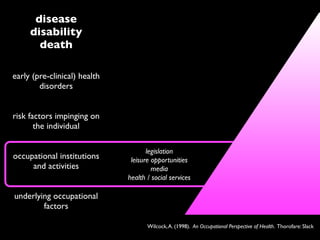
                                     legislation
occupational institutions      leisure opportunities
     and activities                    media
                              health / social services

underlying occupational
        factors

                                     Wilcock, A. (1998). An Occupational Perspective of Health. Thorofare: Slack
disease
     disability
       death

early (pre-clinical) health
        disorders


risk factors impinging on
       the individual


occupational institutions
     and activities

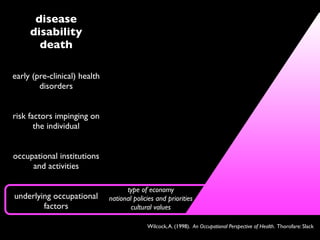
                                    type of economy
underlying occupational       national policies and priorities
        factors                       cultural values

                                            Wilcock, A. (1998). An Occupational Perspective of Health. Thorofare: Slack
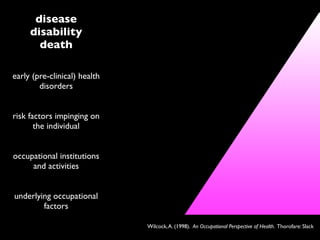
disease
     disability
       death

early (pre-clinical) health
        disorders


risk factors impinging on
       the individual


occupational institutions
     and activities


underlying occupational
        factors

                              Wilcock, A. (1998). An Occupational Perspective of Health. Thorofare: Slack
an occupational
perspective
of humans and health
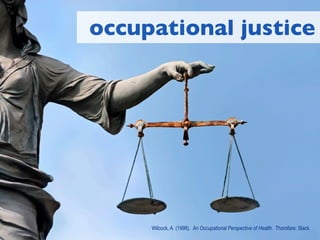
occupational justice


     Wilcock, A. (1998). An Occupational Perspective of Health. Thorofare: Slack
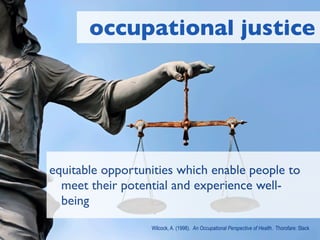
occupational justice


equitable opportunities which enable people to
  meet their potential and experience well-
  being
                  Wilcock, A. (1998). An Occupational Perspective of Health. Thorofare: Slack
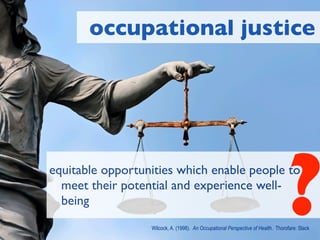
occupational justice


equitable opportunities which enable people to
  meet their potential and experience well-
  being
                                                                                  ?
                  Wilcock, A. (1998). An Occupational Perspective of Health. Thorofare: Slack
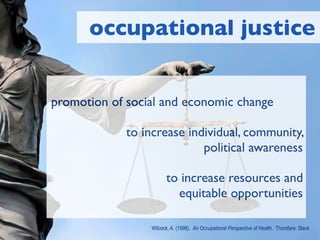
occupational justice


promotion of social and economic change

             to increase individual, community,
                            political awareness

                       to increase resources and
                         equitable opportunities

                 Wilcock, A. (1998). An Occupational Perspective of Health. Thorofare: Slack
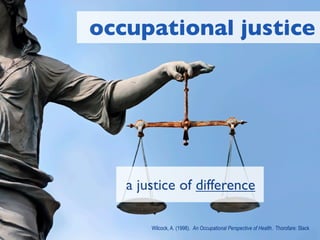
occupational justice


   a justice of difference

       Wilcock, A. (1998). An Occupational Perspective of Health. Thorofare: Slack
Chang, E. (2008). Drug use an occupation: Reflecting on Insite,Vancouver's sueprvised injection site. Occupational Therapy Now, 10(3), 21-23.

Polatajko, H., et al. (2007). Human occupation in context. In E. Townsend & H. Polatajko (Eds.), Enabling Occupation II: Advancing an
     Occupational Therapy Vision for Health,Well-being, & Justice Through Occupation (pp. 37-61). Ottawa: Canadian Association of Occupational
     Therapists.
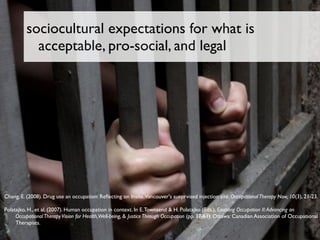
sociocultural expectations for what is
            acceptable, pro-social, and legal


Chang, E. (2008). Drug use an occupation: Reflecting on Insite,Vancouver's sueprvised injection site. Occupational Therapy Now, 10(3), 21-23.

Polatajko, H., et al. (2007). Human occupation in context. In E. Townsend & H. Polatajko (Eds.), Enabling Occupation II: Advancing an
     Occupational Therapy Vision for Health,Well-being, & Justice Through Occupation (pp. 37-61). Ottawa: Canadian Association of Occupational
     Therapists.
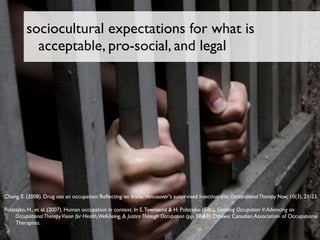
sociocultural expectations for what is
            acceptable, pro-social, and legal


Chang, E. (2008). Drug use an occupation: Reflecting on Insite,Vancouver's sueprvised injection site. Occupational Therapy Now, 10(3), 21-23.

Polatajko, H., et al. (2007). Human occupation in context. In E. Townsend & H. Polatajko (Eds.), Enabling Occupation II: Advancing an
     Occupational Therapy Vision for Health,Well-being, & Justice Through Occupation (pp. 37-61). Ottawa: Canadian Association of Occupational
     Therapists.
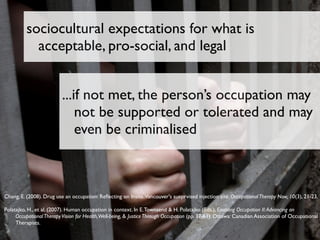
sociocultural expectations for what is
            acceptable, pro-social, and legal


                          ...if not met, the person’s occupation may
                              not be supported or tolerated and may
                              even be criminalised


Chang, E. (2008). Drug use an occupation: Reflecting on Insite,Vancouver's sueprvised injection site. Occupational Therapy Now, 10(3), 21-23.

Polatajko, H., et al. (2007). Human occupation in context. In E. Townsend & H. Polatajko (Eds.), Enabling Occupation II: Advancing an
     Occupational Therapy Vision for Health,Well-being, & Justice Through Occupation (pp. 37-61). Ottawa: Canadian Association of Occupational
     Therapists.
To reflect on the broad scope of
  occupational therapy practice.


To recognise the occupational lens.


 To understand new terms about
      occupational issues.

Occupational justice for slideshare

  • 3.
    To reflect onthe broad scope of occupational therapy practice. To recognise the occupational lens. To understand new terms about occupational issues.
  • 5.
    Occupational therapy isa profession concerned with promoting health and well being through occupation.
  • 6.
    The primary goalof occupational therapy is to enable people to participate in the activities of everyday life.
  • 7.
    Occupational therapists achievethis outcome by enabling people to do things that will enhance their ability to participate or by modifying the environment to better support participation.
  • 8.
    Occupational therapists work collaborativelywith individuals or groups of people.
  • 9.
    Occupational therapists believethat participation can be supported or restricted by... the abilities of the individual
  • 10.
    Occupational therapists believethat participation can be supported or restricted by... the occupation
  • 11.
    Occupational therapists believethat participation can be supported or restricted by... the physical, social, attitudinal and legislative environments
  • 13.
    Occupational therapy isa profession concerned with promoting health and well being through occupation.
  • 14.
    blah BLAH BLAH bl ah bl a h BLAH
  • 15.
    OCCUPATIONAL NATURE OFHUMANS OCCUPATION AND HEALTH
  • 16.
    materials based imagery based rote exercise Ross, L., & Nelson, D. (2000). Comparing materials-based occupation, imagery-based occupation, and rote movement through kinematic analysis of reach. Occupational Therapy Journal of Research, 20(1), 45-60.
  • 17.
    materials based ✓quicker reaction time ✓more rapid movement time imagery based ✓smoother movement ✓more direct movement rote exercise Ross, L., & Nelson, D. (2000). Comparing materials-based occupation, imagery-based occupation, and rote movement through kinematic analysis of reach. Occupational Therapy Journal of Research, 20(1), 45-60.
  • 18.
    Glass, T., DeLeon, C., Marottoli, R., & Berkman, L. (1999). Population based study of social and productive activities as predictors of survival among elderly Americans. British Medical Journal, 319(7208), 478-483.
  • 23.
  • 24.
    occupational nature ofhumans occupational problems / challenges occupation-based practice Kielhofner, G. (1997). Conceptual Foundations of Occupational Therapy. Philadeplhia: F.A. Davis.
  • 25.
  • 26.
    positive health disease well-being disability absence of illness death Wilcock, A. (1998). An Occupational Perspective of Health. Thorofare: Slack
  • 27.
    disease disability death early (pre-clinical) health disorders risk factors impinging on the individual occupational institutions and activities underlying occupational factors Wilcock, A. (1998). An Occupational Perspective of Health. Thorofare: Slack
  • 28.
    disease disability death early (pre-clinical) health disorders risk factors impinging on the individual occupational institutions and activities underlying occupational factors Wilcock, A. (1998). An Occupational Perspective of Health. Thorofare: Slack
  • 29.
    disease disability death early (pre-clinical) health disorders risk factors impinging on the individual occupational institutions and activities underlying occupational factors Wilcock, A. (1998). An Occupational Perspective of Health. Thorofare: Slack
  • 30.
    disease disability death boredom burnout body weight early (pre-clinical) health depression blood pressure disorders sleep disturbance fitness anxiety risk factors impinging on the individual occupational institutions and activities underlying occupational factors Wilcock, A. (1998). An Occupational Perspective of Health. Thorofare: Slack
  • 31.
    disease disability death early (pre-clinical) health disorders occupational risk factors impinging on - alienation the individual - deprivation - imbalance occupational institutions and activities underlying occupational factors Wilcock, A. (1998). An Occupational Perspective of Health. Thorofare: Slack
  • 32.
    occupational imbalance Wilcock, A. (1998). An Occupational Perspective of Health. Thorofare: Slack
  • 33.
    occupational imbalance a lack of balance or disproportion of occupation Wilcock, A. (1998). An Occupational Perspective of Health. Thorofare: Slack
  • 34.
    occupational imbalance a lack of balance or disproportion of occupation physical / mental / social chosen / obligatory strenuous / restful doing / being Wilcock, A. (1998). An Occupational Perspective of Health. Thorofare: Slack
  • 35.
    occupational alienation sense of isolation, powerlessness, frustration, loss of control, engagement from society or self as a result of engagement in occupation which does not satisfy inner needs Wilcock, A. (1998). An Occupational Perspective of Health. Thorofare: Slack
  • 36.
    occupational deprivation deprivation of occupational choice and diversity because of circumstances beyond the control of individuals or communities Wilcock, A. (1998). An Occupational Perspective of Health. Thorofare: Slack
  • 37.
    occupational disruption occurs when usual pattern of occupational engagement is disrupted, and this disruption is temporary or transient Whiteford, G. (2000). Occupational deprivation: Global challenges in the new millennium. British Journal of Occupational Therapy, 63(5), 200-204.
  • 38.
    disease disability death early (pre-clinical) health disorders occupational loneliness risk factors impinging on - alienation ecological breakdown the individual - deprivation substance abuse - imbalance overcrowding occupational institutions and activities underlying occupational factors Wilcock, A. (1998). An Occupational Perspective of Health. Thorofare: Slack
  • 39.
    disease disability death early (pre-clinical) health disorders risk factors impinging on the individual legislation occupational institutions leisure opportunities and activities media health / social services underlying occupational factors Wilcock, A. (1998). An Occupational Perspective of Health. Thorofare: Slack
  • 40.
    disease disability death early (pre-clinical) health disorders risk factors impinging on the individual occupational institutions and activities type of economy underlying occupational national policies and priorities factors cultural values Wilcock, A. (1998). An Occupational Perspective of Health. Thorofare: Slack
  • 41.
    disease disability death early (pre-clinical) health disorders risk factors impinging on the individual occupational institutions and activities underlying occupational factors Wilcock, A. (1998). An Occupational Perspective of Health. Thorofare: Slack
  • 44.
  • 45.
    occupational justice Wilcock, A. (1998). An Occupational Perspective of Health. Thorofare: Slack
  • 46.
    occupational justice equitable opportunitieswhich enable people to meet their potential and experience well- being Wilcock, A. (1998). An Occupational Perspective of Health. Thorofare: Slack
  • 47.
    occupational justice equitable opportunitieswhich enable people to meet their potential and experience well- being ? Wilcock, A. (1998). An Occupational Perspective of Health. Thorofare: Slack
  • 48.
    occupational justice promotion ofsocial and economic change to increase individual, community, political awareness to increase resources and equitable opportunities Wilcock, A. (1998). An Occupational Perspective of Health. Thorofare: Slack
  • 49.
    occupational justice a justice of difference Wilcock, A. (1998). An Occupational Perspective of Health. Thorofare: Slack
  • 50.
    Chang, E. (2008).Drug use an occupation: Reflecting on Insite,Vancouver's sueprvised injection site. Occupational Therapy Now, 10(3), 21-23. Polatajko, H., et al. (2007). Human occupation in context. In E. Townsend & H. Polatajko (Eds.), Enabling Occupation II: Advancing an Occupational Therapy Vision for Health,Well-being, & Justice Through Occupation (pp. 37-61). Ottawa: Canadian Association of Occupational Therapists.
  • 51.
    sociocultural expectations forwhat is acceptable, pro-social, and legal Chang, E. (2008). Drug use an occupation: Reflecting on Insite,Vancouver's sueprvised injection site. Occupational Therapy Now, 10(3), 21-23. Polatajko, H., et al. (2007). Human occupation in context. In E. Townsend & H. Polatajko (Eds.), Enabling Occupation II: Advancing an Occupational Therapy Vision for Health,Well-being, & Justice Through Occupation (pp. 37-61). Ottawa: Canadian Association of Occupational Therapists.
  • 52.
    sociocultural expectations forwhat is acceptable, pro-social, and legal Chang, E. (2008). Drug use an occupation: Reflecting on Insite,Vancouver's sueprvised injection site. Occupational Therapy Now, 10(3), 21-23. Polatajko, H., et al. (2007). Human occupation in context. In E. Townsend & H. Polatajko (Eds.), Enabling Occupation II: Advancing an Occupational Therapy Vision for Health,Well-being, & Justice Through Occupation (pp. 37-61). Ottawa: Canadian Association of Occupational Therapists.
  • 53.
    sociocultural expectations forwhat is acceptable, pro-social, and legal ...if not met, the person’s occupation may not be supported or tolerated and may even be criminalised Chang, E. (2008). Drug use an occupation: Reflecting on Insite,Vancouver's sueprvised injection site. Occupational Therapy Now, 10(3), 21-23. Polatajko, H., et al. (2007). Human occupation in context. In E. Townsend & H. Polatajko (Eds.), Enabling Occupation II: Advancing an Occupational Therapy Vision for Health,Well-being, & Justice Through Occupation (pp. 37-61). Ottawa: Canadian Association of Occupational Therapists.
  • 55.
    To reflect onthe broad scope of occupational therapy practice. To recognise the occupational lens. To understand new terms about occupational issues.