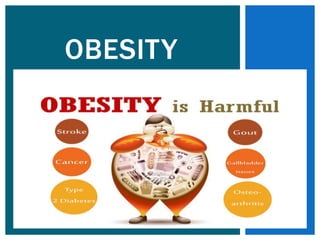
OBESITY
Obesity is defined as an excess of
total body fat that is documented by
a BMI of ≥30 kg/m2.
Obesity is not just a cosmetic
concern. It increases your risk of
diseases and significant impairment
of health
DEFINITION
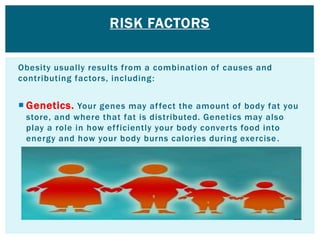
Obesity usually results from a combination of causes and
contributing factors, including:
 Genetics. Your genes may affect the amount of body fat you
store, and where that fat is distributed. Genetics may also
play a role in how efficiently your body converts food into
energy and how your body burns calories during exercise.
RISK FACTORS
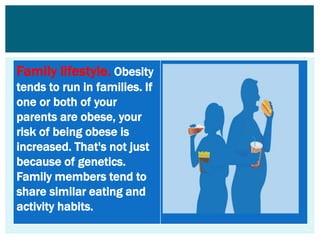
Family lifestyle. Obesity
tends to run in families. If
one or both of your
parents are obese, your
risk of being obese is
increased. That's not just
because of genetics.
Family members tend to
share similar eating and
activity habits.
Inactivity. If you're not very active, you don't
burn as many calories. With a sedentary lifestyle,
you can easily take in more calories every day
than you burn through exercise and routine daily
activities.
Unhealthy diet. A diet that's high in calories,
lacking in fruits and vegetables, full of fast food,
contributes to weight gain.
Medical problems. In some people, obesity can be
traced to a medical cause, such as Cushing's
syndrome(occurs due to abnormally high levels of
cortisol, the most common cause is overuse of
corticosteroids) and other conditions. Medical
problems, such as arthritis, also can lead to
decreased activity, which may result in weight gain.
Certain medications. Some medications can lead
to weight gain if you don't compensate through diet or
activity. These medications include some
antidepressants, anti-seizure medications, diabetes
medications, antipsychotic medications, steroids and
beta blockers.
 Social and economic issues. Avoiding obesity is difficult if
you don't have safe areas to exercise. Similarly, you may not
have been taught healthy ways of cooking, or you may not have
money to buy healthier foods.
 Age. Obesity can occur at any age, even in young children. But
as you age, hormonal changes and a less active lifestyle
increase your risk of obesity. In addition, the amount of muscle
in your body tends to decrease with age. This lower muscle
mass leads to a decrease in metabolism. These changes also
reduce calorie needs, and can make it harder to keep off
excess weight.
 Pregnancy. During pregnancy, a woman's weight necessarily
increases. Some women find this weight difficult to lose after
the baby is born. This weight gain may contribute to the
development of obesity in women.
 Quitting smoking. Quitting smoking is often associated
with weight gain.
 Lack of sleep. Not getting enough sleep or getting too much
sleep can cause changes in hormones that increase your
appetite. You may also crave foods high in calories and
carbohydrates, which can contribute to weight gain.
The
psychological
factor plays an
important role
in weight gain
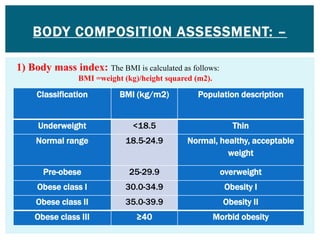
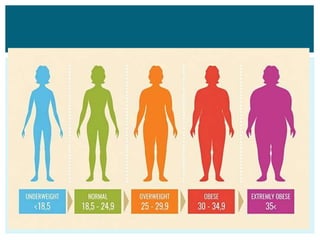
Classification BMI (kg/m2) Population description
Underweight <18.5 Thin
Normal range 18.5-24.9 Normal, healthy, acceptable
weight
Pre-obese 25-29.9 overweight
Obese class I 30.0-34.9 Obesity I
Obese class II 35.0-39.9 Obesity II
Obese class III ≥40 Morbid obesity
BODY COMPOSITION ASSESSMENT: –
1) Body mass index: The BMI is calculated as follows:
BMI =weight (kg)/height squared (m2).
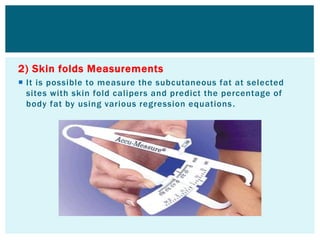
2) Skin folds Measurements
 It is possible to measure the subcutaneous fat at selected
sites with skin fold calipers and predict the percentage of
body fat by using various regression equations.
3) Regional fat distribution (girth measurements)
Waist circumference
Waist circumference is an indirect indicator of
intra-abdominal fat tissue, often called visceral
fat. Waist circumference is preferred over waist-
to-hip ratio for estimating abdominal fat.
A high waist circumference is associated with an
increased risk for type 2 diabetes, high
cholesterol, high blood pressure, and
cardiovascular disease because of excess
abdominal fat.
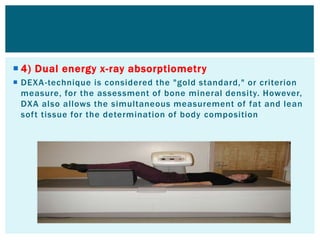
 4) Dual energy x-ray absorptiometry
 DEXA-technique is considered the "gold standard," or criterion
measure, for the assessment of bone mineral density. However,
DXA also allows the simultaneous measurement of fat and lean
soft tissue for the determination of body composition
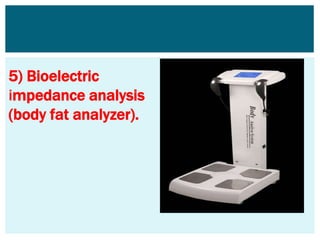
5) Bioelectric
impedance analysis
(body fat analyzer).
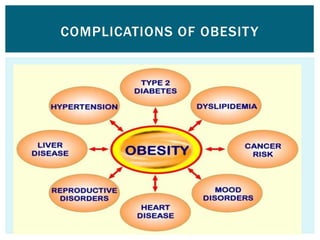
COMPLICATIONS OF OBESITY
Dietary changes
Refrain from over consumption of fats &
carbohydrates
Diet should contain suitable % of cereals
, vegetables& fiber
Food energy intake should not be greater
than what is necessary for energy
expenditure
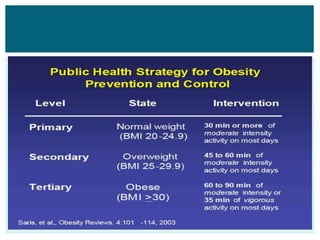
STRATEGIES FOR PREVENTION AND
CONTROL OF OBESITY:-
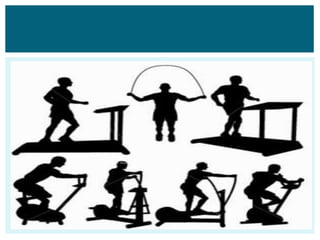
Regular physical activity
Helps in increasing the energy
expenditure so sedentary lifestyle should
be discouraged. leisure pursuits like
gardening, dancing, cycling and
swimming should be encouraged walking
should be preferred to other means
Health education
People are educated about hazards
of obesity and its prevention by
healthy diet and lifestyle , to be
promoted from early age
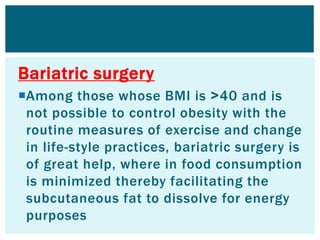
Bariatric surgery
Among those whose BMI is <40 and is
not possible to control obesity with the
routine measures of exercise and change
in life-style practices, bariatric surgery is
of great help, where in food consumption
is minimized thereby facilitating the
subcutaneous fat to dissolve for energy
purposes
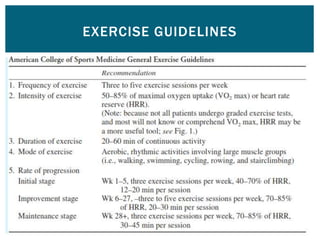
EXERCISE GUIDELINES
Obesity.pptx
Obesity.pptx
Obesity.pptx

Obesity.pptx

  • 1.
  • 2.
    Obesity is definedas an excess of total body fat that is documented by a BMI of ≥30 kg/m2. Obesity is not just a cosmetic concern. It increases your risk of diseases and significant impairment of health DEFINITION
  • 3.
    Obesity usually resultsfrom a combination of causes and contributing factors, including:  Genetics. Your genes may affect the amount of body fat you store, and where that fat is distributed. Genetics may also play a role in how efficiently your body converts food into energy and how your body burns calories during exercise. RISK FACTORS
  • 4.
    Family lifestyle. Obesity tendsto run in families. If one or both of your parents are obese, your risk of being obese is increased. That's not just because of genetics. Family members tend to share similar eating and activity habits.
  • 5.
    Inactivity. If you'renot very active, you don't burn as many calories. With a sedentary lifestyle, you can easily take in more calories every day than you burn through exercise and routine daily activities. Unhealthy diet. A diet that's high in calories, lacking in fruits and vegetables, full of fast food, contributes to weight gain.
  • 6.
    Medical problems. Insome people, obesity can be traced to a medical cause, such as Cushing's syndrome(occurs due to abnormally high levels of cortisol, the most common cause is overuse of corticosteroids) and other conditions. Medical problems, such as arthritis, also can lead to decreased activity, which may result in weight gain. Certain medications. Some medications can lead to weight gain if you don't compensate through diet or activity. These medications include some antidepressants, anti-seizure medications, diabetes medications, antipsychotic medications, steroids and beta blockers.
  • 7.
     Social andeconomic issues. Avoiding obesity is difficult if you don't have safe areas to exercise. Similarly, you may not have been taught healthy ways of cooking, or you may not have money to buy healthier foods.  Age. Obesity can occur at any age, even in young children. But as you age, hormonal changes and a less active lifestyle increase your risk of obesity. In addition, the amount of muscle in your body tends to decrease with age. This lower muscle mass leads to a decrease in metabolism. These changes also reduce calorie needs, and can make it harder to keep off excess weight.
  • 8.
     Pregnancy. Duringpregnancy, a woman's weight necessarily increases. Some women find this weight difficult to lose after the baby is born. This weight gain may contribute to the development of obesity in women.  Quitting smoking. Quitting smoking is often associated with weight gain.  Lack of sleep. Not getting enough sleep or getting too much sleep can cause changes in hormones that increase your appetite. You may also crave foods high in calories and carbohydrates, which can contribute to weight gain.
  • 9.
  • 10.
    Classification BMI (kg/m2)Population description Underweight <18.5 Thin Normal range 18.5-24.9 Normal, healthy, acceptable weight Pre-obese 25-29.9 overweight Obese class I 30.0-34.9 Obesity I Obese class II 35.0-39.9 Obesity II Obese class III ≥40 Morbid obesity BODY COMPOSITION ASSESSMENT: – 1) Body mass index: The BMI is calculated as follows: BMI =weight (kg)/height squared (m2).
  • 12.
    2) Skin foldsMeasurements  It is possible to measure the subcutaneous fat at selected sites with skin fold calipers and predict the percentage of body fat by using various regression equations.
  • 13.
    3) Regional fatdistribution (girth measurements) Waist circumference Waist circumference is an indirect indicator of intra-abdominal fat tissue, often called visceral fat. Waist circumference is preferred over waist- to-hip ratio for estimating abdominal fat. A high waist circumference is associated with an increased risk for type 2 diabetes, high cholesterol, high blood pressure, and cardiovascular disease because of excess abdominal fat.
  • 15.
     4) Dualenergy x-ray absorptiometry  DEXA-technique is considered the "gold standard," or criterion measure, for the assessment of bone mineral density. However, DXA also allows the simultaneous measurement of fat and lean soft tissue for the determination of body composition
  • 16.
  • 17.
  • 18.
    Dietary changes Refrain fromover consumption of fats & carbohydrates Diet should contain suitable % of cereals , vegetables& fiber Food energy intake should not be greater than what is necessary for energy expenditure STRATEGIES FOR PREVENTION AND CONTROL OF OBESITY:-
  • 19.
    Regular physical activity Helpsin increasing the energy expenditure so sedentary lifestyle should be discouraged. leisure pursuits like gardening, dancing, cycling and swimming should be encouraged walking should be preferred to other means
  • 20.
    Health education People areeducated about hazards of obesity and its prevention by healthy diet and lifestyle , to be promoted from early age
  • 21.
    Bariatric surgery Among thosewhose BMI is <40 and is not possible to control obesity with the routine measures of exercise and change in life-style practices, bariatric surgery is of great help, where in food consumption is minimized thereby facilitating the subcutaneous fat to dissolve for energy purposes
  • 22.