New Zealand
Native Birds











Kiwi
Kea
Pukeko
Kereu
Tui
Hoiho
Whio
Kakapo
**Information for this slide show was found
from NZ department of conservation, home
photos and various u-tube videos.
Our Kiwi – New Zealands Icon











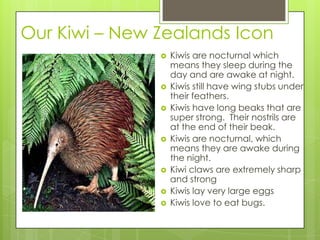
Kiwis are nocturnal which
means they sleep during the
day and are awake at night.
Kiwis still have wing stubs under
their feathers.
Kiwis have long beaks that are
super strong. Their nostrils are
at the end of their beak.
Kiwis are nocturnal, which
means they are awake during
the night.
Kiwi claws are extremely sharp
and strong
Kiwis lay very large eggs
Kiwis love to eat bugs.
Meet Alby and Smiley


Smiley’s beak was broken
after a predator attack.

Alby turned white
after he had been
scared by a
preditor.
Looking after Kiwis









While they will still dig for bugs and
worms, they also think cheese and cat biscuits
are tasty.
They loved looking down our gumboots, in our
clothes and through our hair for bugs.
We had to wear lots of clothes so their claws
wouldn’t scratch and hurt us. They were
super strong and sharp.
They make funny sounds when they want
something.
They loved playing with us and are like little
cats and dogs wanting lots of attention.
Their feathers were soft like fur.
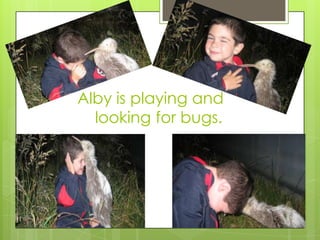
Alby is playing and
looking for bugs.
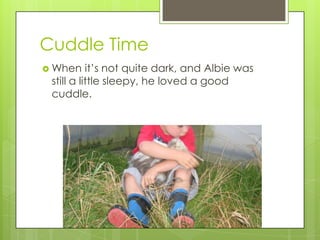
Cuddle Time
 When

it’s not quite dark, and Albie was
still a little sleepy, he loved a good
cuddle.
Kiwi’s Voice
 Male

North Island Kiwi Song

 North

Island Brown Kiwi Video
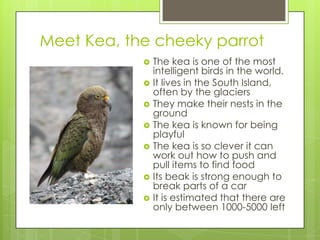
Meet Kea, the cheeky parrot










The kea is one of the most
intelligent birds in the world.
It lives in the South Island,
often by the glaciers
They make their nests in the
ground
The kea is known for being
playful
The kea is so clever it can
work out how to push and
pull items to find food
Its beak is strong enough to
break parts of a car
It is estimated that there are
only between 1000-5000 left
Kea’s Voice
 Bird

Intelligence – The NZ Kea – U-tube

 Kea

song
Pukeko – A swamp loving bird








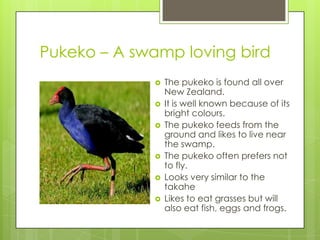
The pukeko is found all over
New Zealand.
It is well known because of its
bright colours.
The pukeko feeds from the
ground and likes to live near
the swamp.
The pukeko often prefers not
to fly.
Looks very similar to the
takahe
Likes to eat grasses but will
also eat fish, eggs and frogs.
All about the Pukeko
A
A

boy and a Pukeko – u-tube

power company using a pukeko in its
ad. U-tube
Kereru – The Wood Pigeon








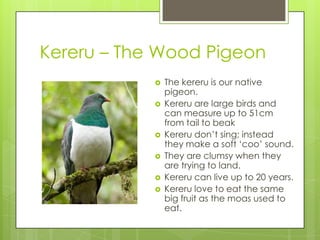
The kereru is our native
pigeon.
Kereru are large birds and
can measure up to 51cm
from tail to beak
Kereru don’t sing; instead
they make a soft ‘coo’ sound.
They are clumsy when they
are trying to land.
Kereru can live up to 20 years.
Kereru love to eat the same
big fruit as the moas used to
eat.
Kereru’s Voice
 Kereru

video clip – u-tube

 Kereru’s

voice
Tui’s







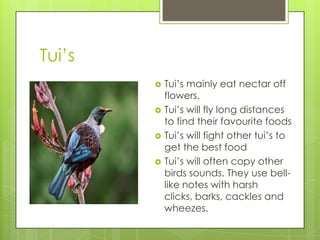
Tui’s mainly eat nectar off
flowers.
Tui’s will fly long distances
to find their favourite foods
Tui’s will fight other tui’s to
get the best food
Tui’s will often copy other
birds sounds. They use belllike notes with harsh
clicks, barks, cackles and
wheezes.
Tui Voice
 Tui

communication song

 Tui

male territorial sounds
Hoiho – Yellow eyed penguin







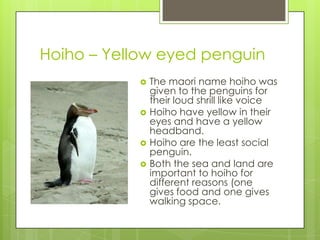
The maori name hoiho was
given to the penguins for
their loud shrill like voice
Hoiho have yellow in their
eyes and have a yellow
headband.
Hoiho are the least social
penguin.
Both the sea and land are
important to hoiho for
different reasons (one
gives food and one gives
walking space.
Hoiho’s Voice
 Hoiho

adult and chick calls

 Hoiho

- utube
Whio – Blue Duck









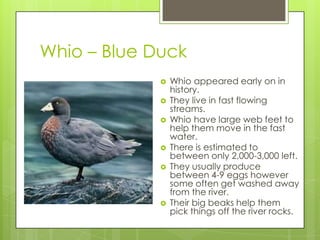
Whio appeared early on in
history.
They live in fast flowing
streams.
Whio have large web feet to
help them move in the fast
water.
There is estimated to
between only 2,000-3,000 left.
They usually produce
between 4-9 eggs however
some often get washed away
from the river.
Their big beaks help them
pick things off the river rocks.
Whio’s Voice
 Whio
 Whio

Song

video - Whio or blue duck is currently
in the second highest category of
endangered species in New Zealand.
Kakapo – flightless parrot










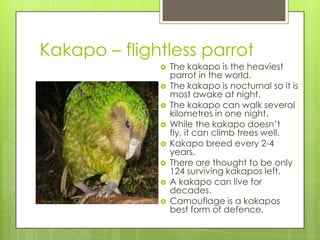
The kakapo is the heaviest
parrot in the world.
The kakapo is nocturnal so it is
most awake at night.
The kakapo can walk several
kilometres in one night.
While the kakapo doesn’t
fly, it can climb trees well.
Kakapo breed every 2-4
years.
There are thought to be only
124 surviving kakapos left.
A kakapo can live for
decades.
Camouflage is a kakapos
best form of defence.
Kakapo’s Voice
 Female

kakapo song

 Sirocco

the kakapo - utube

NZ Native Birds Presentation

  • 1.
    New Zealand Native Birds          Kiwi Kea Pukeko Kereu Tui Hoiho Whio Kakapo **Informationfor this slide show was found from NZ department of conservation, home photos and various u-tube videos.
  • 2.
    Our Kiwi –New Zealands Icon        Kiwis are nocturnal which means they sleep during the day and are awake at night. Kiwis still have wing stubs under their feathers. Kiwis have long beaks that are super strong. Their nostrils are at the end of their beak. Kiwis are nocturnal, which means they are awake during the night. Kiwi claws are extremely sharp and strong Kiwis lay very large eggs Kiwis love to eat bugs.
  • 3.
    Meet Alby andSmiley  Smiley’s beak was broken after a predator attack. Alby turned white after he had been scared by a preditor.
  • 4.
    Looking after Kiwis       Whilethey will still dig for bugs and worms, they also think cheese and cat biscuits are tasty. They loved looking down our gumboots, in our clothes and through our hair for bugs. We had to wear lots of clothes so their claws wouldn’t scratch and hurt us. They were super strong and sharp. They make funny sounds when they want something. They loved playing with us and are like little cats and dogs wanting lots of attention. Their feathers were soft like fur.
  • 5.
    Alby is playingand looking for bugs.
  • 6.
    Cuddle Time  When it’snot quite dark, and Albie was still a little sleepy, he loved a good cuddle.
  • 7.
    Kiwi’s Voice  Male NorthIsland Kiwi Song  North Island Brown Kiwi Video
  • 8.
    Meet Kea, thecheeky parrot        The kea is one of the most intelligent birds in the world. It lives in the South Island, often by the glaciers They make their nests in the ground The kea is known for being playful The kea is so clever it can work out how to push and pull items to find food Its beak is strong enough to break parts of a car It is estimated that there are only between 1000-5000 left
  • 9.
    Kea’s Voice  Bird Intelligence– The NZ Kea – U-tube  Kea song
  • 10.
    Pukeko – Aswamp loving bird       The pukeko is found all over New Zealand. It is well known because of its bright colours. The pukeko feeds from the ground and likes to live near the swamp. The pukeko often prefers not to fly. Looks very similar to the takahe Likes to eat grasses but will also eat fish, eggs and frogs.
  • 11.
    All about thePukeko A A boy and a Pukeko – u-tube power company using a pukeko in its ad. U-tube
  • 12.
    Kereru – TheWood Pigeon       The kereru is our native pigeon. Kereru are large birds and can measure up to 51cm from tail to beak Kereru don’t sing; instead they make a soft ‘coo’ sound. They are clumsy when they are trying to land. Kereru can live up to 20 years. Kereru love to eat the same big fruit as the moas used to eat.
  • 13.
    Kereru’s Voice  Kereru videoclip – u-tube  Kereru’s voice
  • 14.
    Tui’s     Tui’s mainly eatnectar off flowers. Tui’s will fly long distances to find their favourite foods Tui’s will fight other tui’s to get the best food Tui’s will often copy other birds sounds. They use belllike notes with harsh clicks, barks, cackles and wheezes.
  • 15.
    Tui Voice  Tui communicationsong  Tui male territorial sounds
  • 16.
    Hoiho – Yelloweyed penguin     The maori name hoiho was given to the penguins for their loud shrill like voice Hoiho have yellow in their eyes and have a yellow headband. Hoiho are the least social penguin. Both the sea and land are important to hoiho for different reasons (one gives food and one gives walking space.
  • 17.
    Hoiho’s Voice  Hoiho adultand chick calls  Hoiho - utube
  • 18.
    Whio – BlueDuck       Whio appeared early on in history. They live in fast flowing streams. Whio have large web feet to help them move in the fast water. There is estimated to between only 2,000-3,000 left. They usually produce between 4-9 eggs however some often get washed away from the river. Their big beaks help them pick things off the river rocks.
  • 19.
    Whio’s Voice  Whio Whio Song video - Whio or blue duck is currently in the second highest category of endangered species in New Zealand.
  • 20.
    Kakapo – flightlessparrot         The kakapo is the heaviest parrot in the world. The kakapo is nocturnal so it is most awake at night. The kakapo can walk several kilometres in one night. While the kakapo doesn’t fly, it can climb trees well. Kakapo breed every 2-4 years. There are thought to be only 124 surviving kakapos left. A kakapo can live for decades. Camouflage is a kakapos best form of defence.
  • 21.
    Kakapo’s Voice  Female kakaposong  Sirocco the kakapo - utube