
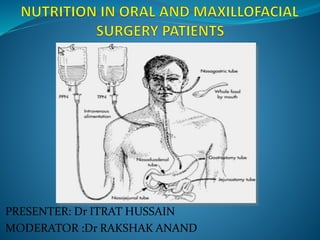

PRESENTER: Dr ITRAT HUSSAIN
MODERATOR :Dr RAKSHAK ANAND
contents
 1-Introduction
 2-Energy balance
 3-Metabolism
 4-Nutritional requirements
 5-Nutrients
 6-Nuritional assessment
 7-Feeding modalities
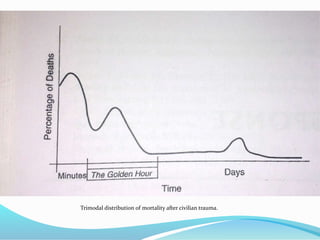
Trimodal distribution of mortality after civilian trauma.
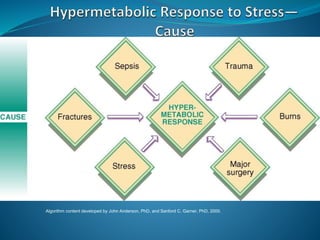
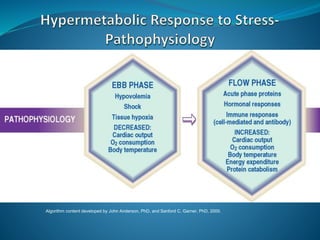
Algorithm content developed by John Anderson, PhD, and Sanford C. Garner, PhD, 2000.
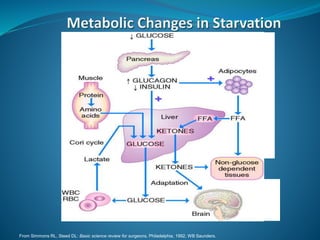
From Simmons RL, Steed DL: Basic science review for surgeons, Philadelphia, 1992, WB Saunders.
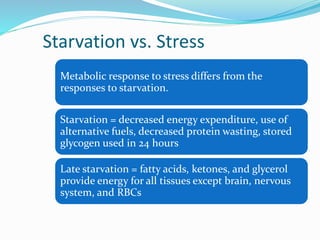
Starvation vs. Stress
Metabolic response to stress differs from the
responses to starvation.
Starvation = decreased energy expenditure, use of
alternative fuels, decreased protein wasting, stored
glycogen used in 24 hours
Late starvation = fatty acids, ketones, and glycerol
provide energy for all tissues except brain, nervous
system, and RBCs
Starvation vs. Stress—cont’d
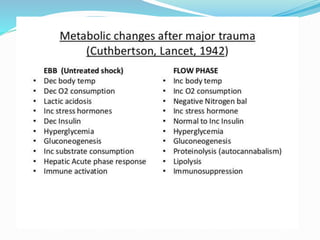
Hypermetabolic state—stress causes accelerated energy
expenditure, glucose production, glucose cycling in liver
and muscle
Hyperglycemia can occur either from insulin resistance or
excess glucose production via gluconeogenesis
Muscle breakdown accelerated .
Hormonal Stress Response
Aldosterone—corticosteroid that causes
renal sodium retention
Antidiuretic hormone (ADH)—stimulates
renal tubular water absorption
These conserve water and salt to support
circulating blood volume
Hormonal Stress Response -
cont’d
ACTH—acts on adrenal cortex to
release cortisol (mobilizes amino acids
from skeletal muscles)
Catecholamines—epinephrine and
norepinephrine from adrenal medulla
to stimulate hepatic glycogenolysis, fat
mobilization, gluconeogenesis
Cytokines
Interleukin-1, interleukin-6, and tumor
necrosis factor (TNF)
Released by phagocytes in response to
tissue damage, infection, inflammation,
and some drugs and chemicals
Systemic Inflammatory Response
Syndrome
SIRS describes the inflammatory response that
occurs in infection, pancreatitis, ischemia,
burns, multiple trauma, shock, and organ injury.
Patients with SIRS are hypermetabolic.
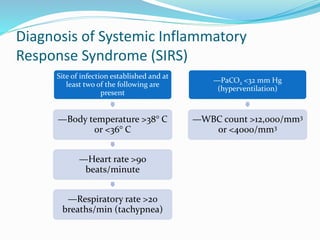
Diagnosis of Systemic Inflammatory
Response Syndrome (SIRS)
Site of infection established and at
least two of the following are
present
—Body temperature >38° C
or <36° C
—Heart rate >90
beats/minute
—Respiratory rate >20
breaths/min (tachypnea)
—PaCO2 <32 mm Hg
(hyperventilation)
—WBC count >12,000/mm3
or <4000/mm3
Multiple Organ Dysfunction Syndrome
Organ dysfunction that results from
direct injury, trauma, or disease or
as a response to inflammation; the
response usually is in an organ
distant from the original site of
infection or injury
ENERGY BALANCE;
Injury of any type is associated with an
increase in energy requirements.
The energy expenditure of injured patients
increases further and is associated with
increase in oxygen consumption that varies
according to the severity of the injury.
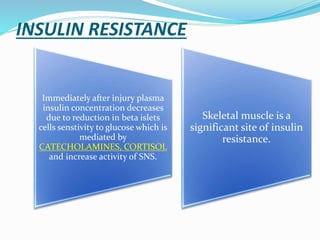
INSULIN RESISTANCE
Immediately after injury plasma
insulin concentration decreases
due to reduction in beta islets
cells senstivity to glucose which is
mediated by
CATECHOLAMINES, CORTISOL
and increase activity of SNS.
Skeletal muscle is a
significant site of insulin
resistance.
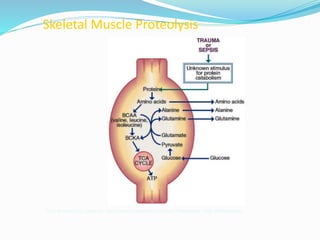
Skeletal Muscle Proteolysis
From Simmons RL, Steed DL: Basic science review for surgeons, Philadelphia, 1992, WB Saunders.
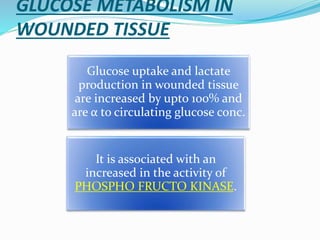
GLUCOSE METABOLISM IN
WOUNDED TISSUE
Glucose uptake and lactate
production in wounded tissue
are increased by upto 100% and
are α to circulating glucose conc.
It is associated with an
increased in the activity of
PHOSPHO FRUCTO KINASE.
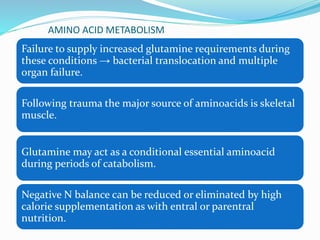
AMINO ACID METABOLISM
Failure to supply increased glutamine requirements during
these conditions → bacterial translocation and multiple
organ failure.
Following trauma the major source of aminoacids is skeletal
muscle.
Glutamine may act as a conditional essential aminoacid
during periods of catabolism.
Negative N balance can be reduced or eliminated by high
calorie supplementation as with entral or parentral
nutrition.
NUTRITIONAL REQUIREMENTS ASSOCIATED
WITH SURGERY OR INJURY
Nutritional
requirements of the
surgical pt are related to the
extent of the injury.
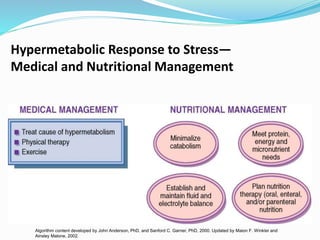
Hypermetabolic Response to Stress—
Medical and Nutritional Management
Algorithm content developed by John Anderson, PhD, and Sanford C. Garner, PhD, 2000. Updated by Maion F. Winkler and
Ainsley Malone, 2002.
BODY FUEL RESERVES

Body must mobilize appropriate nutrient from
fuel reserves in order to meet the additional
requirements imposed by surgery, trauma or
sepsis.
Glucose is stored primarily in the form of
glycogen in liver and muscle .
This relatively small quantity is essential in the
emergency situation for the production of
high energy phosphates during anaerobic
metabolism.
Protein represents the considerable larger
source of fuel , any protein loss represents
loss of an essential function.
Most of the fat in the body serves as a readily available
energy source except mechanical fat pads.
A fundamental goal of nutritional support is to meet the
energy requirement for metabolic purposes, maintain temp
and tissue repair.
The second objective of nutritional support is to meet the
substrate requirement for protein synthesis.
No single nutritional formulation is appropriate for all
patients
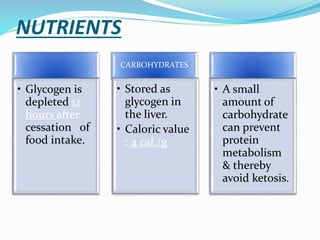
NUTRIENTS
• Glycogen is
depleted 12
hours after
cessation of
food intake.
CARBOHYDRATES
• Stored as
glycogen in
the liver.
• Caloric value
: 4 cal./g
• A small
amount of
carbohydrate
can prevent
protein
metabolism
& thereby
avoid ketosis.
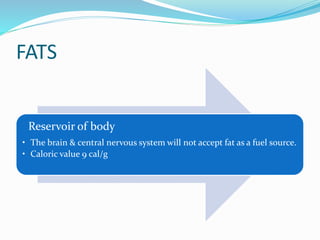
FATS
Reservoir of body
• The brain & central nervous system will not accept fat as a fuel source.
• Caloric value 9 cal/g
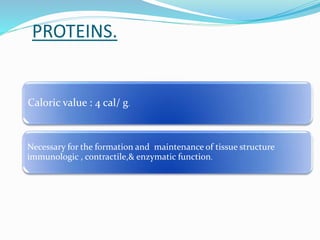
PROTEINS.
Caloric value : 4 cal/ g.
Necessary for the formation and maintenance of tissue structure
immunologic , contractile,& enzymatic function.
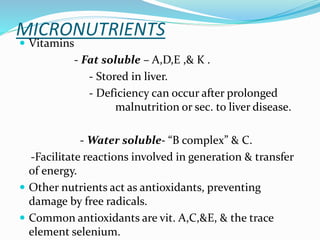
MICRONUTRIENTS
 Vitamins
- Fat soluble – A,D,E ,& K .
- Stored in liver.
- Deficiency can occur after prolonged
malnutrition or sec. to liver disease.
- Water soluble- “B complex” & C.
-Facilitate reactions involved in generation & transfer
of energy.
 Other nutrients act as antioxidants, preventing
damage by free radicals.
 Common antioxidants are vit. A,C,&E, & the trace
element selenium.
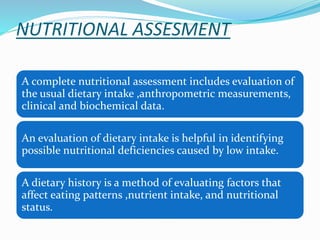
NUTRITIONAL ASSESMENT
A complete nutritional assessment includes evaluation of
the usual dietary intake ,anthropometric measurements,
clinical and biochemical data.
An evaluation of dietary intake is helpful in identifying
possible nutritional deficiencies caused by low intake.
A dietary history is a method of evaluating factors that
affect eating patterns ,nutrient intake, and nutritional
status.
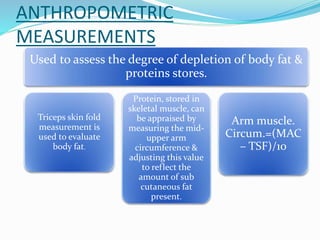
ANTHROPOMETRIC
MEASUREMENTS
Used to assess the degree of depletion of body fat &
proteins stores.
Triceps skin fold
measurement is
used to evaluate
body fat.
Protein, stored in
skeletal muscle, can
be appraised by
measuring the mid-
upper arm
circumference &
adjusting this value
to reflect the
amount of sub
cutaneous fat
present.
Arm muscle.
Circum.=(MAC
– TSF)/10
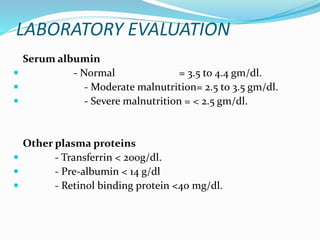
LABORATORY EVALUATION
Serum albumin
 - Normal = 3.5 to 4.4 gm/dl.
 - Moderate malnutrition= 2.5 to 3.5 gm/dl.
 - Severe malnutrition = < 2.5 gm/dl.
Other plasma proteins
 - Transferrin < 200g/dl.
 - Pre-albumin < 14 g/dl
 - Retinol binding protein <40 mg/dl.
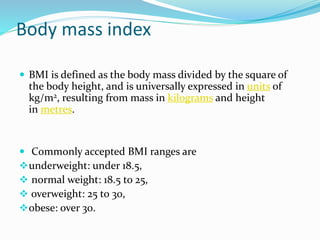
Body mass index
 BMI is defined as the body mass divided by the square of
the body height, and is universally expressed in units of
kg/m2, resulting from mass in kilograms and height
in metres.
 Commonly accepted BMI ranges are
underweight: under 18.5,
 normal weight: 18.5 to 25,
 overweight: 25 to 30,
obese: over 30.
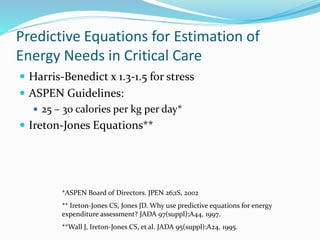
Predictive Equations for Estimation of
Energy Needs in Critical Care
 Harris-Benedict x 1.3-1.5 for stress
 ASPEN Guidelines:
 25 – 30 calories per kg per day*
 Ireton-Jones Equations**
*ASPEN Board of Directors. JPEN 26;1S, 2002
** Ireton-Jones CS, Jones JD. Why use predictive equations for energy
expenditure assessment? JADA 97(suppl):A44, 1997.
**Wall J, Ireton-Jones CS, et al. JADA 95(suppl):A24, 1995.
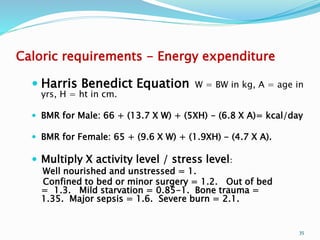
Caloric requirements - Energy expenditure
 Harris Benedict Equation W = BW in kg, A = age in
yrs, H = ht in cm.
 BMR for Male: 66 + (13.7 X W) + (5XH) - (6.8 X A)= kcal/day
 BMR for Female: 65 + (9.6 X W) + (1.9XH) - (4.7 X A).
 Multiply X activity level / stress level:
Well nourished and unstressed = 1.
Confined to bed or minor surgery = 1.2. Out of bed
= 1.3. Mild starvation = 0.85-1. Bone trauma =
1.35. Major sepsis = 1.6. Severe burn = 2.1.
35
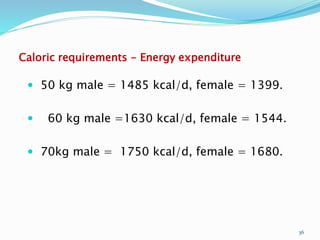
Caloric requirements - Energy expenditure
 50 kg male = 1485 kcal/d, female = 1399.
 60 kg male =1630 kcal/d, female = 1544.
 70kg male = 1750 kcal/d, female = 1680.
36
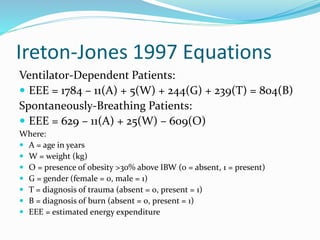
Ireton-Jones 1997 Equations
Ventilator-Dependent Patients:
 EEE = 1784 – 11(A) + 5(W) + 244(G) + 239(T) = 804(B)
Spontaneously-Breathing Patients:
 EEE = 629 – 11(A) + 25(W) – 609(O)
Where:
 A = age in years
 W = weight (kg)
 O = presence of obesity >30% above IBW (0 = absent, 1 = present)
 G = gender (female = 0, male = 1)
 T = diagnosis of trauma (absent = 0, present = 1)
 B = diagnosis of burn (absent = 0, present = 1)
 EEE = estimated energy expenditure
MEDICAL CONDITIONS ASSOCIATED WITH POOR
NUTRITIONAL STATUS
 Black burn et al. In the year 1977 conceded wt loss to be
severe if more than 2% of body wt. is lost in 1 week. More
than 5% in 1 month, more that 7.5% in three months.
 Body wt. below 80% of ideal body wt. or a recent loss of
10% or more of the usual body wt. can mean a loss of fat
stores and visceral and somatic protein.
 Nutritional deficiencies or diseases should be identified
and Rx before surgery to optimize conditions for wound
healing and for fighting infections.
NORMAL DAILY REQUIREMENTS
Protein requirement:
 Requirement for adult male-0.8 g/kg
 Requirement for children - 2 to 2.5g/kg
 Severely stressed pat.- 2to 3g/kg
 CALORIC REQUIREMENTS
- Under normal circumstances the average healthy
adult require = 2500 cal./d.
 - BASAL RESTING LEVEL = 1500 CAL./D.
 - HEAVY EXERCISE = 4000 TO 5000CAL./D.
 - SURGICAL PTS. = 4000 TO 5000CAL./D
FEEDING MODALITIES
 Nutritional support has been associated with reduced
morbidity and mortality enhanced wound healing and
heightened immune function to aid in the prevention
of infection.
 Trauma produces a catabolic response α to the
magnitude of injury which impairs humoral and
cellular immunity
Oral Feeding
 Allows more needed nutrients to be added
 Stimulates normal action of the gastrointestinal tract
 Can usually resume once regular bowel sounds return
 Progresses from clear to full liquids, then to a soft or
regular diet
Mosby items and derived items © 2006 by Mosby,
Inc. Slide 42
Tube Feeding
 Used when oral feeding cannot be tolerated
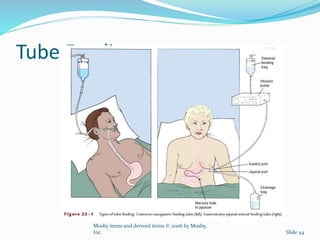
 Nasogastric tube is most common route
 Nasoduodenal or nasojejunal tube more appropriate for patients at risk for
aspiration, reflux, or continuous vomiting.
 Entral feeding is beneficial because it maintains vital gut function, immune
competence and reduction in the incidence of septic complications.
 Absolute contraindications to entral feeding are complete bowel obstruction
inability to absorb nutrients and inability to obtain entral access.
 Translocation of viable intraluminal microbes and endotoxins through the gut
epithelium may predispose the pt to infective complications.
Mosby items and derived items © 2006 by Mosby,
Inc. Slide 43
Tube Feeding
Mosby items and derived items © 2006 by Mosby,
Inc. Slide 44
Nasopharyngeal gastrostomy and jejunostomy tube feedings may be
considered for pts who have normal GIT but cannot or will not eat.
The entral feeding regime should begin with a trial of normal saline
infusion to assure adequate gastric emptying and tolerance to
infusion.
The pts ability to tolerate and absorb entral feedings is determined by
the rate of infusion, the osmolality and chemical nature of the
product.
Entral feedings are often began at a rate of 30-50ml / hour and are
increased by 10-25ml / hour a day until the optimal volume is
delivered.
Alternate Routes for Enteral Tube
Feeding
 Esophagostomy
 Percutaneous endoscopic gastrostomy (PEG)
 Percutaneous endoscopic jejunostomy (PEJ)
Mosby items and derived items © 2006 by Mosby,
Inc. Slide 46
Tube-Feeding Formula
 Generally prescribed by the physician
 Important to regulate amount and rate of
administration
 Diarrhea is most common complication
 Wide variety of commercial formulas available
Mosby items and derived items © 2006 by Mosby,
Inc. Slide 47
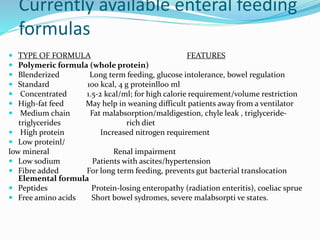
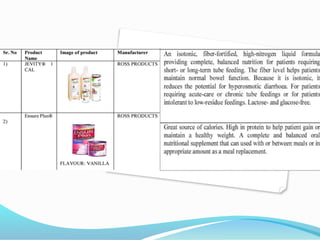
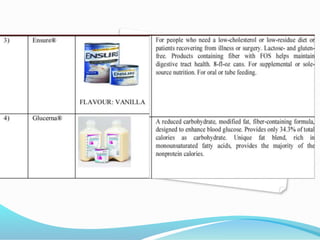
Currently available enteral feeding
formulas
 TYPE OF FORMULA FEATURES
 Polymeric formula (whole protein)
 Blenderized Long term feeding, glucose intolerance, bowel regulation
 Standard 100 kcal, 4 g proteinll00 ml
 Concentrated 1.5-2 kcal/ml; for high calorie requirement/volume restriction
 High-fat feed May help in weaning difficult patients away from a ventilator
 Medium chain Fat malabsorption/maldigestion, chyle leak , triglyceride-
triglycerides rich diet
 High protein Increased nitrogen requirement
 Low proteinl/
low mineral Renal impairment
 Low sodium Patients with ascites/hypertension
 Fibre added For long term feeding, prevents gut bacterial translocation
Elemental formula
 Peptides Protein-losing enteropathy (radiation enteritis), coeliac sprue
 Free amino acids Short bowel sydromes, severe malabsorpti ve states.
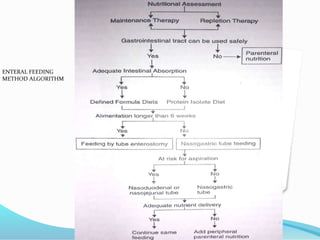
ENTERAL FEEDING
METHOD ALGORITHM
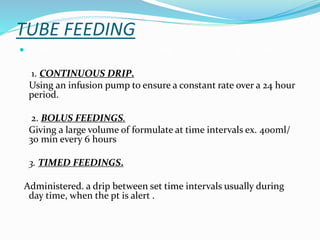
TUBE FEEDING
 Tube feeding may be administered by three basic methods.
1. CONTINUOUS DRIP.
Using an infusion pump to ensure a constant rate over a 24 hour
period.
2. BOLUS FEEDINGS.
Giving a large volume of formulate at time intervals ex. 400ml/
30 min every 6 hours
3. TIMED FEEDINGS.
Administered. a drip between set time intervals usually during
day time, when the pt is alert .
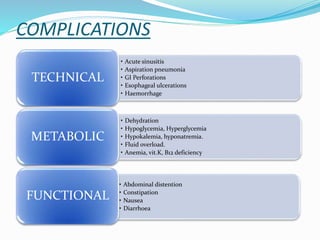
COMPLICATIONS
• Acute sinusitis
• Aspiration pneumonia
• GI Perforations
• Esophageal ulcerations
• Haemorrhage
TECHNICAL
• Dehydration
• Hypoglycemia, Hyperglycemia
• Hypokalemia, hyponatremia.
• Fluid overload.
• Anemia, vit.K, B12 deficiency
METABOLIC
• Abdominal distention
• Constipation
• Nausea
• Diarrhoea
FUNCTIONAL
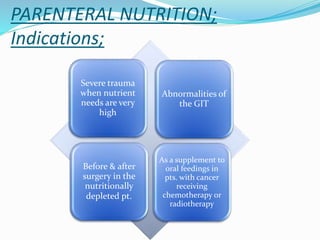
PARENTERAL NUTRITION;
Indications;
Severe trauma
when nutrient
needs are very
high
Abnormalities of
the GIT
Before & after
surgery in the
nutritionally
depleted pt.
As a supplement to
oral feedings in
pts. with cancer
receiving
chemotherapy or
radiotherapy
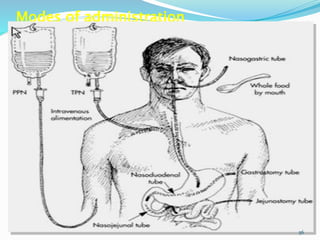
Parenteral Feeding Routes
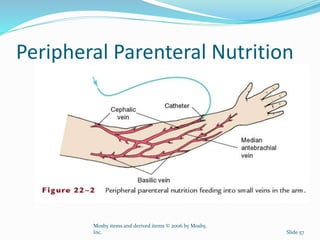
 Peripheral parenteral nutrition (PPN): uses less
concentrated solutions through small peripheral veins
when feeding is necessary for a brief period (10 days)
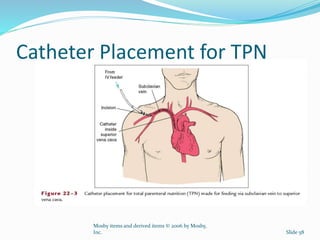
 Total parenteral nutrition (TPN): used when energy
and nutrient requirement is large or to supply full
nutritional support for long periods of time through
large central vein
Mosby items and derived items © 2006 by Mosby,
Inc. Slide 55
Modes of administration
56
Peripheral Parenteral Nutrition
Mosby items and derived items © 2006 by Mosby,
Inc. Slide 57
Catheter Placement for TPN
Mosby items and derived items © 2006 by Mosby,
Inc. Slide 58
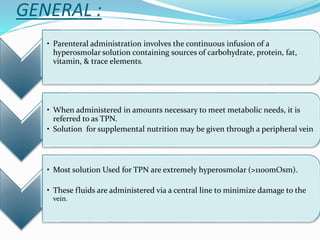
GENERAL :
• Parenteral administration involves the continuous infusion of a
hyperosmolar solution containing sources of carbohydrate, protein, fat,
vitamin, & trace elements.
• When administered in amounts necessary to meet metabolic needs, it is
referred to as TPN.
• Solution for supplemental nutrition may be given through a peripheral vein
• Most solution Used for TPN are extremely hyperosmolar (>1100mOsm).
• These fluids are administered via a central line to minimize damage to the
vein.
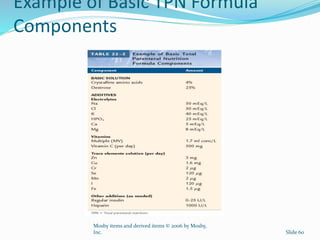
Example of Basic TPN Formula
Components
Mosby items and derived items © 2006 by Mosby,
Inc. Slide 60
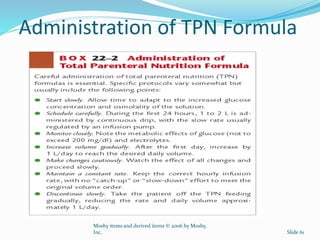
Administration of TPN Formula
Mosby items and derived items © 2006 by Mosby,
Inc. Slide 61
Conclusions;
 Nutritional support plays an integral role in the healing &
recovery of the trauma patient.
 Entral route of feeding is preferable if possible to maintain
gut mucosal integrity, enhance immunocompetence, and
decrease the incidence of septic complications.
 The most common protocol entails feeding through a
nasoduodenal tube using the commonly available
polymeric enteral formulations
 References:
 Oral & maxillofacial surgery laskin volume 2
 Oral & maxillofacial surgery fonsica volume 1
 thank you….

Nutrition in omfs ih

  • 2.
    PRESENTER: Dr ITRATHUSSAIN MODERATOR :Dr RAKSHAK ANAND
  • 3.
    contents  1-Introduction  2-Energybalance  3-Metabolism  4-Nutritional requirements  5-Nutrients  6-Nuritional assessment  7-Feeding modalities
  • 4.
    Trimodal distribution ofmortality after civilian trauma.
  • 5.
    Algorithm content developedby John Anderson, PhD, and Sanford C. Garner, PhD, 2000.
  • 6.
    Algorithm content developedby John Anderson, PhD, and Sanford C. Garner, PhD, 2000.
  • 8.
    From Simmons RL,Steed DL: Basic science review for surgeons, Philadelphia, 1992, WB Saunders.
  • 9.
    Starvation vs. Stress Metabolicresponse to stress differs from the responses to starvation. Starvation = decreased energy expenditure, use of alternative fuels, decreased protein wasting, stored glycogen used in 24 hours Late starvation = fatty acids, ketones, and glycerol provide energy for all tissues except brain, nervous system, and RBCs
  • 10.
    Starvation vs. Stress—cont’d Hypermetabolicstate—stress causes accelerated energy expenditure, glucose production, glucose cycling in liver and muscle Hyperglycemia can occur either from insulin resistance or excess glucose production via gluconeogenesis Muscle breakdown accelerated .
  • 11.
    Hormonal Stress Response Aldosterone—corticosteroidthat causes renal sodium retention Antidiuretic hormone (ADH)—stimulates renal tubular water absorption These conserve water and salt to support circulating blood volume
  • 12.
    Hormonal Stress Response- cont’d ACTH—acts on adrenal cortex to release cortisol (mobilizes amino acids from skeletal muscles) Catecholamines—epinephrine and norepinephrine from adrenal medulla to stimulate hepatic glycogenolysis, fat mobilization, gluconeogenesis
  • 13.
    Cytokines Interleukin-1, interleukin-6, andtumor necrosis factor (TNF) Released by phagocytes in response to tissue damage, infection, inflammation, and some drugs and chemicals
  • 14.
    Systemic Inflammatory Response Syndrome SIRSdescribes the inflammatory response that occurs in infection, pancreatitis, ischemia, burns, multiple trauma, shock, and organ injury. Patients with SIRS are hypermetabolic.
  • 15.
    Diagnosis of SystemicInflammatory Response Syndrome (SIRS) Site of infection established and at least two of the following are present —Body temperature >38° C or <36° C —Heart rate >90 beats/minute —Respiratory rate >20 breaths/min (tachypnea) —PaCO2 <32 mm Hg (hyperventilation) —WBC count >12,000/mm3 or <4000/mm3
  • 16.
    Multiple Organ DysfunctionSyndrome Organ dysfunction that results from direct injury, trauma, or disease or as a response to inflammation; the response usually is in an organ distant from the original site of infection or injury
  • 17.
    ENERGY BALANCE; Injury ofany type is associated with an increase in energy requirements. The energy expenditure of injured patients increases further and is associated with increase in oxygen consumption that varies according to the severity of the injury.
  • 18.
    INSULIN RESISTANCE Immediately afterinjury plasma insulin concentration decreases due to reduction in beta islets cells senstivity to glucose which is mediated by CATECHOLAMINES, CORTISOL and increase activity of SNS. Skeletal muscle is a significant site of insulin resistance.
  • 19.
    Skeletal Muscle Proteolysis FromSimmons RL, Steed DL: Basic science review for surgeons, Philadelphia, 1992, WB Saunders.
  • 20.
    GLUCOSE METABOLISM IN WOUNDEDTISSUE Glucose uptake and lactate production in wounded tissue are increased by upto 100% and are α to circulating glucose conc. It is associated with an increased in the activity of PHOSPHO FRUCTO KINASE.
  • 21.
    AMINO ACID METABOLISM Failureto supply increased glutamine requirements during these conditions → bacterial translocation and multiple organ failure. Following trauma the major source of aminoacids is skeletal muscle. Glutamine may act as a conditional essential aminoacid during periods of catabolism. Negative N balance can be reduced or eliminated by high calorie supplementation as with entral or parentral nutrition.
  • 22.
    NUTRITIONAL REQUIREMENTS ASSOCIATED WITHSURGERY OR INJURY Nutritional requirements of the surgical pt are related to the extent of the injury.
  • 23.
    Hypermetabolic Response toStress— Medical and Nutritional Management Algorithm content developed by John Anderson, PhD, and Sanford C. Garner, PhD, 2000. Updated by Maion F. Winkler and Ainsley Malone, 2002.
  • 24.
    BODY FUEL RESERVES  Bodymust mobilize appropriate nutrient from fuel reserves in order to meet the additional requirements imposed by surgery, trauma or sepsis. Glucose is stored primarily in the form of glycogen in liver and muscle . This relatively small quantity is essential in the emergency situation for the production of high energy phosphates during anaerobic metabolism. Protein represents the considerable larger source of fuel , any protein loss represents loss of an essential function.
  • 25.
    Most of thefat in the body serves as a readily available energy source except mechanical fat pads. A fundamental goal of nutritional support is to meet the energy requirement for metabolic purposes, maintain temp and tissue repair. The second objective of nutritional support is to meet the substrate requirement for protein synthesis. No single nutritional formulation is appropriate for all patients
  • 26.
    NUTRIENTS • Glycogen is depleted12 hours after cessation of food intake. CARBOHYDRATES • Stored as glycogen in the liver. • Caloric value : 4 cal./g • A small amount of carbohydrate can prevent protein metabolism & thereby avoid ketosis.
  • 27.
    FATS Reservoir of body •The brain & central nervous system will not accept fat as a fuel source. • Caloric value 9 cal/g
  • 28.
    PROTEINS. Caloric value :4 cal/ g. Necessary for the formation and maintenance of tissue structure immunologic , contractile,& enzymatic function.
  • 29.
    MICRONUTRIENTS  Vitamins - Fatsoluble – A,D,E ,& K . - Stored in liver. - Deficiency can occur after prolonged malnutrition or sec. to liver disease. - Water soluble- “B complex” & C. -Facilitate reactions involved in generation & transfer of energy.  Other nutrients act as antioxidants, preventing damage by free radicals.  Common antioxidants are vit. A,C,&E, & the trace element selenium.
  • 30.
    NUTRITIONAL ASSESMENT A completenutritional assessment includes evaluation of the usual dietary intake ,anthropometric measurements, clinical and biochemical data. An evaluation of dietary intake is helpful in identifying possible nutritional deficiencies caused by low intake. A dietary history is a method of evaluating factors that affect eating patterns ,nutrient intake, and nutritional status.
  • 31.
    ANTHROPOMETRIC MEASUREMENTS Used to assessthe degree of depletion of body fat & proteins stores. Triceps skin fold measurement is used to evaluate body fat. Protein, stored in skeletal muscle, can be appraised by measuring the mid- upper arm circumference & adjusting this value to reflect the amount of sub cutaneous fat present. Arm muscle. Circum.=(MAC – TSF)/10
  • 32.
    LABORATORY EVALUATION Serum albumin - Normal = 3.5 to 4.4 gm/dl.  - Moderate malnutrition= 2.5 to 3.5 gm/dl.  - Severe malnutrition = < 2.5 gm/dl. Other plasma proteins  - Transferrin < 200g/dl.  - Pre-albumin < 14 g/dl  - Retinol binding protein <40 mg/dl.
  • 33.
    Body mass index BMI is defined as the body mass divided by the square of the body height, and is universally expressed in units of kg/m2, resulting from mass in kilograms and height in metres.  Commonly accepted BMI ranges are underweight: under 18.5,  normal weight: 18.5 to 25,  overweight: 25 to 30, obese: over 30.
  • 34.
    Predictive Equations forEstimation of Energy Needs in Critical Care  Harris-Benedict x 1.3-1.5 for stress  ASPEN Guidelines:  25 – 30 calories per kg per day*  Ireton-Jones Equations** *ASPEN Board of Directors. JPEN 26;1S, 2002 ** Ireton-Jones CS, Jones JD. Why use predictive equations for energy expenditure assessment? JADA 97(suppl):A44, 1997. **Wall J, Ireton-Jones CS, et al. JADA 95(suppl):A24, 1995.
  • 35.
    Caloric requirements -Energy expenditure  Harris Benedict Equation W = BW in kg, A = age in yrs, H = ht in cm.  BMR for Male: 66 + (13.7 X W) + (5XH) - (6.8 X A)= kcal/day  BMR for Female: 65 + (9.6 X W) + (1.9XH) - (4.7 X A).  Multiply X activity level / stress level: Well nourished and unstressed = 1. Confined to bed or minor surgery = 1.2. Out of bed = 1.3. Mild starvation = 0.85-1. Bone trauma = 1.35. Major sepsis = 1.6. Severe burn = 2.1. 35
  • 36.
    Caloric requirements -Energy expenditure  50 kg male = 1485 kcal/d, female = 1399.  60 kg male =1630 kcal/d, female = 1544.  70kg male = 1750 kcal/d, female = 1680. 36
  • 37.
    Ireton-Jones 1997 Equations Ventilator-DependentPatients:  EEE = 1784 – 11(A) + 5(W) + 244(G) + 239(T) = 804(B) Spontaneously-Breathing Patients:  EEE = 629 – 11(A) + 25(W) – 609(O) Where:  A = age in years  W = weight (kg)  O = presence of obesity >30% above IBW (0 = absent, 1 = present)  G = gender (female = 0, male = 1)  T = diagnosis of trauma (absent = 0, present = 1)  B = diagnosis of burn (absent = 0, present = 1)  EEE = estimated energy expenditure
  • 38.
    MEDICAL CONDITIONS ASSOCIATEDWITH POOR NUTRITIONAL STATUS  Black burn et al. In the year 1977 conceded wt loss to be severe if more than 2% of body wt. is lost in 1 week. More than 5% in 1 month, more that 7.5% in three months.  Body wt. below 80% of ideal body wt. or a recent loss of 10% or more of the usual body wt. can mean a loss of fat stores and visceral and somatic protein.  Nutritional deficiencies or diseases should be identified and Rx before surgery to optimize conditions for wound healing and for fighting infections.
  • 39.
    NORMAL DAILY REQUIREMENTS Proteinrequirement:  Requirement for adult male-0.8 g/kg  Requirement for children - 2 to 2.5g/kg  Severely stressed pat.- 2to 3g/kg
  • 40.
     CALORIC REQUIREMENTS -Under normal circumstances the average healthy adult require = 2500 cal./d.  - BASAL RESTING LEVEL = 1500 CAL./D.  - HEAVY EXERCISE = 4000 TO 5000CAL./D.  - SURGICAL PTS. = 4000 TO 5000CAL./D
  • 41.
    FEEDING MODALITIES  Nutritionalsupport has been associated with reduced morbidity and mortality enhanced wound healing and heightened immune function to aid in the prevention of infection.  Trauma produces a catabolic response α to the magnitude of injury which impairs humoral and cellular immunity
  • 42.
    Oral Feeding  Allowsmore needed nutrients to be added  Stimulates normal action of the gastrointestinal tract  Can usually resume once regular bowel sounds return  Progresses from clear to full liquids, then to a soft or regular diet Mosby items and derived items © 2006 by Mosby, Inc. Slide 42
  • 43.
    Tube Feeding  Usedwhen oral feeding cannot be tolerated  Nasogastric tube is most common route  Nasoduodenal or nasojejunal tube more appropriate for patients at risk for aspiration, reflux, or continuous vomiting.  Entral feeding is beneficial because it maintains vital gut function, immune competence and reduction in the incidence of septic complications.  Absolute contraindications to entral feeding are complete bowel obstruction inability to absorb nutrients and inability to obtain entral access.  Translocation of viable intraluminal microbes and endotoxins through the gut epithelium may predispose the pt to infective complications. Mosby items and derived items © 2006 by Mosby, Inc. Slide 43
  • 44.
    Tube Feeding Mosby itemsand derived items © 2006 by Mosby, Inc. Slide 44
  • 45.
    Nasopharyngeal gastrostomy andjejunostomy tube feedings may be considered for pts who have normal GIT but cannot or will not eat. The entral feeding regime should begin with a trial of normal saline infusion to assure adequate gastric emptying and tolerance to infusion. The pts ability to tolerate and absorb entral feedings is determined by the rate of infusion, the osmolality and chemical nature of the product. Entral feedings are often began at a rate of 30-50ml / hour and are increased by 10-25ml / hour a day until the optimal volume is delivered.
  • 46.
    Alternate Routes forEnteral Tube Feeding  Esophagostomy  Percutaneous endoscopic gastrostomy (PEG)  Percutaneous endoscopic jejunostomy (PEJ) Mosby items and derived items © 2006 by Mosby, Inc. Slide 46
  • 47.
    Tube-Feeding Formula  Generallyprescribed by the physician  Important to regulate amount and rate of administration  Diarrhea is most common complication  Wide variety of commercial formulas available Mosby items and derived items © 2006 by Mosby, Inc. Slide 47
  • 48.
    Currently available enteralfeeding formulas  TYPE OF FORMULA FEATURES  Polymeric formula (whole protein)  Blenderized Long term feeding, glucose intolerance, bowel regulation  Standard 100 kcal, 4 g proteinll00 ml  Concentrated 1.5-2 kcal/ml; for high calorie requirement/volume restriction  High-fat feed May help in weaning difficult patients away from a ventilator  Medium chain Fat malabsorption/maldigestion, chyle leak , triglyceride- triglycerides rich diet  High protein Increased nitrogen requirement  Low proteinl/ low mineral Renal impairment  Low sodium Patients with ascites/hypertension  Fibre added For long term feeding, prevents gut bacterial translocation Elemental formula  Peptides Protein-losing enteropathy (radiation enteritis), coeliac sprue  Free amino acids Short bowel sydromes, severe malabsorpti ve states.
  • 51.
  • 52.
    TUBE FEEDING  Tubefeeding may be administered by three basic methods. 1. CONTINUOUS DRIP. Using an infusion pump to ensure a constant rate over a 24 hour period. 2. BOLUS FEEDINGS. Giving a large volume of formulate at time intervals ex. 400ml/ 30 min every 6 hours 3. TIMED FEEDINGS. Administered. a drip between set time intervals usually during day time, when the pt is alert .
  • 53.
    COMPLICATIONS • Acute sinusitis •Aspiration pneumonia • GI Perforations • Esophageal ulcerations • Haemorrhage TECHNICAL • Dehydration • Hypoglycemia, Hyperglycemia • Hypokalemia, hyponatremia. • Fluid overload. • Anemia, vit.K, B12 deficiency METABOLIC • Abdominal distention • Constipation • Nausea • Diarrhoea FUNCTIONAL
  • 54.
    PARENTERAL NUTRITION; Indications; Severe trauma whennutrient needs are very high Abnormalities of the GIT Before & after surgery in the nutritionally depleted pt. As a supplement to oral feedings in pts. with cancer receiving chemotherapy or radiotherapy
  • 55.
    Parenteral Feeding Routes Peripheral parenteral nutrition (PPN): uses less concentrated solutions through small peripheral veins when feeding is necessary for a brief period (10 days)  Total parenteral nutrition (TPN): used when energy and nutrient requirement is large or to supply full nutritional support for long periods of time through large central vein Mosby items and derived items © 2006 by Mosby, Inc. Slide 55
  • 56.
  • 57.
    Peripheral Parenteral Nutrition Mosbyitems and derived items © 2006 by Mosby, Inc. Slide 57
  • 58.
    Catheter Placement forTPN Mosby items and derived items © 2006 by Mosby, Inc. Slide 58
  • 59.
    GENERAL : • Parenteraladministration involves the continuous infusion of a hyperosmolar solution containing sources of carbohydrate, protein, fat, vitamin, & trace elements. • When administered in amounts necessary to meet metabolic needs, it is referred to as TPN. • Solution for supplemental nutrition may be given through a peripheral vein • Most solution Used for TPN are extremely hyperosmolar (>1100mOsm). • These fluids are administered via a central line to minimize damage to the vein.
  • 60.
    Example of BasicTPN Formula Components Mosby items and derived items © 2006 by Mosby, Inc. Slide 60
  • 61.
    Administration of TPNFormula Mosby items and derived items © 2006 by Mosby, Inc. Slide 61
  • 62.
    Conclusions;  Nutritional supportplays an integral role in the healing & recovery of the trauma patient.  Entral route of feeding is preferable if possible to maintain gut mucosal integrity, enhance immunocompetence, and decrease the incidence of septic complications.  The most common protocol entails feeding through a nasoduodenal tube using the commonly available polymeric enteral formulations
  • 63.
     References:  Oral& maxillofacial surgery laskin volume 2  Oral & maxillofacial surgery fonsica volume 1
  • 64.