Nutrients in food
NATURAL SCIENCES: LIFE & LIVING
Grade 6
1½ weeks
Enquiries: G.N. Tibane
Contact number: 0825565022
thulisaps@gmail.com
Food Groups
foods can be grouped according to their functions in the body
and the main nutrients they supply:
- carbohydrates - foods for growth and repair – proteins
- foods for storing energy (in the form of body fats) and
providing insulation and protection for nerves and organs
- fats and oils - foods for building bones and teeth, and
maintaining a healthy immune system- vitamins and
minerals
• most natural foods contain a mixture of more than one
nutrient group
• most processed (manufactured) foods have added salt,
sugar, preservatives, flavourings and colourings
Class-work
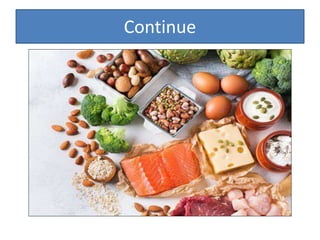
1. Sorting foods into the four different nutrient groups
 carbohydrates in foods such as bread, sugar, mealie meal,
potato, rice, pasta
 proteins in foods such as eggs, beans, meat, fish, cheese
 fats and oils in foods such as margarine, cooking oil, butter
 vitamins and minerals in foods such as fresh fruits and
vegetables, milk (source of calcium)
Continue
Class work
• reading labels on food packaging to look for the nutrients
and/or the additives in the food
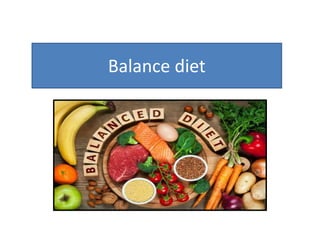
Balance diet
Balance diet
• a diet refers to the selection of foods we eat everyday
• a balanced diet contains sufficient quantities of food from all
four nutrient groups, as well as water and fibre
• some diseases can be related to diet
Class-work
Balanced diets
1. evaluating a given diet to determine if it
contains food from all nutrient groups
Class- work
some diseases can be related to diet
1. finding out about a disease that could be diet
related, such as tooth decay, obesity, diabetes
or deficiency diseases
Topic: Some diseases can be
related to diet NOTES
Compiled by Mr.: MONDLANE.J
GRADE 6
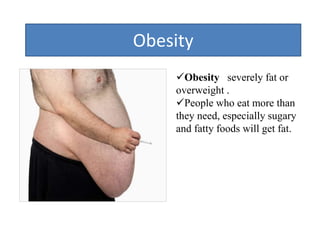
Obesity
Obesity severely fat or
overweight .
People who eat more than
they need, especially sugary
and fatty foods will get fat.
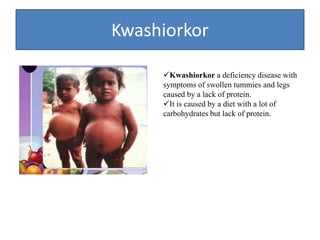
Kwashiorkor
Kwashiorkor a deficiency disease with
symptoms of swollen tummies and legs
caused by a lack of protein.
It is caused by a diet with a lot of
carbohydrates but lack of protein.
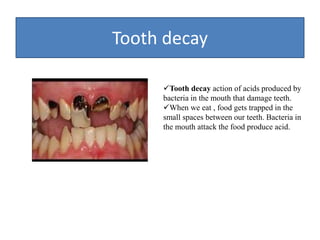
Tooth decay
Tooth decay action of acids produced by
bacteria in the mouth that damage teeth.
When we eat , food gets trapped in the
small spaces between our teeth. Bacteria in
the mouth attack the food produce acid.
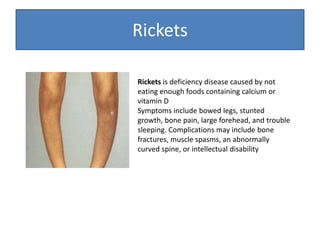
Rickets
Rickets is deficiency disease caused by not
eating enough foods containing calcium or
vitamin D
Symptoms include bowed legs, stunted
growth, bone pain, large forehead, and trouble
sleeping. Complications may include bone
fractures, muscle spasms, an abnormally
curved spine, or intellectual disability
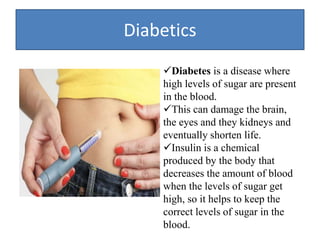
Diabetics
Diabetes is a disease where
high levels of sugar are present
in the blood.
This can damage the brain,
the eyes and they kidneys and
eventually shorten life.
Insulin is a chemical
produced by the body that
decreases the amount of blood
when the levels of sugar get
high, so it helps to keep the
correct levels of sugar in the
blood.
Food processing
2 ½ weeks (8 ¾ hours)
Food processing
Need for processing food
• food is processed to:
- make it edible (preparing, cooking)
- make it last longer (preserving)
- improve its nutrient value (fermenting)
• during processing many foods may lose some
of their nutrients
Food processing
Methods for processing
food
• there are many different
methods (ways) to process
food
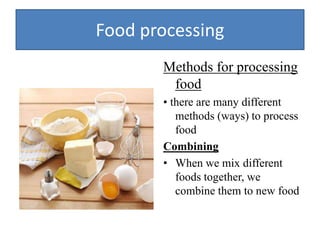
Combining
• When we mix different
foods together, we
combine them to new food
Cooking
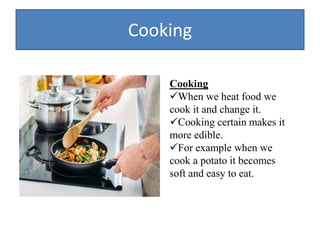
Cooking
When we heat food we
cook it and change it.
Cooking certain makes it
more edible.
For example when we
cook a potato it becomes
soft and easy to eat.
Freezing
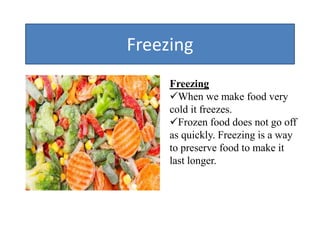
Freezing
When we make food very
cold it freezes.
Frozen food does not go off
as quickly. Freezing is a way
to preserve food to make it
last longer.
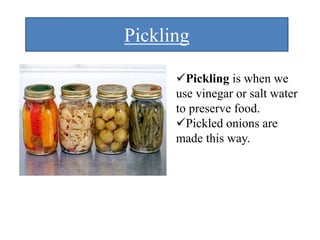
Pickling
Pickling is when we
use vinegar or salt water
to preserve food.
Pickled onions are
made this way.
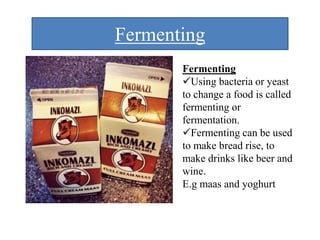
Fermenting
Fermenting
Using bacteria or yeast
to change a food is called
fermenting or
fermentation.
Fermenting can be used
to make bread rise, to
make drinks like beer and
wine.
E.g maas and yoghurt
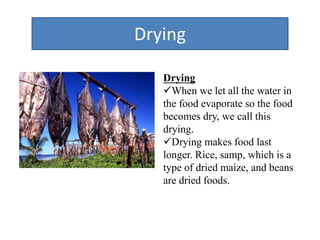
Drying
Drying
When we let all the water in
the food evaporate so the food
becomes dry, we call this
drying.
Drying makes food last
longer. Rice, samp, which is a
type of dried maize, and beans
are dried foods.
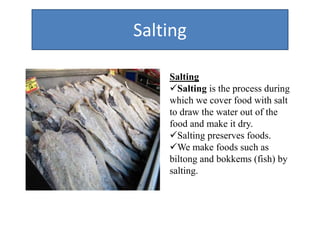
Salting
Salting
Salting is the process during
which we cover food with salt
to draw the water out of the
food and make it dry.
Salting preserves foods.
We make foods such as
biltong and bokkems (fish) by
salting.
Class work
• researching how to process food (raw material)
by combining, cooking, freezing, pickling,
fermenting, drying and salting to make a
product, including indigenous ways of
processing of food in different communities
• choosing a food and processing it in some way
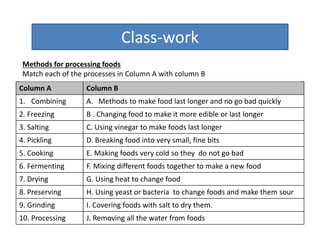
Class-work
Column A Column B
1. Combining A. Methods to make food last longer and no go bad quickly
2. Freezing B . Changing food to make it more edible or last longer
3. Salting C. Using vinegar to make foods last longer
4. Pickling D. Breaking food into very small, fine bits
5. Cooking E. Making foods very cold so they do not go bad
6. Fermenting F. Mixing different foods together to make a new food
7. Drying G. Using heat to change food
8. Preserving H. Using yeast or bacteria to change foods and make them sour
9. Grinding I. Covering foods with salt to dry them.
10. Processing J. Removing all the water from foods
Methods for processing foods
Match each of the processes in Column A with column B

Nutrients in food

  • 1.
    Nutrients in food NATURALSCIENCES: LIFE & LIVING Grade 6 1½ weeks Enquiries: G.N. Tibane Contact number: 0825565022 thulisaps@gmail.com
  • 2.
    Food Groups foods canbe grouped according to their functions in the body and the main nutrients they supply: - carbohydrates - foods for growth and repair – proteins - foods for storing energy (in the form of body fats) and providing insulation and protection for nerves and organs - fats and oils - foods for building bones and teeth, and maintaining a healthy immune system- vitamins and minerals • most natural foods contain a mixture of more than one nutrient group • most processed (manufactured) foods have added salt, sugar, preservatives, flavourings and colourings
  • 3.
    Class-work 1. Sorting foodsinto the four different nutrient groups  carbohydrates in foods such as bread, sugar, mealie meal, potato, rice, pasta  proteins in foods such as eggs, beans, meat, fish, cheese  fats and oils in foods such as margarine, cooking oil, butter  vitamins and minerals in foods such as fresh fruits and vegetables, milk (source of calcium)
  • 4.
  • 5.
    Class work • readinglabels on food packaging to look for the nutrients and/or the additives in the food
  • 6.
  • 7.
    Balance diet • adiet refers to the selection of foods we eat everyday • a balanced diet contains sufficient quantities of food from all four nutrient groups, as well as water and fibre • some diseases can be related to diet
  • 8.
    Class-work Balanced diets 1. evaluatinga given diet to determine if it contains food from all nutrient groups
  • 9.
    Class- work some diseasescan be related to diet 1. finding out about a disease that could be diet related, such as tooth decay, obesity, diabetes or deficiency diseases
  • 10.
    Topic: Some diseasescan be related to diet NOTES Compiled by Mr.: MONDLANE.J GRADE 6
  • 11.
    Obesity Obesity severely fator overweight . People who eat more than they need, especially sugary and fatty foods will get fat.
  • 12.
    Kwashiorkor Kwashiorkor a deficiencydisease with symptoms of swollen tummies and legs caused by a lack of protein. It is caused by a diet with a lot of carbohydrates but lack of protein.
  • 13.
    Tooth decay Tooth decayaction of acids produced by bacteria in the mouth that damage teeth. When we eat , food gets trapped in the small spaces between our teeth. Bacteria in the mouth attack the food produce acid.
  • 14.
    Rickets Rickets is deficiencydisease caused by not eating enough foods containing calcium or vitamin D Symptoms include bowed legs, stunted growth, bone pain, large forehead, and trouble sleeping. Complications may include bone fractures, muscle spasms, an abnormally curved spine, or intellectual disability
  • 15.
    Diabetics Diabetes is adisease where high levels of sugar are present in the blood. This can damage the brain, the eyes and they kidneys and eventually shorten life. Insulin is a chemical produced by the body that decreases the amount of blood when the levels of sugar get high, so it helps to keep the correct levels of sugar in the blood.
  • 16.
    Food processing 2 ½weeks (8 ¾ hours)
  • 17.
    Food processing Need forprocessing food • food is processed to: - make it edible (preparing, cooking) - make it last longer (preserving) - improve its nutrient value (fermenting) • during processing many foods may lose some of their nutrients
  • 18.
    Food processing Methods forprocessing food • there are many different methods (ways) to process food Combining • When we mix different foods together, we combine them to new food
  • 19.
    Cooking Cooking When we heatfood we cook it and change it. Cooking certain makes it more edible. For example when we cook a potato it becomes soft and easy to eat.
  • 20.
    Freezing Freezing When we makefood very cold it freezes. Frozen food does not go off as quickly. Freezing is a way to preserve food to make it last longer.
  • 21.
    Pickling Pickling is whenwe use vinegar or salt water to preserve food. Pickled onions are made this way.
  • 22.
    Fermenting Fermenting Using bacteria oryeast to change a food is called fermenting or fermentation. Fermenting can be used to make bread rise, to make drinks like beer and wine. E.g maas and yoghurt
  • 23.
    Drying Drying When we letall the water in the food evaporate so the food becomes dry, we call this drying. Drying makes food last longer. Rice, samp, which is a type of dried maize, and beans are dried foods.
  • 24.
    Salting Salting Salting is theprocess during which we cover food with salt to draw the water out of the food and make it dry. Salting preserves foods. We make foods such as biltong and bokkems (fish) by salting.
  • 25.
    Class work • researchinghow to process food (raw material) by combining, cooking, freezing, pickling, fermenting, drying and salting to make a product, including indigenous ways of processing of food in different communities • choosing a food and processing it in some way
  • 26.
    Class-work Column A ColumnB 1. Combining A. Methods to make food last longer and no go bad quickly 2. Freezing B . Changing food to make it more edible or last longer 3. Salting C. Using vinegar to make foods last longer 4. Pickling D. Breaking food into very small, fine bits 5. Cooking E. Making foods very cold so they do not go bad 6. Fermenting F. Mixing different foods together to make a new food 7. Drying G. Using heat to change food 8. Preserving H. Using yeast or bacteria to change foods and make them sour 9. Grinding I. Covering foods with salt to dry them. 10. Processing J. Removing all the water from foods Methods for processing foods Match each of the processes in Column A with column B