Download to read offline
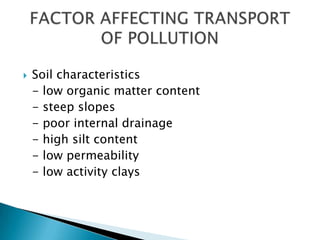
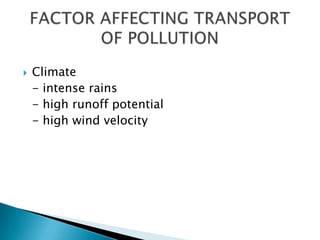
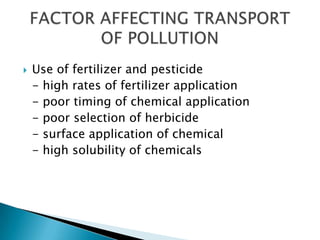
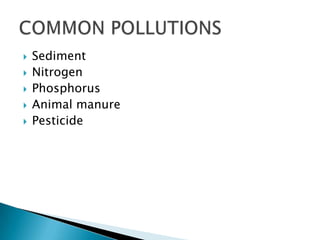
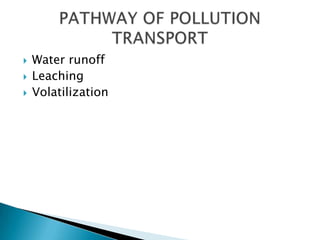
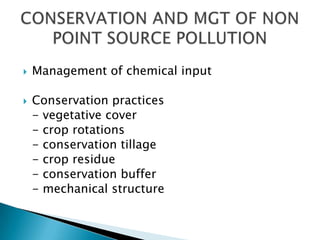

The document discusses eutrophication, which is when an increase in plant nutrients like nitrogen and phosphorus in water promotes excessive algal growth. This depletes oxygen levels and eliminates aerobic organisms. While the process occurs naturally, human activities have accelerated it through nutrient inputs and reducing ecosystem buffering capacity. Non-point sources are diffuse pollution sources that cannot be traced to a single origin, unlike point sources, and are influenced by soil management, characteristics, climate, fertilizer and pesticide use, as well as contaminants like sediment, nitrogen, phosphorus, and animal manure transported via runoff, leaching or volatilization. Conservation practices can help manage chemical inputs.


![5G Explained! A High Level Overview [Introduction]](https://cdn.slidesharecdn.com/ss_thumbnails/5gexplainedahighleveloverview-260119165306-cc137a3e-thumbnail.jpg?width=640&height=640&fit=bounds)


