NUCLEAR WASTE MANAGEMENT
Presented by:
Amit Vidhate (SCH40)
Shubham Jangam (SCH54)
Adesh Arote (SCH73)
Vaibhav Durge (SCH52)
Content:
• Introduction (What is Nuclear waste?)
• Sources of Nuclear waste
• Effects of Nuclear waste
• Categories of Nuclear waste
• Storage and Disposal of Nuclear waste
• Steps for Effective Management
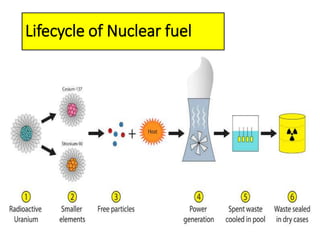
• Lifecycle of Nuclear fuel
• Ionizing Radiation symbol
What is Nuclear waste?
• Nuclear waste is a type of hazardous waste that
contains radioactive material.
• Nuclear waste is a by-product of various nuclear
technology processes
• Radioactive (or nuclear) waste is a byproduct from
nuclear reactors, fuel processing plants, hospitals
and research facilities.
• Nuclear waste is regulated by government agencies
in order to protect human health and the
environment.
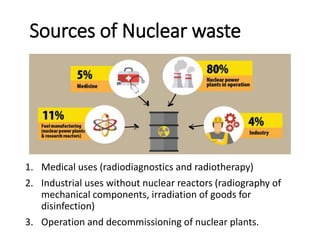
Sources of Nuclear waste
1. Medical uses (radiodiagnostics and radiotherapy)
2. Industrial uses without nuclear reactors (radiography of
mechanical components, irradiation of goods for
disinfection)
3. Operation and decommissioning of nuclear plants.
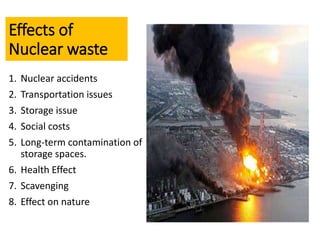
Effects of
Nuclear waste
1. Nuclear accidents
2. Transportation issues
3. Storage issue
4. Social costs
5. Long-term contamination of
storage spaces.
6. Health Effect
7. Scavenging
8. Effect on nature
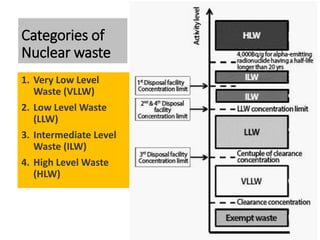
Categories of
Nuclear waste
1. Very Low Level
Waste (VLLW)
2. Low Level Waste
(LLW)
3. Intermediate Level
Waste (ILW)
4. High Level Waste
(HLW)
Storage & Disposal of waste
1) LLW and short-lived ILW:
Near surface disposal at ground level, or in canverns
of below ground level.( at a depth of tens of meter)
2) Long lived ILW and HLW:
Deep geological disposal (at depth between 250m
and 1000m for mined repositories, or 2,000m to
5,000m for boreholes.)
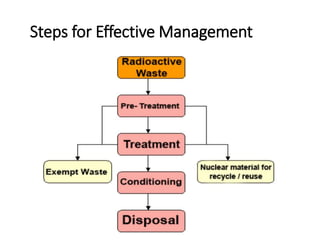
Steps for Effective Management
Lifecycle of Nuclear fuel
Ionizing Radiation (symbol)
Thank you!!

Nuclear waste management

  • 1.
    NUCLEAR WASTE MANAGEMENT Presentedby: Amit Vidhate (SCH40) Shubham Jangam (SCH54) Adesh Arote (SCH73) Vaibhav Durge (SCH52)
  • 2.
    Content: • Introduction (Whatis Nuclear waste?) • Sources of Nuclear waste • Effects of Nuclear waste • Categories of Nuclear waste • Storage and Disposal of Nuclear waste • Steps for Effective Management • Lifecycle of Nuclear fuel • Ionizing Radiation symbol
  • 3.
    What is Nuclearwaste? • Nuclear waste is a type of hazardous waste that contains radioactive material. • Nuclear waste is a by-product of various nuclear technology processes • Radioactive (or nuclear) waste is a byproduct from nuclear reactors, fuel processing plants, hospitals and research facilities. • Nuclear waste is regulated by government agencies in order to protect human health and the environment.
  • 4.
    Sources of Nuclearwaste 1. Medical uses (radiodiagnostics and radiotherapy) 2. Industrial uses without nuclear reactors (radiography of mechanical components, irradiation of goods for disinfection) 3. Operation and decommissioning of nuclear plants.
  • 5.
    Effects of Nuclear waste 1.Nuclear accidents 2. Transportation issues 3. Storage issue 4. Social costs 5. Long-term contamination of storage spaces. 6. Health Effect 7. Scavenging 8. Effect on nature
  • 6.
    Categories of Nuclear waste 1.Very Low Level Waste (VLLW) 2. Low Level Waste (LLW) 3. Intermediate Level Waste (ILW) 4. High Level Waste (HLW)
  • 7.
    Storage & Disposalof waste 1) LLW and short-lived ILW: Near surface disposal at ground level, or in canverns of below ground level.( at a depth of tens of meter) 2) Long lived ILW and HLW: Deep geological disposal (at depth between 250m and 1000m for mined repositories, or 2,000m to 5,000m for boreholes.)
  • 8.
  • 9.
  • 10.
  • 11.