NOSE
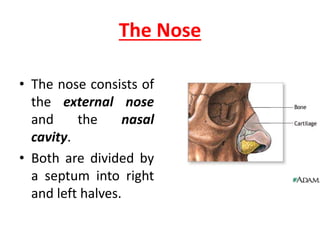
The Nose
• The nose consists of
the external nose
and the nasal
cavity.
• Both are divided by
a septum into right
and left halves.
External Nose
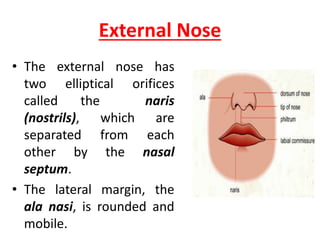
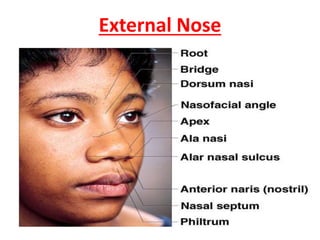
• The external nose has
two elliptical orifices
called the naris
(nostrils), which are
separated from each
other by the nasal
septum.
• The lateral margin, the
ala nasi, is rounded and
mobile.
External Nose
External Nose
The framework of
the external nose is
made up by the,
• nasal bone
• frontal processes of
the maxillae
• the nasal part of the
frontal bone
External Nose
SENSE OF SMELL
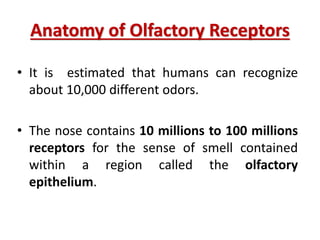
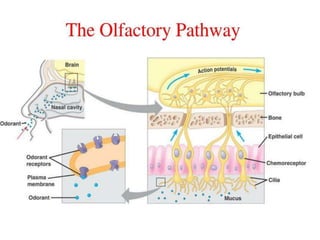
Anatomy of Olfactory Receptors
• It is estimated that humans can recognize
about 10,000 different odors.
• The nose contains 10 millions to 100 millions
receptors for the sense of smell contained
within a region called the olfactory
epithelium.
Cont..
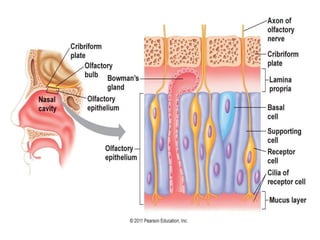
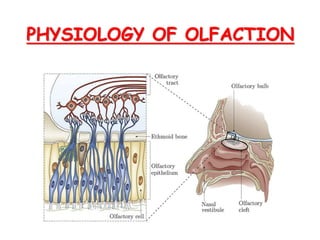
• Olfactory epithelium occupies the superior
part of the nasal cavity, covering the inferior
surface of the cribriform plate and extending
along the superior nasal conchae.
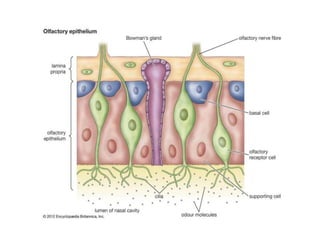
• It consists of three kinds of cells: olfactory
receptors, supporting cells, and basal cells.
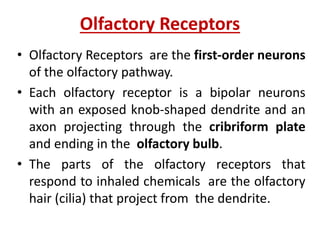
Olfactory Receptors
• Olfactory Receptors are the first-order neurons
of the olfactory pathway.
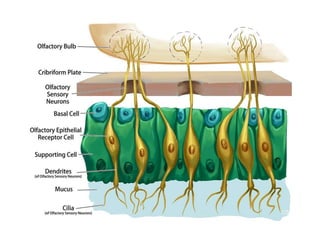
• Each olfactory receptor is a bipolar neurons
with an exposed knob-shaped dendrite and an
axon projecting through the cribriform plate
and ending in the olfactory bulb.
• The parts of the olfactory receptors that
respond to inhaled chemicals are the olfactory
hair (cilia) that project from the dendrite.
Supporting Cells
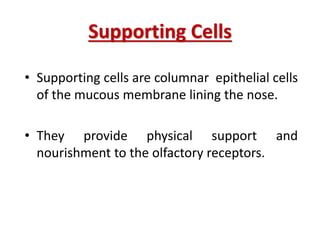
• Supporting cells are columnar epithelial cells
of the mucous membrane lining the nose.
• They provide physical support and
nourishment to the olfactory receptors.
Basal Cells
• Basal cells are the stem cells located between
the bases of the supporting cells.
• They continually undergo cell division to
produce new olfactory receptors.
• Within the connective tissue that supports the
olfactory epithelium are olfactory ( Bowman’s)
glands, which produces mucus that is carried
to the surface of epithelium by ducts.
PHYSIOLOGY OF OLFACTION
19
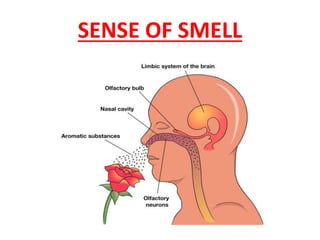
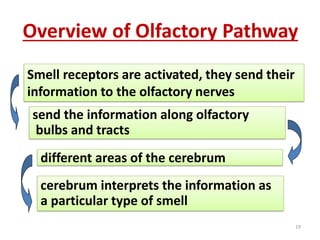
Overview of Olfactory Pathway
send the information along olfactory
bulbs and tracts
different areas of the cerebrum
cerebrum interprets the information as
a particular type of smell
Smell receptors are activated, they send their
information to the olfactory nerves
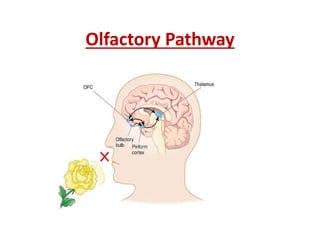
Olfactory Pathway
Nose anatomy & physiology sensory system

Nose anatomy & physiology sensory system

  • 1.
  • 2.
    The Nose • Thenose consists of the external nose and the nasal cavity. • Both are divided by a septum into right and left halves.
  • 3.
    External Nose • Theexternal nose has two elliptical orifices called the naris (nostrils), which are separated from each other by the nasal septum. • The lateral margin, the ala nasi, is rounded and mobile.
  • 4.
  • 5.
    External Nose The frameworkof the external nose is made up by the, • nasal bone • frontal processes of the maxillae • the nasal part of the frontal bone
  • 6.
  • 7.
  • 8.
    Anatomy of OlfactoryReceptors • It is estimated that humans can recognize about 10,000 different odors. • The nose contains 10 millions to 100 millions receptors for the sense of smell contained within a region called the olfactory epithelium.
  • 9.
    Cont.. • Olfactory epitheliumoccupies the superior part of the nasal cavity, covering the inferior surface of the cribriform plate and extending along the superior nasal conchae. • It consists of three kinds of cells: olfactory receptors, supporting cells, and basal cells.
  • 11.
    Olfactory Receptors • OlfactoryReceptors are the first-order neurons of the olfactory pathway. • Each olfactory receptor is a bipolar neurons with an exposed knob-shaped dendrite and an axon projecting through the cribriform plate and ending in the olfactory bulb. • The parts of the olfactory receptors that respond to inhaled chemicals are the olfactory hair (cilia) that project from the dendrite.
  • 13.
    Supporting Cells • Supportingcells are columnar epithelial cells of the mucous membrane lining the nose. • They provide physical support and nourishment to the olfactory receptors.
  • 15.
    Basal Cells • Basalcells are the stem cells located between the bases of the supporting cells. • They continually undergo cell division to produce new olfactory receptors. • Within the connective tissue that supports the olfactory epithelium are olfactory ( Bowman’s) glands, which produces mucus that is carried to the surface of epithelium by ducts.
  • 16.
  • 19.
    19 Overview of OlfactoryPathway send the information along olfactory bulbs and tracts different areas of the cerebrum cerebrum interprets the information as a particular type of smell Smell receptors are activated, they send their information to the olfactory nerves
  • 20.