S U B M I T T E D B Y
A . S I VA K U L A S E K A R A PA A N D I A N
M . T E C H ( B I O T E C H N O L O G Y )
NON-HAZARDOUS WASTE
MANAGEMENT
TECHNOLOGIES
WHAT IS NON-HAZARDOUS WASTE?
Type of industrial waste
Cannot be added to dumpster or sewage line.
Sugars,lactic acid, bromides, or carbonates are the examples of
Non-Hazardous waste.
Not affect human.
TYPES OF NON-HAZARDOUS WASTE
Household waste
Ordinary industrial waste
Solid waste
Construction waste
Organic waste
Wastewater
Sludge from wastewater treatment plants
Packaging and recyclable materials
Infectious Healthcare Waste (IHW) and medical waste
Bottom ash from solid waste incinerators
RULES & REGULATIONS OF NHW
Aim at providing control
Specify the responsibilities
Regulations governing generators of NHW
1.preparation for transport
2.manifest requirements
3.record keeping & reporting
Regulations governing transporters of NHW
1.notification prior to transport
2.manifest requirements
COLLECTION AND DISPOSAL
No true way to collect and dispose of non-
hazardous waste, simply because the wastes
themselves have individual regulations depending on
what they are.
For example, lactic acid will be disposed of
differently than oil
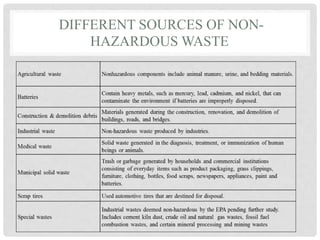
DIFFERENT SOURCES OF NON-
HAZARDOUS WASTE
CO-GENERATION TECHNOLOGY
Co-generation facilities convert non-hazardous waste to
energy through high temperature incineration.
Heat generated from this process boils water which powers
steam generators that make electric energy used in homes and
businesses.
BENEFITS
Complete destruction through a green technology. Co-
generation reduces waste volume by 90+%.
Alternative solution to hazardous waste incineration. Same
destruction result at drastically reduced cost for non-hazardous
waste.
Sustainable solution metrics generated through energy
recovery. Per US EPA, waste-to-energy is a “clean, reliable,
renewable source of energy.”
CONT.,
Ability to handle all waste consistencies including solids,
liquids and sludges.
 Premier emission technology; Modern waste-to-energy
facilities a meet or exceed EPA’s Maximum Achievable
Control Technology (MACT) standards.
Secure and compliant
Destruction
High temperature thermal process
Sustainable solution
Ability to process liquids, sludges and solids
CLASSIFICATION
Under Texas regulation non-hazardous wastes are categorized as
Class 1
Class 2
Class 3.
Class 2 and Class 3 waste are considered less harmful to the
environment or human health than Class 1 waste.
CLASS 1
It regulated by the TCEQ and are potentially threatening to
human health and the environment if not properly managed,
because of the constituents and properties this class can
include.
Examples are water contaminated with ethylene glycol, soils
contaminated with petroleum hydrocarbons, liquids that are
ignitable at levels above 150 degrees F, and semi-solids and
solids when combined with water exhibits corrosive
properties.
CLASS 2
• Class 2 wastes are often accepted at local landfills
examples of wastes that fall under the Class II
definition are depleted aerosol cans, non-surgical
non-radioactive medical waste, and food waste and
packaging that result from plant production,
manufacturing or laboratory operations.
CLASS 3
Class 3 wastes that are insoluble, do not react with
other materials, and also not decompose.
Examples of wastes which fall under the Class III
definition are chemically inert and insoluble
substances, waste which poses no threat to human
health or the environment, rocks, bricks, glass, dirt
and some plastics that are inert and insoluble solid
waste materials.
Non-Hazardous Waste Management Technologies

Non-Hazardous Waste Management Technologies

  • 1.
    S U BM I T T E D B Y A . S I VA K U L A S E K A R A PA A N D I A N M . T E C H ( B I O T E C H N O L O G Y ) NON-HAZARDOUS WASTE MANAGEMENT TECHNOLOGIES
  • 2.
    WHAT IS NON-HAZARDOUSWASTE? Type of industrial waste Cannot be added to dumpster or sewage line. Sugars,lactic acid, bromides, or carbonates are the examples of Non-Hazardous waste. Not affect human.
  • 3.
    TYPES OF NON-HAZARDOUSWASTE Household waste Ordinary industrial waste Solid waste Construction waste Organic waste Wastewater Sludge from wastewater treatment plants Packaging and recyclable materials Infectious Healthcare Waste (IHW) and medical waste Bottom ash from solid waste incinerators
  • 4.
    RULES & REGULATIONSOF NHW Aim at providing control Specify the responsibilities Regulations governing generators of NHW 1.preparation for transport 2.manifest requirements 3.record keeping & reporting Regulations governing transporters of NHW 1.notification prior to transport 2.manifest requirements
  • 5.
    COLLECTION AND DISPOSAL Notrue way to collect and dispose of non- hazardous waste, simply because the wastes themselves have individual regulations depending on what they are. For example, lactic acid will be disposed of differently than oil
  • 6.
    DIFFERENT SOURCES OFNON- HAZARDOUS WASTE
  • 8.
    CO-GENERATION TECHNOLOGY Co-generation facilitiesconvert non-hazardous waste to energy through high temperature incineration. Heat generated from this process boils water which powers steam generators that make electric energy used in homes and businesses.
  • 9.
    BENEFITS Complete destruction througha green technology. Co- generation reduces waste volume by 90+%. Alternative solution to hazardous waste incineration. Same destruction result at drastically reduced cost for non-hazardous waste. Sustainable solution metrics generated through energy recovery. Per US EPA, waste-to-energy is a “clean, reliable, renewable source of energy.”
  • 10.
    CONT., Ability to handleall waste consistencies including solids, liquids and sludges.  Premier emission technology; Modern waste-to-energy facilities a meet or exceed EPA’s Maximum Achievable Control Technology (MACT) standards. Secure and compliant Destruction High temperature thermal process Sustainable solution Ability to process liquids, sludges and solids
  • 11.
    CLASSIFICATION Under Texas regulationnon-hazardous wastes are categorized as Class 1 Class 2 Class 3. Class 2 and Class 3 waste are considered less harmful to the environment or human health than Class 1 waste.
  • 12.
    CLASS 1 It regulatedby the TCEQ and are potentially threatening to human health and the environment if not properly managed, because of the constituents and properties this class can include. Examples are water contaminated with ethylene glycol, soils contaminated with petroleum hydrocarbons, liquids that are ignitable at levels above 150 degrees F, and semi-solids and solids when combined with water exhibits corrosive properties.
  • 13.
    CLASS 2 • Class2 wastes are often accepted at local landfills examples of wastes that fall under the Class II definition are depleted aerosol cans, non-surgical non-radioactive medical waste, and food waste and packaging that result from plant production, manufacturing or laboratory operations.
  • 14.
    CLASS 3 Class 3wastes that are insoluble, do not react with other materials, and also not decompose. Examples of wastes which fall under the Class III definition are chemically inert and insoluble substances, waste which poses no threat to human health or the environment, rocks, bricks, glass, dirt and some plastics that are inert and insoluble solid waste materials.