Download to read offline


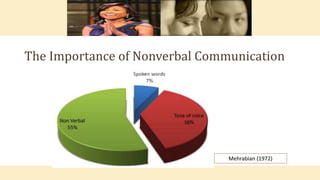
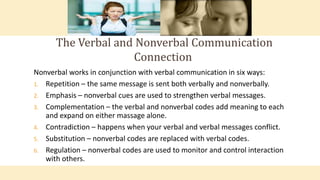
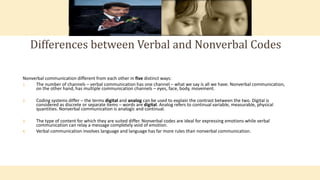
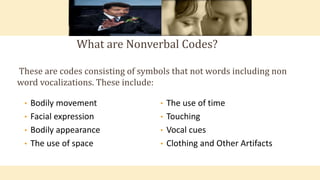
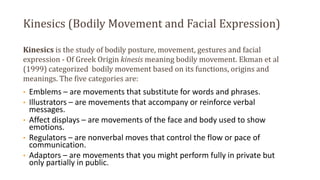
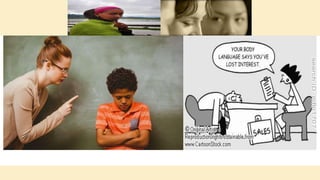
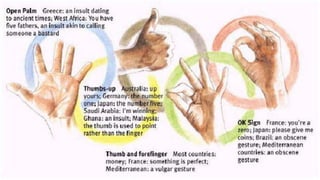



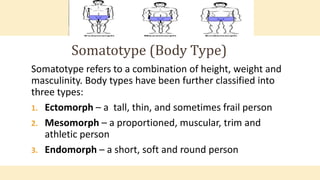

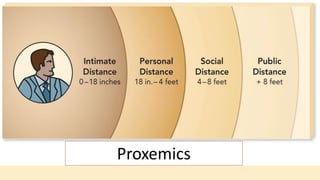
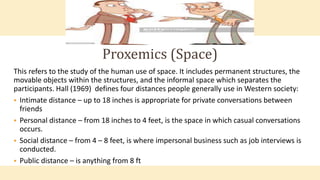
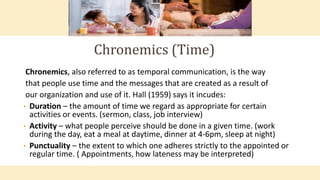
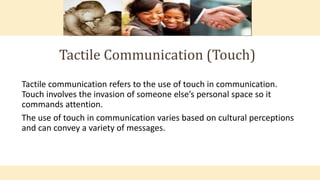
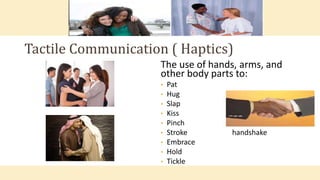
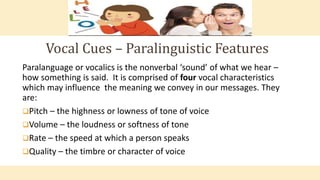


Nonverbal communication includes facial expressions, gestures, eye contact, posture, touch, physical space between people and objects like clothing. It provides additional meaning beyond words alone. Some ways that nonverbal communication works include repetition to emphasize verbal messages, contradiction when verbal and nonverbal messages conflict, and regulation to control interactions. Nonverbal codes fall into categories like emblems, illustrators, affect displays and regulate the flow of communication. Factors like proxemics, chronemics, haptics, and objectics also convey nonverbal messages.


![160210119038[1]](https://cdn.slidesharecdn.com/ss_thumbnails/1602101190381-170108122946-thumbnail.jpg?width=640&height=640&fit=bounds)


![Youteach assignment[1]](https://cdn.slidesharecdn.com/ss_thumbnails/youteachassignment1-110505205656-phpapp02-thumbnail.jpg?width=640&height=640&fit=bounds)


