NON VERBAL COMMNICATION
BODY LANGAGUE
HARI MOHAN (17PBA019)
SAPNA DEVI (17PBA042)
BADDI UNIVERSITY OF EMERGING SCIENCES AND TECHNOLOGY
NONVERBAL COMMUNICATION
Nonverbal communication includes all
unwritten and unspoken messages, both
intentional and unintentional.
FEATURES :
 Non verbal communication flows through all acts of
speaking or writing.
 They are the wordless messages .
 Is a creative activity , which comes through stimuli
produced by the mind.
Body Language
During our life we all use body language all the
time without knowing or realizing it.
Example : When a child has had enough to eat,
he turns his head from side to side, to stop his
parents from feeding him.
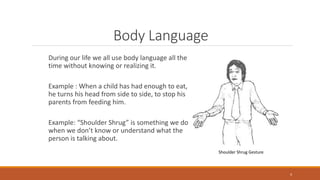
Example: “Shoulder Shrug” is something we do
when we don’t know or understand what the
person is talking about.
4
Shoulder Shrug Gesture
Palm Gesture
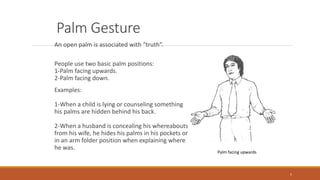
An open palm is associated with “truth”.
People use two basic palm positions:
1-Palm facing upwards.
2-Palm facing down.
Examples:
1-When a child is lying or counseling something
his palms are hidden behind his back.
2-When a husband is concealing his whereabouts
from his wife, he hides his palms in his pockets or
in an arm folder position when explaining where
he was.
5
Palm facing upwards
Palm Gesture
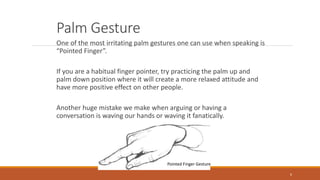
One of the most irritating palm gestures one can use when speaking is
“Pointed Finger”.
If you are a habitual finger pointer, try practicing the palm up and
palm down position where it will create a more relaxed attitude and
have more positive effect on other people.
Another huge mistake we make when arguing or having a
conversation is waving our hands or waving it fanatically.
6
Pointed Finger Gesture
Hand and Arm gestures
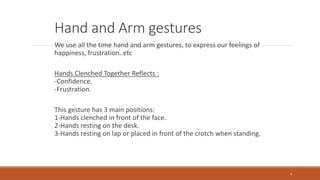
We use all the time hand and arm gestures, to express our feelings of
happiness, frustration..etc
Hands Clenched Together Reflects :
-Confidence.
-Frustration.
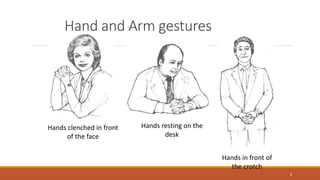
This gesture has 3 main positions:
1-Hands clenched in front of the face.
2-Hands resting on the desk.
3-Hands resting on lap or placed in front of the crotch when standing.
7
Hand and Arm gestures
8
Hands clenched in front
of the face
Hands resting on the
desk
Hands in front of
the crotch
WORNG GESTURES
9/27/2010 LAT TRAINING DEPARTMENT - COMMUNICATION & BODY LANGUAGE VER 1 9
Leaning Back too
much — you come
off lazy or
arrogant
No: 1
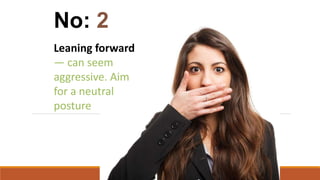
Leaning forward
— can seem
aggressive. Aim
for a neutral
posture
No: 2
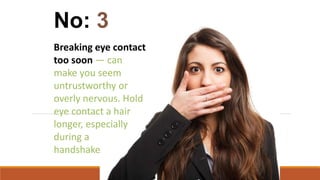
Breaking eye contact
too soon — can
make you seem
untrustworthy or
overly nervous. Hold
eye contact a hair
longer, especially
during a
handshake
No: 3
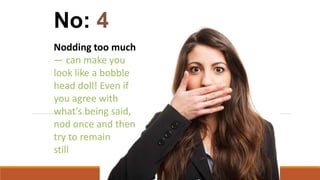
Nodding too much
— can make you
look like a bobble
head doll! Even if
you agree with
what’s being said,
nod once and then
try to remain
still
No: 4
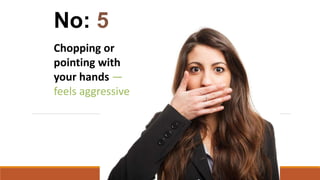
Chopping or
pointing with
your hands —
feels aggressive
No: 5
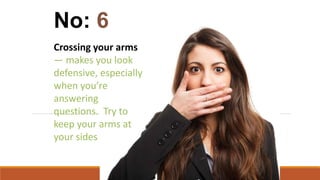
Crossing your arms
— makes you look
defensive, especially
when you’re
answering
questions. Try to
keep your arms at
your sides
No: 6
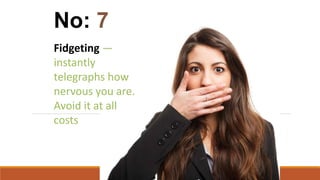
Fidgeting —
instantly
telegraphs how
nervous you are.
Avoid it at all
costs
No: 7
Holding your hands
behind your back
(or firmly in your
pockets) — can look
rigid and stiff. Aim
for a natural, hands
at your sides
posture
No: 8
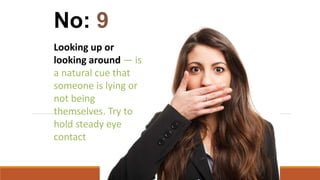
Looking up or
looking around — is
a natural cue that
someone is lying or
not being
themselves. Try to
hold steady eye
contact
No: 9
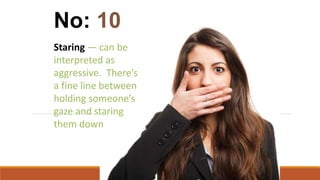
Staring — can be
interpreted as
aggressive. There’s
a fine line between
holding someone’s
gaze and staring
them down
No: 10
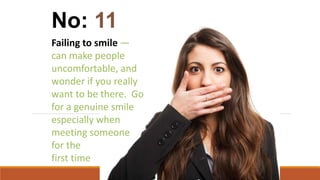
Failing to smile —
can make people
uncomfortable, and
wonder if you really
want to be there. Go
for a genuine smile
especially when
meeting someone
for the
first time
No: 11
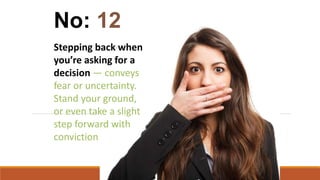
Stepping back when
you’re asking for a
decision — conveys
fear or uncertainty.
Stand your ground,
or even take a slight
step forward with
conviction
No: 12
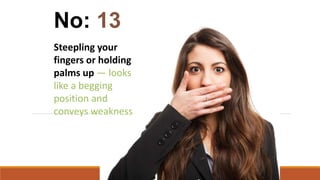
Steepling your
fingers or holding
palms up — looks
like a begging
position and
conveys weakness
No: 13
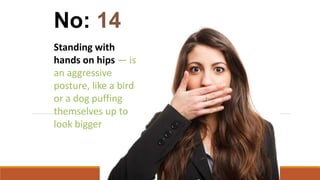
Standing with
hands on hips — is
an aggressive
posture, like a bird
or a dog puffing
themselves up to
look bigger
No: 14
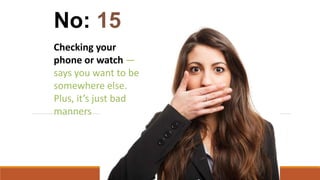
Checking your
phone or watch —
says you want to be
somewhere else.
Plus, it’s just bad
manners
No: 15
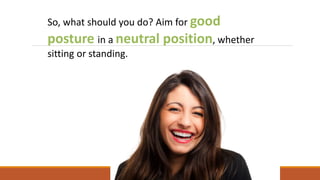
So, what should you do? Aim for good
posture in a neutral position, whether
sitting or standing.
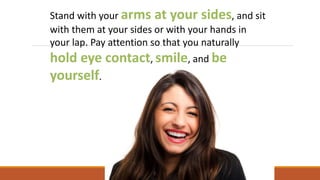
Stand with your arms at your sides, and sit
with them at your sides or with your hands in
your lap. Pay attention so that you naturally
hold eye contact, smile, and be
yourself.
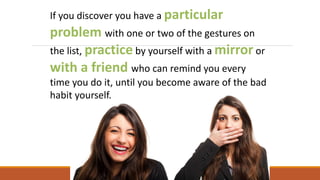
If you discover you have a particular
problem with one or two of the gestures on
the list, practice by yourself with a mirror or
with a friend who can remind you every
time you do it, until you become aware of the bad
habit yourself.

Non verbal commnication

  • 1.
    NON VERBAL COMMNICATION BODYLANGAGUE HARI MOHAN (17PBA019) SAPNA DEVI (17PBA042) BADDI UNIVERSITY OF EMERGING SCIENCES AND TECHNOLOGY
  • 2.
    NONVERBAL COMMUNICATION Nonverbal communicationincludes all unwritten and unspoken messages, both intentional and unintentional.
  • 3.
    FEATURES :  Nonverbal communication flows through all acts of speaking or writing.  They are the wordless messages .  Is a creative activity , which comes through stimuli produced by the mind.
  • 4.
    Body Language During ourlife we all use body language all the time without knowing or realizing it. Example : When a child has had enough to eat, he turns his head from side to side, to stop his parents from feeding him. Example: “Shoulder Shrug” is something we do when we don’t know or understand what the person is talking about. 4 Shoulder Shrug Gesture
  • 5.
    Palm Gesture An openpalm is associated with “truth”. People use two basic palm positions: 1-Palm facing upwards. 2-Palm facing down. Examples: 1-When a child is lying or counseling something his palms are hidden behind his back. 2-When a husband is concealing his whereabouts from his wife, he hides his palms in his pockets or in an arm folder position when explaining where he was. 5 Palm facing upwards
  • 6.
    Palm Gesture One ofthe most irritating palm gestures one can use when speaking is “Pointed Finger”. If you are a habitual finger pointer, try practicing the palm up and palm down position where it will create a more relaxed attitude and have more positive effect on other people. Another huge mistake we make when arguing or having a conversation is waving our hands or waving it fanatically. 6 Pointed Finger Gesture
  • 7.
    Hand and Armgestures We use all the time hand and arm gestures, to express our feelings of happiness, frustration..etc Hands Clenched Together Reflects : -Confidence. -Frustration. This gesture has 3 main positions: 1-Hands clenched in front of the face. 2-Hands resting on the desk. 3-Hands resting on lap or placed in front of the crotch when standing. 7
  • 8.
    Hand and Armgestures 8 Hands clenched in front of the face Hands resting on the desk Hands in front of the crotch
  • 9.
    WORNG GESTURES 9/27/2010 LATTRAINING DEPARTMENT - COMMUNICATION & BODY LANGUAGE VER 1 9
  • 10.
    Leaning Back too much— you come off lazy or arrogant No: 1
  • 11.
    Leaning forward — canseem aggressive. Aim for a neutral posture No: 2
  • 12.
    Breaking eye contact toosoon — can make you seem untrustworthy or overly nervous. Hold eye contact a hair longer, especially during a handshake No: 3
  • 13.
    Nodding too much —can make you look like a bobble head doll! Even if you agree with what’s being said, nod once and then try to remain still No: 4
  • 14.
    Chopping or pointing with yourhands — feels aggressive No: 5
  • 15.
    Crossing your arms —makes you look defensive, especially when you’re answering questions. Try to keep your arms at your sides No: 6
  • 16.
    Fidgeting — instantly telegraphs how nervousyou are. Avoid it at all costs No: 7
  • 17.
    Holding your hands behindyour back (or firmly in your pockets) — can look rigid and stiff. Aim for a natural, hands at your sides posture No: 8
  • 18.
    Looking up or lookingaround — is a natural cue that someone is lying or not being themselves. Try to hold steady eye contact No: 9
  • 19.
    Staring — canbe interpreted as aggressive. There’s a fine line between holding someone’s gaze and staring them down No: 10
  • 20.
    Failing to smile— can make people uncomfortable, and wonder if you really want to be there. Go for a genuine smile especially when meeting someone for the first time No: 11
  • 21.
    Stepping back when you’reasking for a decision — conveys fear or uncertainty. Stand your ground, or even take a slight step forward with conviction No: 12
  • 22.
    Steepling your fingers orholding palms up — looks like a begging position and conveys weakness No: 13
  • 23.
    Standing with hands onhips — is an aggressive posture, like a bird or a dog puffing themselves up to look bigger No: 14
  • 24.
    Checking your phone orwatch — says you want to be somewhere else. Plus, it’s just bad manners No: 15
  • 25.
    So, what shouldyou do? Aim for good posture in a neutral position, whether sitting or standing.
  • 26.
    Stand with yourarms at your sides, and sit with them at your sides or with your hands in your lap. Pay attention so that you naturally hold eye contact, smile, and be yourself.
  • 27.
    If you discoveryou have a particular problem with one or two of the gestures on the list, practice by yourself with a mirror or with a friend who can remind you every time you do it, until you become aware of the bad habit yourself.