NISO’s DDA Initiative: Cross
Industry Stakeholders Express PDA
to Improve the Landscape for All

Charleston Conference

November 8, 2012

Barbara Kawecki, YBP Library Services

BKawecki@ybp.com

Michael Levine-Clark, University of Denver

michael.levine-clark@du.edu
Definitions

Public Display of Affection (PDA)
   An act of physical intimacy in the view of
    others.

Portable Digital Assistant (PDA)
   An obsolete digital device.
Definitions

Patron-Driven Acquisition (PDA)
  Acquisition of library materials based on direct
   or indirect patron input, including faculty
   requests and analysis of collection usage

Demand-Driven Acquisition (DDA)
  Acquisition of library materials based on
   patron selection at the point of need.
Why DDA?

Rebalance collection from possible use
 toward immediate need
 Make many more titles available to users
   A broader, deeper collection

 Spend same amount for greater access or
  less for same access
Why Do We Need Best Practices?

Management of the “consideration
 pool” – the titles available for purchase
 or lease
   Rules for:
     Adding titles
     Keeping unowned titles available
     Removing titles
     Managing records
A New Way of Thinking About
Acquisition

An evolution from getting books into the
 collection
                   To
Long-term management of discovery
 tools that allow for demand-driven
 access to monographs
A Disruption to the Entire
Publishing Supply Chain

Uncertainty for scholarly publishers
New role for approval vendors
   From booksellers to service providers
Changing role for academic libraries
   Stewardship vs access
Potentially similar issues for public
 libraries, trade publishers
Components of DDA

 Free discovery of content
   Set amount of time in the entire book
   Set number of pages
   Front and back matter

 Temporary lease
 Purchase
 Tools and strategies for automated
  management of the consideration pool
Goals

 Develop a flexible model for DDA that works
  for publishers, vendors, aggregators, and
  libraries.
 Allow for DDA plans that
   Meet local budget and collection needs
   Allow for consortial participation
   Allow for cross-aggregator implementation
   Account for how DDA impacts all functional
    areas of the library
Deliverables

Recommendations for
  Managing and populating the
   consideration pool
  Developing consistent models for
    Free discovery
    Temporary lease
    Purchase
Deliverables

 Recommendations for
  Methods for managing multiple formats (p&e)
  Ways to incorporate print-on-demand (POD)
  Development of tools and strategies to
   measure use
  Implementation at the local and consortial
   levels
  Providing long-term access to unowned e-book
   content
Timeline

 Appointment of working group       Aug 2012
 Approval of charge, initial work   Oct 2012
  plan
 Completion of information
  gathering                          June 2013
 Completion of initial draft        Aug 2013
 Gathering of public comments       Sept 2013
 Completion of final draft          Dec 2013
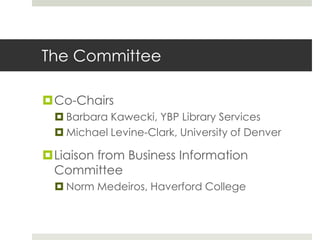
The Committee

Co-Chairs
   Barbara Kawecki, YBP Library Services
   Michael Levine-Clark, University of Denver

Liaison from Business Information
 Committee
   Norm Medeiros, Haverford College
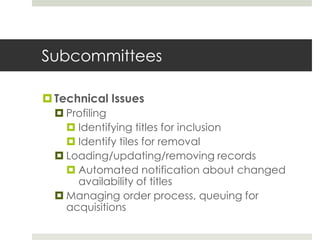
Subcommittees

 Technical Issues
   Profiling
     Identifying titles for inclusion
     Identify tiles for removal
   Loading/updating/removing records
     Automated notification about changed
      availability of titles
   Managing order process, queuing for
    acquisitions
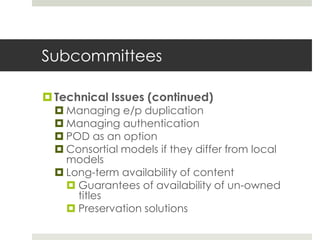
Subcommittees

 Technical Issues (continued)
   Managing e/p duplication
   Managing authentication
   POD as an option
   Consortial models if they differ from local
    models
   Long-term availability of content
     Guarantees of availability of un-owned
      titles
     Preservation solutions
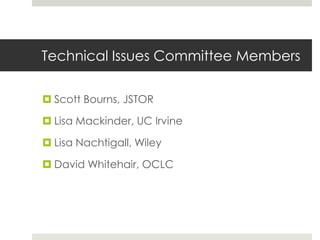
Technical Issues Committee Members

 Scott Bourns, JSTOR

 Lisa Mackinder, UC Irvine

 Lisa Nachtigall, Wiley

 David Whitehair, OCLC
Subcommittees

 Access Models
     Free discovery
     Temporary access
     Purchase
     Single vs. multiple users
     Implications for publishers
     Consortial models if they differ from local
     Long-term availability of content
       Guarantees of availability of un-owned content
       Financial implications
Access Models Committee Members

 Lenny Allen, Oxford University Press

 Karin Byström, Uppsala University

 Terry Ehling, Project Muse

 Rochelle Logan, Douglas County Libraries

 Cory Polonetsky, Elsevier

 Dana Sharvit, Ex Libris
Subcommittees

Metrics
  Cross-aggregator
  Local vs. consortial
  Development of spending predictions based
   on usage
  Analyses of referral sources
Metrics Committee Members

 Stephen Bosch, University of Arizona

 Lorraine Keelan, Palgrave Macmillan

 Kari Paulson, EBL

 Jason Price, Claremont Colleges
Thank You
Barbara Kawecki

BKawecki@ybp.com


Michael Levine-Clark

michael.levine-clark@du.edu

NISO's DDA Initiative

  • 1.
    NISO’s DDA Initiative:Cross Industry Stakeholders Express PDA to Improve the Landscape for All Charleston Conference November 8, 2012 Barbara Kawecki, YBP Library Services BKawecki@ybp.com Michael Levine-Clark, University of Denver michael.levine-clark@du.edu
  • 2.
    Definitions Public Display ofAffection (PDA)  An act of physical intimacy in the view of others. Portable Digital Assistant (PDA)  An obsolete digital device.
  • 3.
    Definitions Patron-Driven Acquisition (PDA)  Acquisition of library materials based on direct or indirect patron input, including faculty requests and analysis of collection usage Demand-Driven Acquisition (DDA)  Acquisition of library materials based on patron selection at the point of need.
  • 4.
    Why DDA? Rebalance collectionfrom possible use toward immediate need  Make many more titles available to users  A broader, deeper collection  Spend same amount for greater access or less for same access
  • 5.
    Why Do WeNeed Best Practices? Management of the “consideration pool” – the titles available for purchase or lease  Rules for:  Adding titles  Keeping unowned titles available  Removing titles  Managing records
  • 6.
    A New Wayof Thinking About Acquisition An evolution from getting books into the collection To Long-term management of discovery tools that allow for demand-driven access to monographs
  • 7.
    A Disruption tothe Entire Publishing Supply Chain Uncertainty for scholarly publishers New role for approval vendors  From booksellers to service providers Changing role for academic libraries  Stewardship vs access Potentially similar issues for public libraries, trade publishers
  • 8.
    Components of DDA Free discovery of content  Set amount of time in the entire book  Set number of pages  Front and back matter  Temporary lease  Purchase  Tools and strategies for automated management of the consideration pool
  • 9.
    Goals  Develop aflexible model for DDA that works for publishers, vendors, aggregators, and libraries.  Allow for DDA plans that  Meet local budget and collection needs  Allow for consortial participation  Allow for cross-aggregator implementation  Account for how DDA impacts all functional areas of the library
  • 10.
    Deliverables Recommendations for Managing and populating the consideration pool  Developing consistent models for  Free discovery  Temporary lease  Purchase
  • 11.
    Deliverables  Recommendations for  Methods for managing multiple formats (p&e)  Ways to incorporate print-on-demand (POD)  Development of tools and strategies to measure use  Implementation at the local and consortial levels  Providing long-term access to unowned e-book content
  • 12.
    Timeline  Appointment ofworking group Aug 2012  Approval of charge, initial work Oct 2012 plan  Completion of information gathering June 2013  Completion of initial draft Aug 2013  Gathering of public comments Sept 2013  Completion of final draft Dec 2013
  • 13.
    The Committee Co-Chairs  Barbara Kawecki, YBP Library Services  Michael Levine-Clark, University of Denver Liaison from Business Information Committee  Norm Medeiros, Haverford College
  • 14.
    Subcommittees  Technical Issues  Profiling  Identifying titles for inclusion  Identify tiles for removal  Loading/updating/removing records  Automated notification about changed availability of titles  Managing order process, queuing for acquisitions
  • 15.
    Subcommittees  Technical Issues(continued)  Managing e/p duplication  Managing authentication  POD as an option  Consortial models if they differ from local models  Long-term availability of content  Guarantees of availability of un-owned titles  Preservation solutions
  • 16.
    Technical Issues CommitteeMembers  Scott Bourns, JSTOR  Lisa Mackinder, UC Irvine  Lisa Nachtigall, Wiley  David Whitehair, OCLC
  • 17.
    Subcommittees  Access Models  Free discovery  Temporary access  Purchase  Single vs. multiple users  Implications for publishers  Consortial models if they differ from local  Long-term availability of content  Guarantees of availability of un-owned content  Financial implications
  • 18.
    Access Models CommitteeMembers  Lenny Allen, Oxford University Press  Karin Byström, Uppsala University  Terry Ehling, Project Muse  Rochelle Logan, Douglas County Libraries  Cory Polonetsky, Elsevier  Dana Sharvit, Ex Libris
  • 19.
    Subcommittees Metrics  Cross-aggregator  Local vs. consortial  Development of spending predictions based on usage  Analyses of referral sources
  • 20.
    Metrics Committee Members Stephen Bosch, University of Arizona  Lorraine Keelan, Palgrave Macmillan  Kari Paulson, EBL  Jason Price, Claremont Colleges
  • 21.
    Thank You Barbara Kawecki BKawecki@ybp.com MichaelLevine-Clark michael.levine-clark@du.edu