NIGHTTIME COOLING 
• As the sun lowers, its energy is spread over a larger area 
• In late afternoon or early evening, the earth’s surface and air above begin 
to lose more energy than they receive 
• The ground and air above cool by radiating infrared energy, a process called 
radiational cooling 
• The land is much better radiator than air 
• Surface air transfers some energy to the ground by conduction 
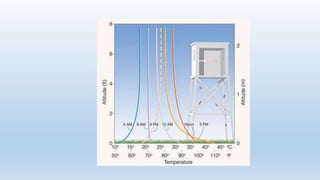
• The measured increase in air temperature just above the ground which is 
formed mainly through radiational cooling of the surface is known as a 
radiation inversion 
• As radiation inversions occur on most clear, calm nights, they are also 
called nocturnal inversions
Radiation Inversions 
• A strong radiation inversion occurs when the air near the ground is 
much colder than the air higher up 
• Ideal conditions for a strong inversion; 
• calm air 
• long night 
• fairly dry air and cloud-free sky 
• Windless night 
• Long night 
• Clear sky and dry air
• On winter nights in middle latitudes, it is common to experience 
below-freezing temperatures near the ground and air 5°C warmer at 
your waist 
• Top of the inversion is usually not more than 100 m above the 
ground 
• A surface that is wet or covered with vegetation can add water vapor 
to the air 
• Lowest temperature on any given day is usually observed around 
sunrise 
• Cold, heavy surface air slowly drains downhill during the night and 
eventually settles in low-lying basins and valleys
Night time cooling
Night time cooling

Night time cooling

  • 1.
    NIGHTTIME COOLING •As the sun lowers, its energy is spread over a larger area • In late afternoon or early evening, the earth’s surface and air above begin to lose more energy than they receive • The ground and air above cool by radiating infrared energy, a process called radiational cooling • The land is much better radiator than air • Surface air transfers some energy to the ground by conduction • The measured increase in air temperature just above the ground which is formed mainly through radiational cooling of the surface is known as a radiation inversion • As radiation inversions occur on most clear, calm nights, they are also called nocturnal inversions
  • 3.
    Radiation Inversions •A strong radiation inversion occurs when the air near the ground is much colder than the air higher up • Ideal conditions for a strong inversion; • calm air • long night • fairly dry air and cloud-free sky • Windless night • Long night • Clear sky and dry air
  • 5.
    • On winternights in middle latitudes, it is common to experience below-freezing temperatures near the ground and air 5°C warmer at your waist • Top of the inversion is usually not more than 100 m above the ground • A surface that is wet or covered with vegetation can add water vapor to the air • Lowest temperature on any given day is usually observed around sunrise • Cold, heavy surface air slowly drains downhill during the night and eventually settles in low-lying basins and valleys