Current affairs reporting
Leveraging new and social media

Sanjana Hattotuwa

TEDGlobal Fellow 2010
Editor, Groundviews (www.groundviews.org)
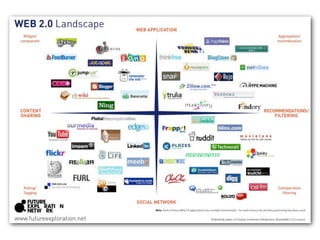
what is social media?

• Social media uses Internet and web-based technologies to transform
  broadcast media monologues (one to many) into social media dialogues
  (many to many). It supports the democratization of knowledge and
  information, transforming people from content consumers into content
  producers. (Wikipedia)
what is new media?

• New media is a term meant to encompass the emergence of digital,
  computerized, or networked information and communication technologies.


• New media is not television programs, feature films, magazines, books, or
  paper-based publications. (Wikipedia)


• But increasingly, old media is leveraging the web, Internet and mobiles in
  generating and disseminating news and information.
new media and foundations

• Blogs


• Social networks (Twitter, Facebook)


• Google Maps


• Mobiles: SMS, mobile photography and video


• VoIP: Skype, Google Chat


• And making this all possible is ADSL + 3G wireless broadband
what’s new

• Ubiquity of two way communications


• Addressable peoples, even those who IDPs or refugees


• Both news generation and dissemination leverages new media


• Disintermediated models vs. traditional media model


• Citizens as producers


• Low resolution content broadcast on high definition media
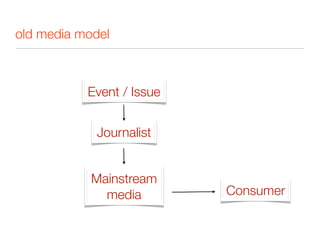
old media model


           Event / Issue


             Journalist


            Mainstream
              media        Consumer
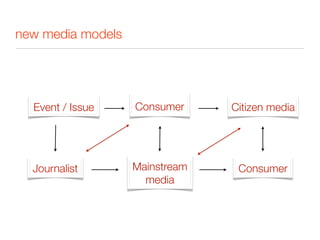
new media models


  Event / Issue    Consumer     Citizen media


  Journalist       Mainstream    Consumer
                     media
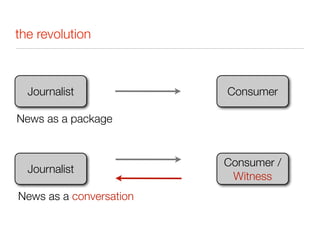
the revolution


  Journalist             Consumer

News as a package


                         Consumer /
  Journalist
                          Witness
News as a conversation
What is out there?
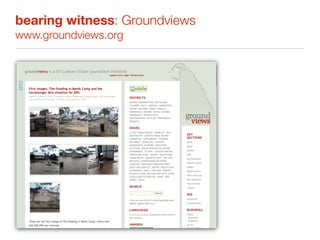
bearing witness: Groundviews
www.groundviews.org
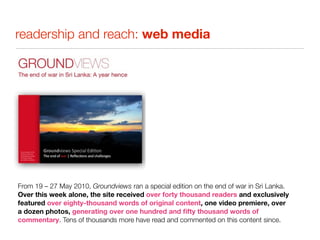
readership and reach: web media


From 19 – 27 May 2010, Groundviews ran a special edition on the end of war in Sri Lanka.
Over this week alone, the site received over forty thousand readers and exclusively
featured over eighty-thousand words of original content, one video premiere, over
a dozen photos, generating over one hundred and fifty thousand words of
commentary. Tens of thousands more have read and commented on this content since.
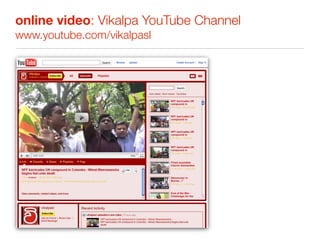
online video: Vikalpa YouTube Channel
www.youtube.com/vikalpasl
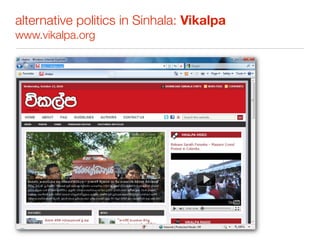
alternative politics in Sinhala: Vikalpa
www.vikalpa.org
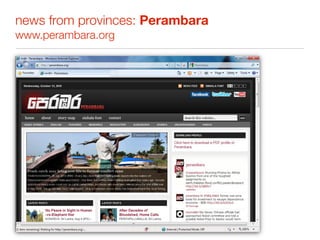
news from provinces: Perambara
www.perambara.org
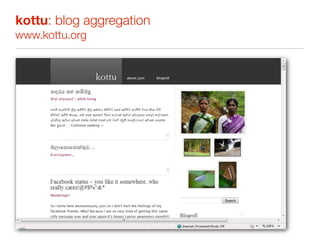
kottu: blog aggregation
www.kottu.org
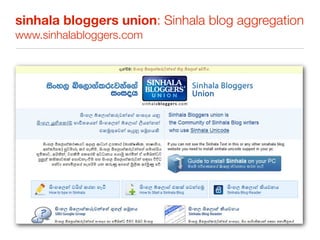
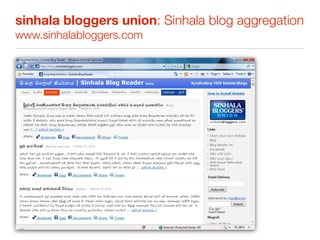
sinhala bloggers union: Sinhala blog aggregation
www.sinhalabloggers.com
sinhala bloggers union: Sinhala blog aggregation
www.sinhalabloggers.com
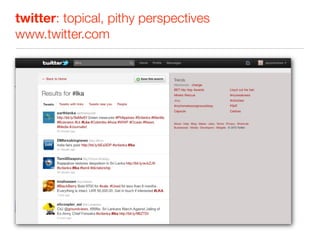
twitter: topical, pithy perspectives
www.twitter.com
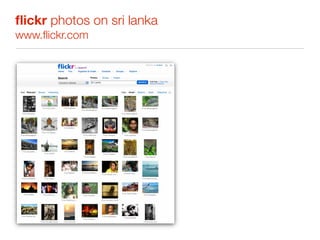
flickr photos on sri lanka
www.flickr.com
Facebook for work
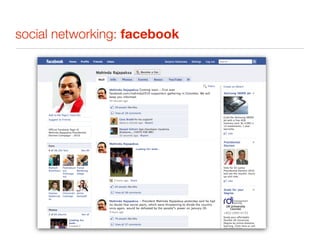
social networking: facebook
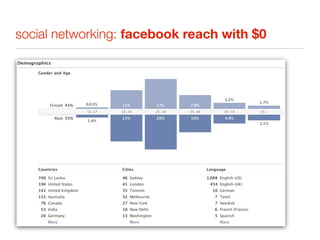
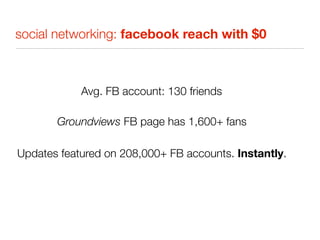
social networking: facebook reach with $0


            Avg. FB account: 130 friends

       Groundviews FB page has 1,600+ fans

Updates featured on 208,000+ FB accounts. Instantly.
Managing content: Pulling in
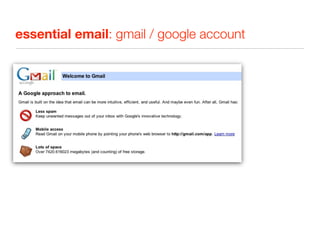
essential email: gmail / google account
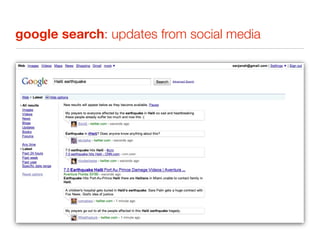
google search: updates from social media
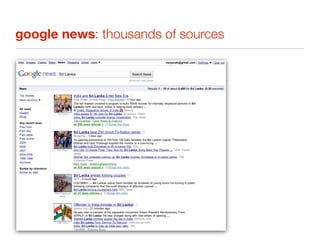
google news: thousands of sources
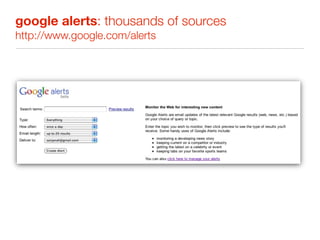
google alerts: thousands of sources
http://www.google.com/alerts
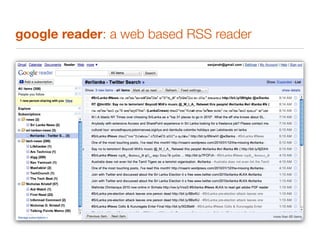
google reader: a web based RSS reader
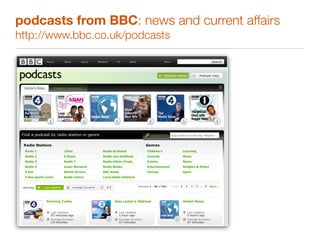
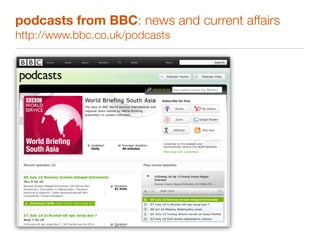
podcasts from BBC: news and current affairs
http://www.bbc.co.uk/podcasts
podcasts from BBC: news and current affairs
http://www.bbc.co.uk/podcasts
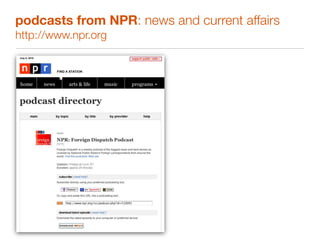
podcasts from NPR: news and current affairs
http://www.npr.org
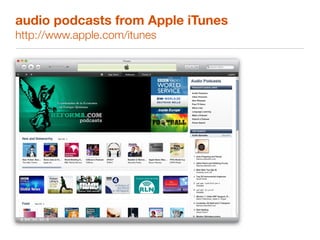
audio podcasts from Apple iTunes
http://www.apple.com/itunes
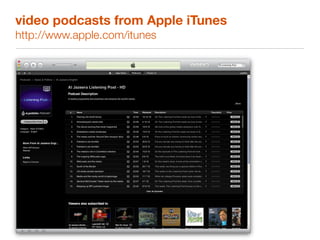
video podcasts from Apple iTunes
http://www.apple.com/itunes
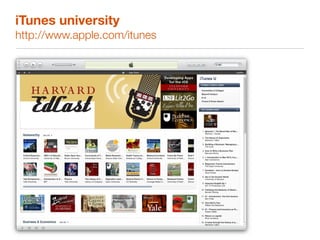
iTunes university
http://www.apple.com/itunes
curated content
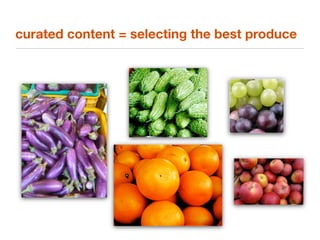
curated content = selecting the best produce
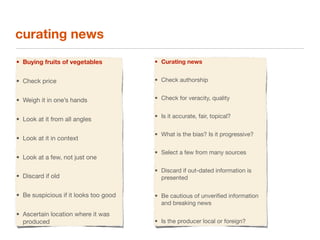
curating news
• Buying fruits of vegetables          • Curating news


• Check price                          • Check authorship


• Weigh it in one’s hands              • Check for veracity, quality


                                       • Is it accurate, fair, topical?
• Look at it from all angles

                                       • What is the bias? Is it progressive?
• Look at it in context

                                       • Select a few from many sources
• Look at a few, not just one

                                       • Discard if out-dated information is
• Discard if old                         presented

• Be suspicious if it looks too good   • Be cautious of unverified information
                                         and breaking news
• Ascertain location where it was
  produced                             • Is the producer local or foreign?
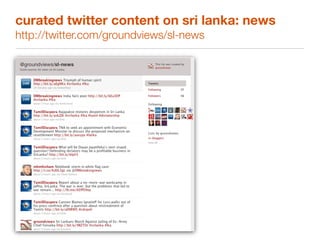
curated twitter content on sri lanka: news
http://twitter.com/groundviews/sl-news
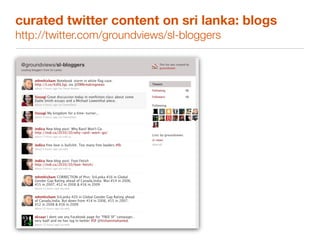
curated twitter content on sri lanka: blogs
http://twitter.com/groundviews/sl-bloggers
twitter desktop client
seesmic.com/seesmic_desktop/sd2
Managing content: Pushing out
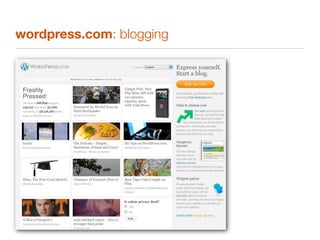
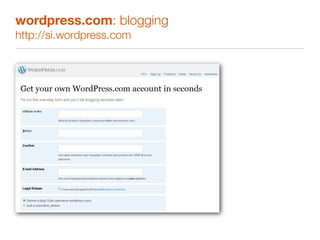
wordpress.com: blogging
http://si.wordpress.com
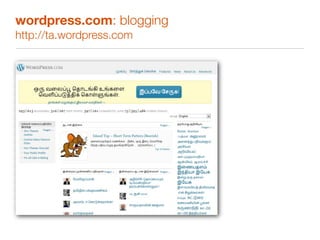
wordpress.com: blogging
http://ta.wordpress.com
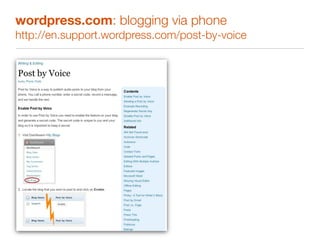
wordpress.com: blogging via phone
http://en.support.wordpress.com/post-by-voice
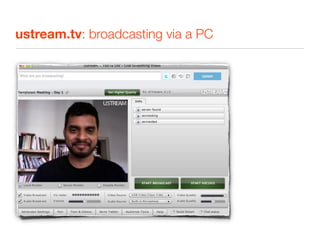
ustream.tv: broadcasting via a PC
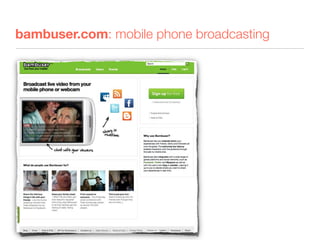
bambuser.com: mobile phone broadcasting
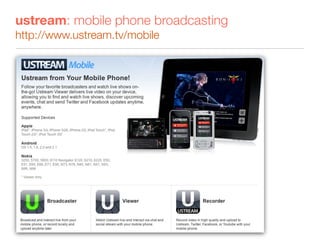
ustream: mobile phone broadcasting
http://www.ustream.tv/mobile
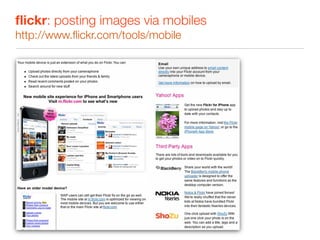
flickr: posting images via mobiles
http://www.flickr.com/tools/mobile
enduring challenges

• Impartial, accurate coverage still vital, increasingly hard to ascertain


• Torrent of information, trickle of knowledge


• Veracity and verifiability


• Eye-witness accounts are partial, subjective


• New media / technology illiteracy even amongst journalists


• Apathy and animosity against citizen journalism


• Licensing and attribution of online content
key points: recap

• New technologies potentially give voice to all citizens


• Be sceptical of new information, but use new media to push and pull content


• Develop media literacy to embrace new technologies
Thank you

New media and current affairs