Student Life
A Student Affairs Perspective
Serving students. Developing leaders. 100% engagement.
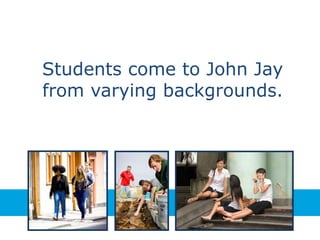
Students come to John Jay
from varying backgrounds.
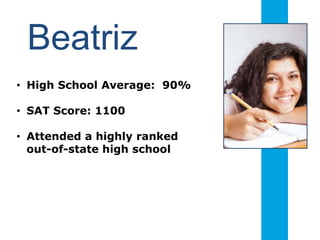
Beatriz
• High School Average: 90%
• SAT Score: 1100
• Attended a highly ranked
out-of-state high school
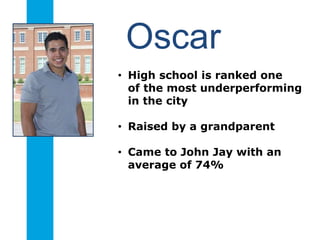
Oscar
• High school is ranked one
of the most underperforming
in the city
• Raised by a grandparent
• Came to John Jay with an
average of 74%
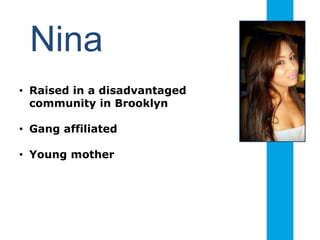
Nina
• Raised in a disadvantaged
community in Brooklyn
• Gang affiliated
• Young mother
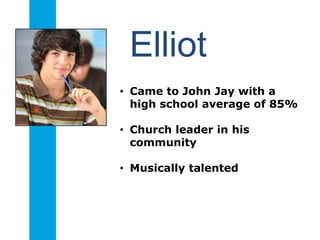
Elliot
• Came to John Jay with a
high school average of 85%
• Church leader in his
community
• Musically talented
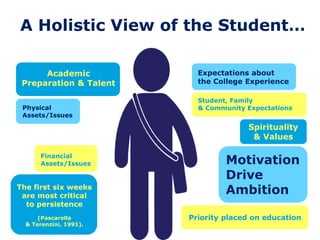
Academic
Preparation & Talent
Expectations about
the College Experience
Culture, Family
& Community ExpectationsPhysical
Assets/Issues
Financial
Assets/Issues
Spirituality
& Values
Motivation
Drive
Ambition
Priority placed on education
The first six weeks
are most critical
to persistence
(Pascarella
& Terenzini, 1991).
A Holistic View of the Student…
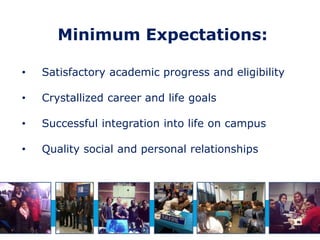
Minimum Expectations:
• Satisfactory academic progress and eligibility
• Crystallized career and life goals
• Successful integration into life on campus
• Quality social and personal relationships
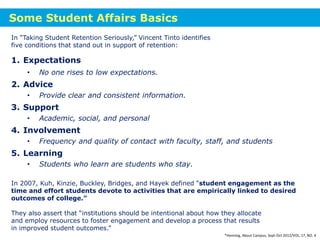
Some Student Affairs Basics
In “Taking Student Retention Seriously,” Vincent Tinto identifies
five conditions that stand out in support of retention:
1. Expectations
• No one rises to low expectations.
2. Advice
• Provide clear and consistent information.
3. Support
• Academic, social, and personal
4. Involvement
• Frequency and quality of contact with faculty, staff, and students
5. Learning
• Students who learn are students who stay.
In 2007, Kuh, Kinzie, Buckley, Bridges, and Hayek defined “student engagement as the
time and effort students devote to activities that are empirically linked to desired
outcomes of college.”
They also assert that “institutions should be intentional about how they allocate
and employ resources to foster engagement and develop a process that results
in improved student outcomes.”
*Henning, About Campus, Sept-Oct 2012/VOL. 17, NO. 4
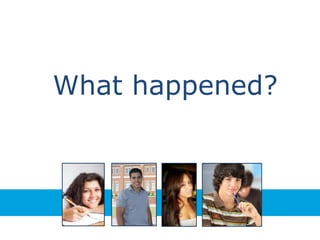
What happened?
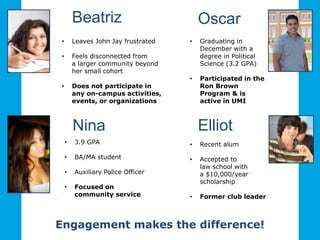
Beatriz
• Leaves John Jay frustrated
• Feels disconnected from
a larger community beyond
her small cohort
• Does not participate in
any on-campus activities,
events, or organizations
Oscar
• Graduating in
December with a
degree in Political
Science (3.2 GPA)
• Participated in the
Ron Brown
Program & is
active in UMI
Nina
• 3.9 GPA
• BA/MA student
• Auxiliary Police Officer
• Focused on
community service
Elliot
• Recent alum
• Accepted to
law school with
a $10,000/year
scholarship
• Former club leader
Engagement makes the difference!
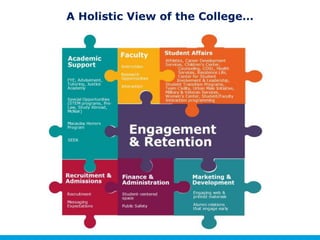
A Holistic View of Engagement & Retention
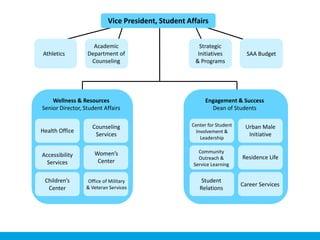
Vice President, Student Affairs
Athletics
Academic
Department of
Counseling
Strategic
Initiatives
& Programs
SAA Budget
Wellness & Resources
Senior Director, Student Affairs
Engagement & Success
Dean of Students
Health Office
Counseling
Services
Accessibility
Services
Women’s
Center
Children’s
Center
Office of Military
& Veteran Services
Center for Student
Involvement &
Leadership
Urban Male
Initiative
Community
Outreach &
Service Learning
Residence Life
Student
Relations
Career Services
Reducing Barriers Increasing Engagement
• Academic Preparation
• Complex Family Situations
• Lack of Cultural Capital
• Financial Burden
• Wellness Challenges
• Physical & Cognitive
Disabilities
• College Bureaucracy
• Out-of-Class Experiences
• Involvement/Spirit/Community
• Leadership
• Travel
• Residential Living
• Campus-Related Work
• Internships
• Service
• Peer Mentoring
• Setting & Upholding
Community Standards
Behavioral
Intervention
Team
(B.I.T.)
Assisting Students in Distress
See Something. Say Something. Do Something.
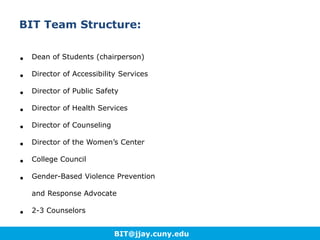
• Dean of Students (chairperson)
• Director of Accessibility Services
• Director of Public Safety
• Director of Health Services
• Director of Counseling
• Director of the Women’s Center
• College Council
• Gender-Based Violence Prevention
and Response Advocate
• 2-3 Counselors
BIT Team Structure:
BIT@jjay.cuny.edu
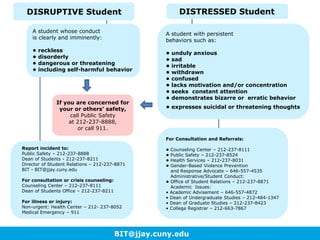
DISTRESSED StudentDISRUPTIVE Student
A student whose conduct
is clearly and imminently:
• reckless
• disorderly
• dangerous or threatening
• including self-harmful behavior
A student with persistent
behaviors such as:
• unduly anxious
• sad
• irritable
• withdrawn
• confused
• lacks motivation and/or concentration
• seeks constant attention
• demonstrates bizarre or erratic behavior
• expresses suicidal or threatening thoughts
If you are concerned for
your or others’ safety,
call Public Safety
at 212-237-8888,
or call 911.
Report incident to:
Public Safety – 212-237-8888
Dean of Students - 212-237-8211
Director of Student Relations – 212-237-8871
BIT - BIT@jjay.cuny.edu
For consultation or crisis counseling:
Counseling Center – 212-237-8111
Dean of Students Office – 212-237-8211
For illness or injury:
Non-urgent: Health Center – 212- 237-8052
Medical Emergency – 911
For Consultation and Referrals:
• Counseling Center – 212-237-8111
• Public Safety – 212-237-8524
• Health Services – 212-237-8031
• Gender-Based Violence Prevention
and Response Advocate – 646-557-4535
Administrative/Student Conduct:
• Office of Student Relations – 212-237-8871
Academic Issues:
• Academic Advisement – 646-557-4872
• Dean of Undergraduate Studies – 212-484-1347
• Dean of Graduate Studies – 212-237-8423
• College Registrar – 212-663-7867
BIT@jjay.cuny.edu
Partnerships with Faculty
• Faculty-Student Engagement Grants
• Internships
• Campus Activities Board (CAB)
• Common Read — Convocation
• Class Substitutes
• Travel Fund
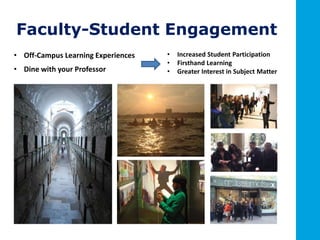
Faculty-Student Engagement
• Off-Campus Learning Experiences
• Dine with your Professor
• Increased Student Participation
• Firsthand Learning
• Greater Interest in Subject Matter
The Real Challenges
• There is a difference between academic preparedness
and being ready to persist and succeed academically.
• Students know how to go to class – they do not know
how to go to college.
• Students often can’t articulate their needs and, therefore
are unable to seek help unless the institution intervenes.
View this presentation at:
www.slideshare.net/StudentAffairsJJC

Student Life: A Student Affairs Perspective

  • 1.
    Student Life A StudentAffairs Perspective Serving students. Developing leaders. 100% engagement.
  • 2.
    Students come toJohn Jay from varying backgrounds.
  • 3.
    Beatriz • High SchoolAverage: 90% • SAT Score: 1100 • Attended a highly ranked out-of-state high school
  • 4.
    Oscar • High schoolis ranked one of the most underperforming in the city • Raised by a grandparent • Came to John Jay with an average of 74%
  • 5.
    Nina • Raised ina disadvantaged community in Brooklyn • Gang affiliated • Young mother
  • 6.
    Elliot • Came toJohn Jay with a high school average of 85% • Church leader in his community • Musically talented
  • 7.
    Academic Preparation & Talent Expectationsabout the College Experience Culture, Family & Community ExpectationsPhysical Assets/Issues Financial Assets/Issues Spirituality & Values Motivation Drive Ambition Priority placed on education The first six weeks are most critical to persistence (Pascarella & Terenzini, 1991). A Holistic View of the Student…
  • 8.
    Minimum Expectations: • Satisfactoryacademic progress and eligibility • Crystallized career and life goals • Successful integration into life on campus • Quality social and personal relationships
  • 9.
    Some Student AffairsBasics In “Taking Student Retention Seriously,” Vincent Tinto identifies five conditions that stand out in support of retention: 1. Expectations • No one rises to low expectations. 2. Advice • Provide clear and consistent information. 3. Support • Academic, social, and personal 4. Involvement • Frequency and quality of contact with faculty, staff, and students 5. Learning • Students who learn are students who stay. In 2007, Kuh, Kinzie, Buckley, Bridges, and Hayek defined “student engagement as the time and effort students devote to activities that are empirically linked to desired outcomes of college.” They also assert that “institutions should be intentional about how they allocate and employ resources to foster engagement and develop a process that results in improved student outcomes.” *Henning, About Campus, Sept-Oct 2012/VOL. 17, NO. 4
  • 10.
  • 11.
    Beatriz • Leaves JohnJay frustrated • Feels disconnected from a larger community beyond her small cohort • Does not participate in any on-campus activities, events, or organizations Oscar • Graduating in December with a degree in Political Science (3.2 GPA) • Participated in the Ron Brown Program & is active in UMI Nina • 3.9 GPA • BA/MA student • Auxiliary Police Officer • Focused on community service Elliot • Recent alum • Accepted to law school with a $10,000/year scholarship • Former club leader Engagement makes the difference!
  • 12.
    A Holistic Viewof Engagement & Retention
  • 13.
    Vice President, StudentAffairs Athletics Academic Department of Counseling Strategic Initiatives & Programs SAA Budget Wellness & Resources Senior Director, Student Affairs Engagement & Success Dean of Students Health Office Counseling Services Accessibility Services Women’s Center Children’s Center Office of Military & Veteran Services Center for Student Involvement & Leadership Urban Male Initiative Community Outreach & Service Learning Residence Life Student Relations Career Services
  • 14.
    Reducing Barriers IncreasingEngagement • Academic Preparation • Complex Family Situations • Lack of Cultural Capital • Financial Burden • Wellness Challenges • Physical & Cognitive Disabilities • College Bureaucracy • Out-of-Class Experiences • Involvement/Spirit/Community • Leadership • Travel • Residential Living • Campus-Related Work • Internships • Service • Peer Mentoring • Setting & Upholding Community Standards
  • 16.
    Behavioral Intervention Team (B.I.T.) Assisting Students inDistress See Something. Say Something. Do Something.
  • 17.
    • Dean ofStudents (chairperson) • Director of Accessibility Services • Director of Public Safety • Director of Health Services • Director of Counseling • Director of the Women’s Center • College Council • Gender-Based Violence Prevention and Response Advocate • 2-3 Counselors BIT Team Structure: BIT@jjay.cuny.edu
  • 18.
    DISTRESSED StudentDISRUPTIVE Student Astudent whose conduct is clearly and imminently: • reckless • disorderly • dangerous or threatening • including self-harmful behavior A student with persistent behaviors such as: • unduly anxious • sad • irritable • withdrawn • confused • lacks motivation and/or concentration • seeks constant attention • demonstrates bizarre or erratic behavior • expresses suicidal or threatening thoughts If you are concerned for your or others’ safety, call Public Safety at 212-237-8888, or call 911. Report incident to: Public Safety – 212-237-8888 Dean of Students - 212-237-8211 Director of Student Relations – 212-237-8871 BIT - BIT@jjay.cuny.edu For consultation or crisis counseling: Counseling Center – 212-237-8111 Dean of Students Office – 212-237-8211 For illness or injury: Non-urgent: Health Center – 212- 237-8052 Medical Emergency – 911 For Consultation and Referrals: • Counseling Center – 212-237-8111 • Public Safety – 212-237-8524 • Health Services – 212-237-8031 • Gender-Based Violence Prevention and Response Advocate – 646-557-4535 Administrative/Student Conduct: • Office of Student Relations – 212-237-8871 Academic Issues: • Academic Advisement – 646-557-4872 • Dean of Undergraduate Studies – 212-484-1347 • Dean of Graduate Studies – 212-237-8423 • College Registrar – 212-663-7867 BIT@jjay.cuny.edu
  • 19.
    Partnerships with Faculty •Faculty-Student Engagement Grants • Internships • Campus Activities Board (CAB) • Common Read — Convocation • Class Substitutes • Travel Fund
  • 20.
    Faculty-Student Engagement • Off-CampusLearning Experiences • Dine with your Professor • Increased Student Participation • Firsthand Learning • Greater Interest in Subject Matter
  • 21.
    The Real Challenges •There is a difference between academic preparedness and being ready to persist and succeed academically. • Students know how to go to class – they do not know how to go to college. • Students often can’t articulate their needs and, therefore are unable to seek help unless the institution intervenes.
  • 22.
    View this presentationat: www.slideshare.net/StudentAffairsJJC