Download as PDF, PPTX




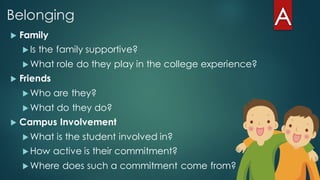
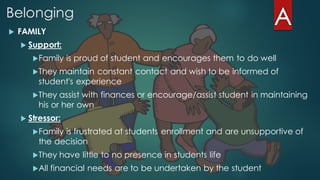
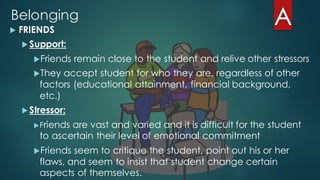
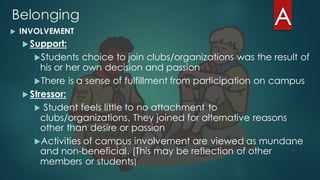
!["A feeling of belonging is crucial, especially for first
generation students or those who might have trouble
adapting to the college environment. The purpose of [the
office of] Student Involvement [and Activities] is to find ways
to reach out to those students and engage them. Becoming
involved on campus through a club helps to build
connections.....[students will] make friends and have
something to look forward to."
-Rebecca Jimenez, Director of Student Involvement and Activities, Salem State University](https://image.slidesharecdn.com/firstgenerationlowsocioeconomicstudents-160320032058/85/First-Generation-Low-Income-Student-Development-Theory-20-320.jpg)
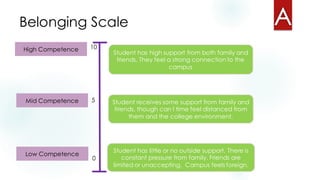
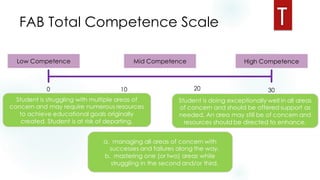

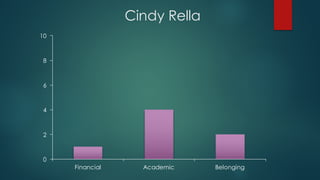

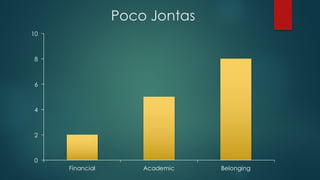
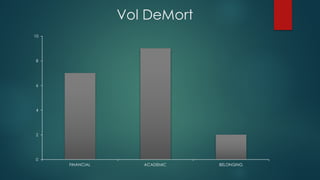
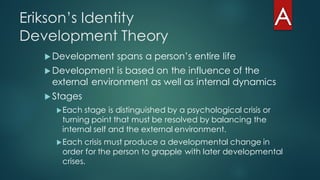
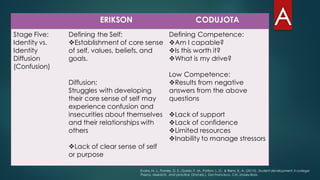
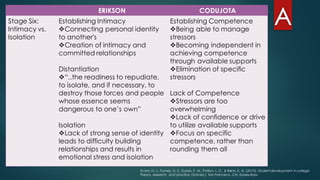
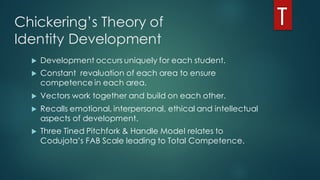
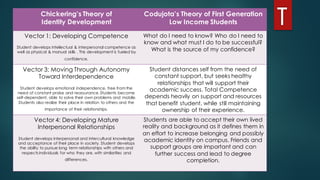
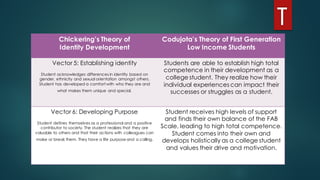

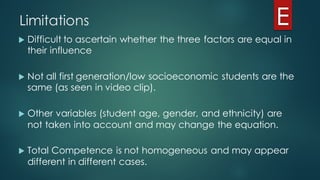

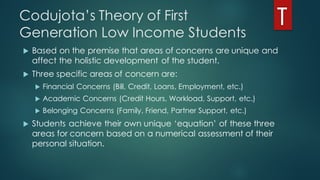
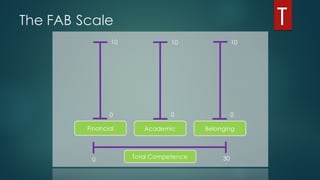
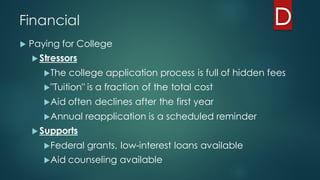
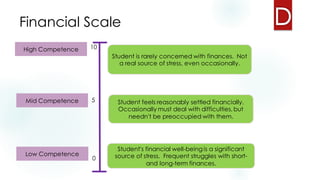
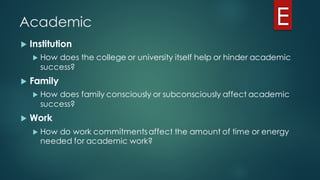
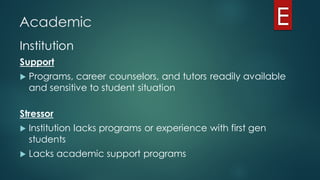
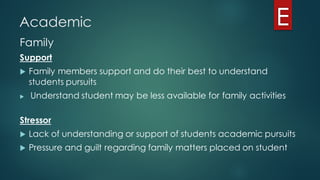
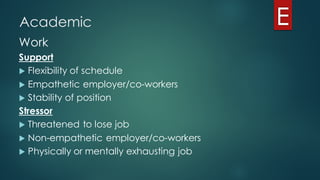
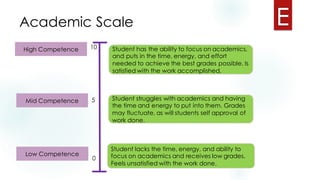
Codujota's theory proposes that first generation, low-income college students face unique challenges in three areas - financial concerns, academic concerns, and belonging concerns. These areas make up a "FAB scale" where students receive a score in each area based on their personal situations and resources. A student's overall competence is determined by their total score across all three areas. The theory aims to help identify students' specific challenges and needs for support. It also draws parallels between first generation students' development and theories from Erikson and Chickering on broader student development. However, the theory has limitations in accounting for all individual differences and variables that could impact student experiences.


