NEUROPHARMACOLOGY
TRAUMATIC BRAIN INJURY
Biopsychosocial Approaches to Treating Traumatic Brain
Injury
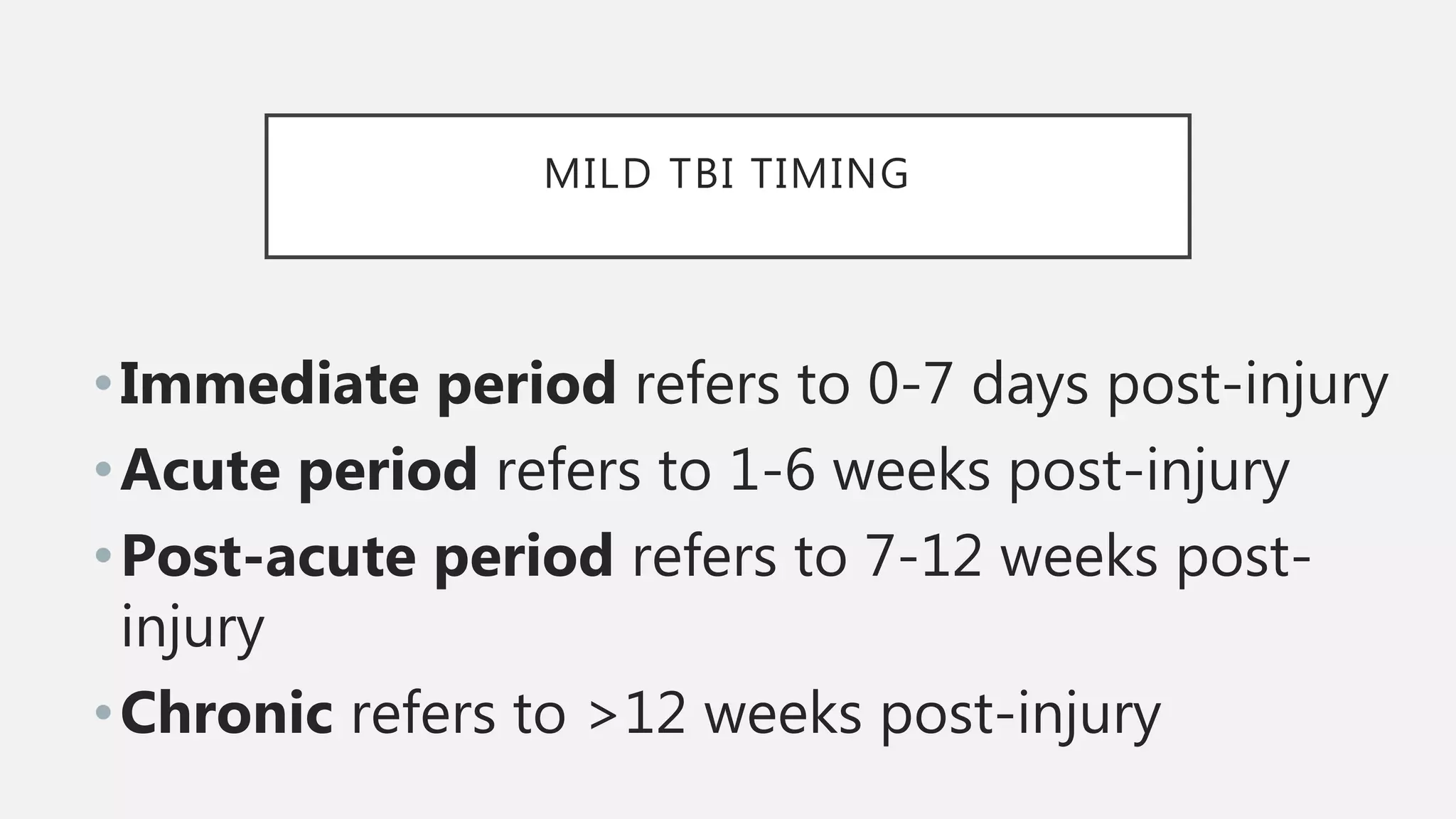
MILD TBI TIMING
•Immediate period refers to 0-7 days post-injury
•Acute period refers to 1-6 weeks post-injury
•Post-acute period refers to 7-12 weeks post-
injury
•Chronic refers to >12 weeks post-injury
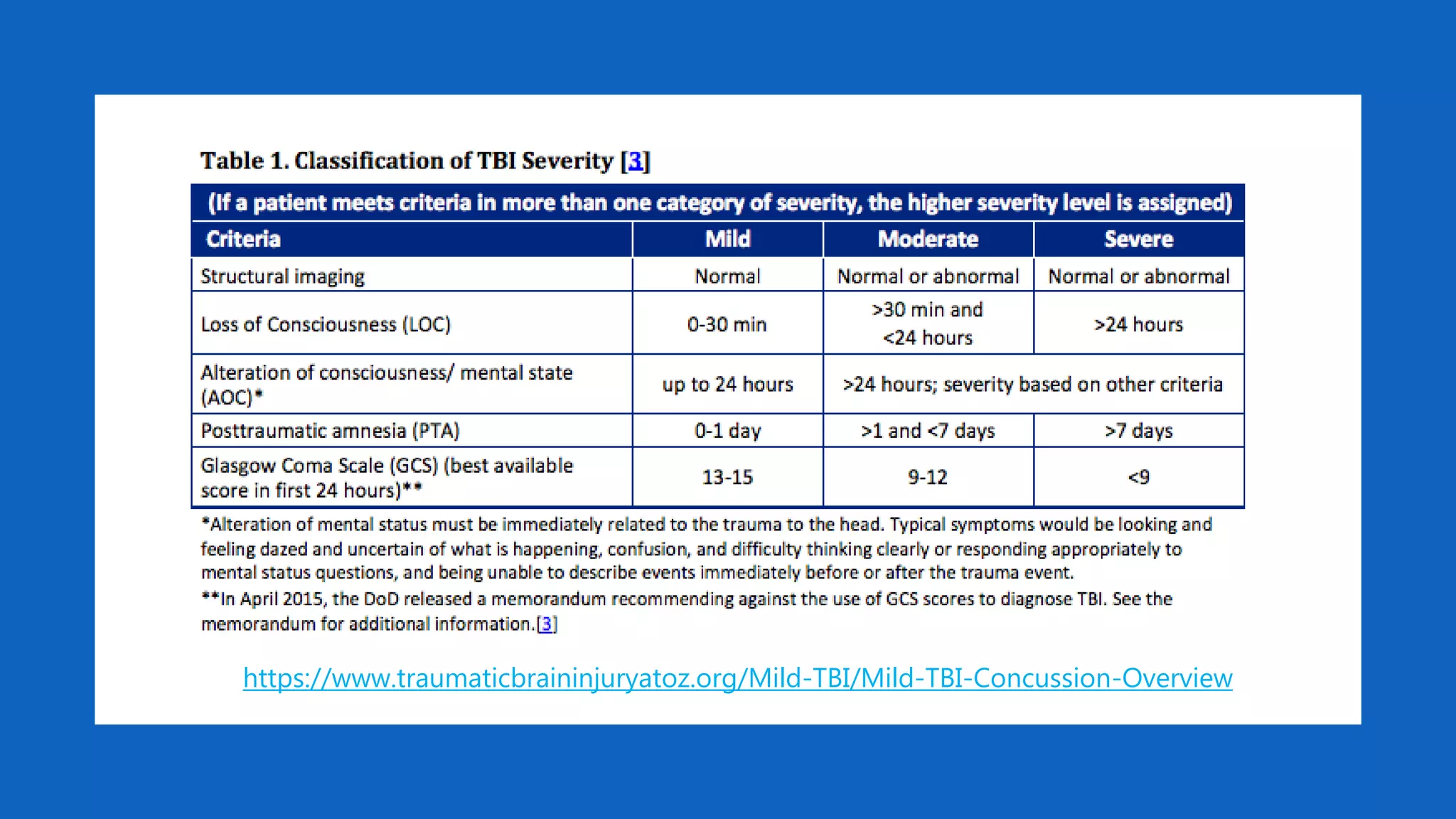
https://www.traumaticbraininjuryatoz.org/Mild-TBI/Mild-TBI-Concussion-Overview
Epidural
Hematom
a
Contusion
(Bruising)
Diffuse Axonal
Injury
Swollen Brain
(Blood Vessels
Complex
Sub-Dural
Hematom
a
Sub Arachnoid
Hematoma
Different
Pathology
Different
Treatments
One
Disease
https://www.traumaticbraininjuryatoz.o
rg/Moderate-to-Severe-TBI/Types-of-
Brain-Injuries/Blast-Injuries.aspx
Traumatic Brain Injury – Neuropsychiatric
Sequela
Diffusion Tensor
Imaging
Mapping The
Connectome
Traumatic Brain Injury
Functional Circuits
The functional
relationship between
these structures map
key findings in how the
anxiety circuit works. In
head injury there can
multiple ways a circuit
can be disrupted.
Calhoon, G. G., & Tye, K. M. (2015). Resolving the neural circuits of
anxiety. Nature neuroscience, 18(10), 1394-1404.
Areas of the inner skull can be sharp. Sheering of cranial nerves, impact
to frontal lobes (orbital medial) and temporal lobes are common.
Woodard, T. J., Hill, A. M., & Bell-Lynum, K. S. (2015). Managing neuropsychiatric
symptoms in traumatic brain injury. US Pharm, 11, 16.
TBI COGNITIVE
CHALLENGES
• Cognitive Challenges: Interdisciplinary
care is helpful, multidisciplinary and
includes pharmacotherapy, physical
therapy, occupational therapy, recreation,
therapy, speech therapy, and vocational
rehabilitation.
• Common Cognitive Challenges: Arousal,
attention, concentration, memory,
language, and executive function, memory
loss both verbal and nonverbal, executive
functioning challenges, include poor
planning, organizing, sequencing and set-
shifting, as well as processing speed.
• Four Phases: 1. Post Injury coma, 2. Cog
and beh disruptions poor memory at this
time., 3. Rapid recovery, 4. More slow
recovery
• Medication Management: Dopaminergic
medications (e.g. psychostimulants) and
M-TBI SYMPTOMS
HEADACHES
• Headaches: Rates are between 30% and 90% in TBI (mild moderate and severe). mTBI
post-traumatic headaches typically start with in 7 days.. Acute post-traumatic headaches
< 3 mo., Chronic > 3 mo.
• Three major kinds of post-traumatic headaches: Tension type, Migraine type and
combined type.
• Key Assessments: Tension or Migraines, Medication induced headaches (NSAIDs and
Opioids), Sleep (assess sleep apnea – stop bang), stress, anxiety disorders, PTSD and
depression.
• Non-Pharm–Treatment: Normalize and inform (most last < 3 mo.), CBT, Acupuncture,
Relaxation Training, ACT, biofeedback (e.g. EMG), exercise plan, sleep management, plan
(people need increased sleep post head injury).
• Pharm Tx – NSAIDs, aspirin or acetaminophen. Migraines: triptans (abortive) e.g.
sumatriptan, prophylactic such as topiramate. AVOID Narcotics (CNS Depression)
DIZZINESS AND DISEQUILIBRIUM
• Dizziness and disequilibrium are common post TBI in acute phase. Refer for Eval
(PT/OT or PCP Vestibular exam etc).
• Assessment Types of Causes:
• (Peripheral) Inner ear disorders: Benign paroxysmal positional vertigo, Labyrinthine
concussion, Posttraumatic endolymphatic hydrops, Perilymphatic fistula, Bilateral labyrinthine
dysfunction
• Central Disorders: Migraine-induced vestibulopathy, visual dysfunction,
• Psychological: Depression, Anxiety, Somatic Symptom
• Musculoskeletal Disorders: Flexion/Extension/Rotation/Cervical Inj. Triggered
• Temporal bone fracture
• Non-Pharm Tx: Vestibular balance rehab (tailored to PT), canalith repositioning
procedures, qualified vestibular rehabilitation.
• Pharm Tx: First-line medication choice would be meclizine, followed by scopolamine
and dimenhydrinate, depending upon symptom presentation. Pharmacotherapy with
clonazepam, diazepam or lorazepam is discouraged due to the sedating and
addictive qualities of those agents.
DEPRESSION & MANIA POST-TBI
• Post Brain Inj: “Feelings of loss, demoralization, and discouragement seen soon after injury
are often followed by symptoms of persistent dysphoria. Fatigue, irritability, suicidal
thoughts, anhedonia, disinterest, and insomnia” Poor premorbid level of functioning and
past history of psychiatric illness are major risk factors for depression.
• Mania: Rates higher then general population (approx. 9%). Family hx of mania mod
predictive.
• Biology of Depression in TBI: biogenic amine-containing neurons as they pass through
the basal ganglia or frontal-subcortical white matter. The presence of left dorsolateral
frontal and left basal ganglia lesions is associated with an increased probability of
developing major depression.
• Medication Management Depression: SSRIs, (anti-depressants with < cholinergic effects),
dopamine agents.
• Medication Management Mania: Mood stabilizers/anticonvulsants, these may impair cog
ANTIDEPRESSANTS
SSRIs are useful in the treatment of depression, mood lability, and
impulsivity. Tricyclics are generally not first line in the treatment of TBI
patients because of their anticholinergic side effects. Trazodone is useful
for agitation and sleep.
PSYCHOSTIMULANTS
• Psychostimulants: Methylphenidate
and dextroamphetamine are the
commonly used psychostimulants. They
act by increasing catecholamine activity
by blocking the reuptake of
norepinephrine and dopamine. Side
effects include paranoia, dysphoria,
agitation, and irritability.
• Dopamine: Plays a key role in
neuroplasticity changing attention based
learning through increased focus,
synaptic strength through modulating
Long-term potentiation and long-term
depression
DOPAMINERGIC MEDICATIONS
(PARKINSON’S TX)
The frontal lobes are especially rich in dopamine, and their frequent
involvement in TBI is associated with decreased dopamine activity.
Amantadine, bromocriptine, and levodopa are commonly used
dopaminergic agents.
• Levadopa and bromocriptine are both dopamine
agonists. They have been studied in small, uncontrolled
case studies and have been found to be effective in the
treatment of mood, cognition, and behavior.
• Amantadine enhances release of dopamine, inhibits
reuptake, and increases activity at the postsynaptic
receptors. Also aN -methyl-D -aspartate (NMDA)
glutamate receptor antagonist, and this property might
protect neuronal cells against excitotoxicity. Side effects
of amantadine include confusion, hallucinations, edema,
and hypotension.
ANTICONVULSANT/MOOD STABILIZERS
The role of anticonvulsants in the treatment of neuropsychiatric
sequelae of TBI are multiple. They are used to treat seizure disorder,
mood lability, mania, impulsivity, aggression, and rage.
REVIEW
Traumatic Brain Injury (TBI) - Biopsychosocial Approaches to Pharmacological Treatment and Symptom Management

Traumatic Brain Injury (TBI) - Biopsychosocial Approaches to Pharmacological Treatment and Symptom Management

  • 1.
    NEUROPHARMACOLOGY TRAUMATIC BRAIN INJURY BiopsychosocialApproaches to Treating Traumatic Brain Injury
  • 4.
    MILD TBI TIMING •Immediateperiod refers to 0-7 days post-injury •Acute period refers to 1-6 weeks post-injury •Post-acute period refers to 7-12 weeks post- injury •Chronic refers to >12 weeks post-injury
  • 8.
  • 9.
    Epidural Hematom a Contusion (Bruising) Diffuse Axonal Injury Swollen Brain (BloodVessels Complex Sub-Dural Hematom a Sub Arachnoid Hematoma Different Pathology Different Treatments One Disease
  • 12.
  • 13.
    Traumatic Brain Injury– Neuropsychiatric Sequela
  • 16.
  • 17.
    Traumatic Brain Injury FunctionalCircuits The functional relationship between these structures map key findings in how the anxiety circuit works. In head injury there can multiple ways a circuit can be disrupted. Calhoon, G. G., & Tye, K. M. (2015). Resolving the neural circuits of anxiety. Nature neuroscience, 18(10), 1394-1404.
  • 19.
    Areas of theinner skull can be sharp. Sheering of cranial nerves, impact to frontal lobes (orbital medial) and temporal lobes are common.
  • 27.
    Woodard, T. J.,Hill, A. M., & Bell-Lynum, K. S. (2015). Managing neuropsychiatric symptoms in traumatic brain injury. US Pharm, 11, 16.
  • 28.
    TBI COGNITIVE CHALLENGES • CognitiveChallenges: Interdisciplinary care is helpful, multidisciplinary and includes pharmacotherapy, physical therapy, occupational therapy, recreation, therapy, speech therapy, and vocational rehabilitation. • Common Cognitive Challenges: Arousal, attention, concentration, memory, language, and executive function, memory loss both verbal and nonverbal, executive functioning challenges, include poor planning, organizing, sequencing and set- shifting, as well as processing speed. • Four Phases: 1. Post Injury coma, 2. Cog and beh disruptions poor memory at this time., 3. Rapid recovery, 4. More slow recovery • Medication Management: Dopaminergic medications (e.g. psychostimulants) and
  • 29.
    M-TBI SYMPTOMS HEADACHES • Headaches:Rates are between 30% and 90% in TBI (mild moderate and severe). mTBI post-traumatic headaches typically start with in 7 days.. Acute post-traumatic headaches < 3 mo., Chronic > 3 mo. • Three major kinds of post-traumatic headaches: Tension type, Migraine type and combined type. • Key Assessments: Tension or Migraines, Medication induced headaches (NSAIDs and Opioids), Sleep (assess sleep apnea – stop bang), stress, anxiety disorders, PTSD and depression. • Non-Pharm–Treatment: Normalize and inform (most last < 3 mo.), CBT, Acupuncture, Relaxation Training, ACT, biofeedback (e.g. EMG), exercise plan, sleep management, plan (people need increased sleep post head injury). • Pharm Tx – NSAIDs, aspirin or acetaminophen. Migraines: triptans (abortive) e.g. sumatriptan, prophylactic such as topiramate. AVOID Narcotics (CNS Depression)
  • 31.
    DIZZINESS AND DISEQUILIBRIUM •Dizziness and disequilibrium are common post TBI in acute phase. Refer for Eval (PT/OT or PCP Vestibular exam etc). • Assessment Types of Causes: • (Peripheral) Inner ear disorders: Benign paroxysmal positional vertigo, Labyrinthine concussion, Posttraumatic endolymphatic hydrops, Perilymphatic fistula, Bilateral labyrinthine dysfunction • Central Disorders: Migraine-induced vestibulopathy, visual dysfunction, • Psychological: Depression, Anxiety, Somatic Symptom • Musculoskeletal Disorders: Flexion/Extension/Rotation/Cervical Inj. Triggered • Temporal bone fracture • Non-Pharm Tx: Vestibular balance rehab (tailored to PT), canalith repositioning procedures, qualified vestibular rehabilitation. • Pharm Tx: First-line medication choice would be meclizine, followed by scopolamine and dimenhydrinate, depending upon symptom presentation. Pharmacotherapy with clonazepam, diazepam or lorazepam is discouraged due to the sedating and addictive qualities of those agents.
  • 32.
    DEPRESSION & MANIAPOST-TBI • Post Brain Inj: “Feelings of loss, demoralization, and discouragement seen soon after injury are often followed by symptoms of persistent dysphoria. Fatigue, irritability, suicidal thoughts, anhedonia, disinterest, and insomnia” Poor premorbid level of functioning and past history of psychiatric illness are major risk factors for depression. • Mania: Rates higher then general population (approx. 9%). Family hx of mania mod predictive. • Biology of Depression in TBI: biogenic amine-containing neurons as they pass through the basal ganglia or frontal-subcortical white matter. The presence of left dorsolateral frontal and left basal ganglia lesions is associated with an increased probability of developing major depression. • Medication Management Depression: SSRIs, (anti-depressants with < cholinergic effects), dopamine agents. • Medication Management Mania: Mood stabilizers/anticonvulsants, these may impair cog
  • 33.
    ANTIDEPRESSANTS SSRIs are usefulin the treatment of depression, mood lability, and impulsivity. Tricyclics are generally not first line in the treatment of TBI patients because of their anticholinergic side effects. Trazodone is useful for agitation and sleep.
  • 37.
    PSYCHOSTIMULANTS • Psychostimulants: Methylphenidate anddextroamphetamine are the commonly used psychostimulants. They act by increasing catecholamine activity by blocking the reuptake of norepinephrine and dopamine. Side effects include paranoia, dysphoria, agitation, and irritability. • Dopamine: Plays a key role in neuroplasticity changing attention based learning through increased focus, synaptic strength through modulating Long-term potentiation and long-term depression
  • 38.
    DOPAMINERGIC MEDICATIONS (PARKINSON’S TX) Thefrontal lobes are especially rich in dopamine, and their frequent involvement in TBI is associated with decreased dopamine activity. Amantadine, bromocriptine, and levodopa are commonly used dopaminergic agents. • Levadopa and bromocriptine are both dopamine agonists. They have been studied in small, uncontrolled case studies and have been found to be effective in the treatment of mood, cognition, and behavior. • Amantadine enhances release of dopamine, inhibits reuptake, and increases activity at the postsynaptic receptors. Also aN -methyl-D -aspartate (NMDA) glutamate receptor antagonist, and this property might protect neuronal cells against excitotoxicity. Side effects of amantadine include confusion, hallucinations, edema, and hypotension.
  • 39.
    ANTICONVULSANT/MOOD STABILIZERS The roleof anticonvulsants in the treatment of neuropsychiatric sequelae of TBI are multiple. They are used to treat seizure disorder, mood lability, mania, impulsivity, aggression, and rage.
  • 41.