Department of Computer Science
Engineering in Computer Networks and Information Systems (IRISI)
2nd year of the Engineering
Neuromarketing
Where Brain science and Marketing Meet
Academic year: 2013/2014
Made by Requested by
MOSAIF Afaf Mr AIT HADOU
ELKHAROUSSI Chaimae
Plan:
1. Your brain and consuming
2. Neuroscience 101
3. Neuromarketing
a) Methods/Technology
b) Examples
4. Conclusion
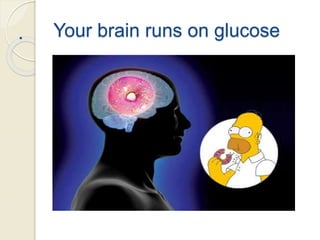
Your brain runs on glucose.
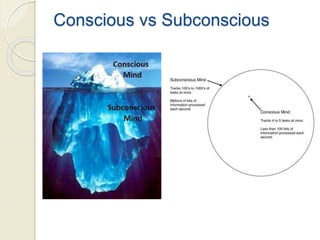
Conscious vs Subconscious
Marketing
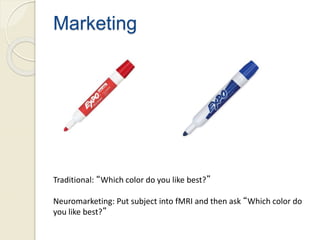
Traditional: “Which color do you like best?”
Neuromarketing: Put subject into fMRI and then ask “Which color do
you like best?”
Neuroscience 101
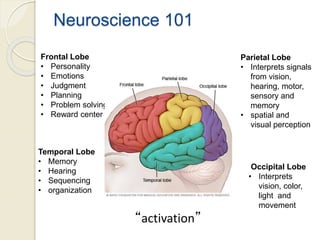
Frontal Lobe
• Personality
• Emotions
• Judgment
• Planning
• Problem solving
• Reward center
Parietal Lobe
• Interprets signals
from vision,
hearing, motor,
sensory and
memory
• spatial and
visual perception
Temporal Lobe
• Memory
• Hearing
• Sequencing
• organization
Occipital Lobe
• Interprets
vision, color,
light and
movement
“activation”
Tools
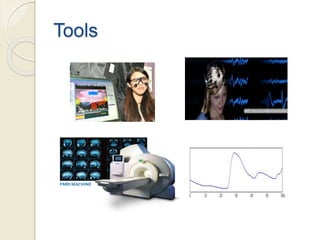
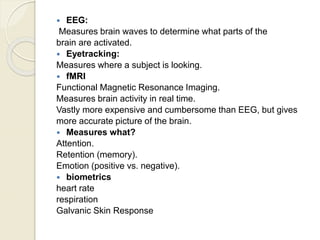
 EEG:
Measures brain waves to determine what parts of the
brain are activated.
 Eyetracking:
Measures where a subject is looking.
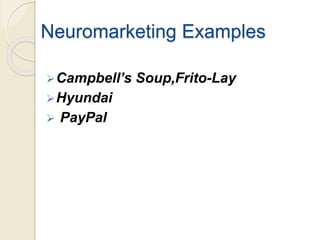
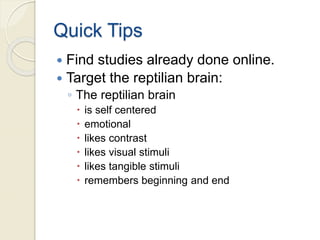
 fMRI
Functional Magnetic Resonance Imaging.
Measures brain activity in real time.
Vastly more expensive and cumbersome than EEG, but gives
more accurate picture of the brain.
 Measures what?
Attention.
Retention (memory).
Emotion (positive vs. negative).
 biometrics
heart rate
respiration
Galvanic Skin Response
Neuromarketing Examples
Campbell’s Soup,Frito-Lay
Hyundai
 PayPal
Quick Tips
 Find studies already done online.
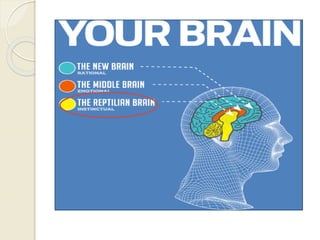
 Target the reptilian brain:
◦ The reptilian brain
 is self centered
 emotional
 likes contrast
 likes visual stimuli
 likes tangible stimuli
 remembers beginning and end
Neuromarketing is traditional
marketing with technology.
 stores have targeted the reptilian brain
to create a positive buying environment
even before neuroscience technology
was available.
◦ Color
◦ Shapes
◦ Organization
◦ Smell
◦ Music
Thank you for your Attention!!

Neuromarketing

  • 1.
    Department of ComputerScience Engineering in Computer Networks and Information Systems (IRISI) 2nd year of the Engineering Neuromarketing Where Brain science and Marketing Meet Academic year: 2013/2014 Made by Requested by MOSAIF Afaf Mr AIT HADOU ELKHAROUSSI Chaimae
  • 2.
    Plan: 1. Your brainand consuming 2. Neuroscience 101 3. Neuromarketing a) Methods/Technology b) Examples 4. Conclusion
  • 3.
    Your brain runson glucose.
  • 5.
  • 7.
    Marketing Traditional: “Which colordo you like best?” Neuromarketing: Put subject into fMRI and then ask “Which color do you like best?”
  • 8.
    Neuroscience 101 Frontal Lobe •Personality • Emotions • Judgment • Planning • Problem solving • Reward center Parietal Lobe • Interprets signals from vision, hearing, motor, sensory and memory • spatial and visual perception Temporal Lobe • Memory • Hearing • Sequencing • organization Occipital Lobe • Interprets vision, color, light and movement “activation”
  • 9.
  • 10.
     EEG: Measures brainwaves to determine what parts of the brain are activated.  Eyetracking: Measures where a subject is looking.  fMRI Functional Magnetic Resonance Imaging. Measures brain activity in real time. Vastly more expensive and cumbersome than EEG, but gives more accurate picture of the brain.  Measures what? Attention. Retention (memory). Emotion (positive vs. negative).  biometrics heart rate respiration Galvanic Skin Response
  • 11.
  • 12.
    Quick Tips  Findstudies already done online.  Target the reptilian brain: ◦ The reptilian brain  is self centered  emotional  likes contrast  likes visual stimuli  likes tangible stimuli  remembers beginning and end
  • 13.
    Neuromarketing is traditional marketingwith technology.  stores have targeted the reptilian brain to create a positive buying environment even before neuroscience technology was available. ◦ Color ◦ Shapes ◦ Organization ◦ Smell ◦ Music
  • 14.
    Thank you foryour Attention!!

Editor's Notes

  • #4 Your brain runs on glucose. When your brain is used, it drains glucose. Studies show that brain areas responsible for learning and memory drain particularly fast when learning and memory tasks become difficult. The brain does not ever want to starve or run out of glucose, therefore, the brain is going to take as many shortcuts as possible to conserve that energy during a task to achieve a goal. The brain wants to do the least amount of work to get the same task done..
  • #5 For example, when you’re on the internet and you go to a webpage with a ton of reading, you may conciously think, “Eh, I don’t want to read all of this..” and you skip through it, missing information that the website writer thought was important. You’re trying to do the least amount of work to get the gist of what that site is saying. That’s a conscious example.. You CONSCIOUSLY think “This is too much to read” Unconscious: you may not notice that looking at this is actually stressing you out.. You’re having a negative experience and your stress hormones are skyrocketing. Your brain doesn’t want to use all the glucose required to read through this site.
  • #6 So, cognitive neuroscientists conclude that the self-conscious mind (or neo-cortex) contributes only about 5 percent of our cognitive activity. That means that 95 percent of our decisions, actions, emotions and behaviors are derived from the unobserved processing of the subconscious mind. (Lipton, 2009 and Szegedy-Mazak 2005 - see end notes). Conclusion: 95% of our decisions happen unconsciously without our awareness.
  • #7 Sales brain and media sauce created this diagram which matches what many scientists and researchers have found: humans contain 3 brains.. The new brain which is rational thought, the middle brain: emotional thought… and finally the reptillian brain. The oldest brain (evolutionarily), it’s the part that causes us to go into fight or flight mode. Like when you jump and run when you see a stick because you thought it was a snake. You don’t rationalize “HEY theres a snake! And then decide to run.. Your brain decides for you. Again, if someone goes at you with a punch and fakes you out or maybe if you hear a loud sudden noice, you still flinch even when they do it multiple times.. This reptillian brain is therefore known by scientists as the area that makes decisions.. It’s the part in animals that makes them eat when its time to eat or run away from a predator. And it still works the same way in humans. This therefore is the area which neuromarketers TARGET!
  • #8 Marketing Example: Lets say you’re producing a product.. Lets say a marker. You can make this product in any color you want to differentiate yourself from your competitors products.. So you make some samples (a red and a blue marker) and you put a traditional focus group together and you ask everyone what color do you like better? Everyone says red, so you make red markers anticipating most people will buy your red marker over your competitor.. The thing is.. Your product doesn’t end up selling as much as you’d like it to… Consciously, everyone thought they liked the red marker.. But then they didn’t buy it… subconsciously, something must be going on.. In neuromarketing, you can throw those people in an fMRI scan, ask them if they like red or blue better. They will tell you they like the red, but their brains will show you they really like the blue better… so instead the company can manufacture blue ones and they will sell. And maybe the brain scan will show they blue promotes more calmness than red and that could be a possible reason why people actually like it better so use that in the branding to show the value of a good blue marker
  • #9 Before I tell you more about these new technologies.. A quick neuroscience lesson If a part of the brain is “activated” it means that part of the brain is working the most. For instance if I show you a silent movie and the room is quiet, the information will move through your eye and your visual cortex/occipital lobe (that processes visual information) will be activated. The brain will then will send that information to other brain areas so that you can identify what the objects are, and maybe what is the emotional story going on..all from the visual information. There are new technologies which can monitor your brain activity while you are watching advertisements. The more something is activated, the more it has your attention, gets embedded into your memory.. the more you create an emotional attachment . neuromarketers are using information like this to determine which types of ads are more successful and WHY. What about that ad made you want to buy it.
  • #12 Brands such as Campbell’s Soup, Gerber, and Frito-Lay have used neuromarketing to restyle their packaging designs. Consumers were exposed to a product’s packaging piece by piece, and their response was recorded as positive, neutral, or negative. This information was used in conjunction with an in-depth interview to analyze specific points that eventually resulted in changes to elements such as color, text size, and imagery. For instance, Frito-Lay discovered matte bags with pictures of potatoes did not trigger a negative response, whereas shiny bags with pictures of chips on them did. Within months, new bags were designed and the shiny ones were scrapped. Hyundai utilized neuromarketing when they gave thirty participants EEG caps and asked them to examine a car prototype for an hour. Information recorded by the electrodes were stored in an individualized hard drive and analyzed by experts. In another case, PayPal discovered that commercials focusing on speed and convenience triggered a significantly higher response than those advertising safety and security and developed an entirely new ad campaign based on the results.
  • #13 So for contrast.. Use black and white, red and green, yellow and purple.. Contrasting colors on websites to gain attention People prefer smaller widths of content on the web But they actually READ wider widths of content FASTER People prefer smaller widths because they THINK and are CONVINCED that they read smaller width content faster when the reverse is actually true What people want isn’t necessarily what is best   But memory wise.. fancy font give 82 percent recall Simple font only has 72 percent