

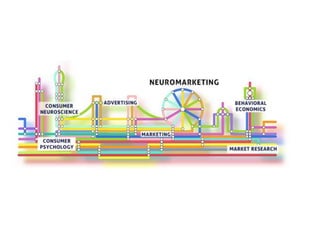

Neuromarketing
By
DR R. Bakshi
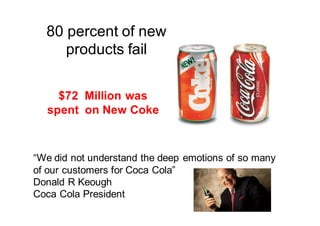
80 percent of new
products fail
“We did not understand the deep emotions of so many
of our customers for Coca Cola”
Donald R Keough
Coca Cola President
$72 Million was
spent on New Coke
Which
commercial
shall help us
sell more?
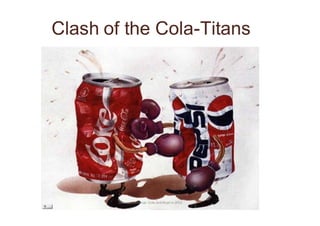
Clash of the Cola-Titans
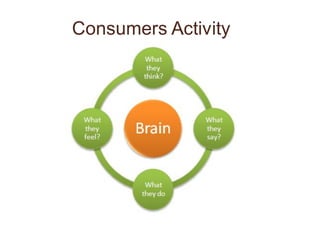
Consumers Activity
Traditional Techniques
1.Focus Group
2.Survey
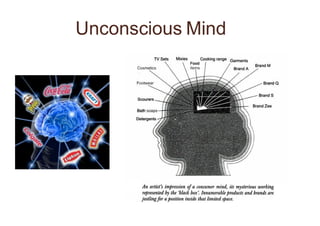
Unconscious Mind
Neuro-Science
Examining Brand’s Place in
Consumers Mind
1. “Footprint” of consumer – brand
engagement
2. Effectiveness of marketing campaigns
3. To the brain, a representation of a brand is
no different than any other representation
pulled together from the three modules.
• Knowledge
• Experience
• Emotion.
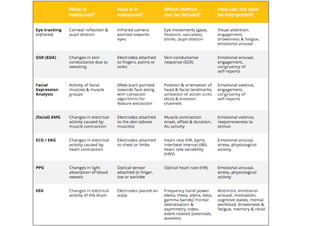
Tools to Understand
Consumers Emotions
• Eyetrack
• Galvanic Skin Response
• EEG (Electro Encephelogram)
• MEG (Magneto Encephelogram)
• fMRI
• Heart Rate
• Facial Expression
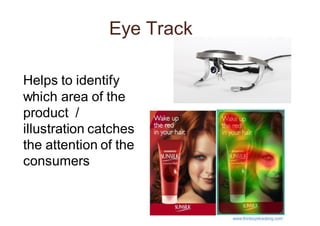
Eye Track
Helps to identify
which area of the
product /
illustration catches
the attention of the
consumers
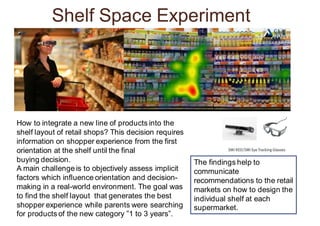
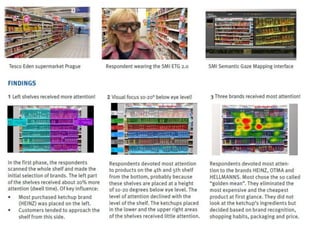
Shelf Space Experiment
How to integrate a new line of products into the
shelf layout of retail shops? This decision requires
information on shopper experience from the first
orientation at the shelf until the final
buying decision.
A main challenge is to objectively assess implicit
factors which influence orientation and decision-
making in a real-world environment. The goal was
to find the shelf layout that generates the best
shopper experience while parents were searching
for products of the new category ”1 to 3 years”.
The findings help to
communicate
recommendations to the retail
markets on how to design the
individual shelf at each
supermarket.
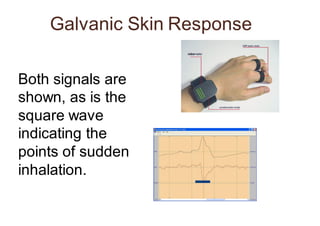
Galvanic Skin Response
Both signals are
shown, as is the
square wave
indicating the
points of sudden
inhalation.
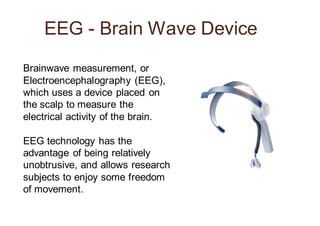
EEG - Brain Wave Device
Brainwave measurement, or
Electroencephalography (EEG),
which uses a device placed on
the scalp to measure the
electrical activity of the brain.
EEG technology has the
advantage of being relatively
unobtrusive, and allows research
subjects to enjoy some freedom
of movement.
EEG Results identifies
• Perception
• Learning
• Memory
• Attention
• Motivation
• Emotions and Feelings
Brain Response Analysis
The brain’s “default network” appeared to
remain more active when viewing direct
mail. Activity in this brain network has been
associated with a greater focus on a
person’s internal emotional response to
outside stimuli. This suggests that the
individuals were relating information to
their own thoughts and feelings.
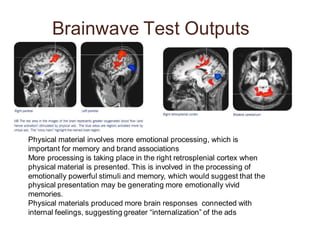
NB The red area in the images of the brain
represents greater oxygenated blood flow
(and hence activation) stimulated by
physical ads. The blue areas are regions
activated more by virtual ads. The “cross
hairs” highlight the named brain region.
Millward Brown and Bangor
University came up with a powerful
and innovative approach to help us
understand how both physical and
digital media are processed by the
brain.
Brainwave Test Outputs
Physical material involves more emotional processing, which is
important for memory and brand associations
More processing is taking place in the right retrosplenial cortex when
physical material is presented. This is involved in the processing of
emotionally powerful stimuli and memory, which would suggest that the
physical presentation may be generating more emotionally vivid
memories.
Physical materials produced more brain responses connected with
internal feelings, suggesting greater “internalization” of the ads
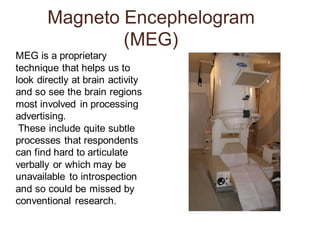
Magneto Encephelogram
(MEG)
MEG is a proprietary
technique that helps us to
look directly at brain activity
and so see the brain regions
most involved in processing
advertising.
These include quite subtle
processes that respondents
can find hard to articulate
verbally or which may be
unavailable to introspection
and so could be missed by
conventional research.
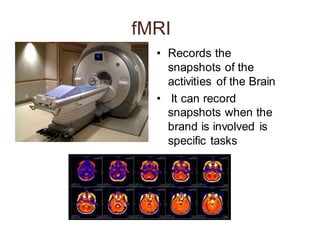
fMRI
• Records the
snapshots of the
activities of the Brain
• It can record
snapshots when the
brand is involved is
specific tasks
Use of fMRI Reports
1. fMRI may help identify which of several options has the
2. strongest customer appeal.
3. In planning promotional campaigns, such as movie
trailers or various forms of advertising, fMRI data may
help identify the most effective messages.
4. It can be used to better understand how marketing
actions
5. change people’s preferences and experiences,
consciously or subconsciously.
6. Companies should consider using fMRI in situations in
which consumers are unlikely to say what they think,
because they can’t or they won’t.
Source: Karmarar, U. (2015) Marketers Should Pay Attention to fMRI,
Harvard Business Review
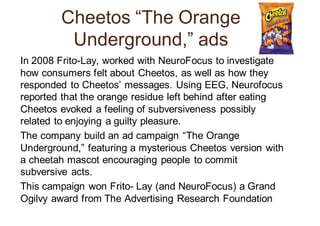
Cheetos “The Orange
Underground,” ads
In 2008 Frito-Lay, worked with NeuroFocus to investigate
how consumers felt about Cheetos, as well as how they
responded to Cheetos’ messages. Using EEG, Neurofocus
reported that the orange residue left behind after eating
Cheetos evoked a feeling of subversiveness possibly
related to enjoying a guilty pleasure.
The company build an ad campaign “The Orange
Underground,” featuring a mysterious Cheetos version with
a cheetah mascot encouraging people to commit
subversive acts.
This campaign won Frito- Lay (and NeuroFocus) a Grand
Ogilvy award from The Advertising Research Foundation
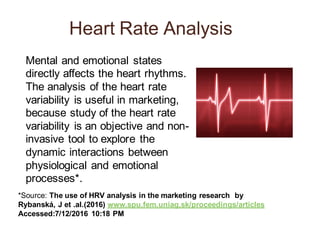
Heart Rate Analysis
Mental and emotional states
directly affects the heart rhythms.
The analysis of the heart rate
variability is useful in marketing,
because study of the heart rate
variability is an objective and non-
invasive tool to explore the
dynamic interactions between
physiological and emotional
processes*.
*Source: The use of HRV analysis in the marketing research by
Rybanská, J et .al.(2016) www.spu.fem.uniag.sk/proceedings/articles
Accessed:7/12/2016 10:18 PM
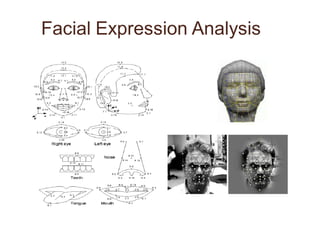
Facial Expression Analysis
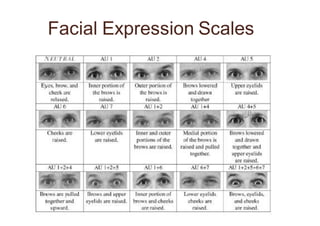
Facial Expression Scales
Where Is Neuromarketing
Headed?
• One of the major frontiers for
neuromarketing lies in building an
understanding of the ways in which
different societies relate to companies,
advertisements and brands.
• Neuroscience methods are able to
discriminate whether marketing messages
are perceived and actually represented
differently by different target groups
Users of Neuromarketing Data
• Coca Cola
• Google
• Walmart
• Kraft
• PayPal
• Intel
• Quaker
• FritoLays
End

Neuromarketing

  • 1.
  • 2.
    80 percent ofnew products fail “We did not understand the deep emotions of so many of our customers for Coca Cola” Donald R Keough Coca Cola President $72 Million was spent on New Coke
  • 3.
  • 4.
    Clash of theCola-Titans
  • 5.
  • 6.
  • 7.
  • 9.
  • 10.
    Examining Brand’s Placein Consumers Mind 1. “Footprint” of consumer – brand engagement 2. Effectiveness of marketing campaigns 3. To the brain, a representation of a brand is no different than any other representation pulled together from the three modules. • Knowledge • Experience • Emotion.
  • 11.
    Tools to Understand ConsumersEmotions • Eyetrack • Galvanic Skin Response • EEG (Electro Encephelogram) • MEG (Magneto Encephelogram) • fMRI • Heart Rate • Facial Expression
  • 12.
    Eye Track Helps toidentify which area of the product / illustration catches the attention of the consumers
  • 13.
    Shelf Space Experiment Howto integrate a new line of products into the shelf layout of retail shops? This decision requires information on shopper experience from the first orientation at the shelf until the final buying decision. A main challenge is to objectively assess implicit factors which influence orientation and decision- making in a real-world environment. The goal was to find the shelf layout that generates the best shopper experience while parents were searching for products of the new category ”1 to 3 years”. The findings help to communicate recommendations to the retail markets on how to design the individual shelf at each supermarket.
  • 15.
    Galvanic Skin Response Bothsignals are shown, as is the square wave indicating the points of sudden inhalation.
  • 16.
    EEG - BrainWave Device Brainwave measurement, or Electroencephalography (EEG), which uses a device placed on the scalp to measure the electrical activity of the brain. EEG technology has the advantage of being relatively unobtrusive, and allows research subjects to enjoy some freedom of movement.
  • 17.
    EEG Results identifies •Perception • Learning • Memory • Attention • Motivation • Emotions and Feelings
  • 18.
    Brain Response Analysis Thebrain’s “default network” appeared to remain more active when viewing direct mail. Activity in this brain network has been associated with a greater focus on a person’s internal emotional response to outside stimuli. This suggests that the individuals were relating information to their own thoughts and feelings. NB The red area in the images of the brain represents greater oxygenated blood flow (and hence activation) stimulated by physical ads. The blue areas are regions activated more by virtual ads. The “cross hairs” highlight the named brain region. Millward Brown and Bangor University came up with a powerful and innovative approach to help us understand how both physical and digital media are processed by the brain.
  • 19.
    Brainwave Test Outputs Physicalmaterial involves more emotional processing, which is important for memory and brand associations More processing is taking place in the right retrosplenial cortex when physical material is presented. This is involved in the processing of emotionally powerful stimuli and memory, which would suggest that the physical presentation may be generating more emotionally vivid memories. Physical materials produced more brain responses connected with internal feelings, suggesting greater “internalization” of the ads
  • 20.
    Magneto Encephelogram (MEG) MEG isa proprietary technique that helps us to look directly at brain activity and so see the brain regions most involved in processing advertising. These include quite subtle processes that respondents can find hard to articulate verbally or which may be unavailable to introspection and so could be missed by conventional research.
  • 21.
    fMRI • Records the snapshotsof the activities of the Brain • It can record snapshots when the brand is involved is specific tasks
  • 22.
    Use of fMRIReports 1. fMRI may help identify which of several options has the 2. strongest customer appeal. 3. In planning promotional campaigns, such as movie trailers or various forms of advertising, fMRI data may help identify the most effective messages. 4. It can be used to better understand how marketing actions 5. change people’s preferences and experiences, consciously or subconsciously. 6. Companies should consider using fMRI in situations in which consumers are unlikely to say what they think, because they can’t or they won’t. Source: Karmarar, U. (2015) Marketers Should Pay Attention to fMRI, Harvard Business Review
  • 23.
    Cheetos “The Orange Underground,”ads In 2008 Frito-Lay, worked with NeuroFocus to investigate how consumers felt about Cheetos, as well as how they responded to Cheetos’ messages. Using EEG, Neurofocus reported that the orange residue left behind after eating Cheetos evoked a feeling of subversiveness possibly related to enjoying a guilty pleasure. The company build an ad campaign “The Orange Underground,” featuring a mysterious Cheetos version with a cheetah mascot encouraging people to commit subversive acts. This campaign won Frito- Lay (and NeuroFocus) a Grand Ogilvy award from The Advertising Research Foundation
  • 24.
    Heart Rate Analysis Mentaland emotional states directly affects the heart rhythms. The analysis of the heart rate variability is useful in marketing, because study of the heart rate variability is an objective and non- invasive tool to explore the dynamic interactions between physiological and emotional processes*. *Source: The use of HRV analysis in the marketing research by Rybanská, J et .al.(2016) www.spu.fem.uniag.sk/proceedings/articles Accessed:7/12/2016 10:18 PM
  • 25.
  • 26.
  • 28.
    Where Is Neuromarketing Headed? •One of the major frontiers for neuromarketing lies in building an understanding of the ways in which different societies relate to companies, advertisements and brands. • Neuroscience methods are able to discriminate whether marketing messages are perceived and actually represented differently by different target groups
  • 29.
    Users of NeuromarketingData • Coca Cola • Google • Walmart • Kraft • PayPal • Intel • Quaker • FritoLays
  • 30.