Download to read offline



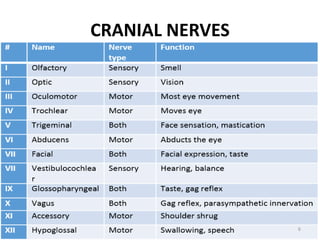
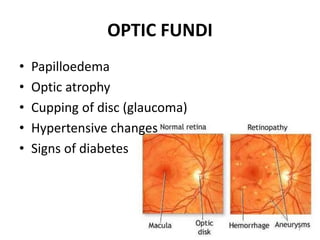
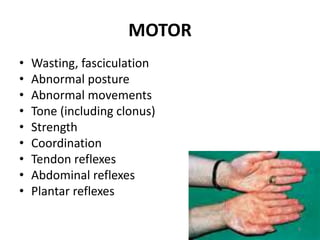



The document outlines the key areas examined during a clinical neurological examination, including: 1) General appearance, mood, facial expressions, handedness, and nutritional status. 2) Stance, gait, posture, and balance tests. 3) Examination of the back, neck, and skull. 4) Assessment of the cranial nerves and optic fundi. 5) Evaluation of motor functions, muscle tone, strength, coordination and reflexes. 6) Sensory testing including pain, temperature, position, vibration and discrimination. 7) Assessment of higher cerebral functions such as orientation, memory and speech.


